G.O.A.T. Pehelwaan
He was the greatest of all time. He also ate a whole goat. This is not a metaphor.
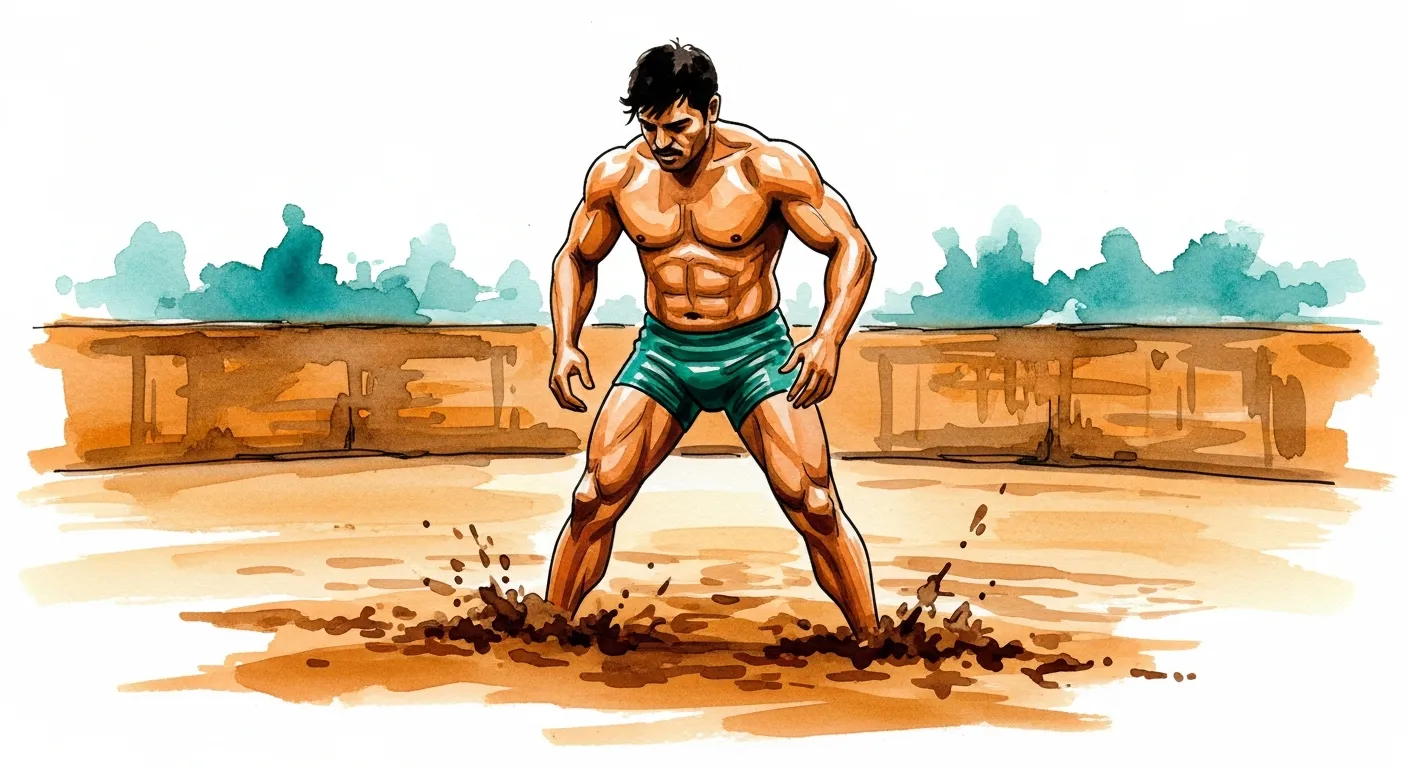
Watercolor illustration
Let's start with Aslam.
Aslam Pehelwaan trained three times a day. Not three sessions of forty-five minutes with a playlist and a towel. Three full sessions, Indian pushups called dands, deep squats called baithaks, stone lifting, heavy club work, wrestling. His guru was the Great Gama himself, which is the equivalent of learning to cook from the person who invented fire.
After all of this, after the three sessions, after the sweat and the mud and the grappling, Aslam would sit down to eat.
He would eat an entire goat.
Not a leg. Not a shoulder. Not a generous portion that a normal person might call a lot. An entire goat. One sitting. This is documented in his Wikipedia entry with the same casual tone you'd use to note that someone preferred tea over coffee. It is said that he used to eat an entire goat during a single meal. Just there. In the record. Unremarked upon.
Because in the world of the pehelwaan, this was not remarkable. This was dinner.
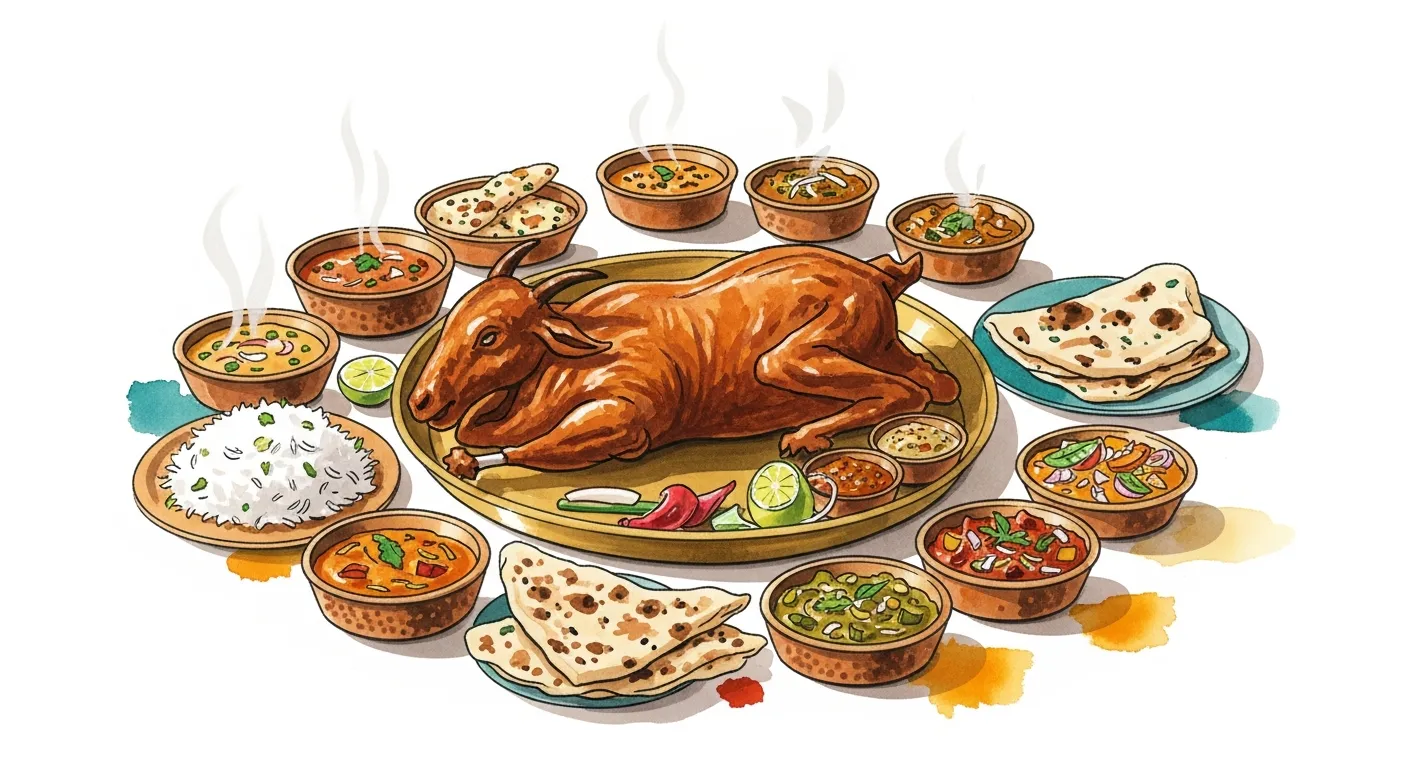
An entire goat. One sitting. Unremarked upon. This was dinner.
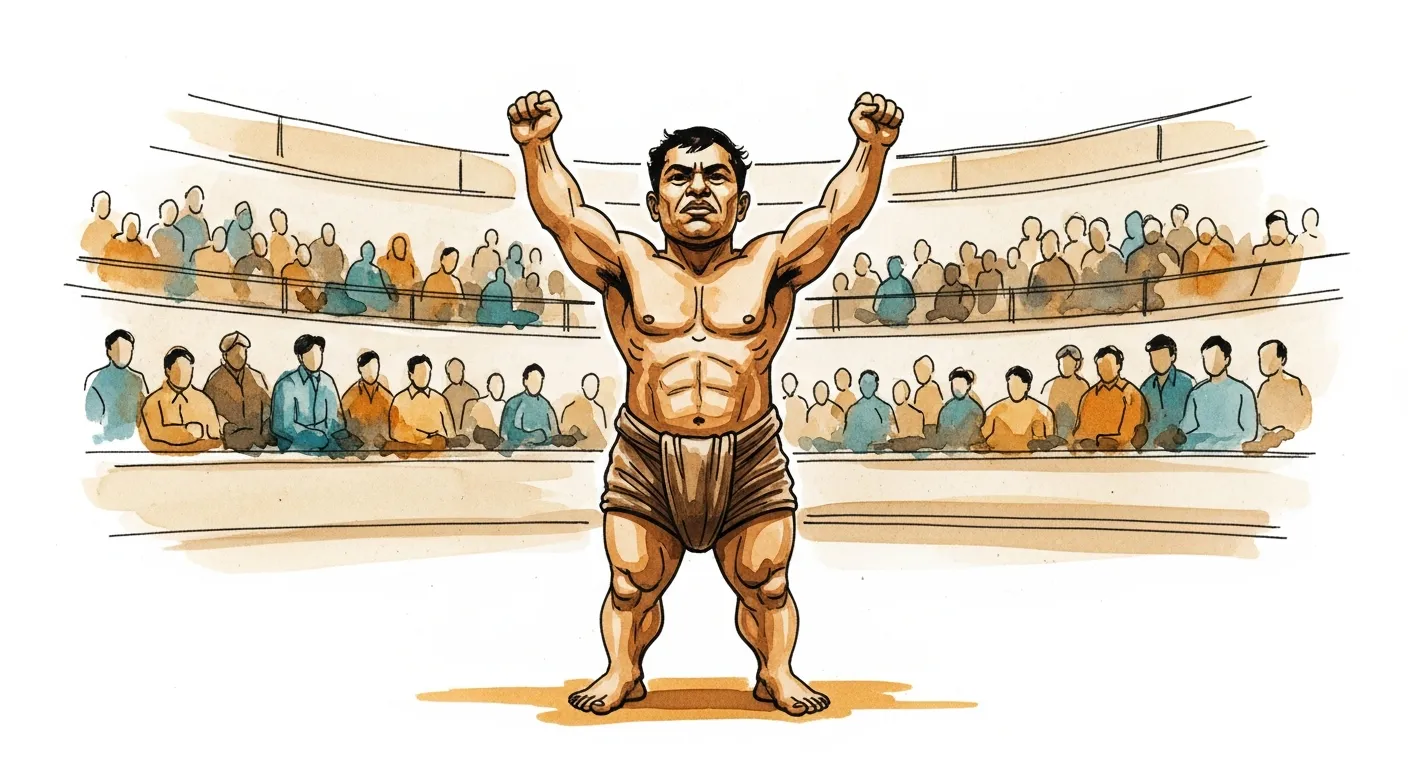
The Great Gama, Ghulam Mohammad Baksh Butt, born 1878 in Amritsar, died 1960 in Lahore, is by any serious measure one of the greatest athletes who ever lived. He fought over five thousand bouts across fifty years. He never lost. Not once. Not a single bout in fifty years of professional wrestling. His opponents included the world heavyweight champions of England, Poland, America. He beat them all. The Polish champion Stanislaus Zbyszko was so comprehensively outmatched that he lay pinned to the mat for two hours and thirty-five minutes rather than concede, and still lost.
Gama was 5 feet 7 inches tall. This is important. Every opponent he ever destroyed was bigger than him.
His daily training: 5,000 baithaks. 3,000 dands. Wrestling with forty fellow wrestlers in sequence. Then swimming. This was every day. Before noon.
Then he ate.
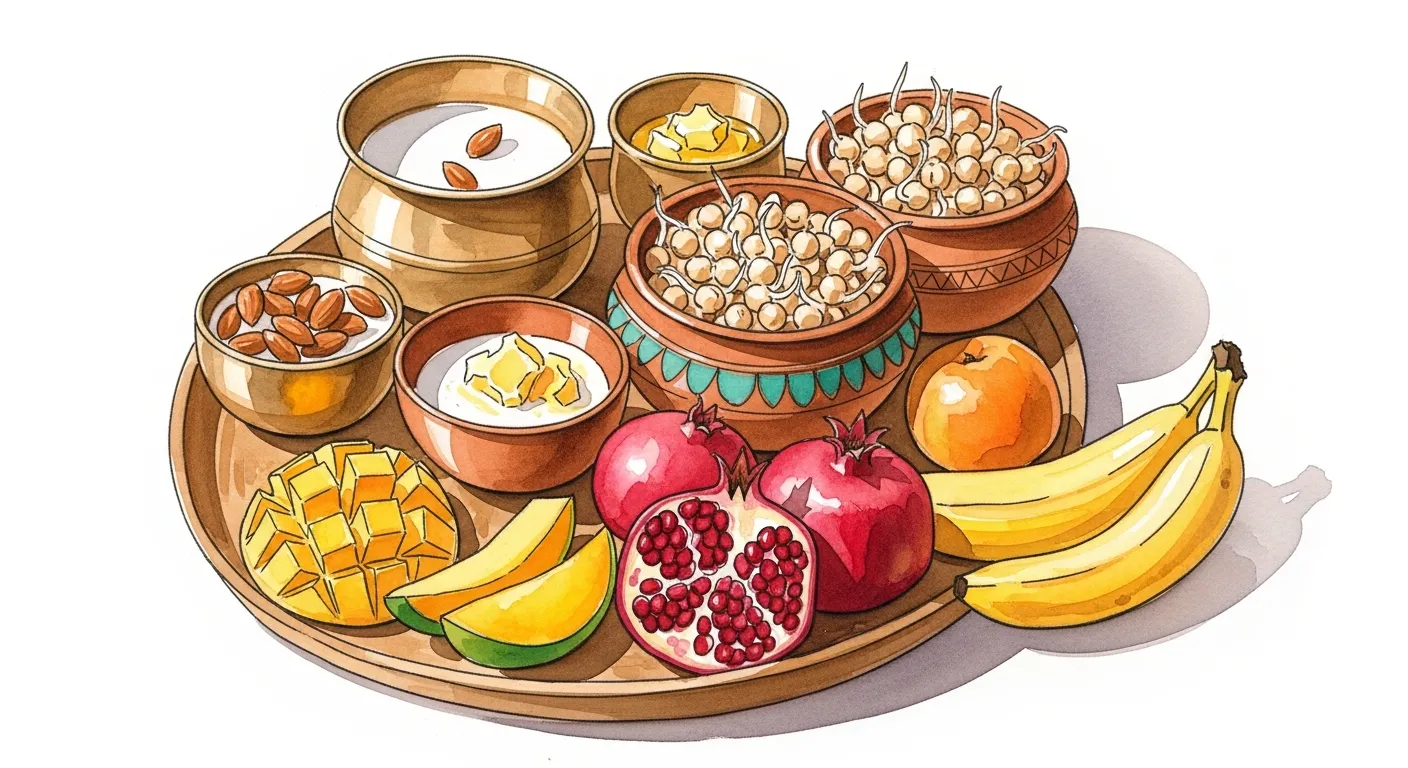
According to his grandson Nasir Bholu, who documented it: 15 litres of milk. 9 kilograms of almonds. 3 kilograms of butter. Mutton. Three baskets of fruit. Every day. Not as a challenge or a feat or a stunt. As maintenance. As simply what the body required to do what it did.
Bruce Lee studied Gama's training methods and incorporated them into his own practice. The dand, the Indian pushup, a fluid movement between a downward dog and a cobra, appears in Lee's notebooks. The man who the world considers the pinnacle of physical human development looked at Gama's methods and said: I want that.
The Prince of Wales visited India and honoured Gama personally. The Maharajas competed to be his patron. In 1947, when Partition turned the streets of Lahore into violence, Gama, a Muslim, stood with his wrestlers at the entrance of the Hindu community on Mohni Road. He held the mobs back physically. He gave the families food for a week. He walked them to the border himself.
A man who could eat 15 litres of milk a day could also carry an entire community to safety on his back.
The diet these men followed had a name and a philosophy.
Khurak, from the Persian khorak-e pahlavani, the wrestler's diet. Built not on calorie counting or macros but on a framework that predates the gym by several thousand years. The Samkhya school of Hindu philosophy divides all things, food, activity, thought, into three qualities. Sattva: calm, pure, building. Rajas: passionate, activating, burning. Tamas: dull, heavy, dragging down. Wrestling is inherently rajasic, hot, aggressive, competitive. The pehelwaan diet was designed to counterbalance this with sattvic food. Cool the fire. Build the foundation.
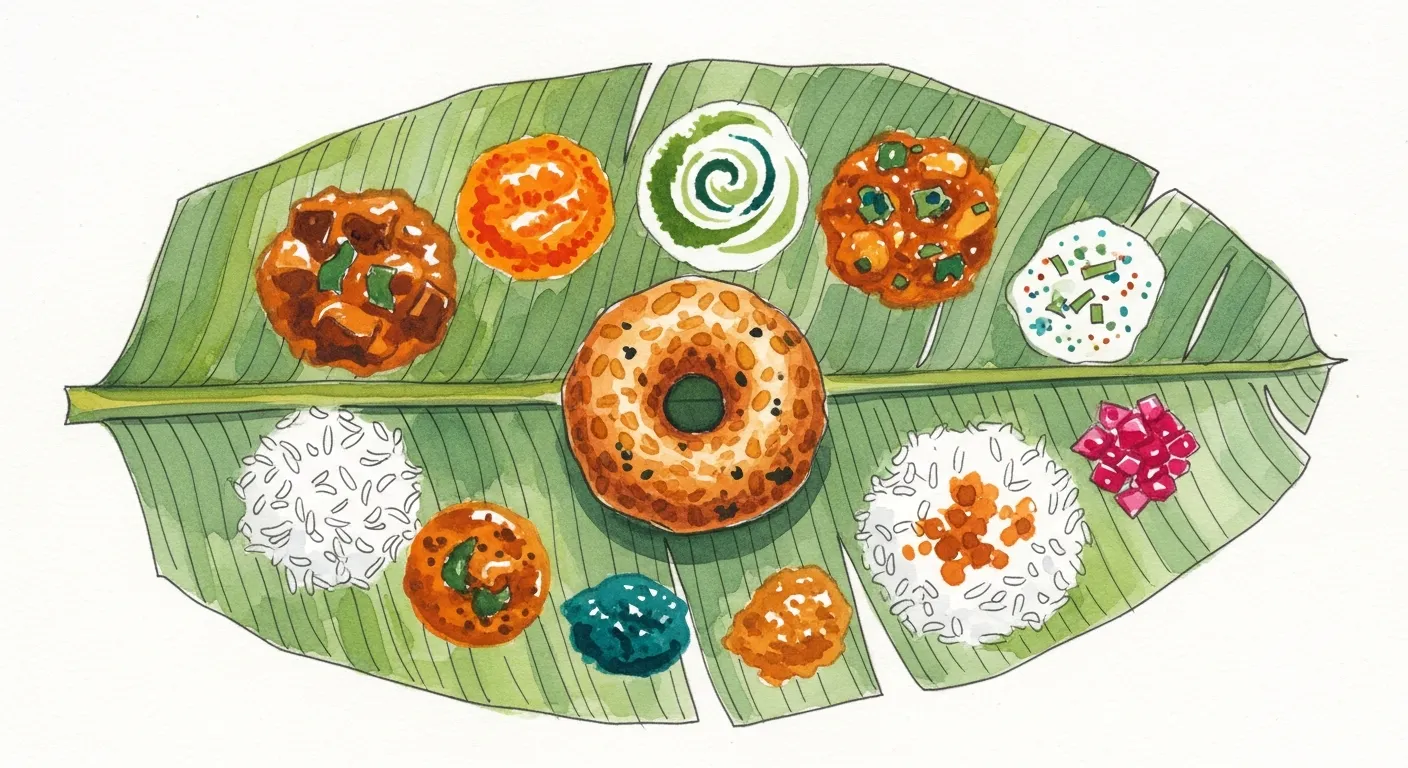
The holy trinity of the khurak: milk, ghee, almonds. To these, add sprouted chickpeas seasoned with salt, pepper and lime, the wrestling community's version of a snack, eaten from a clay bowl at dawn. Seasonal fruit. No oil, no fried food, no alcohol, no chaat, no achar, nothing sour. The akhara was also celibate, the reasoning being that the body's vital energy, once conserved, could be redirected entirely into training.
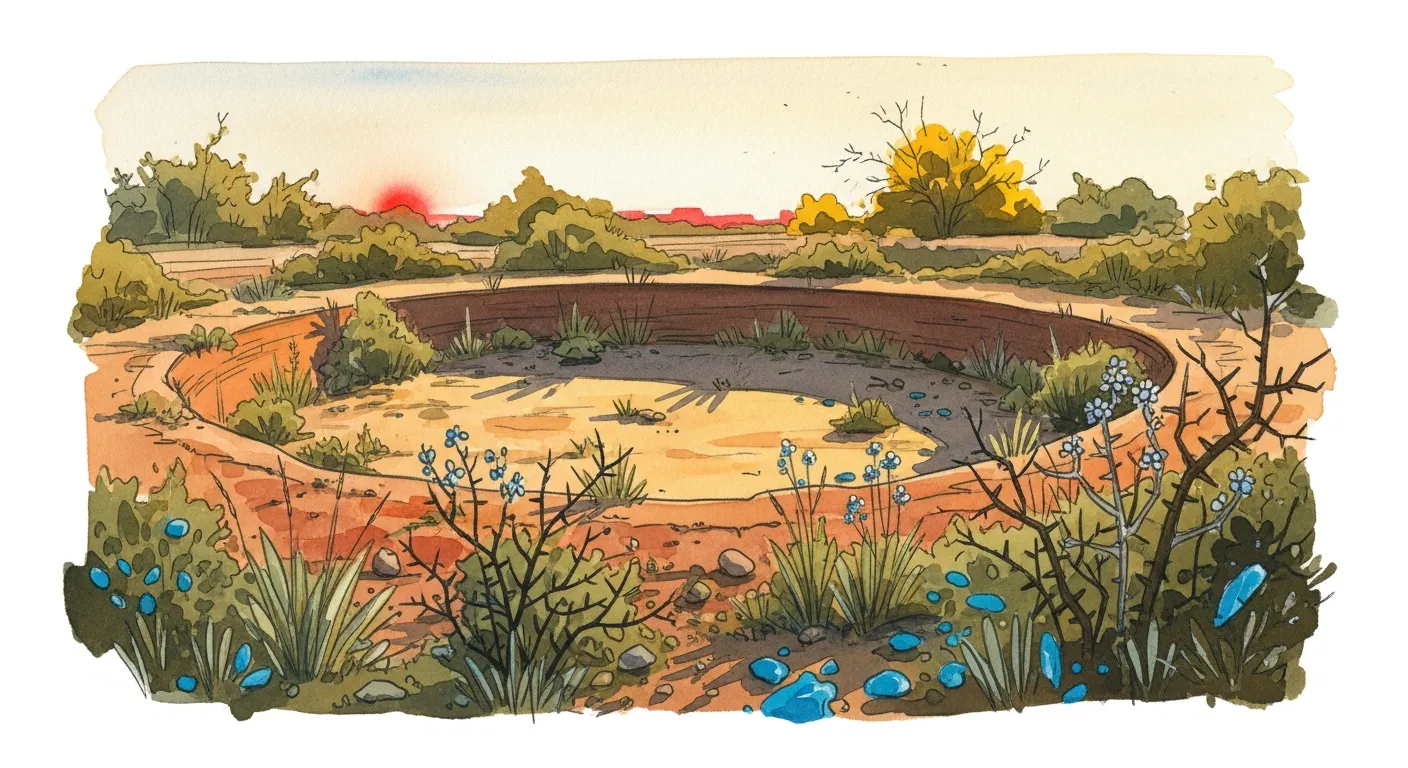
They woke at 3am. They slept by 9pm. They worshipped Hanuman, the great wrestler of mythology, the one who carried a mountain in one hand, at the temple inside every akhara before training began. The mud of the wrestling pit was mixed with oil, ghee, and buttermilk, softened and sanctified, ploughed and worshipped each morning before anyone set foot in it.
This is not sport. This is a civilisation.
And it is dying.
The akhara that existed on every corner of every North Indian city, Varanasi, Delhi, Kolhapur, Amritsar, is down to a fraction. States that had five hundred skilled wrestlers in the 1930s now struggle to sustain forty akharas. The young men who would have been pehelwaans are working sales jobs, going to gyms with mirrors and motivational quotes on the walls, drinking protein powder in flavours called Double Rich Chocolate and Caribbean Punch.
The mud pits have become mat courts. The baithak has become the squat rack. The ghee has become MCT oil. The almond paste tonic has become a pre-workout with seventeen ingredients and a warning label.
Everything the khurak knew, the relationship between food and training, between what you eat and who you are, between the body's fire and what you feed it to keep it steady, is now being reverse-engineered by nutritional science and sold back to us at a premium. Magnesium. Healthy fats. Fermented dairy. Whole foods. No processed sugar. Protein timing. The wellness industry has discovered the akhara diet and repackaged it in a matte-finish bottle.
The pehelwaan didn't need a label. He needed a whole goat.
There is one more thing about Gama worth saying.
He died in 1960 in Lahore. He died poor. The land the government gave him was not enough. He could not make ends meet in old age. GD Birla, the Indian industrialist, sent him 2,000 rupees every month when he heard about this, a Hindu businessman quietly caring for a Muslim wrestler who had saved Hindu lives during Partition. The Pakistani government also increased his pension when the situation became known.
The greatest wrestler in the history of the subcontinent died at 82, having never been defeated, having saved lives with his bare hands, having eaten quantities of food that seem physically impossible and are absolutely true.
There is no supplement for that. There is no akhara anymore that produces that.
There is only the record, and the goat story, and the image of a 5-foot-7 man lying a Polish champion flat on his back and holding him there for two and a half hours while the crowd waited to see what would happen.
Nothing happened. Gama was simply not moveable.
Field Notes
Quick referenceMilk (10-15 litres), almonds (ground paste), ghee (3 kg at extreme), sprouted chickpeas with salt-pepper-lime. No oil, no fried food, no alcohol, no sour foods.
Over 5,000 bouts. Zero losses. Career 1888-1952. World Heavyweight Champion, London 1910. Never defeated by anyone.
Chinchechi Talim, Pune (est. 1783). Tulsi Akhara, Varanasi. Guru Hanuman Akhara, Delhi. Not tourist attractions. Last rooms where this knowledge lives.
5,000 baithaks, 3,000 dands, wrestling with forty men, swimming, massage. Before noon. Every day. The food was fuel for an engine at full capacity.
Aslam Pehelwaan. Born 1927. Student of Gama. Commonwealth Champion 1953. World No. 9, Wrestling Revue 1968. One entire goat. Per meal.
Get the next story first
Join the Bhukkads. Free, no spam, just stories.
Takes 30 seconds.