The Dairy That Refused to Add Preservatives
A 108-year-old shop on Princess Street. A regulator finally counting milk vendors. And a kilo of mawa that costs what it costs because someone, somewhere, is still doing the arithmetic by hand.
Generated by Imagen 4
In 1916, the British were running a war in Europe and a country in Asia, and neither was going particularly well. Bombay was a city of plague survivors and cotton money. The Parsis, having arrived from Persia somewhere between the 8th and 10th centuries to escape the Arab conquest, had spent eight hundred years becoming the most reliable middle class in the subcontinent. They built shipyards. They built schools. They built one of the first stock exchanges in Asia. And in 1916, on a lane off Princess Street in Kalbadevi, three brothers from the Kurla suburb opened a small shop that sold milk.
The shop is still there. The brothers are not. The milk is.
This is not a story about nostalgia. This is a story about what happens when a regulator, a hundred and ten years later, finally writes a rule that asks every dairy in India to prove what it has been doing.
THE LANE BEFORE THE LICENCE
Princess Street is a Bombay invention. It was carved through the dense Kalbadevi grid in 1905, named after Princess Mary, widened to let trams through, and lined with the kind of buildings that the city is now too tired to maintain and too sentimental to demolish. The street runs from Marine Lines towards Kalbadevi Road, and somewhere along its middle, behind a modest signboard in green and white, Parsi Dairy Farm has been operating since 1916.
The shop did not begin on Princess Street. It began as a small dairy in Kurla, run by Nanabhoy Ranji and his brothers, who were buying milk from buffaloes and selling it to a city that drank tea like it was oxygen. By the 1920s, the operation had moved to Princess Street and the family had figured out something the rest of Bombay had not yet bothered to figure out. If you do not add preservatives to milk, you have to sell it the same day you make it. Which means you have to know exactly how much you will sell. Which means you have to know your customer by face, by household, by the size of their family.
A hundred and eight years later, the fourth generation of the family is running the shop, and the rule is still the same. No preservatives. Same-day production. The mawa made in the morning is gone by evening or it is thrown away.
THE PRODUCT THAT EXPLAINS THE BUSINESS
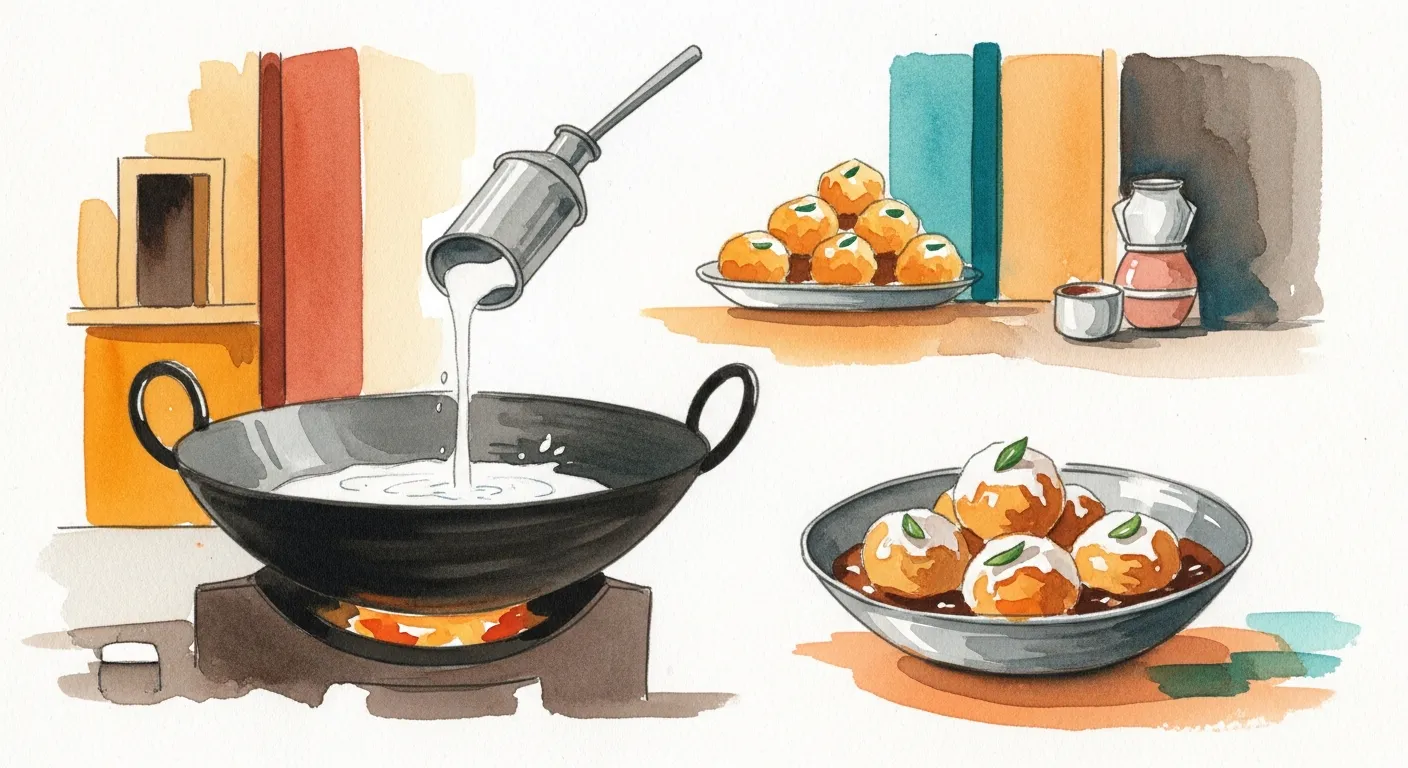
Nobody talks about mawa. Everybody eats it. Mawa is what happens when you reduce milk in a wide iron kadai over low heat for three to four hours, stirring continuously, until roughly 80 percent of the water has evaporated and what remains is a dense, fat-rich solid that is the structural foundation of about 70 percent of Indian sweets. Pedha is mawa. Barfi is mawa. Gulab jamun is mawa. Kalakand, malai peda, milk cake, the entire wedding sweet economy of North and West India, all mawa.
Fifteen litres of milk make roughly three kilograms of mawa. The arithmetic has not changed since the Mughals.
What has changed is the price of the fifteen litres. In June 2024, Amul and Mother Dairy raised liquid milk prices by 2 rupees a litre, and Bikanervala, the Delhi sweet giant, announced it would absorb the increase rather than pass it on. For a chain that buys milk in tankers, 2 rupees a litre is a board-meeting decision. For a shop on Princess Street that sources its buffalo milk from a network of cooperative farms outside the city, 2 rupees a litre is the difference between a kilo of pedha at one price and a kilo of pedha at another.
The shop has held its prices for years at a time, then moved them in steps that the regulars notice.
THE REGULATOR FINALLY SHOWS UP
For most of the twentieth century, the Indian dairy supply chain was a ghost economy. Buffalo owners sold to local collectors. Collectors sold to halwais. Halwais sold to you. Nobody was registered. Nobody was inspected. Nobody knew, with any precision, how much milk was in circulation versus how much was being adulterated with starch, urea, detergent, or worse.
In March 2026, FSSAI mandated that all independent milk producers and vendors obtain registration or a licence, framing it as a traceability measure. The intention is good. The consequence, for a shop like Parsi Dairy Farm, is paperwork that costs less than the compliance, and compliance that costs more than the paperwork.
A shop that has spent a century not adding preservatives, not buying powdered milk, not adulterating ghee with vanaspati, suddenly has to prove all of this on a form. The form is not the problem. The audits are not the problem. The problem is that the small, unregistered competitor down the road, who is selling pedha at half the price made from milk powder reconstituted with palm oil, is now also filling out the same form. The regulation flattens the difference between the people who were always doing it right and the people who are now learning to look like they do.
The enforcement, when it comes, is real. FSSAI imposed a 1 lakh rupee penalty on Heritage Foods for product quality non-compliance, a signal to the larger industry that even the listed players will be checked. The smaller you are, the harder a 1 lakh rupee penalty hits.
THE FOURTH GENERATION
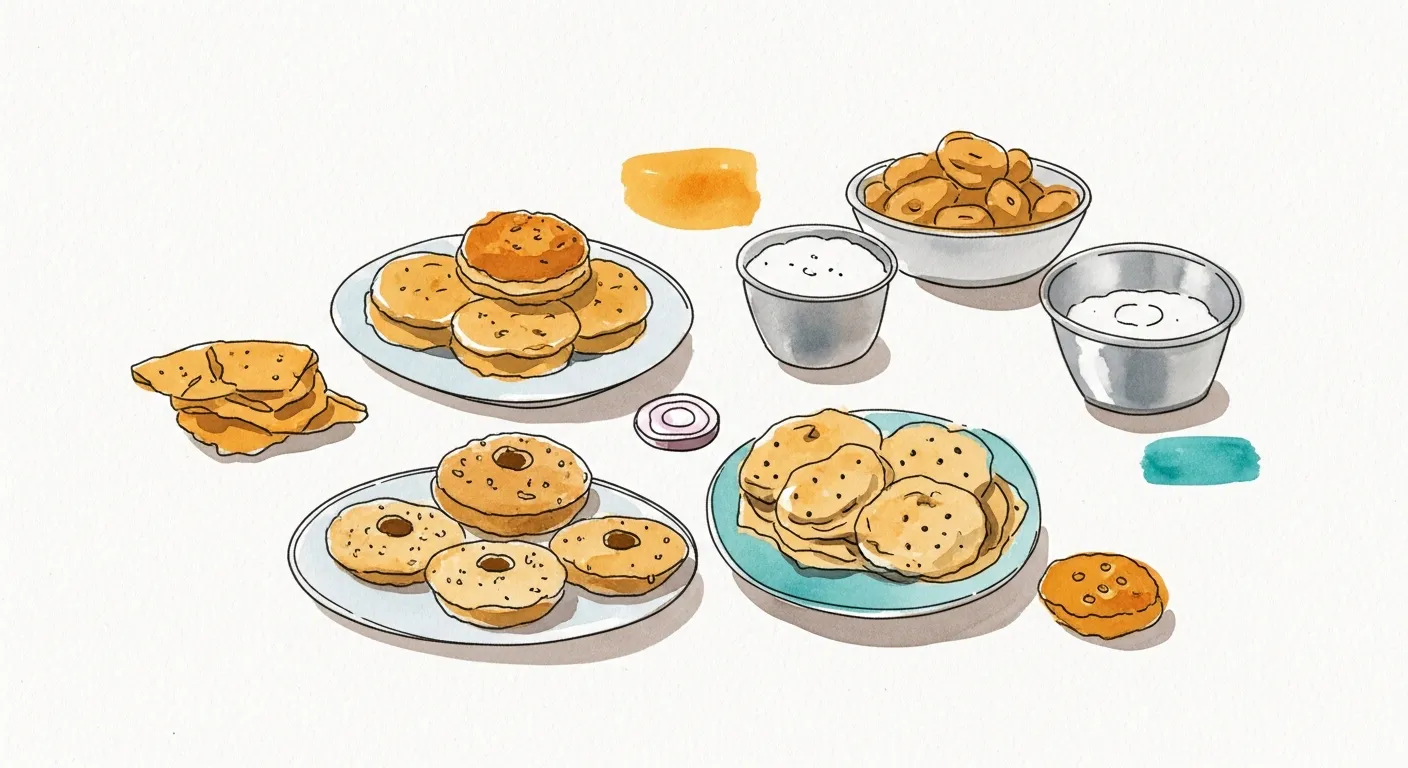
The shop is now run by the fourth generation of the founding family, and the renovation completed in 2024 was the first major refresh in decades. The interior is brighter. The display cases are new. The recipes are unchanged.
This is the part that the spreadsheet does not capture. Every generation that has run this shop has had the option to scale. To open branches. To franchise. To start selling pre-packaged paneer in a tetra carton at every supermarket in the western suburbs. Every generation has chosen not to. The reasoning, repeated across four generations and a hundred and eight years, is the same. The moment you scale mawa beyond what one kadai and one stirrer can handle, you stop making mawa. You start making something that looks like mawa.
Scale is the enemy of the recipe, and the recipe is the entire business.
THE PEDHA ARITHMETIC
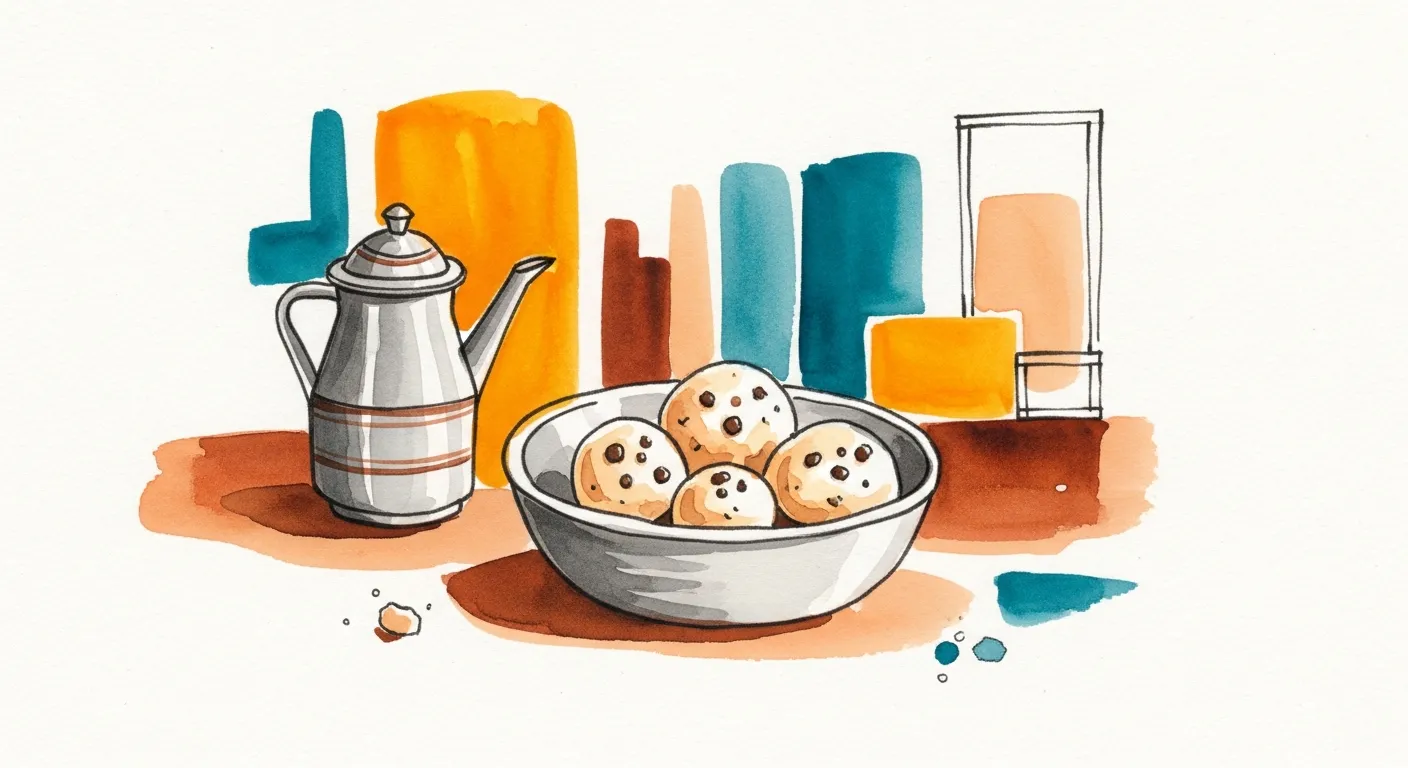
A kilo of malai pedha at Parsi Dairy Farm sits at a number that regulars will recognise and outsiders will find steep. The arithmetic, walked backwards, makes sense. Five litres of buffalo milk for a kilo of finished pedha. Buffalo milk at roughly 70 to 80 rupees a litre when bought in cooperative volume, more when sourced from specific farms. Cardamom from Kerala. Sugar. Saffron, sometimes. Three to four hours of one person's labour, on one stove, for one batch.
The shop's margin is the part that the customer does not see. It is thinner than a Bandra cafe selling 600 rupee filter coffee. It is thinner than the wholesaler in the same lane. The price is high because the cost is high, not because the brand is.
The FSSAI compliance adds another layer. Lab testing of milk samples. Documentation of supplier chains. Cold chain validation for transport. Registration fees. Annual renewals, until the 2026 amendments moved licensing towards a perpetual model. For a shop running on this margin, every new line item is a conversation about whether the price moves up by 20 rupees a kilo or 50.
THE COMMUNITIES THAT KEPT IT GOING
The Parsi community in Bombay numbered roughly 110,000 in the 1940s. Today it sits at around 40,000 in the city. The customer base for a shop named Parsi Dairy Farm has, on paper, shrunk by more than half. The shop is busier than it has ever been.
The explanation is simple. The clientele is not Parsi. It has not been Parsi for a long time. The shop sells to Gujarati families ordering for weddings, to Marwari households stocking up for Diwali, to Bohra customers who know exactly which mithai will hold for the drive to Bhendi Bazaar, to film crews ordering boxes for sets, to office assistants buying small packs for their bosses' tea trays. The Parsi name is the signature. The customer is the city.
Which is the part the new regulation does not threaten and the new prices do not erode. A shop that has survived two world wars, Partition, the textile strike, demonetisation, the pandemic, and the rise of cloud kitchens is not going to be undone by a registration form. It will adapt. It will absorb the 2 rupees a litre. It will pass on what it cannot absorb. It will continue to make mawa in the morning that is gone by evening.
THE LAST KADAI ON THE LANE
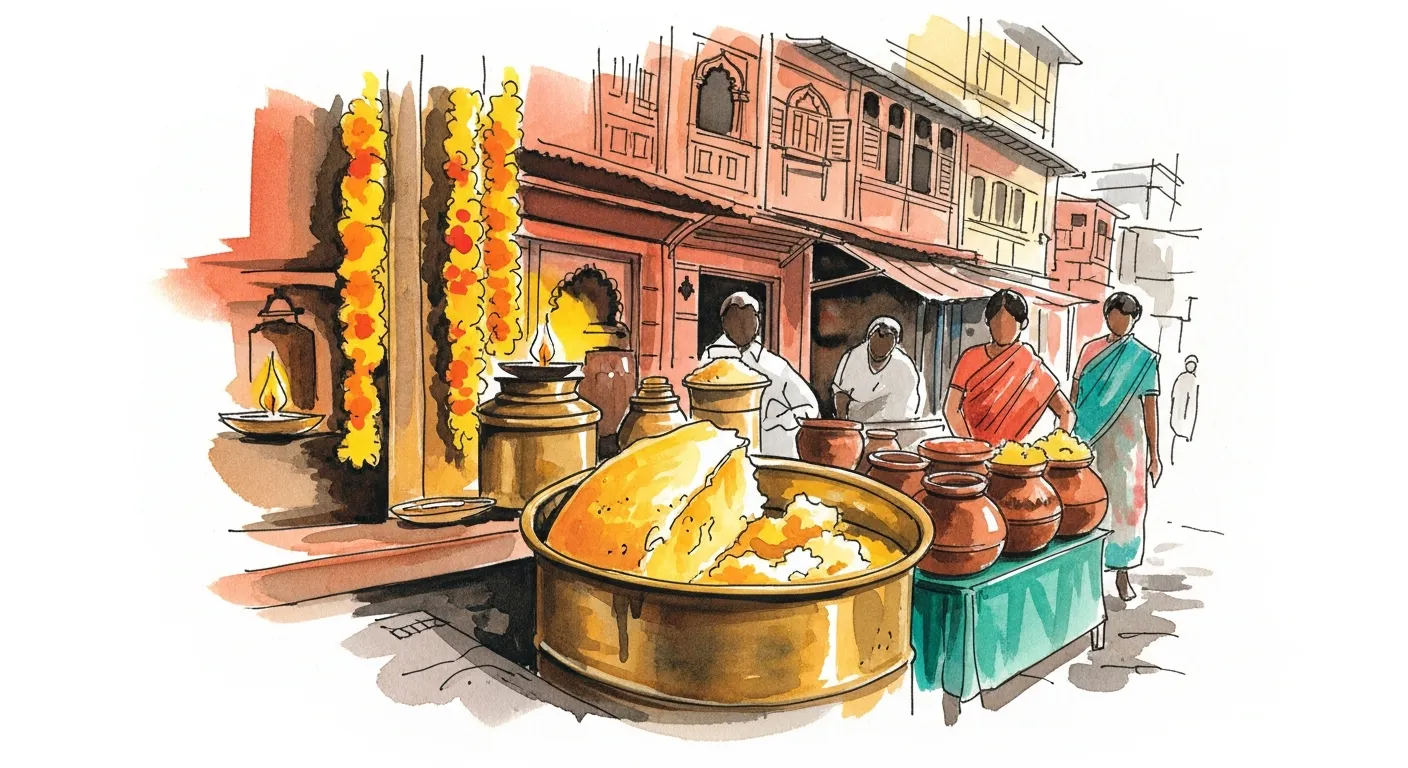
Walk past the shop on a Saturday afternoon. The line is at the door. The boxes are being tied with string, not sealed with stickers. The pedha is warm. The man behind the counter knows three of the people in the queue by name and the order before they say it.
This is the entire business model. Not a chain. Not a brand. A lane, a kadai, a recipe, and one more generation that has decided not to add preservatives.
A hundred and eight years in, the milk is still made the same day it is sold.
Field Notes
Quick referenceFifteen litres of milk make three kilograms of mawa. The arithmetic has not changed since the Mughals.
FSSAI imposed a 1 lakh rupee penalty on Heritage Foods. The smaller you are, the harder it hits.
The Parsi community in Bombay: 110,000 in the 1940s. Around 40,000 today. The shop is busier than ever.
Three to four hours of one person's labour, on one stove, for one batch. No preservatives means same-day sale or it gets thrown away.
Princess Street was carved through the Kalbadevi grid in 1905, named after Princess Mary, widened for trams.
Get the next story first
Join the Bhukkads. Free, no spam, just stories.
Takes 30 seconds.