India's Biggest Cashew Secret Is in Odisha
You know Goa cashews. You've heard of Kerala cashews. Nobody talks about Chhatrapur.
You know Goa cashews. You've heard of Kerala cashews. You've eaten Maharashtra cashews at every wedding buffet in your life. Nobody talks about Odisha.
Specifically, nobody talks about Chhatrapur.
Which is strange. Because Odisha has the largest area under cashew cultivation in the entire country - 2.23 lakh hectares. Ahead of Andhra Pradesh. Ahead of Maharashtra. And the beating heart of all that cultivation is Ganjam district. Headquarters: Chhatrapur.
THE PORTUGUESE ACCIDENT
Cashew is native to eastern Brazil. The Portuguese introduced it to India nearly five centuries ago. First stop: Goa. Original purpose: not food. They planted it to stop coastal soil from washing into the sea. A soil binder. That's all it was meant to be.
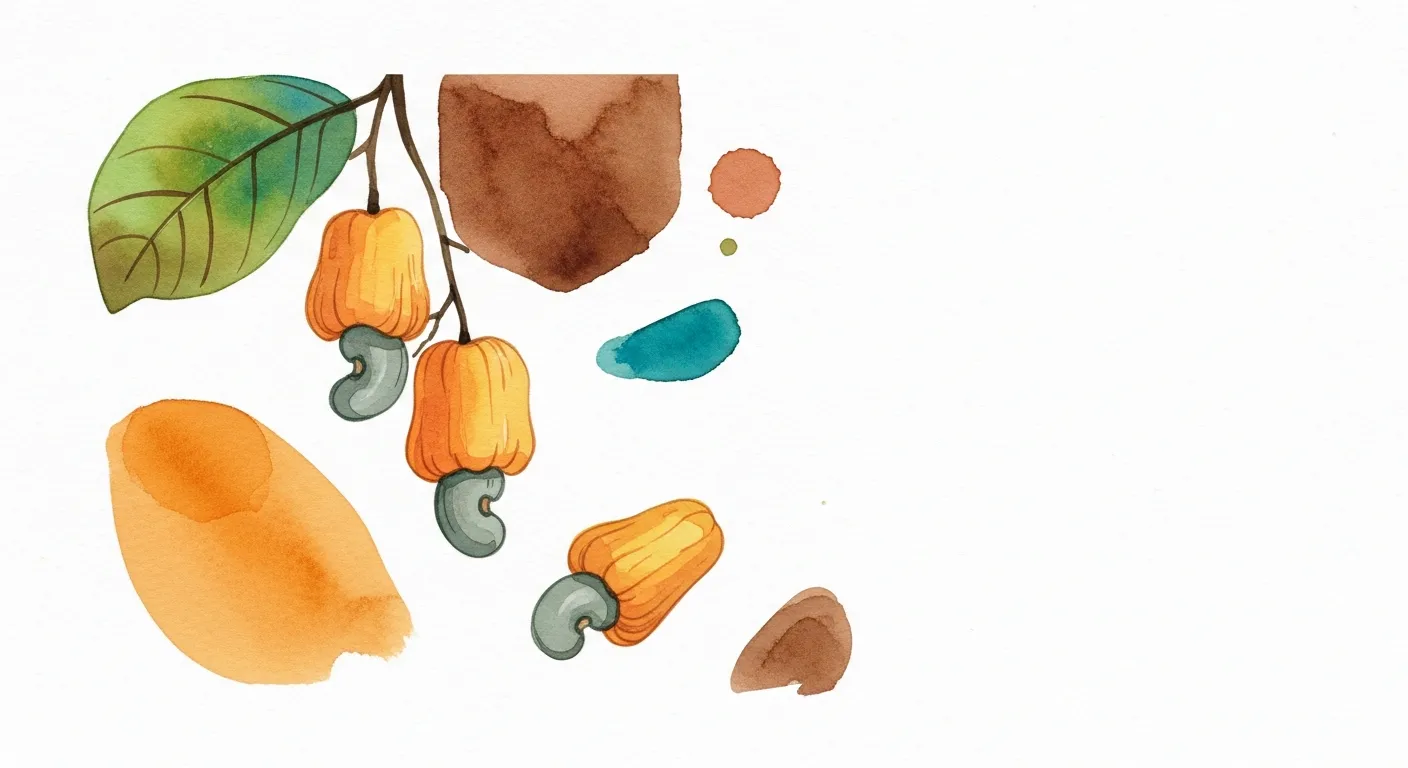
Then the elephants got involved.
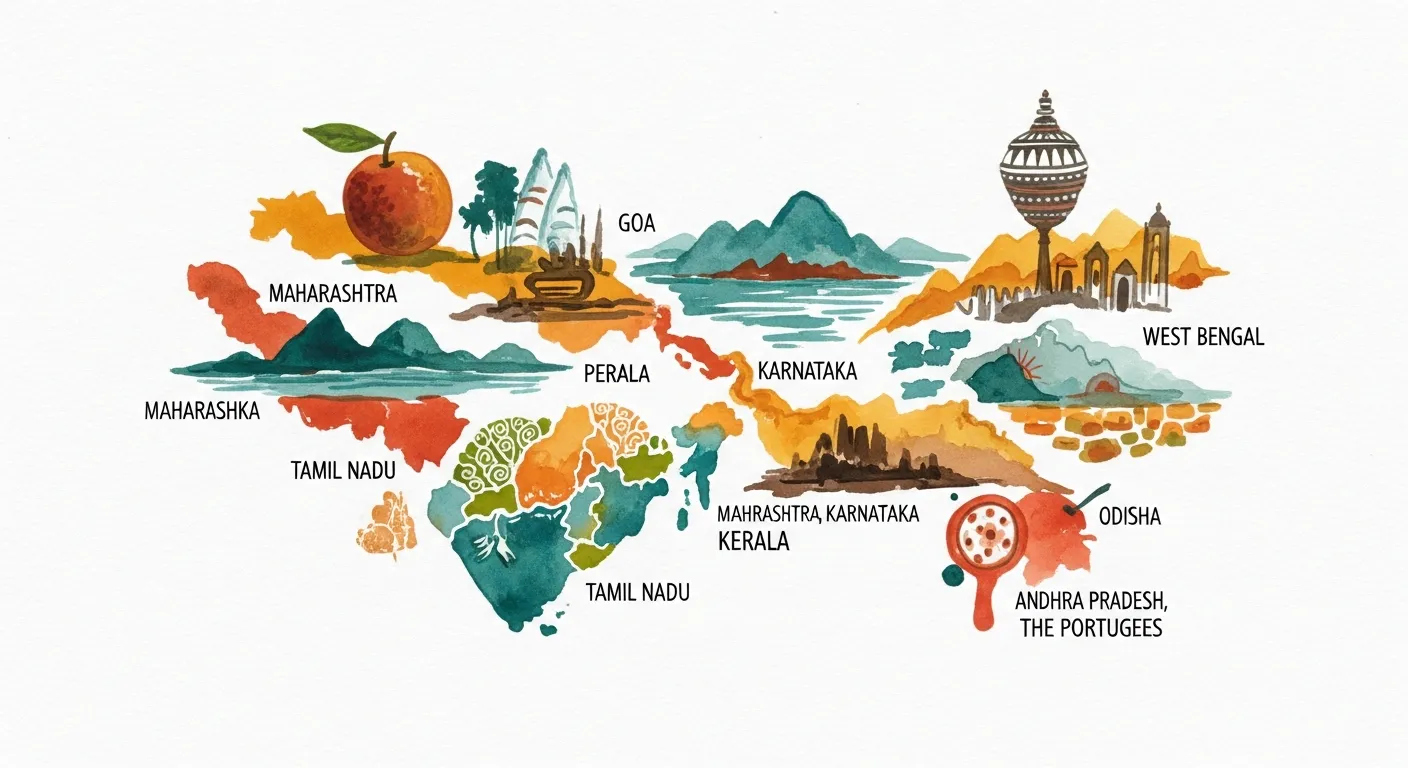
They ate the fruit, walked hundreds of kilometres, and deposited seeds across the entire peninsula. Maharashtra, Goa, Karnataka, Kerala, Tamil Nadu, Andhra Pradesh, Odisha, West Bengal. The Portuguese planted one tree in Goa. The elephants planted a continent.
Commercial exploitation didn't begin until the early 1960s. Four hundred years of cashew trees growing along the Indian coast, and nobody thought to build a business around it until Nehru's India was already a decade old.
Chhatrapur was paying attention.
THE NUMBERS
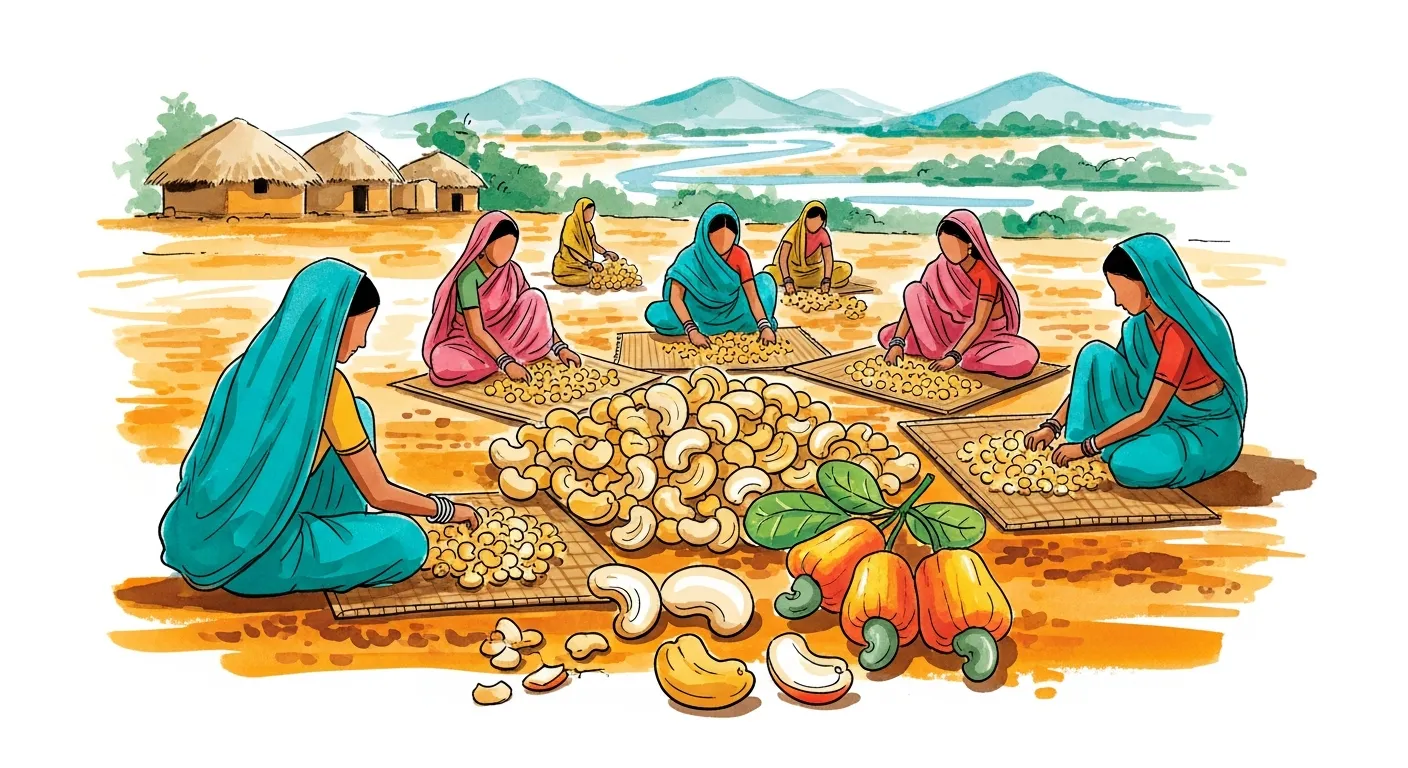
More than 76 cashew processing units operate in the district. Total production: 5,000 MT of cashew kernels. Turnover: ₹100 crore. Employment: 7,200 people. The majority of those 7,200 people are women.
There's a cluster called the Sri Jagannath Cashew Cluster, established in 2007, operating out of Sabulia, Rambha. Multiple small processors under one quality and marketing umbrella, designed specifically to compete with the mechanised giants of Vietnam.
It hasn't fully worked. But it hasn't failed either.
THE THING NOBODY TELLS YOU
The cashew nut is not a nut. It's a seed that grows outside the fruit. A kidney-shaped true seed that develops externally at the end of the cashew apple, enclosed within a hard shell containing a caustic phenolic liquid. That liquid is anacardic acid, chemically related to the toxin in poison ivy. It will blister your skin.
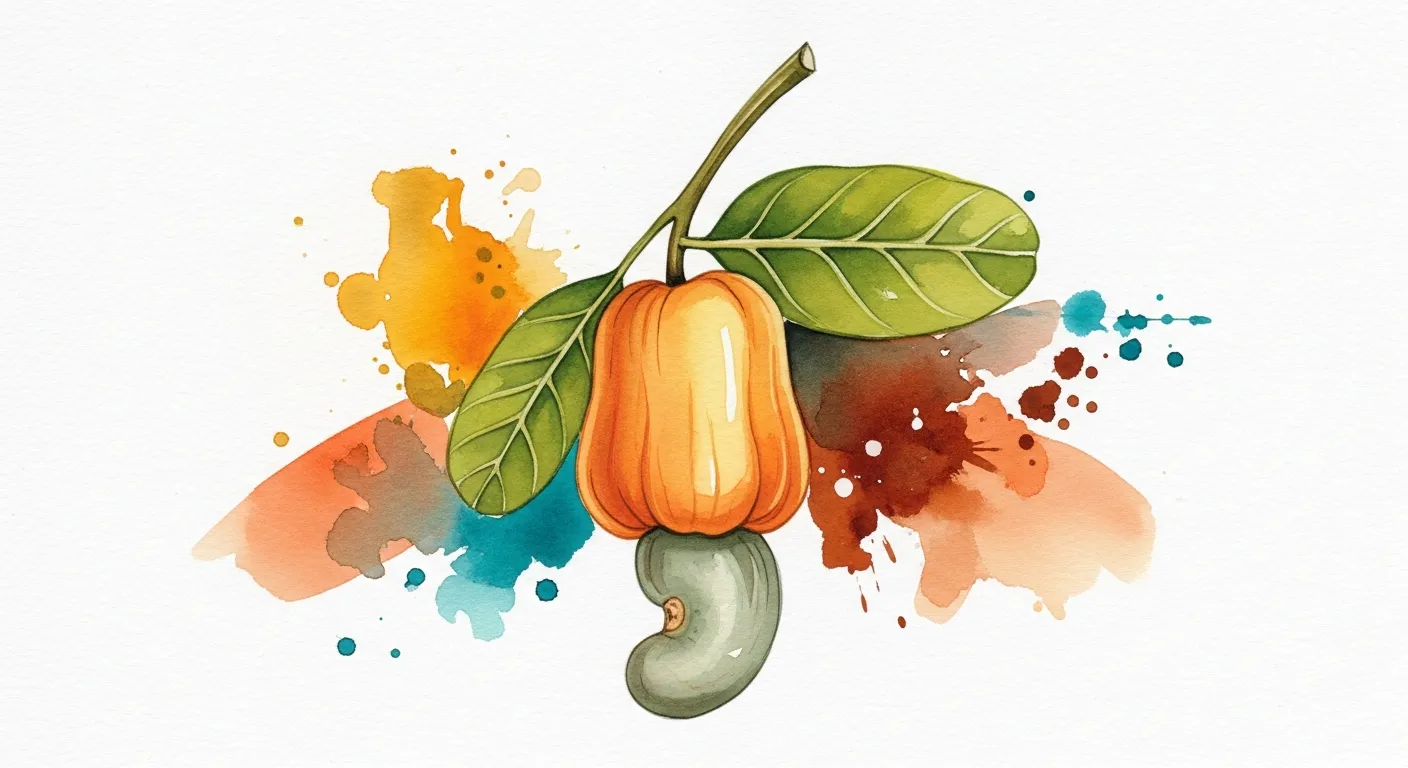
This is why every cashew you've ever eaten has been cooked twice - once to neutralise the shell liquid, once to remove the inner skin.
Machines exist to shell cashews, but given that shells vary in size and shape, there is no "one-blade-fits-all." Machines produce broken kernels or kernels contaminated with shell liquid. Manual processing is typically favoured.
A woman in Chhatrapur shells cashews by hand. With a wooden mallet and a curved blade. She knows by touch which nut will crack clean and which will shatter.
That knowledge isn't in any machine.
The shell liquid she extracts - CNSL, Cashew Nut Shell Liquid - is rich in phenolic compounds and extensively used in paint, varnish, brake lining, and resin industries. The waste product of making your bar snack is an industrial raw material that goes into the brake pads of Indian automobiles.
Nothing is wasted. Not even the poison.
ONE LAST THING
The name "cashew" comes from the Portuguese "caju," which comes from the Tupi word "acaju" - meaning "nut that produces itself." The scientific name Anacardium means "upward heart," because if you look at the cashew apple with the nut hanging below it, it looks exactly like a human heart with the aorta pointing down.
The nut that produces itself. Sitting at the end of a false fruit. Poisonous until cooked. Planted for erosion control. Spread by elephants. Harvested by hand.
The shell becomes brake pads. The apple becomes feni. And the town where most of India's cashew land sits, next to a lagoon, at the end of an Odisha coastline that tourists skip entirely, is a place you've never heard of called Chhatrapur.
Now you have.
Field Notes
Quick referenceChhatrapur, Ganjam district - India's largest cashew cultivation area
₹100 crore turnover, 7,200 workers, mostly women
Hand-shelled with wooden mallet and curved blade
Portuguese planted for soil control, elephants spread across India
Get the next story first
Join the Bhukkads. Free, no spam, just stories.
Takes 30 seconds.