The Drink That Saved India Every Summer
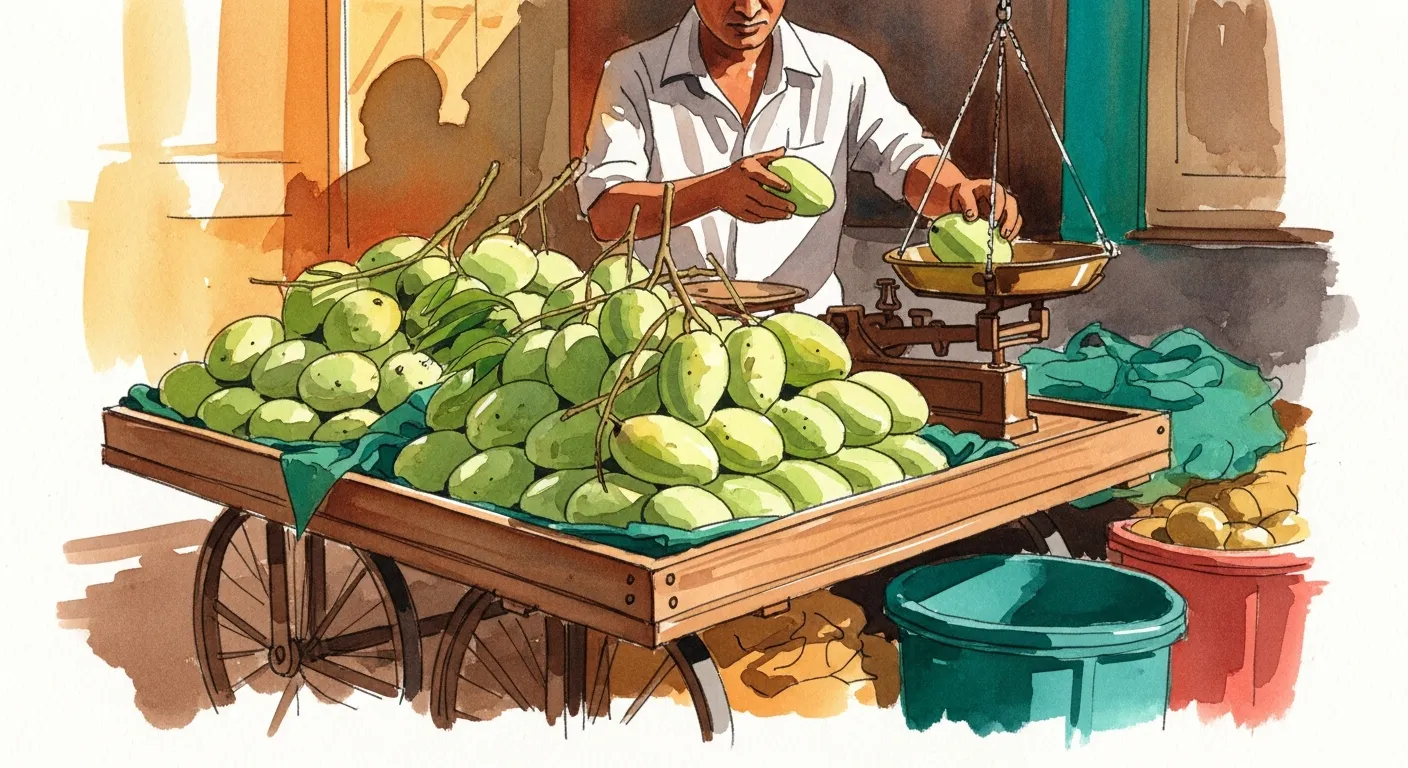
Aam panna predates the Mughals, the British, and possibly the mango-eating habits of everyone reading this. It is the oldest functional beverage in Indian food history. And it is available at your sabziwala right now for Rs 20.
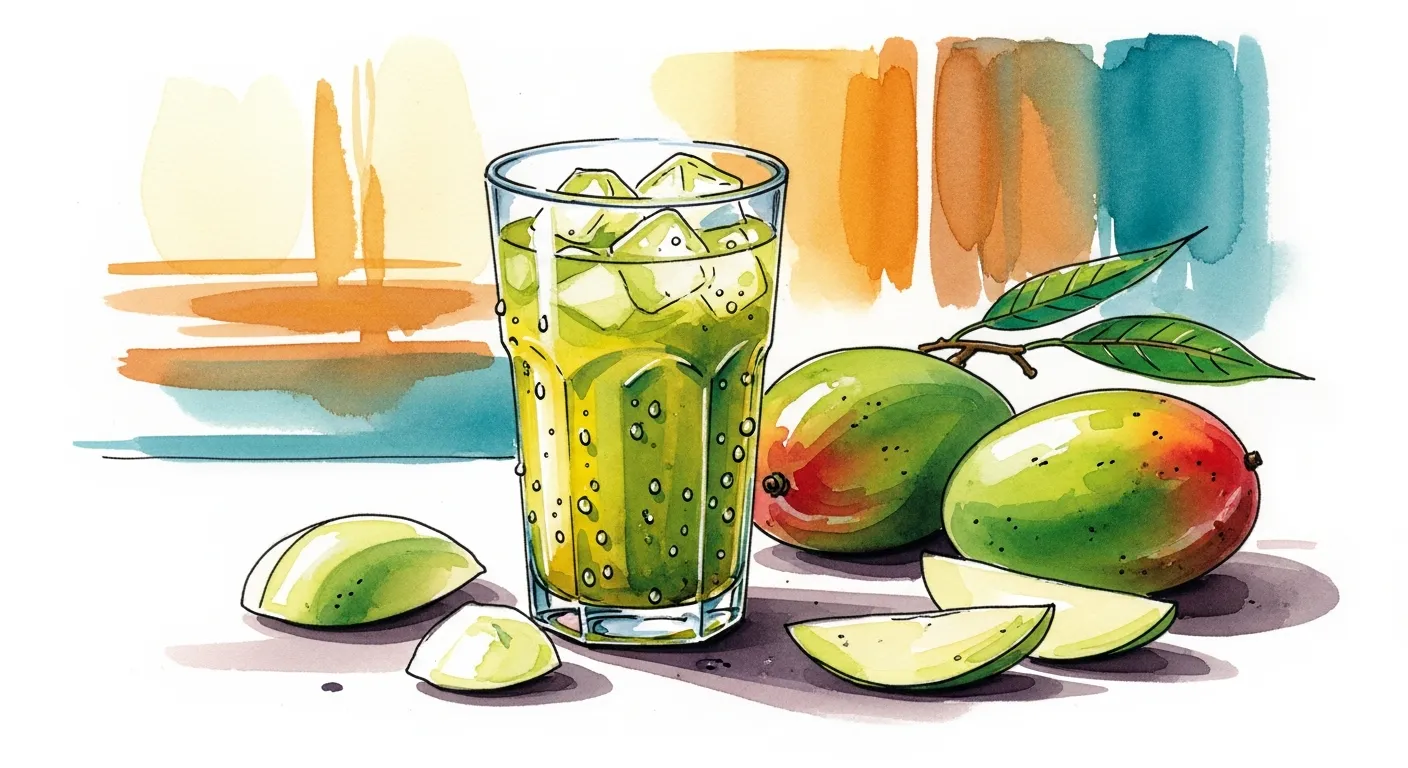
Watercolor illustration
The raw mango appears in Indian markets in March. By May it is everywhere, piled on every cart, hanging from every branch, green and sour and hard and absolutely not ready to eat as a fruit. This is the point. The raw mango is not a failed ripe mango. It is a different ingredient entirely, and for four thousand years, India has known exactly what to do with it.
According to food historian Pushpesh Pant, aam panna predates the arrival of the Mughals in India. He says: "We find mention of aam panna in ancient Ayurvedic literature as well as in the writings of Kalidasa, which was long before the Mughals came to India. Panna is derived from the Sanskrit word paaniya which translates to something one drinks."
Kalidasa. The playwright. The poet. The man who wrote Abhijnanashakuntalam in roughly the 4th or 5th century CE. He was writing about aam panna. That is the company this drink keeps.
Aam panna quenches thirst and prevents the excessive loss of sodium chloride and iron during summer due to excessive sweating. It is regarded in Indian culture as a tonic believed to increase resistance against tuberculosis, anaemia, cholera and dysentery. This is not wellness-brand copy. This is documented Ayurvedic medicine. The spices, roasted cumin, black salt, black pepper, are not there for flavour alone. They are there because the Indian subcontinent figured out electrolyte replacement centuries before anyone named electrolytes.
The Mughal chapter
When the Mughals arrived in the 16th century, they did not invent aam panna. They inherited it and elevated it. Mughal royal kitchens elevated aam panna through innovations in royal feasts, fusing the traditional Indian raw mango base with spices like roasted cumin, black pepper, and mint, drawn from Central Asian and Persian culinary influences.
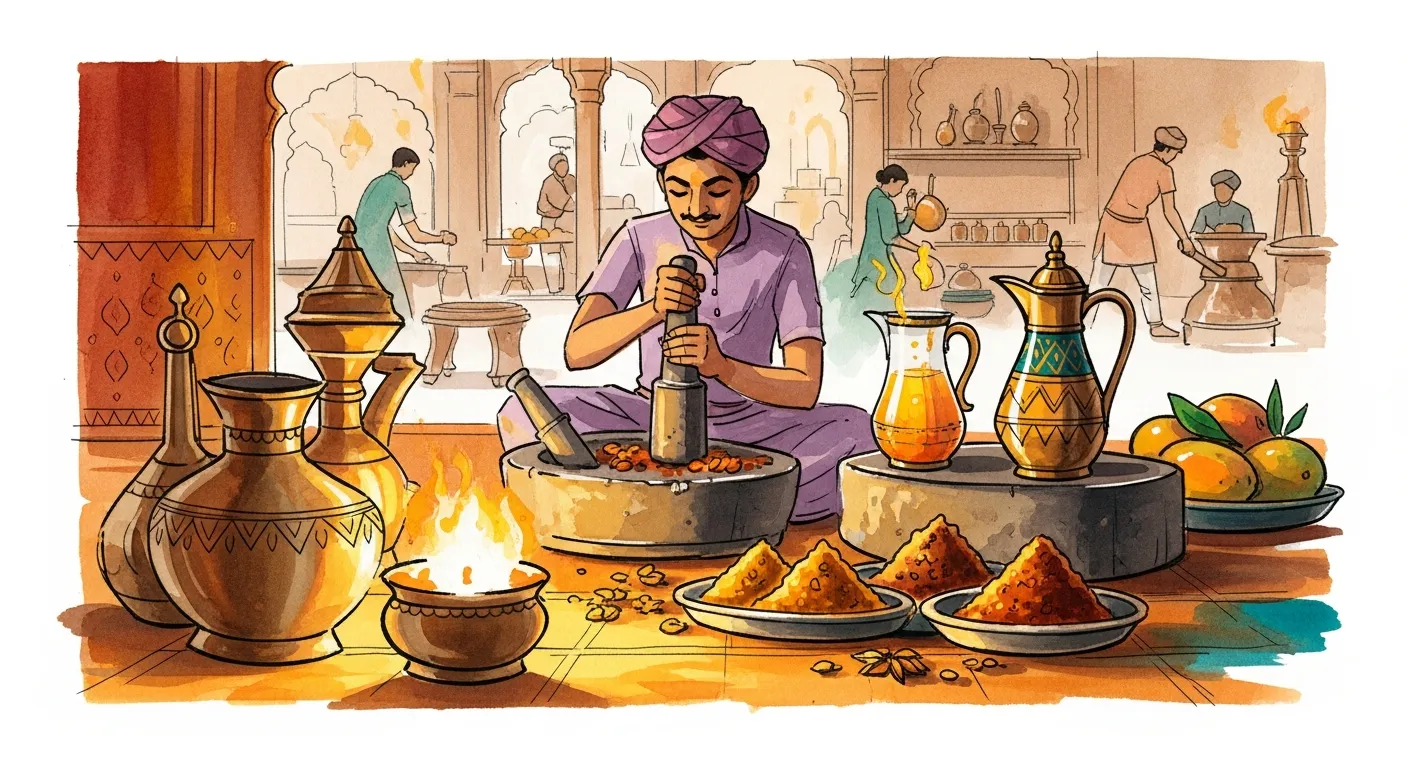
Legends claim that Babur, the founder of the Mughal Empire, developed a fondness for raw mango preparations after being introduced to them by local rulers, leading to adaptations in his kitchens that blended indigenous methods with Persian flavours.
A Central Asian emperor, accustomed to the fruits of Samarkand and Kabul, encountered the raw mango of India and was undone by it.
The drink that was already ancient became imperial. The spices got more specific. The preparation got more precise. The mango, sour, green, full of acids, remained exactly what it had always been.
The science, briefly
Unripe mango is sour in taste because of the presence of oxalic, citric and malic acids. Unripe mango is a rich source of pectin, which gradually diminishes after the formation of the stone.
The raw mango is not just unripe. It is chemically distinct from the ripe fruit, a different acid profile, a different pectin concentration, a different relationship with the human body in summer heat. The heat-resistant properties of green mangoes prevent the body from getting heatstroke in summer.
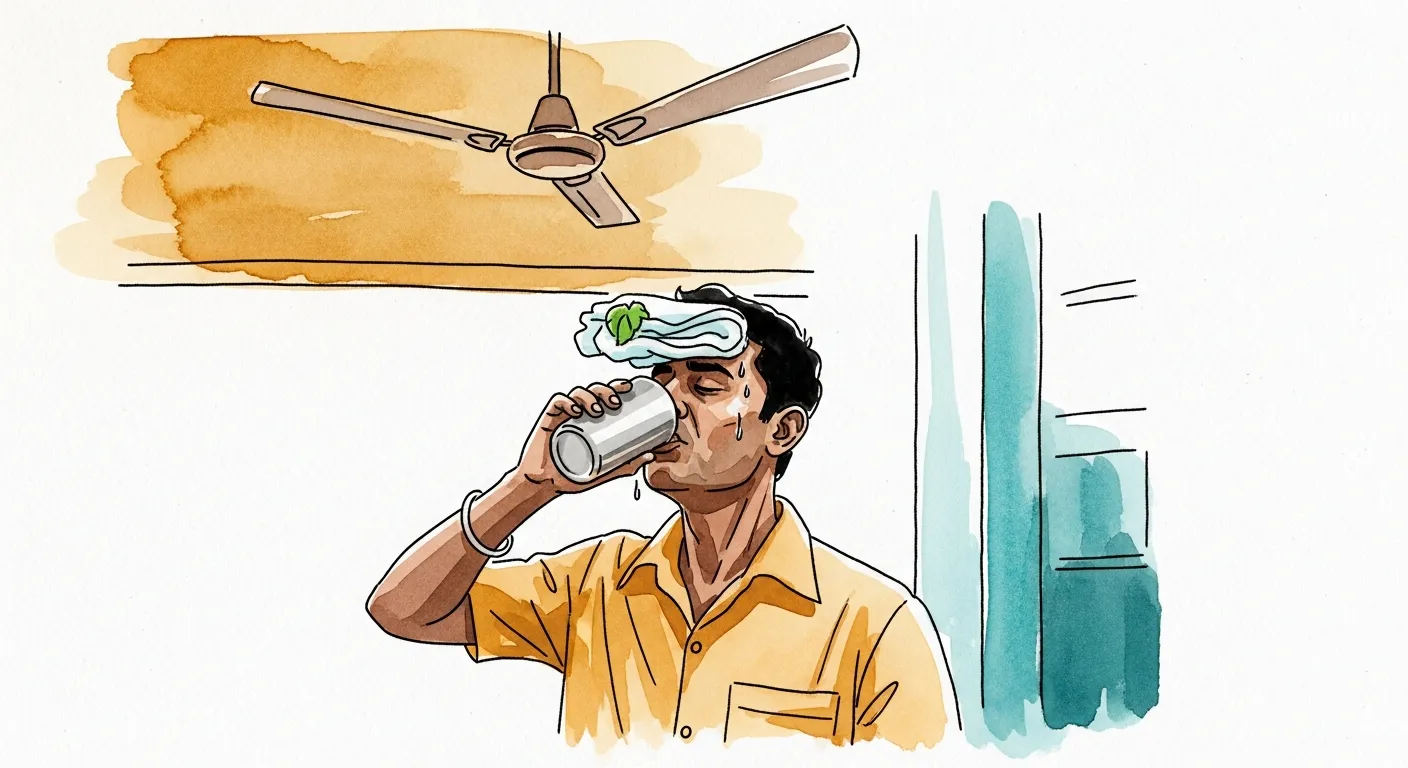
India did not have ORS packets. It had aam panna. Same logic, much better taste.
One last thing before the recipe
It is called Aam Ka Panna or Kairi Ka Panna in North India, Kachi Kairi nu sharbat in Gujarat, Aam Jhora in Madhya Pradesh, and Aam Pora Shorbot in West Bengal.
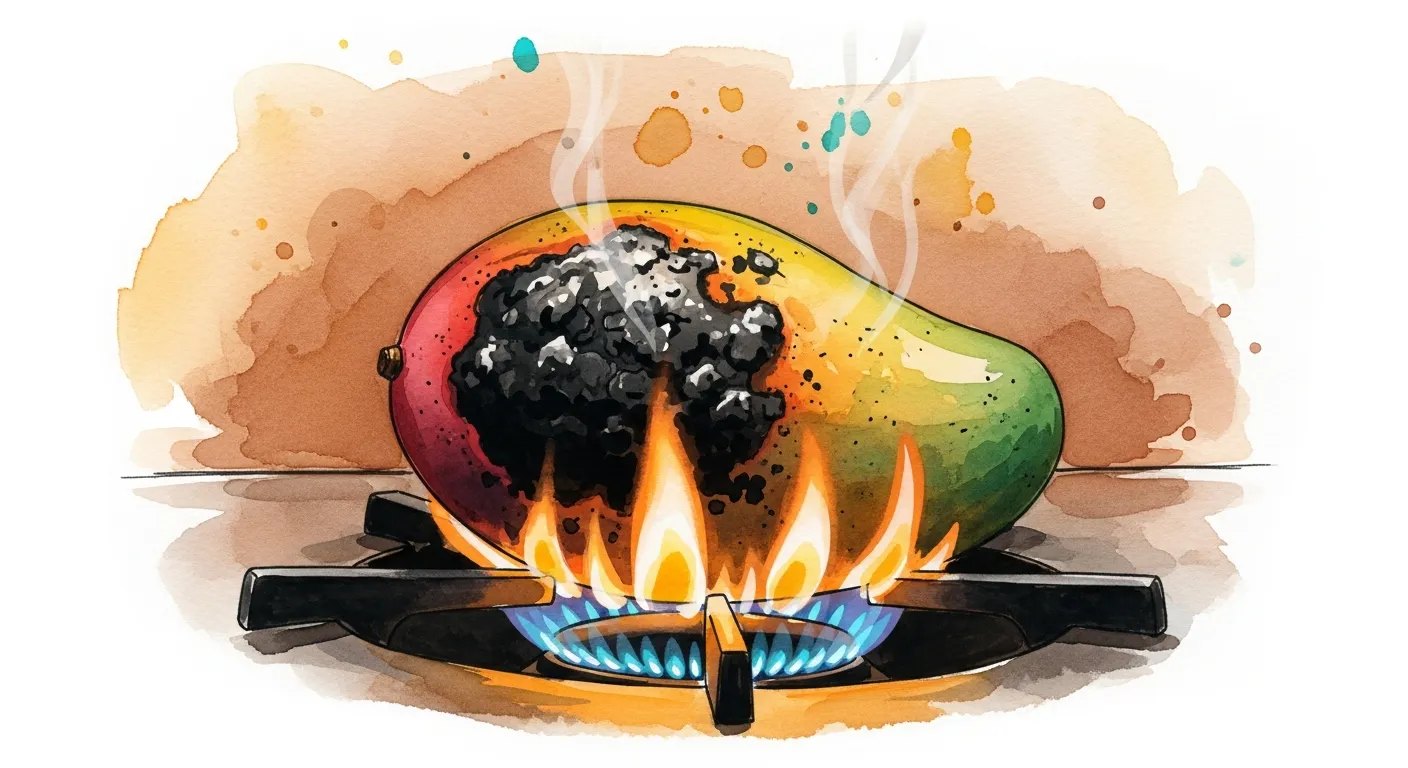
Five names across five regions for the same drink, raw mango, spice, water, cold. Each version slightly different: Bengal chars the mango directly on flame for a smoky undertone. Gujarat uses cardamom. Maharashtra adds fennel. North India leans hard into the black salt and cumin. The method changes. The instinct does not. Every hot-climate community in India independently arrived at the same answer: cook the raw mango, add the cooling spices, drink it cold.
This is what four thousand years of summer looks like.
Aam Panna
India's oldest summer drink. Raw mango, roasted spices, black salt, cold water. Makes a concentrate, keeps in the fridge for two weeks.
Ingredients
Steps
Notes
Field Notes
Quick referenceRaw mangoes in Mumbai markets March through May. Buy dark green, hard, sour-smelling. Avoid softened ones, that is ripening and you want the acid.
Raw mangoes from any sabziwala. Black salt, kala namak, from any kirana store. Bhuna jeera: dry roast cumin, cool, grind. Three minutes, ten times better than store-bought.
Char the whole raw mango on your gas burner until skin is black and blistered. Peel, blend with same spices. Aam pora shorbot. Worth the smoke.
During Gudi Padwa, aam panna is prepared as a tangy beverage symbolizing renewal and vitality amid the rising heat. Today was Gudi Padwa. You should have already made this.
The poet who mentioned panna lived between the 1st and 5th centuries CE. He wrote about this drink over 1,500 years ago. It was already old when he wrote about it.
Get the next story first
Join the Bhukkads. Free, no spam, just stories.
Takes 30 seconds.