The Drink That Nobody Wanted
In 1905, a man stood outside his shop on Lokmanya Tilak Marg and drank a pink glass of something strange, in full public view, all day long. He did this because nobody in Bombay would buy what he was selling. That drink is now the city's most beloved dessert. This is the falooda story.
Watercolor illustration
Start in Shiraz.
Legend has it that faloodeh was the first frozen dessert ever made, dating from around 400 BC, invented largely by accident, when flavouring syrups were spilled on snow, and people realised that they could be transformed into a delicious treat.
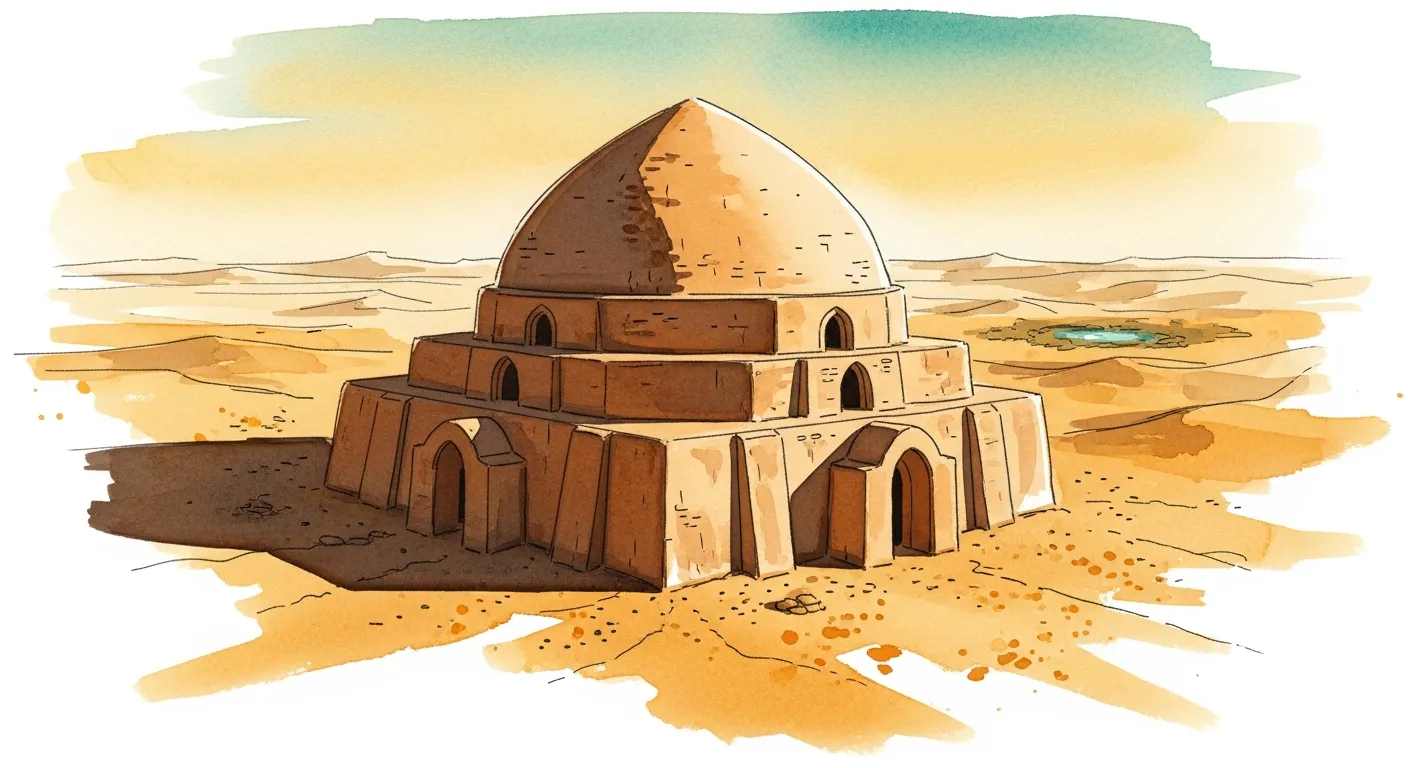
The ancient Persians built ice storage houses known as yakhchals, mammoth dome-shaped structures with thick mud walls, underground storage rooms, and below them, underground aqueducts to keep the ice cool. Giant ancient refrigerators in the middle of the desert. All of it, the engineering, the architecture, the labour, built in service of this: thin vermicelli noodles frozen in rose water and sugar syrup, served cold on a hot day.
The Persian word paloodeh is derived from the verb paloodan, which means "to refine". The refined thing. The thing that has been strained, purified, made precise. This is what they called their frozen dessert, not sweet, not cold, not pink, but refined. The Persians named their food the way other cultures named their gods.
This was the original faloodeh. Frozen vermicelli, rose water, lime. Nothing else. Ice kept in a mud dome the size of a building. Served to royalty in Shiraz.
It stayed in Persia for roughly two thousand years. Then the Mughals arrived in India, and everything moved.
The journey
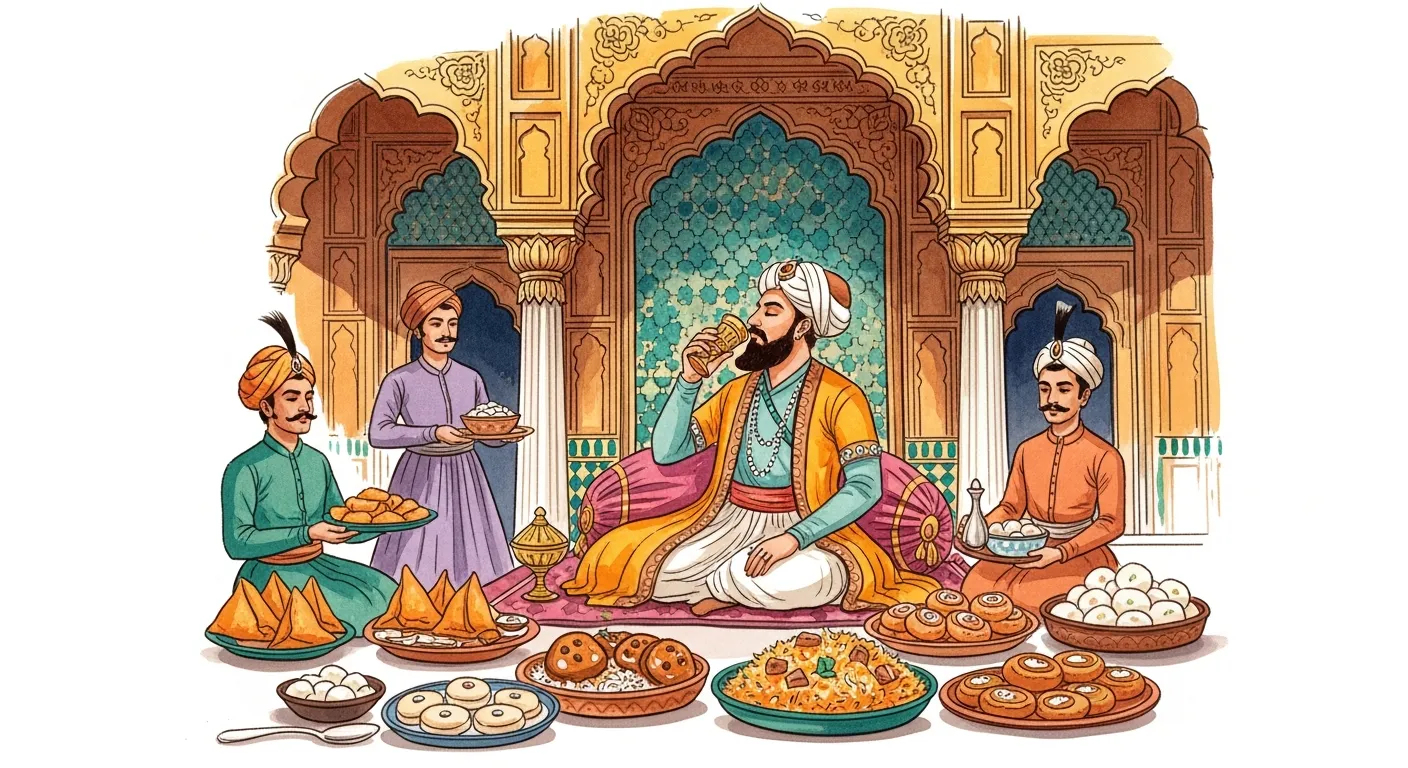
The dessert came to late medieval India with the many Central Asian dynasties that invaded and settled in South Asia in the 16th to 18th century. The present form of falooda was developed in the Mughal Empire and spread with its conquests.
According to food historian K.T. Achaya, in his book The Story of Our Food: when Jahangir reached Iran to conquer a princely state, he was persuaded by the culture, royal food and water. Jahangir liked falooda the most in Iranian food, being very delicious and different in appearance too.
An emperor of India, visiting Persia, tasted frozen noodles in rose syrup and could not get them out of his mind. He brought the idea home. His royal kitchens took the Persian base, cold, sour, icy, and began building on it. Milk arrived. Basil seeds arrived. Sweet basil seeds that grow in India substituted pistachios that are native to Iran and Central Asia. The ice went from frozen to chilled. The drink got richer, heavier, sweeter. It went from a sorbet to something between a dessert and a beverage that had no good category, not quite a drink, not quite a sweet, fully itself.
The Persianate rulers who succeeded the Mughals patronised the dessert with their own adaptations, specifically in Hyderabad Deccan and the Carnatic areas. Every court added something. The rose syrup deepened. The kulfi arrived on top, Indian ice cream, dense and sweet, sitting above the cold milk like a crown. The vermicelli softened in the milk until it had the texture of something between silk and nothing.
By the time it reached the streets of Bombay, falooda had been four centuries in the making.
The man who stood outside his shop all day
The year is 1905. Bombay. A new shop has opened opposite Crawford Market on Lokmanya Tilak Marg, a Persian family, recently arrived, selling something they are calling falooda.
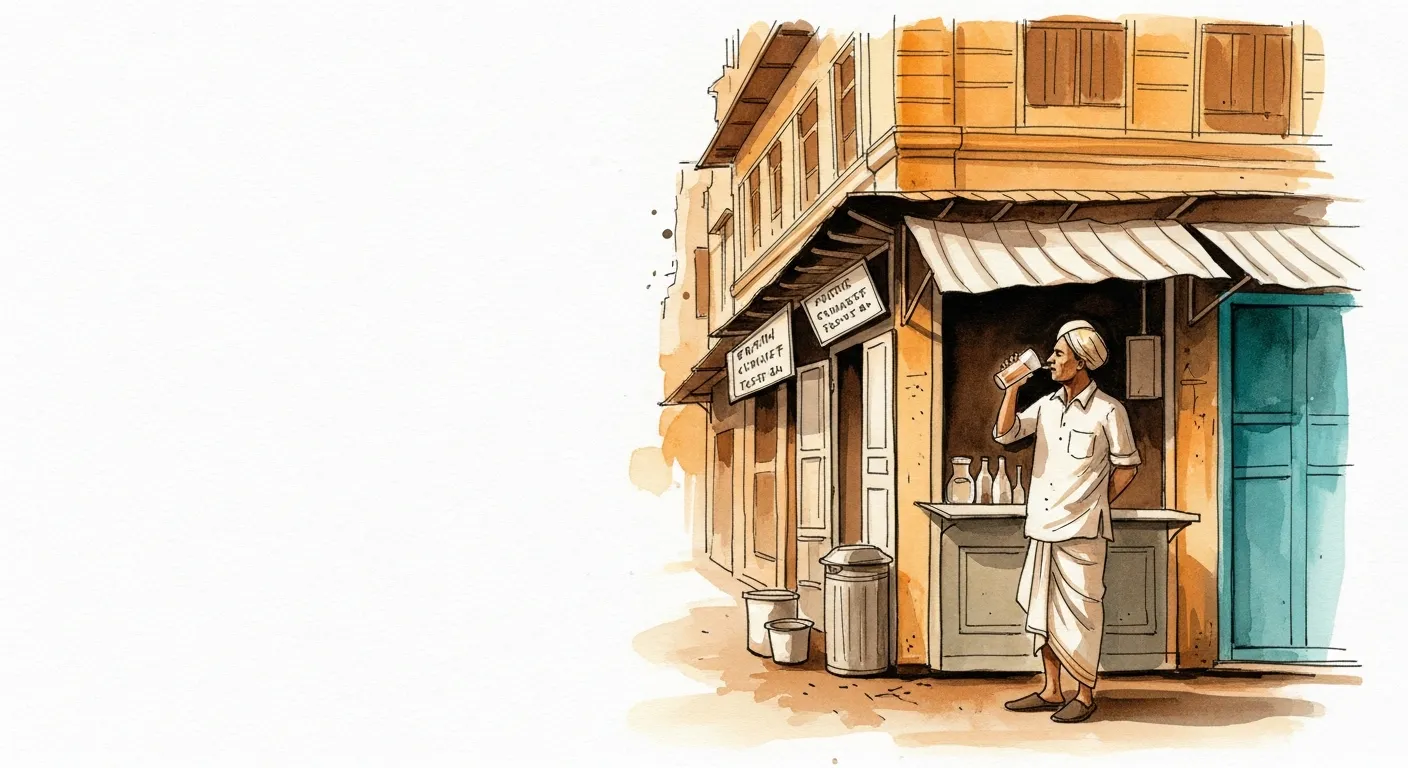
Badshah Cold Drinks started selling falooda in 1905. Back then they faced many difficulties selling this product as people were afraid to eat a pink drink with noodles and strange seeds in it.
Think about what this looked like to someone walking past. A tall glass, pink from the rose syrup. Inside it, vermicelli noodles, which look like nothing food should contain. Small black seeds floating in the milk, swelling slowly, the sabja seeds, the sweet basil, which Bombay had never seen presented this way. Ice on top of it all. And a scoop of ice cream.
A Mumbaikar in 1905 saw this and said: no.
Badshah had a plan. He made his family members stand outside the shop and drink the falooda throughout the day. Eventually the curious nature of an Indian couldn't resist but try the new special drink.
This is one of the great marketing stories in Mumbai food history. No advertisement. No celebrity endorsement. No social media. Just a family, standing on the footpath outside Crawford Market, drinking pink drinks with visible noodles inside them, in full public view, all day, every day, until the city's curiosity broke.
It broke. Established in the year 1905, Badshah Cold Drink has been rated 4.1 based on 7,869 customer reviews, and those are just the ones who left a rating online. The actual number of people who have drunk a falooda at Badshah across one hundred and twenty years is not a number anyone can calculate.
The shop is still there. Same location. Same family. One hundred and twenty years. The Royal Falooda, rose syrup, vanilla ice cream, sabja seeds, vermicelli, cold milk, is the same drink it was in 1905. Nothing has changed. Nothing needed to.
What it is, precisely
Falooda is a layered argument.
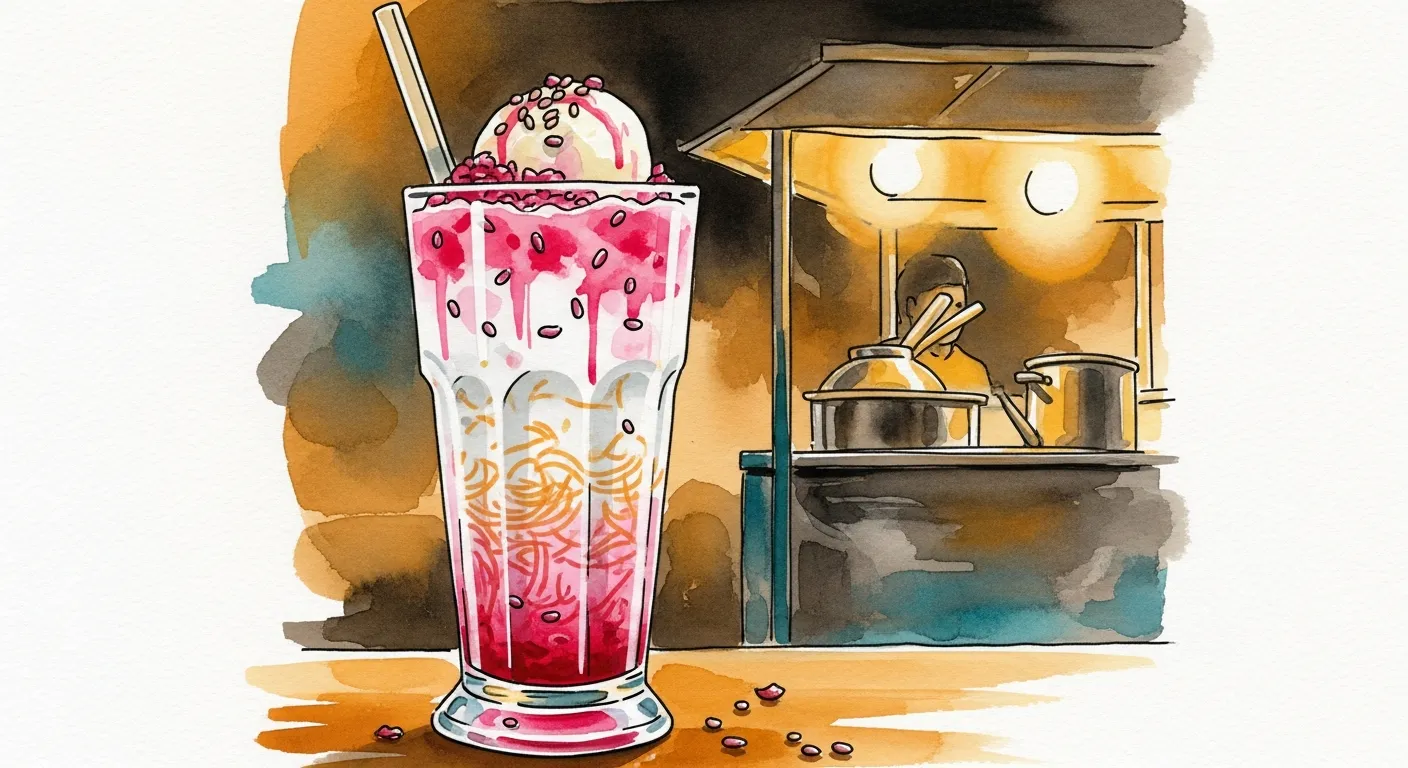
At the bottom: sabja seeds, sweet basil seeds that have been soaked in water until they swell into small translucent globes with a black centre. They have almost no flavour. Their only job is texture, a soft pop between the teeth, something between tapioca and nothing.
Above that: falooda sev, thin vermicelli, cooked until just soft, chilled in water, piled loosely so it doesn't clump. In Hindi, the word faluda is sometimes used as slang for something that has been shredded to nothing. The vermicelli earns this, thin enough to be almost invisible, present enough to give every sip a gentle resistance.
Above that: cold, full-fat milk. Sometimes thickened into rabri, reduced slowly with sugar and cardamom until it is halfway between milk and cream.
Above that: rose syrup. The colour alone is an argument. That specific shade of pink, not red, not pale, is the colour of falooda. It is recognisable from across a room. The syrup sinks slowly through the milk, turning everything it touches a gradient of rose.
Above that: ice cream. In Mumbai, almost always kulfi or vanilla. Cold meeting cold. The ice cream melts slowly into the milk, making the drink colder and creamier as you go.
You drink the top. You eat the middle. You slurp the bottom. Every layer tastes different at the beginning and all the same by the end, when the ice cream has melted into the milk and the rose syrup has dispersed and the sabja seeds are everywhere and the vermicelli has absorbed everything and you are drinking something that was, fifteen minutes ago, five separate things.
Five ingredients becoming one drink, over the course of eating it. That is the point.
Why 11 PM
Falooda is not a morning drink. It is not a lunch drink. It is not an after-dinner digestive.
Falooda is the thing you have after the biryani has settled and the kebabs are finished and the city has cooled slightly and you are still not ready to go home. It is the permission you give yourself at the end of a long evening. It is the last indulgence, the dessert that arrives when you have already eaten too much and somehow have room for this specifically.
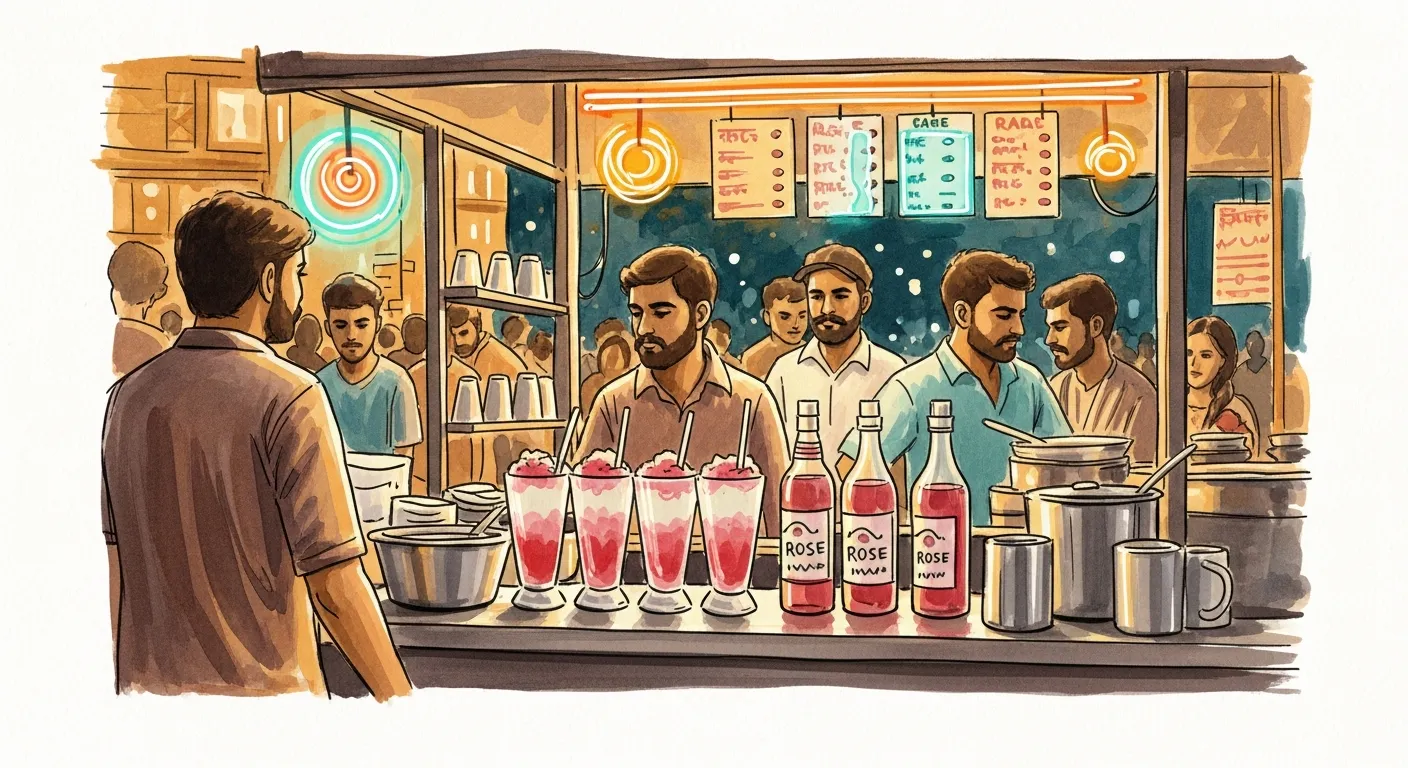
On Mohammadali Road at 11 PM tonight, the falooda counters are running at full capacity. Shalimar, open until 2 AM. Baba Falooda in Mahim, open until 1 AM. The street stalls around Minara Masjid with the tall glasses lined up and the rose syrup bottle perpetually tilted.
Order one. Sit with it. Let it melt.
This is the correct time. This is the correct mood. The city is running on the specific energy of a festival night, fed, celebratory, not quite ready for sleep. The falooda is cold. The street is warm. The glass arrives tall and pink and you wrap your hands around it and you start at the top and you work your way down and somewhere around the middle, when the ice cream has started to dissolve and the rose syrup is tinting everything and the sabja seeds are finding your tongue one by one, you understand why a Persian emperor in the 16th century could not stop thinking about this drink.
He tasted it once and had to bring it home.
HOW MANY CALORIES IN ONE FULL GLASS OF FALOODA?
Field Notes
Quick referenceBaba Falooda, Mahim, open until 1 AM. Royal Malai Kulfi Falooda. Shalimar, Bhendi Bazaar, open until 2 AM. Shahi Gulab Falooda with kulfi. Badshah, opposite Crawford Market, since 1905. Royal Falooda, Rs 135.
Faloodeh Shirazi. Still made in Shiraz, Iran, exactly as it was in 400 BC. Frozen vermicelli in rose water and sugar syrup with lime. Added to Iran's Intangible Cultural Heritage list in 2023.
Sabja seeds first, then sev, then cold milk, then rose syrup, then ice cream. Build it in this order. Mix at the table or eat through the layers. Both are correct.
In Hindustani slang, faluda means something shredded to nothing. Someone whose izzat is destroyed has had it turned to faluda. The word for dessert is also the word for being completely undone.
Established 1905. One hundred and twenty years. Same spot, same family, opposite Crawford Market. Royal Falooda Rs 135. Cash only.
Falooda is an Eid drink the way sheer khurma is an Eid sweet. It arrives at the end, after the feast, as the night lengthens and nobody wants to say it's time to go home.
Get the next story first
Join the Bhukkads. Free, no spam, just stories.
Takes 30 seconds.