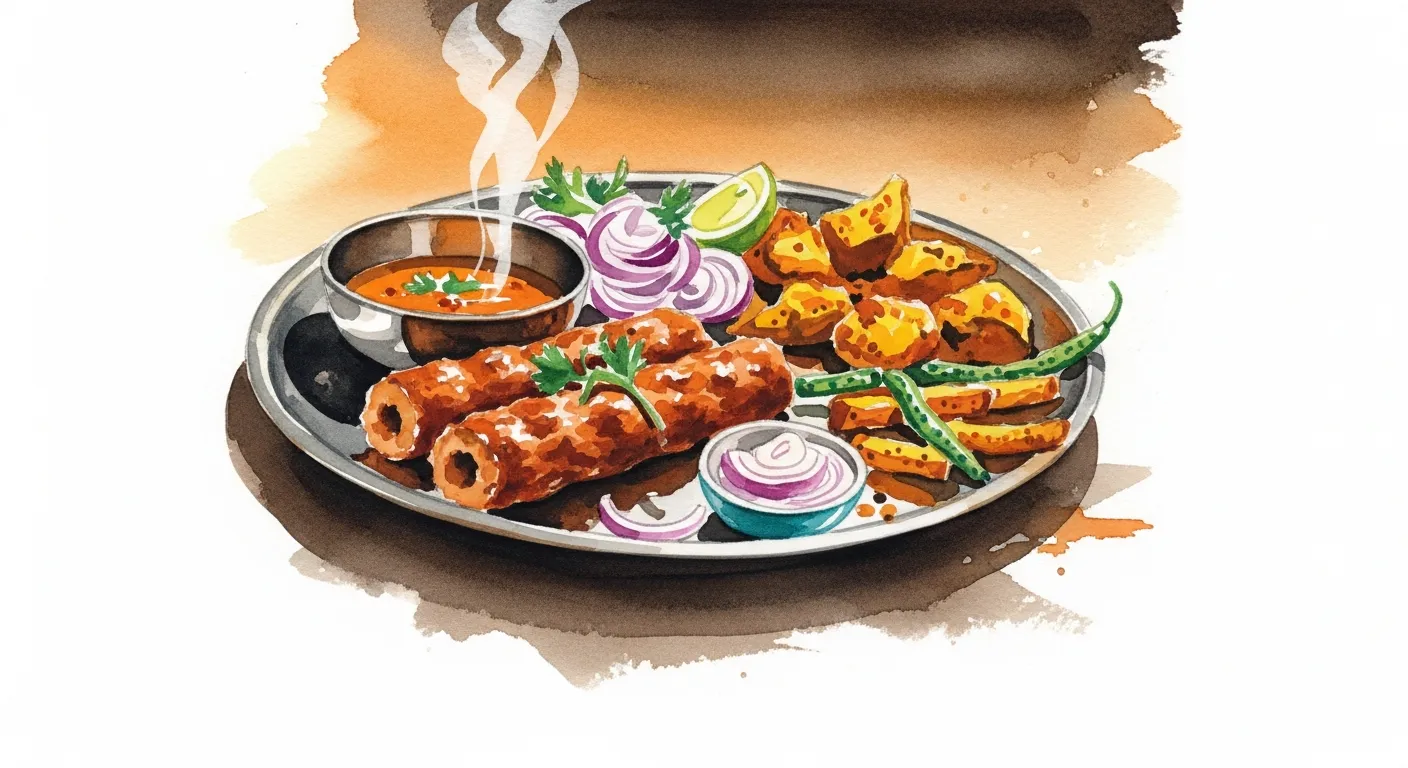
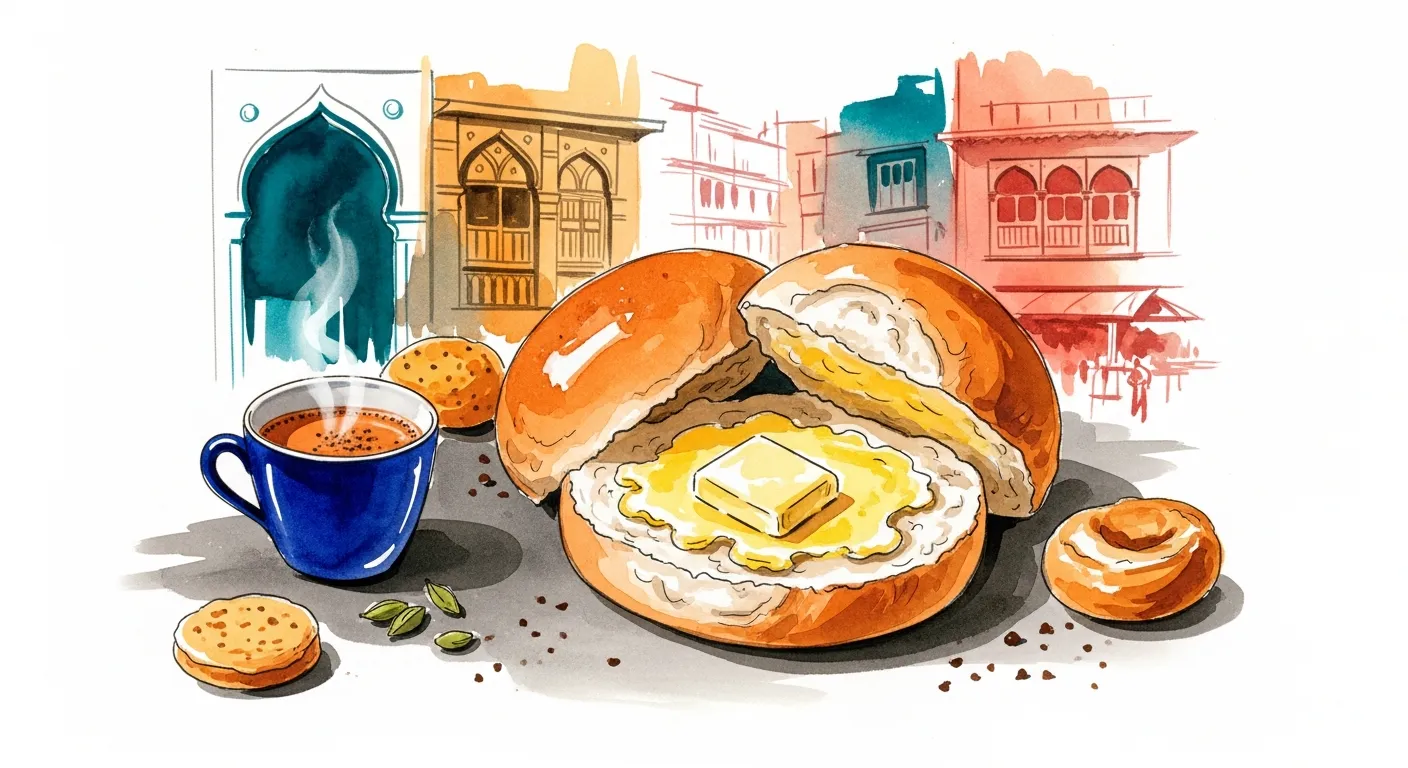
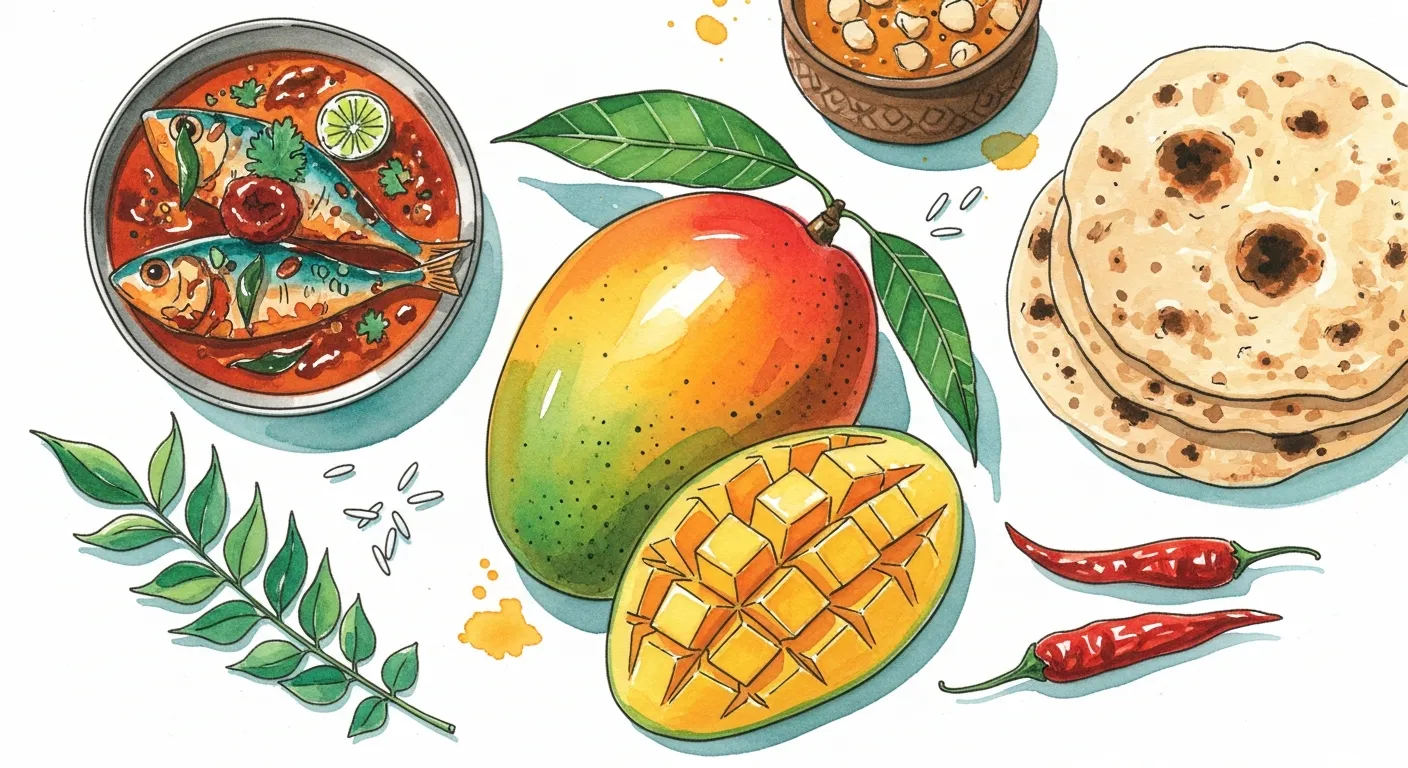
The Field Marshal's Kitchen
Sam Manekshaw commanded a million soldiers, won a war in thirteen days, and kept a pot of dhansak in his freezer for at least a year. This is a story about what a man eats, and what that tells you about who he is.
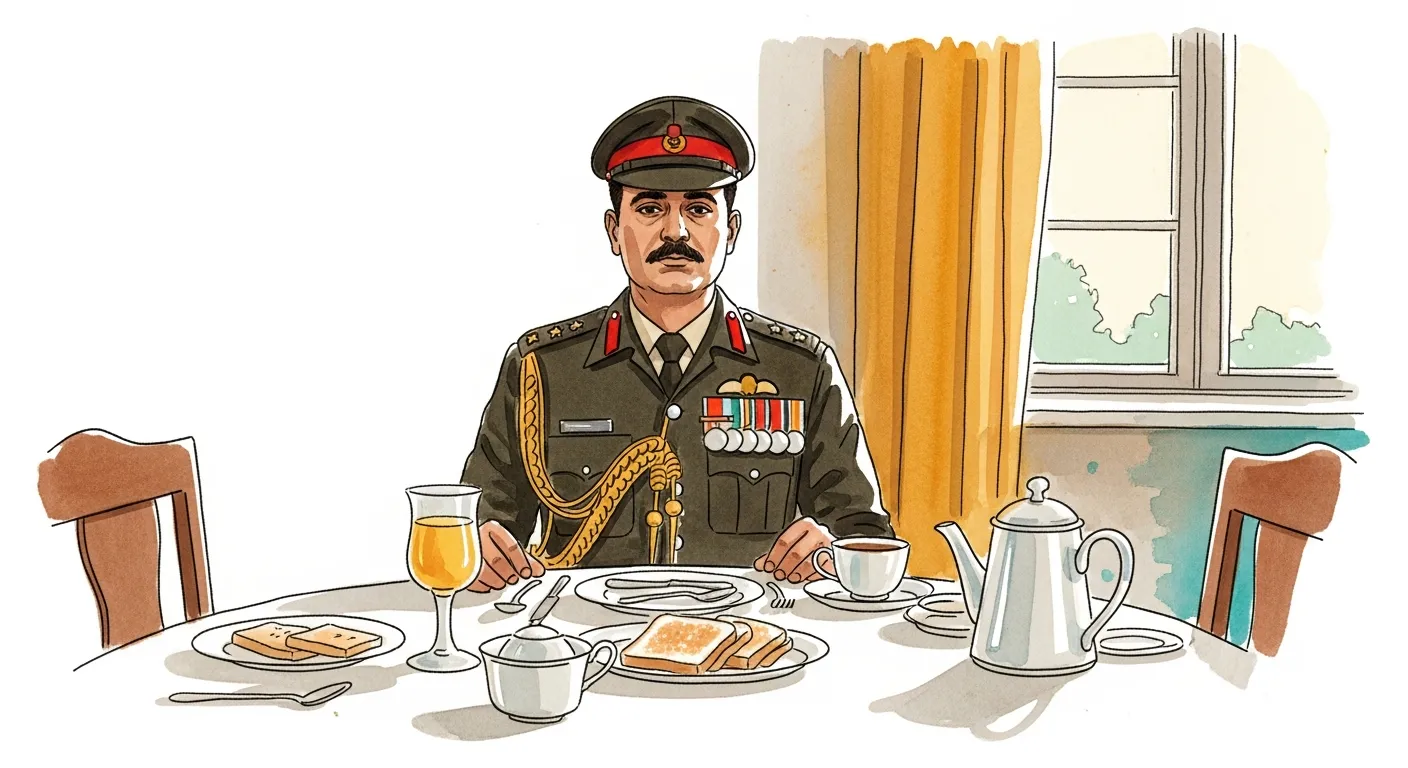
Watercolor illustration
On the morning of December 3, 1971, the Pakistan Air Force bombed Indian airfields in the west. The war had officially begun.
In South Block, Delhi, Field Marshal Sam Hormusji Framji Jamshedji Manekshaw, Army Chief, commander of over one million soldiers, architect of a military campaign eight months in careful preparation, did what he did every morning.
He ate breakfast fully dressed.
This is documented. His driver Kennedy, who spent years ferrying senior officers around Wellington cantonment, told a journalist with the quiet certainty of someone who had witnessed it many times: "He was a pucca soldier, Sir. He would never eat his breakfast without getting fully dressed." In a career that spanned five wars across four decades, that discipline never wavered. The uniform came on first. Then the meal. Then the war.
Who Manekshaw was, before we talk about what he ate
Sam Manekshaw was born on April 3, 1914, in Amritsar, to a Parsi family. His father was a doctor. He grew up in Punjab, the food culture of the street, the home kitchen, the doctor's table, and carried that upbringing into every posting, every country, every war.
He wanted to be a doctor in London. His father said no. In an act of rebellion, he sat the entrance examination for the newly formed Indian Military Academy in Dehradun in 1932, placed sixth in merit, and was selected. He was eighteen years old. He had no idea he had just redirected his entire life.
By 1942, he was a captain in Burma, leading his company in a counter-attack against Japanese forces at Pagoda Hill on the Sittang bridgehead. He was shot by light machine gun fire, seven bullets through his lungs, liver, and kidneys. His Sikh orderly, Sher Singh, carried him on his back across approximately fourteen miles of battlefield to an Australian surgeon. The surgeon refused to treat him, said he was too badly wounded to survive. Sher Singh insisted. The surgeon relented. When the surgeon asked what had happened, Manekshaw said he had been kicked by a mule. The surgeon laughed. He treated him. Most of Manekshaw's intestines were removed. He survived.
Major General David Cowan, watching from the field, personally pinned his own Military Cross ribbon on Manekshaw on the spot, saying: "A dead person cannot be awarded a Military Cross."
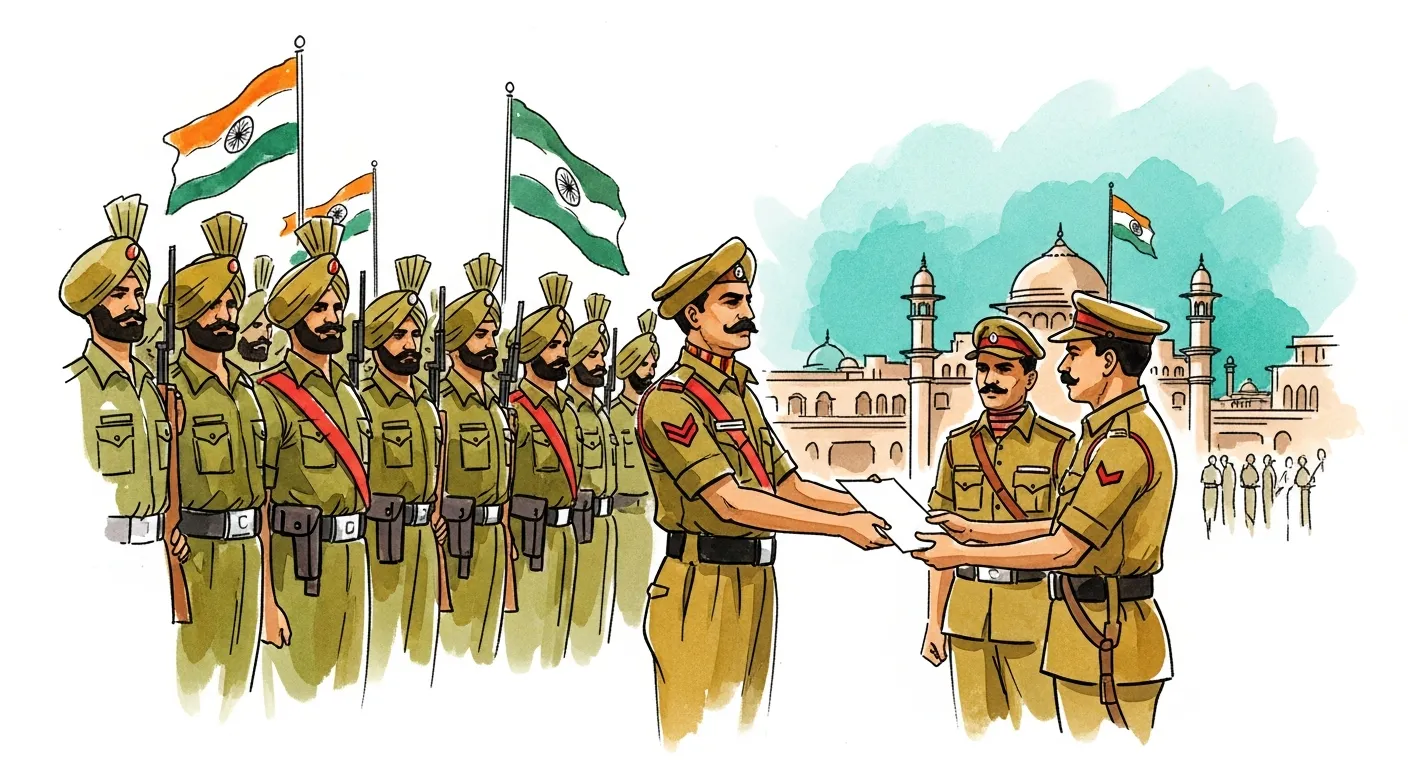
Manekshaw returned to active duty. He participated in the 1947 war over Kashmir, the 1962 war with China, the 1965 war with Pakistan. He became Army Chief in June 1969. And in December 1971, he orchestrated the war that created Bangladesh in thirteen days, one of the most decisive military victories in modern history, and accepted the surrender of over 90,000 Pakistani soldiers.
He is the only Indian to hold the rank of Field Marshal, a rank one holds for life.
None of this is the story. The story is the kitchen.
Two kitchens
Sule Bahadur was a Gorkha soldier. He became Sam Manekshaw's batman and cook, and stayed with him for over forty years. Long after Manekshaw retired to Coonoor in the Nilgiris, Sule Bahadur was there. He is now retired himself, settled in Nepal, and in an interview with The Week he described the household with the specificity of someone who had lived inside it every day for decades.
The Manekshaw home had two kitchens.
One belonged to Sule Bahadur. One belonged to Manekshaw.
This is the detail that tells you everything. The Field Marshal who commanded a million soldiers also cooked. Not ceremonially, not as a performance for guests, cooked. Filmmaker Meghna Gulzar, who spent years researching the Sam Bahadur biopic in close consultation with his family, confirmed it: "He was a very avid foodie and therefore very interested in how things were cooked right from a young age. So, he used to constantly be giving tips to the cook or the khansama."
His daughter Maja Daruwala confirmed that when the family was posted to London in 1957 for Manekshaw's tenure at the Imperial Defence College, he took charge of the household cooking himself. The dishes he made: chhole bhature, kheema pao, makki di roti, sarson ka saag, bhuna chana soup. A Parsi man from Amritsar, cooking Punjabi food in London, for his family. This is what forty years of India in one kitchen looks like.
The dhansak in the freezer
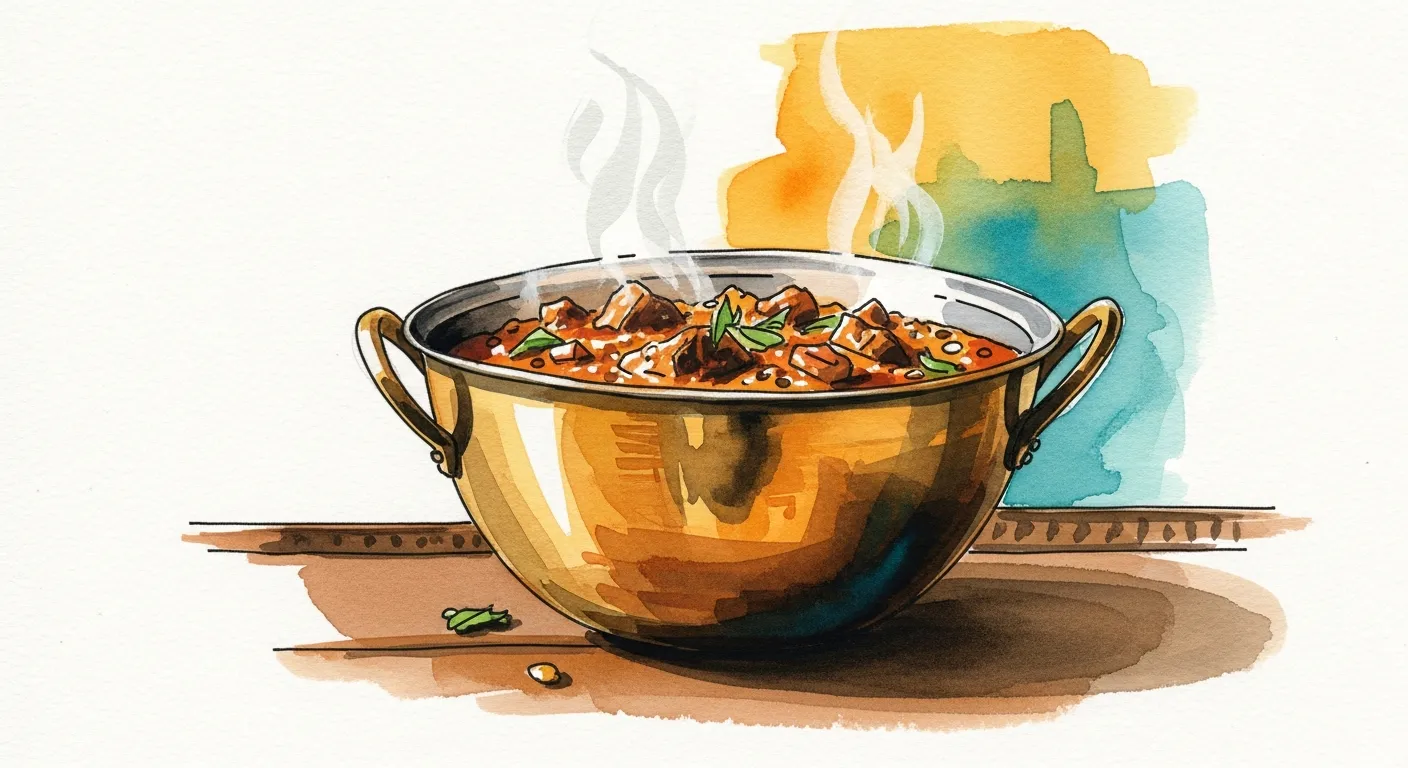
Dhansak is the defining dish of Parsi cuisine. Mutton or goat, slow-cooked with a mixture of lentils and vegetables, toor dal, masoor dal, chana dal, and a specific spice blend that every Parsi family guards with the intensity of a military secret. It is the dish that appears at every significant occasion. It is also, critically, a dish that improves with age.
Manekshaw knew this with the conviction of someone who had tested it extensively.
Sule Bahadur told The Week: "Sam had a really big freezer. Those days people were not comfortable keeping food in the freezer for long, but he would proudly brag about all the stuff he had in there, especially the dhansak which was always at least a year old. And then he would taste a spoonful and animatedly pat himself on the back."
A year old. In a freezer. Aged like wine. Self-congratulated with a spoon.
The same man who kept 90,000 Pakistani prisoners of war and monitored their humane treatment personally. The same man who told Indira Gandhi in April 1971, when she wanted to invade East Pakistan immediately, that the army was not ready, that the monsoon would destroy any campaign, that twelve of his tanks were combat-ready, that the grain harvest was competing for rail carriages, and held firm against a Prime Minister, a cabinet, and the weight of political pressure, because he knew the correct answer and would not pretend otherwise.
That man kept a year-old pot of dhansak in his freezer and tasted it with ceremony.
The same man who won the war in thirteen days kept expired caviar on principle.
The refrigerator as character
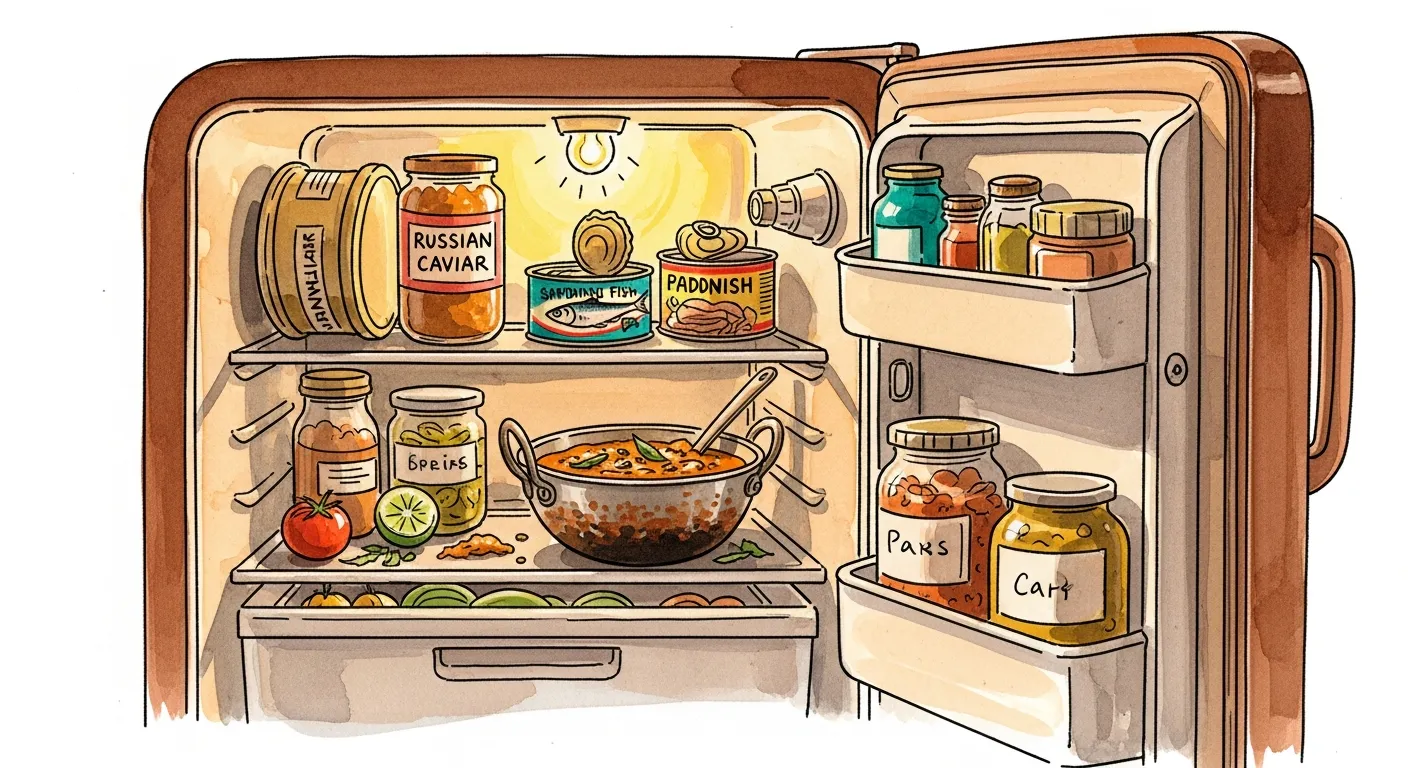
Sule Bahadur described what else was in the Manekshaw refrigerator: Russian caviar. Canned fish. Exotic delicacies from postings and diplomatic exchanges across the world. Many of them past their expiry dates.
"Yet, he would not let anyone throw them out," Bahadur told The Week.
This is the detail that makes you love him. A man meticulous enough to plan the logistics of a three-front war across 1,700 kilometres, who insisted on waiting eight months to fight rather than lose, that same man held onto expired caviar on principle. He had put it there. It was his. The expiry date was not his concern.
His refrigerator was a museum of everywhere he had been, everything he had eaten, every gift he had received and could not bring himself to release. This is not hoarding. This is a man who understood that food is memory, and you do not throw away memory simply because someone has printed a date on the tin.
The barbecue general
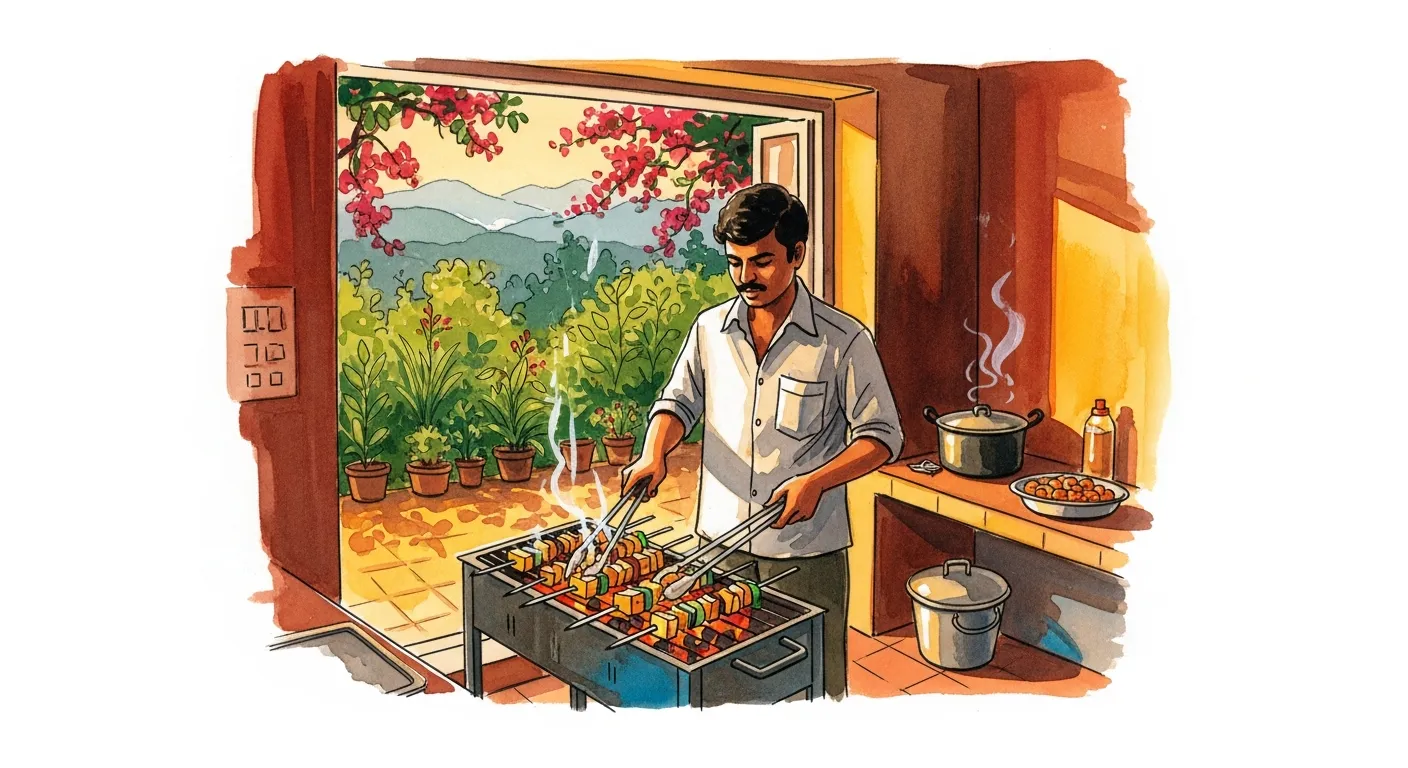
When Manekshaw hosted, he cooked himself.
"He would never let waiters or orderlies serve drinks to his guests. He would do it himself," Sule Bahadur told The Week. "During barbecue evenings at home, he would be turning the skewers himself and would expect his guests, too, to do the same. The food was never pre-cooked and all the fresh salads would be from his own garden."
His own garden. In every posting across his forty-year career, Coonoor, Calcutta, Delhi, Wellington, the Manekshaw household maintained a garden, a flock of hens, four dogs, a buffalo, and two Jersey cows. The fresh salad on the barbecue table came from soil he had tended. The eggs on the breakfast table came from hens he kept. This is a man who understood the full chain from ground to plate, and insisted on being part of it.
He also had, Sule Bahadur noted, an elaborate collection of the latest cookware. The Field Marshal who won the 1971 war had good knives and knew it.
A refrigerator full of expired caviar and year-old dhansak. This is what happens when a soldier understands that food is memory.
What the food says
Sam Manekshaw's kitchen is a biography.
The dhansak aged a year in the freezer: a Parsi man from Amritsar, carrying his mother's cuisine through five wars across four decades, refusing to let the best version of the dish be rushed.
The makki di roti and sarson ka saag cooked in London: a soldier who absorbed every place he was posted, Burma, England, Punjab, Bengal, Tamil Nadu, and carried the food of each place with him, not as a tourist but as a resident.
The barbecue where he turned the skewers himself: a general who understood that the most important thing a host can offer a guest is not service but presence.
The expired caviar he would not throw away: a man who knew that the point of receiving something is to keep it, and that the keeping is the honour.
His chauffeur Kennedy, who drove hundreds of senior officers over twenty-seven years of service, summed up the man in one sentence: "He was a pucca soldier, Sir."
He ate breakfast fully dressed. He kept a year-old pot of dhansak. He turned his own skewers. He sent a car to rescue Sharmila Tagore and the Nawab of Pataudi from a communal mob in 1969, because that is what you do when you have a car and someone needs rescuing.
He won the war in thirteen days.
"I'm OK.", Sam Manekshaw's last words, two days before he died at 94.
Of course he was.
Field Notes
Quick referenceField Marshal Sam Manekshaw, 1914-2008. Born Amritsar. Parsi. Only Indian Field Marshal. Led the 1971 war, thirteen days, 90,000 surrendered, Bangladesh created.
Mutton slow-cooked with toor, masoor, chana dal. Served with brown rice and kachumber. Not festive, cooked for mourning meals and Sundays. Manekshaw kept it a year in his freezer.
Gorkha batman and cook to Manekshaw for 40+ years. Primary source on the kitchen, fridge, and food habits. Interviewed by The Week from Nepal.
February 22, 1942. Seven bullets. Lungs, liver, kidneys. Carried 14 miles by Sher Singh. Military Cross pinned on the spot by Major General David Cowan.
One for Sule Bahadur, one for the General. Both in constant use. Coonoor, Nilgiris, Tamil Nadu.
Get the next story first
Join the Bhukkads. Free, no spam, just stories.
Takes 30 seconds.