The New Year India Celebrates Five Times
Same sky. Same moon. Same first morning of Chaitra. Five communities, five names, one idea: eat the bitter with the sweet before the year begins.
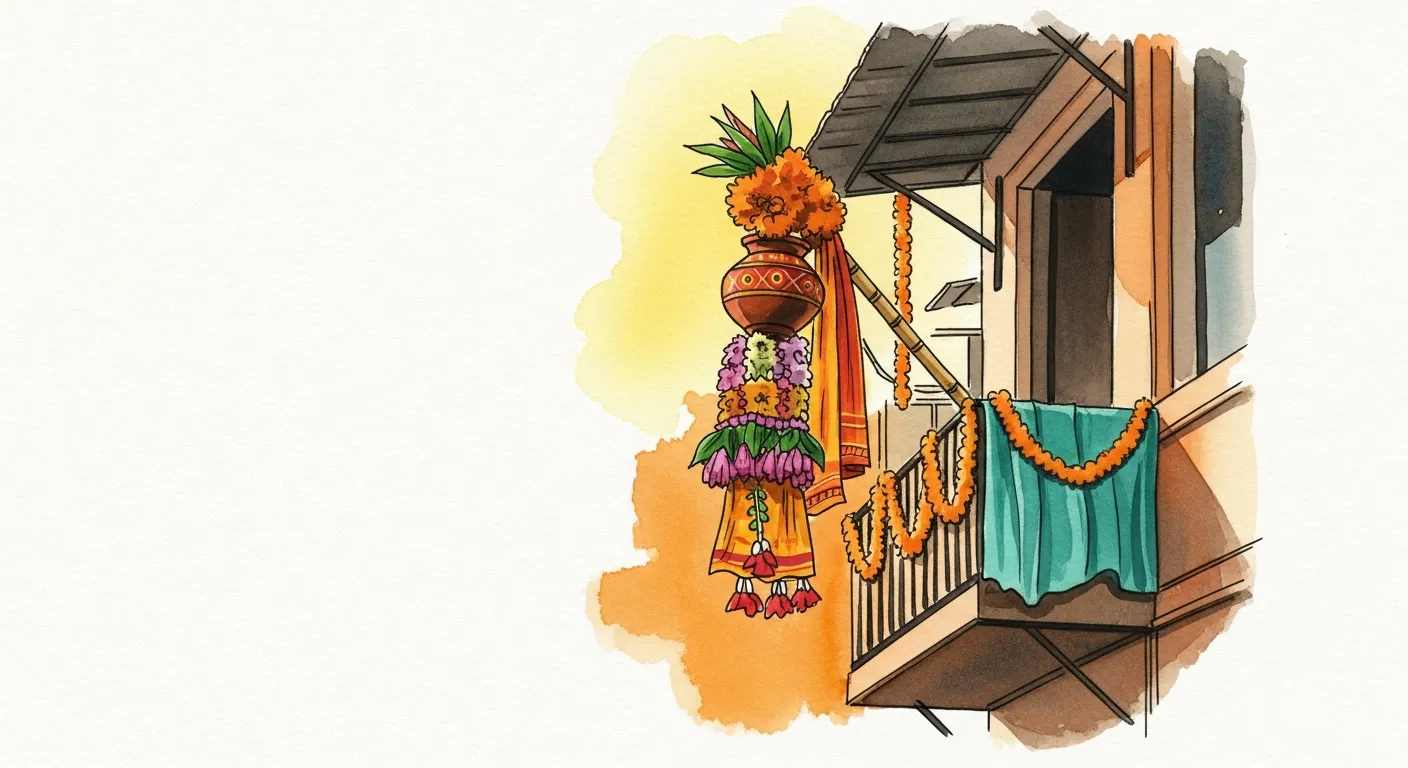
Watercolor illustration
This morning, something happened simultaneously in a Maharashtrian housing society in Dadar, a Telugu household in Hyderabad, a Sindhi family's apartment in Ulhasnagar, a Kashmiri Pandit home in Jammu, and a Meitei village in Manipur.
They all ate something bitter.
On purpose. Before anything else. Before chai, before breakfast, before the phone. The first thing in the mouth on the first day of the new year was something that made them wince.
This is not punishment. This is philosophy.
What is actually happening today
The Hindu lunisolar calendar, not the Gregorian one the British handed us and we kept for offices and deadlines, marks its new year on the first day of Chaitra, the first month. Chaitra Shukla Pratipada: the first lunar day of the bright fortnight of the first month. Today, March 19, 2026, is that day.
The British gave India a unified solar calendar. The subcontinent kept its regional lunisolar ones for everything that actually matters, festivals, weddings, naming ceremonies, first harvests, new beginnings. The Gregorian calendar tells you the date. The Hindu calendar tells you where you are in the cycle.
This year begins the Parabhava Nama Samvatsara, the 60th name in a recurring 60-year cycle of Hindu year names. Parabhava: transformation, upheaval, new energy. The subcontinent named its years before the Gregorian calendar existed. It is still naming them.
Today is where five communities, separated by language, geography, cuisine, and centuries of distinct cultural evolution, all independently arrive at the same moment and call it the beginning.
Five communities. Five names. One sky. One beginning.
GUDI PADWA, Maharashtra, Goa, Konkan
The gudi went up before sunrise.
A long bamboo staff. Wrapped in bright silk, yellow or orange. Crowned with a garland of flowers, a string of neem leaves, a cluster of sugar crystals called gathi, and an inverted silver or copper pot at the top. This entire construction hoisted outside the home, facing the street, tied to a window or balcony, visible to the neighbourhood.
This is the Gudi. The flag of the household's new year.
The name comes from Gudhi, some trace it to the victory flag of the Maratha armies, the standard that Chhatrapati Shivaji Maharaj's soldiers planted after battle. Others connect it to Brahma's flag at the moment of creation, the dhvaja that marked the beginning of time. Either origin story lands in the same place: this is a flag of victory. The victory of being alive at the start of another year.
Then comes the eating.
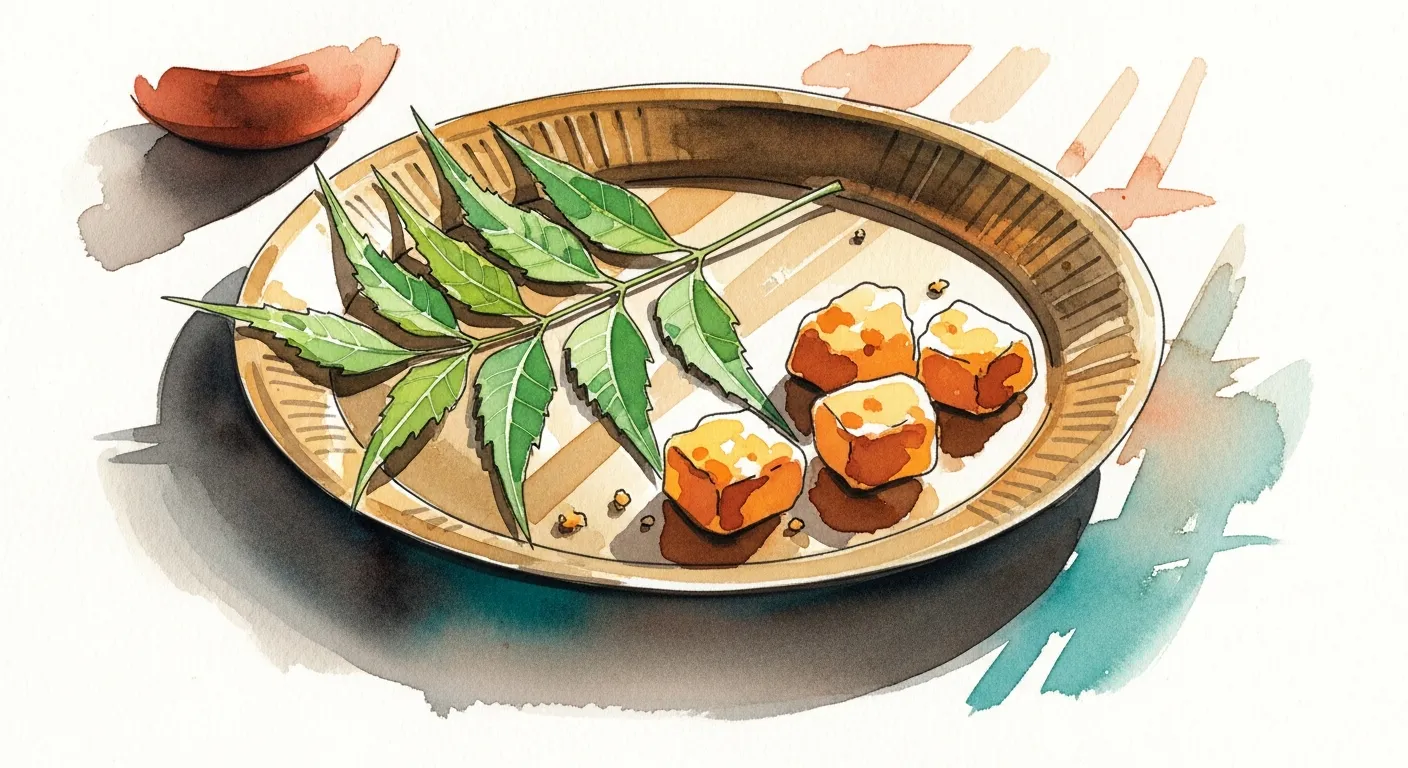
Neem leaves and jaggery, together, on an empty stomach. The neem is so bitter it makes children's faces collapse. The jaggery is so sweet it softens everything. You eat them at the same time. You don't eat the sweet first to coat the tongue. You eat them together.
The reason is stated plainly in the ritual: life is both. The year will bring you sweetness and it will bring you bitterness and it will bring them to you mixed together and you will not always get to choose the order. So you begin by practising, eating both, simultaneously, intentionally, before the year has a chance to hand them to you separately.
The rest of the day is puran poli, the stuffed flatbread of sweetened chana dal and jaggery, soft and golden, eaten with ghee. Shrikhand, strained yogurt with saffron and cardamom. Soonth, dry ginger powder with sugar, used as a digestive. Aamras if the season has been good to the mangoes. The table is unambiguously celebratory. But it started with neem.
Mumbai's Gudi Padwa processions, the Shobha Yatra down Dr Ambedkar Road in Dadar, through Girgaon, along Marine Drive, are the largest street celebrations the city sees outside of Ganesh Chaturthi. Floats, dhol-tasha groups, women in nauvari sarees, men on horseback. The gudi visible from every window of every building along the route.
The gudi visible from every window. The flag of the household's new year.
UGADI, Karnataka, Andhra Pradesh, Telangana
Same day. Different name. Same neem.
Ugadi, from Yuga (age/era) and Adi (beginning). The beginning of the age. The Telugu and Kannada communities mark the same Chaitra Shukla Pratipada with bevu-bella, neem flowers and jaggery, the exact ritual logic as Maharashtra's neem and jaggery, arrived at independently across different linguistic communities, which tells you something about what the subcontinent instinctively understood.
But Ugadi has something Maharashtra doesn't: the pachadi.
The pachadi is a single dish that contains all six tastes. Not as a balance or a compromise, as a deliberate map. Shadrasa, the six rasas of Indian food philosophy: sweet (madhura), sour (amla), bitter (tikta), pungent (katu), salty (lavana), astringent (kashaya). One dish, one bowl, all six.
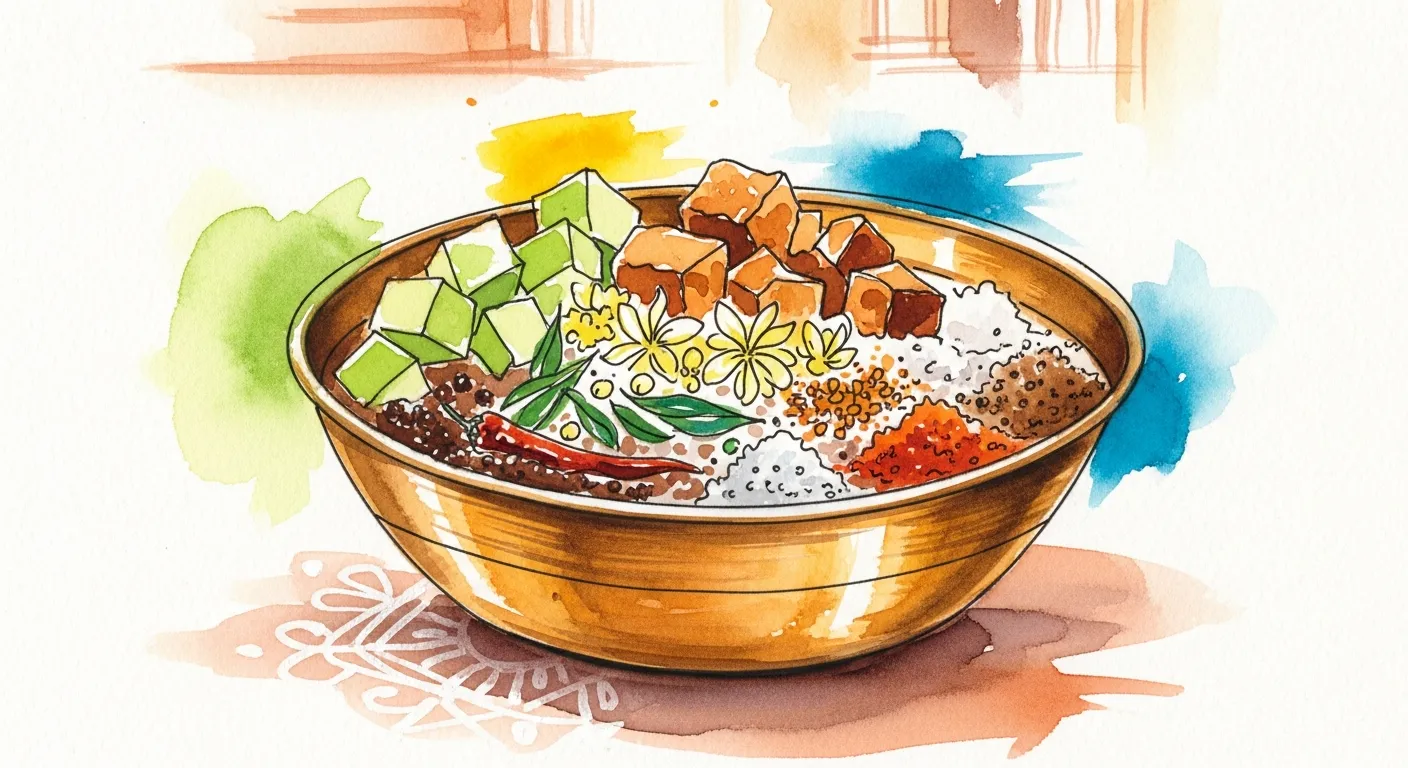
The ingredients: raw mango for sour. Jaggery for sweet. Neem flowers for bitter. Green chilli or pepper for pungent. Salt. Tamarind for astringent. All combined. All eaten together this morning.
The logic is explicit. The pachadi represents the full emotional and experiential range of the year ahead. Not edited. Not optimistic. Not a highlight reel. All of it, the sourness of disappointment, the sweetness of joy, the bitterness of loss, the sharpness of conflict, the salt of tears, the dryness of exhaustion, all in one bowl, eaten knowingly, at the beginning.
There is no other cuisine tradition in the world that does this with such deliberate, philosophical precision.
The rest of Ugadi: holige (the Kannada version of puran poli), pulihora (tamarind rice), mango dal, kosambari (lentil salad with raw mango). The food is spring food, light, tangy, fresh, anchored to the raw mango that appears in both the pachadi and most of the side dishes because March is when the mangoes are young and sour and the year is young and uncertain.
CHETI CHAND, Sindhi community
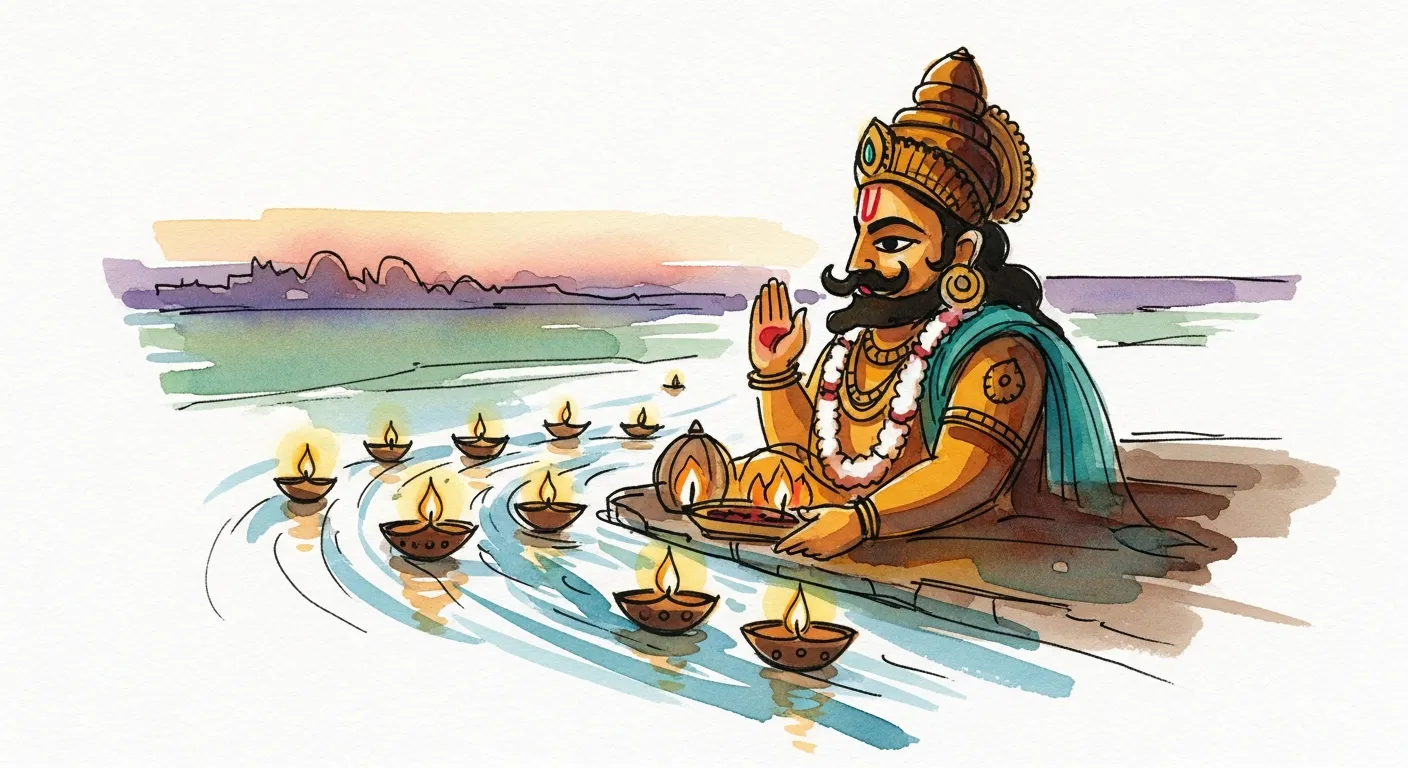
The same Chaitra Pratipada is the Sindhi New Year, Cheti Chand, the shining moon of Cheti (the Sindhi name for the month). It celebrates the birthday of Jhulelal, the Sindhi river deity, the Ishtadeva of the community, born to protect the Sindhi people from a tyrannical ruler who demanded forced religious conversion.
Jhulelal emerged from the Indus River. He is depicted riding a fish, seated on a wave, sometimes on a lotus. He is associated with water, light, and protection. His name comes from jhulan, to swing, to rock, like a child being rocked in a cradle, or water rocking a boat.
Before Jhulelal was born, the Sindhi Hindus prayed for forty days on the banks of the Sindhu River. Forty days of continuous vigil, asking the river for protection from a ruler who would not let them be. The river answered. Cheti Chand celebrates that answer. The forty-day prayer period, Chaliho, ended this morning.
Cheti Chand is the most important festival in the Sindhi calendar, made more so by Partition, which erased the physical homeland. The community that lost the Indus carries Jhulelal as the thread connecting them to the river they no longer live beside.
The food of Cheti Chand: tahiri, saffron-scented yellow rice, sweet, cooked with jaggery and dry fruits, offered first to Jhulelal at the water before being eaten. Sai bhaji, the quintessential Sindhi spinach-lentil dish, slow-cooked, deeply nourishing. Seyal machi, fish in a gravy of onion and tomato. The Sindhi table today is generous in a specific way, food that remembers a geography even when the geography is gone.
Water is worshipped. Diyas float on it. The community gathers at the nearest water body, in Mumbai, the Sindhi populations of Ulhasnagar, Chembur, and parts of South Mumbai come together near the sea.
NAVREH, Kashmiri Pandits
Navreh is the quietest of the new years and perhaps the most precise.
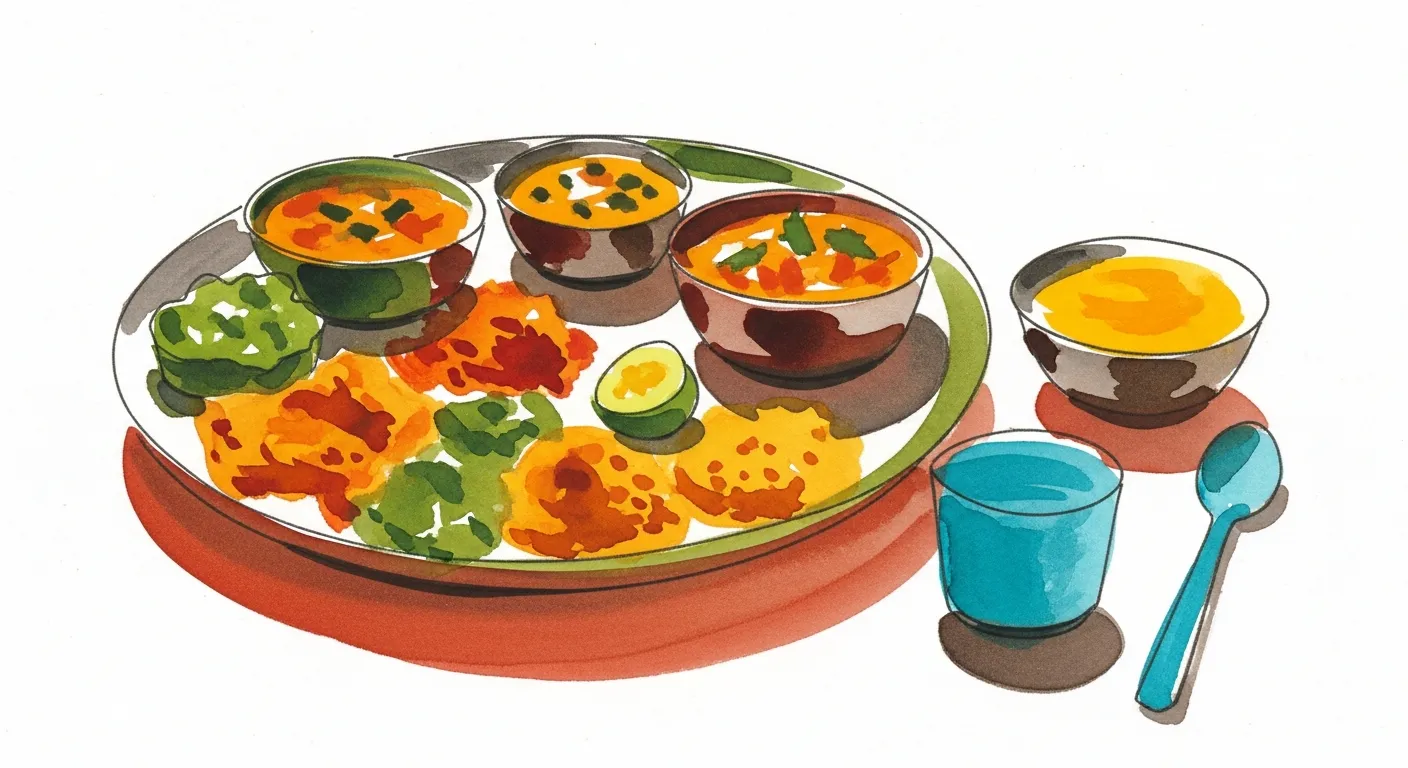
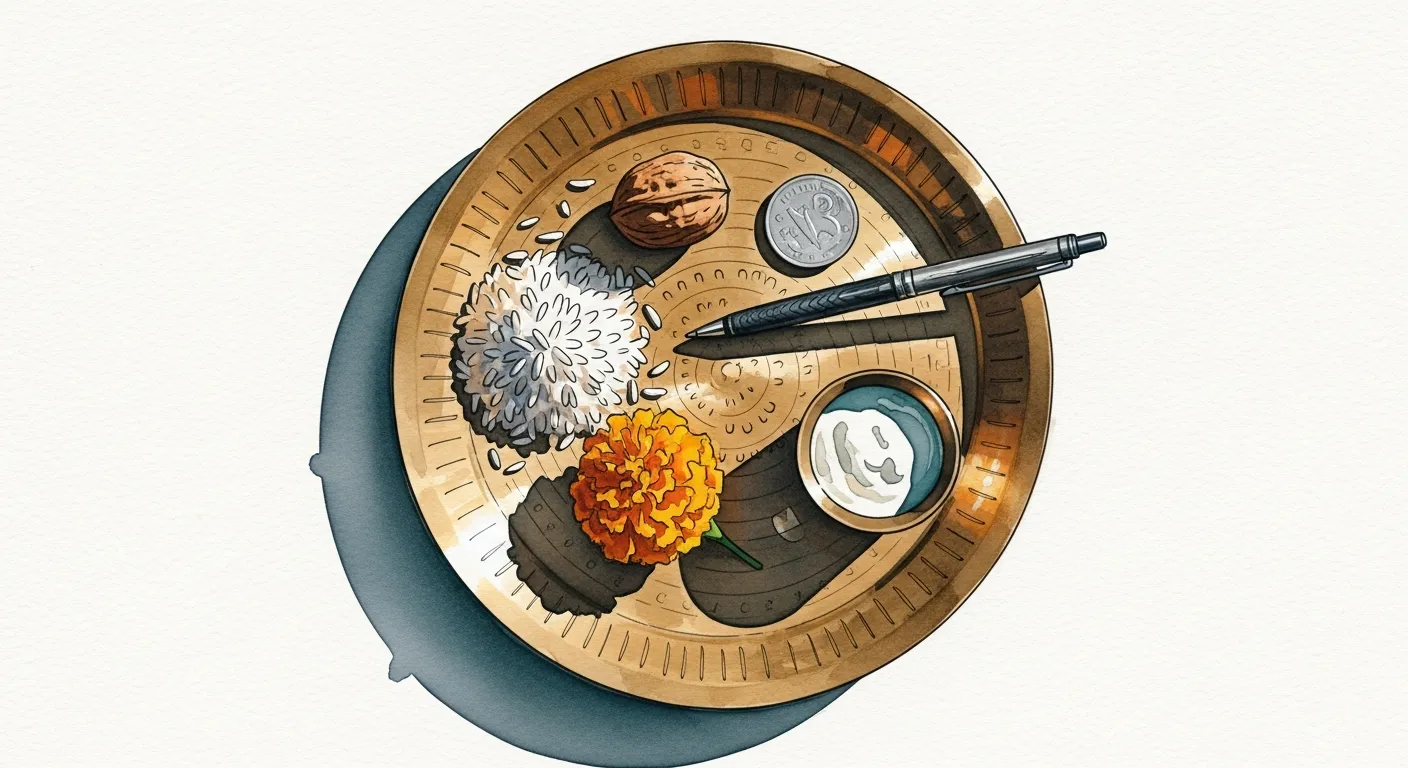
The night before, a brass thaal, a large flat plate, was prepared by the elder women of the household. Arranged on it: a small mound of rice, a walnut, a piece of salt, a container of curd, a silver coin, a pen, a sugar crystal, a spring flower. Sometimes a mirror. This plate was set in a specific place, covered, and left overnight.
This morning, before eyes landed on anything else, before the phone, before the street, before another person's face, the family looked at the thaal. The thaal was the first thing seen in the new year.
The logic: you begin the year by seeing abundance. Rice for sustenance. Walnut for health. Salt for life's necessities. Curd for auspiciousness. Coin for prosperity. Pen for knowledge. Sugar for sweetness. Flower for beauty. The new year is greeted with a curated vision of everything you want it to contain.
Then the feast: methi chaman, rogan josh, dum aloo, haakh (the bitter Kashmiri greens, again, bitterness appears), modur pulao (sweet rice with dry fruits and saffron).
For the Kashmiri Pandit diaspora, spread across Jammu, Delhi, Mumbai, and now much of the world, Navreh is held with particular intensity. The community that lost its valley in 1990 carries the thaal ritual as a continuity. The thaal remembers the home even when the home is gone. The parallel with Cheti Chand and the Sindhis is not accidental, both are communities of displacement for whom the new year ritual is also an act of cultural preservation.
The thaal remembers the home even when the home is gone.
SAJIBU NONGMA PANBA, Manipur
In the Meitei community of Manipur, the same lunisolar new year is Sajibu Nongma Panba, also called Cheiraoba.
The day begins with ritual bathing. Then an offering to the household deities. Then the thabal chongba, a traditional community folk dance, circular, performed at night, young men and women holding hands in a ring. The food is freshly cooked and shared, fermented fish (ngari), bamboo shoot preparations, eromba (a mash of boiled vegetables with fermented fish paste), rice in every form.
The Meitei calendar independently arrived at the same lunisolar logic, the same Chaitra anchor. The subcontinent's relationship with time ran on similar operating systems even when the communities had no contact with each other.
What the five have in common
One: they all eat something bitter at the start.
The neem of Maharashtra. The neem flowers of Andhra and Karnataka. The haakh of Kashmir. The bitter greens that appear on every Manipuri table. The pachadi's bitter note. Five different communities, one instinct, start the year with an honest acknowledgment that it will not be entirely sweet.
Two: they all involve water.
The Gudi faces the sky. Cheti Chand worships Jhulelal at the water. Navreh includes curd, water, transformed. Sajibu begins with ritual bathing. Ugadi pachadi contains tamarind, the most water-dependent of flavours.
Three: they all involve the family table before anything else.
Not the office. Not the market. Not the phone. The threshold of the home, the morning kitchen, the arranged plate, these are the first acts of the new year.
Four: they all fall on the same day because they are all reading the same sky.
The lunisolar calendar is not one tradition's invention. It is a shared observation, the moon's cycle, the sun's position, the agricultural season's turning. March is the end of the cold, the beginning of the heat, the moment when the mango appears, when the neem flowers, when the Indus swells with snowmelt, when the valley's crops show their first green. The calendar didn't create the festival. The season did. Five communities watched the same season arrive and built five different ceremonies around the same moment.
The one dish worth making tonight
The Ugadi pachadi. Because it is the most honest food ritual there is.
Not a recipe. Instructions.
Take a raw mango, young, sour, unripe. Grate it or chop it fine. Add jaggery, crumbled. Add a few neem flowers if you can find them, if not, a tiny pinch of dried methi leaves approximates the bitterness. A small green chilli, sliced. A pinch of salt. A small piece of tamarind soaked in water, the liquid squeezed in.
Mix it. Taste it. All six tastes will arrive at different moments, the sour hits first, then the sweet, then the bitter lingers, the sharp arrives late, the salt and astringency hold everything together underneath.
Eat it tonight if you didn't this morning.
Think of it not as a chutney but as a forecast. The year will taste like this. You already know. You're prepared.
Field Notes
Quick referenceChaitra Shukla Pratipada. Parabhava Nama Samvatsara, the 60th in a 60-year cycle. Shalivahana Shaka Year 1948. Also the start of Chaitra Navratri.
Mumbai's main Gudi Padwa procession runs through Dadar, Dr Ambedkar Road, Girgaon, Marine Drive. If you're reading this before noon, go now.
Any Udupi or Andhra restaurant in Matunga will have made Ugadi pachadi this morning. Cafe Madras, Hotel Rama Nayak, Arya Bhavan. Call ahead.
Ulhasnagar is the epicentre. Sindhi Panchayat near Colaba organises a South Mumbai gathering. The tahiri is worth finding. Evening puja: approx 6:30-8:00 PM.
Neem leaves and jaggery eaten together on an empty stomach. The ritual acknowledgment that the year will bring both bitter and sweet. If you haven't done it this morning, the day is not over.
India runs simultaneously on the Gregorian, the Islamic Hijri, the Saka, and multiple regional lunisolar systems. The country is always in at least three different years at the same time.
Get the next story first
Join the Bhukkads. Free, no spam, just stories.
Takes 30 seconds.