Eid Mubarak! A Deep Dive Into What Eid Tastes Like Around the World
Sheer khurma to bastilla to rendang to sawine. Same prayer, completely different tables.
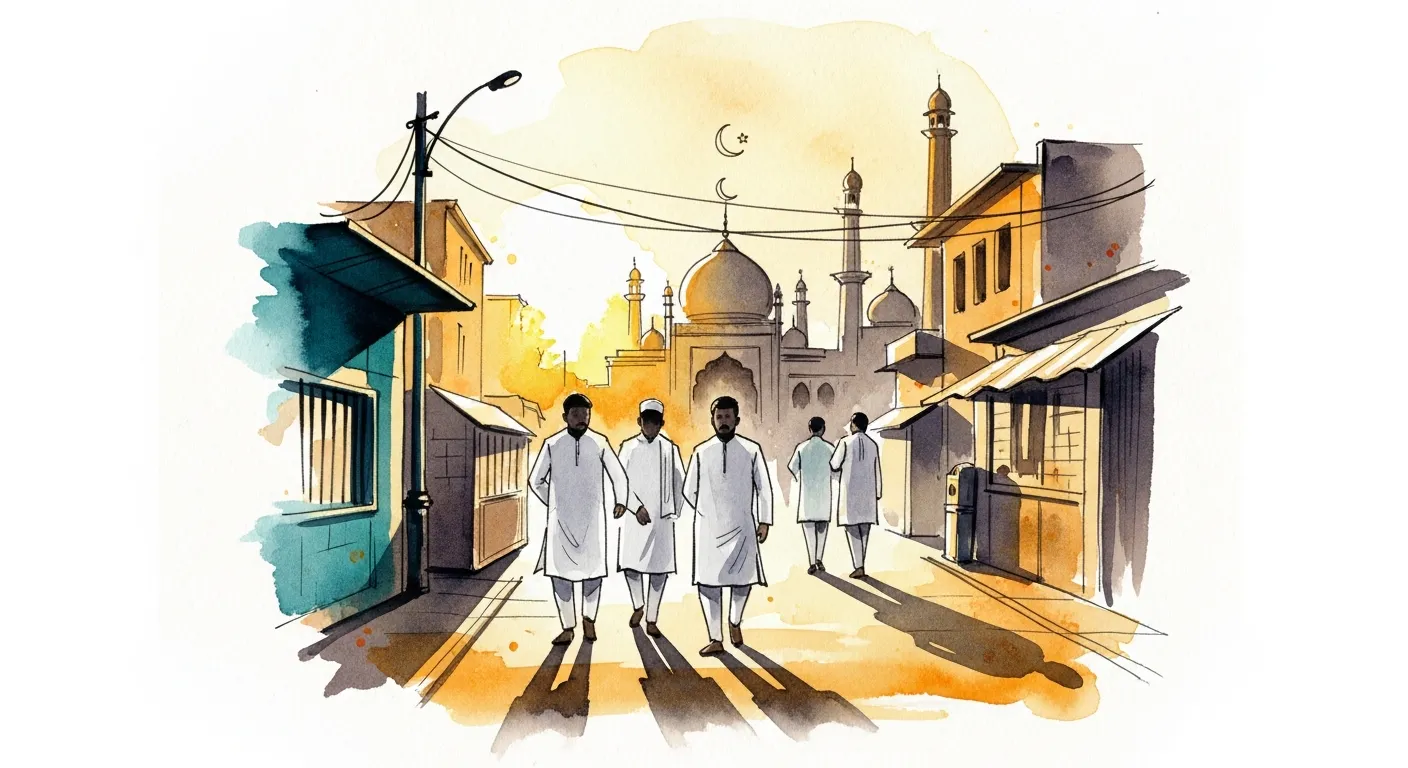
Watercolor illustration
Two Eids a year. Not one.
Eid al-Fitr, today. The sweet one. Meethi Eid. Thirty days of Ramadan end this morning and the first thing in the mouth is something sweet. Always sweet first.
Eid al-Adha, June this year. Bakri Eid. The sacrifice Eid. A livestock animal, goat, sheep, cow, camel, is slaughtered, and the meat divided into three equal parts: family, friends, the poor. No household keeps more than a third. This is the one built entirely around meat.
Same greeting for both, Eid Mubarak. Different everything else.
The food especially.
INDIA FIRST, BECAUSE YOU ALREADY KNOW THIS
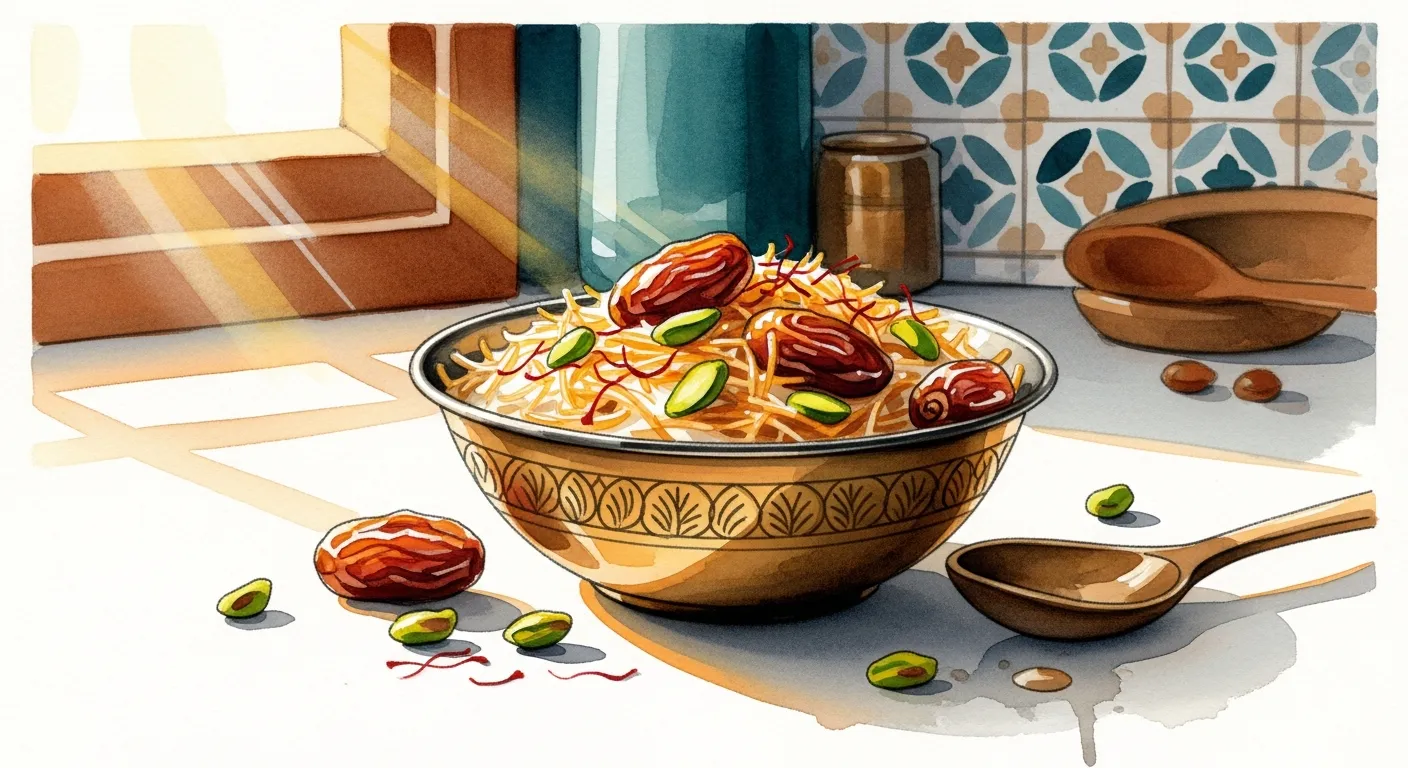
Sheer khurma before anything else. The vermicelli pudding with milk, dates, saffron, pistachios, this is the universal opening on every Indian Eid table, north to south, east to west. After that, it fractures.
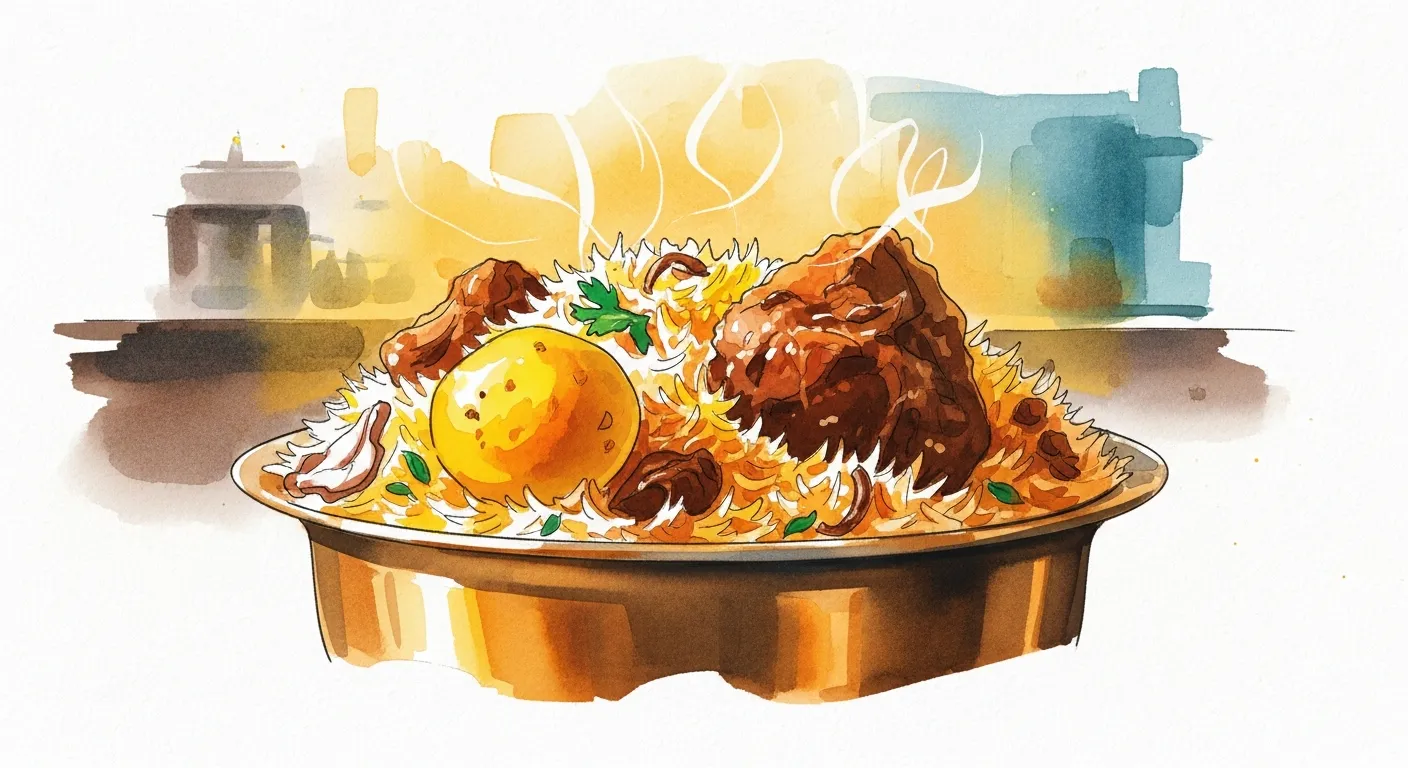
Hyderabad eats dum biryani and haleem, the haleem so specific it has a Geographical Indication tag, the only meat product in India to have one. You cannot call it Hyderabadi haleem unless it is made in Hyderabad.
Lucknow whispers its food at you. Galouti kebab ground so fine it dissolves on the tongue. Sheermal bread more perfume than bread. Kiwami seviyan with balai, the clotted cream of the Awadhi kitchen.
Kolkata puts a potato in the biryani. This sounds like a small thing. It is not a small thing. The story of that potato is the story of a king who lost his kingdom and could no longer afford enough meat, and whose cooks reached for something cheaper and accidentally invented one of the most debated ingredients in Indian food history. More on that below.
Kerala does not do Mughal. Kerala does maritime. Malabar biryani with kaima rice, shorter, nuttier, lighter. Pathiri flatbread. Unnakaya, a banana fritter stuffed with coconut and egg. Arab traders were on the Malabar coast before the Mughal empire existed. The food remembers this.
Mumbai, Mohammadali Road, right now, today, is running at full capacity. Nalli nihari at dawn, kebabs on coal, phirni in clay cups, malpua in syrup. The city smells like Eid.
You know all of this. You've eaten most of it.
Here is what you don't know.
EID AROUND THE WORLD, WHERE IT BECOMES UNRECOGNISABLE
The same festival. The same prayer. The same greeting. And then you land somewhere and the food on the table looks nothing like anything you've seen at an Eid before.
Morocco and North Africa
The centrepiece is tagine, meat slow-cooked in a conical clay pot with dried apricots, prunes, almonds, and warm spices. Sweet and savoury in the same mouthful. This is not a biryani situation. This is fruit with meat, and it is extraordinary.
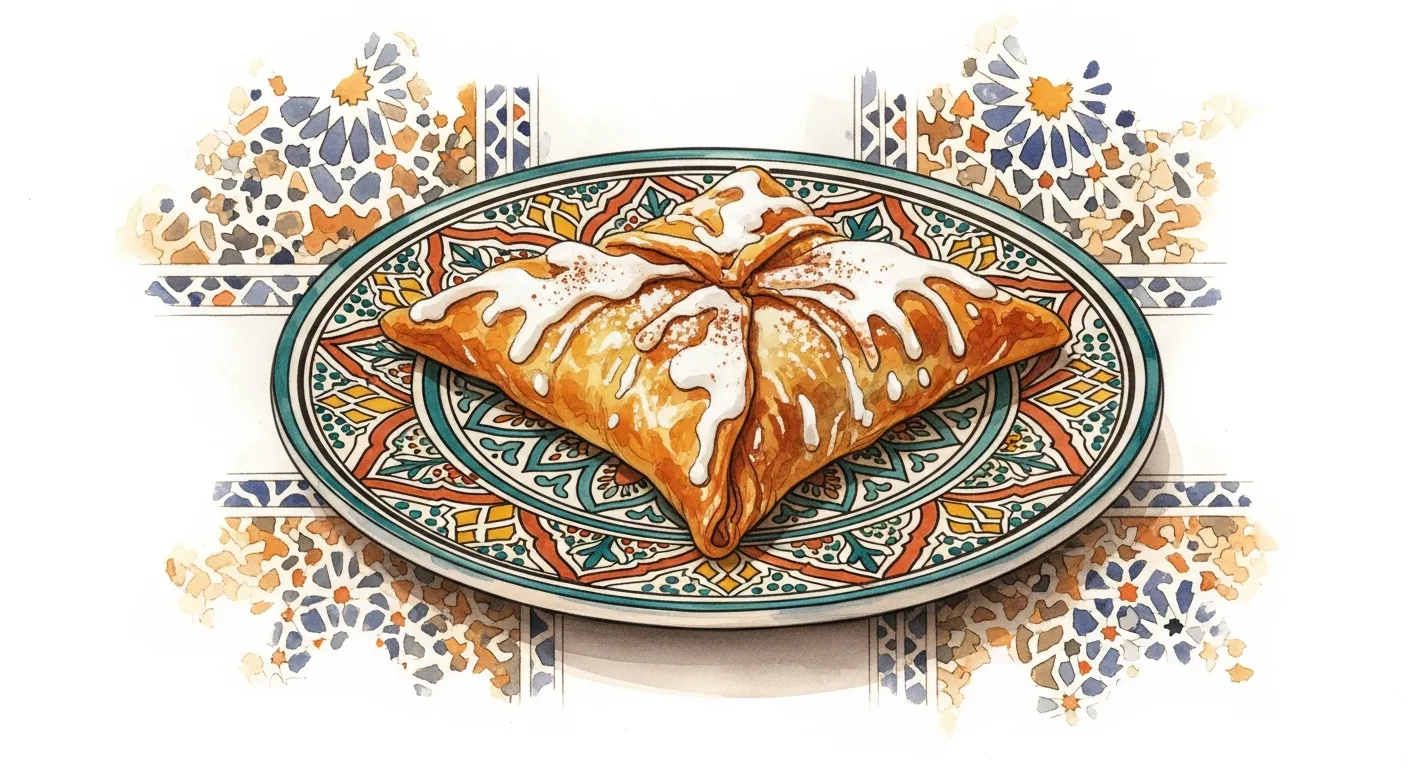
Then there is bastilla, a pie. Pigeon or chicken, almonds, cinnamon, wrapped in paper-thin pastry and dusted on top with icing sugar. A savoury pie with icing sugar. The Moors who were expelled from medieval Spain carried their Andalusian food culture back to North Africa. Bastilla is what happened when that culture landed in a Moroccan kitchen. It is one of the great dishes of the world and almost nobody outside the region has heard of it.
Turkey
Turkish Eid is called Seker Bayrami, the sugar festival. The centrepiece is not meat. It is baklava. Families spend three days visiting relatives and at every house, without exception, there is Turkish coffee and baklava. The entire city of Istanbul smells of pistachio and clarified butter for seventy-two hours. The meat is secondary. The pastry is the point.
Iran
Persian Eid food is fragrant and ceremonial. Ash reshteh, a thick noodle and herb soup eaten to mark new beginnings. Sholeh zard, saffron and rosewater rice pudding, made in large quantities and distributed as charitable offering to neighbours. Not eaten privately. Given away. The generosity is the ritual, and the food is the instrument of it.
Indonesia
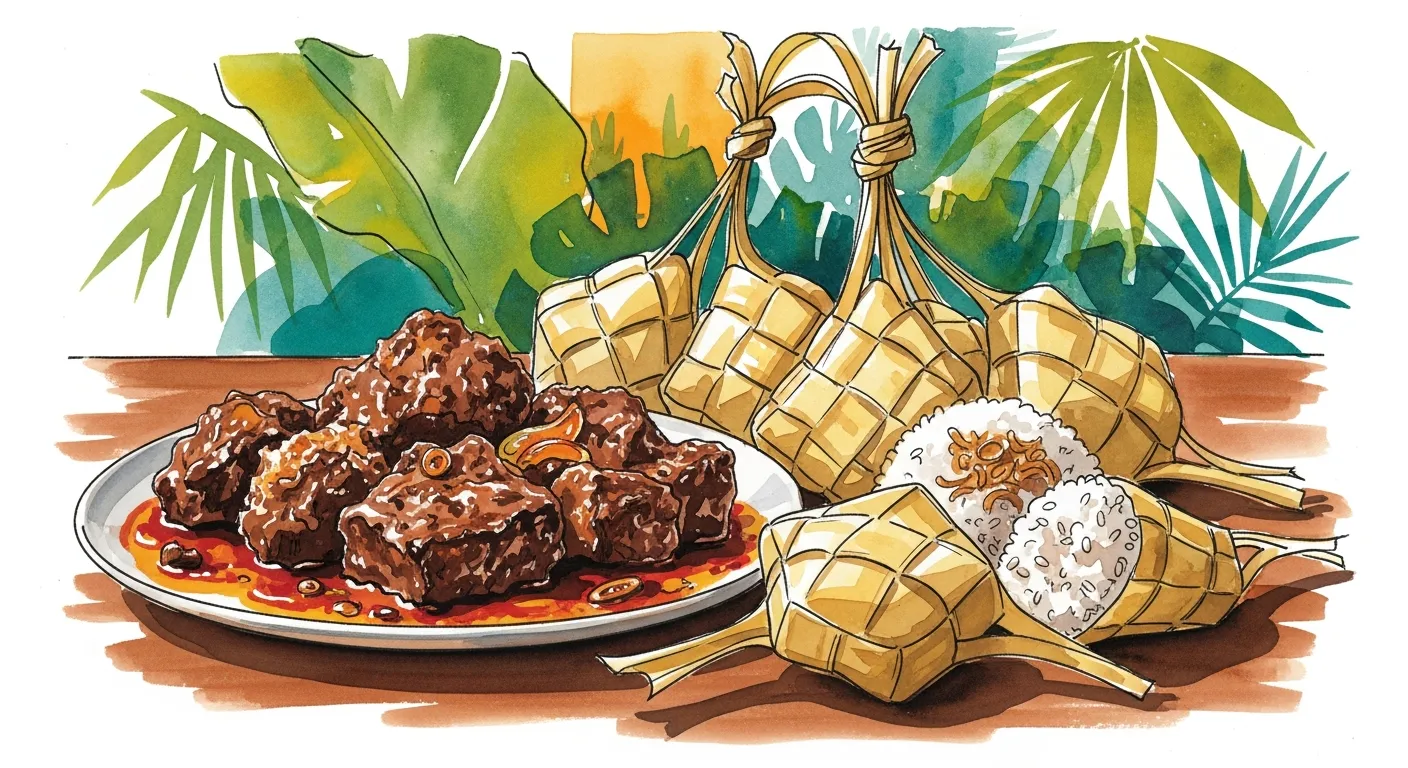
The world's largest Muslim population eats ketupat, rice compressed and cooked inside woven palm leaf pouches, which give it a specific texture and a faint grassy fragrance that no other cooking method produces. This is eaten with rendang, beef cooked in coconut milk and spices for eight hours until the liquid evaporates completely and the spices caramelise directly onto the meat. It is consistently voted one of the most delicious foods on earth. It takes an entire day to make. They make it for Eid.
West Africa
Senegal brings out thieboudienne, rice and fish, the national dish, elevated for the occasion. Nigeria does suya, beef skewered and grilled over open coals with a spice rub that has ground peanuts at its base, alongside kilishi, which is dried spiced meat similar to jerky but with a complexity that jerky does not have. West African Eid food is smoky, fermented, intensely savoury. No rose water. No saffron. Completely different register.
Trinidad and Tobago
Here is the one that stops you. Trinidad's Muslim community eats sawine, vermicelli in sweetened milk, as their Eid sweet. The same vermicelli. The same sweetened milk. The same festival morning logic of sweet first before anything else. This is the same instinct as sheer khurma, arriving in the Caribbean through completely separate migration routes, indentured labourers from India brought to Trinidad by the British in the 19th century, settling into the same ritual on the same day, ten thousand kilometres away. The table looks different. The logic is identical.
That is the thing about Eid. The prayer is the same everywhere. The greeting is the same. And somewhere underneath the bastilla and the ketupat and the suya and the sawine, the same impulse, mark the day with food, share it with whoever is near you, make more than you need.
THE POTATO THAT CROSSED INDIA IN A KING'S KITCHEN
Back to that Kolkata biryani potato.
In 1856, the British annexed the Kingdom of Oudh. The last Nawab, Wajid Ali Shah, poet, playwright, inventor of modern Kathak dance, was put on a steamer to Calcutta under the pretence that it was a temporary stop before London. It was not temporary. He spent the rest of his life there.
He brought five hundred people with him. Poets, musicians, maulvis, and khansamas, royal cooks who carried the full repertoire of Awadhi cuisine entirely in their heads.
He settled in Metiabruz and built a miniature Lucknow. Palaces, gardens, a zoo, mushaira evenings. A king playing king in exile.
Then he wanted to feed his labourers.
Biryani must be served, this was not negotiable, this was who he was. But the meat budget was gone. The khansamas needed something to fill the handi. Something that could absorb the saffron and hold the spices.
They reached for the potato.
The Portuguese had brought potatoes to India and they were still considered exotic, expensive enough to be interesting, not as expensive as meat. The potato turned out to be a perfect vessel. Porous enough to absorb every spice in the handi. Dense enough to survive the dum-cook. Golden-brown and yielding at the table.
The Nawab loved it. He ordered it in every biryani from then on.
Manzilat Fatima, his great-great-granddaughter, runs a home diner in Kolkata today. She says: "You have the characteristic of Awadh biryani in the Kolkata one. They are like cousins of one family."
Every Eid in Kolkata, millions of people sit down to biryani and argue, affectionately, proudly, that the potato is the best part.
They are right. And they are eating, without knowing it, the ingenuity of a broke king's kitchen in Metiabruz, 1856, trying to honour a feast when the feast was running out.
The potato did not diminish the biryani. It completed it.
THIS MORNING
The moon was sighted last night. Eid is today.
By 6am, the lanes around Minara Masjid were already full. Men in white kurtas. Children in new clothes. The smell of sheer khurma from every open window. The sound of takbeer carrying across the neighbourhood.
After the prayer, the tables.
Sheer khurma first. The first sweet thing after thirty days of fasting. The announcement that the hard part is over.
Then the biryani. Then the kebabs. Then the guests. Then more food. Then more guests. Then four o'clock in the afternoon when the neighbourhood settles into the specific warmth of a day well-lived.
Same day. Bastilla in Casablanca. Baklava in Istanbul. Rendang in Jakarta. Suya in Lagos. Sawine in Port of Spain. Sheer khurma in Mumbai.
Eid Mubarak.
Field Notes
Quick referenceEid al-Fitr: March 20, 2024, today. End of Ramadan. Sweet Eid. Eid al-Adha: approximately June 27, 2024. The sacrifice Eid. Confirmed closer to the date by moon sighting.
If you ever find yourself in Casablanca or Marrakech at Eid, order the bastilla. Pigeon is traditional, chicken is common now. The icing sugar on the savoury pie is the whole point.
Eight hours. Coconut milk must fully evaporate before spices caramelise onto the meat. No shortcut produces the same result. Indonesian grandmothers start the day before Eid.
Only meat product in India with a Geographical Indication tag. Slow-cooked wheat, lentils, mutton, minimum four hours. Pista House exports during Eid season.
Not the same dish. Sheer khurma has dates, khurma means dates in Persian, richer, older. Seviyan is simpler, everyday. Most homes make seviyan. Sheer khurma is the occasion one.
Great-great-granddaughter of Wajid Ali Shah. Runs Manzilat's in Kasba, Kolkata. Cooks Awadhi food, not Mughlai. To eat there is the closest to the original Eid table of a dethroned Nawab.
Trinidad's sawine and India's seviyan are the same dish, separated by the Atlantic and 150 years of migration. Both eaten on Eid morning. Food remembers what history forgets.
Get the next story first
Join the Bhukkads. Free, no spam, just stories.
Takes 30 seconds.