The Food the Kotha Kept Alive
Before Bollywood mythologised them and real estate erased them, the women of Kamathipura fed this city something it still eats today.
Watercolor illustration
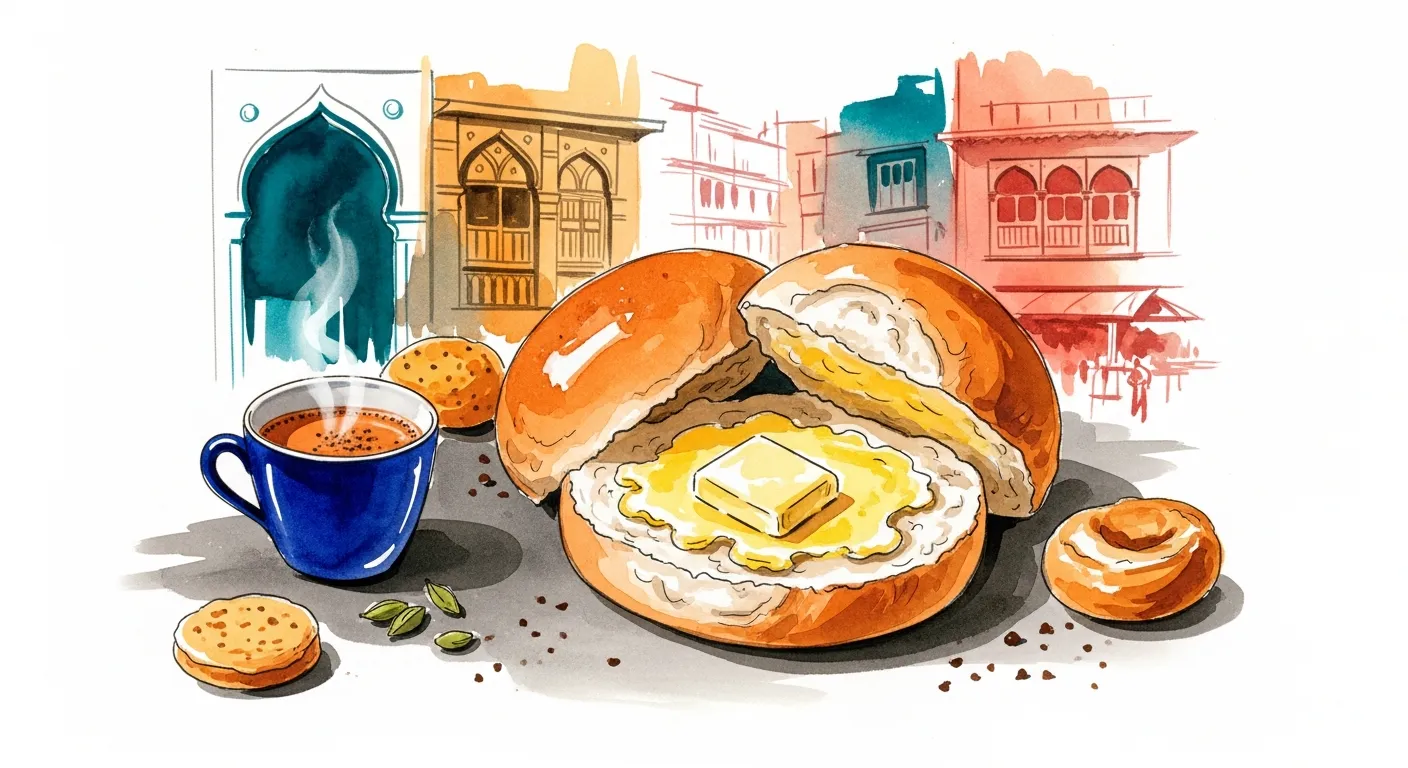
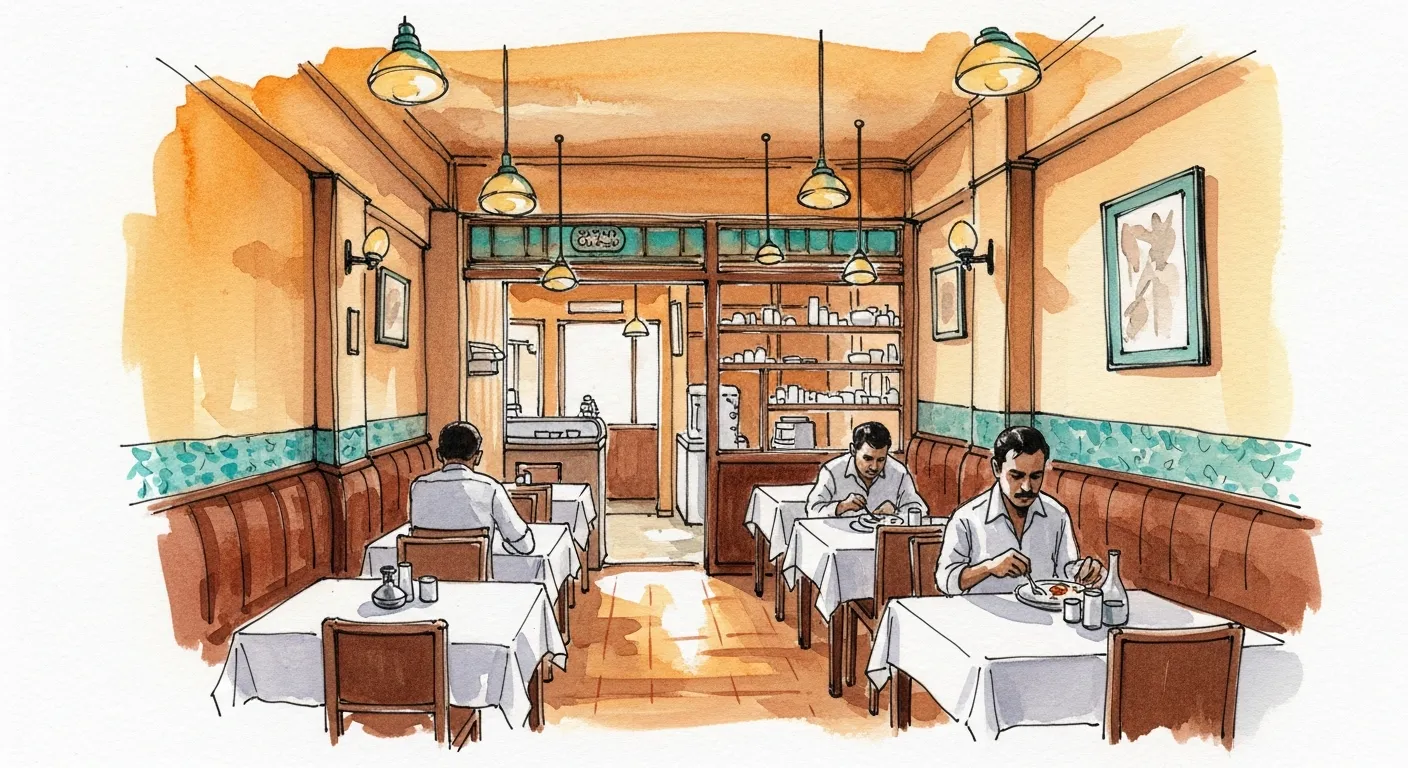
There is a restaurant at Nagpada junction called Sarvi. It has been there since 1920. The walls are the colour of old tea. The tables are close together. It opens at 6am and it does not apologise for anything on the menu.
Somewhere in the back, there is a table they call the Manto Table.
Saadat Hasan Manto, the writer who saw Bombay more clearly than almost anyone who has ever written about it, used to come here in the mornings. He would sit, eat, and watch. What he watched, mostly, was the neighbourhood around him. The lanes of Kamathipura were minutes away. The women who lived and worked in them were the subject of some of the most honest writing about this city that exists. Manto did not look away. He did not romanticise. He just watched, and wrote, and ate his breakfast.
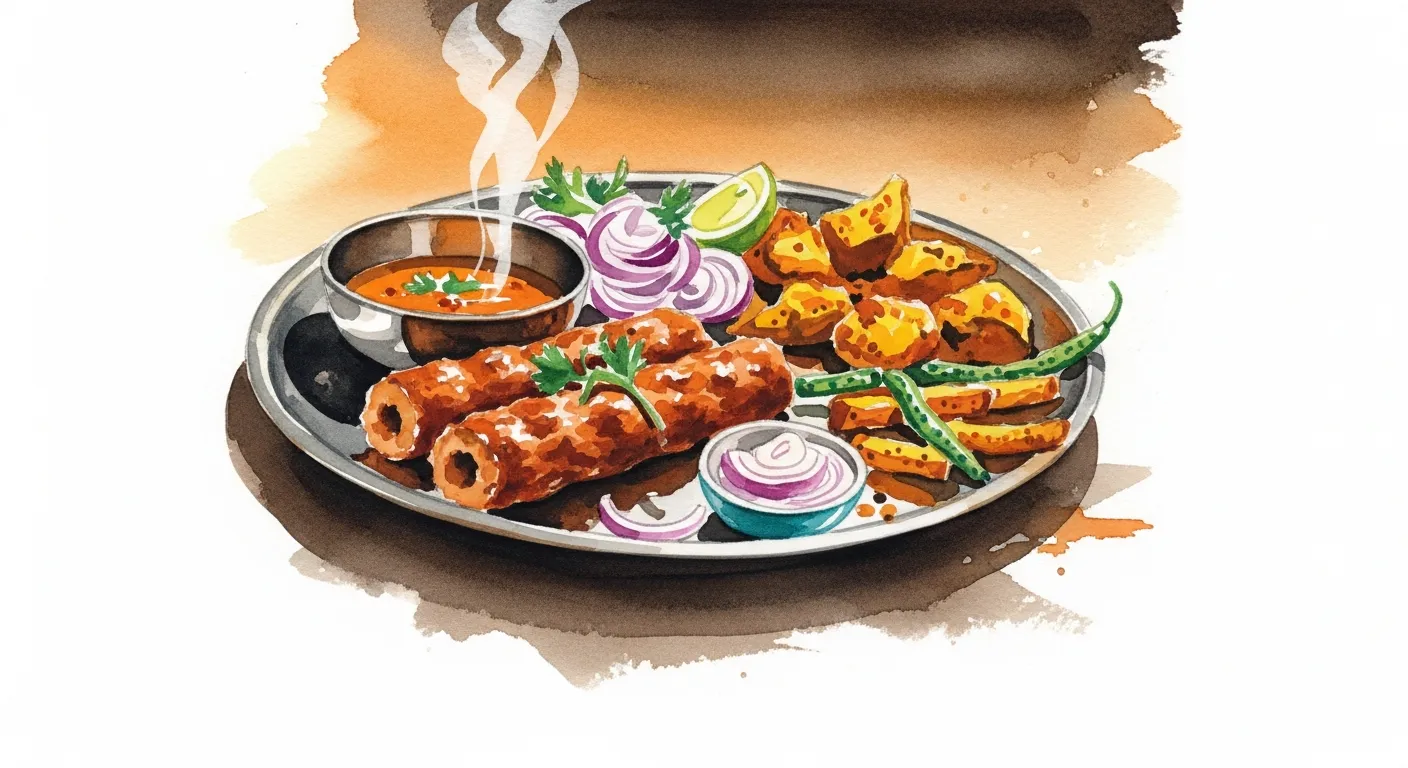
The food he ate at Sarvi, seekh kebab, bheja fry, maska pav, is Mughal food. It is also kotha food. The connection between those two things is a history that the city has largely chosen to forget.
Before the British arrived and decided what these women were, the tawaif was not a prostitute.
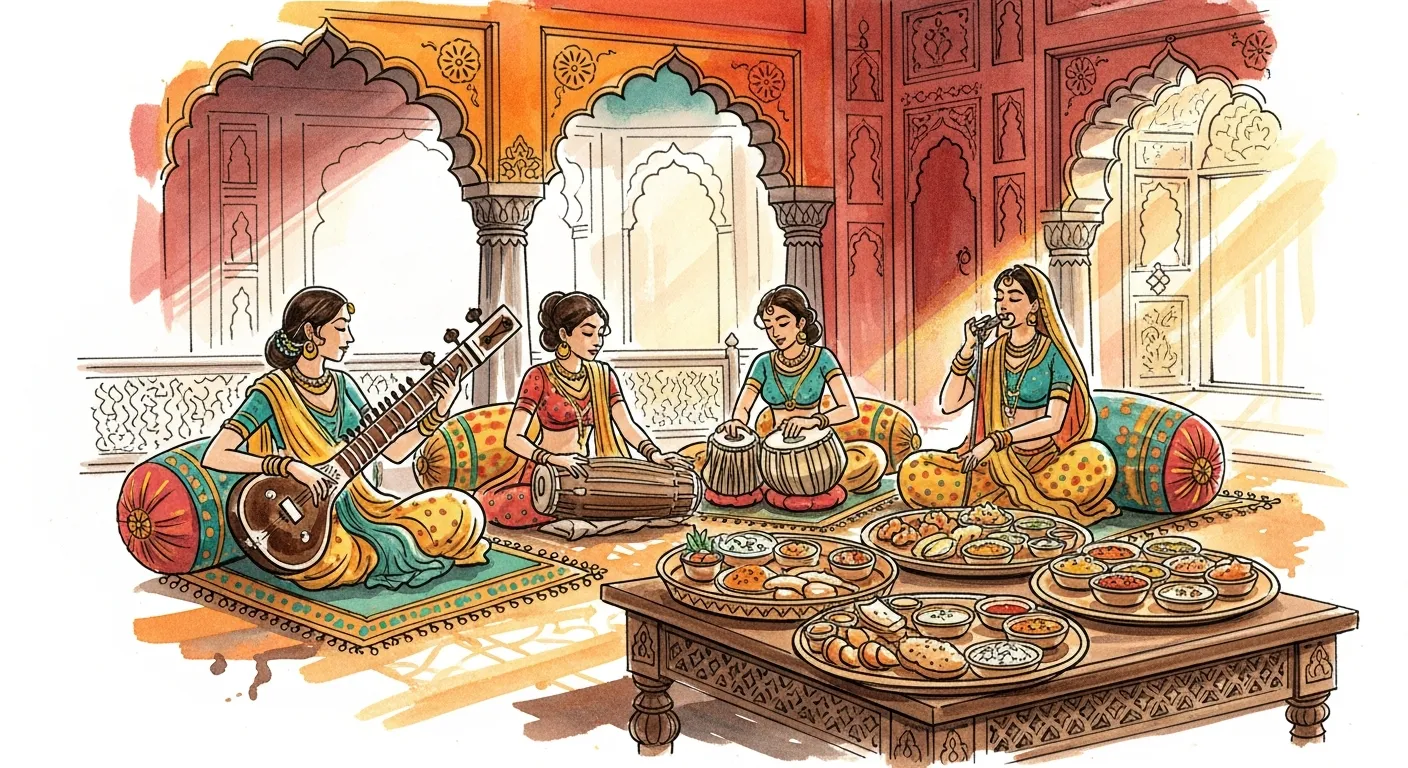
This requires saying clearly, because a century of colonial law and Bollywood melodrama has buried it. The tawaif was a courtesan, a trained performer, poet, musician, and keeper of Mughal cultural tradition. The kotha was not a brothel. It was a salon. Mughal royalty sent their sons there to learn manners, Urdu, music, and how to eat. The tawaifs of Lucknow were, at their peak, the highest taxpayers in the city. They owned property. They controlled their own wealth. They presided over mehfils, gatherings of poets, musicians, writers, where the food on the table was as carefully considered as the ghazal being sung.
The kotha had a cuisine. It was the cuisine of the Mughal court, refined by women who had been trained in every art of hospitality. Slow-cooked nihari. Delicate seekh kebab. Biryani made for a gathering, not a transaction. Food that required time, skill, and the understanding that a guest, however he arrived, deserved to be fed well.
The kotha was not a brothel. It was a salon. The food on the table was as carefully considered as the ghazal being sung.
Then 1857 happened.
After the Indian Rebellion, the British moved systematically against everything that represented the old Mughal order. The tawaifs were part of that order. Their kothas were seized. Their land was taken. The Victorian morality project, which had no patience for women who owned property, presided over salons, and operated outside male domestic control, redefined them as prostitutes. The legal framework followed. The distinction between courtesan and sex worker, which had been clear and meaningful for centuries, was collapsed by colonial legislation into a single category of shame.
The tawaifs were pushed out of Lucknow and Awadh. They moved to cities where the British presence was strong and the demand for what they did, entertainment, companionship, food, conversation, would continue. Many came to Bombay.
Kamathipura was already forming at the edges of the British fort by 1795. Originally a settlement of Kamathi labourers from what is now Telangana, it became by the mid-1800s the designated zone where the British military sent its soldiers for entertainment. The British built the system. The women who filled it came from everywhere, from UP, Bengal, Karnataka, Nepal, and from the collapsing kotha culture of the north. They brought what they carried. Their languages. Their prayers. Their recipes.
By 1992, the area had 45,000 sex workers. At its peak it was called Asia's largest red-light district. The lanes were divided roughly by regional community, workers from different states clustering in the same gullis, speaking the same languages, cooking the same food. A Bengali woman cooked what her mother cooked in Murshidabad. A woman from UP made the nihari she had watched being made in a kotha kitchen in Lucknow. A woman from Karnataka made the rice and dal she had grown up with.
The food of Kamathipura was, in this sense, a map of India's migrant misery and migrant resilience simultaneously. Every regional cuisine that passed through those lanes left a trace. The biryani shops along Falkland Road. The late-night kebab stalls near Grant Road station that are still there, still selling at midnight, still attended by the city's night-workers and insomniacs and anyone who knows where to go. The food existed because the women cooked it, for themselves, for the men who visited, for the children who grew up in those lanes, for the neighbourhood that formed around them.
Manto understood this neighbourhood not as a problem to be solved but as a city within a city. His stories about the women of Kamathipura, Mozelle, Janaki, Hamid's Baby, are not tragic in the way that a social worker's report is tragic. They are honest. He saw women who were funny, angry, tender, selfish, generous, bored, strategic, human, in other words, in the full range of what that means. He sat at Sarvi and watched the lanes and wrote what he saw.
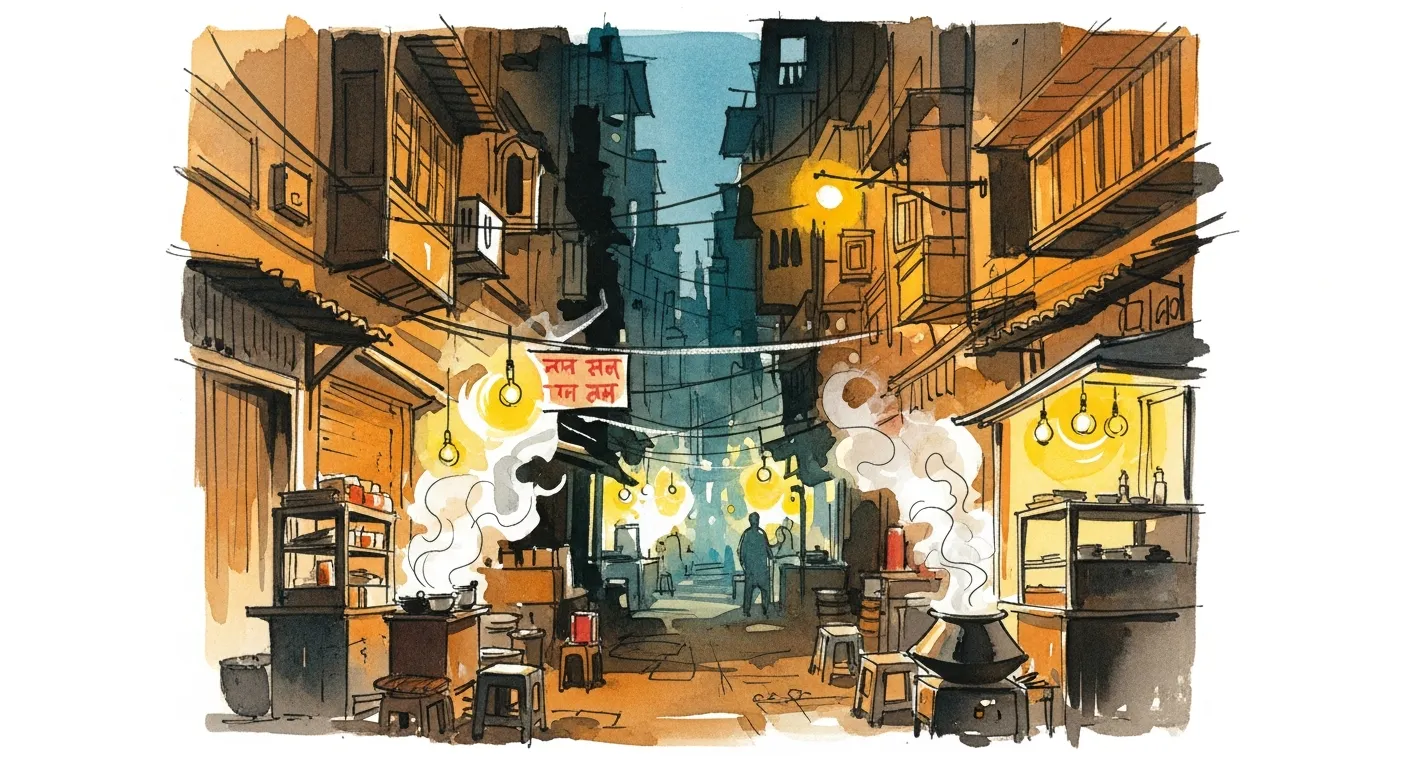
He saw women who were funny, angry, tender, selfish, generous, bored, strategic. Human.
The food at Sarvi is the food of that neighbourhood. The seekh kebab recipe has not changed. The bheja masala has not changed. The maska pav, butter on bread, the simplest thing, has not changed. It is 1919 food in a 2026 city, and it has survived because the neighbourhood that sustained it had a reason to keep cooking.
The neighbourhood is disappearing now for the same reason everything in South Bombay disappears, the land is worth more than the people on it.
From 50,000 sex workers in 1992, Kamathipura is down to fewer than 500 today. The buildings are being bought lane by lane. The builders arrived the way they always arrive, quietly, with offers that are hard to refuse when the alternative is another decade in a dilapidated building with unreliable water. The women moved to Nalasopara, to Vikhroli, to the far suburbs where the rents are lower and nobody knows them.
The food stalls remain for now. The kebab wala near Grant Road who sells out by midnight. The biryani shop on Falkland Road that has been there longer than anyone working there can remember. Sarvi with its Manto Table and its unchanged menu.
But the neighbourhood that made this food meaningful, the specific density of migrant women from specific places cooking specific things, is going. When it goes, the food will still exist. The seekh kebab will still be on the menu somewhere. But it will have lost the context that gave it weight. It will just be food, instead of what it actually is: a century of women feeding themselves and each other and the city around them, with whatever they brought from home.
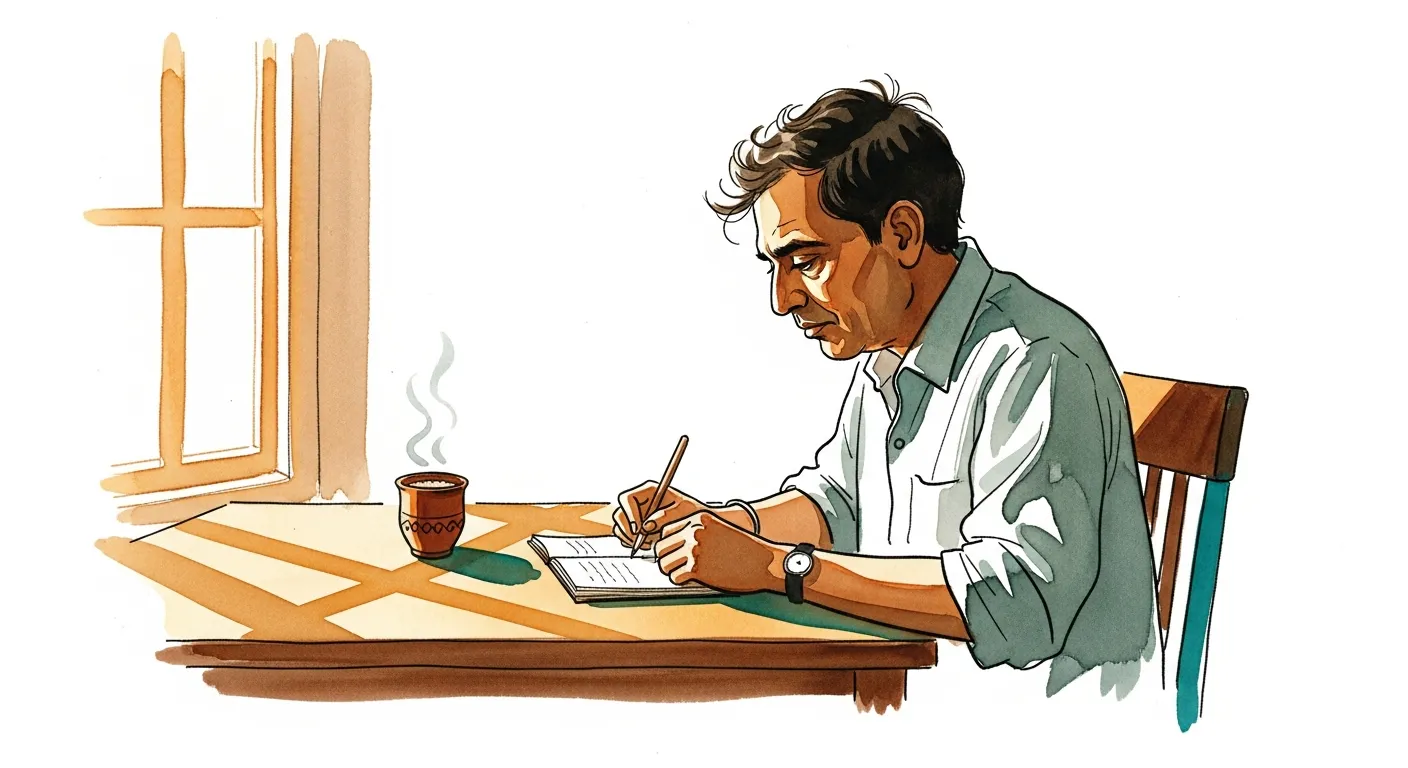
There is a detail in Manto's writing that keeps coming back. He wrote about the women of Kamathipura not with pity but with the same attention he gave everything else in the city, the mill workers, the radio producers, the Partition refugees. He understood that these were people the city needed and used and then chose not to see. He sat at Sarvi and ate his breakfast and watched the lanes and wrote it all down.
The food outlasted the writing. The writing outlasted the lanes. The lanes are almost gone.
Who does a city decide to feed, and who does it decide to forget?
Get the next story first
Join the Bhukkads. Free, no spam, just stories.
Takes 30 seconds.