On the Menu: Bandra
From Koli fish dried on the rocks to Portuguese pork vindaloo to a 1938 Iranian biryani to the mid-2000s restaurant boom that made a suburb into a city unto itself, the food history of the Queen of Suburbs, birth till date.
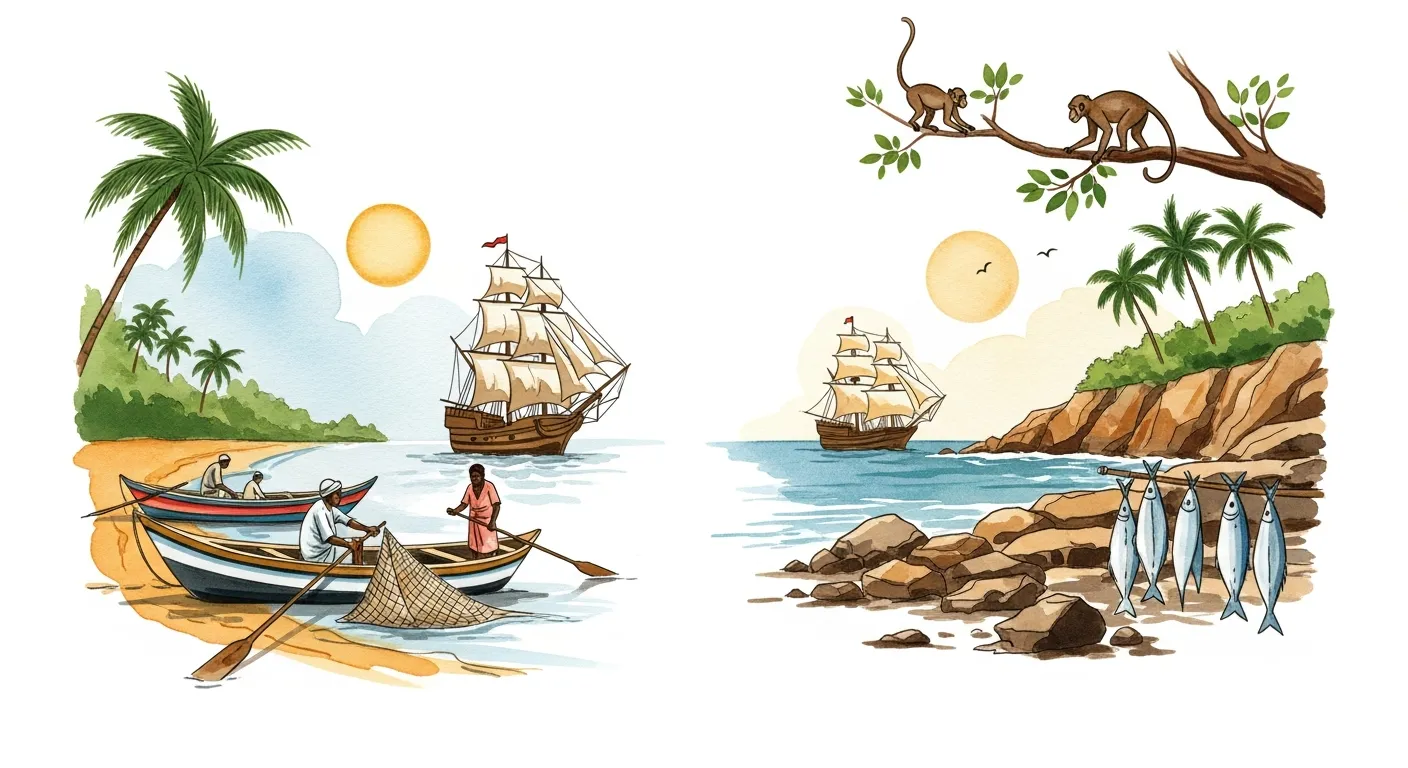
Vandra. Marathi for monkey. That was the first name.
Then the Portuguese arrived and tried to spell it. Bandor. Bandora. The Marathas took it and it became Bandera. Then Bandura. The British wrote Bandore, Pandara, Bandorah, Bandara. The locals said Vandre. Ten names across five centuries, each one a different empire's attempt to pronounce a word that meant monkey.
Then a railway official painted Bandra on a signboard at the end of the 19th century. The trains started stopping there. People started calling it that. That was that.
Before Bandra had a name, it had fish.
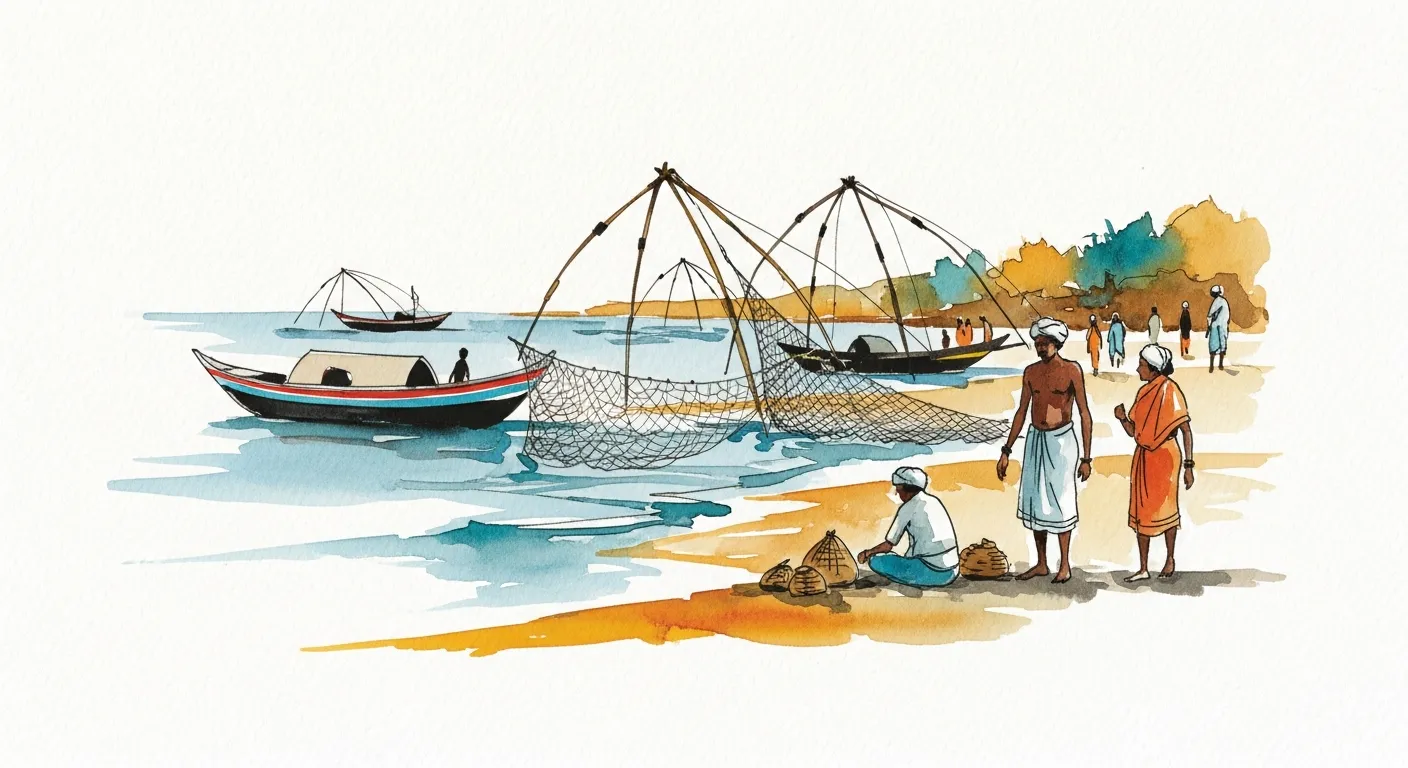
The Koli fishing community settled these shores long before any colonial power arrived to rename the place, convert the people, and build churches on the hills. They fished the Arabian Sea. They dried their catch on the rocks. They built their koliwadas at the water's edge, Chimbai, Danda, Khar Danda, and organised their entire economy around the sea.
The fish they caught and ate are the same fish this suburb still runs on. Pomfret. Surmai. Rawas. Prawns. And bombil, the Bombay Duck, which the Portuguese would later call bambulim, from which the local name derived. The Kolis prepared bombil by dredging it in rice flour and their own masala: sun-dried red chillies, coriander seeds, tirphal (Sichuan pepper, which gives the masala its distinctive bitter heat), and a careful blend of other spices that each household held as its own. Fresh bombil has a single bone and surprisingly delicate flesh. Dried bombil, semi-cured in the sun, hung in lines outside koliwada houses, becomes something else entirely: concentrated, umami-rich, a whole different food made by removing water and adding time.
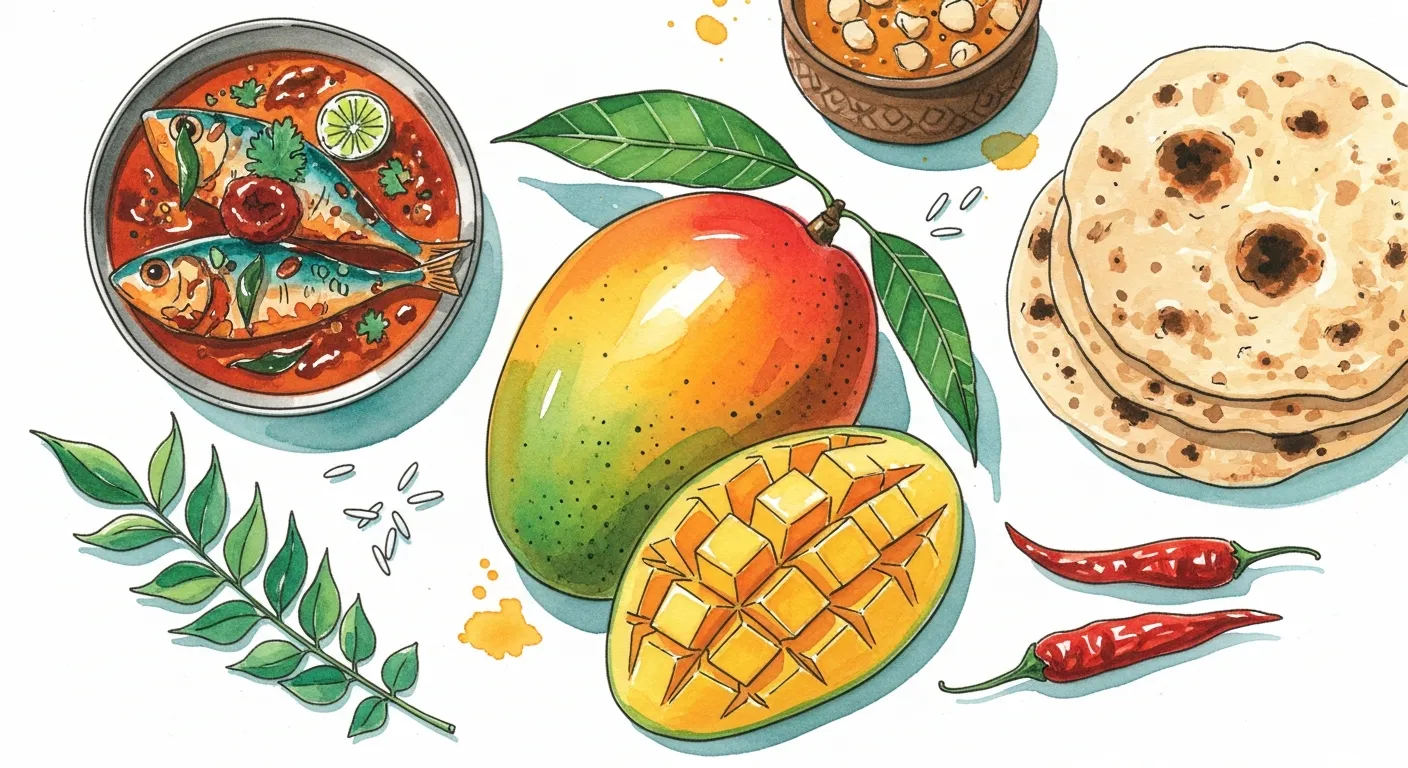
The Koli kitchen was coconut, fish, tamarind, kokum, and rice. All of it local. All of it grown or caught within sight of where it was eaten. This is Bandra's original cuisine, the one that existed before anyone arrived to improve it.
You will not find a Koli menu on Linking Road or Hill Road. But the food is there if you know where to look: community pop-ups in Chimbai and Versova, the annual seafood festivals, and the homes of families who have been cooking this way since before the suburb had a name.
1534: THE PORTUGUESE BRING THE PIG
Diego da Silveira sailed into what the Portuguese called Bandora Creek in 1534, acquired the territory, and set in motion a chain of events that would transform what Bandra ate for the next five centuries.
The Portuguese brought three things to the Bandra kitchen that had not been there before: the chilli, the pig, and vinegar.
The chilli arrived from the New World via Portuguese trade routes, Columbus found it in the Caribbean, the Portuguese carried it to India, and within a generation it had so thoroughly embedded itself in the cooking of the Konkan coast that it is now impossible to imagine Koli masala, bottle masala, or any of the fish curries of this coastline without it. The chilli that the Kolis and the newly converted Catholics began using in the 16th century is a Portuguese import. It tastes indigenous because it has been here for 500 years.
The pig was more complicated. The Koli and Kunbi and Bhandari communities whom the Jesuits converted to Catholicism were not traditionally pork-eaters. The Portuguese predilection for pork, for sorpotel, for sausages, for roasted suckling pig, arrived with the missionaries. By the time the conversions had settled and a generation of East Indian Catholic families had established themselves in the villages of Ranwar and Chuim and Sherly and Pali, pork had become the centrepiece of the feast table. Not daily food. Special occasion food. Wedding food. Christmas food. Food that said: something important is happening today.
Vinegar, specifically, toddy vinegar made from coconut sap fermented for months, is what Portuguese cooking used to preserve and brighten its meat dishes. The vindaloo is vinho e alho: wine and garlic. When the Portuguese marinade hit the Konkan coast, the wine became toddy vinegar, the garlic stayed, and the chilli intensified everything. The East Indian pork vindaloo is the record of this encounter, preserved in a recipe.
THE BOTTLE MASALA: 500 YEARS IN A JAR
The most important thing the East Indian community of Bandra ever made is not a dish. It is a spice blend.
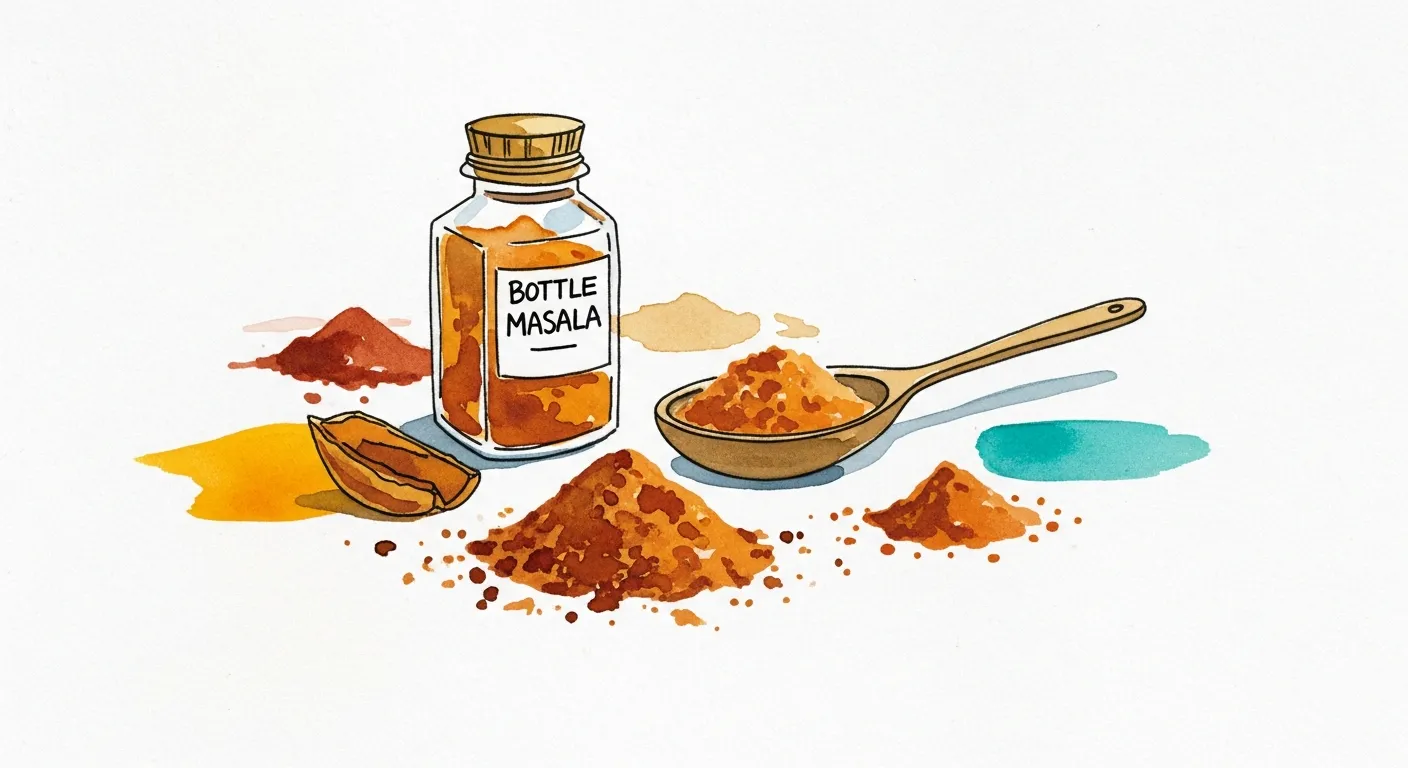
Every summer, before the monsoon, the women of the East Indian Catholic households of Ranwar and Chimbai and Pali, and of Vasai, Gorai, Versova, all the koliwadas of the extended community, would begin the process of making bottle masala. The chillies were bought in South Bombay, chosen carefully, stalks removed, laid out to dry in the harsh May sun until the skin cracked and the flesh was crisp. Other spices, between 25 and 60 of them, depending on the family, and no two families' recipes are identical, were sun-dried separately on old cloth or nine-yard saris. Each was then individually roasted over a wood fire. The pounding was done in large mortars, sometimes by hired masalawaalis, itinerant spice women who moved between East Indian households during masala season, pounding and roasting and gossipping, paid in tea and food and the satisfaction of work that was clearly theirs to do.
The resulting spice powder was stored in dark glass bottles, originally recycled beer bottles, because the tinted glass protected the masala from sunlight and kept it good through the monsoon months. Hence the name: bottle masala.
What is in it? Stone flower, mugwort, nagkesar bulbs, Kashmiri chillies, cumin, coriander, turmeric, pepper, sesame, shah jeera, poppy, mustard, saffron, star anise, cloves, cinnamon, cardamom, bay leaves, mace, fennel, nutmeg, fenugreek. And more, depending on the family. The full recipe is a family secret. Every East Indian household guards its version with the particular intensity that people reserve for things that cannot be replaced.
The bottle masala is the flavour of this community's entire history, Maharashtra's Konkan base ingredients, Portuguese techniques and meat preferences, British-era preservation instincts, all fused over 500 years into a single red powder stored in a beer bottle.
There is no dedicated East Indian restaurant in Bandra yet, though chefs like Glyston Gracias and Freny Fernandes are working to change that. For now, the cuisine lives in private homes, community fairs, and the occasional pop-up. The rest of the city eats Bandra's restaurants. The food that made Bandra is still waiting for its own table.
THE WEDDING TABLE: WHAT BANDRA ACTUALLY ATE
For the East Indian Catholic families who defined Bandra's food culture through most of the 19th and early 20th century, the daily meal was simple: fish curry and rice. The sea was the pantry. The bombil, the pomfret, the surmai, the prawns, these were not restaurant food or special occasion food. They were lunch.
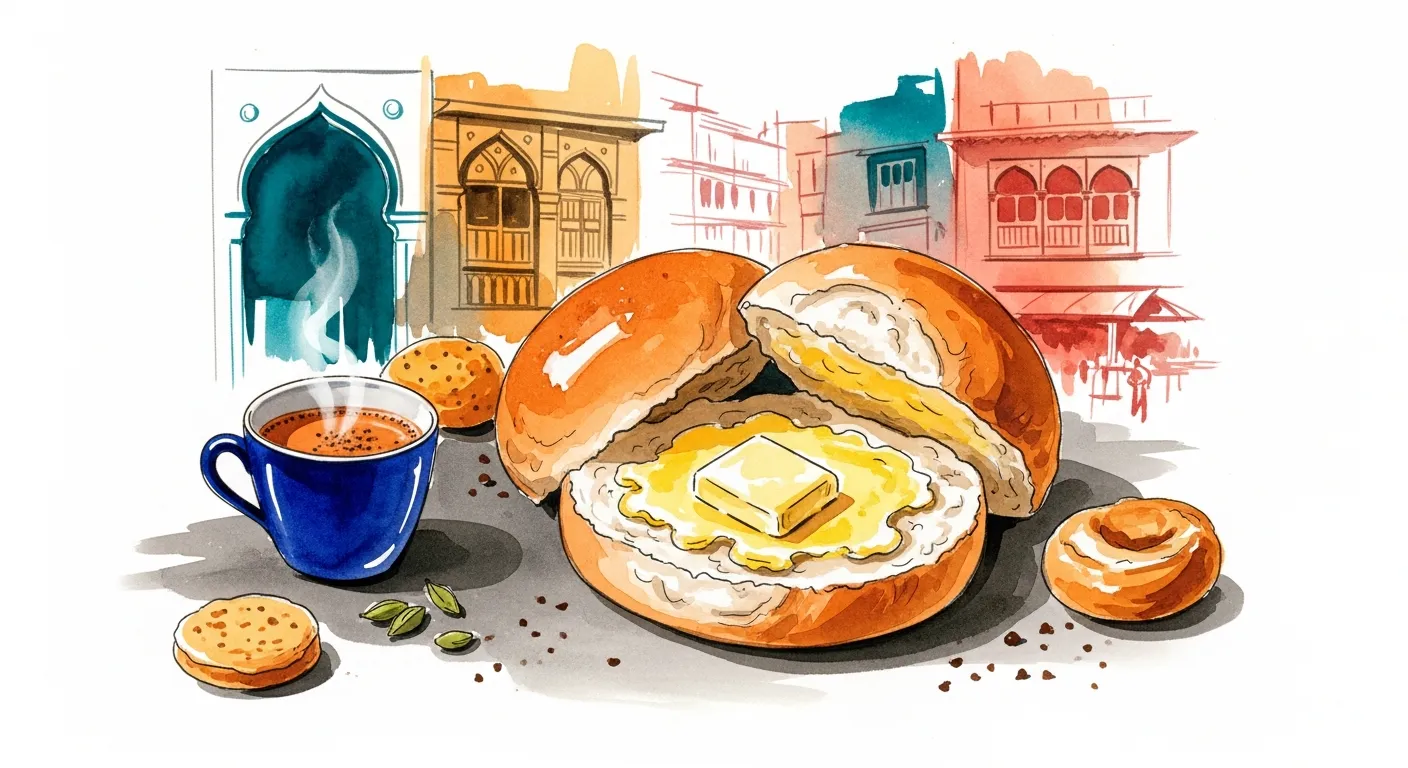
Sometimes there was a side dish of beef with the fish curry, accompanied by bread, the pav that the Portuguese had introduced and the local bakers had made their own. Pork appeared at feasts and birthdays. Chicken was expensive enough to be reserved for important guests, and when chicken appeared it was almost always xacuti, the coconut and spice curry that carries a clear Goan Portuguese lineage. The chicken with apricots and the mutton khudi were dishes that came out of the community cookbook, first published by the Bombay East Indian Association in 1981 after decades of recipes existing only in the memory of women who had learned by watching their mothers.
Weddings were eight-day affairs. Thursday was pig slaughter day. Friday was papads-for-drinks day. Saturday was fugias, deep-fried sweet bread made from fermented yeast dough, a Portuguese technique lightened with coconut milk from the Konkan coast, somewhere between a beignet and an Indian mithai. The wedding was Sunday. By Thursday of the following week, the guests were gone, the food was eaten, and the honeymoon was over.
The toddy wine ran through all of it. The aunties of Bandra made wine from grapes, tomatoes, beets, and carrots. During Mumbai's prohibition years, Bandra was known for its Aunty Bars, rooms in the living quarters of East Indian homes where homemade hooch was sold quietly. The suburb that the British thought of as a respectable Catholic neighbourhood was, under the surface, making its own liquor and selling it out of residential compounds.
1938: AN IRANIAN OPENS A RESTAURANT ON HILL ROAD
Syed Ali Akbar arrived in Bombay in 1912 from Iran. He opened a restaurant called Bombay Restaurant in Bandra Bazaar. It went fine. In 1938, he found a space on Hill Road, previously a motor showroom that wasn't performing, and opened Lucky Restaurant.
The menu was simple: biryani, kheema pav, mutton chops, dal, coffee. An Iranian's interpretation of what Bombay Muslim food should be, served in a suburb that was predominantly Catholic but hungry enough to eat anything well-made. Lucky Restaurant is still there. The biryani is still the reason people come. The caramel custard that now ends the meal wasn't on the original 1938 menu, but it has become as associated with the place as the biryani itself. Regulars have been ordering the exact same meal for decades.
Lucky smells like biryani from the street. It is the first thing you smell when you enter Bandra from the south, which means it has been the suburb's greeting card for 87 years.
Around the same time, Pamposh opened on Linking Road, opposite National College. South Indian food, idlis, vadas, masala dosa, in a suburb where eating out was reserved for major celebrations and most families cooked everything at home. Pamposh introduced a generation of Bandra Catholics to the masala dosa, which arrived in their food memory alongside the idli-vada as the first food eaten outside the home.
THE BAKERIES
Bandra's bakers deserve their own section.
A-1 Bakery on Hill Road was, to everyone who grew up in Bandra in the 1960s and 1970s, the best pav in the world. MacRonnels had brown bread that was expensive and worth every rupee. The A-1 pav was soft in the way that only Mumbai's soft water, Bandra's particular humidity, and a baker who has made the same bread for twenty years can produce. These were not artisan bakeries in the contemporary sense, they were neighbourhood bakeries, daily bread suppliers, places you went to on the way home rather than as a destination in themselves.
The bread tradition in this suburb goes back to the Portuguese. The Jesuits taught the baking of pav in the 16th century. The technique, fermented yeast dough, baked in a hot oven, came from Lisbon via Goa. The local bakers adapted it with toddy as a ferment, producing a bread with a slightly sour, deeply flavoured crumb that was suited to the humid coastal climate. East Indian families made fugias and bhakri (a flat rice flour bread). The Koli Christians made their own versions. By the 20th century, the baking tradition had diffused entirely into the neighbourhood, not as a marker of any one community, but as simply what Bandra did every morning.
THE RESTAURANT REVOLUTION: MID-2000s
Through most of the 20th century, Bandra's food was home food. The restaurants that existed, Lucky, Pamposh, Good Luck Cafe for keema pav, Candies for sandwiches and rolls, Elco for pani puri, were neighbourhood institutions rather than destinations.
Things changed in the mid-2000s. There was a spate of high-profile restaurant openings in Bandra, trendy ones which presented international cuisines in a manner in which Mumbai had rarely seen till then. These became the talk of the town and made Bandra the food destination that it is today.
Salt Water Cafe. Olive. Smoke House Deli. Pali Bhavan. Pali Village Cafe. The Bagel Shop. A string of openings that repositioned a Catholic suburb with excellent bones and good foot traffic as Mumbai's most cosmopolitan eating destination. The restaurants drew the city to Bandra; Bandra's existing energy, the sea views, the winding lanes, the Bollywood adjacency, the young professional demographic of BKC, kept them there.
Chef Glyston Gracias, an East Indian who headed the Smokehouse Deli chain, began bringing his mother's bottle masala into the kitchen, introducing it into a six-hour braised pork belly that appeared as a Christmas special. Chef Clyde Comello at Indigo Deli used bottle masala in his pot roasts and ox tongue preparations. The cuisine that had existed for 500 years only in private homes was beginning, slowly, to appear in restaurant kitchens, not as heritage food in a heritage restaurant, but folded into contemporary European menus by East Indian chefs who grew up eating it.
This is how a cuisine survives without a restaurant: through the chefs who carry it in their hands.
WHAT BANDRA EATS NOW
Walk down Hill Road on a Saturday evening. Lucky's biryani smell hits you at the signal. A queue of families outside Elco. Candies packed, as it always is, with people eating chicken sandwiches and mince rolls. Good Luck Cafe with its Irani-style service and keema pav, the chairs slightly uncomfortable, the chai served in small glasses, exactly as it should be.
Then the rest: Thai, Japanese, Italian, Korean, pan-Asian, wood-fired pizza, natural wine bars, artisanal coffee, brunch menus that change seasonally, tasting menus with wine pairings, bubble tea shops on every second lane, cloud kitchen delivery operations running out of repurposed Portuguese bungalows.
Bandra now has more cuisines per square kilometre than most cities have in their entirety. Its food has followed its people: the Kolis who have been here since the beginning, the East Indians whose families have been here for four centuries, the Bollywood ecosystem that arrived in the 1950s, the BKC corporate population that arrived in the 2000s, the expat community.
And somewhere in the gaps between the wine bars and the brunch spots, young East Indian chefs are taking their mothers' bottle masalas and their grandmothers' recipes and introducing them into modern kitchens. The East Indian food renaissance is happening quietly, through WhatsApp messages about which chef is running a bottle masala special this week.
The Koli fishermen of Chimbai still dry bombil on lines outside their houses, visible from the road that leads to Bandstand. The fish that Bandra started with is still here. The sea is still here. The koliwada is still here, between the seafront apartments and the Bollywood bungalows, doing what it has done for a thousand years.
The oldest kitchen in this suburb is still cooking.
East Indian Bottle Masala
The definitive spice blend of Bandra's East Indian Catholic community. 25+ spices, sun-dried and hand-pounded. Every family's version is different. This is a traditional base recipe, adapted from community sources.
Ingredients
Steps
Notes
Field Notes
Quick referenceKolis settled Bandra's shores before any colonial power arrived to rename the place.
Diego da Silveira sailed into Bandora Creek in 1534 and changed what Bandra ate for five centuries.
Bottle masala contains between 25 and 60 spices, stored in dark glass beer bottles to survive the monsoon.
Lucky Restaurant opened in 1938 on Hill Road, still smells like biryani from the street.
East Indian weddings were eight-day affairs. Thursday: pig slaughter. Friday: papads. Saturday: fugias. Sunday: wedding.
Get the next story first
Join the Bhukkads. Free, no spam, just stories.
Takes 30 seconds.