Sunday Brunch Has a Wilder History Than You Think
A hungover writer named it in 1895. A New York law built it. 1,500 brothels made sure it stuck.
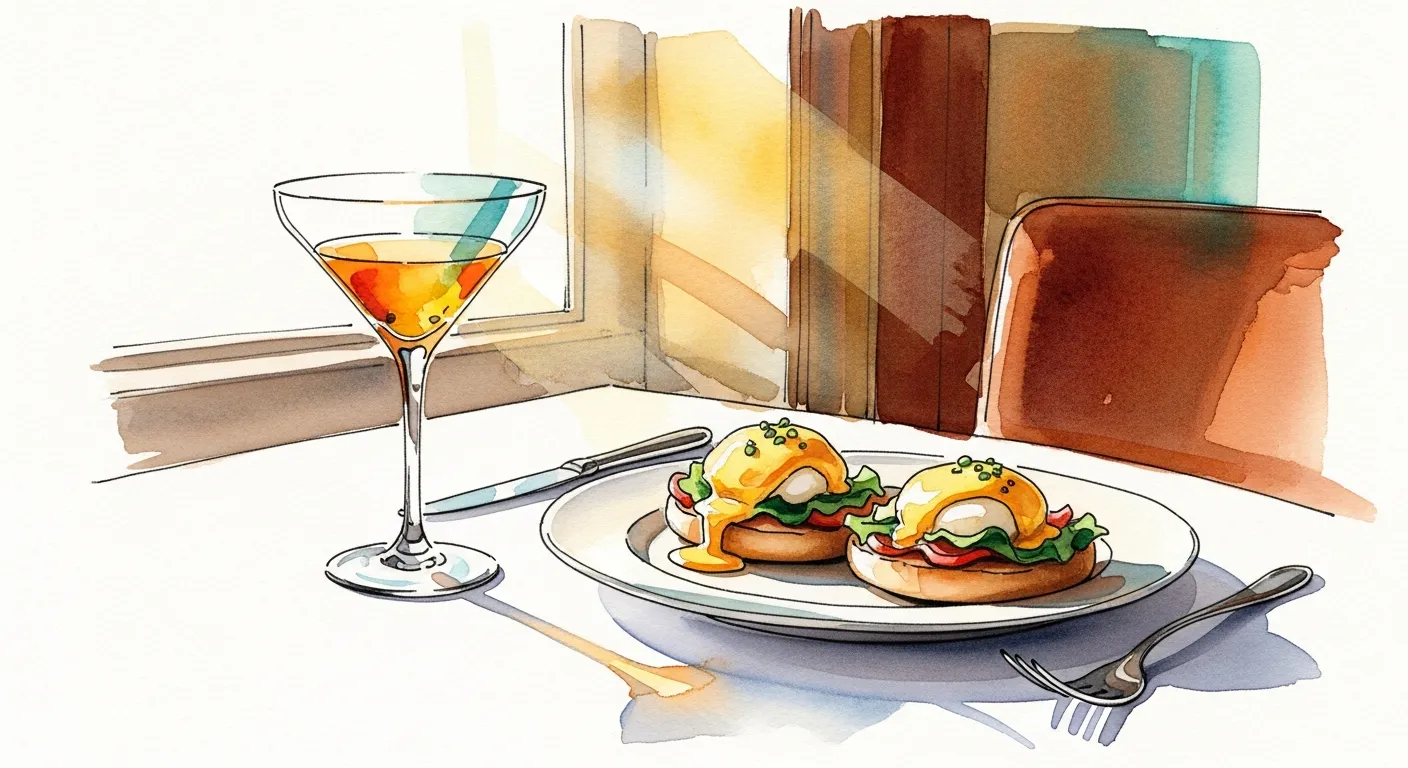
You think brunch is about eggs. It isn't. It never was. Brunch is about a hangover, a loophole, a very inedible sandwich, and the most unintended consequences in the history of American legislation.
The meal you're eating this Sunday morning has been through more than you have.
THE HANGOVER MANIFESTO
- Britain. A writer named Guy Beringer - not a chef, not a restaurateur, a writer - publishes one essay in a minor magazine called Hunter's Weekly. The essay is titled "Brunch: A Plea."
It is, at its core, the most eloquent argument ever made for why people who drink heavily on Saturday should not be expected to function on Sunday morning.
Beringer's exact pitch: brunch "makes life brighter for Saturday night carousers." He argues that eggs and bacon are "adapted to solitude - consoling, but not exhilarating. They do not stimulate conversation." He wants something later. Something sociable. Something that lets him sleep until noon without the crushing weight of social judgment.
"Brunch is cheerful, sociable, and inciting. It is talk-compelling. It puts you in a good temper. It sweeps away the worries and cobwebs of the week."
He signs off with: "Beer and whiskey are admitted as substitutes for tea and coffee."
The father of brunch was a hungover man making a philosophical case for sleeping past ten. He coined the word. He wrote one essay. He changed Sunday mornings for the next 131 years.
Nobody knows anything else about Guy Beringer. He wrote this one thing and vanished. Which, honestly, is the most writer thing that has ever happened.
THE LAW THAT BUILT IT
New York, 1896. One year after Beringer's essay. A Republican senator named John Raines - backed by a young, morally furious Theodore Roosevelt, then the city's police commissioner - passes a law banning Sunday alcohol sales across New York State.
The Raines Law had noble intentions. Sunday was the only day off for most working men in a six-day work week. The city's 8,000 saloons were packed every Sunday. The temperance movement wanted them shut. Roosevelt wanted vice cleaned up. Senator Raines wanted votes from upstate Protestant churchgoers who were appalled by the godless drinking habits of New York City's immigrant population.
The law passed on March 23, 1896. It raised liquor licence costs to three times their previous price, raised the drinking age from sixteen to eighteen, and banned Sunday alcohol sales entirely.
Except in hotels.
A hotel was legally defined as any establishment with ten rooms and food. That's it. Ten rooms. Some food. You're a hotel.
New York looked at this definition and got to work immediately.
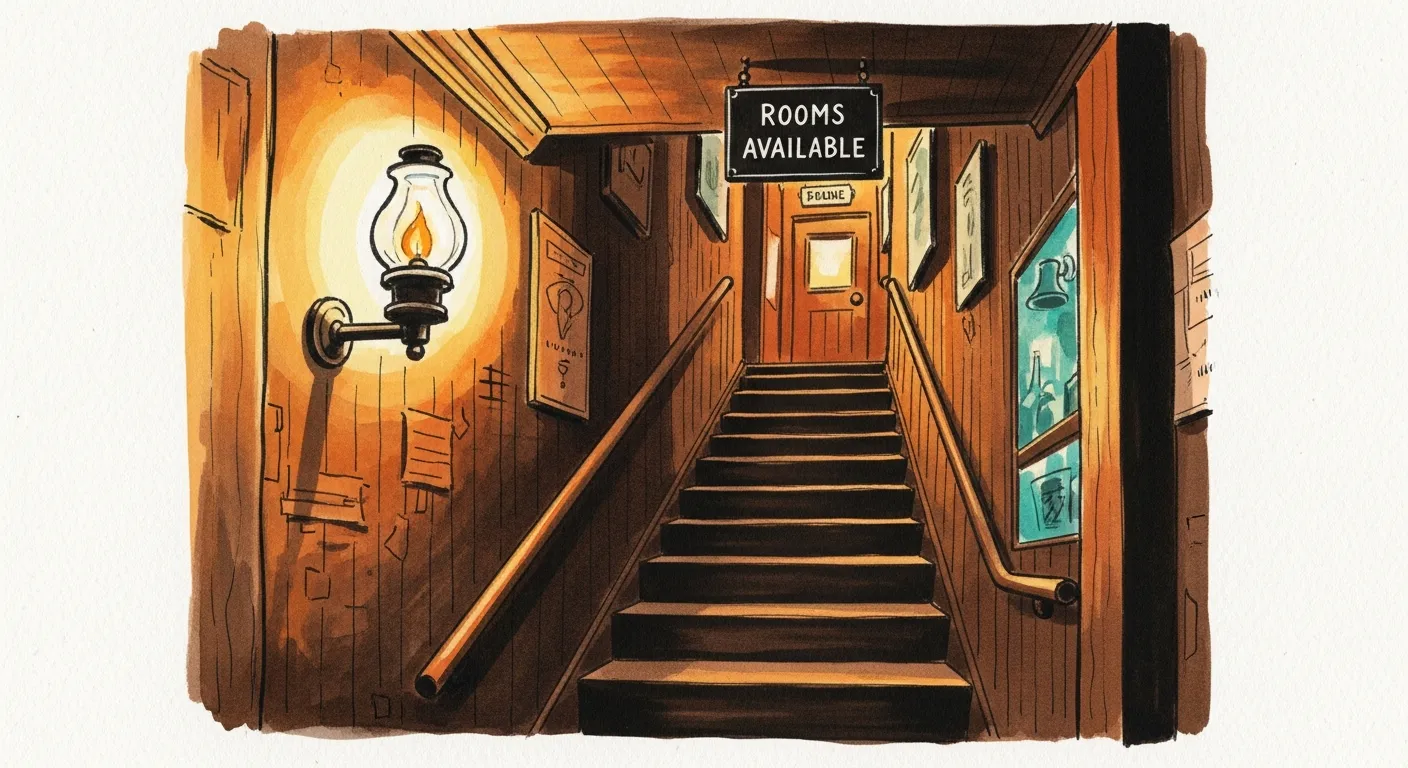
1,500 BROTHELS AND A SANDWICH
Within six months of the Raines Law passing, in Brooklyn alone, the number of registered hotels went from 13 to 800. Across New York City, 1,500 fake hotels appeared essentially overnight. Saloons nailed together flimsy partition walls upstairs, rented out space on cots, called themselves hotels, and kept pouring drinks seven days a week.
The law required food to be served with alcohol. Nobody in these establishments wanted to cook. So they invented something called the Raines Sandwich.
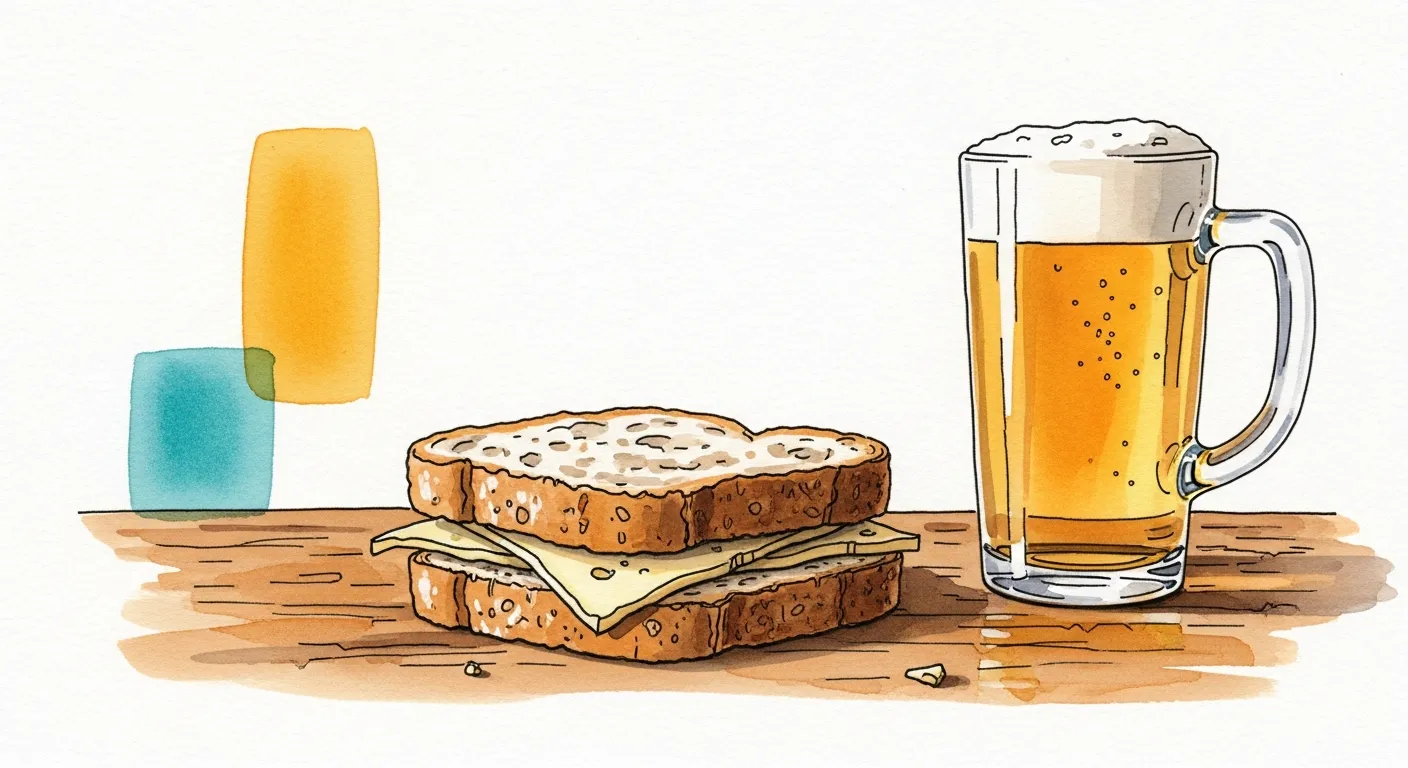
Two pieces of stale bread. Old cheese or ham. Completely inedible by design.
The same sandwich would travel from table to table with each drink order - placed in front of one customer, removed when the drink was finished, brought to the next customer with the next drink.
A sandwich so old and hard it became a weapon. This is the direct ancestor of your artisanal sourdough toast.
Some Raines Sandwiches reportedly stayed in circulation for over a week. The Social History of Bourbon records that "once in a while some yokel picked up a Raines Law sandwich and tried to eat it, and everybody had a good laugh."
The rooms above these establishments - the ten rooms required by law - were rented out to prostitutes and unmarried couples by the hour. By 1905, a citizens' association called the Committee of Fourteen had formed specifically to shut the Raines Law hotels down, citing an explosion in prostitution across the city. By 1911, most had closed. The Raines Law itself was repealed in 1923, swept away by Prohibition.
But the format it created - alcohol on Sunday, served with food, in an establishment that wasn't quite a restaurant and wasn't quite a bar - had already been normalised across the entire city. The loophole outlasted the law. The Sunday food-and-drink format outlasted the brothels. The meal outlasted everything.
THE CHURCH-SHAPED HOLE
After World War II, something happened to Sunday in America that nobody planned for.
Church attendance collapsed.
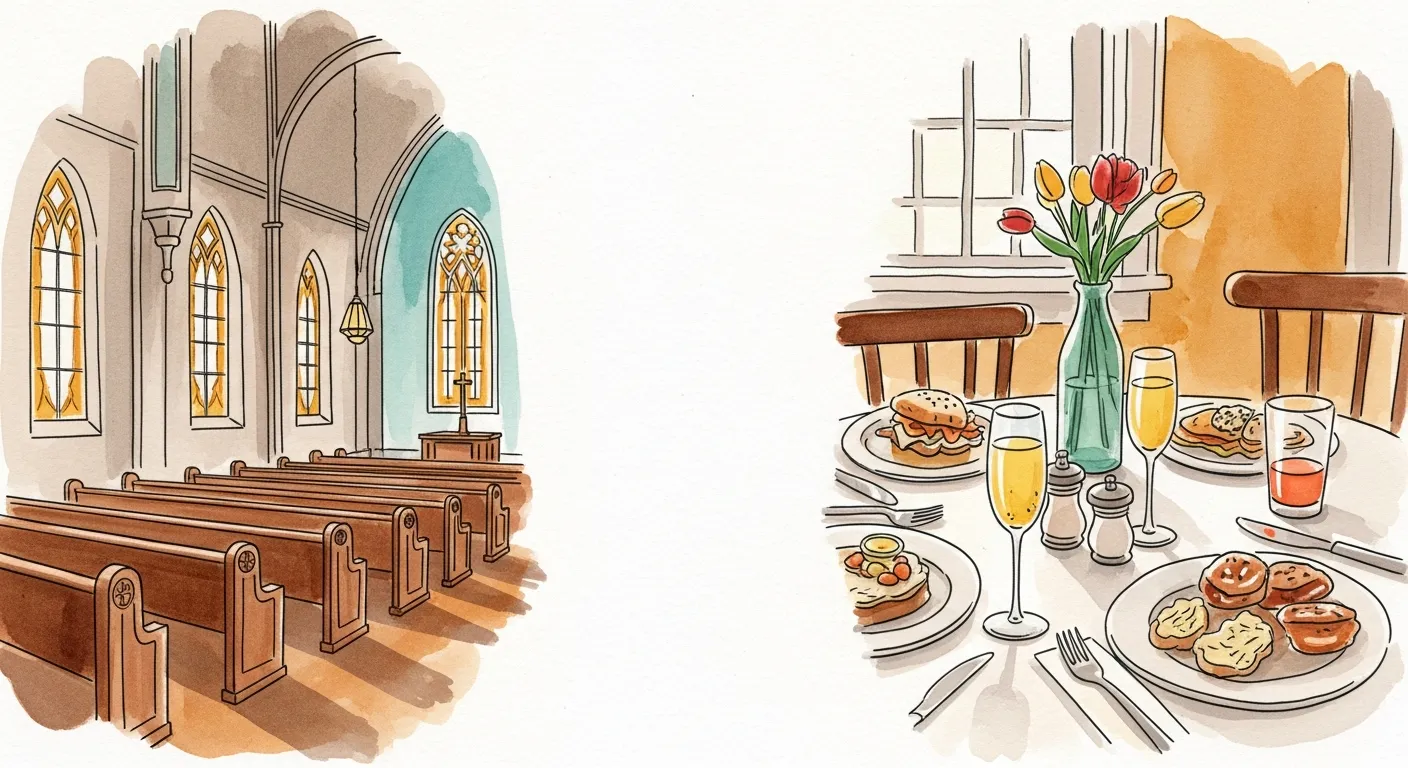
An entire social institution - three hours of structured communal time, a shared meal after, a reason to be somewhere together on Sunday morning - simply vacated the calendar for millions of people simultaneously. Stanford professor Carl Degler identified it precisely: "Sunday dinner became important because it was the only time people could eat together as a family unit during the week at the onset of urbanisation and industrialisation."
Brunch walked straight into that hole. Same time slot. Same social function. Different rituals. The mimosa replaced the hymn. The eggs benedict replaced the post-church roast. The reservation replaced the pew. Nobody designed this substitution. It just happened, the way all the best cultural shifts happen - quietly, and then all at once.
THE B-TEAM IN THE KITCHEN
Anthony Bourdain said it first and said it best, in Kitchen Confidential, the year 2000. And he said it from the inside - because he had cooked brunch, badly, for years.
"I hated brunch. No matter how badly I screwed up in my life or how unemployable I was, I could always get a job as a brunch cook because nobody wants to do brunch."
Here is what happens in every brunch kitchen that the menu doesn't tell you.
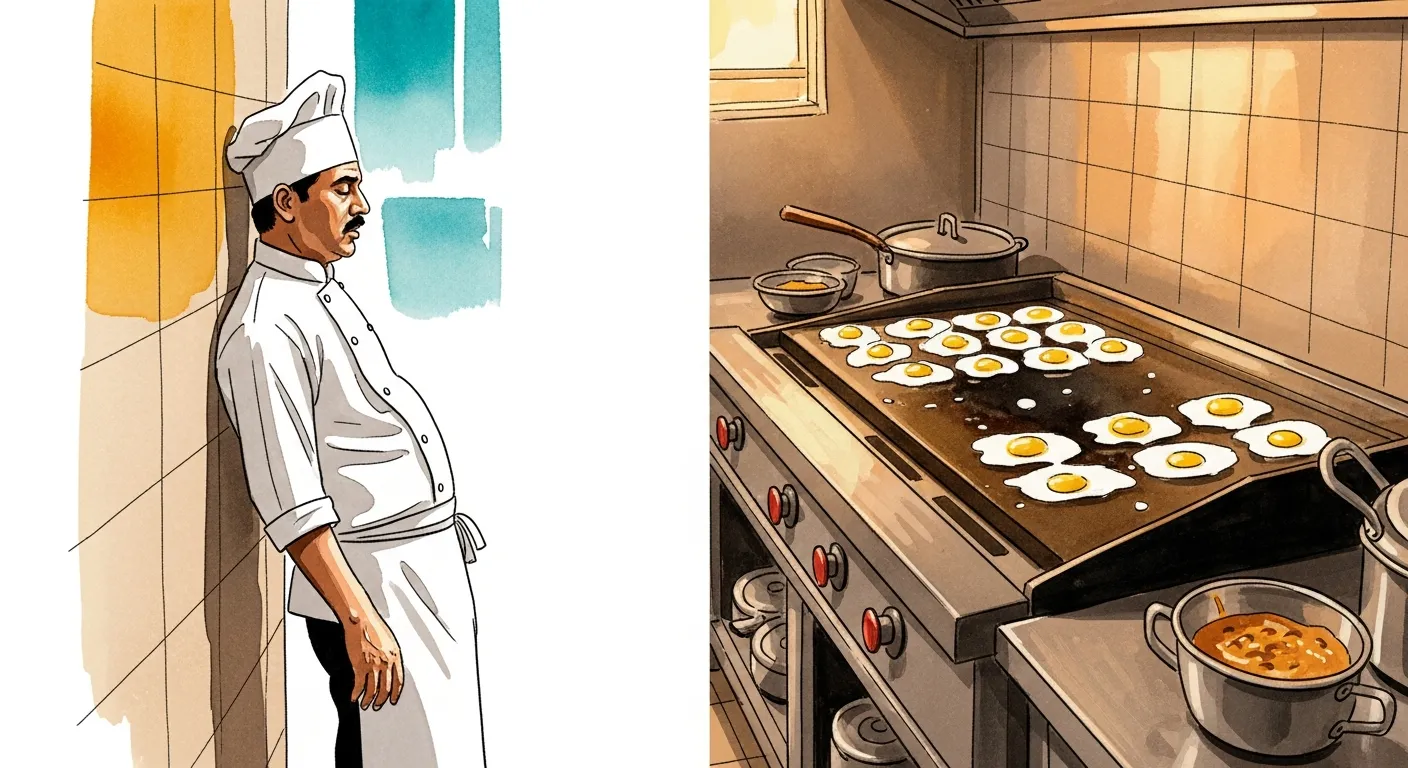
The best line cooks work Friday and Saturday nights - the most important dinner services of the week. Sunday morning is staffed by whoever couldn't get out of it. The head chef is frequently not present. The junior cook who joined three months ago is making your hollandaise.
Brunch is demoralising to the serious line cook. Nothing makes an aspiring Escoffier feel more like an army commissary cook than having to slop out eggs over bacon.
He was not being dramatic. He was being a journalist.
HOW A TELEVISION SHOW FINISHED THE JOB
The 1990s. Brunch had been culturally present for decades but it was still, fundamentally, a meal. Then Sex and the City put four women at a Manhattan brunch table every Sunday and turned it into an aspirational identity. The bottomless mimosa. The eggs benedict. The talking, the not talking about what really matters. A generation of urban women in their twenties and thirties saw that table and wanted it.
Brunch became a personality type.
Then Instagram made it a content format. Then every cafe and hotel and restaurant that needed to monetise a dead Sunday morning launched a brunch menu, put avocado toast on it, and called it artisanal.
WHAT BRUNCH WAS SUPPOSED TO BE
Go back to Guy Beringer. 1895. One essay. One plea.
He didn't want a menu. He didn't want a buffet. He didn't want a content opportunity or a Sunday ritual of performative leisure. He wanted to sleep in without guilt. He wanted a table where conversation happened naturally.
"It is talk-compelling. It puts you in a good temper. It makes you satisfied with yourself and your fellow-beings."
The institution he accidentally named survived the Raines Law. It survived the brothels. It survived two World Wars. It survived Bourdain. It survived Instagram. It will survive whatever comes next.
But the actual idea - late, loose, social, talk-compelling, cheerful - is still worth protecting.
The hangover is optional. The conversation is mandatory. The food should be worth the Sunday.
Field Notes
Quick referenceGuy Beringer coined 'brunch' in 1895 Hunter's Weekly essay
1,500 fake hotels appeared overnight in NYC to serve Sunday drinks
Same inedible sandwich circulated table-to-table for weeks
Sunday brunch staffed by whoever couldn't get out of it
Get the next story first
Join the Bhukkads. Free, no spam, just stories.
Takes 30 seconds.