What the Hell Is Happening at This Coffee Shop
You walked in for a coffee. The barista just said "fruity notes." You are confused. This is for you.
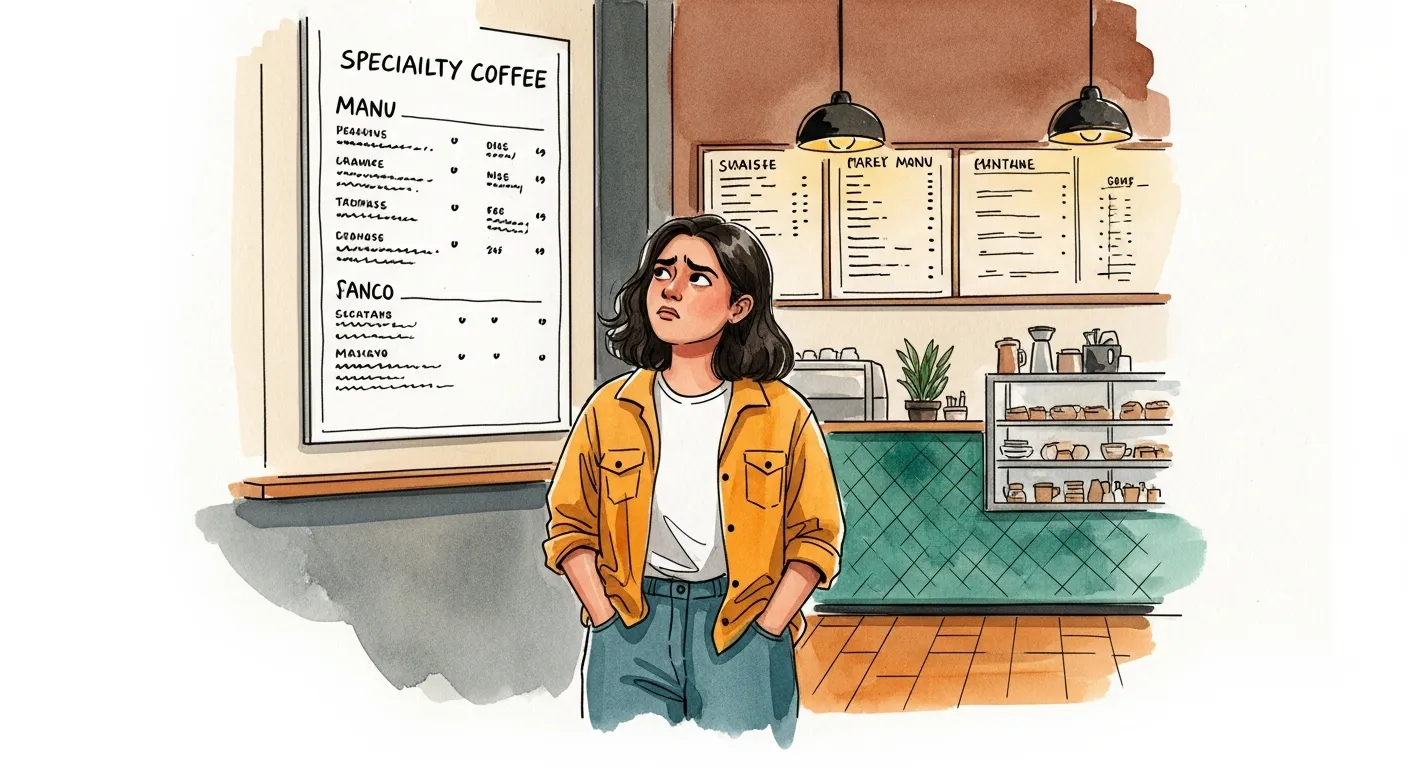
Watercolor illustration
You are standing in front of a menu that says things like "washed Ethiopian, jasmine, stone fruit, 210 grams" and you wanted a coffee, not a homework assignment.
Here is the thing nobody tells you: the fancy coffee shop is not complicated. It just speaks a different language. Once you know five words, you own the room.
Here are the five words.
ONE: SINGLE ORIGIN
Your entire life you have been drinking blended coffee. Multiple farms, multiple countries, mixed together for consistency. It tastes like coffee. Reliably. Every time.
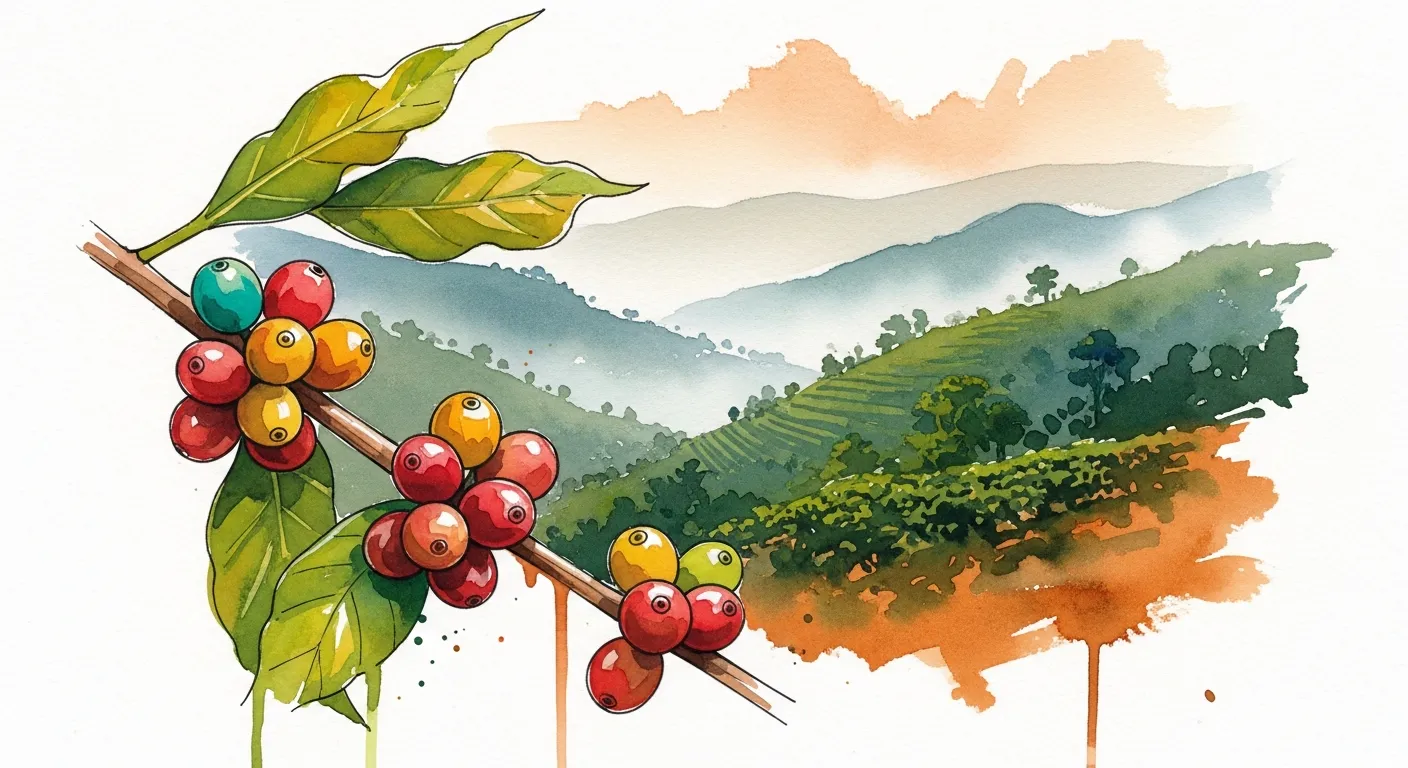
Single origin means one farm. One region. One country. Nothing mixed. You are tasting exactly what that specific piece of land grows. A coffee from Chikmagalur in Karnataka tastes different from a coffee from Yirgacheffe in Ethiopia tastes different from one from Manizales in Colombia. Same drink. Completely different experience.
This is why the menu sounds like a geography lesson. It is a geography lesson. Order the one that sounds most interesting and find out.
TWO: THE ROAST
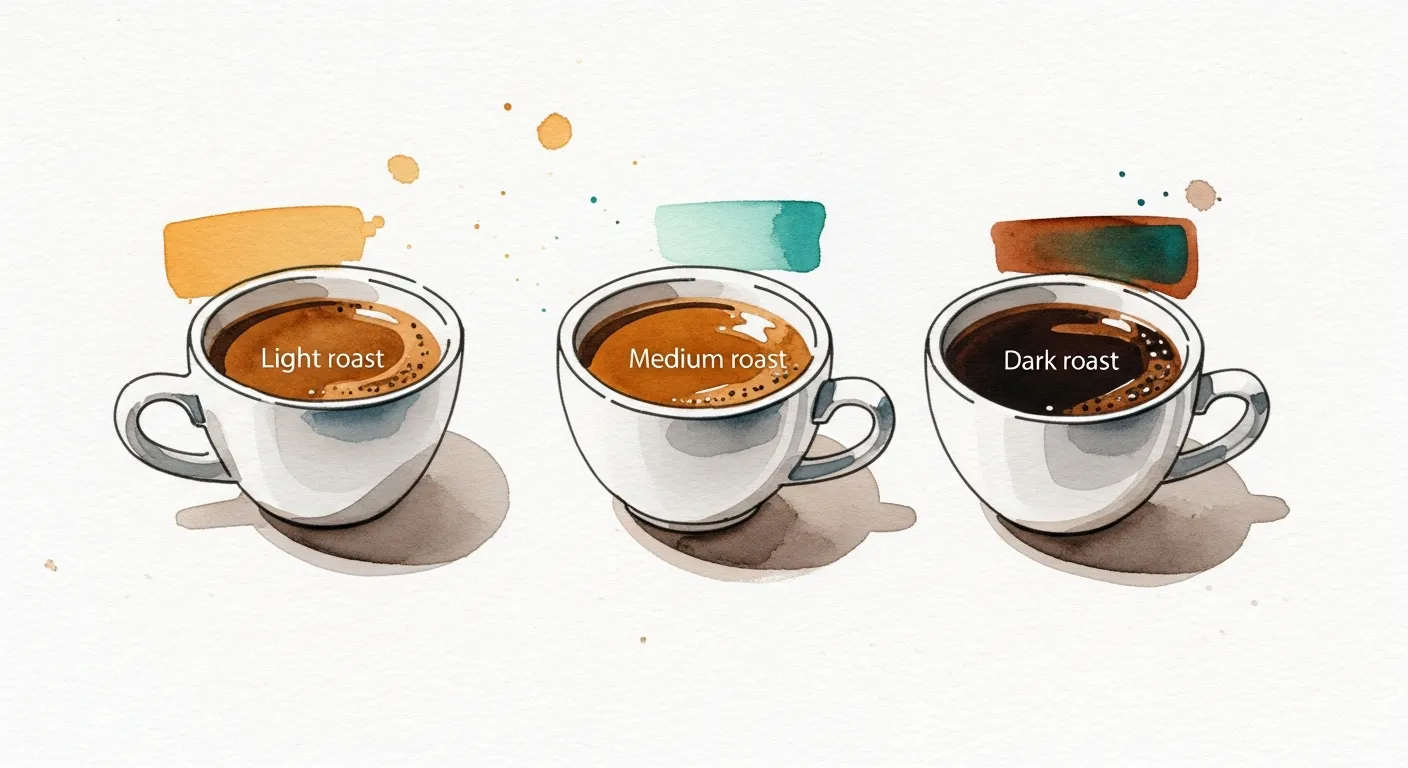
Light roast, medium roast, dark roast. Everyone thinks dark roast means stronger. It does not mean stronger. It means more roasted, more of the coffee's original flavour has been cooked away and replaced with roast flavour. Bitter, smoky, the thing that tastes like "coffee."
Light roast keeps more of what the bean actually tastes like. This is why specialty coffee places serve light roasts and the coffee sometimes tastes like blueberries or lemon or literally anything other than what you expected. It is not wrong. It is correct. The bean genuinely tastes like that.
If you want the familiar strong dark taste, ask for dark roast or espresso. If you want to understand why people obsess over this, order a light roast pour over and drink it black.
THREE: THE METHOD
How your coffee is made changes everything. These are the methods you will actually encounter:
Espresso, a machine forces water through coffee under pressure in 30 seconds. Small. Intense. The base of everything else, your latte, your cappuccino, your flat white. All espresso plus milk in different proportions.
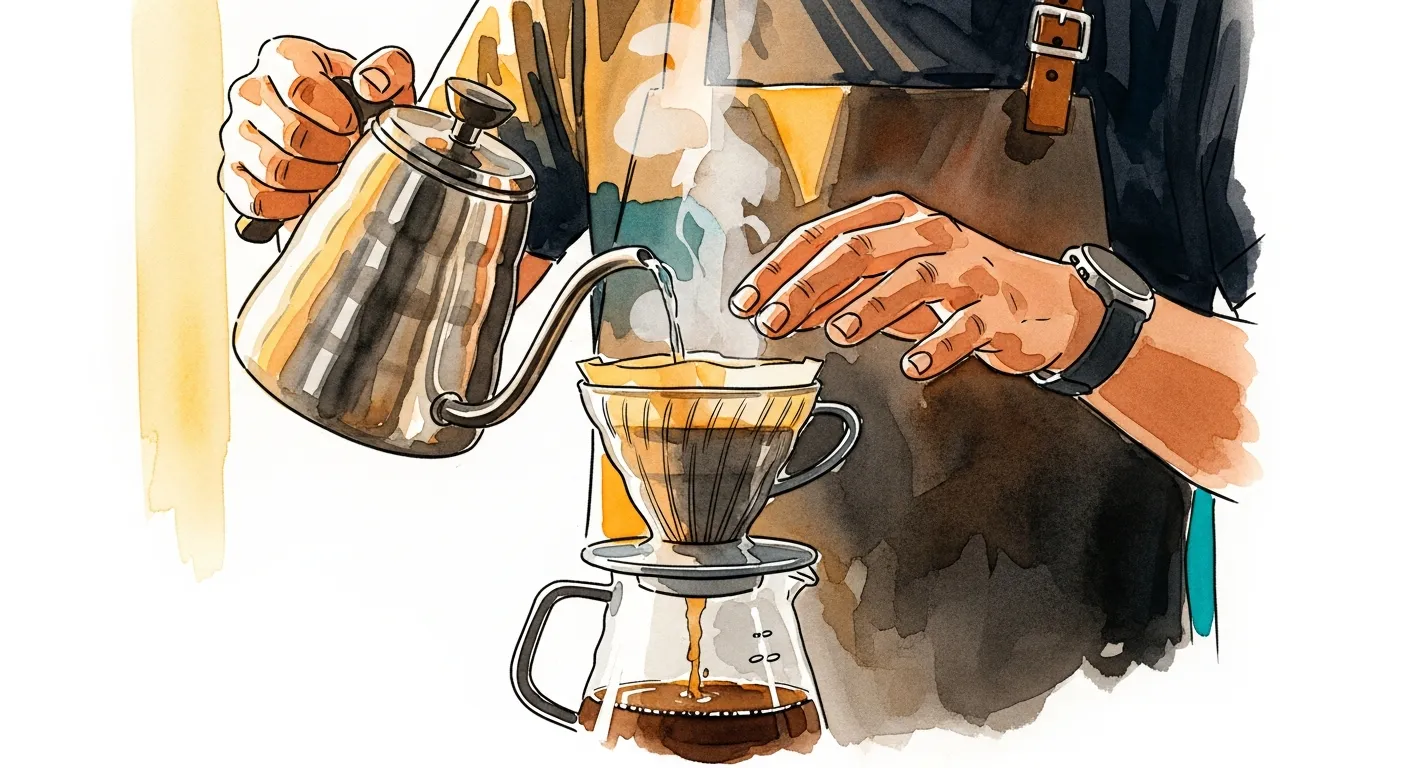
Pour over, someone pours hot water slowly by hand over coffee in a filter. Takes 4 minutes. Cleaner taste. Shows you what the bean actually is. If the place is serious, this is how they show off their best stuff.
Cold brew, coffee soaked in cold water for 18-24 hours. Not iced coffee. Not the same thing. Smoother, lower acid, more caffeine than you'd expect. Do not drink two.
Filter coffee / drip, gravity pulls water through coffee in a machine. What your office makes, done properly.
FOUR: WHAT TO ORDER YOUR FIRST TIME
Walk in. Say this: "What's your most interesting single origin today, and can I have it as a pour over?"
Watch what happens. The barista will either light up completely or explain that they only do espresso-based drinks, both are fine. If they light up, you are about to drink something that will make you understand why people spend Rs 400 on a cup of coffee.
If that feels too much, order a flat white. Double espresso, less milk than a latte, more coffee-forward. It will taste good. You will not look confused ordering it.
Do not order a "strong coffee." That is not a thing here. Say "more espresso" or "darker roast."
FIVE: HOW TO TASTE IT
When the cup arrives, try it black first. One sip. Before milk, before sugar, before you decide you hate it.
You are looking for three things:
Is it bitter or bright? Bitter means darker roast. Bright means lighter roast with more acidity. Neither is bad. They are just different.
Does it feel heavy or light in your mouth? Heavy = more body, like a Sumatran coffee. Light = clean and crisp, like a Kenyan. Body is texture, not taste.
What's the aftertaste? Good coffee leaves something pleasant behind. Bad coffee leaves nothing or leaves sourness. The finish is where you know.
That's it. That's the whole system.
THE THINGS ON THE MENU THAT WILL TRIP YOU UP
"Natural process", the coffee cherry was dried with the fruit still on the bean. Results in sweeter, fruitier, sometimes winey flavour. The Ethiopian natural that tastes like blueberry jam is not defective. It was made this way.
"Washed process", fruit removed before drying. Cleaner, brighter, more straightforwardly coffee-tasting.
"Tasting notes: jasmine, brown sugar, blood orange", this is not the barista being pretentious. Coffee has hundreds of flavour compounds. When extracted correctly, specific ones come forward. You might not taste all of them. You will taste something different from what you expected. This is the whole point of going.
"Microlot", coffee from a very small, specific section of one farm. Even more specific than single origin. You are about to drink something maybe a thousand people in the world have access to this season. This justifies the price.
"Espresso ratio 1:2", ignore this. That's for the barista.
THE UNSPOKEN RULES
Don't ask for extra sugar before you've tasted it. Taste it first.
Don't ask for cream if they don't offer it. Ask for milk.
Do ask the barista what they're excited about today. Every good barista has an answer. The bad ones don't.
If you hate it, say so nicely and explain why, bitter, sour, too weak. A good cafe will fix it or explain what happened. This is not a restaurant. They want you to understand what you're drinking.
Don't take calls at the brew bar. There is a brew bar etiquette. Watch someone make your pour over if they let you. It takes four minutes. It is worth watching.
WHAT IS ACTUALLY HAPPENING IN INDIA RIGHT NOW
Mumbai, Bengaluru, Delhi, Pune, Hyderabad, a new wave of specialty coffee shops has opened in the last five years and it is genuinely world-class. Indian coffee, from Chikmagalur, Coorg, Wayanad, the Nilgiris, is among the finest raw material on earth. For most of history it was all exported to Europe. Now it is being roasted in Bandra and brewed in Indiranagar and poured into cups in Hauz Khas.
The people running these places went to Seoul and Melbourne and Copenhagen and came back and opened something at home. The equipment is the same. The training is real. The coffee is actually better than what you'd get at equivalent price points in most of the world because the beans are grown three hours away.
You are not paying Rs 350 for attitude. You are paying for someone who genuinely cares about the specific farm the bean came from, the specific temperature the water was at, the specific number of seconds the extraction took, and wants you to taste the result of all of that.
You can decide if that's worth it after the first cup.
It usually is.
WHERE TO START IN MUMBAI
Subko. Blue Tokai. Araku. Third Wave Coffee. Corridor Seven. Sleepy Owl for cold brew if you're starting out. Ask any of them what's currently on pour over. Buy a bag of single origin to take home. Get a cheap stovetop moka pot for Rs 500. Start there.
The rabbit hole is real. You have been warned.
Field Notes
Quick reference"What's your most interesting single origin today, as a pour over?" Say this. Watch the barista light up. If too much, order a flat white.
Dark roast does not mean stronger. It means more roasted. Light roast keeps the bean's actual flavour. That blueberry taste is real.
Subko, Blue Tokai, Araku, Third Wave, Corridor Seven, Sleepy Owl. Ask what's on pour over. Buy a bag. Get a Rs 500 moka pot. Start there.
Chikmagalur, Coorg, Wayanad, the Nilgiris. Among the finest beans on earth. Exported to Europe for decades. Now being roasted three hours from the farm.
Not iced coffee. Coffee soaked in cold water for 18-24 hours. Smoother, lower acid, more caffeine than you'd expect. Do not drink two.
Get the next story first
Join the Bhukkads. Free, no spam, just stories.
Takes 30 seconds.