The Vada Pav and the Square Foot
A potato cutlet invented for mill workers in 1966. A pavement in Dadar that costs more per square foot than a flat in Bhandup. And a generation of vendors deciding whether to hand the tongs to their sons.
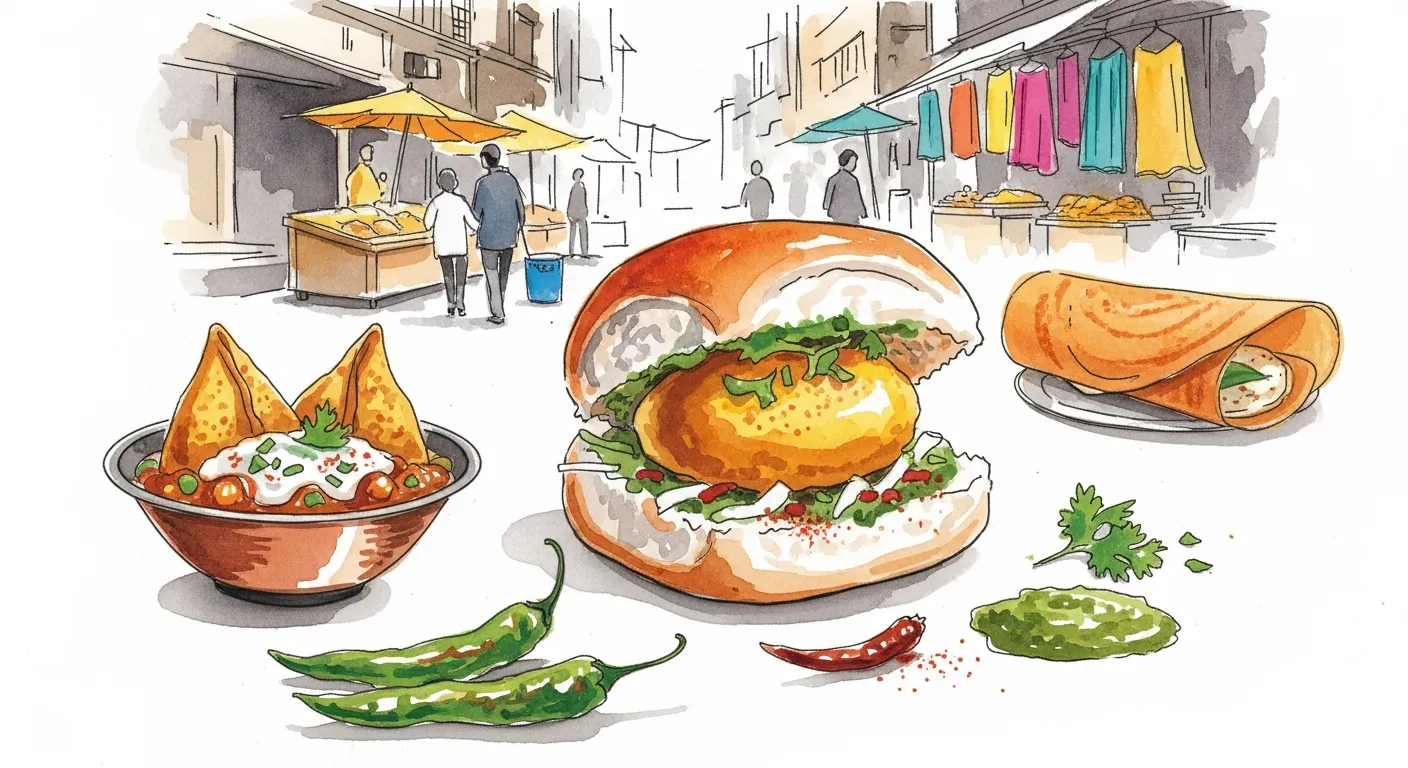
Generated by Imagen 4
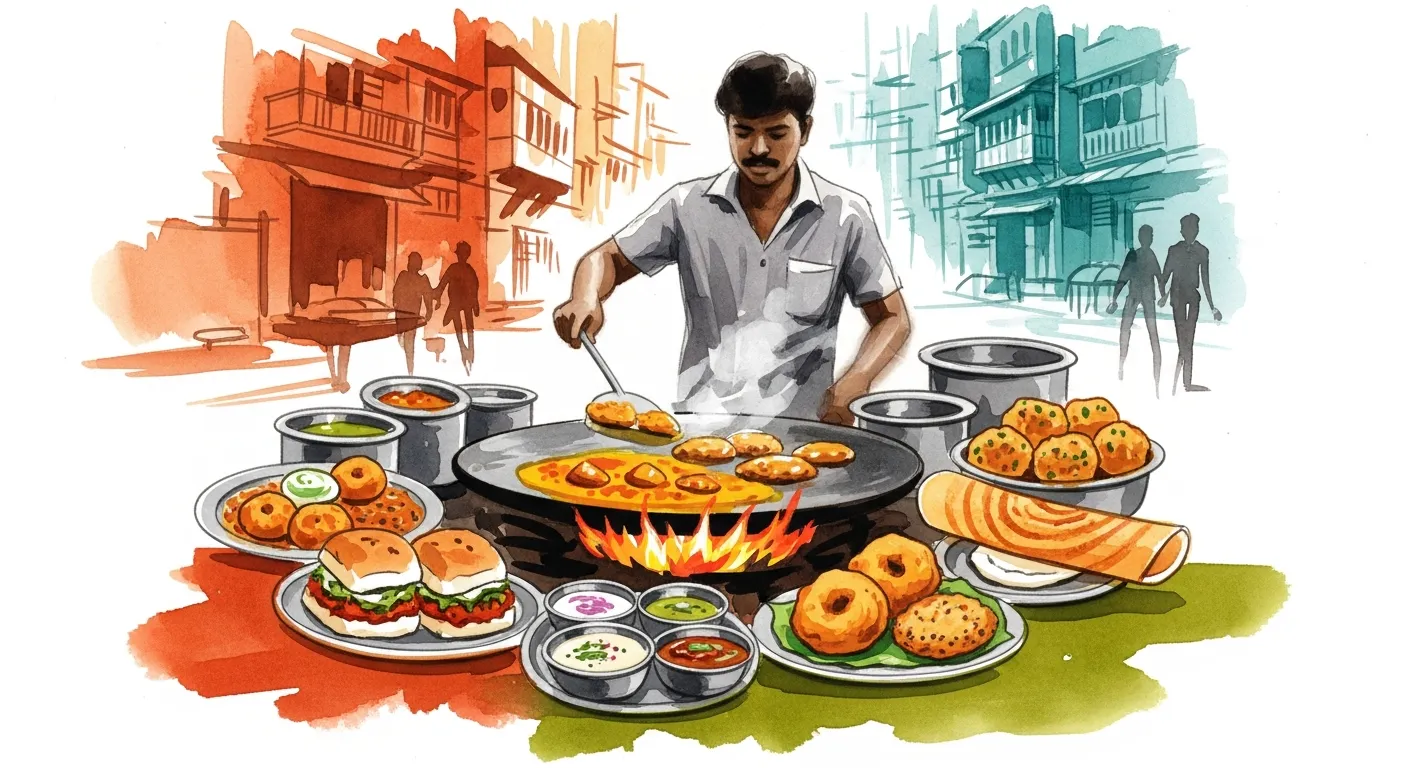
In 1966, a man named Ashok Vaidya set up a snack cart outside Dadar railway station. He was selling whatever he could fry. The mill workers coming off the morning shift at Kohinoor Mills, Madhusudan Mills, Shree Ram Mills, the entire belt of Lalbaug and Parel, needed something cheap, fast, portable, and filling. Vaidya took a potato cutlet, the Maharashtrian batata vada, slapped it inside a pav left over from the city's Portuguese-Goan bread tradition, added green chutney and fried chilli, and handed it over for fifteen paise.
The vada pav was not invented to be iconic. It was invented to feed a man who had been operating a loom for ten hours and had twenty minutes before his train.
Fifty-nine years later, the loom is gone. The mill is a mall. The man is a software engineer at the mall. And the vada pav stall is still there, on the same pavement, run by the grandson of the man who took over from Ashok Vaidya's competitor in 1973.
This is not a story about nostalgia. This is a story about square footage.
THE PAVEMENT NOBODY OWNS AND EVERYBODY RENTS
Nobody talks about the fact that the pavement outside Dadar station is one of the most expensive pieces of real estate in Asia. Not legally. Legally, the BMC owns it. Functionally, it is sublet through a daisy chain of pagdi, hafta, hereditary occupancy, and informal arrangements that nobody writes down because nobody can.
A stall on that pavement, the kind with a steel kadai and two stools and a glass case for the vadas, occupies roughly six square feet. Six. The shop behind it, a 200 square foot retail space, rents for around one lakh rupees a month. That is five hundred rupees per square foot.
The vada pav vendor, on his six square feet, is not paying market rent because there is no market. He is paying something to someone, every week, in cash, for the right to keep standing where his father stood. The amount has gone up. It has always gone up. What is different now is that the rate of increase has decoupled from the rate at which a vada pav can be sold.
THE BMC MATH
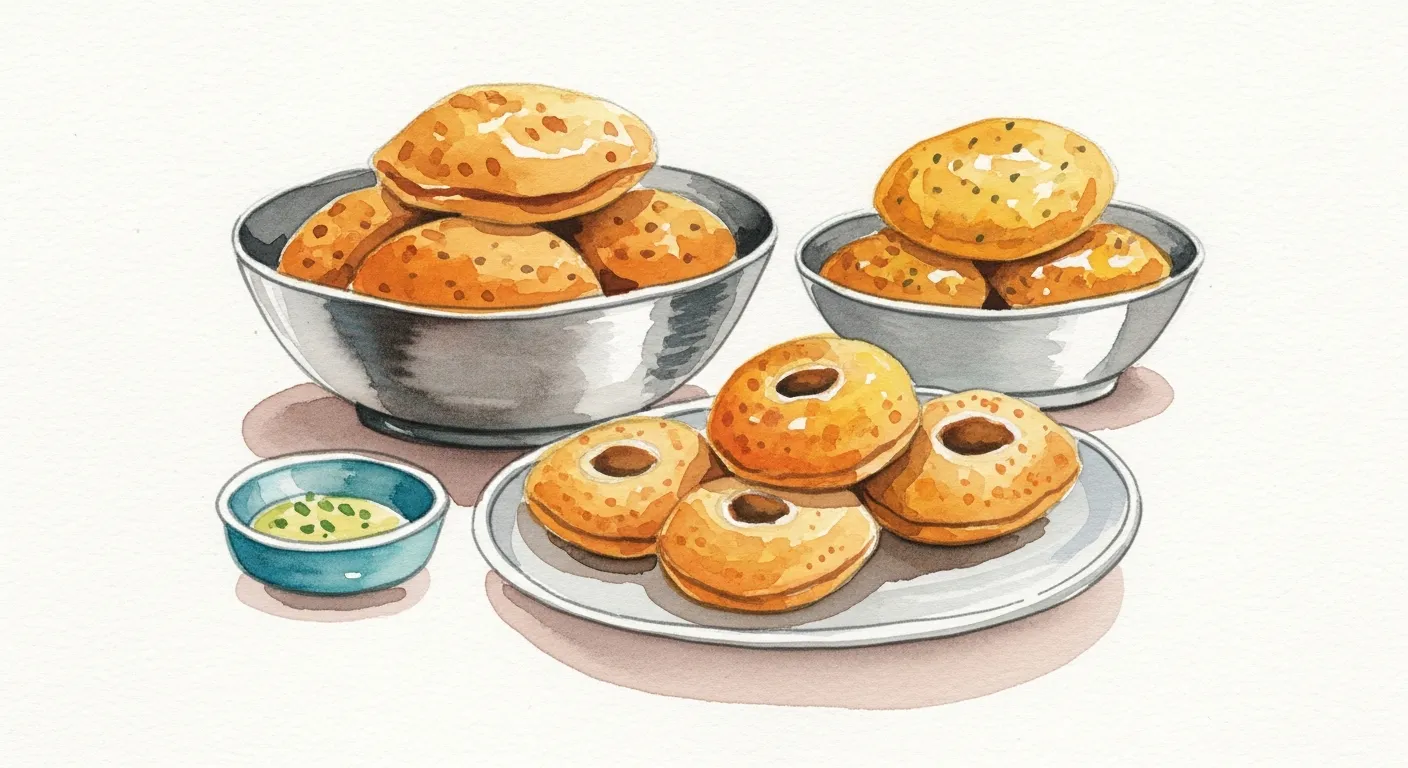
In the formal market, the math is even crueller. Earlier this year, the BMC raised stall rents in municipal markets by 50 percent, with monthly rents in some cases moving from 120 rupees to 1,400 rupees, plus a 5 percent annual increment baked in.
A twelve-fold jump. Negotiated by nobody who sells anything for fifteen rupees.
The vendors on the Dadar pavement are not in municipal markets. They are unlicensed, semi-licensed, or licensed under hawker zones that have been redrawn four times since 2014. But the BMC's rent number sets the floor for what every collector in the informal economy thinks they can ask for. If the man with paperwork is paying 1,400, the man without paperwork is being asked for 800.
Six square feet of pavement now costs more, proportionally, than the apartment the vendor lives in.
THE NUMBERS ON THE GRIDDLE
Let us do the arithmetic that the man in the white banian does in his head every morning.
A vada pav at a Dadar stall sells for between 18 and 25 rupees. The potato, besan, oil, pav, chutney, and gas amortise to roughly 9 rupees per piece. The vendor clears about 11 rupees in margin per vada pav. On a strong morning rush, between 7 and 10 AM, a single stall can move 300 pieces. The rest of the day, another 200.
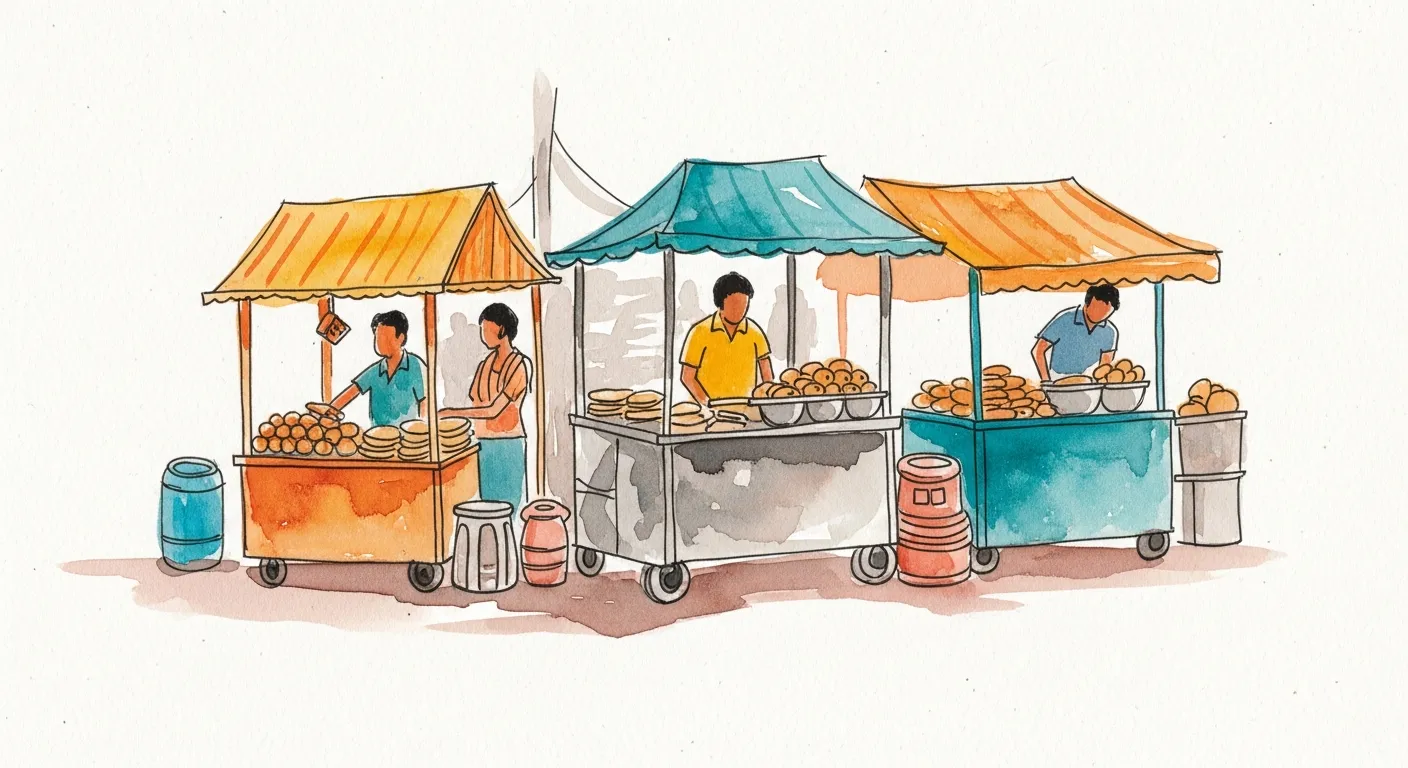
Five hundred vada pavs. Five thousand five hundred rupees of margin. Out of that comes the hafta, the gas refill, the helper's daily wage of 400 rupees, the ice for the chutney, the loss on unsold pavs that have gone stale by 9 PM.
What reaches the family is somewhere between 2,500 and 3,000 rupees a day. Seventy-five thousand a month, if nothing breaks, if nobody falls sick, if the monsoon does not flood the stall, if the BMC drive does not confiscate the kadai, if the son does not announce he wants to drive for Uber instead.
THE HYGIENE QUESTION, ASKED BY PEOPLE WHO HAVE NEVER STOOD AT A KADAI
The second pressure is softer but harder to fight. The Indian Express recently ran a lifestyle feature in which an expert described Indian street food hygiene as 'highly questionable' and recommended that people minimise their consumption of it.
This is the new register. Not 'I don't like it.' Not 'I prefer something else.' But 'it is unsafe, and I am being responsible by avoiding it.'
A 2023 study in the International Journal of Creative Research Thoughts found that hygienic street food stalls in Mumbai generated an average daily revenue of 4,953 rupees, while stalls perceived as unhygienic generated 2,405. A gap of more than two to one. Perception, in this market, is not a small variable. It is the variable.
The younger commuter at Dadar station, the one with the laptop bag and the AirPods, is not buying vada pav from the man whose father served his father. He is walking past that stall to the Jumboking outlet inside the station, where the vada pav costs 60 rupees, comes in a printed paper sleeve, and is fried in oil that gets changed on a schedule somebody has documented.
The Jumboking vada pav is three times the price and one third the flavour. It is winning anyway.
THE MEN WHO ARE STILL THERE
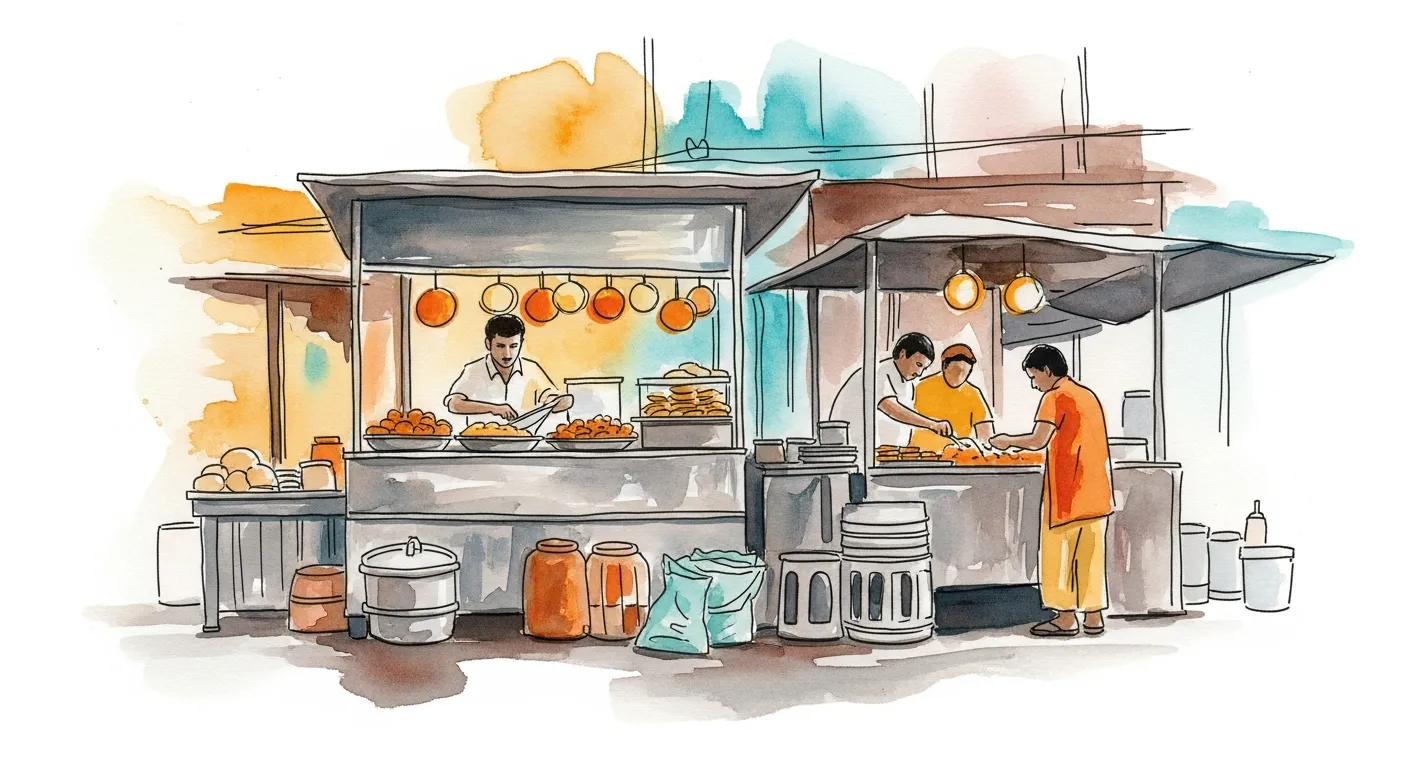
In March 2026, a group of hawkers gathered in Dadar to protest the restrictions and clearance drives affecting their work, saying their traditional means of livelihood was under threat. The gathering was small. The press coverage was smaller. The next morning, the stalls were back on the pavement, frying.
This is the pattern. The pressure mounts. The vendor adapts, complains, organises briefly, and goes back to work because the kadai does not pay for itself. The son watches. The son does the math the father will not do out loud. The son starts looking at delivery jobs, at security guard postings at the new towers in Lower Parel, at anything that does not require him to stand for fourteen hours and negotiate with three different men for the right to do so.
A stall that has been on the same pavement for forty years is not closed by a single event. It is closed by a son who declines to take over. The father stands for one more year, two more years, until his knees give. Then the stall goes quiet. Somebody else moves in, usually a younger migrant from Marathwada or eastern UP, and starts the clock over.
The vada pav does not vanish. The vada pav lineage does.
WHAT GETS LOST WHEN THE LINEAGE GOES
The argument for the old stall is not sentimental. It is technical.
A vada pav fried by a man who has been frying vada pav for thirty years is not the same vada pav fried by a man who started last Tuesday. The potato is mashed coarser, with the skin still flecked through it. The garlic chutney is pounded, not blended, so the texture catches in the mouth. The pav is split with a thumb, not a knife, so the bread tears along its grain and holds the chutney without going soggy. The fried chilli is salted while still hot.
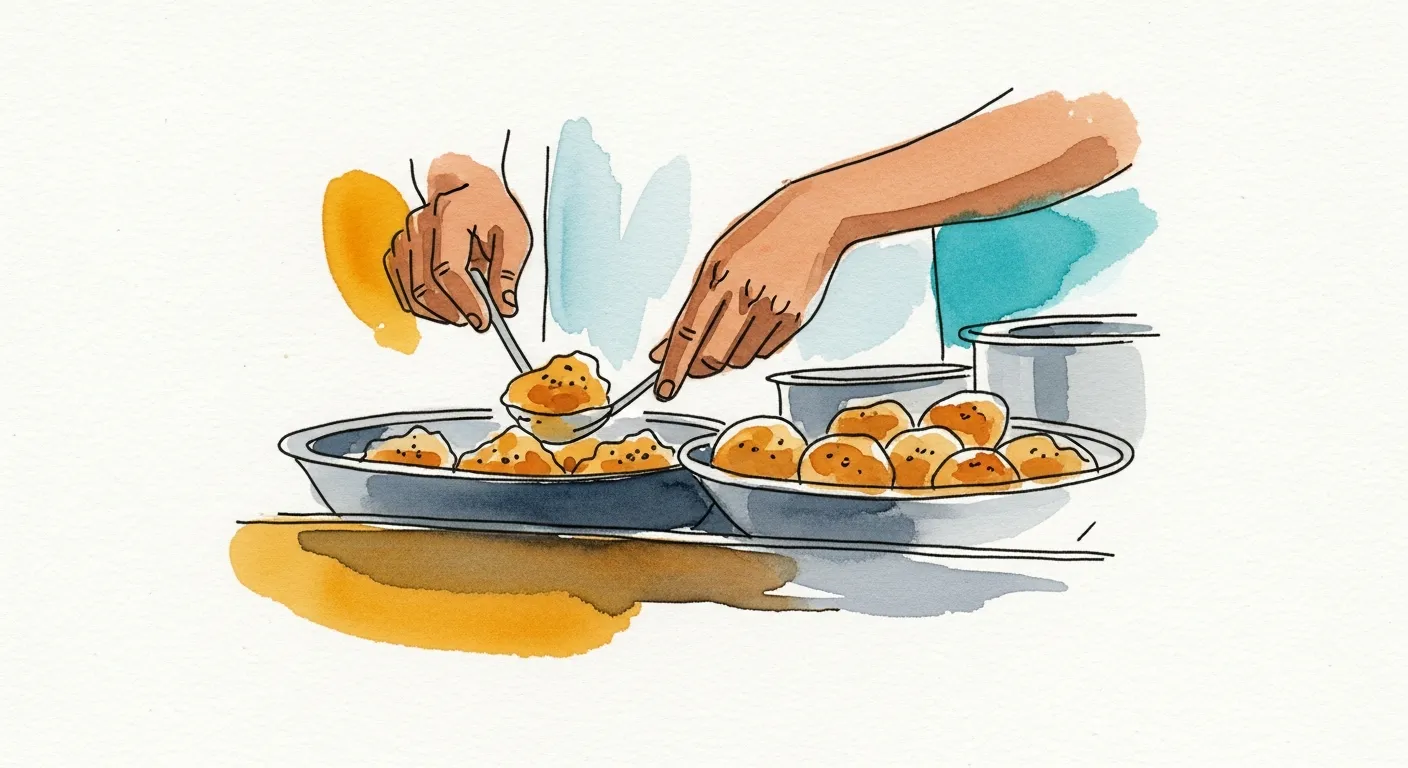
None of this is written down. None of it is on a Jumboking training manual. It lives in the wrist of a man who learned it from another man who learned it from Ashok Vaidya's competitor in 1973.
When that wrist stops, the recipe survives. The technique does not.
THE MATH THAT MIGHT WORK
There are vendors on the Dadar pavement who have figured out the next move. They have a UPI sticker. They have an Instagram account run by a nephew. They have started doing a 'special' vada pav with cheese, with schezwan, with peri-peri masala, priced at 40 rupees, for the same commuter who would otherwise walk to Jumboking. They have put up a small laminated sign that says the oil is changed daily and the water is filtered.
The sign may or may not be true. What matters is that it exists. The hygiene argument, once made, has to be answered in its own language.
This is not a betrayal of the format. The format was always pragmatic. Ashok Vaidya did not invent the vada pav out of reverence for tradition. He invented it because a mill worker had twenty minutes and fifteen paise. The vendor in 2026 who adds a cheese slice and a UPI QR is doing the same calculation his grandfather did. Read the customer. Feed the customer. Stay on the pavement.
The pavement is still there. The kadai is still hot. The grandson, for now, is still standing behind it.
The twenty minutes have not changed.
Field Notes
Quick referenceAshok Vaidya invented the vada pav in 1966 for mill workers with twenty minutes and fifteen paise.
Six square feet of Dadar pavement costs more proportionally than most Mumbai apartments.
Each vada pav clears 11 rupees profit. A strong stall moves 500 pieces daily.
The pav is split with a thumb, not a knife, so it tears along its grain and holds chutney.
When the wrist stops, the recipe survives. The technique does not.
Get the next story first
Join the Bhukkads. Free, no spam, just stories.
Takes 30 seconds.