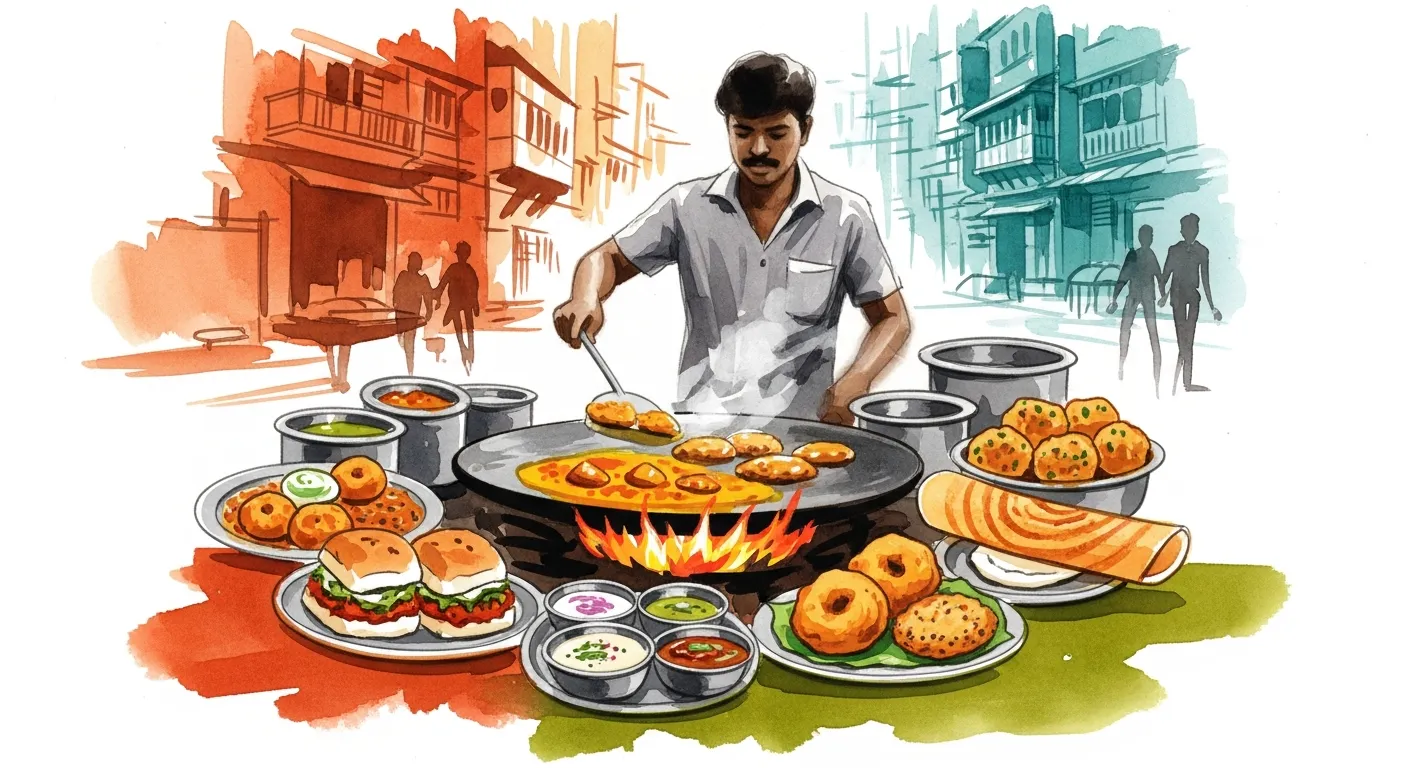
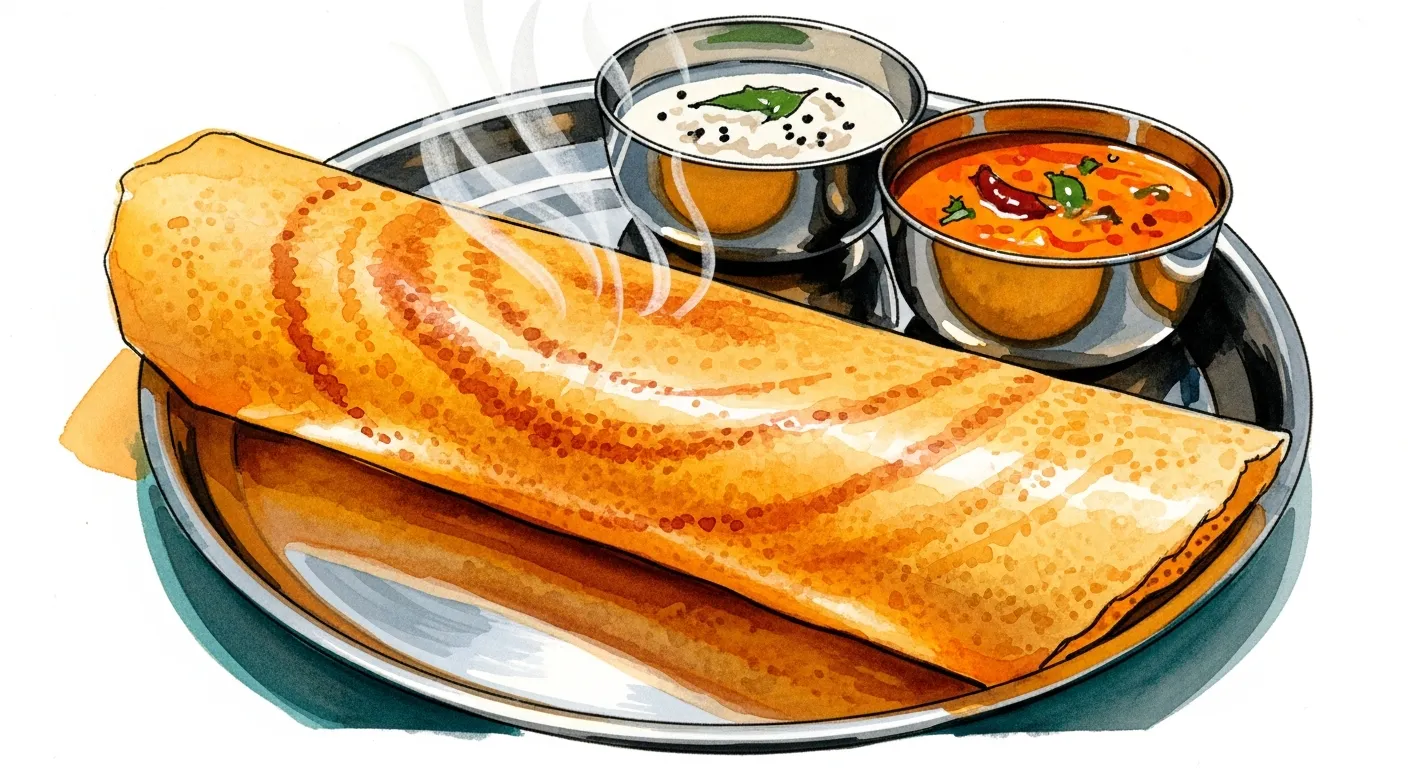
The Bhajiya and the Paperwork
A monsoon snack older than most Mumbai neighbourhoods. A regulator that just decided street vendors are worth training. And a stall on Khetwadi that has been frying since before any of this existed.
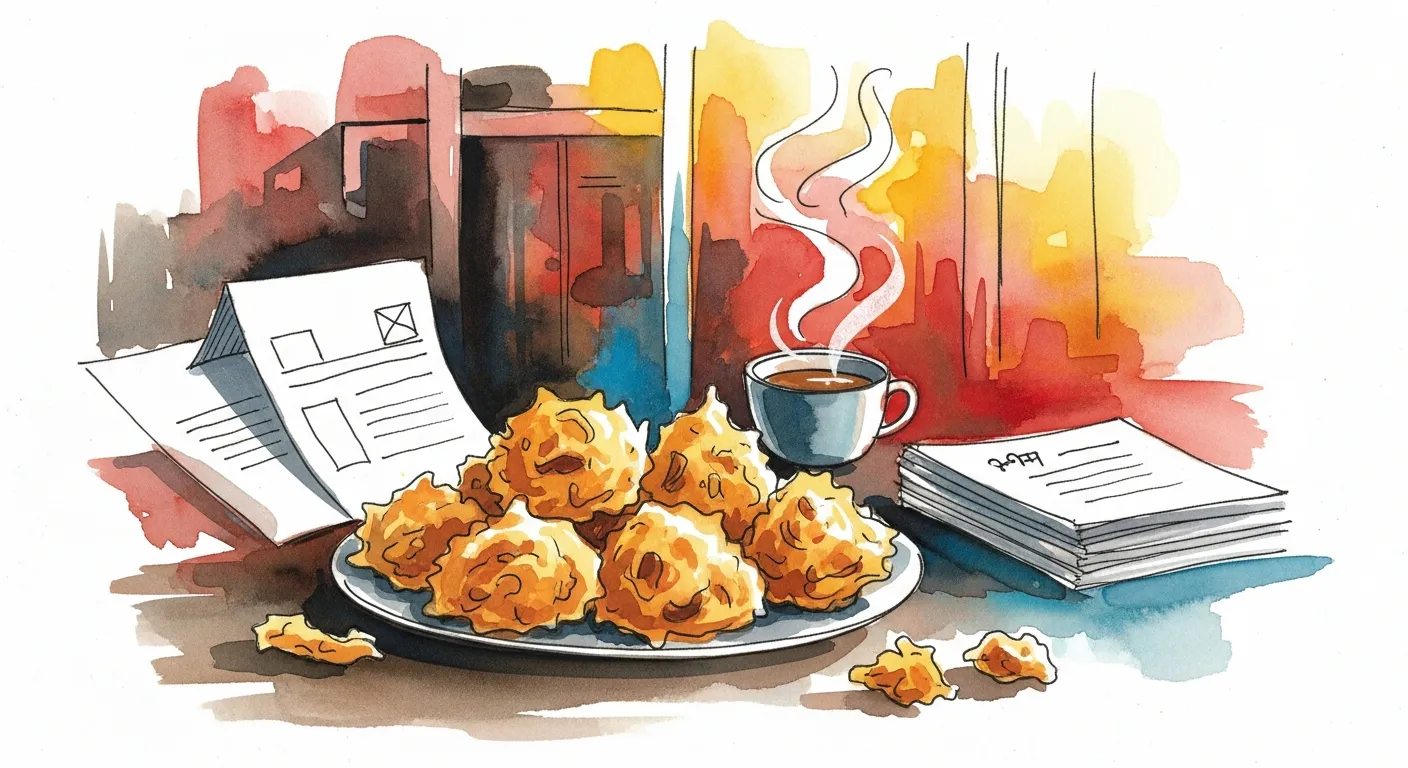
Generated by Imagen 4
In 1894, the Bombay Municipal Corporation passed an ordinance requiring all street hawkers to register with the city. Nobody registered. The hawkers kept hawking. The city kept eating. The ordinance kept being passed every few decades, in slightly different language, with slightly different penalties, and the bhajiya kept getting fried.
This is not a story about regulation defeating tradition. It is a story about a regulator that, after 130 years of writing rules nobody followed, finally wrote one that might actually work. And the people it affects most are the ones frying onions in chickpea batter on a lane in Khetwadi at 4 PM on a wet July afternoon.
THE LANE BEFORE THE LANE
Khetwadi is not a neighbourhood. It is twelve lanes, numbered one through twelve, running off Girgaon's spine like ribs off a fishbone. The name comes from khet, field. There were fields here once. In the 1820s, when the British were still figuring out what to do with the seven islands they had stitched together with landfill, this was where Pathare Prabhus and Gaud Saraswat Brahmins farmed vegetables for a city that had not yet decided to become a city.
The fields went. The lanes stayed. The vegetables, in a roundabout way, also stayed, just battered and fried now.
Nobody talks about the fact that the bhajiya stall is one of the oldest continuous food formats in Bombay. Older than the vada pav (1966). Older than the Irani cafe (1870s). Older than the Parsi dairy. The technique, ground gram flour, water, spice, hot oil, predates the British by at least 600 years. The Manasollasa, a 12th century Sanskrit text written by the Chalukya king Someshvara III, describes deep-fried gram-flour fritters called parika. That is the bhajiya. That is the same bhajiya. Eight hundred years of recipe stability, and the only thing that has changed is the price of oil.
WHAT THE STALLS ACTUALLY ARE
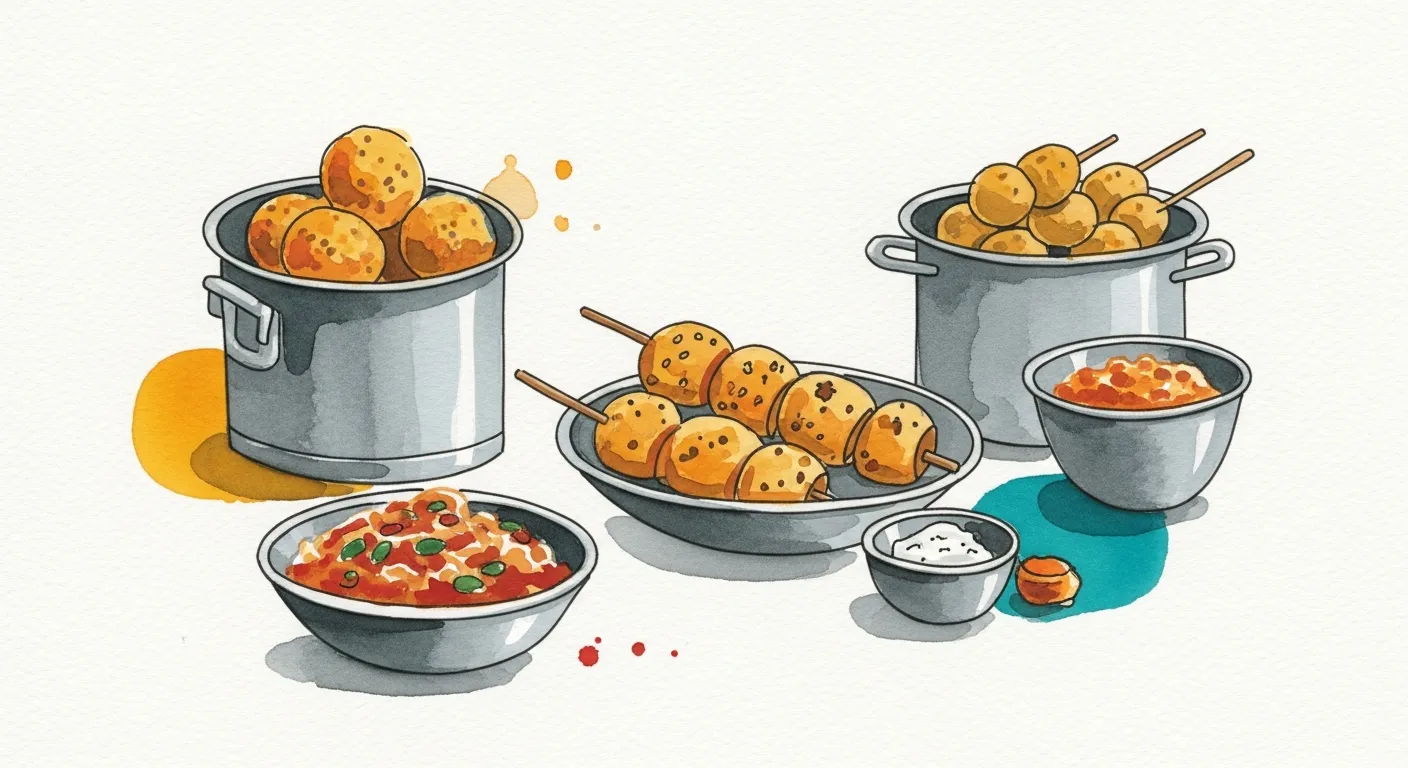
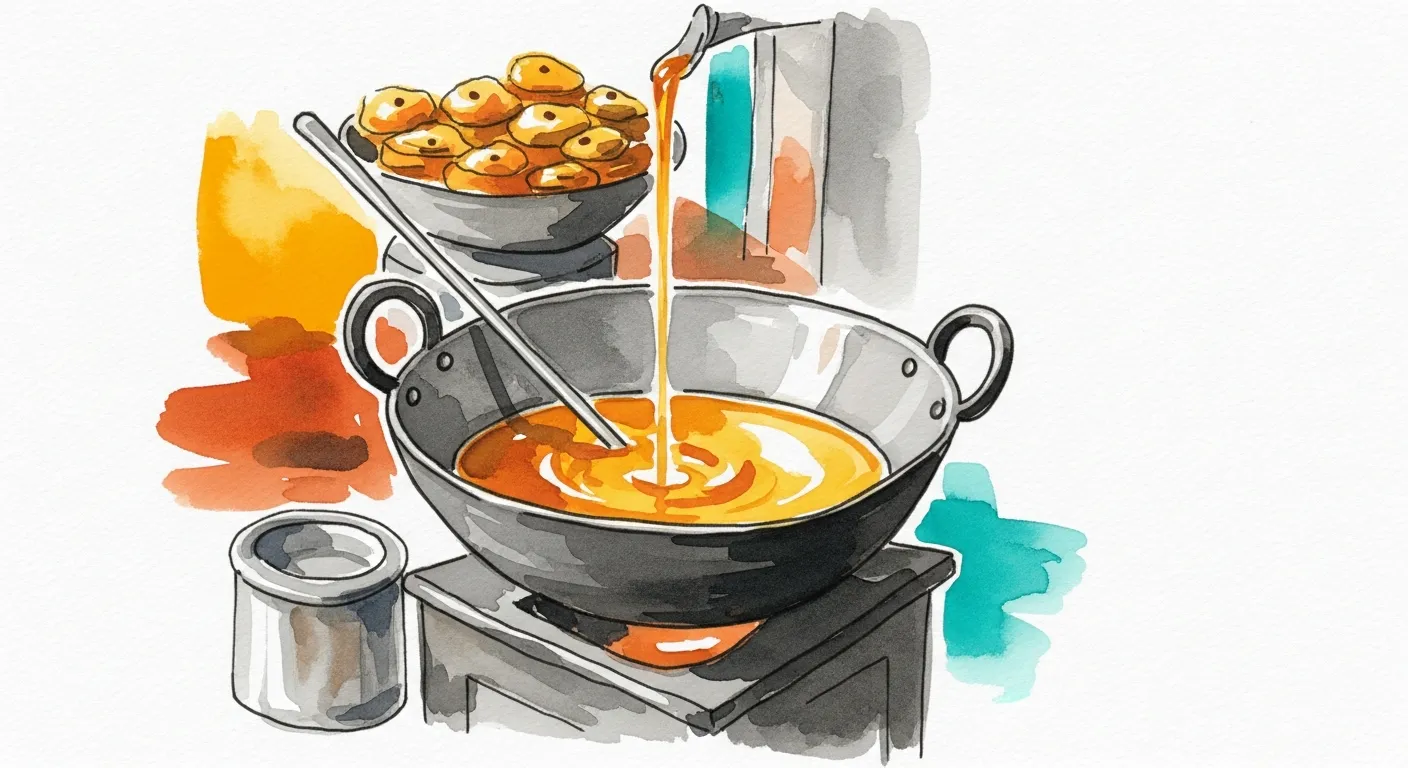
Walk down Khetwadi's khau gallis on any monsoon evening. The format has not shifted in three generations. A kadai of oil, kept at a steady simmer by a man who has been judging oil temperature by sound for thirty years. A steel tray of sliced onion, potato, chilli, sometimes paneer, sometimes a wedge of bread. A bowl of besan batter, mixed by hand, seasoned by feel. A newspaper cone. A chutney. Done.
The economics are brutal in their simplicity. A plate of bhajiya sells for between forty and sixty rupees. The besan costs roughly nine rupees a plate. The oil, amortised across a day's frying, costs another six. Onion, potato, chilli, fuel, packaging, another eight. The vendor takes home maybe twenty rupees a plate. On a good monsoon evening, with the rain hammering down and the office crowd stopping on the way home, a stall might do 200 plates. Four thousand rupees of margin on a wet Tuesday. Six hundred on a dry Wednesday in October.
This is the business. This has always been the business.
THE LAW THAT FINALLY NOTICED
On April 1, 2026, the Food Safety and Standards Authority of India introduced the most significant regulatory reform in its 17-year history. Food licenses became perpetually valid. The turnover threshold for basic registration jumped from twelve lakh rupees a year to one and a half crore. Street vendors already registered under the Street Vendors Act of 2014 received deemed FSSAI registration automatically.
Read that again. The threshold went up by a factor of more than twelve. A bhajiyawala doing four thousand rupees on a good day, even working 300 days a year, clears around twelve lakh annually. Under the old rules, that put him squarely inside the licensing net. Under the new rules, he can earn ten times that and still only need a Basic Registration.
The annual fee for a Basic FSSAI Registration varies by category, typically ranging from a few hundred to a few thousand rupees. A State License, which kicks in only above one and a half crore, costs two thousand to five thousand a year.
The price of a few plates of his own bhajiya.
THE TRAINING NOBODY EXPECTED
Between January and June 2025, FSSAI and the Brihanmumbai Municipal Corporation ran a joint food safety training program that reached roughly 2,000 street food vendors across Greater Mumbai. The stated goal is 10,000. The curriculum is not abstract. Oil reuse limits. Hand washing. Storage temperatures for cut onion in monsoon humidity. The difference between a clean rag and a clean rag.
The vendors who went through the training came out with a Food Safety Supervisor certificate, a basic registration, and, more usefully, a laminated card that they could show the inspector when he came around asking questions. The card is the point. The card means the inspector keeps walking.
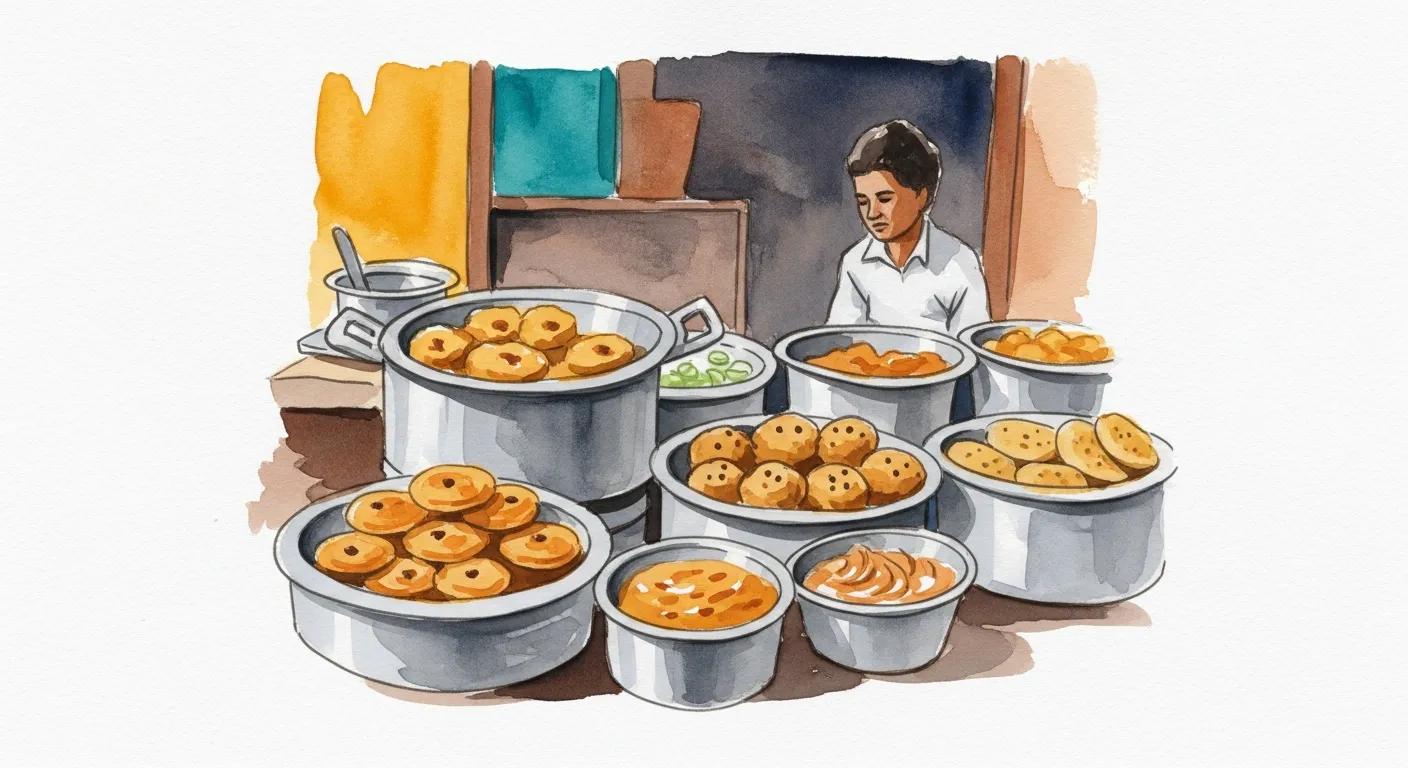
For a generational stall on Khetwadi 9th Lane, where the grandfather started frying in 1958 and the grandson is frying now, the laminated card is the first piece of paper the family has ever held that says the state acknowledges the business exists.
WHAT THE MONSOON DOES TO ALL OF THIS
Mumbai's monsoon and the bhajiya are the same cultural object. One does not exist without the other. The first heavy rain of June lands and the city, by some unwritten contract, decides it is bhajiya weather. Demand triples. Sometimes quadruples. The stall that did 200 plates in May does 600 in July.
This is also when sourcing goes sideways. Onion prices spike, because Maharashtra's onion belt is in Nashik and Nashik floods. Besan prices stay relatively stable, but the quality drops, because the chickpea harvest from Madhya Pradesh sits in damp warehouses. Cooking oil, the single largest variable cost, moves with global palm oil markets and a monsoon that delays port unloading.
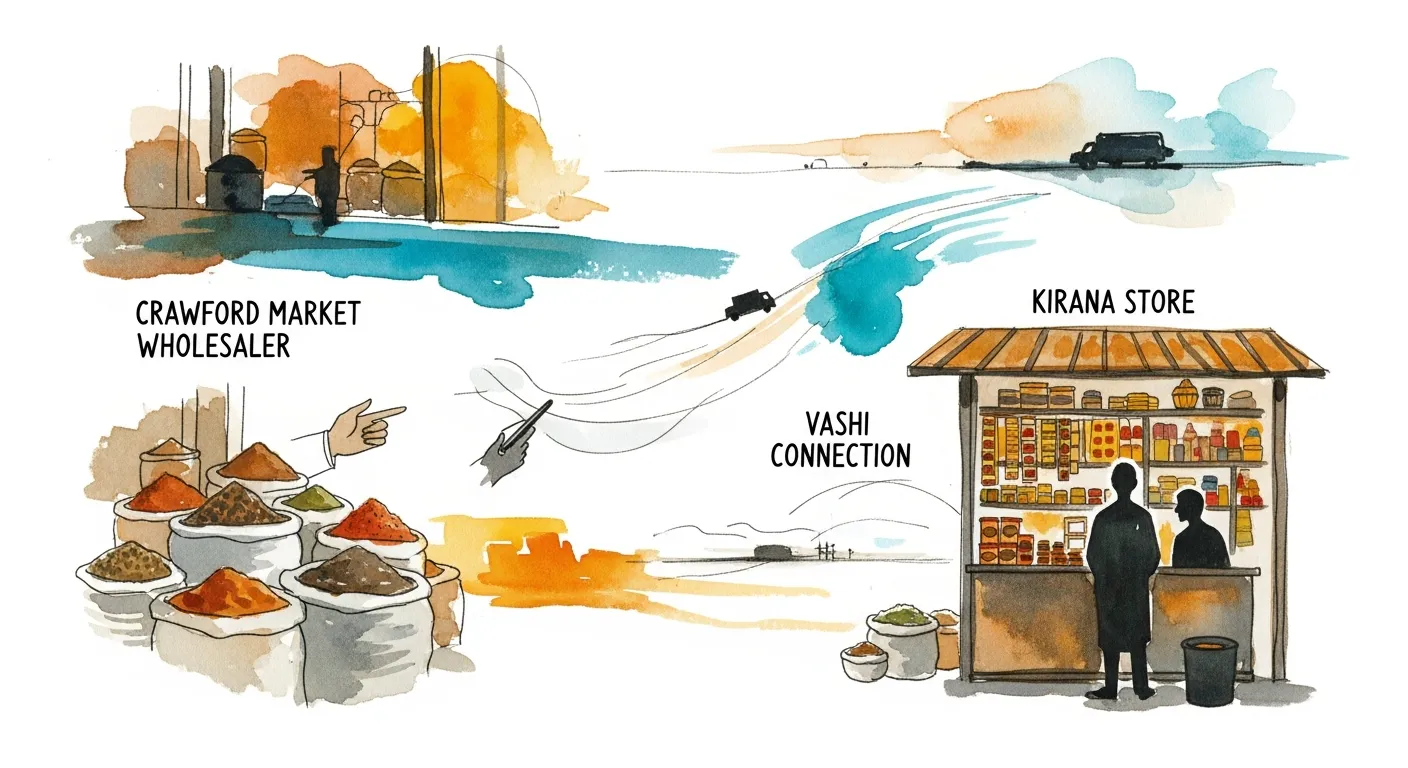
The stalls have always handled this through informal sourcing. A relationship with a wholesaler in Crawford Market. A cousin who knows a man in Vashi. A standing arrangement with the kirana down the lane who floats credit until Saturday. None of this is on paper. All of it is on trust. The new FSSAI rules do not ask for it to be on paper.
That last sentence is the one nobody saw coming. The 2026 reforms deliberately stepped away from documentation requirements that would have required vendors to produce supplier invoices and batch numbers for ingredients bought from a man whose only signage is his face.
THE ONES WHO STAYED
There is a stall on Khetwadi 6th Lane, no signboard worth mentioning, formica counter, two kadais, run by a family that has been there since the 1960s. The grandfather fried through the 1974 textile mill closures. The father fried through the 1992 riots, the 1993 blasts, the 2005 floods. The son is frying now, through a regulatory regime that has, after 130 years of pretending he did not exist, finally written rules that fit him.
He went through the training in May. He got the laminated card in June. The first heavy rain landed on June 11th. By 5 PM that evening he had a queue of fourteen people standing under umbrellas waiting for onion bhajiya.
The bhajiya is nine rupees of besan, six rupees of oil, eight rupees of everything else, and twenty rupees of margin. The recipe is from the 12th century. The lane is from the 1820s. The rain has been doing this since before any of it.
Eight hundred years of recipe stability. One year of paperwork that finally makes sense.
The inspector keeps walking. The kadai keeps simmering. The queue keeps growing.
Field Notes
Quick referenceThe Manasollasa, written in the 12th century, describes deep-fried gram-flour fritters called parika — the same bhajiya recipe for 800 years.
Four thousand rupees margin on a wet Tuesday. Six hundred on a dry Wednesday in October. This is the business.
The FSSAI turnover threshold jumped from 12 lakh to 1.5 crore — a factor of twelve increase that finally fits street vendors.
None of it is on paper. All of it is on trust. The new rules do not ask for it to be on paper.
The stall that did 200 plates in May does 600 in July. Mumbai's monsoon and the bhajiya are the same cultural object.
Get the next story first
Join the Bhukkads. Free, no spam, just stories.
Takes 30 seconds.