The Return Trip
Three chefs walked out of New York kitchens. They ended up in Bandra. The interesting part is why they stayed.

In the 1780s, a Bengali nobleman named I'tisam-ud-Din traveled through Europe as an envoy of the Mughal emperor Shah Alam II. He stayed three years. He ate roast meats, boiled potatoes, things cooked without turmeric or conviction. When he returned, he wrote about what the English did to food. The horror was quiet, scholarly, precise.
For two centuries after that, the story of food and migration between India and the West ran in one direction. Indian cooks went out. They opened restaurants in London, in New York, in Houston, in Brick Lane. They adapted. They softened. They learned to explain themselves. The idea that a Western chef might reverse that migration, might walk into a city like Mumbai and find themselves adapting, softening, learning to explain themselves, that idea is barely thirty years old.
Now it is happening in one specific neighbourhood, on one specific stretch of the western suburbs, with an intensity that deserves a closer look.
THE NEIGHBOURHOOD
Bandra has always been the hinge. Not South Bombay, with its colonial dining rooms. Not the sprawl of the northern suburbs. Bandra sits between the two, geographically and culturally, a neighbourhood that was Portuguese before it was British, Catholic before it was cosmopolitan, village before it was venue.
The East Indian community, the original Catholic inhabitants of the Konkan coast, had their rice fields and toddy here long before the term "food scene" existed. The Bandra you eat in today, the one with fourteen-seat chef's counters and natural wine lists, is built on land that once grew rice and kokum.
The conversation is always about what opened, never about what was already there.
But this is the ground three chefs from New York chose to land on.
THE ONE WHO CAME BACK
Hussain Shahzad is not, technically, a foreign chef who settled in India. He is an Indian chef who left, worked at the restaurant many consider the best in the world, and came back. The distinction matters.
In 2014, Shahzad was a cook at Eleven Madison Park in Manhattan. EMP, as the industry calls it, held three Michelin stars, would go on to be named the world's best restaurant in 2017. The kitchen ran with the discipline of a surgical theatre. Every plate was a composition. Every composition was a thesis.
Shahzad returned to India in 2015. Not because New York rejected him. Because Mumbai called.
He joined Hunger Inc. Hospitality, the group behind The Bombay Canteen and O Pedro, and eventually became its Executive Chef. His restaurant, Papa's, sits in Bandra. It is a chef's counter. 14 seats. The menu is Indian, but the technique is global. A dish might reference a dal his grandmother made, executed with the precision of a tasting menu at a three-star restaurant in Midtown.
The technique is borrowed. The memory is his own.
This is the part that gets misread. People see a chef who worked at EMP and assume he came back to make Indian food "elevated." That word. What Shahzad actually does is more interesting. He uses the rigour of a New York fine-dining kitchen to excavate flavours that were already there. He is not elevating Indian food. He is refusing to believe it was ever low.
THE ITALIAN-AMERICAN SOMEWHERE ELSE
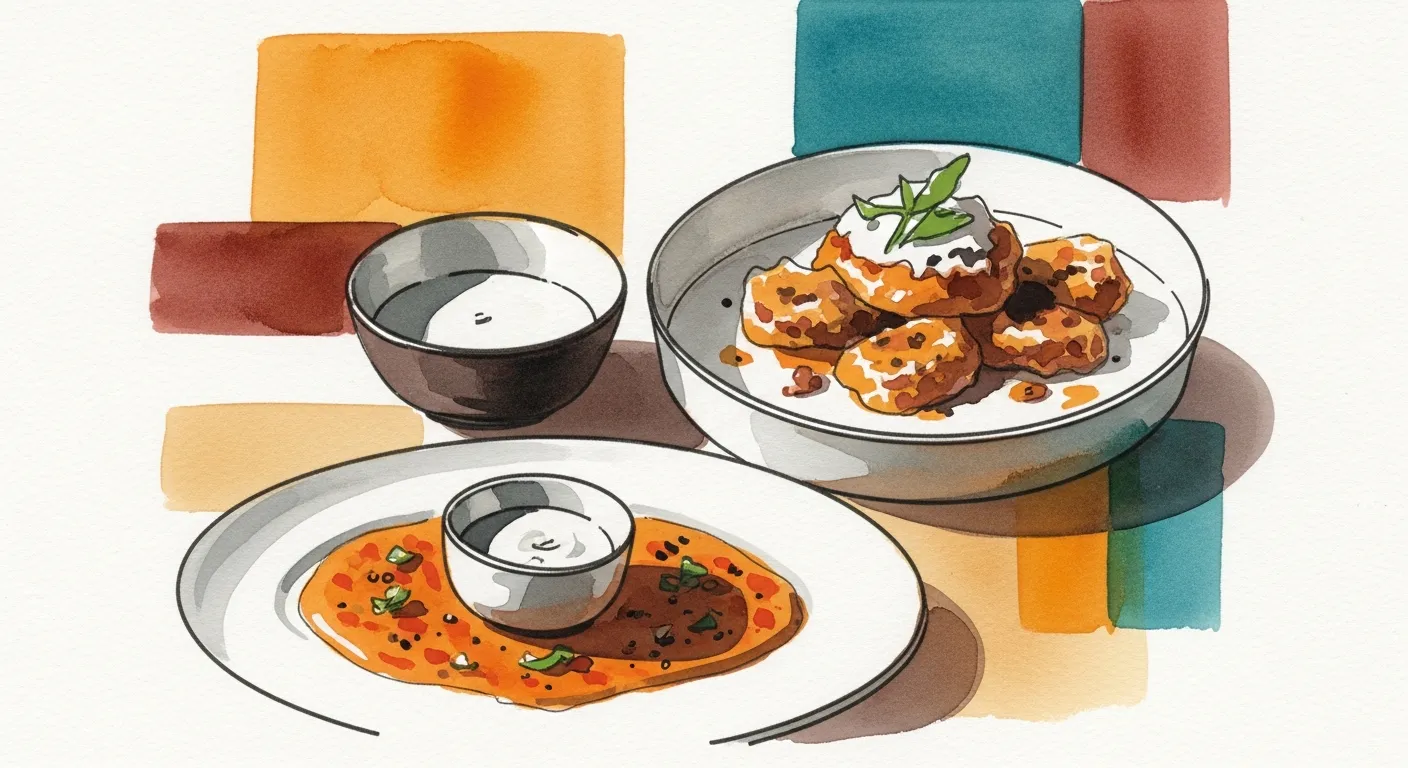
Anthony Burd cooked in New York, then Hong Kong, then Bangkok, where he opened a restaurant. The story goes that he was then asked to bring his approach to Italian-American comfort food to Mumbai's business district, and the trajectory of what happens when you don't soften flavours for anyone took a very specific turn.
Burd's position, according to those who have worked with him, involves resistance. The resistance to adaptation that most chefs accept as inevitable when they cross continents. The garlic stays. The anchovy stays. The chilli heat, if anything, gets turned up, because this is a city that can handle chilli heat.
What gets adjusted instead is the vegetarian section. Expanded. Not because of sudden moral clarity about plant-based eating, but because the mathematics of Mumbai dining are different. In New York, a chef who ignores vegetarians is called uncompromising. In Mumbai, he is called closed.
The more interesting development is the reverse flow. Dishes that work in Mumbai travel back to other locations. The current is running both ways now.
THE BISTRO THAT REPLACED A GHOST
Will Aghajanian had a project somewhere in New York. It dissolved. That is the polite word. Projects do not close, they dissolve, like sugar in boiling water, leaving nothing behind but a faint sweetness and some debt.
Aghajanian landed in Bandra. The neighbourhood bistro format, in his hands, means something different than it would mean in Brooklyn. In New York, a neighbourhood bistro means checked tablecloths, a burger on the menu, and a landlord who will eventually sell the building. In Bandra, it means something else. It means a place where the chef can cook what he wants because the neighbourhood will actually show up on a Tuesday.
In New York, restaurants survive their chefs. In Bandra, chefs survive their restaurants.
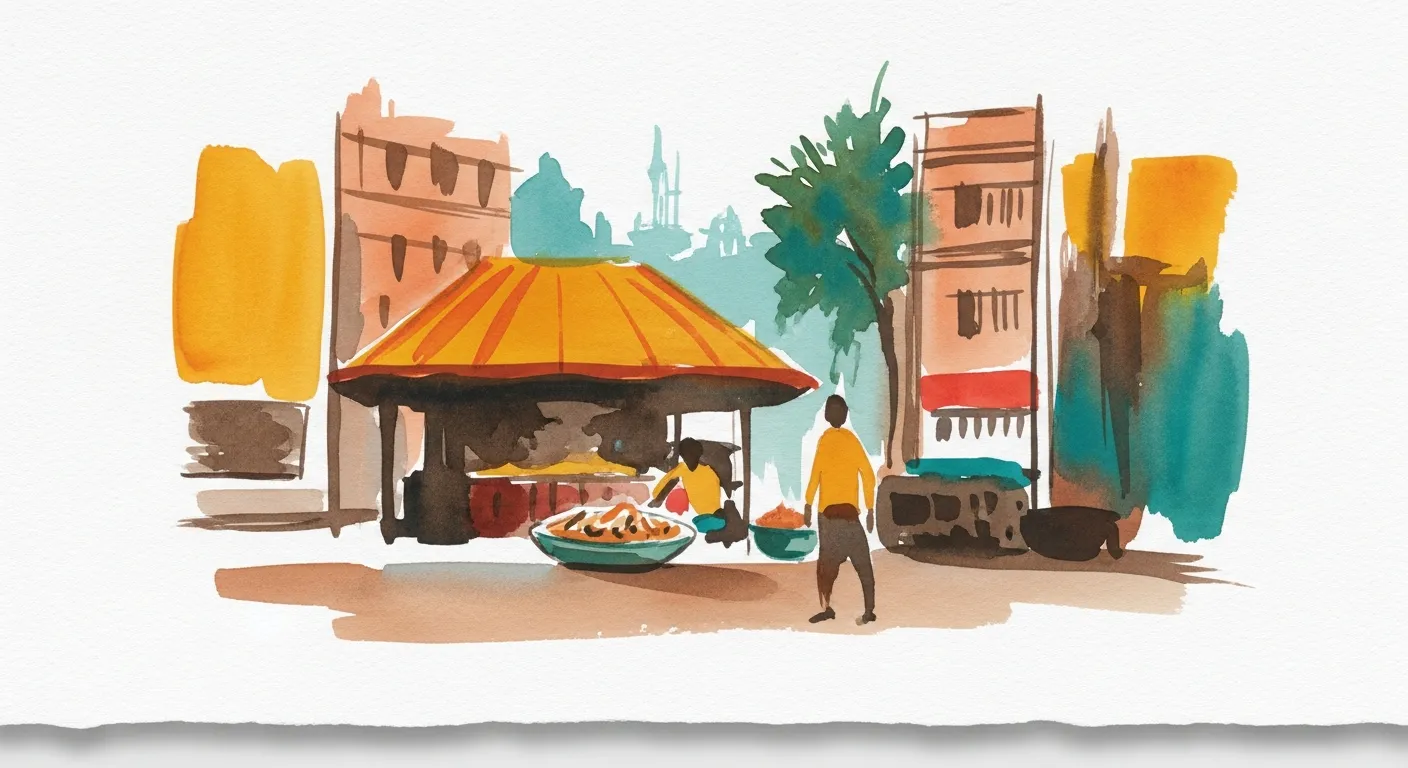
Aghajanian's story is the most telling of the three. He did not come to India as a conqueror or an explorer. He came because a project ended somewhere else and this city had room. Mumbai did not need him. He needed Mumbai.
THE DIRECTION OF TRAFFIC
Here is the thing worth examining.
For decades, the anxiety in Indian food culture was about legitimacy. Could Indian cuisine be "fine dining"? Could it hold its own against French technique, Japanese precision, Nordic minimalism? The anxiety produced some strange outcomes. Molecular gastronomy applied to chaat. Deconstructed biryanis. Foam on everything.
The arrival of these chefs, all three of them choosing Bandra within the same handful of years, suggests the anxiety has flipped. It is no longer Indian chefs trying to prove themselves in Western kitchens. It is Western chefs, or Western-trained chefs, realizing that the energy, the audience, the sheer appetite of a city like Mumbai is not something you can find in Brooklyn or the 11th arrondissement.
Shahzad came back because the ingredients were here. Burd stayed because the audience was here. Aghajanian arrived because the opportunity was here.
Three different reasons. Same postcode.
THE 14-SEAT ARGUMENT
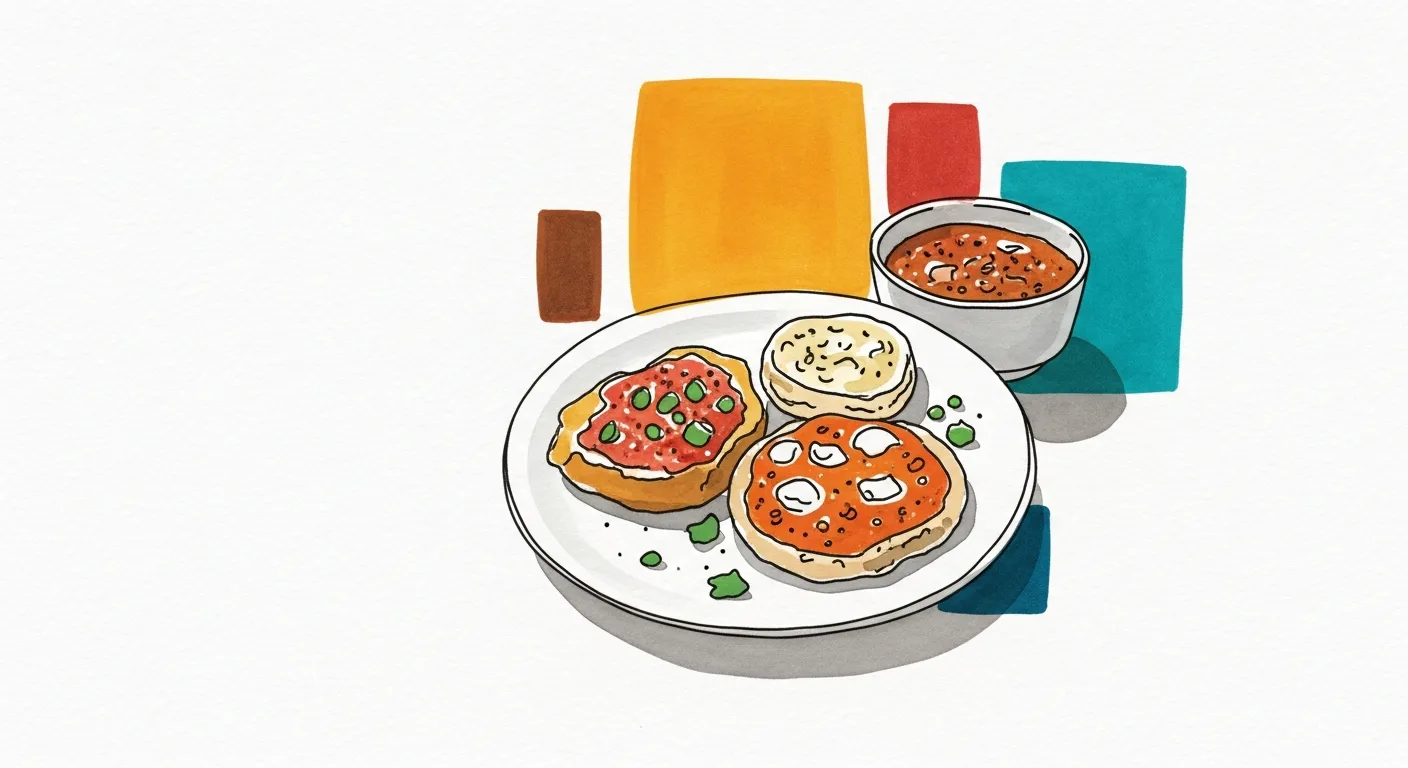
Papa's serves 14 people at a time. Other formats fill floors in business districts. Others operate as neighbourhood bistros. These are three completely different approaches serving three completely different functions, and the fact that all three exist in the same neighbourhood tells you something about what Bandra has become.
It is not a dining district. Dining districts are planned, zoned, intentional. Bandra is organic. A bakery next to a garage next to a wine bar next to a temple next to a gym that used to be a warehouse. The restaurants do not cluster because someone planned a food hub. They cluster because the rents, while obscene, are slightly less obscene than South Bombay, and the clientele walks in knowing what burrata is.
Shahzad's 14-seat counter at Papa's is the sharpest articulation of this. You do not open a 14-seat restaurant in a city of 21 million people unless you believe, with absolute conviction, that the right 14 people will show up every night. That is not confidence. That is data.
14 seats. 21 million people. The math is the point.
THE RETURN
I'tisam-ud-Din went back to India after his years in England. He wrote his account of wonders seen in foreign lands. He documented English food with the same careful anthropological distance that English travelers had used to document Indian food for centuries. He turned the gaze around.
Two hundred and forty years later, the gaze is turning again. Not in a book this time, but on a plate, in a neighbourhood bistro in Bandra, where chefs from elsewhere are expanding their vegetarian sections because the city asked them to.
The migration of food has always been a two-lane road. For a long time, the traffic was heavier in one direction. Now the lanes are evening out.
I'tisam-ud-Din would have understood. He ate the roast meats. He wrote it down. He went home.
Field Notes
Quick referenceEleven Madison Park held three Michelin stars when Hussain Shahzad worked there in 2014.
Papa's serves exactly 14 people at a time in a city of 21 million.
Bandra sits on land that once grew rice and kokum for the East Indian community.
In New York, ignoring vegetarians makes you uncompromising. In Mumbai, it makes you closed.
I'tisam-ud-Din documented English food in the 1780s with the same anthropological distance English travelers used for Indian food.
Get the next story first
Join the Bhukkads. Free, no spam, just stories.
Takes 30 seconds.