Mumbai Was a Forest. Here's What It Tasted Like.
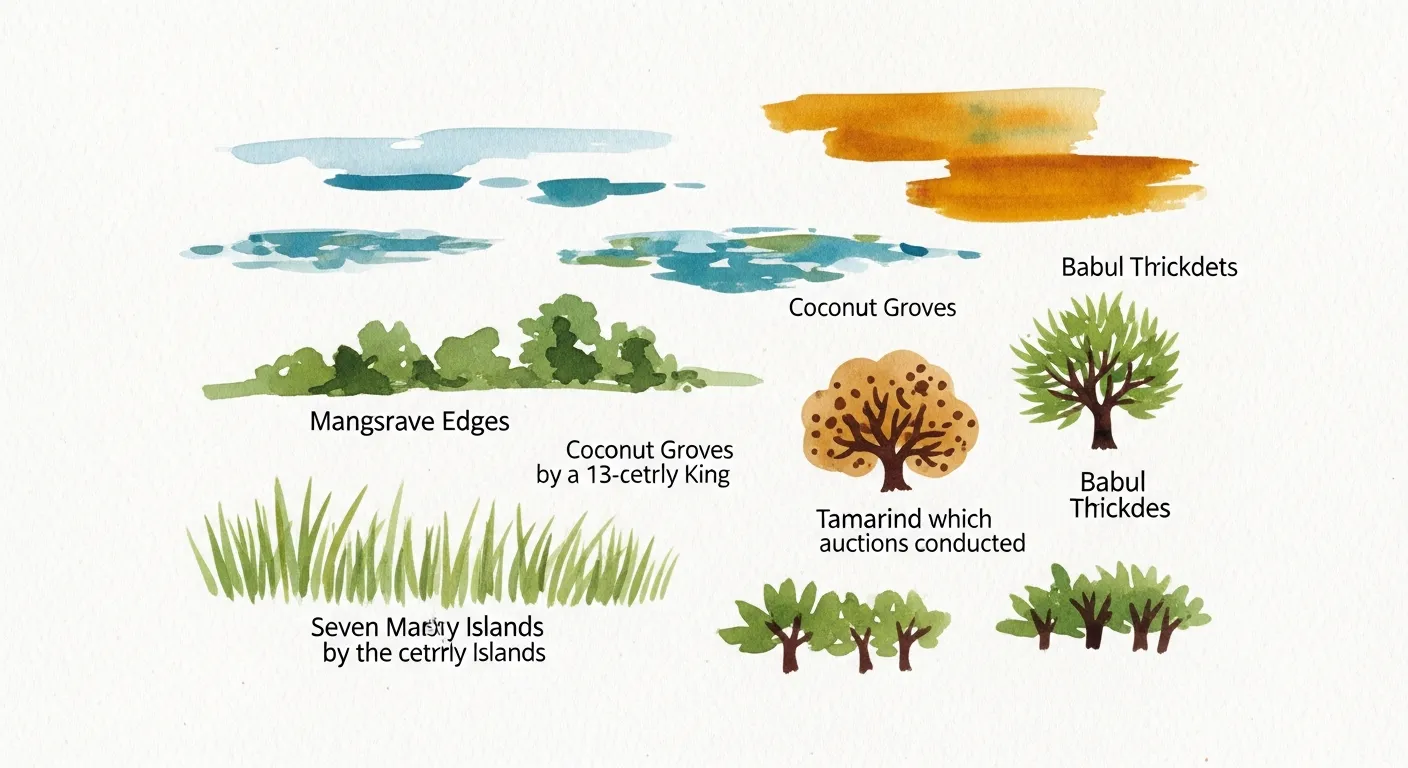
Chinchpokli means tamarind grove. Fanaswadi means jackfruit orchard. Wadala means banyan row. Mumbai didn't grow over its forest. It grew out of it.
Before it was a city, Mumbai was a canopy.
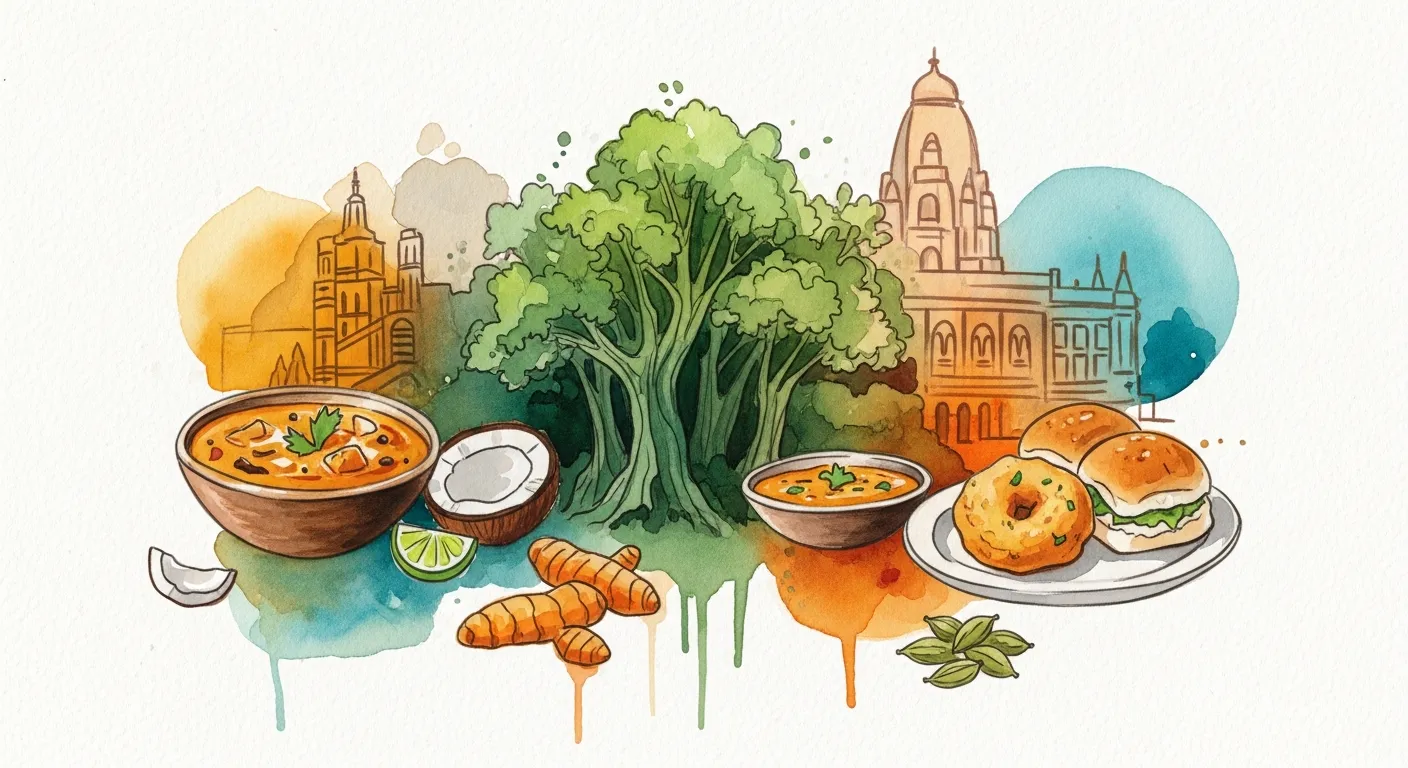
Seven marshy islands, mangrove edges, coconut groves planted by a 13th-century king, tamarind trees under which auctions were conducted, babul thickets so dense they gave a temple its name. The forest came first. The city grew inside it. Then the city replaced it, and mostly forgot what it had replaced.
S.M. Edwards, writing in The Rise of Bombay: A Retrospect at the turn of the last century, called this place a "land of trees." He wasn't being romantic. He was stating a fact that was already disappearing.
The 2018 BMC tree census counted 29.75 lakh trees across the city. A new census, using ground-penetrating radar, is expected to begin in 2026. A new census, using ground-penetrating radar, is expected to begin in 2026.
But here is the thing about a forest you've eaten: it doesn't entirely disappear. The tamarind in your pani puri. The coconut in your fish curry. The jackfruit in your monsoon thali. The jamun staining your tongue purple on a rainy afternoon. The flavours of Mumbai's original forest are still on the table. The trees that produced them mostly aren't.
This is that story.
THE MANGO, THE TREE THAT FED AN EMPIRE
Mazgaon, in South Mumbai, is now a tangle of docks, high-rises, and naval installations. It is hard to imagine it as anything else.
In the 17th century, it was an orchard.
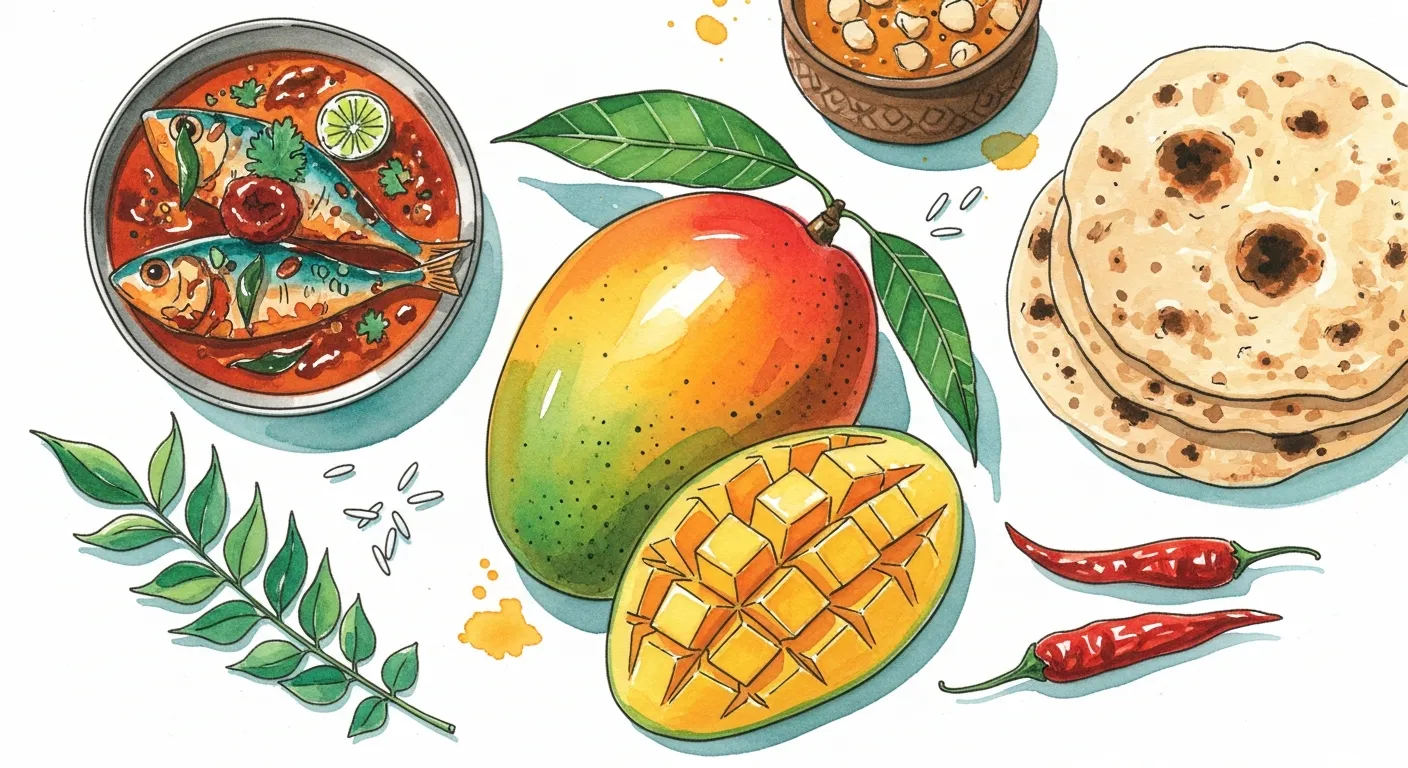
Mazgaon had a variety of mango tree that fruited twice a year, a biological rarity. These mangoes were considered exceptional enough to be packed and shipped to the court of Mughal Emperor Aurangzeb. They were celebrated enough that Thomas Moore, an Irish poet who had never visited India, mentioned them by name in his 1817 epic poem Lalla Rookh, calling them "the Mangoes of Mazagong."
Read that again. A 19th-century Irish poet, writing about a fictional Mughal princess, considered the mangoes of a small Bombay island famous enough to cite by location.
Before cotton. Before opium. Before the stock exchange and the mills and all the things Bombay is supposed to be known for. The first luxury export of this island was a mango.
Those orchards are gone. In their place: the Mazagaon Docks, where warships are built. The mangoes that once travelled to Mughal courts now travel from Ratnagiri, 300 kilometres south, arriving in this city that used to grow them as a consumer rather than a producer. Every Alphonso you eat in Mumbai is a small act of historical irony.
THE TAMARIND, THE TREE THAT NAMED THE CITY
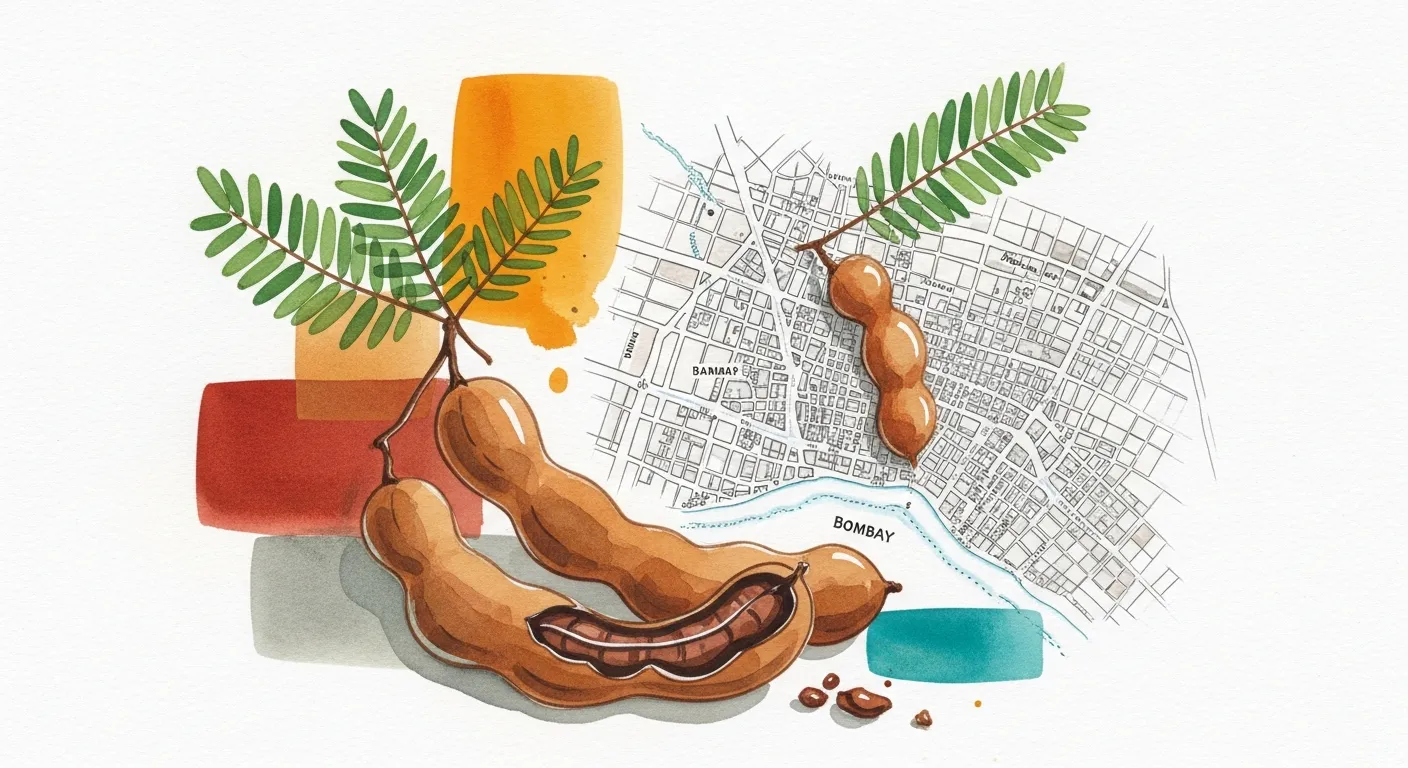
There is an old tamarind tree that appears on an 1849 map of Bombay, not a building, not a fort, a single tree, marked specifically and given a name: the old tamarind tree. An 1803 report notes that informal auctions were held under it. As recently as 1920, men gathered under it daily between noon and four in the afternoon.
The tamarind tree was Bombay's original meeting point. Its shade was public infrastructure.
The tree's name tells its whole story: tamar-i-hind, the Arabic for "date of India," given by Arab traders who brought it from Africa and watched it become so thoroughly native that it named entire neighbourhoods. Chinchpokli, earlier Chinchpooghly, means a dell of tamarinds: chinch being tamarind in Marathi and Konkani. The tamarind grove was so dense, so defining, that the neighbourhood took the grove's name. The grove is gone. The name survived.
In the kitchen, the tamarind never left. The chinch-gulachi amti, tamarind and jaggery dal, is the backbone of Maharashtrian home cooking. The chaat chutney that makes pani puri structurally possible is tamarind. The souring agent in Parsi dhansak is tamarind. The thing that cuts through the richness of South Indian sambar is tamarind. Remove it and you haven't simplified the food, you've broken it.
The old tamarind tree at Azad Maidan is gone. The taste of it is in every meal.
THE JACKFRUIT, THE WORKER'S TREE
Fanaswadi, in Kalbadevi, takes its name from the jackfruit, phanas in Marathi. There was a time when jackfruit grew here densely enough to define the neighbourhood's identity. That time ended before anyone alive can remember it.
The jackfruit is the world's largest tree-borne fruit. A single specimen can weigh 55 kilos. The tree is profligate, it produces fruit in enormous quantities, requires almost no maintenance once established, and gives you two entirely different foods depending on when you harvest it. Young jackfruit, cooked as a vegetable, has a dense fibrous texture that absorbs spice the way meat does. Ripe jackfruit, eaten fresh, is intensely sweet, almost floral, the yellow lobes pulling apart into something that tastes like a mango decided to become a fruit salad.
For the mill workers and fishing communities of old Bombay, the jackfruit growing in a compound or over a lane wall was free food. Substantial, nutritious, free food. The tree asked nothing from you and fed everyone who walked past.
The world has recently discovered jackfruit as a meat substitute. Food startups in London and New York are charging 12 pounds for a jackfruit burger. In the city where jackfruit once grew on public trees over public lanes, you pay three times the price for it at a grocery store.
THE JAMUN, THE MONSOON FRUIT
If you are over 35 and grew up in Bombay, you know this fruit the way you know a childhood smell. Small, purple-black, intensely tart, eaten by the handful with black salt, your mouth staining for the next two hours. Your tongue permanently purple by noon. Fingers dyed. Textile catastrophe if worn on anything white.
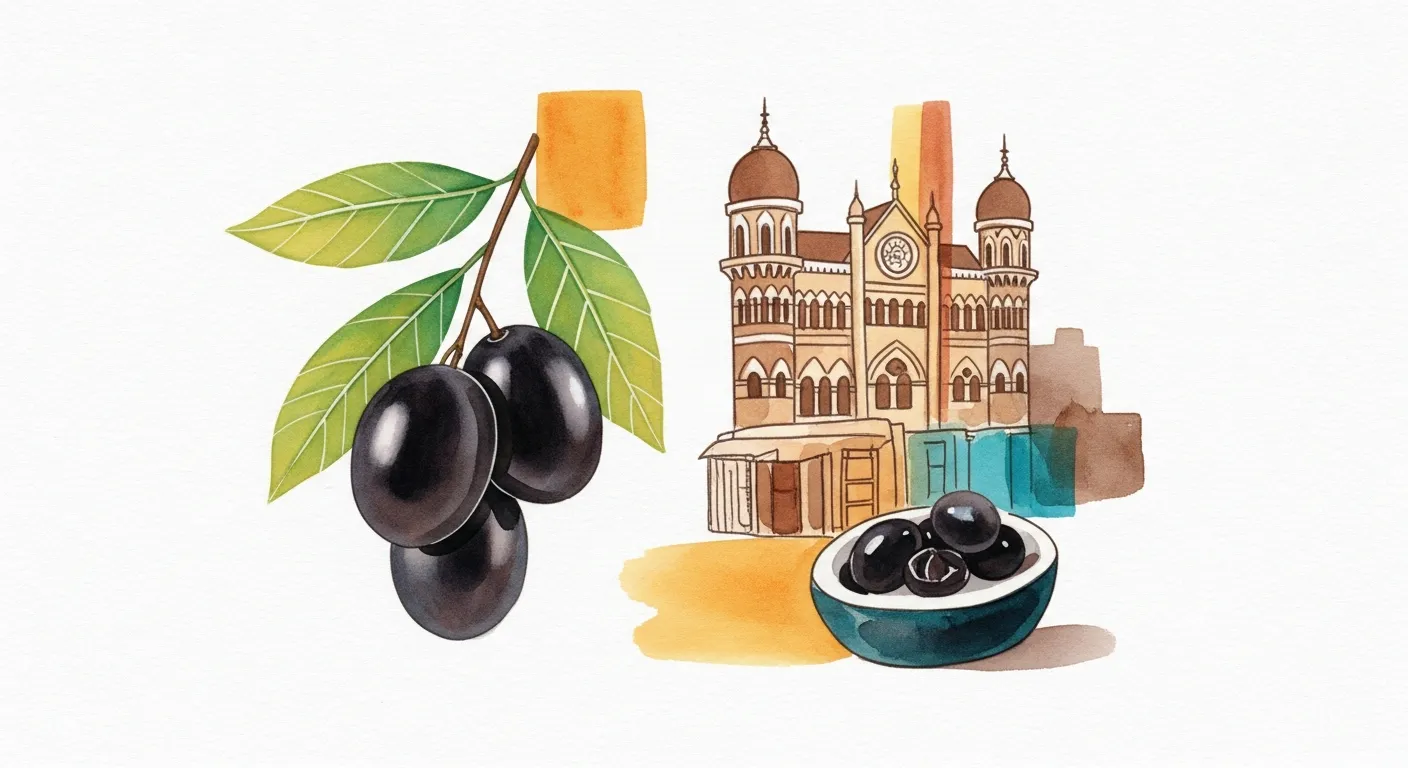
The jamun (Syzygium cumini) is native to the subcontinent. It needs almost nothing, lives over a hundred years, and produces 50 to 60 kilos of fruit per season. Maharashtra is the largest jamun-producing state in India. And yet the Mumbai that once had jamun trees hanging over compound walls in every old neighbourhood, free fruit, taken for granted, seasonal and abundant. The jamun that once cost two rupees a paper cone from a vendor whose source was the tree next door now arrives from elsewhere, shrink-wrapped, at prices that would have seemed insane to anyone who grew up eating it for free.
The jamun ripens just as the monsoon begins. The first rains and the first jamun arrive together every year. This is not coincidence. It is the forest's original calendar, still running on schedule, even though the trees that ran it are mostly gone.
THE COCONUT, THE KOLI ECONOMY
Before King Bhimdev arrived in Mahim in the 13th century, the islands were sparse, Koli fishing communities, babul thickets, mangroves. Bhimdev planted coconut palms. The Marathi word for coconut, mad, survives in the old name "Mahim Woods." The coconut didn't just define the landscape. It was the entire economy.
The Koli community used every part of the palm. The water. The flesh eaten fresh. The flesh pressed for oil. The sap tapped and fermented into tadi, Bombay's original drink, the one that gave Tardeo its name (tad being the Toddy Palm). The leaf for thatching. The coir for rope. The shell for fuel. A coconut palm is not a tree. It is a complete economic system in one organism, and the Koli community had built their entire existence around it before anyone else arrived on these islands.
Every stretch of coastal Mumbai, Versova, Juhu, Madh, Malvani, Manori, was once dense with coconut palms. That coastline still exists. The density has changed, but the coconut's presence in the kitchen hasn't.
The coconut chutney in your Udupi thali. The coconut milk in your Malvani surmai curry. The tender coconut being hacked open by a vendor at Juhu Chowpatty at 7am. All of it descends directly from a 13th-century king planting palms on a marshy island and a fishing community building everything they needed around them.
THE BANYAN, THE TREE THAT BUILT DALAL STREET
The banyan does not grow upward. It grows outward, sending aerial roots down from its branches that thicken into new trunks, which send out new branches, which send down more roots. A single banyan given space and time looks like a forest. It is one tree.
Wadala takes its name from wad-ali, banyan row. There were rows of them here once, before the neighbourhood became what it is now. Worli is named after its banyan grove.
But the most consequential banyan in Mumbai's history left no trace. It was in front of Town Hall, where Horniman Circle now stands. In the 1850s, a group of stockbrokers, four Gujaratis and one Parsi, began gathering under it to trade shares. More came. The group moved as it grew, always to another banyan, always to shade. They eventually found a permanent address. It became Dalal Street. The institution became the Bombay Stock Exchange, Asia's oldest, now worth over five trillion dollars.
Asia's largest financial exchange was incubated under a fig tree. This is not a metaphor. It happened.
THE TREES STILL STANDING
Not everything was lost. Walk through old Bombay with your eyes open.
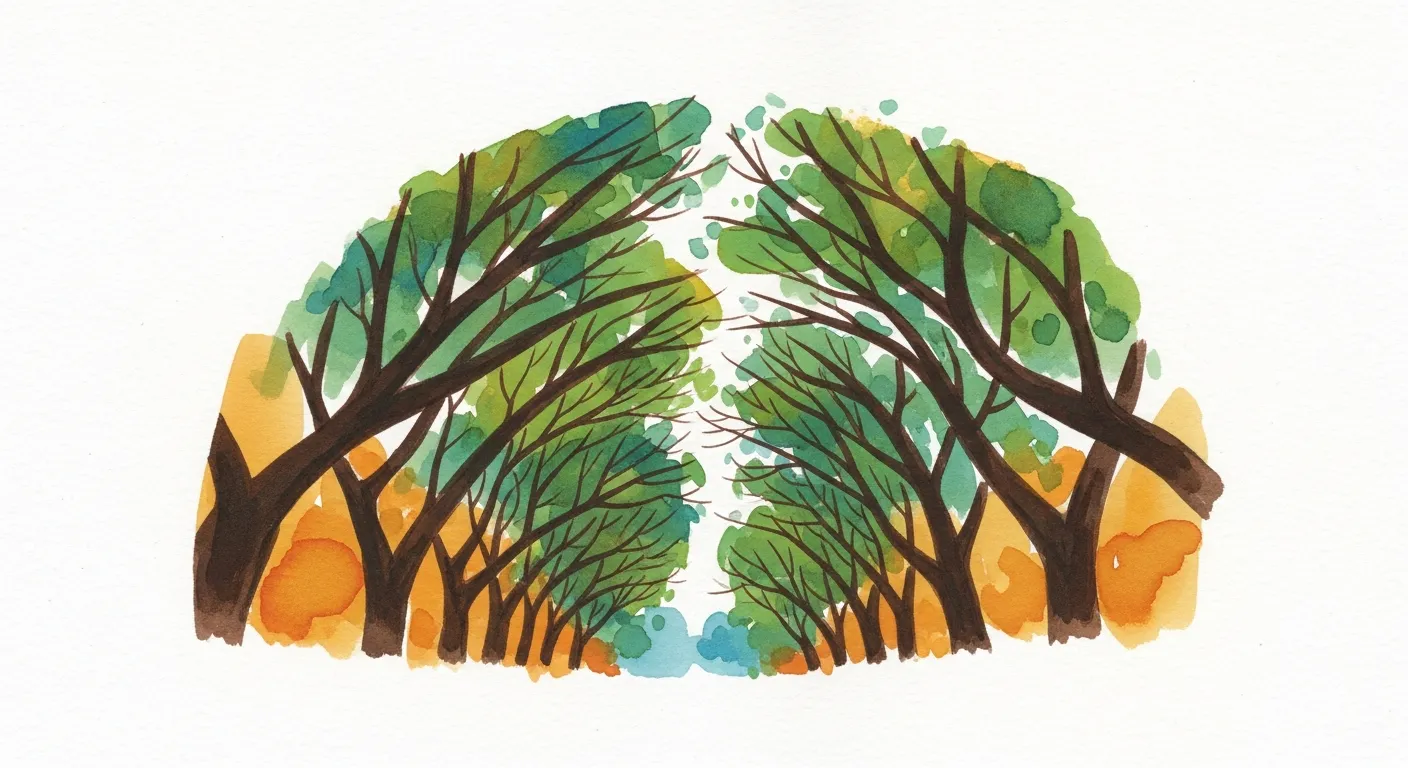
The rain tree on Pedder Road and Altamont Road, pairs of them arching overhead until their canopies meet in the middle, turning the avenue into a green cathedral. Its leaves fold at dusk, trapping insects whose droppings fall like light rain on anyone below. The city found this charming and named the tree after it.
The gulmohar, every April and May, exploding across the city in sheets of orange-red just as the heat becomes personal. It came from Madagascar, brought by the Portuguese or the British, nobody is quite certain. It arrived, stayed, and became so thoroughly Bombay that school children grow up associating its colour with summer holidays and the permission to be elsewhere.
The neem in every old lane, not planted by any plan, simply there, as neem trees are everywhere in India because they require almost nothing and give almost everything back. Antibacterial. Antifungal. The twig that was the toothbrush before there were toothbrushes. In a city that routinely ranks among the world's most polluted, every neem is doing quiet, irreplaceable work.
The peepal at every temple entrance, sacred to three religions simultaneously, roots penetrating walls and pavements with complete indifference to private property, producing oxygen through the night while every other tree sleeps. It survives infrastructure projects because it is sacred. In this city, religion is doing the conservation work that urban planning won't.
And hidden in plain sight: approximately 120 baobab trees scattered through Colaba, Sewri, Mazgaon, and Versova. African trees, arriving via Arab traders perhaps 700 years ago, now completely settled. In Maharashtra, the baobab is called Gorakh chinch, chinch being the Marathi word for tamarind, because even the name of an African tree on this soil connects back to something edible. The baobab's fruit, powdery, tart, extremely nutritious, called "monkey bread" in Africa, grows here every season. Nobody eats it. The tree arrived before the city could figure out what to do with it.
WHAT THE NAMES REMEMBER
Babulnath, named for the babul acacia thickets at the foothills of Malabar Hill. Bhendi Bazaar, named for the bhendi tree that once grew here in groves. Fanaswadi, jackfruit orchard. Chinchpokli, tamarind grove. Wadala, banyan row. Worli, banyan grove. Parel, named for the padel, the trumpet flower, by the Koli fishermen who lived here. Tadeo, the toddy palm. Borbhat Lane in Girgaon, named for the bor, the Indian Jujube, which produced between five and ten thousand fruits a year from a single tree and once hung over this lane for free.
Every one of these trees is gone from the places that remember their names. The forest gave way. The naming persisted. You walk through the ghost of a forest every time you navigate this city.
The IISc's recommended ratio is seven trees per person. Gandhinagar manages four. Mumbai has one for every four. Ghatkopar, in the east, has the most trees, 2.92 lakh. Bhendi Bazaar, named after a tree, has 7,816.
The new census begins in 2026. Ground-penetrating radar will map the root systems of what remains. It will count the trees that are there. It will not count the ones that are gone, or the dishes built around them, or the neighbourhoods that carry their names like a form of mourning nobody quite articulates.
Mumbai was a forest. The forest is mostly gone.
But every time you squeeze tamarind into a chutney, pull apart a jackfruit, eat jamun until your fingers stain, you are eating from a tree that this city grew out of, and has spent the last two centuries trying to forget.
Field Notes
Quick referenceA new tree census using ground-penetrating radar begins in Mumbai in 2026. It will map the root systems of what remains.
The jamun and monsoon arrive together every year — the forest's original calendar, still running.
A single jackfruit can weigh 55 kilos. The tree is profligate.
The 2018 BMC census counted 29.75 lakh trees across Mumbai. Ghatkopar leads with 2.92 lakh.
The Bombay Stock Exchange began under a banyan tree in front of Town Hall.
Get the next story first
Join the Bhukkads. Free, no spam, just stories.
Takes 30 seconds.