The Cob That Waits for the Rain
Marine Drive's bhuttawalas have run on two variables for four generations: a coal fire and a monsoon. Both are getting harder to hold.
Generated by Imagen 4
Maize is not Indian. It arrived on a Portuguese ship sometime in the sixteenth century, part of the same Columbian Exchange that gave this subcontinent the chilli, the potato, the tomato, and the cashew. For the first two hundred years, nobody in India took it seriously. It was a poor man's grain in the interior. A famine crop. Something you ate when the jowar failed.
And then, quietly, it climbed the Deccan and became one of the most important street foods in a city that did not exist yet when the first cob was planted.
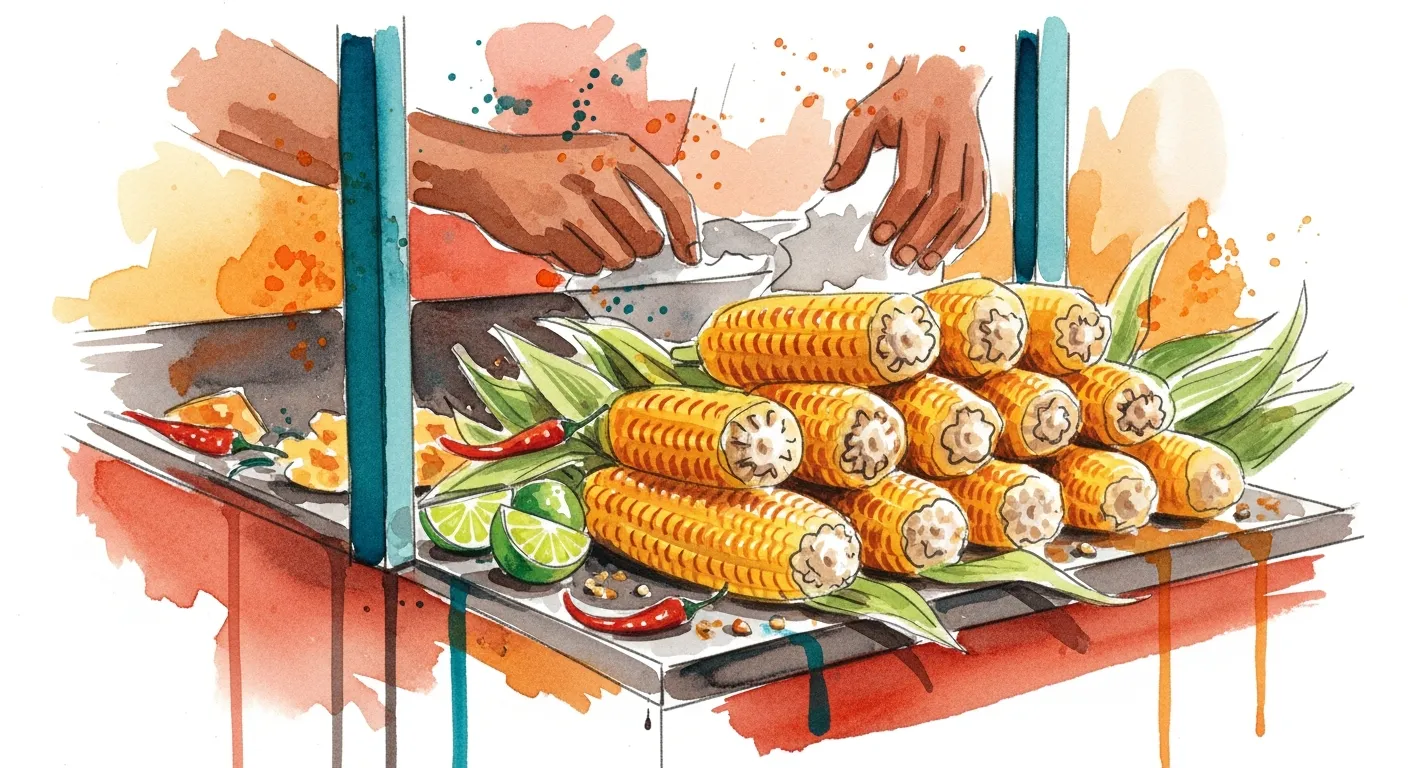
Bombay learned to roast corn over coal. Not boil it, the way the Americans do. Not steam it, the way the Southeast Asians do. Roast it. Blackened on the outside, kernels barely giving, then rubbed with a cut lime dipped in salt and red chilli powder. The smoke does half the work. The rain does the rest.
Without the rain, the bhutta is just corn.
THE MAN AT THE PARAPET
Walk the crescent from Nariman Point to Chowpatty on any evening in July. The parapet is where the city sits. Couples, students, families with small children, cab drivers on a break, a Gujarati uncle who has walked here every evening since 1987. And somewhere along the wall, a man in a plastic sheet crouches over a small iron grate. Coal underneath. A basket of green cobs beside him. A lime cut into quarters on a piece of newspaper.
He has been there, or someone in his family has, for longer than most of the buildings behind him.

Marine Drive was completed as a reclamation in 1940. The bhuttawalas arrived shortly after. Most of the older families along this stretch trace back to Bihar, to Uttar Pradesh, to the maize belt of the Gangetic plain. They came for the mills, stayed for the pavement, and found that a city of thirteen million people walking home in the rain would pay ten rupees, then twenty, then forty for a smoke-blackened cob and the memory of their grandmother.
The smell of roasted bhutta near Marine Drive or Juhu Beach instantly reminds people of Mumbai rains.
That line is from Restaurant India, and it is the kind of sentence that gets written about food and forgotten about people. Someone has to sit in that rain. Someone has to buy the coal at 5 am from the wholesaler in Grant Road. Someone has to soak the cobs. Someone has to find a stretch of parapet the BMC has not chalked out that week.
NOBODY TALKS ABOUT THE COAL
Everyone writes about the nostalgia. Nobody writes about the input costs.
A bhuttawala on Marine Drive works on margins that would embarrass a stockbroker. A cob bought from the Vashi APMC in July costs somewhere between twelve and eighteen rupees depending on the week and the rain. Coal, which used to run at forty rupees a kilo five years ago, now sits closer to seventy. A kilo of coal roasts roughly thirty cobs. Lime, salt, chilli powder, the small square of newspaper the cob used to be handed over on. Multiply it out and the vendor is netting fifteen to twenty rupees per bhutta if he sells everything. If it rains too hard, and nobody stops, he goes home with wet coal and a basket of cobs that will not keep past forty-eight hours.
The Citizen Matters reporting on monsoon vendors puts the earnings loss for Mumbai street sellers at close to sixteen percent in a bad month. For a bhuttawala, whose entire selling season is the four months of unpredictable rain, sixteen percent is not a rough patch. It is the year.
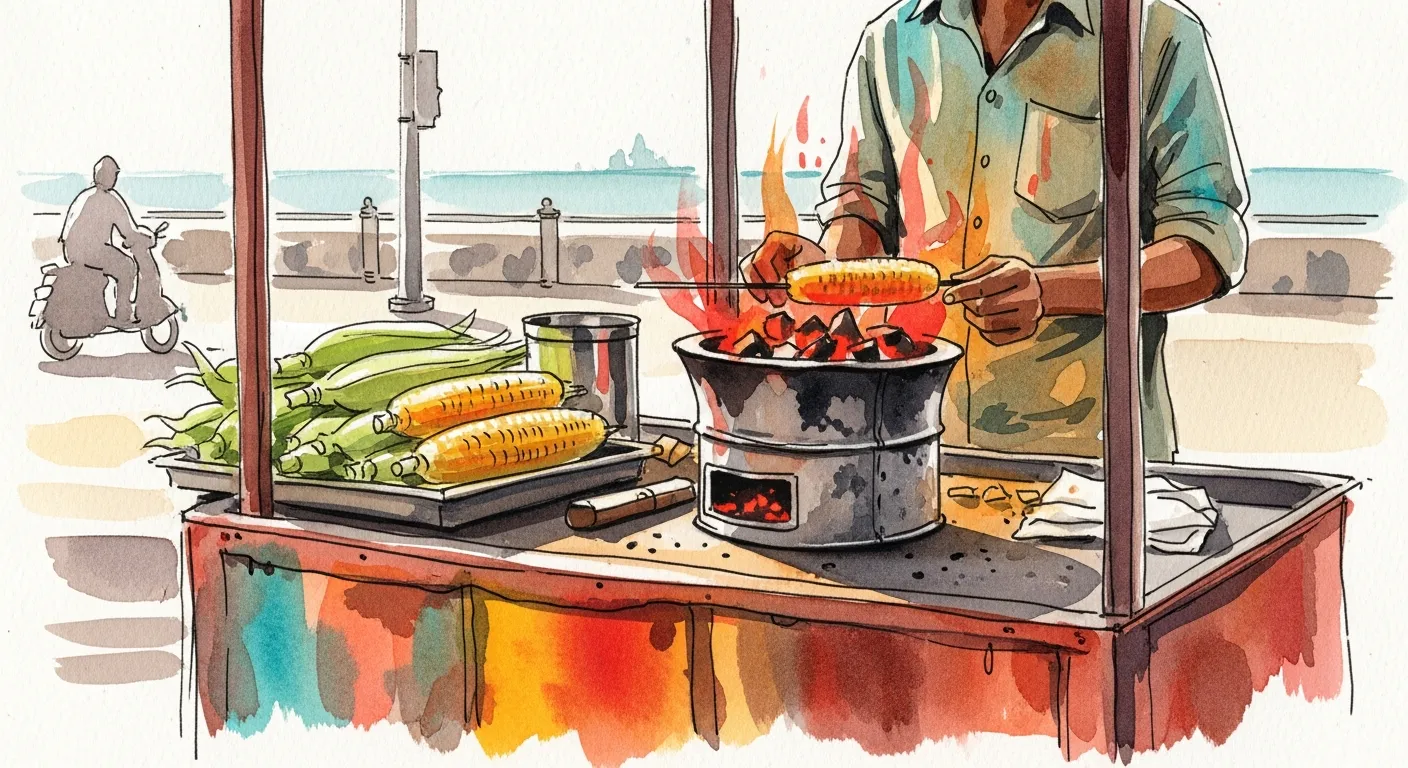
The bhuttawala is the only vendor in Mumbai who needs the rain to make his product feel right, and who loses money every time it actually falls.
THE A WARD AND THE 1,451
In October and November of last year, the Brihanmumbai Municipal Corporation ran a hawker crackdown across the city. Twenty thousand hawkers were actioned against in two months. Of those, 1,451 were in the A ward, which covers Colaba, Churchgate, Nariman Point, and the entire Marine Drive crescent.
A ward is the highest-value real estate the corporation manages. It is also, historically, where the bhuttawala worked without much friction. The parapet was neutral ground. The vendor was not blocking a shopfront, not sitting under a hoarding, not creating a traffic issue. He was standing at a sea wall selling roasted corn to people who came to the sea wall to look at the sea.
The 1,451 number changed that arithmetic. A vendor who used to pay the occasional hafta and stay in one spot now moves three times a week. Some have stopped coming altogether. The ones who stay have started paying more to stay.
THE VENDING ZONE PROPOSAL
At the same time, and this is the part that has confused everyone, a separate arm of the BMC has floated a proposal to formally convert stretches of Marine Drive into a designated street vending zone. The Hindu reported the discontent among the residents' associations and the trader groups, both of whom were not consulted.
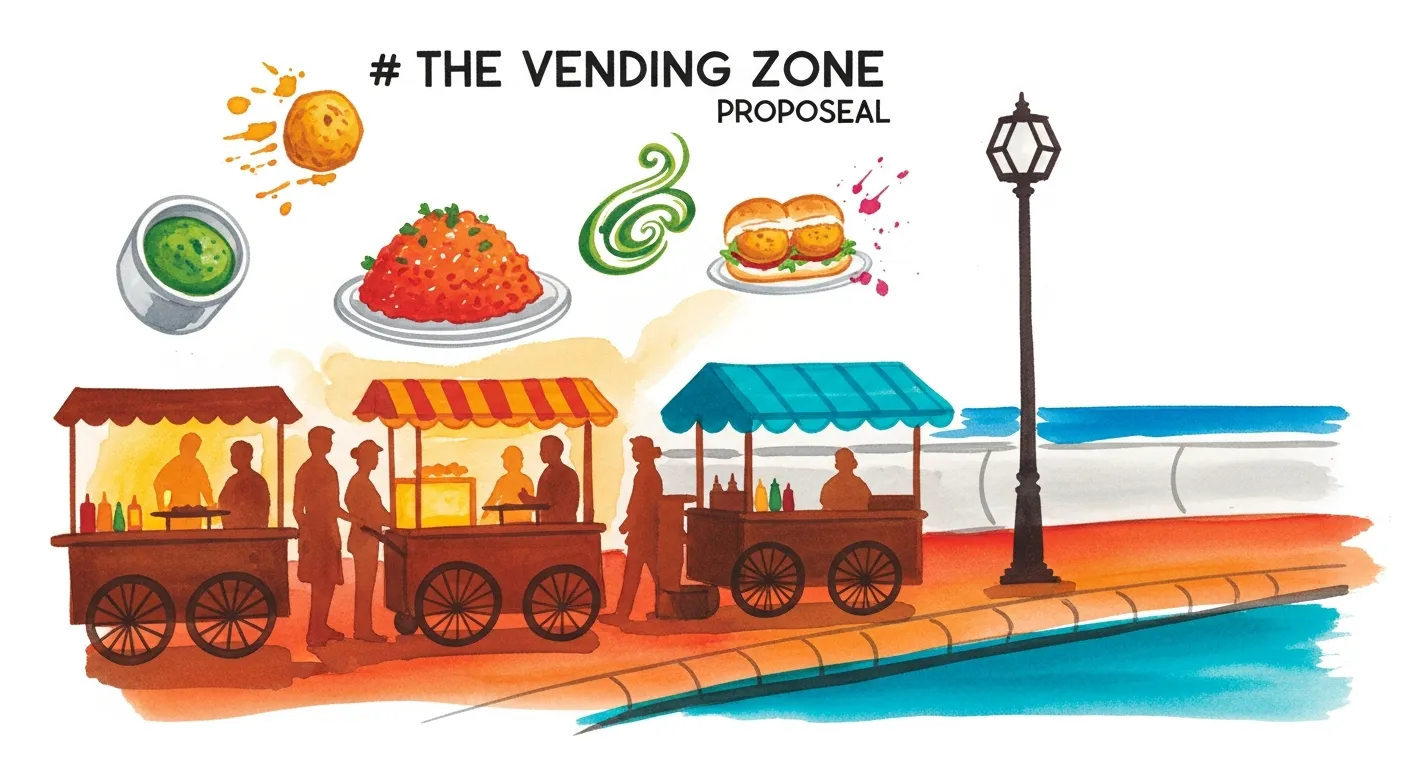
So the same street is being cleared of unlicensed vendors and simultaneously being proposed as a licensed vending zone. A bhuttawala who has worked the parapet for thirty years, without a license because the license did not exist, now finds himself both illegal under the crackdown and eligible under the new proposal, provided he can produce documentation for a livelihood the state has spent decades pretending did not happen.
The vendor is not being regulated. He is being formalised out of the picture.
The fee structures for the proposed zones have not been finalised. The residents want fewer vendors. The trader associations want none. The vendors want to know if the license, when it comes, will cost them more than a season of bhutta sales.
THE NEWSPAPER BAN
And then there is the paper.
Every bhutta in Mumbai, for as long as anyone has been eating one, has been handed to the customer wrapped at the base in a torn square of yesterday's newspaper. It absorbs the moisture. It insulates the palm from the heat. It costs nothing because the vendor buys it by the kilo from the raddiwala.
In 2024, the Maharashtra Food and Drug Administration banned newspaper as a food wrap, citing lead and ink contamination. Food-grade paper, which is what the vendor is now expected to use, costs somewhere between eight and fifteen times more per sheet. Violations carry fines, and in serious cases, imprisonment and license cancellation.
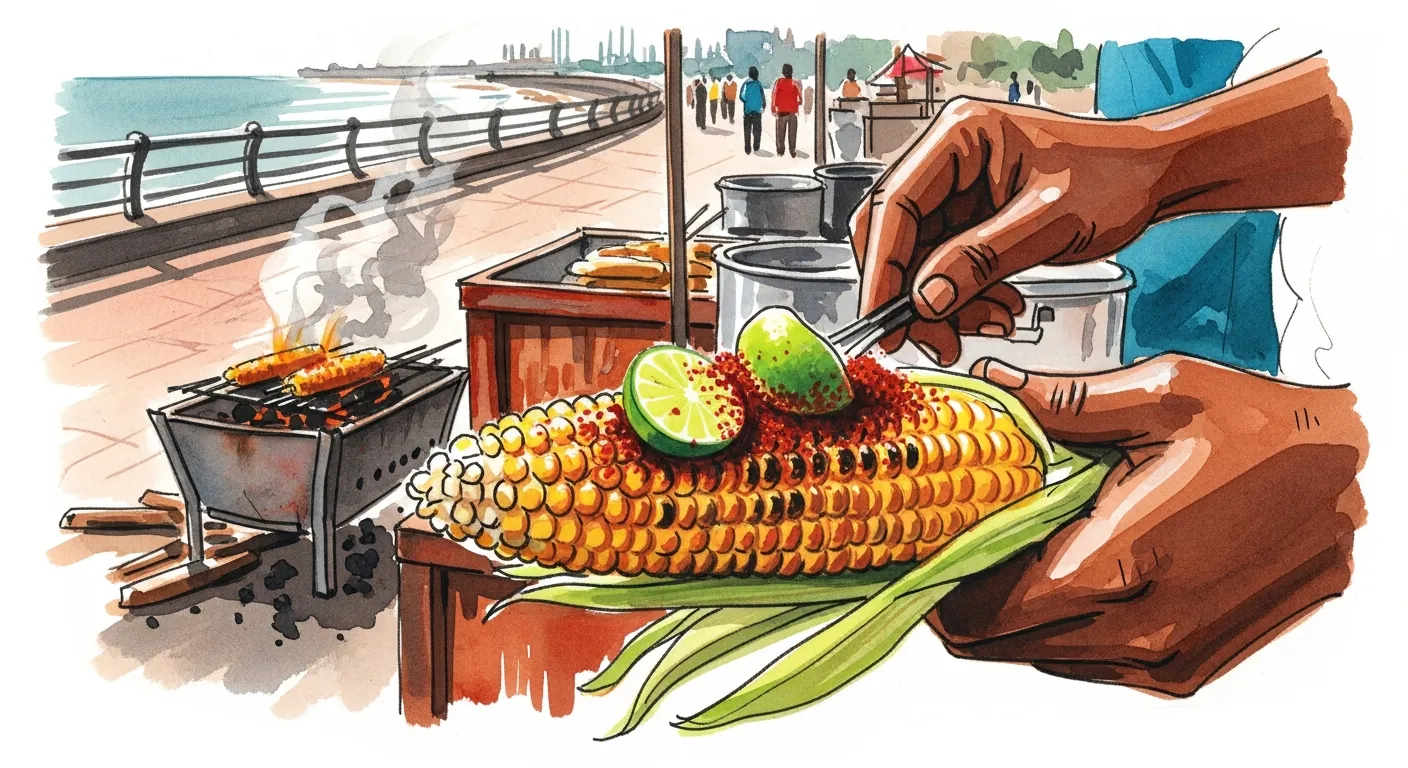
A bhuttawala without a license can now be fined for wrapping his corn in the paper that told him the fine existed.
FOUR GENERATIONS, ONE COB
The families who work this stretch are not new arrivals. Some of them are on the third and fourth generation of the same pavement. The grandfather came in the 1950s. The father took over in the 1980s. The son works it now, and in most cases, the son is not sure whether the grandson will.
Maize prices are climbing. Coal is climbing faster. The rain is unpredictable in a way it was not twenty years ago, arriving late, arriving too hard, arriving in bursts that clear the promenade for a week and then vanish. The customer who used to walk here every evening now orders on Swiggy from a building that was not there in 2004.
And yet, on any evening in July when the rain holds off for an hour and the light goes silver over the Arabian Sea, the parapet fills up. Somebody wants a bhutta. Somebody always wants a bhutta.
The cob is a five-hundred-year-old immigrant sold by a four-generation immigrant to a city that is itself a reclamation.
The coal catches. The lime hits the salt. The kernel blackens.
The rain, eventually, comes back.
Field Notes
Quick referenceMaize reached India via Portuguese ships in the sixteenth century, part of the same Columbian Exchange that brought the chilli and the potato. It took two hundred years to matter.
1,451 of the 20,000 hawkers actioned in the BMC's October-November crackdown were in A Ward, which covers the entire Marine Drive crescent.
One kilo of coal roasts roughly thirty cobs. Coal has gone from around forty rupees a kilo five years ago to closer to seventy today.
The Maharashtra FDA banned newspaper as food wrap in 2024. Food-grade paper costs eight to fifteen times more per sheet. Violations can carry imprisonment.
Marine Drive was completed as a reclamation in 1940. The bhuttawalas followed. The parapet has had vendors for over eighty years.
Get the next story first
Join the Bhukkads. Free, no spam, just stories.
Takes 30 seconds.