The Lunch Hour That Stopped Coming
A Fort sandwich was built around a 1 pm rush that no longer exists. The cylinders cost three times what they did. The clerks work from home on Fridays. And the man with the butter knife is still showing up at 8 am.
Generated by Imagen 4
The British built Bombay's Fort district to do paperwork. Not commerce in the romantic sense, not trade in the dhow-and-spice sense. Paperwork. Ledgers, indents, shipping manifests, the slow grinding clerical labour of an empire that ran on signatures in triplicate. By the 1860s, the walls of the actual fort had come down and the buildings that replaced them, the Gothic piles along what is now D N Road and the neoclassical blocks behind the Town Hall, were filled with men in white shirts moving paper from one desk to another.
Those men needed lunch.
They did not have time to go home. They did not have canteens. They had a one-hour break, a few annas in their pocket, and a pavement.
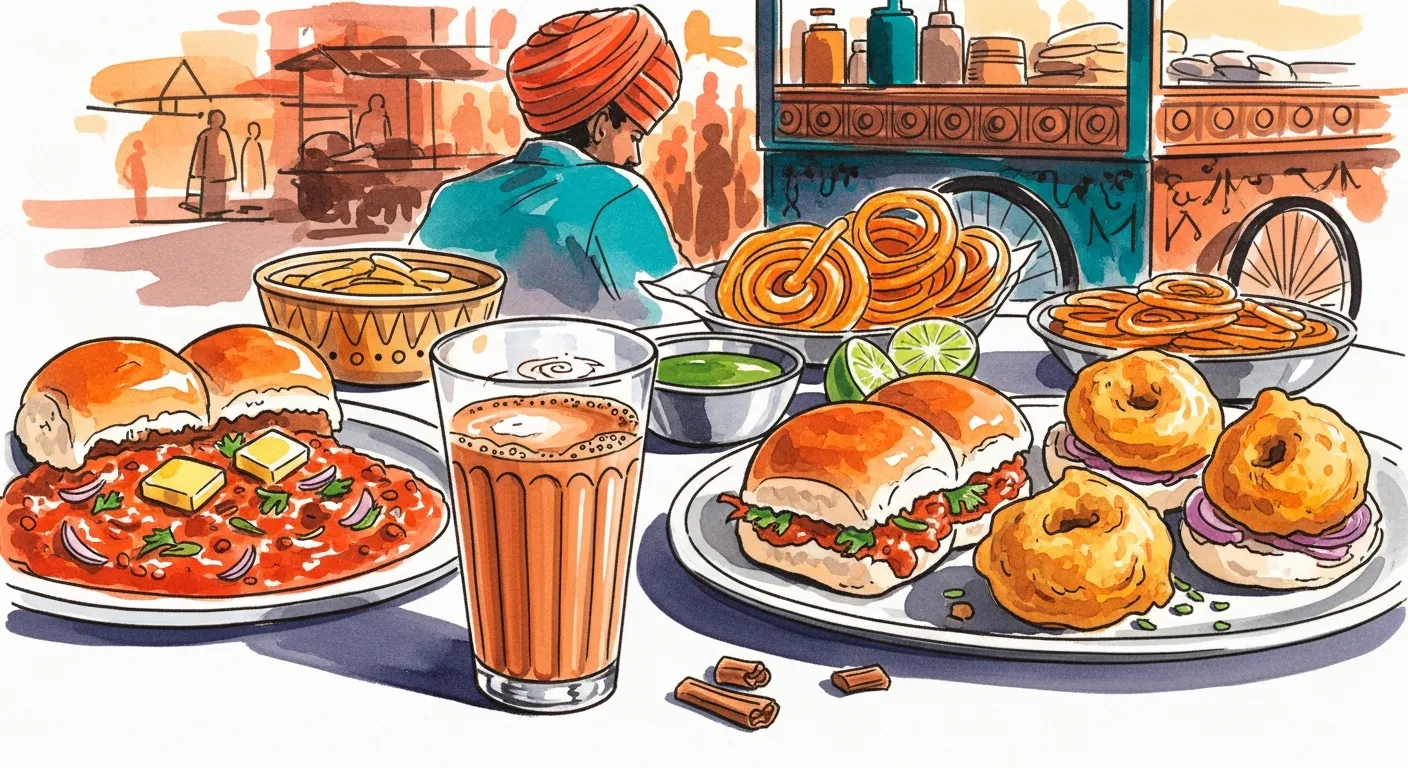
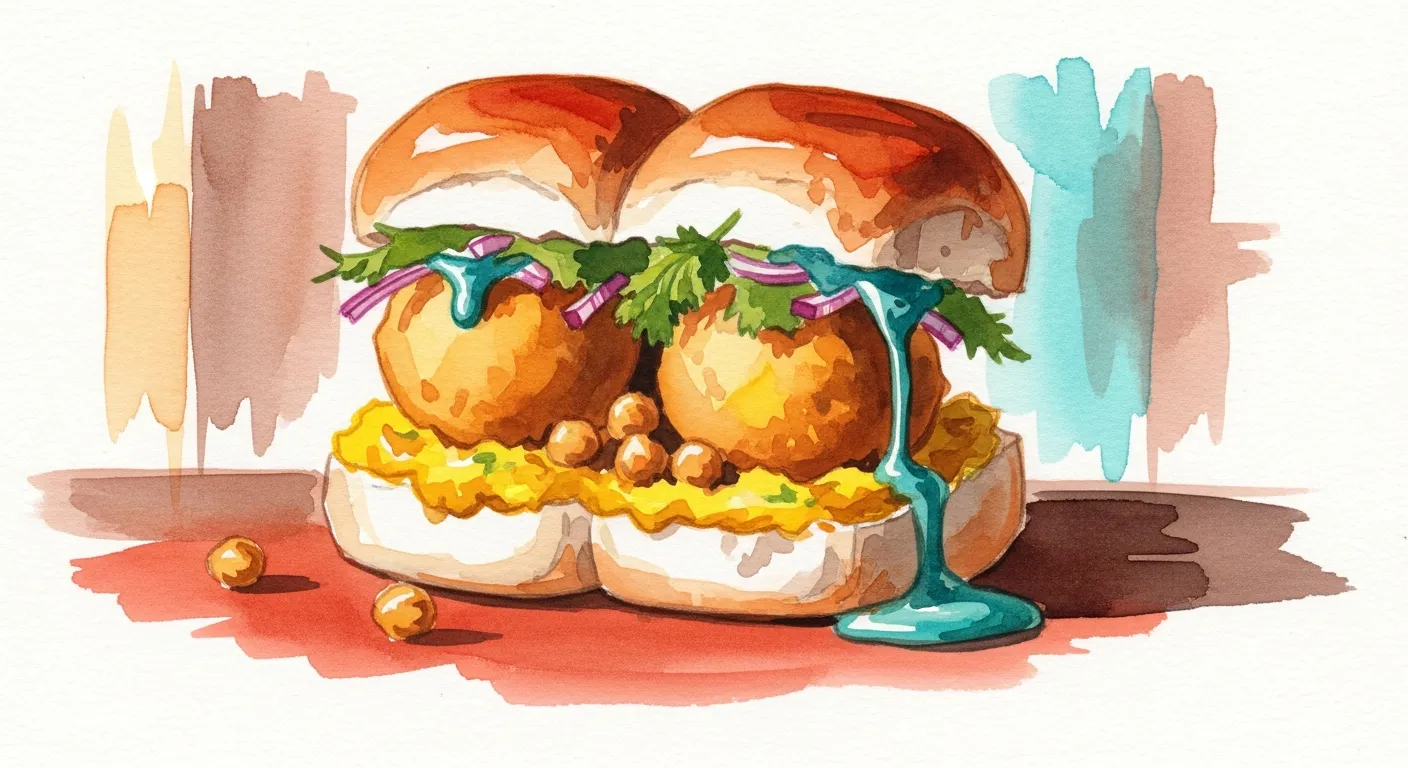
The Bombay sandwich, the Fort vada pav, the Nariman Point bhel cone, the cutting chai that arrives in a glass too hot to hold: these were not invented as cuisine. They were invented as logistics. A meal that could be assembled in ninety seconds, eaten standing, and forgotten by the time the clerk got back to his ledger. The chutney sandwich at Fort is not a food. It is a delivery system for the lunch hour of the Indian white-collar economy.
In 2026, the lunch hour is on Zoom.
THE CLERK WHO ISN'T COMING
Nobody talks about the desk. Everybody talks about the sandwich.
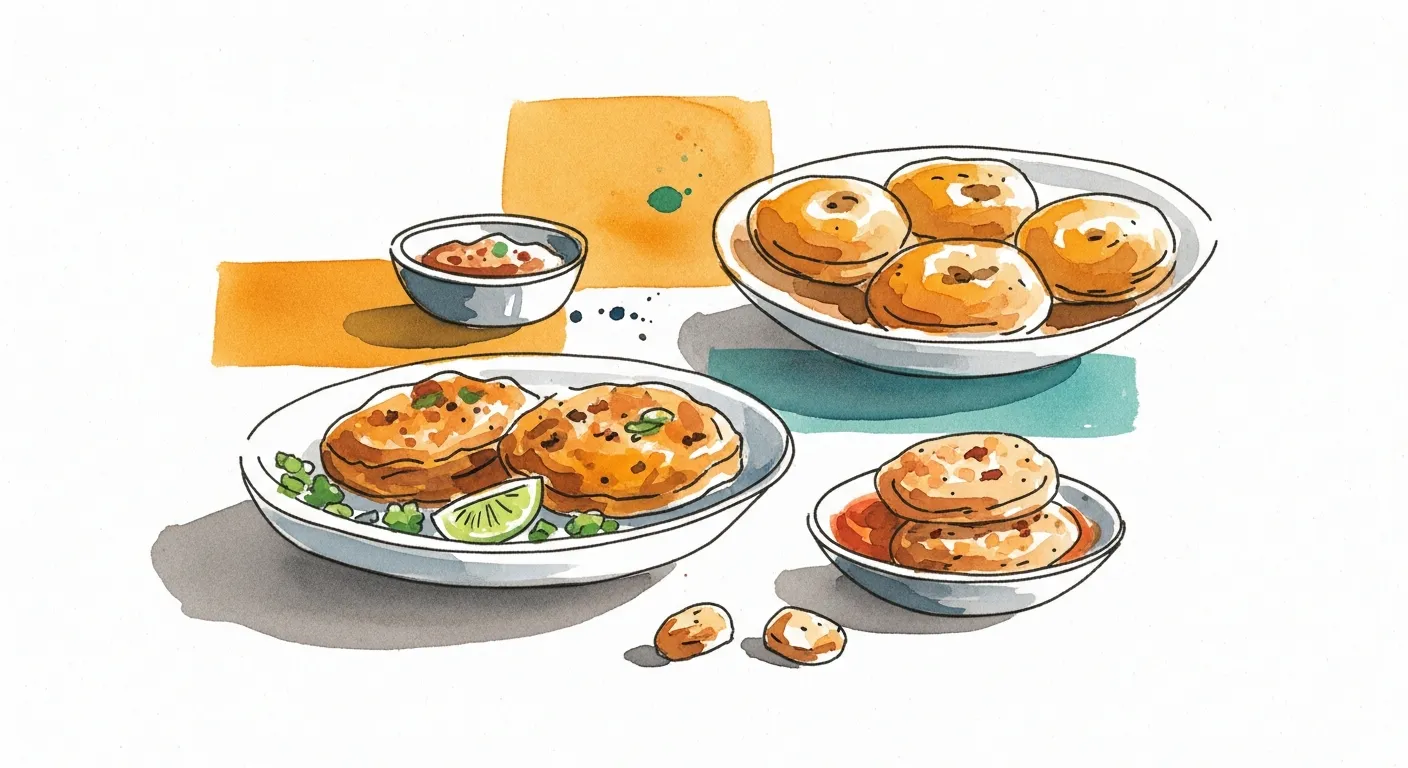
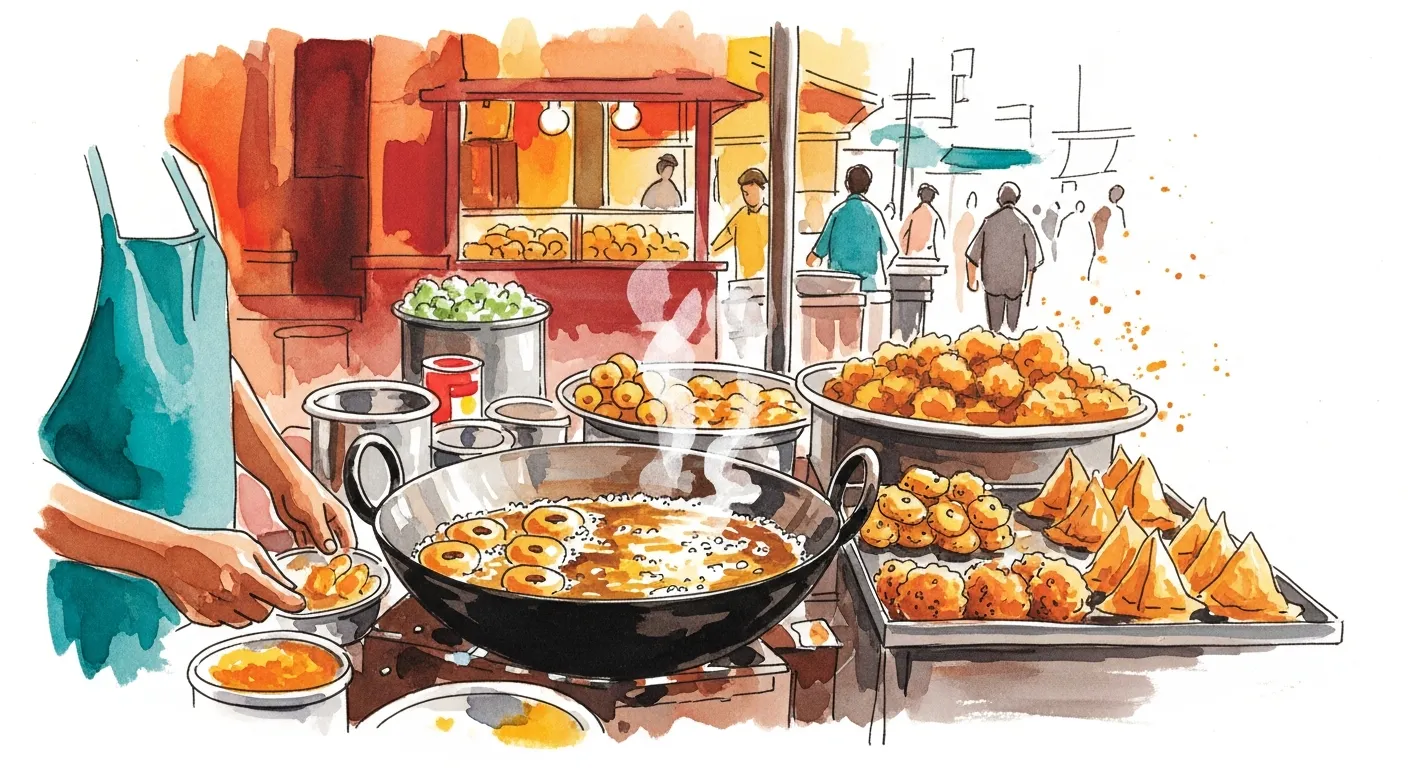
The sandwich vendor in Fort, the one with the steel trunk and the loaf of Modern bread and the green chutney that has been the same green for forty years, did not build his economics around walk-ins. He built it around a population. A specific, predictable, recurring population of clerks, accountants, peons, junior brokers, and stenographers who left their offices at exactly 1 pm and were back at their desks by 2 pm. Two hundred sandwiches an hour. Three hundred on a good day. The same faces, four days a week, for a decade.
That population is now hybrid.
The Tuesday-Wednesday-Thursday office, the new normal of corporate India, has cut the Fort lunch crowd by something close to half on the bookend days. Mondays are quiet. Fridays are quieter. The vendor who used to sell out by 2.30 pm is now packing up at 4 pm with bread left over. Bread does not keep. Chutney does not keep. The maths of the cart was always tight. The maths of the cart, in 2026, is bleeding.
A meal built around a one-hour break does not survive a four-day week.
THE CYLINDER THAT TRIPLED
Then the cooking gas got expensive.
A LocalCircles survey from March 2026 found that 54% of Indians who visited street food vendors reported price increases of up to 25% in the past week, driven almost entirely by the cost of cooking fuel. The headline number is the consumer's. The vendor's number is worse.
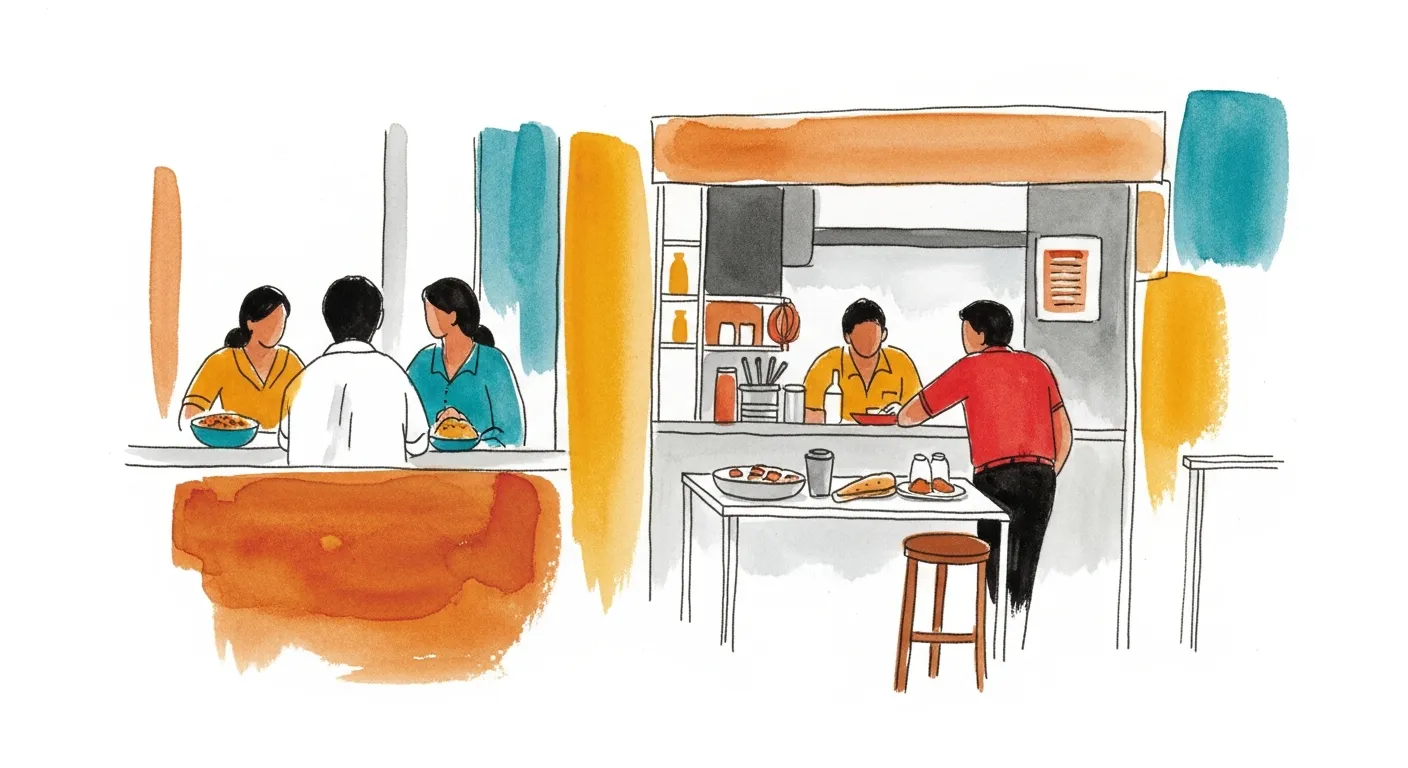
Commercial LPG cylinders in Mumbai that once cost around 1,800 to 2,000 rupees are now changing hands at 4,000 to 6,000 rupees or more on the black market, with some Mumbai eateries reporting fuel cost increases of over 300 percent. The disruption is partly geopolitical, linked to supply chain shocks that Hindustan Times traced back to a faraway war, partly logistical, partly the slow squeeze of a regulated commodity meeting an unregulated kitchen.
The pav bhaji vendor at Cross Maidan uses one cylinder a day in season. He used to budget 60,000 rupees a month for fuel. He is now budgeting 1.8 lakh, sometimes more, on a footpath turnover that has not grown by a single rupee.
WHAT 30 BECAME 50
The pavement economy of Fort and Nariman Point runs on a number that does not show up in any inflation index. It is the price point of the snack. For decades the operating range was 20 to 40 rupees, the amount a clerk could spend without thinking, the amount a peon could spend with thinking, the amount that made the calculation of lunch invisible.
Moneycontrol reported in March 2026 that what was once a 30 rupee street snack is now edging towards 50 rupees or more. On paper, that is a 67% increase. In practice, it is the difference between a daily customer and a twice-a-week customer. The clerk who used to eat two vada pavs now eats one. The stenographer who used to add a cutting chai now skips it. The peon brings a tiffin from home.
The vendor sees the same faces. He sells them less.
THE STUDY NOBODY READS
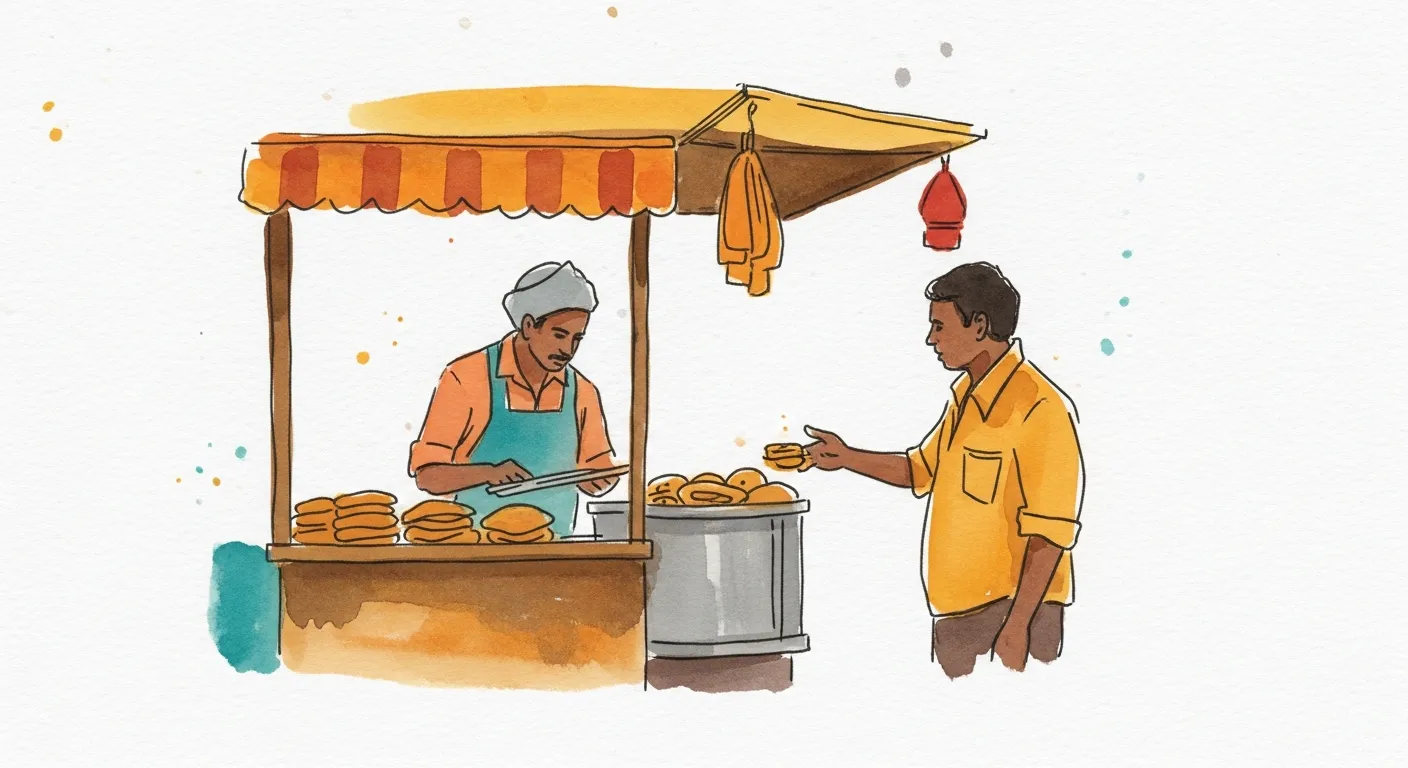
In November 2025, a paper appeared in the Social Sciences journal published by MDPI examining the precarious livelihoods of street food vendors in South Mumbai, including Nariman Point. The researchers documented what anyone with eyes on Veer Nariman Road already knew. The vendors are largely unregistered. They have no formal credit access. They have no insurance. They pay informal rents to whoever controls the patch of pavement. They are subject to municipal action that arrives without warning and leaves without explanation.
A separate paper in the International Journal of Financial Management and Research from September 2024 analysed the economic disruption to Indian street vendors during and after the pandemic, tracking the drop in daily revenue, the squeeze on profit margins from rising raw materials, and the slow shift in customer behaviour that did not reverse when the offices reopened.
It did not reverse because the offices did not fully reopen.
The pandemic ended for everyone except the people who fed the office.
THE GENERATIONAL MATH
The vendors who work the Fort pavements are, in many cases, the second or third person in their family to work that exact patch. The cart was inherited. The recipe was inherited. The license, where there is one, was inherited. The customer base was inherited too, except the customer base does not transfer the way a chutney recipe does. The customer base is now sitting in a flat in Mulund attending a meeting in Bandra Kurla Complex on a laptop.
The son who took over the cart in 2022 is running a business that his father built for a city that no longer exists.
THE COPING
The adaptations are quiet and unsubsidised.
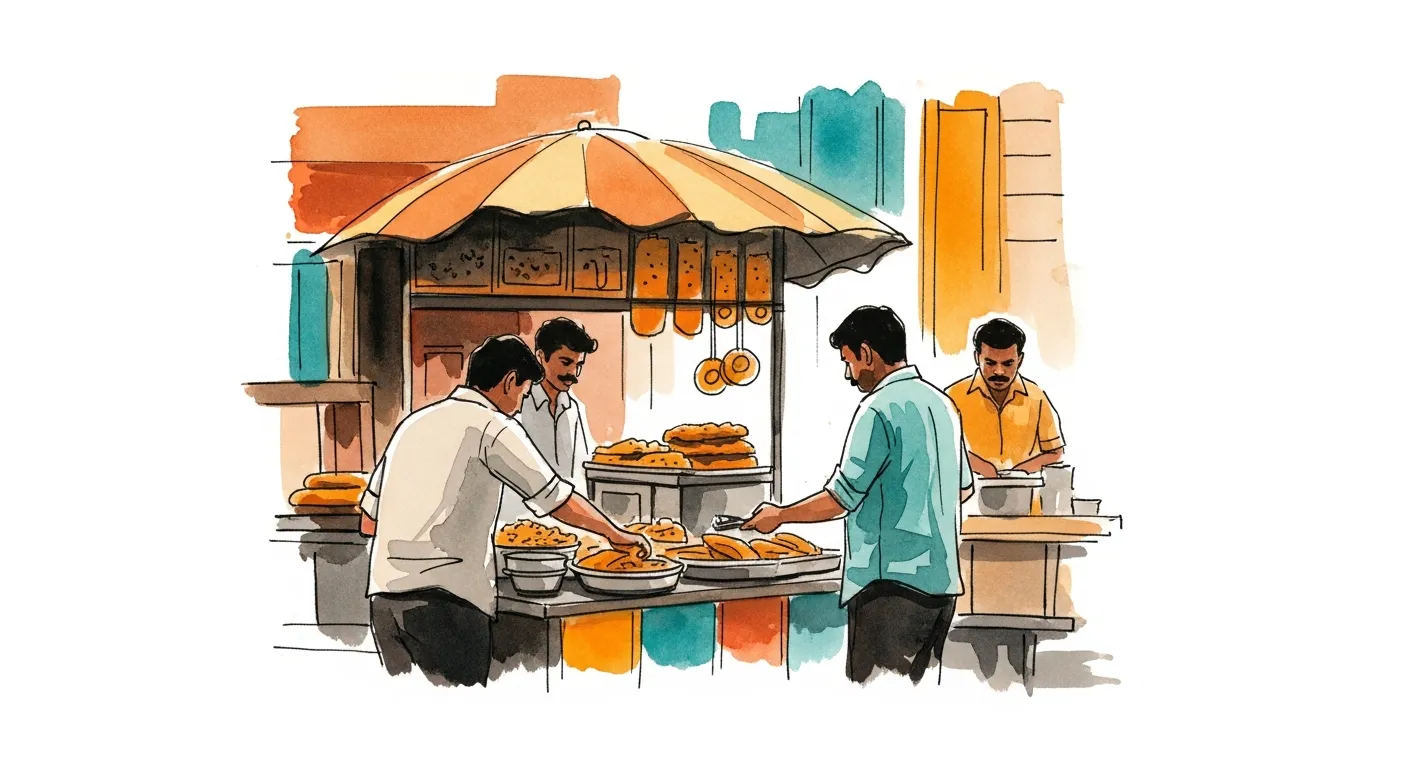
Some vendors have started Swiggy and Zomato listings, which solves a demand problem and creates a margin problem, since the platforms take a cut that a 50 rupee sandwich cannot absorb. Some have shifted to office tiffin runs, delivering lunch to the offices that are open on the days they are open, building a Tuesday-Wednesday-Thursday business that compensates for the Monday-Friday quiet. Some have moved off cooking gas entirely, going back to charcoal or kerosene where the law allows it, which is a 1980s solution to a 2026 problem. Some have simply reduced portions and held the price, hoping the customer does not notice. The customer notices.
The MDPI study found that the most common coping strategy was the oldest one. Working longer hours for less money.
WHAT FORT KEEPS
There is a chaat vendor near Horniman Circle who has been at the same spot since 1998. He remembers when the Bombay Stock Exchange ran on open outcry and his 2 pm rush included men in red jackets still hoarse from the trading floor. He remembers when the cylinder cost 400 rupees. He remembers when a plate of sev puri was 15.
He is still there. The plate is now 80. The men in red jackets are gone. The trading is electronic, the clerks are hybrid, the cylinder is on the black market, and the chutney is the same green it was in 1998 because some things do not change even when everything around them does.
The Bombay sandwich was never going to disappear. It was just going to get harder to make for the same price.
The lunch hour will come back. It will not come back the way it left. It will come back in pieces, three days a week, with smaller crowds and bigger expectations, and the vendors who survive will be the ones who learned to do the same work for less margin without letting the chutney go grey.
The man with the butter knife was at his cart at 8 am this morning. He will be there tomorrow. The clerks may or may not show up.
He shows up anyway.
Field Notes
Quick referenceThe Tuesday-Wednesday-Thursday office has cut the Fort lunch crowd by half on Mondays and Fridays.
Commercial LPG cylinders that cost 1,800 rupees now change hands at 4,000-6,000 rupees on the black market.
What was once a 30 rupee street snack is now edging towards 50 rupees or more — a 67% increase.
The son who took over the cart in 2022 is running a business his father built for a city that no longer exists.
The chaat vendor near Horniman Circle remembers when a plate of sev puri was 15 rupees. The plate is now 80.
Get the next story first
Join the Bhukkads. Free, no spam, just stories.
Takes 30 seconds.