The Kadhi That Crossed a Border
A 75-year-old Sindhi cafe in Chembur. A vegetable price that doubled in May. A community that lost a country and kept the recipes. And what happens when the kokum gets expensive.
Generated by Imagen 4
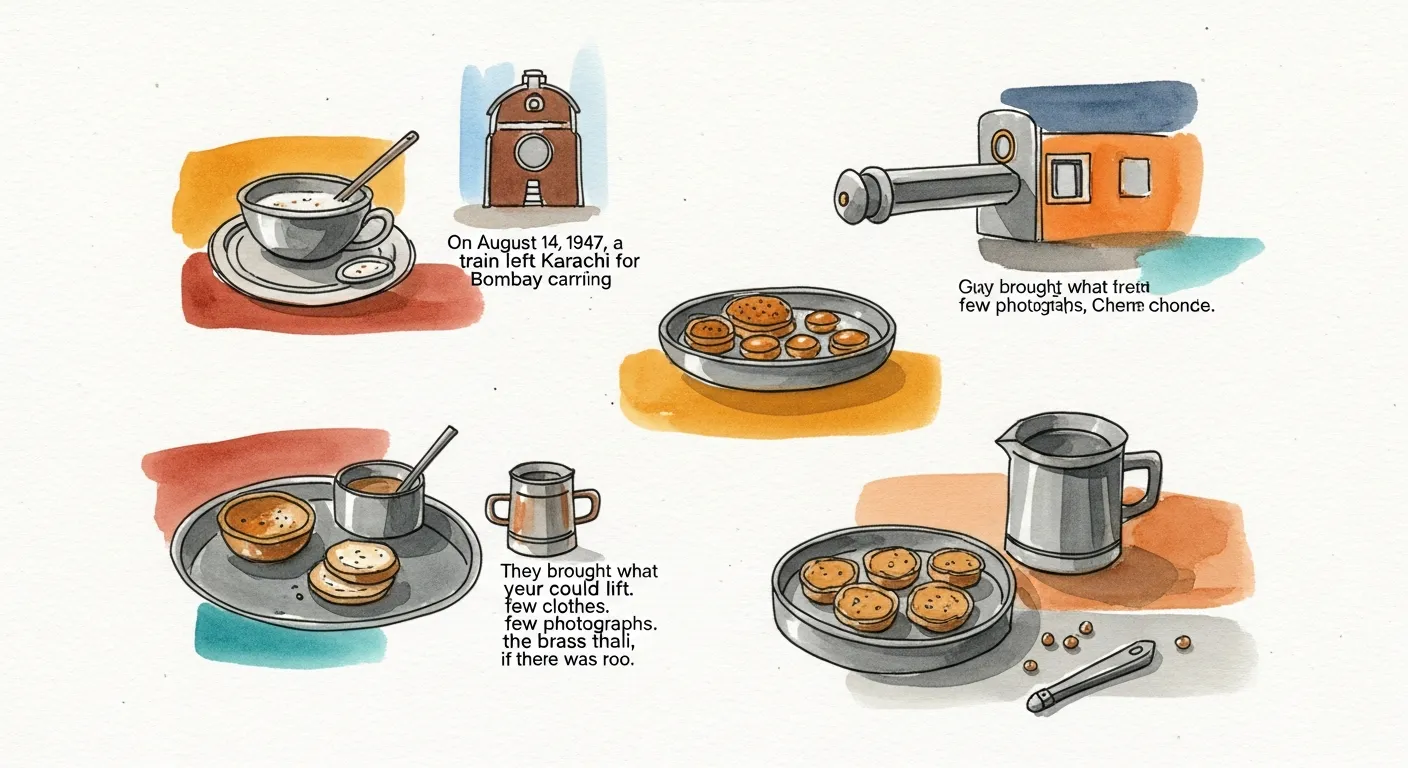
On August 14, 1947, a train left Karachi for Bombay carrying people who had packed in three days. They brought what they could lift. A few clothes. A few photographs. The brass thali, if there was room. The grinding stone, if there wasn't. Most of them did not bring furniture. They did not bring land deeds. They did not bring the houses they had lived in for four generations along the Indus.
They brought the recipes.
The Sindhi community is one of the few in India that arrived without a state. Punjab was partitioned. Bengal was partitioned. Sindh was simply gone, the entire province given to the new country, and the Hindus who had lived there for centuries were now refugees in a city that had not asked for them. Bombay absorbed them anyway. Some went to Ulhasnagar. Some went to Kalyan. Some, by 1948, were given a patch of barracks land in the south-eastern stretch of the city that the British had used as a military camp during the war.
They called it Sindhi Camp. The city, eventually, called the neighbourhood Chembur.
This is not a story about Partition. This is a story about a bowl of kadhi in 2026 and a tomato that costs sixty rupees a kilo more than it did last June.
THE CAMP THAT BECAME A NEIGHBOURHOOD
The barracks were temporary. The barracks stayed. By 1950, the families had built a market, a gurdwara for the Nanakpanthi Sindhis, a school, and along the main road, a row of small eating places that served the food the women were already making at home. Vig Refreshments opened around 1950 in Chembur's Sindhi Camp, 75 years ago, and is still run by the same family. Dal pakwan in the morning. Chole bhature by lunch. A glass case of mithai that has not changed its arrangement in three decades.
Nobody talks about the women who never opened a shop. Everybody talks about the cafes.
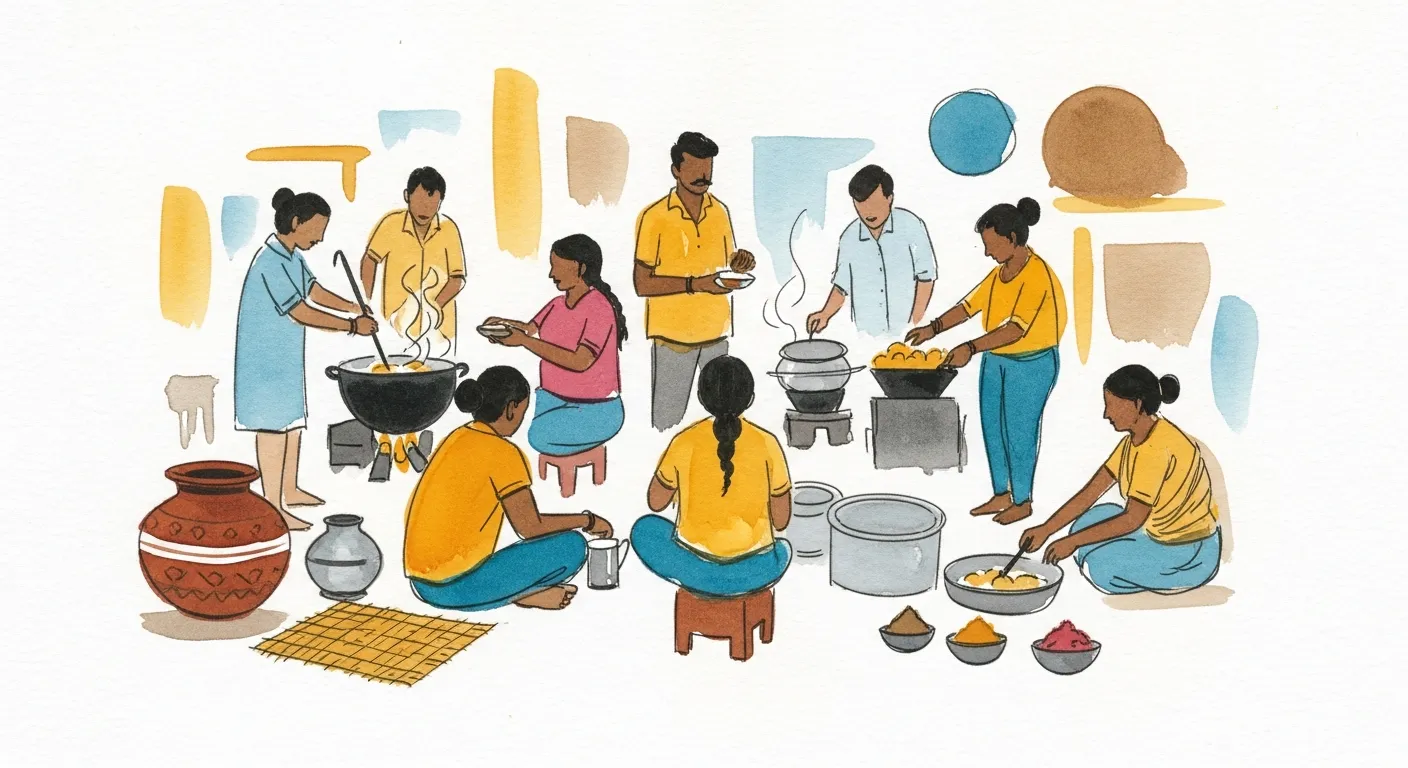
For every Vig Refreshments on the main road, there were thirty kitchens on the upper floors of the buildings around it, where the actual work of preserving Sindhi cuisine was being done by women who never put a name on a board. They cooked for weddings. They cooked for thread ceremonies. They cooked for the family that had just moved in three doors down and didn't have a stove yet. They cooked, eventually, for the neighbours who paid by the tiffin, by the dabba, by the order of forty koki for a Sunday lunch.
This is the home chef economy. It existed in Chembur before the word existed anywhere else.
WHAT MONSOON USED TO MEAN
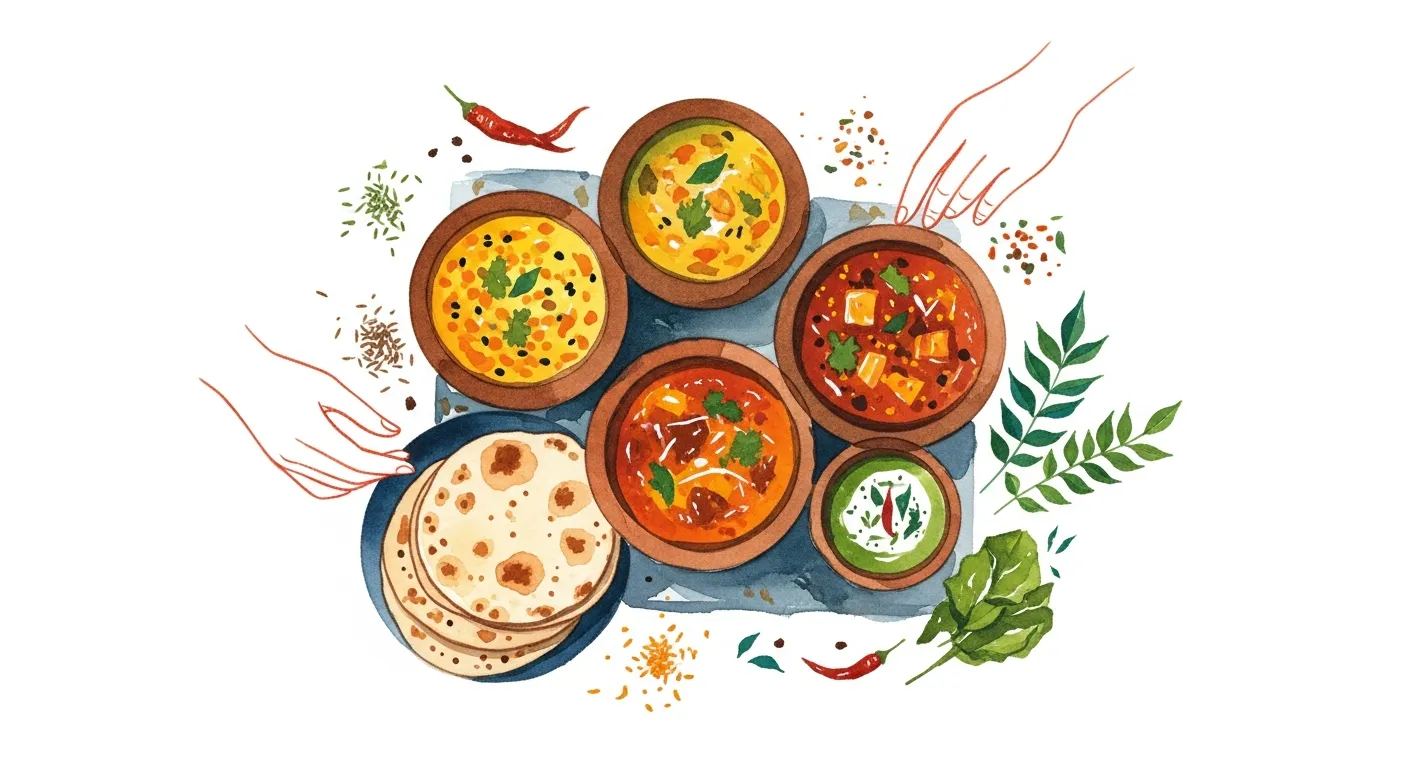
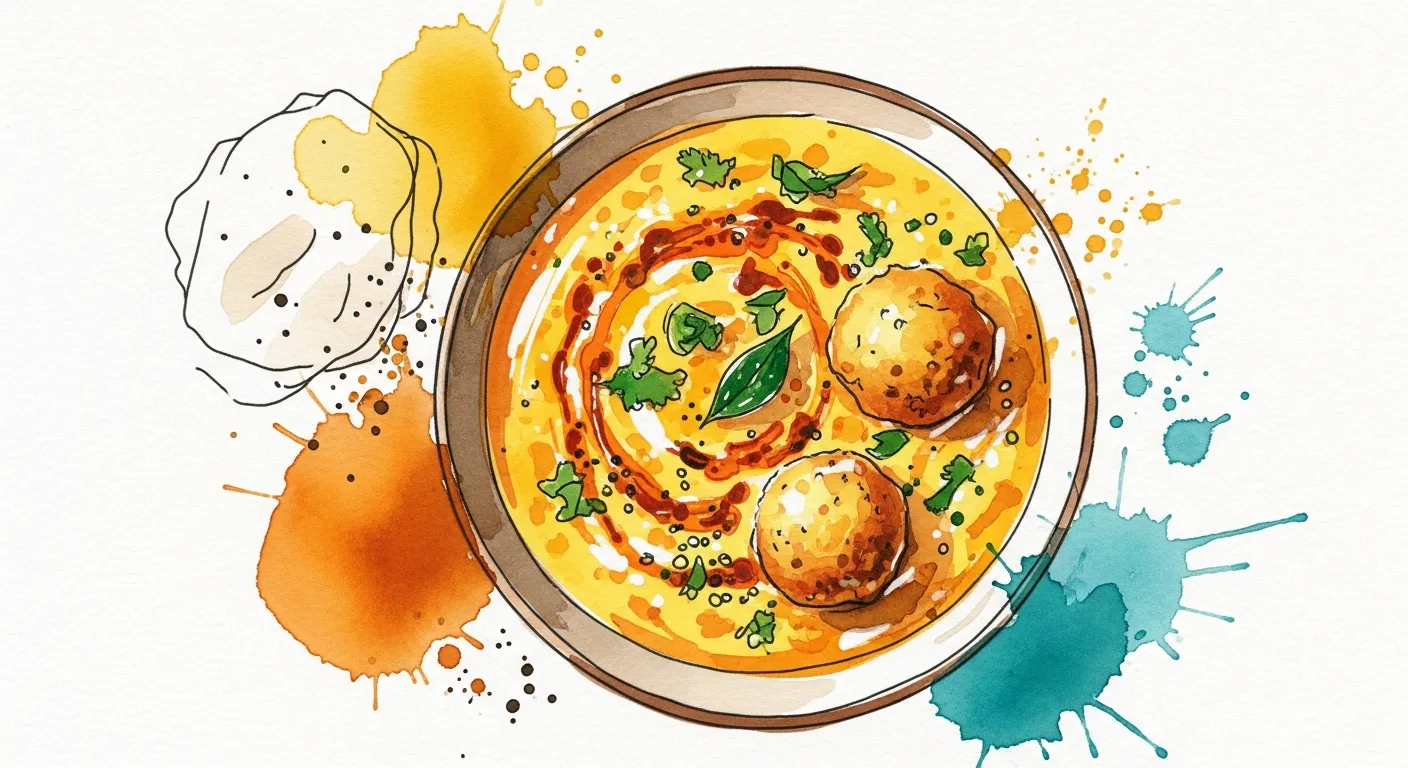
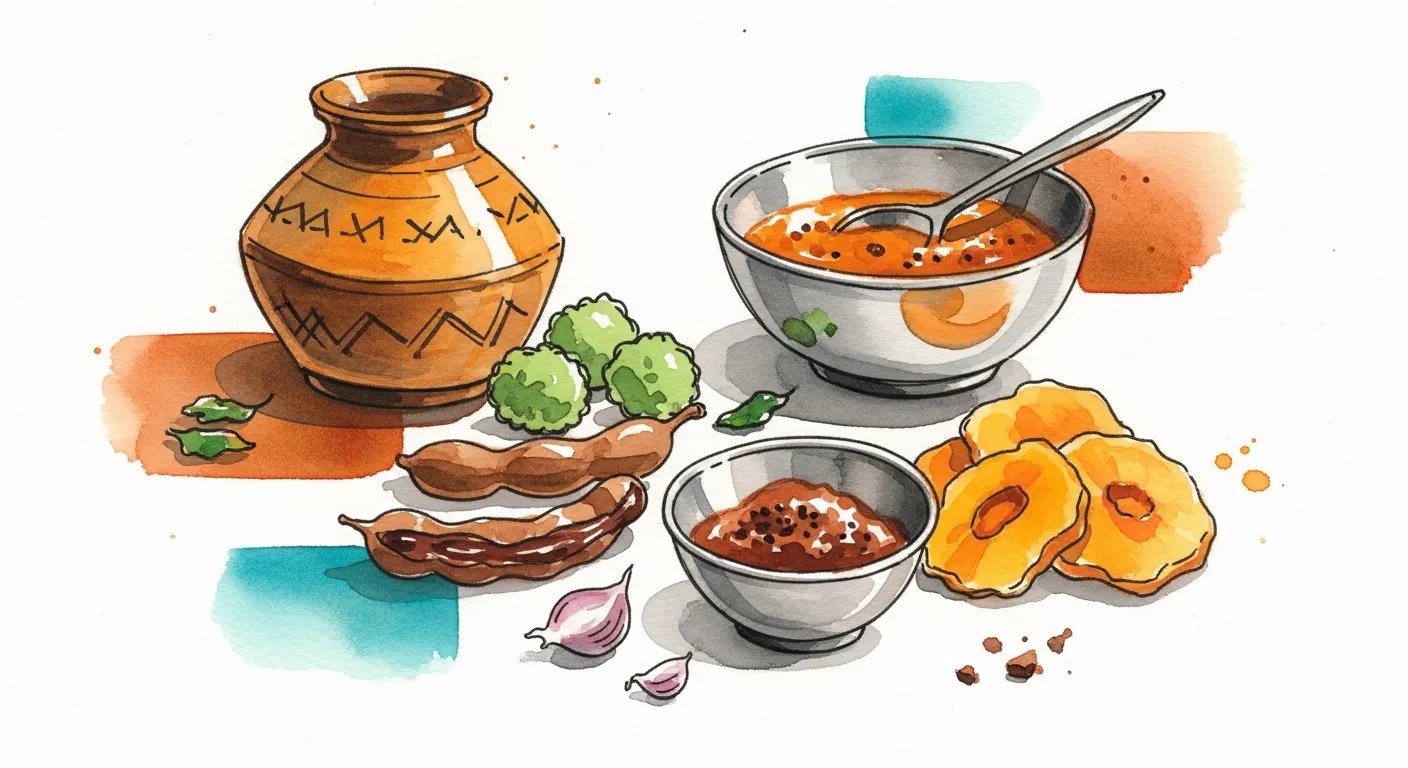
The Sindhi monsoon menu is built on sourness. Kokum. Tamarind. Dried mango. Yogurt that has been allowed to turn sharp. The logic is climatic. When the air is wet and the digestion slows, the food has to do more work, and sour does the work. Sindhi kadhi, unlike its Gujarati cousin, has no yogurt. It is a chickpea-flour broth tempered with curry leaves, fenugreek seeds, and a fistful of vegetables, finished with tamarind water. It is served with rice. It is served, in the rains, almost daily.
Then there is seyal phulka. Stale rotis revived in onion and tomato gravy, the kind of dish that exists because nothing in a Sindhi kitchen is ever thrown away. Sai bhaji, the green stew of spinach, dill, and dal that a doctor would prescribe if a doctor wrote prescriptions for monsoon depression. Aloo tuk, the twice-fried potatoes that are the closest a vegetarian community ever got to a confit.
None of this is expensive food. It was designed by a community in transit, by women who had to feed eight people on the budget of four, in a kitchen that was a kerosene stove on a balcony.
The dishes survived because they were cheap. Now they are expensive to make.
THE TOMATO PROBLEM
In May 2025, early monsoon rains in Mumbai sent vegetable prices to nearly double their usual rates, with kitchen staples becoming what one report called a luxury. Tomato. Onion. Coriander. The three things at the base of seyal phulka. The three things you cannot substitute.
By August 2025, Indian households were grappling with rising food prices across edible oils, rice, and vegetables, fuelled by heavy monsoon rains, reduced crop production, and a weaker rupee. Edible oil matters because aloo tuk is fried twice. Rice matters because kadhi without rice is just soup.
The home chefs of Sindhi Camp run on margins of fifteen to twenty percent on a good month. When tomatoes double, the margin is the first thing to go. The second thing to go is the dish itself, quietly, replaced on the order form with something that uses fewer perishables.
Seema Mirchandani, who has run a tiffin service from her flat near the Chembur station for twenty-two years, told a neighbour she had stopped offering seyal phulka as a default in June 2025. It came back as a paid add-on. Forty rupees extra. Most regulars said yes. A few stopped ordering on Mondays.
This is how a recipe goes quiet. Not in one decision. In forty small ones.
THE COMFORT FOOD MARKET
There is a counterweight. In April 2026, a study of Mumbai professionals reported a sharp shift toward homemade meals, driven by a preference for nutrition, reliability, and comfort. The same young office workers who spent the 2010s on cloud kitchen biryani are now, in their thirties, looking for what their grandmother made. Or what somebody's grandmother made.
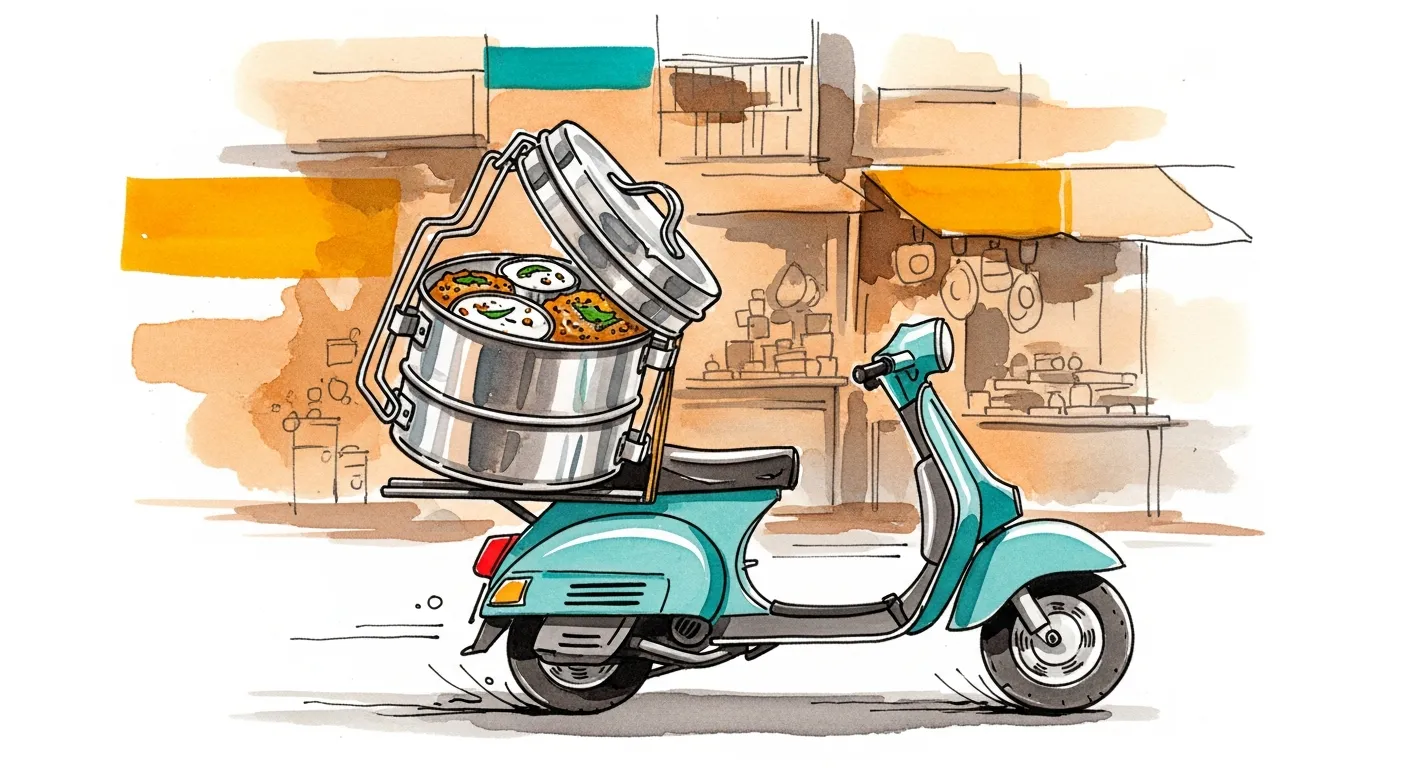
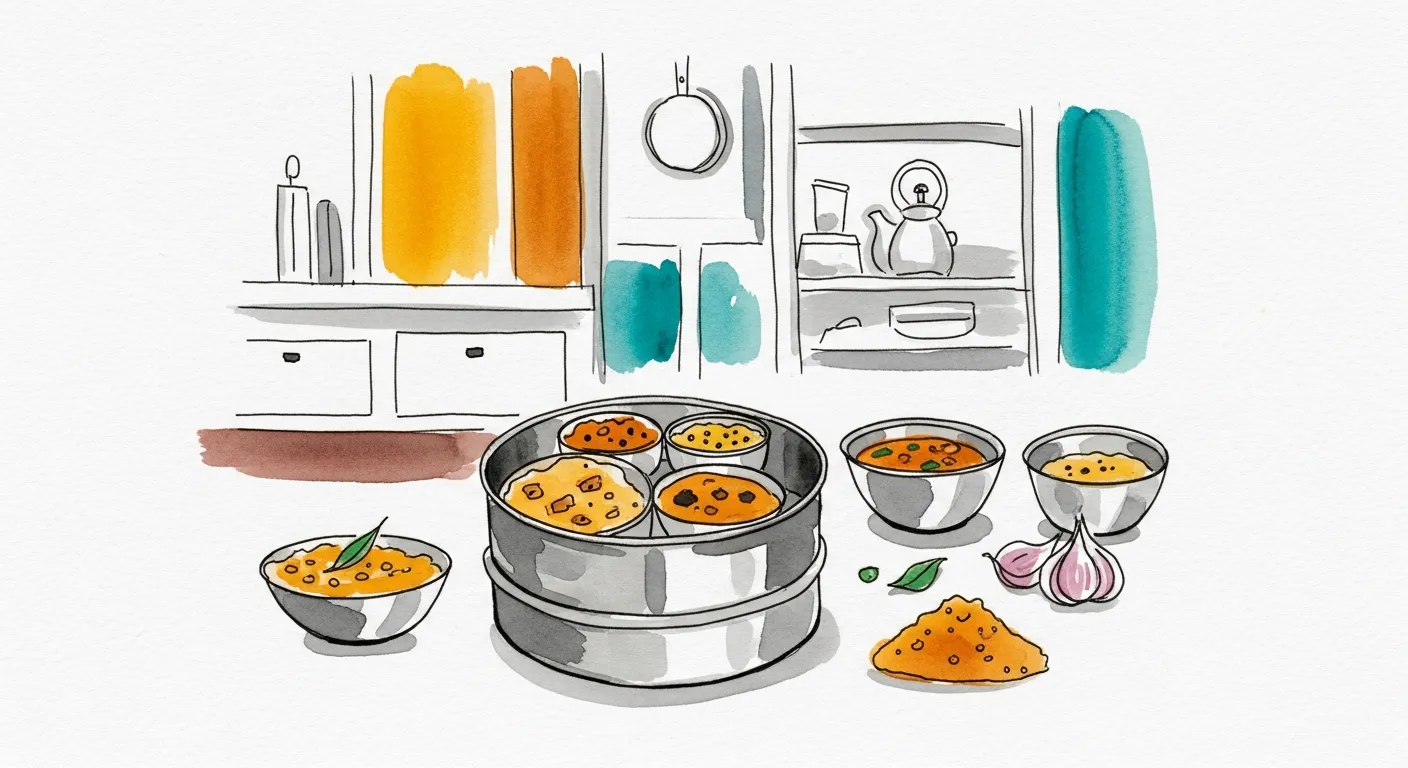
The Sindhi home chef is well-placed for this. The cuisine is, by design, comfort food. Slow-cooked. Vegetable-forward. Built around grains and pulses that move easily on a delivery bike. A dabba of sai bhaji and phulka and a small katori of kadhi travels better than most things on a Mumbai monsoon afternoon.
The trouble is that the new customer wants the dish lighter. Less ghee. Less salt. More vegetable. Which is, on paper, fine. In practice, it means the home chef is being asked to use more of the ingredient whose price has doubled, and less of the one whose price is stable.
The customer wants the heritage. The customer also wants the heritage to lose four kilos.
WHAT GETS KEPT
Sindhi cuisine has historically demonstrated adaptability, adjusting recipes to available ingredients while preserving its essence, with dishes like Dal Pakwan and Sindhi Kadhi reflecting the community's effort to maintain a culinary heritage across borders. This is the line the community tells itself. It is also true.
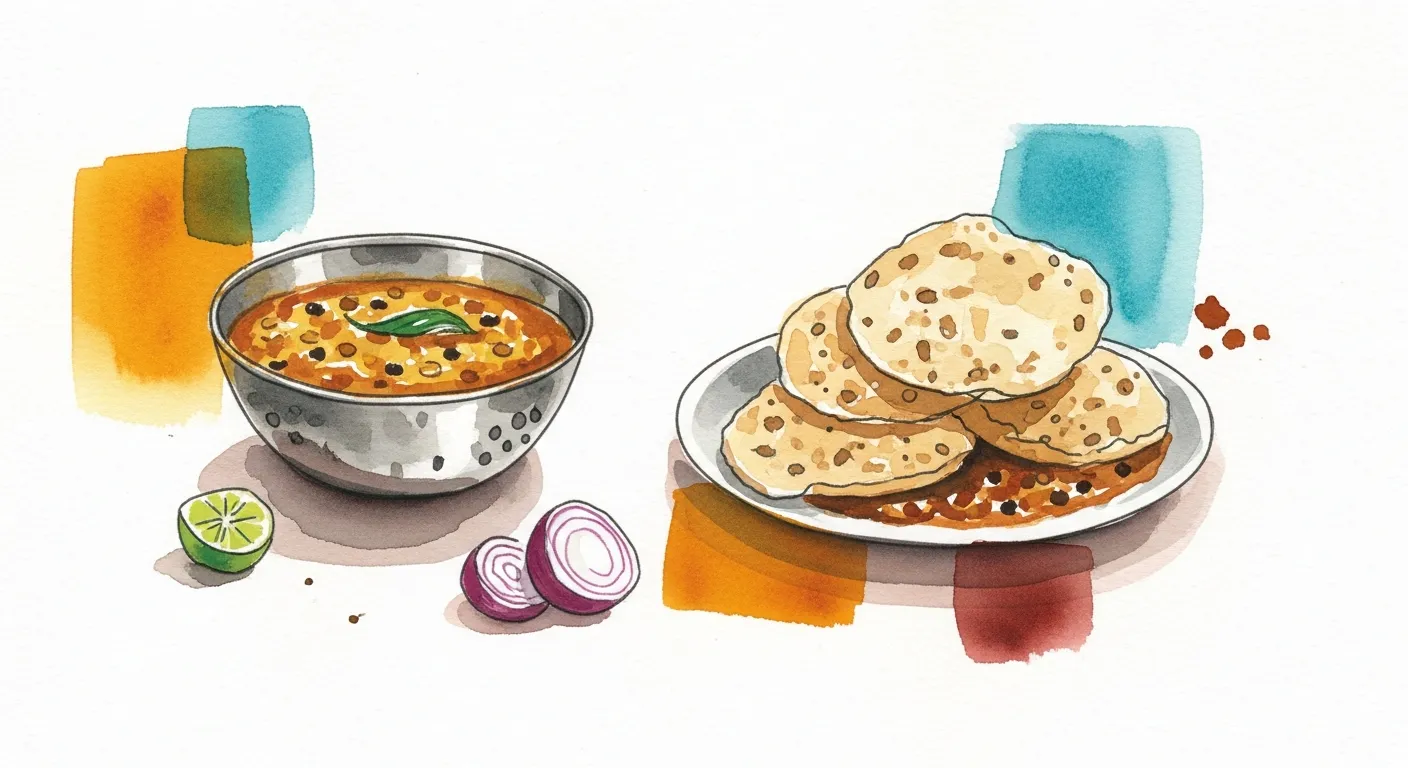
The pakwan, the crisp fried disc that holds the dal, has not changed. The dal has. Older recipes used chana dal slow-cooked for hours with a heavy hand of cumin. The version on the morning order form in 2026 is lighter, faster, less oil, less ghee, more lemon at the end. The chefs will say it tastes the same. The aunts will say it doesn't. Both are correct.
Koki, the thick spiced flatbread that is to Sindhis what paratha is to Punjabis, has held the line. The reason is simple. Wheat is cheap. Onions are not. So koki gets ordered. Seyal phulka does not.
Sindhi kadhi has split into two versions. The full one, with seven vegetables and tamarind, is now a Sunday-only item in most tiffin services around Sindhi Camp. The weekday kadhi has three vegetables. Drumstick, when it is in season. Cluster beans, when it isn't. The kokum has been quietly replaced by amchur in some kitchens because dried mango powder costs less and stores longer. Nobody announces this. The order form does not list it. The customer does not ask.
A recipe is not a list of ingredients. It is a list of choices.
THE FOURTH GENERATION
The women cooking in Sindhi Camp now are mostly the granddaughters of the women who arrived in 1947. They learned the recipes from mothers who learned from mothers who cooked them in Hyderabad and Karachi and Sukkur. The chain is intact. The kitchen has changed. The gas cylinder costs more. The tomato costs more. The customer wants less ghee.
What survives is what can be cooked profitably on a Tuesday in July when the rain has been heavy and the vegetable cart has not arrived. What survives is dal pakwan, because chana dal stores. What survives is koki, because wheat stores. What survives is the kadhi, in a thinner form, because the technique survives even when the ingredient list shrinks.
The full Sindhi monsoon table, the one with seven sour dishes and three fried ones and a sweet kheer at the end, still exists. It exists at weddings. It exists on Diwali. It exists on the days when a daughter visits from Pune and the mother decides the budget can wait.
The rest of the year, the table is shorter. The recipes are quieter. The community that crossed a border with nothing but recipes is now editing them, line by line, against the price of a tomato.
They kept the food once before. They will keep it again.
Field Notes
Quick referenceAugust 14, 1947. The train from Karachi to Bombay carried recipes, not furniture.
British military barracks became a refugee settlement. The barracks stayed 75 years.
May 2025: Monsoon rains doubled vegetable prices. Seyal phulka became a paid add-on.
Sindhi cuisine is built on sourness. Kokum, tamarind, dried mango. Sour does the digestive work.
For every Vig Refreshments on the main road, thirty kitchens preserved the cuisine upstairs.
Get the next story first
Join the Bhukkads. Free, no spam, just stories.
Takes 30 seconds.