The Glass That Costs Twelve Rupees Now
Milk went up two rupees a litre. Sugarcane went up nine hundred a tonne. A generation of office workers started ordering cold brew. The cutting chai stall at the corner of Fort is doing the maths.
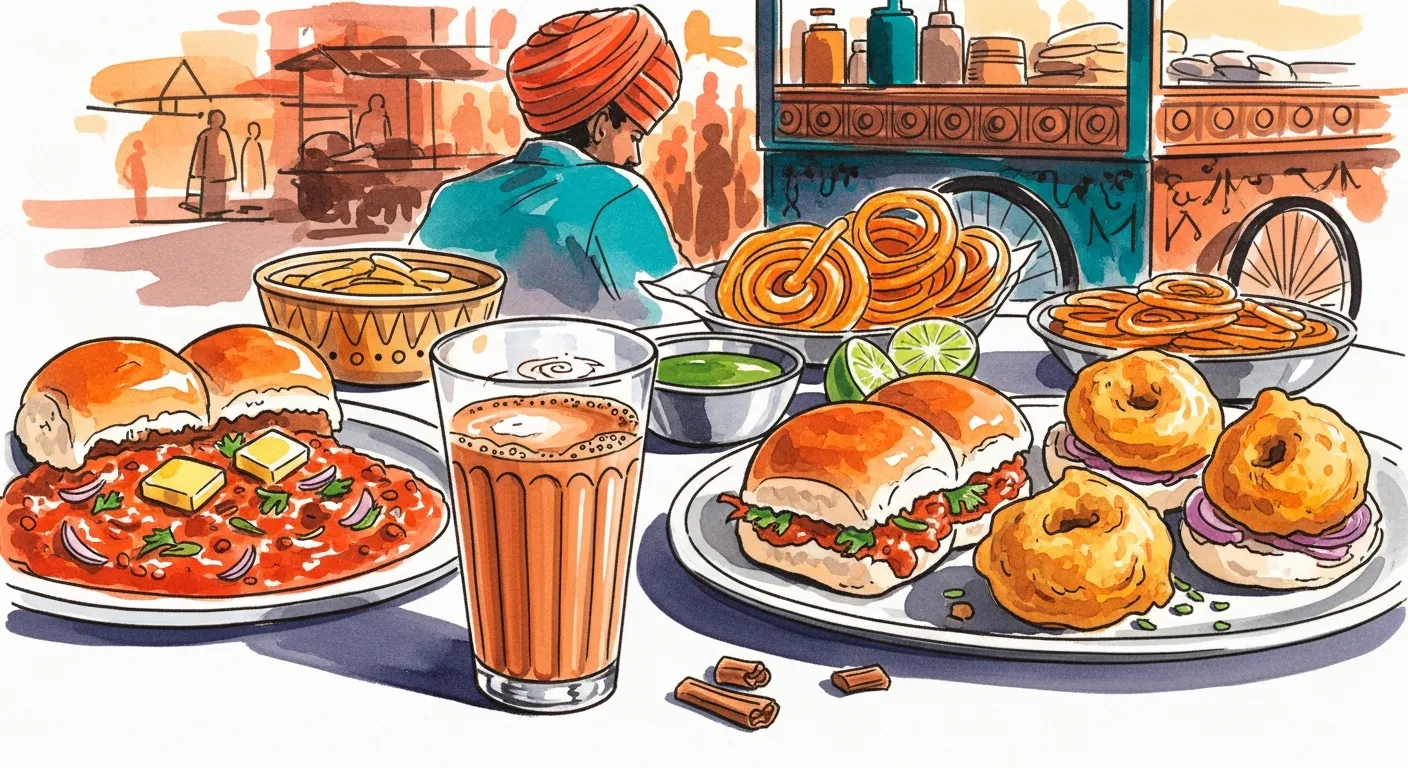
Generated by Imagen 4
In the 1820s, a Scotsman named Robert Bruce found tea growing wild in the hills of Assam. He brought the discovery to the colonial administration. The British East India Company, which had spent the previous decades smuggling opium into China in exchange for tea leaves, saw the opportunity. By the time the Company's trade monopoly ended in 1874, private planters had already moved into Assam and Darjeeling with enough capital and ambition to flood the London market within a generation. The problem was the rest of the leaves. The dust. The fannings. The broken grades that the English would not drink.
The Indian Tea Association, in the 1910s, ran a campaign to convince Indian workers to drink the leftover grades. They sent men to railway platforms with samovars. They handed out free cups to mill workers in Bombay. They added milk because the dust was bitter. They added sugar because the milk was thin. They added cardamom and ginger because the sugar was expensive and the spices were not.
That campaign, designed by an English marketing committee to clear inventory, became the chai we now consider a national identity.
A hundred and ten years later, on a footpath outside Bombay House in Fort, a man named Suresh is boiling the same four ingredients in a pot that has not been replaced since his father bought it. The pot is older than the customers. The recipe is older than the pot. The arithmetic is newer than both.
THE TWO RUPEES THAT BROKE THE GLASS
Nobody talks about the supply chain of a seven rupee chai.
A cutting chai is 75 millilitres of liquid. Roughly 40 millilitres of that is milk. The rest is water, leaves, sugar, and whatever spice the stall keeps in a steel dabba next to the burner. At seven rupees a glass, which was the going rate in the Fort lanes through 2024 and most of 2025, the milk cost was about a rupee twenty. The sugar was forty paise. The leaves, the gas, the labour, the disposable cup that some stalls have started using because the steel washer charges more than the chai, filled the rest.
Then May 2026 happened. Amul and Mother Dairy raised milk prices by two rupees a litre, citing increases in cattle feed, packaging film, and fuel. Two rupees on a litre sounds small. On a stall that goes through fifteen litres of milk a day, it is thirty rupees. On a month, it is nine hundred. On a stall that nets about twelve thousand a month after every other cost, it is a 7.5 percent pay cut delivered overnight.
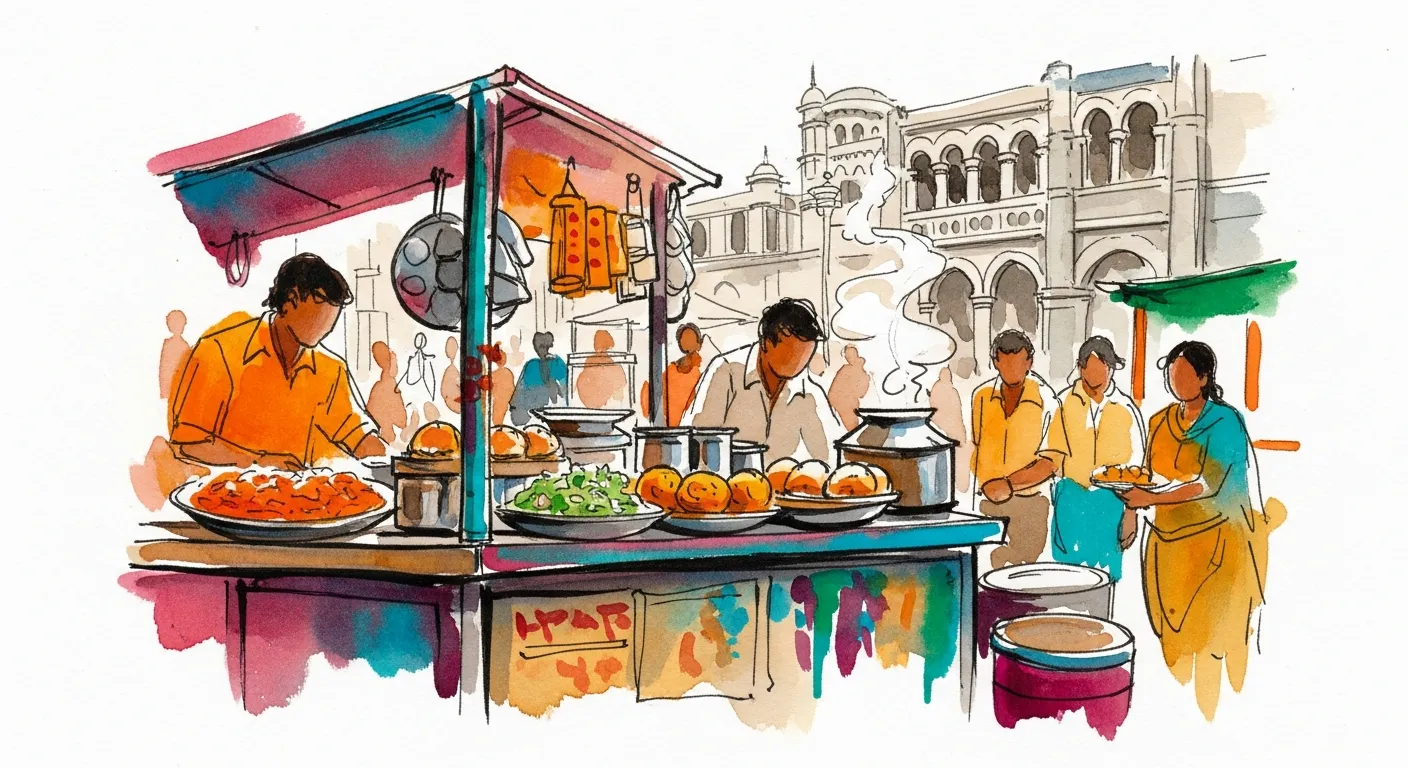
The sugar situation is quieter and worse. The Fair and Remunerative Price for sugarcane has climbed from Rs 2,750 per tonne in 2018-19 to Rs 3,650 for the current season, a 32 percent jump, while the minimum selling price of sugar has barely moved since 2019-20. The mills are squeezed. The wholesalers are squeezed. The forty paise of sugar in your cutting is now fifty five paise of sugar. Multiply by 300 glasses a day. The number stops being small.
Then there is the LPG. Street vendors across Mumbai, including the Khau Galli stretch in Fort, have been absorbing repeated cylinder price hikes through 2025 and 2026, with some shifting their prices upward by two to five rupees per item just to stay solvent.
The seven rupee chai is now a twelve rupee chai in most of Fort. The customers have not been told. The board has not been changed. The price arrives at the moment of payment, in a small apologetic mumble, and the customer pays it because the alternative is to walk three minutes to a place where the same caffeine costs two hundred and eighty.
THE MAN WITH THE POT
Suresh Yadav's father came to Bombay from Jaunpur in 1971. He set up the stall outside what is now Bombay House in 1978. He sold chai to the clerks at Tata Sons, the brokers walking to the BSE, the lawyers heading to the High Court, the journalists at the Times building. He never wrote down a recipe. He boiled the leaves longer than most. He used more ginger in monsoon. He took Diwali off and one day in March for his daughter's wedding.
Suresh took over in 2009. The stall has not moved. The pot has not been replaced. The customer base has, in the last four years, started to shift in a way his father would not recognise.
The lawyers still come. The clerks still come. The brokers, the few that are left after the BSE went electronic, still come.
The new analysts at the consulting firms on the twelfth floor do not.
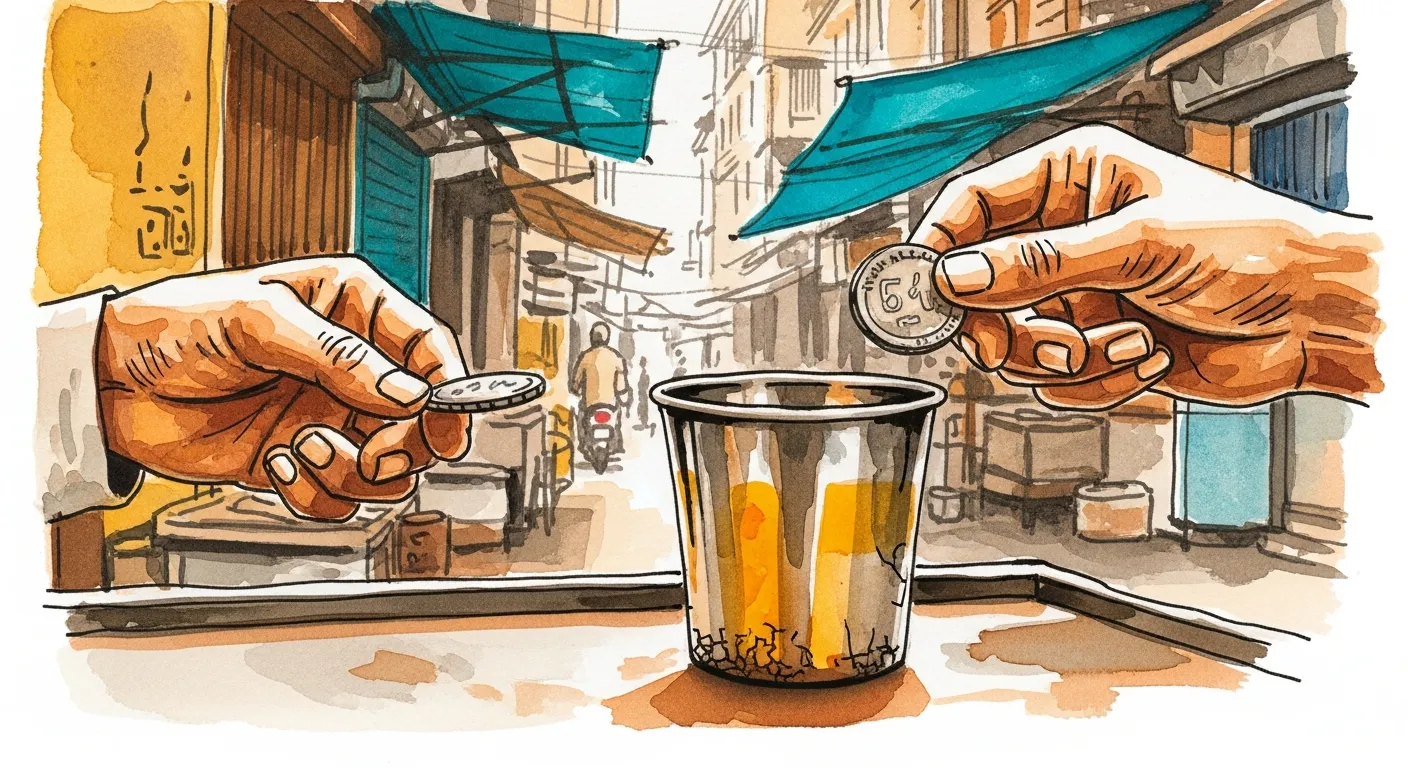
The chai stall did not lose its customers. It lost their children.
THE COFFEE THAT WALKED IN WEARING A LANYARD
A May 2026 survey found that 69 percent of Indians still prefer tea, but 26 percent now favour coffee, with the shift concentrated among the under-thirty office worker in a metro city. The number is not the interesting part. The interesting part is the geography. Fort is exactly the postcode where that 26 percent works.
The Starbucks at Horniman Circle opened in 2012. The Blue Tokai at Kala Ghoda opened in 2019. The Subko at Ballard Estate opened in 2022. The Third Wave at Fort opened in 2024. Each one of them sells a 240 ml cappuccino for somewhere between 280 and 380 rupees. Each one of them has air conditioning, wifi, a phone charging point, and a chair you can sit on for ninety minutes while pretending to work.
The cutting chai costs twelve rupees and comes with a footpath.
This is not a fair fight. It was never meant to be a fight. The two formats were doing different jobs. The chai was a five minute break between two emails. The coffee was a meeting. Then somewhere around 2023, the meeting started becoming the break.
A young office worker on r/AskIndia wrote in late 2025 that she finds it weird to opt out of the office coffee run, that the cutting chai stall outside her building is something her seniors go to and her peers do not, that the social cost of choosing the footpath over the chain has become higher than the rupee cost of choosing the chain over the footpath.
Read that sentence again. The cheaper option is now the socially expensive one.
WHAT THE STALL ACTUALLY SELLS
Nobody talks about what you are buying at a cutting chai stall.
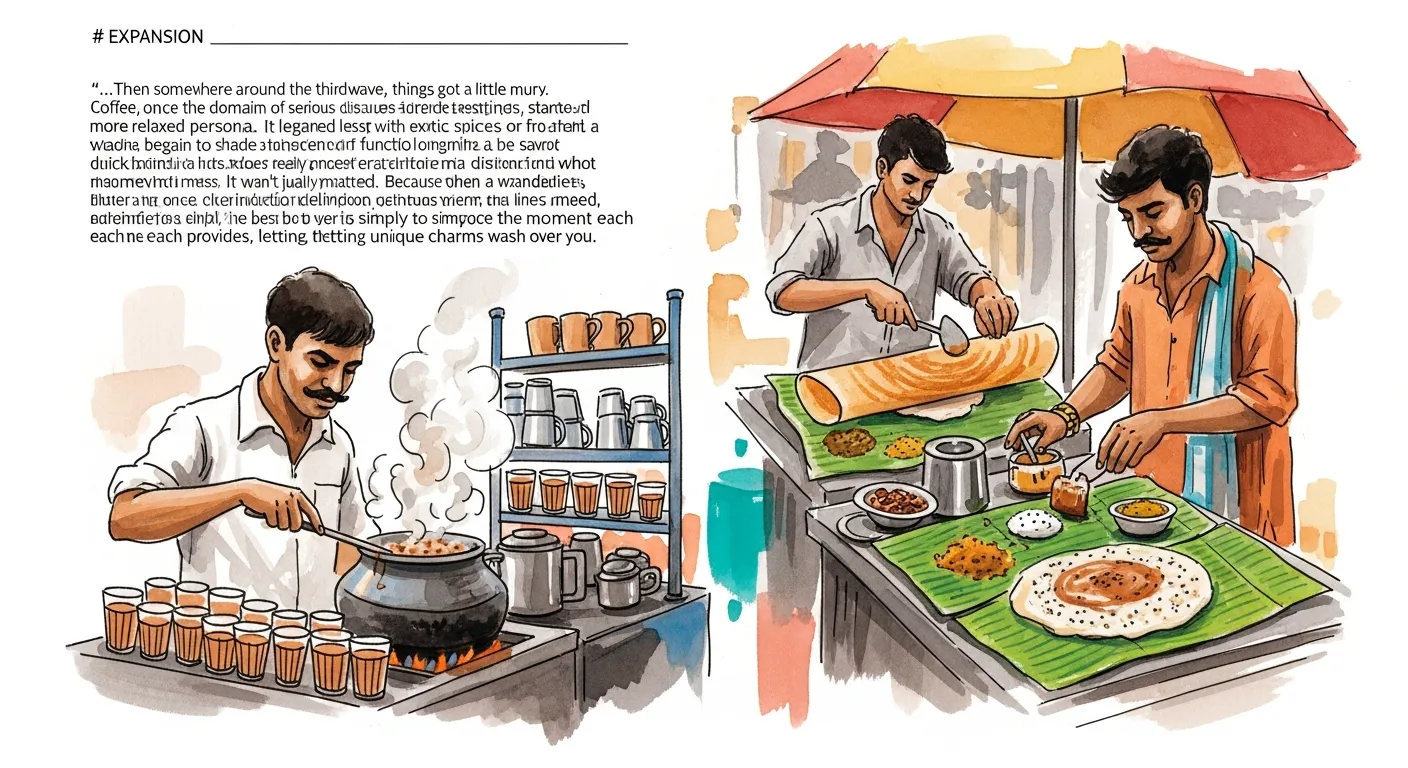
You are not buying tea. You can make tea at home for two rupees. You are buying a five minute pause in a working day that has been engineered to eliminate pauses. You are buying the small conversation with the man who has been boiling your cup for nine years and knows you take it less sweet on Mondays. You are buying the right to stand on a footpath in a business district that has otherwise priced you out of standing anywhere.
You are buying, though nobody says this out loud, a piece of a city that was built by clerks and is being rebuilt by analysts.
The Starbucks sells coffee. The stall sells the footpath.
THE STALLS THAT ADAPTED, AND THE ONES THAT DID NOT
Some of the older stalls in Fort have done the maths and adjusted. The chai at the stall near Asiatic Library now comes with a masala option for fifteen rupees, a ginger option for fourteen, and an elaichi pour for sixteen. The base cutting is twelve. The menu has been quietly upgraded to behave like a cafe, with tiers and add-ons, even though the pot is the same pot.
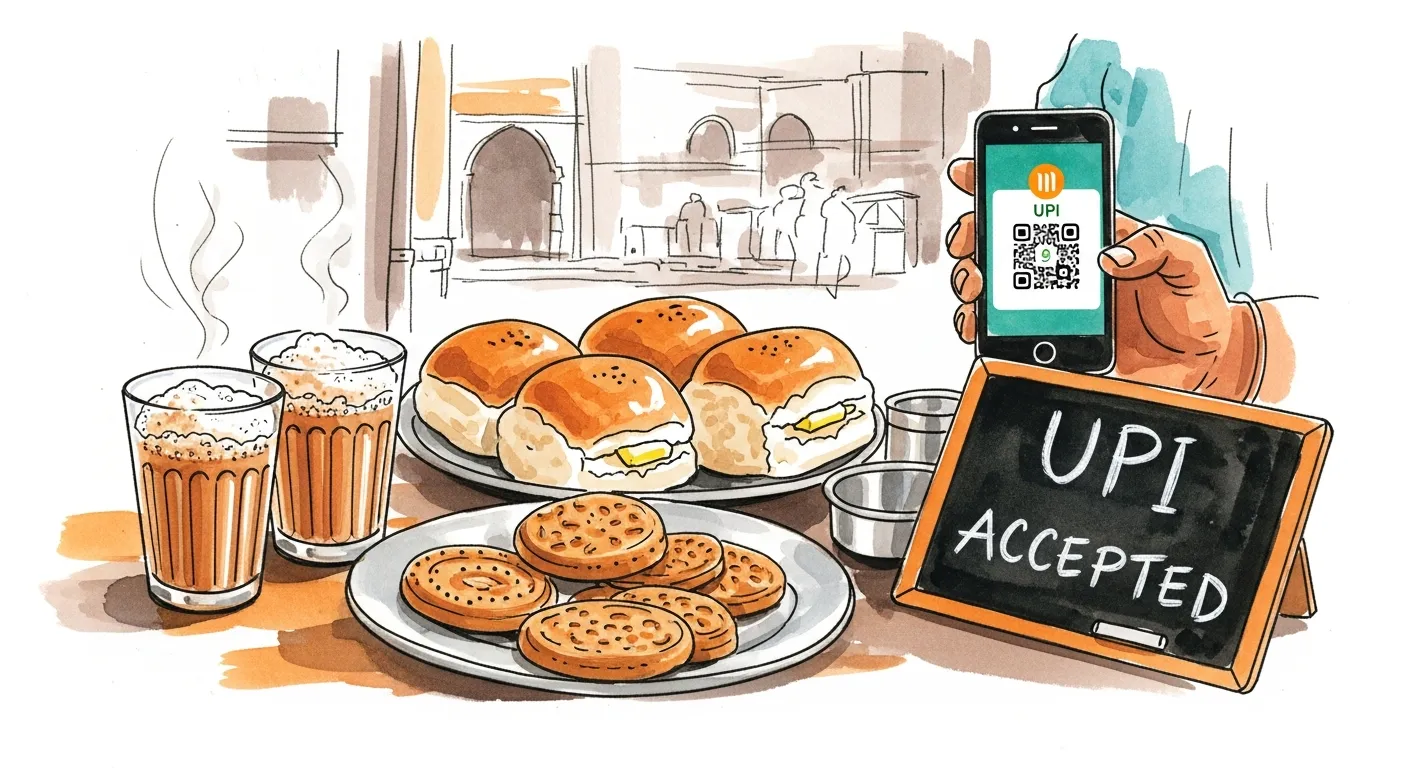
A few have added bun maska and khari at the side, taking a leaf from the Irani playbook. A few have started accepting UPI, which sounds small until you realise that the analyst with no cash in her wallet was walking past for three years for that exact reason.
A few have not adjusted. They are still charging seven rupees. They are still cash only. They are running their stall the way their father ran it, on the assumption that the customers will keep arriving because the customers always arrived.
The customers are still arriving. Just fewer of them, and older.
THE RITUAL IS NOT THE DRINK
The Indian Tea Association invented the chai ritual in the 1910s to clear inventory. The British did not drink the dust. The Indians, taught by an English marketing committee, did. A hundred and ten years of repetition turned a sales tactic into a morning.
What feels eternal is usually a hundred years old. What feels new is usually older than that.
The cutting chai stall outside Bombay House is not the soul of Mumbai. It is a small business run by a man named Suresh whose father came from Jaunpur in 1971, whose pot is from 1978, whose milk cost went up two rupees in May, whose sugar is a fraction more expensive than last quarter, whose youngest customers walked past him this morning to pay 320 rupees for a flat white.
The ritual will move. It always moves. The leaves have changed three times in a century. The sweetener has changed twice. The cup has changed from steel to glass to paper. The footpath has not.
Suresh will be there tomorrow morning at six. The pot will be on. The price, written nowhere, will be twelve. The lawyer who has been coming for twenty years will pay it without asking.
The analyst will walk past.
The pot stays on.
Field Notes
Quick referenceThe Indian Tea Association's campaign to push chai onto Indian workers began in the 1910s. It was an inventory-clearing exercise. It became a national ritual.
Two rupees extra per litre, fifteen litres a day: that is nine hundred rupees a month off a stall netting twelve thousand. A 7.5 percent overnight pay cut, announced by nobody.
A 75 ml cutting chai: roughly 40 ml milk, the rest water, leaves, sugar, spice. At seven rupees, the margin was counted in paise. At twelve rupees, it barely recovers.
Fort has a Starbucks, a Blue Tokai, a Subko, and a Third Wave. All opened between 2012 and 2024. All charge 280 to 380 rupees for 240 ml. The footpath stall charges twelve.
The Fair and Remunerative Price for sugarcane went from Rs 2,750 per tonne in 2018-19 to Rs 3,650 this season. A 32 percent climb. The forty paise of sugar in your cutting felt every rupee of it.
Get the next story first
Join the Bhukkads. Free, no spam, just stories.
Takes 30 seconds.