The Bhonu Holds Its Ground
Fort and Dhobi Talao still cook for a community that shrinks ten percent a decade. The recipes haven't moved.
Generated by Imagen 4
In 1639, a man named Dorabji Nanabhoy Patel arrived in Bombay from Surat. The British had just acquired the seven islands as part of Catherine of Braganza's dowry, and they needed people who could write, count, build, and feed. Dorabji could do all four. He set up shop, paid his taxes, and within two generations the Patel family was running the customs house. The Parsis migrated to Bombay because they were already useful in Surat, and Bombay needed what Surat had.
The food came with them. So did the cooks.
THE WORD BEFORE THE WORD
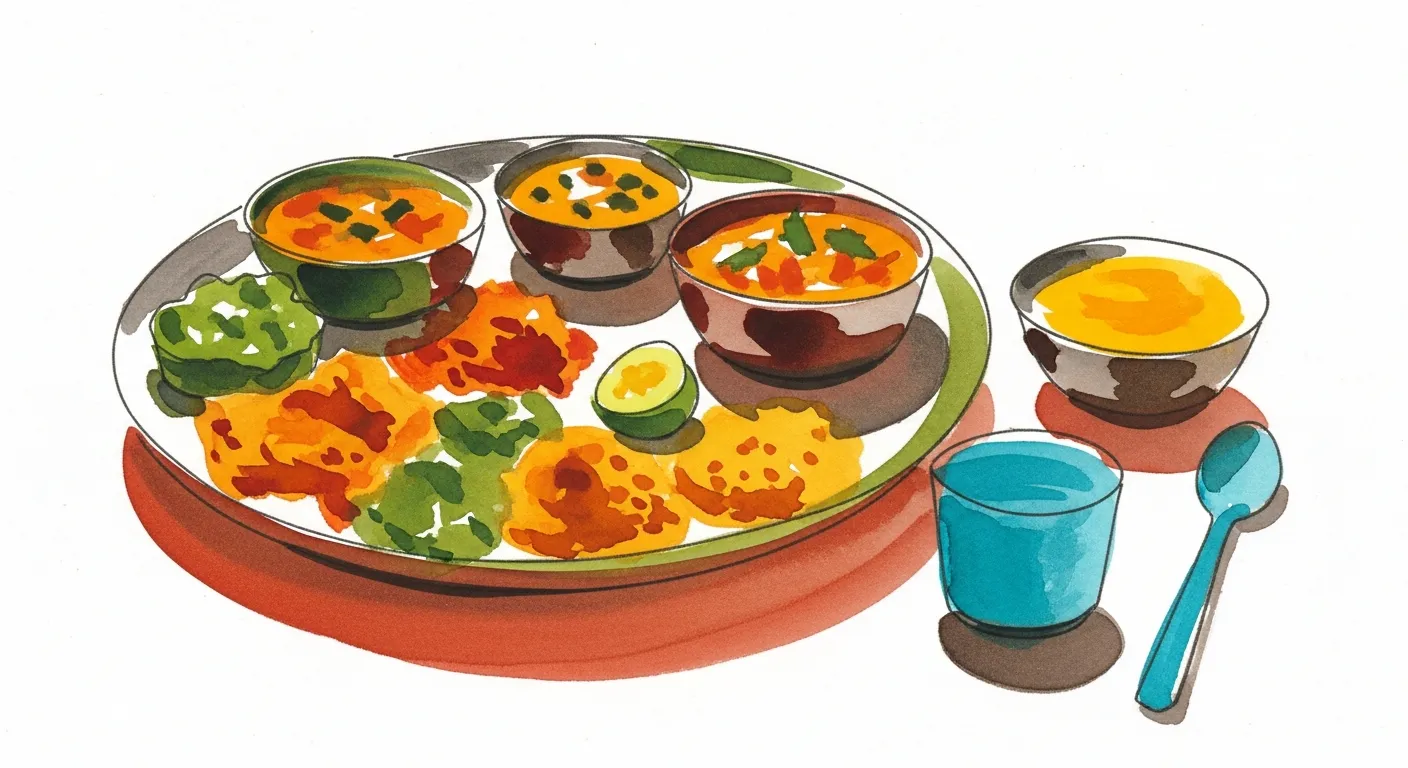
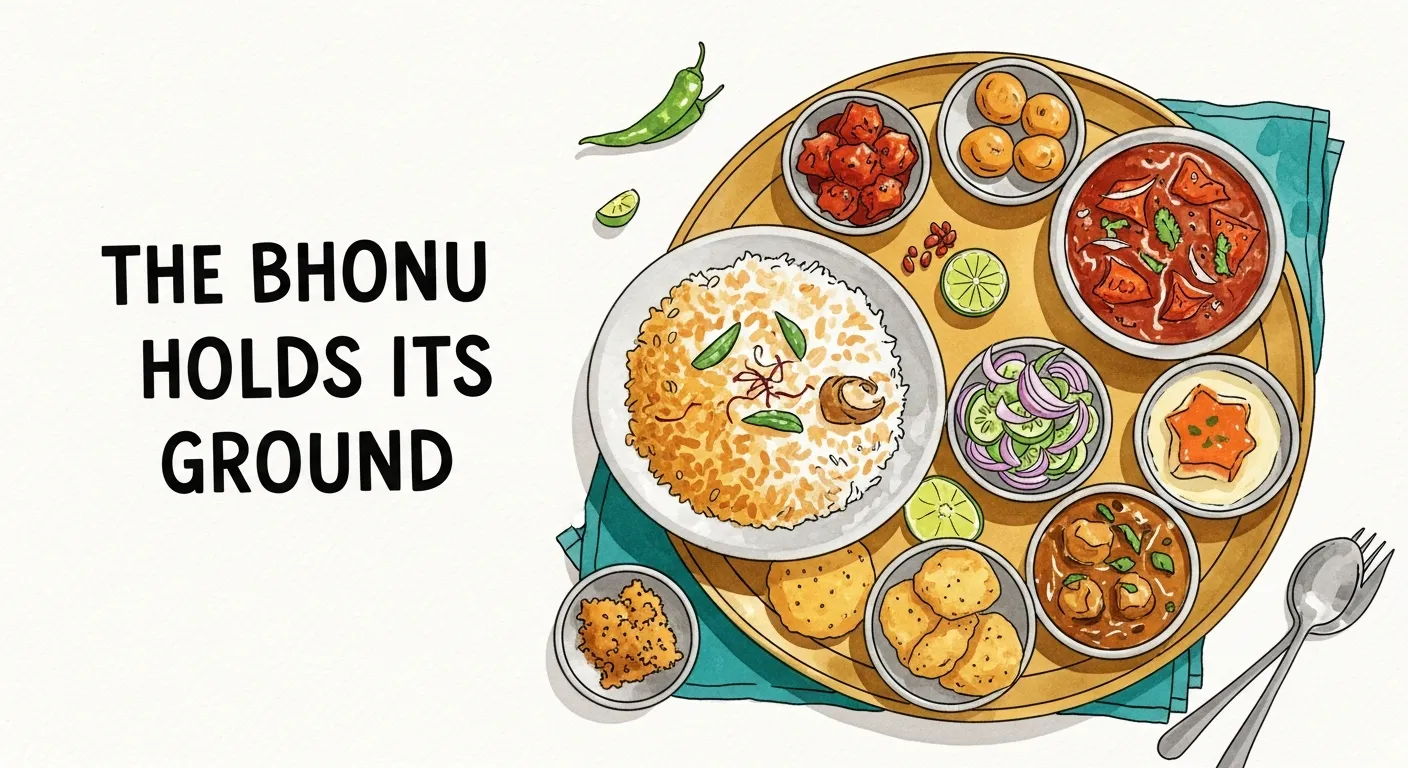
Bhonu is the Gujarati-Parsi word for a meal, but it does not mean what dinner means in English. A bhonu is an event. A bhonu has rules. The banana leaf goes down. The patrel goes on the left, the rotli on the right, the saria in the centre. The lagan-nu-bhonu, the wedding meal, has a script four hundred years old. Patra-ni-machhi steamed in banana leaf, salli boti, mutton pulao-dal, lagan-nu-custard. In that order. With those proportions. By those caterers.
The caterers are the part nobody talks about.
The restaurants get the press. Britannia and Co. in Fort, run by the late Boman Kohinoor's family, gets written about every May. Sassanian Boulangerie in Dhobi Talao crossed 111 years in 2024 and still sells dhansak at Rs 250 and sali kheema at Rs 190. The lunch counters are the visible Parsi food economy. They survive on nostalgia and office workers and the occasional tourist with a Lonely Planet bookmark.
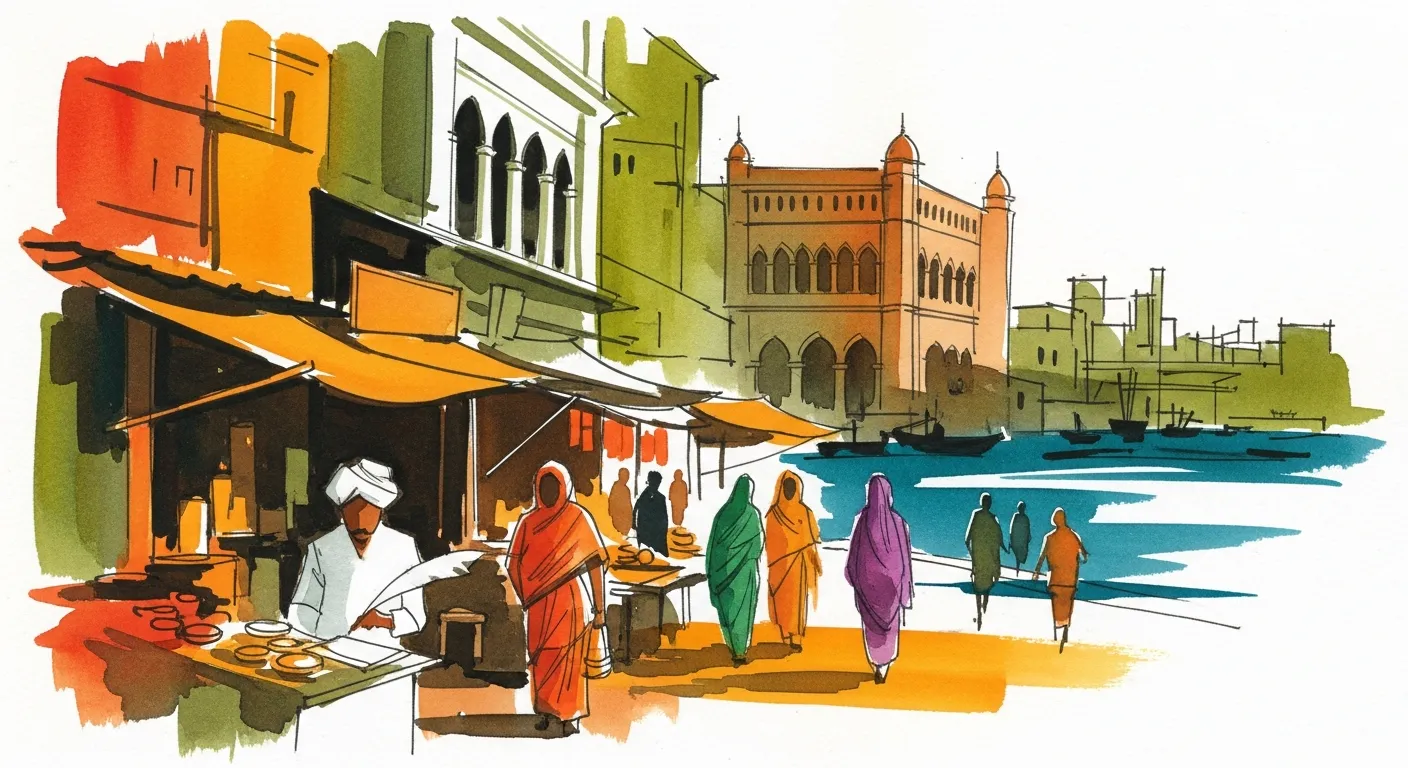
The bhonu caterers, the men and women who load up Tempo Travellers at 4 am with steel degchis of dhansak and drive to a wedding in Dadar Parsi Colony, work somewhere else. Quieter. Older. With a clientele that, by every available measure, is getting smaller.
THE TEN PERCENT PROBLEM
The Parsi population in India shrinks by about ten percent every decade. Projections suggest Mumbai's Parsi community will drop to under 20,000 by 2051. That is not a slow demographic curve. That is a generation watching its own arithmetic.
A bhonu caterer's business runs on weddings, navjotes, fourth-day ceremonies, anniversary lunches at the Ripon Club, and the navroze season in March. Every one of those events depends on a community of a specific size, with specific traditions, that orders specific food.
Think about that. The customer base is finite. The menu is fixed. The recipes are not negotiable. You cannot pivot. You cannot rebrand. You cannot put a truffle on the patra-ni-machhi and call it a tasting menu. The aunties will know. The aunties always know.
The bhonu is one of the few cuisines in Mumbai where the customer is also the auditor.
THE LEDGER IN 2026
The economic squeeze is straightforward. Per-plate rates for non-vegetarian Mumbai catering in 2026 run between Rs 1,600 and Rs 2,500, driven by ingredient prices, staffing, and menu complexity. Parsi bhonu sits at the top of that range. The mutton is bone-in. The fish is whole pomfret, not fillet. The custard is set, not piped. The dal is cooked twice.
Then the LPG arrived as a problem. In March 2026, caterers across Mumbai began raising per-dish prices by Rs 25 to Rs 50 and modifying menus in response to severe commercial cylinder shortages. A bhonu kitchen runs four to six commercial burners through a wedding morning. The dhansak alone takes three hours of slow heat.
Now stack the inputs. Mutton has roughly doubled in five years. Pomfret moves with the monsoon and the trawler diesel rate. Eggs, jaggery, tamarind, sugarcane vinegar, the specific Parsi sugarcane vinegar from a handful of suppliers in Navsari, all of it has moved up. Labour is the quiet one. The senior bawarchi at a bhonu kitchen, the man who knows when the dhansak dal has cooked down to the right thickness, is not replaceable by a YouTube tutorial. He trained for fifteen years. He charges accordingly.
A wedding bhonu for 300 guests that cost Rs 3.5 lakh in 2015 costs closer to Rs 7 lakh in 2026. The guest list, meanwhile, is shorter than it was in 2015. The math gets uncomfortable.
WHAT FORT AND DHOBI TALAO STILL HOLD
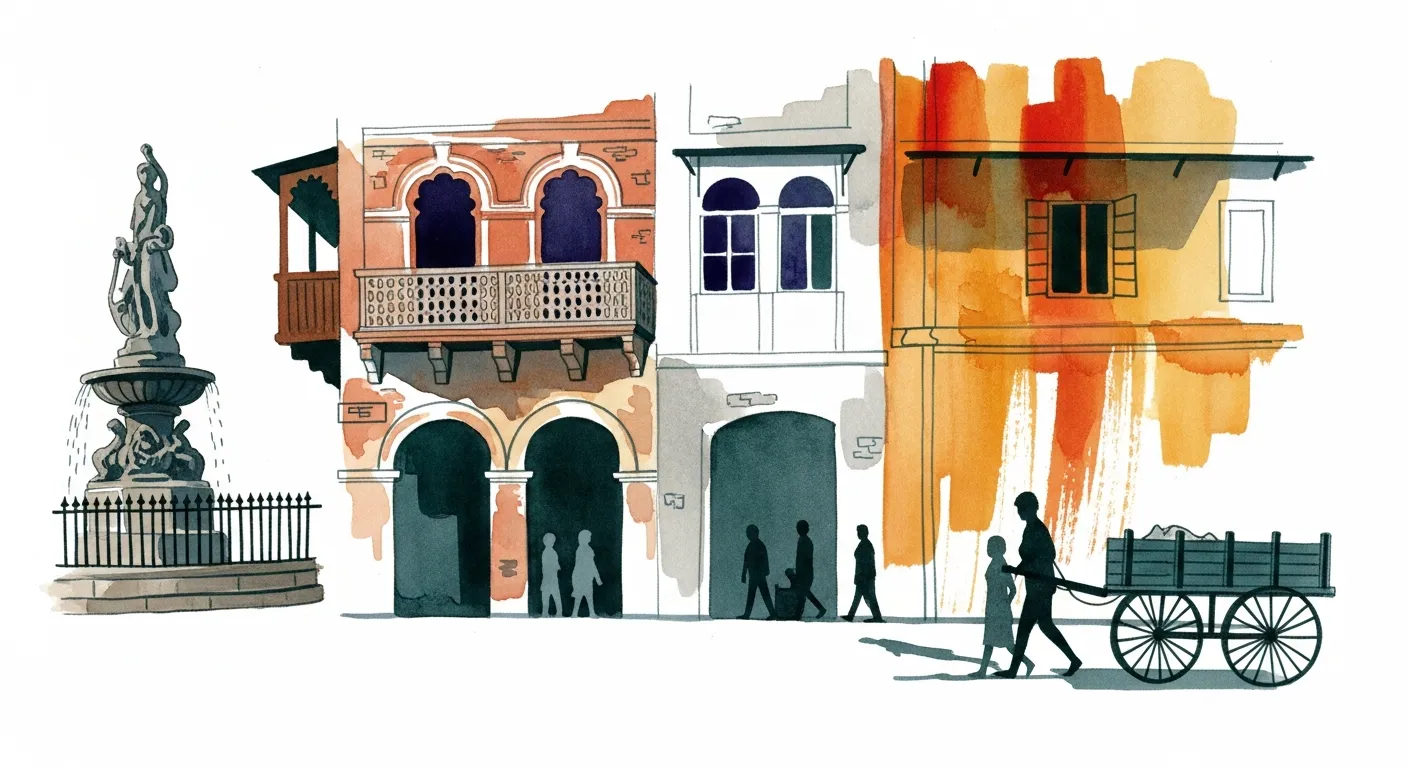
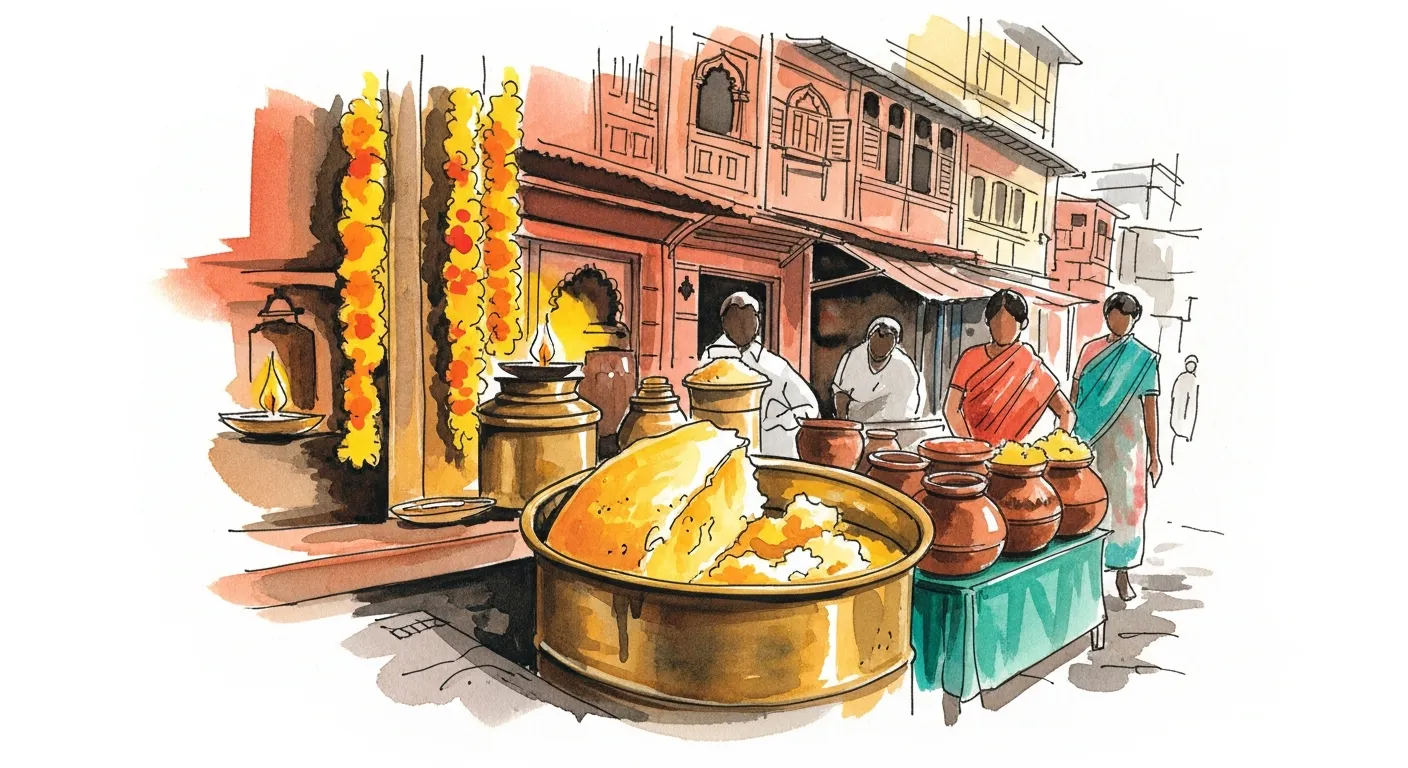
Walk from Flora Fountain toward Metro Cinema on a Saturday morning. The bhonu is invisible from the street. You will not see a signboard. You will see the side entrance of an old building with a freight lift, and you will see a man in a white banyan loading a degchi the size of a child into a tempo. That is a bhonu going out.
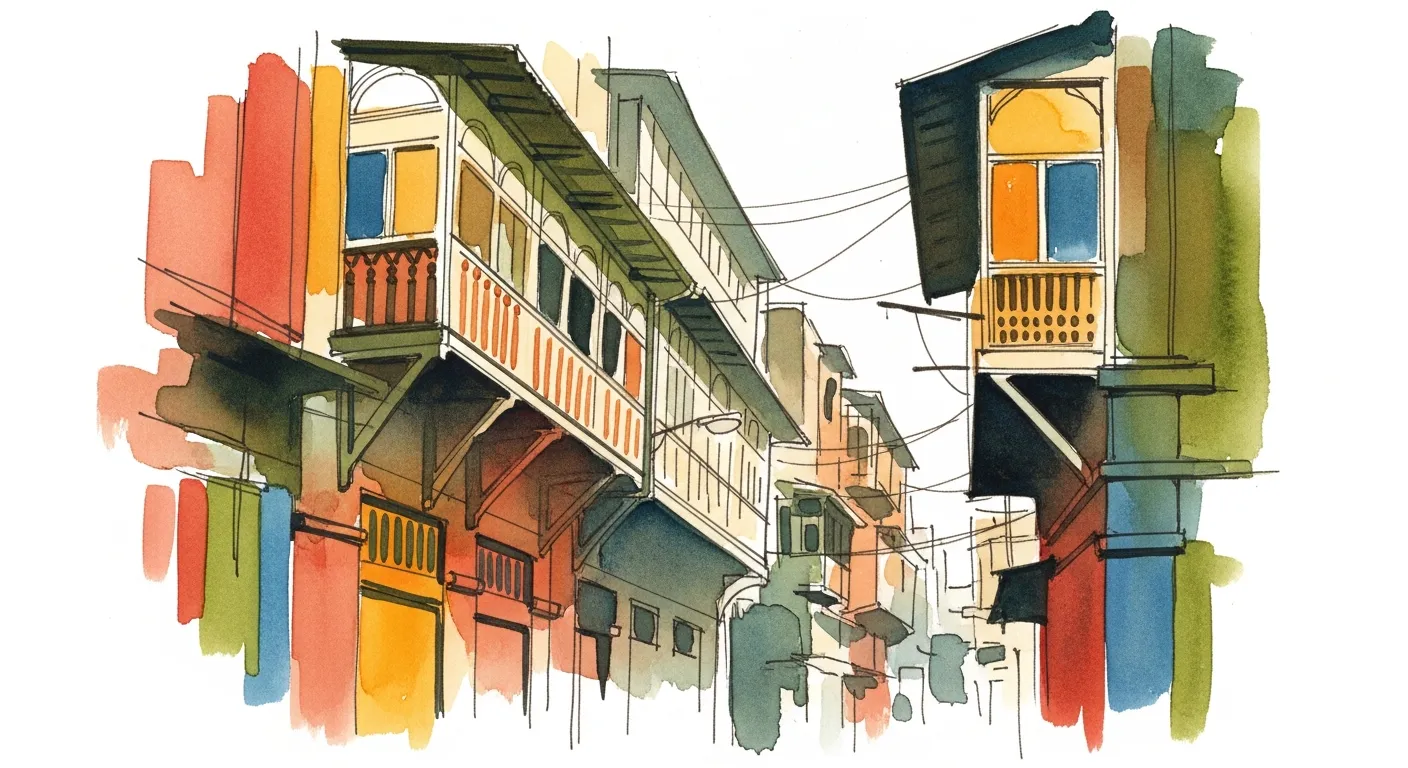
The kitchens are upstairs. Some are in old Parsi baugs. Some are in pre-war buildings off Princess Street. Some operate out of agiary kitchens with the trustees' permission. None of them advertise. The phone numbers move by word of mouth through Parsi WhatsApp groups, the Bombay Parsi Punchayet directory, and a generation of grandmothers who still remember which caterer made the dhansak at someone's navjote in 1987.
The restaurants that survive in this stretch survive on a different model. Britannia, founded in 1923 by Rashid Kohinoor and made famous by his son Boman, still serves berry pulao to a Fort lunch crowd that arrives at noon. Sassanian, founded in 1913, still opens at 7 am for the bun-maska crowd. These are working lunches and quick breakfasts. The bhonu, the proper sit-down feast, lives elsewhere.
Restaurants feed the city. Caterers feed the community.
THE ADAPTATIONS THAT WORK
The bhonu caterers who are still standing in 2026 have done three things, quietly, without press releases.
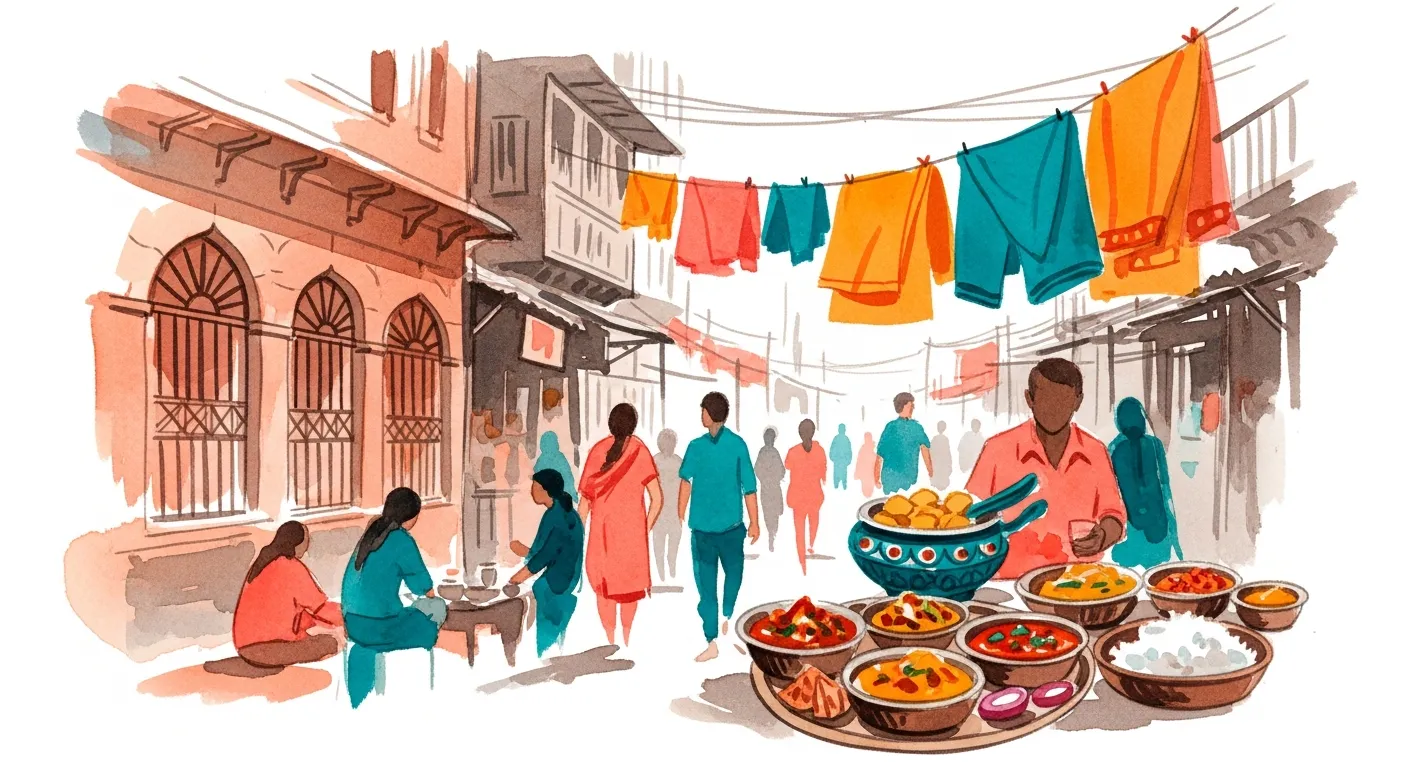
First, they have shrunk the kitchen footprint. A bhonu that used to need eight assistants now runs on five, with the prep distributed across multiple days. The patra-ni-machhi paste is made on Wednesday. The dhansak dal is soaked on Thursday. The mutton is marinated Friday night. By Saturday morning, the cooking is assembly. This is not new. This is how Parsi kitchens worked in 1950. It just stopped being economical for a while in the early 2000s, when labour was cheap, and started being economical again when labour got expensive.
Second, they have opened the order book to non-Parsi clients. Corporate lunches at Nariman Point. Diwali boxes for Gujarati families who want a salli boti spread. The lagan-nu-custard has become a dessert order in its own right, sold to restaurants and home buyers in 500ml steel tiffins. This is the part the older generation does not love and the younger generation insists on. The recipes do not change. The customer does.
Third, they have priced the bhonu honestly. A proper four-course Parsi wedding spread for 200 guests now costs what it costs. The caterers stopped apologising for the number around 2019. The community grumbled. The community paid. The bhonu went out anyway, on time, in degchis, to a Parsi baug in Andheri or a fire temple compound in Colaba.
THE THING THAT IS NOT ENDING
There is a version of this story that frames the bhonu as something on its way out. Shrinking community, rising costs, ageing cooks, fewer weddings. That version is lazy. It mistakes a smaller scene for a quieter one.
The bhonu is not a mass cuisine. It never was. In 1881, the Parsi population of Bombay was around 48,000. In 2011, it was around 45,000. In 2051 it will be under 20,000. The cuisine was never feeding a million people. It was feeding a community that knew itself, in rooms that knew the rules, by cooks who knew the family.
The Fort and Dhobi Talao bhonu kitchens are still doing exactly that. With fewer staff. With higher per-plate margins. With a client list that includes a few Marwari families and a Bengali wedding planner who orders salli boti for her own birthday every June. The recipes have not moved. The vinegar still comes from Navsari. The pomfret is still whole.
The last time I ate at a proper bhonu, a fourth-day ceremony in a Dadar baug in 2024, the dhansak came out at 1.15 pm. Exactly when it was supposed to. The caterer was a 67-year-old man whose father had catered the same family's weddings in the 1960s. The custard was set, not piped.
The community will be smaller in 2051. The bhonu will still be on time.
Field Notes
Quick referenceSassanian Boulangerie opened in 1913. Bun-maska before Bombay had a skyline.
Dhansak at Sassanian: Rs 250. A bhonu for 300 guests: closer to Rs 7 lakh in 2026.
No signboard. No Instagram. The phone number lives in a Parsi WhatsApp group and a grandmother's memory.
Patra-ni-machhi. Salli boti. Mutton pulao-dal. Lagan-nu-custard. In that order. Every time. Four hundred years, same script.
Mumbai's Parsi community: 48,000 in 1881. 45,000 in 2011. Under 20,000 projected by 2051.
Get the next story first
Join the Bhukkads. Free, no spam, just stories.
Takes 30 seconds.