The Ghee That Outlived the Empire
In Bhuleshwar's lanes, a mithai economy built over 150 years is meeting the economics of organised retail. The kaju katli is fine. The kaju katli-wallah is doing the math.
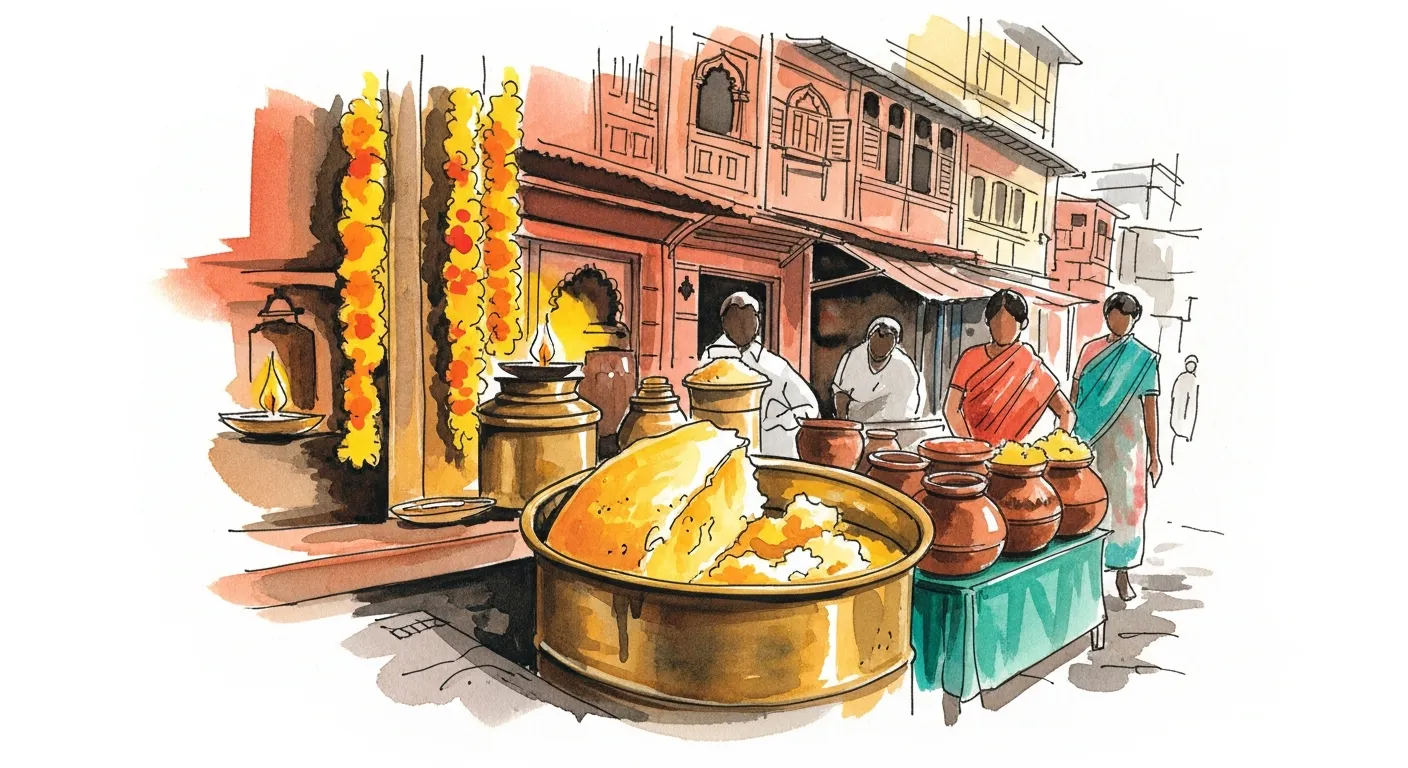
Generated by Imagen 4
In 1803, a fire ripped through the Fort area of Bombay and displaced thousands of Gujarati and Marwari trading families who had been living inside the walls. The English wanted the Fort for themselves. The traders needed somewhere to go. They walked north, past the maidan, past the tanks, and settled on a piece of land where a temple to Bhuleshwar Mahadev had been standing since long before anyone was counting.
They brought their ledgers. They brought their gods. They brought their cooks.
By the 1860s, the lanes around the temple had hardened into what they still are today: a grid of shops so narrow that two men with tiffins cannot pass each other without one turning sideways. Cotton merchants on one street. Silver on another. Imitation jewellery, which is now what Bhuleshwar is most famous for globally, on a third. And tucked between them, in shops that were often no wider than a single doorway, the mithaiwallahs. Gujarati. Marwari. A few Jain families who would not touch onion or garlic and cooked accordingly.
They stayed. For a hundred and fifty years, they stayed.
THE PART NOBODY TALKS ABOUT
Every conversation about heritage markets in Mumbai is a conversation about buildings. The weathered cornices. The wooden balconies. The stone plaques with dates in Gujarati numerals. The C Ward heritage debate, which covers Bhuleshwar, is fought entirely on the question of facades.
Nobody talks about the ghee.
The ghee is where the heritage actually lives. A Jain mithaiwallah in Bhuleshwar does not just avoid onion and garlic. He sources his ghee from a specific dairy that his father sourced from, uses a copper kadhai that has been in the shop since before Partition, and cooks mohanthal in batches small enough that the besan does not burn on the bottom. The mithai is the artefact. The shop is just where it happens.
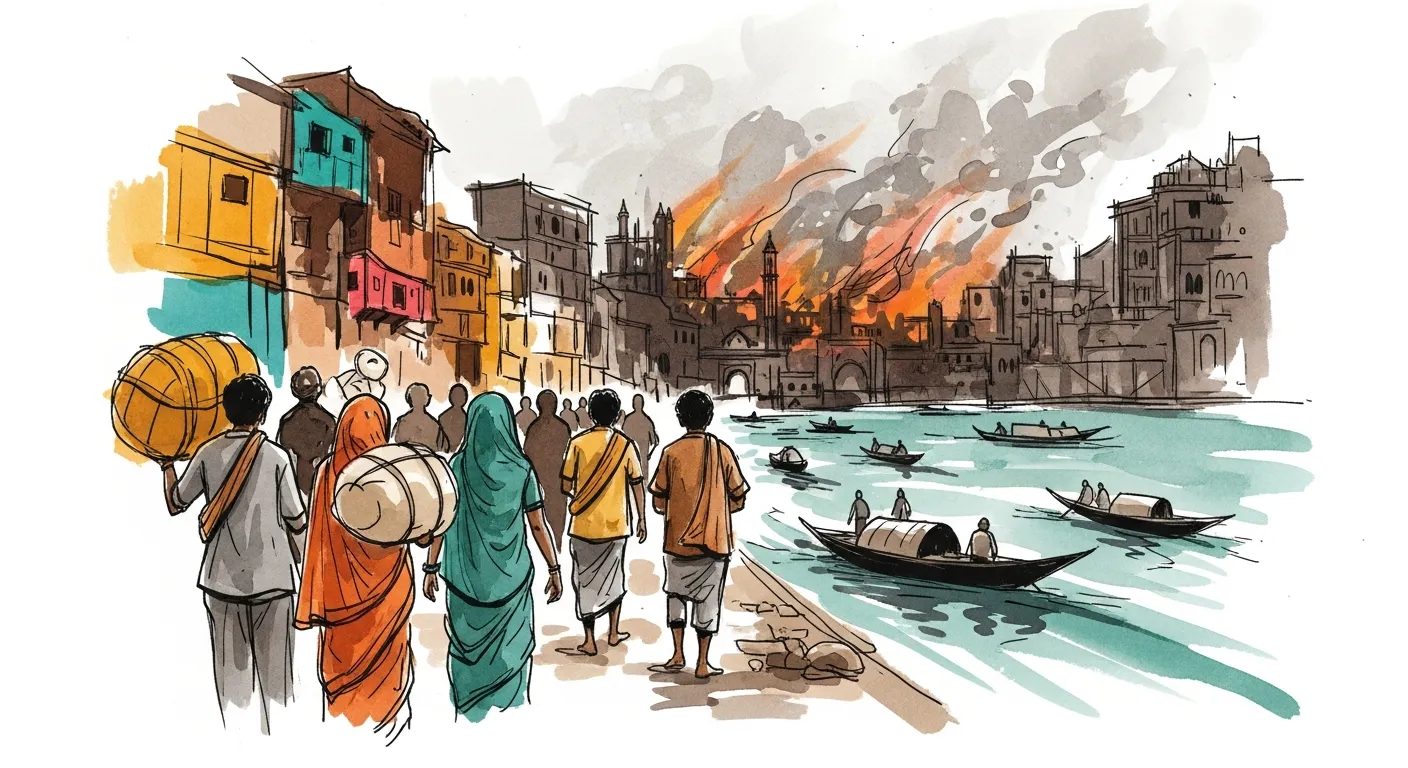
And the shop is where the pressure is landing.
THE NUMBER THAT CHANGED THE MATH
Start with the number every mithaiwallah in Bhuleshwar has now heard, whether he wanted to or not. According to IMARC Group, the India packaged sweets market was valued at INR 8,431 crore in 2025. It is projected to reach INR 30,505.74 crore by 2034. That is a compound annual growth rate of 15.36%, sustained over nine years.
The packaged sweets market is growing four times faster than the Indian economy.
That growth is not happening in a vacuum. It is happening in air-conditioned outlets with barcode scanners and shelf-stable kaju katli that will not spoil in a Mumbai monsoon. It is happening in shops that can hire a graphic designer for the box. It is happening on quick-commerce apps that will deliver a 250-gram tin of soan papdi to Malabar Hill in eleven minutes.
The organised players know this. They are not selling sugar. They are selling the memory, boxed, sealed, and priced at a margin the corner shop cannot match.
The shop is not competing with another shop. It is competing with the eleven-minute delivery window.
THE FOUR CONFECTIONS THAT DEFINE THE LANE
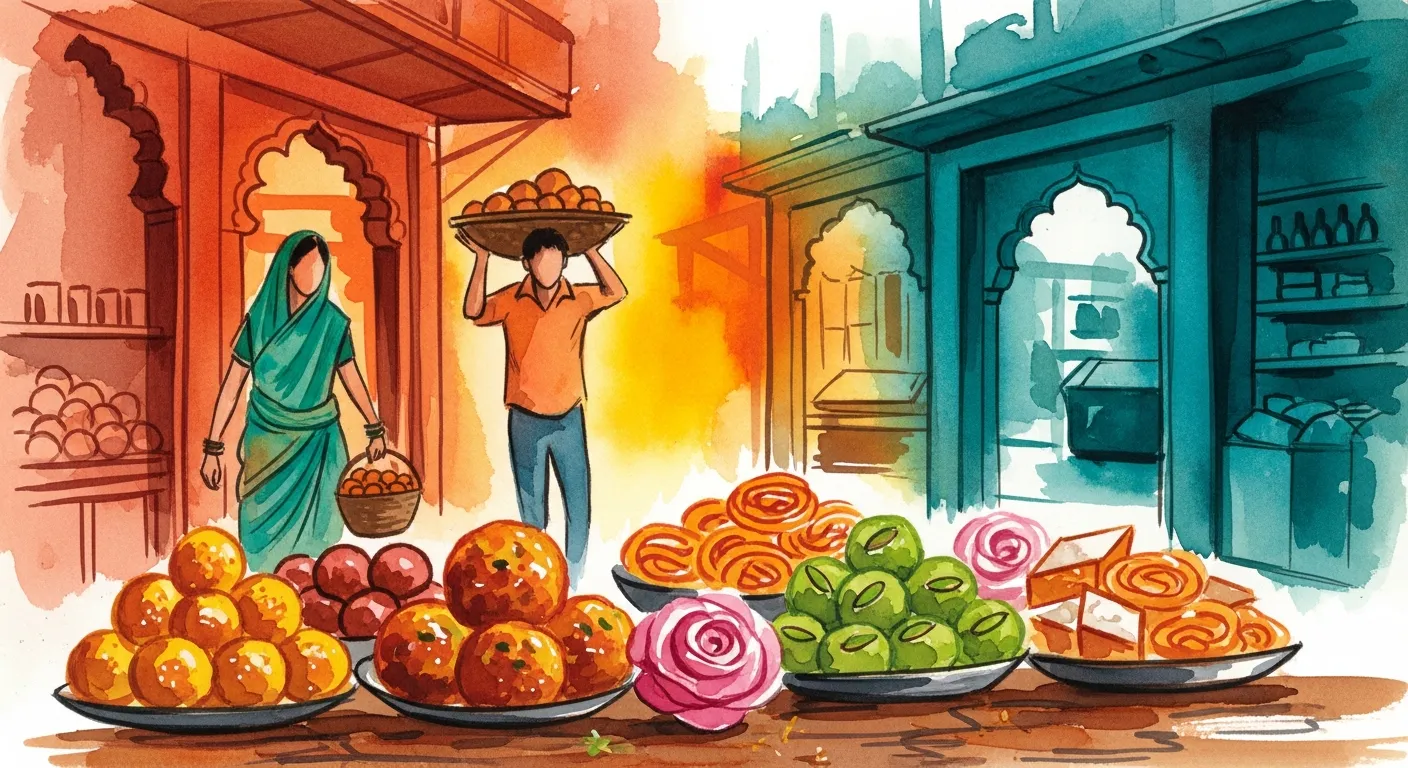
Walk from the temple towards Panjrapole and you will pass shops selling four things that are not easy to find done well anywhere else in the city.
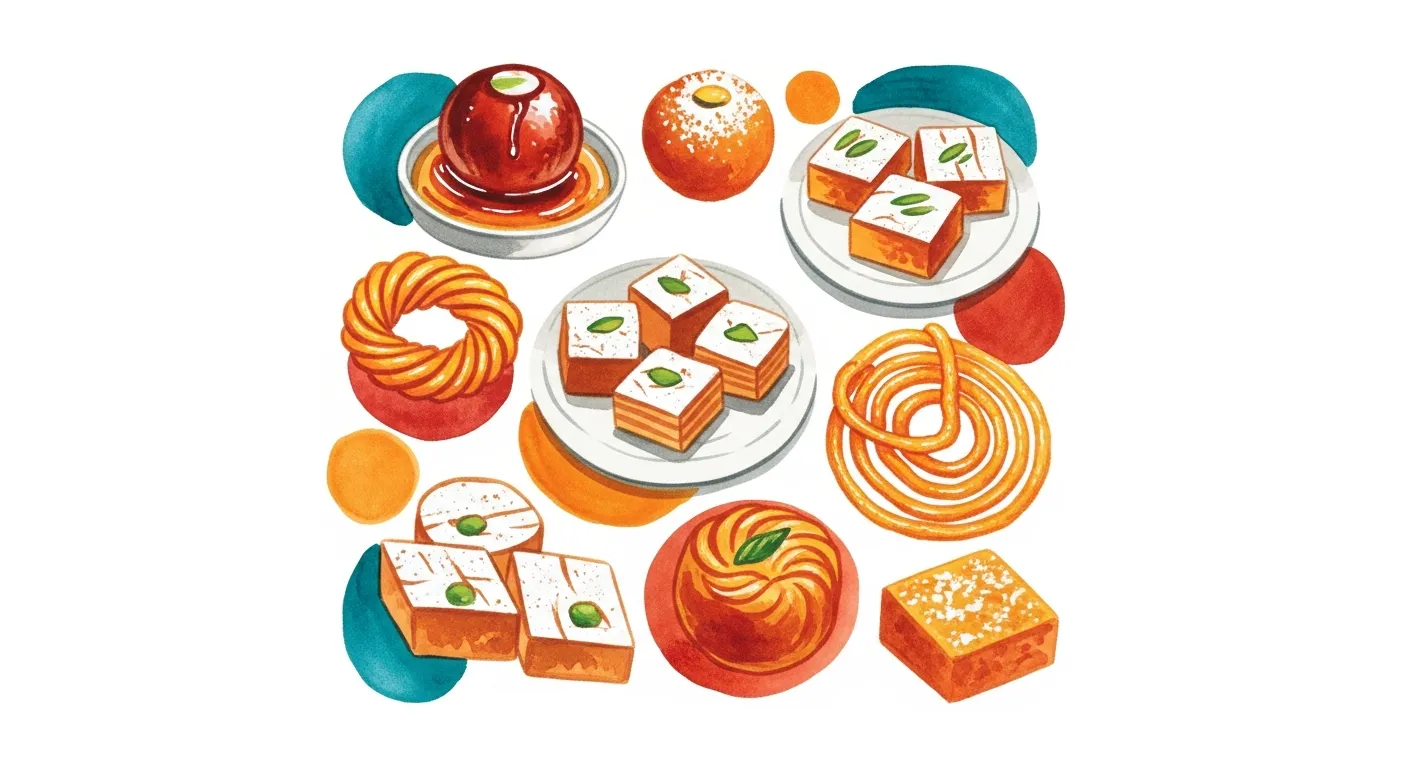
Mohanthal. A Gujarati besan fudge that needs the flour roasted in ghee for the better part of an hour, stirred continuously, until it turns from yellow to a deep khaki and smells like a temple kitchen at Diwali. Get it wrong by two minutes and it is grainy. Get the ghee wrong and it is nothing.
Sukhdi. Also called gur papdi. Wheat flour, jaggery, ghee. Three ingredients. Cooked in the same kadhai your grandfather used. The Jain version drops the wheat for something else depending on the family.
Ghari. A Surat specialty, technically, but the Bhuleshwar Gujaratis brought it with them. A round pastry filled with mawa, pistachio, almond, and enough ghee that you can see it pooling if the shop keeps them under a fan.
Chikki and chikki-adjacent brittles made with specific ratios of jaggery to nut that the shop has not written down anywhere. The recipe lives in the elbow of the man stirring.
These are not items on a menu. They are the reason the shop exists.
THE PRESSURE FROM THREE DIRECTIONS
The first pressure is the redevelopment plan. Bhuleshwar is being reimagined as a world-class commercial-cum-residential centre, with the stated drivers being poor infrastructure and unsanitary conditions. Nobody who has walked those lanes in July would argue with the infrastructure point. The question is what happens to the shop that has been paying pagdi rent since 1952 when the building comes down and the new one has a lift, a lobby, and a rent card indexed to the market.
The second pressure is the organised retail expansion. Traditional sweet shops now need to offer unique experiences to retain customers. Which is a polite way of saying the man who has been making mohanthal correctly for forty years is now expected to also do branding.
The third pressure is the one documented across C Ward. Crowds, hawkers, traffic choking entry and exit points. Redevelopment plans and a growing population reshaping the ward faster than its aging buildings can manage. The customer who used to walk from Kalbadevi for a specific ghari now orders a generic one from an app because the lane is impassable at 4 pm on a Saturday.
WHAT GETS LOST WHEN THE MATH STOPS WORKING
Here is what a Bhuleshwar Jain mithai shop actually is, if you strip away the nostalgia.
It is a supply chain. The ghee comes from a dairy that has been supplying the shop for three generations. The besan is milled to a specific coarseness at a chakki two lanes over. The pistachios come from a dry-fruit merchant on the same street who imports through a Marwari trader in Crawford Market. The silver varakh comes from a beater in Zaveri Bazaar. The copper kadhai was repaired by a kalaiwallah who still walks the lanes with a bag of tin.
When the shop closes, none of those relationships survive on their own. The dairy loses a customer. The chakki loses a customer. The kalaiwallah loses a route. The heritage is not one shop. It is the network.
The organised sector is not competing with the shop. It is quietly replacing the ecosystem.
And the network is what the packaged sweets market does not replicate. A tin of factory-made mohanthal is not just a lower-quality version of the shop version. It is a different object entirely, made from ingredients sourced through a supermarket procurement chain that has no relationship with a single one of those Bhuleshwar suppliers.
THE ADAPTATION
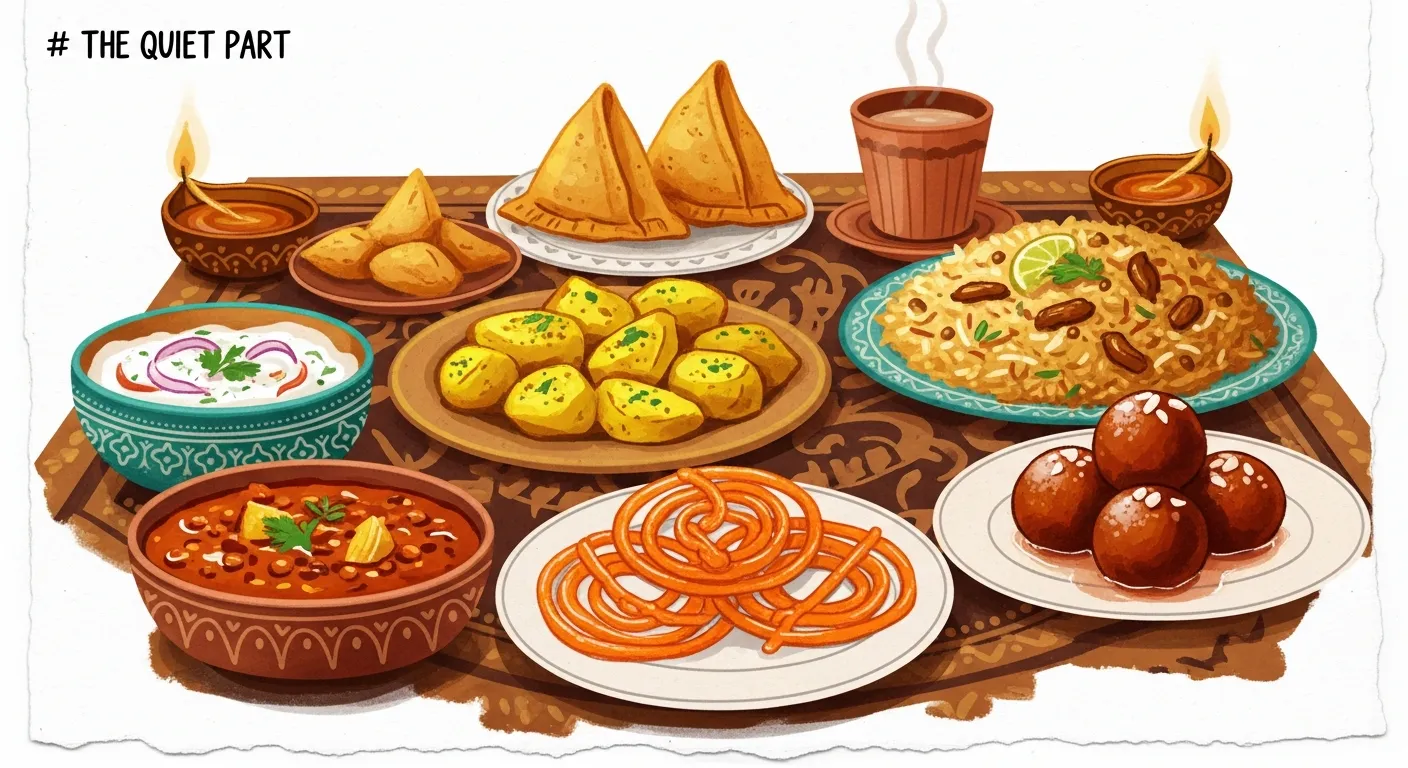
Some shops are adapting. Many of the older establishments have added digital payment, refreshed their storefronts, started taking orders on WhatsApp, opened Instagram accounts run by a grandson home from engineering college. The old-world atmosphere that no modern mall can recreate is still there. It is just now accepting UPI.
A few of them have leaned harder into the specificity. If you cannot compete on price, compete on the thing the factory cannot make. Small-batch mohanthal cooked to order. Sukhdi made with a specific jaggery from a specific district. Ghari sold only in the six weeks around Diwali, the way it used to be sold, before shelf life became a virtue.
This is the unique offering. It was always there. They just did not have to name it before.
THE QUIET PART
The 1803 fire that pushed the traders out of the Fort was, in a strange way, what created Bhuleshwar. A displacement produced a district. The district produced a food culture. The food culture produced four specific confections that exist in that particular form because a Gujarati family, a Marwari family, and a Jain family all ended up living on the same lane and cooking for each other.
Two hundred and twenty-three years later, the same lane is being asked to displace itself again. Voluntarily this time. For its own good.
The mithai will survive. Kaju katli is not going anywhere. The packaged sweets market will make sure of that. INR 30,505.74 crore by 2034 buys a lot of kaju katli.
The question is whether the mithaiwallah survives. The specific man in the specific shop, with the specific dairy and the specific kadhai and the specific elbow that knows when the besan has turned.
He is doing the math. The math is not new. The traders who walked north in 1803 were doing the math too.
They stayed.
Field Notes
Quick referenceThe 1803 Fort fire displaced Gujarati and Marwari traders north into what became Bhuleshwar. A catastrophe built a food district.
India's packaged sweets market: INR 8,431 crore in 2025, projected INR 30,505.74 crore by 2034. CAGR of 15.36%. The corner shop did not set that target.
Roasted in ghee for close to an hour. Two minutes over and it is grainy. The ghee wrong and it is nothing. No recipe card covers this.
One Bhuleshwar mithai shop connects a dairy, a chakki, a dry-fruit merchant, a varakh beater in Zaveri Bazaar, and a kalaiwallah still walking the lanes. Not one shop. One ecosystem.
The copper kadhai is still there. So is the UPI QR code. The grandson runs the Instagram. The grandfather still knows when the besan has turned.
Get the next story first
Join the Bhukkads. Free, no spam, just stories.
Takes 30 seconds.