The Customer Who Stopped Coming Back
Morarji Desai banned hand-pulled rickshaws in Bombay seventy-five years ago. The men who pulled them ate at specific canteens in Bhendi Bazaar. Those canteens are still there. The men are not. Nobody planned for what happens to a restaurant when its customer base is legislated out of existence.
Generated by Imagen 4
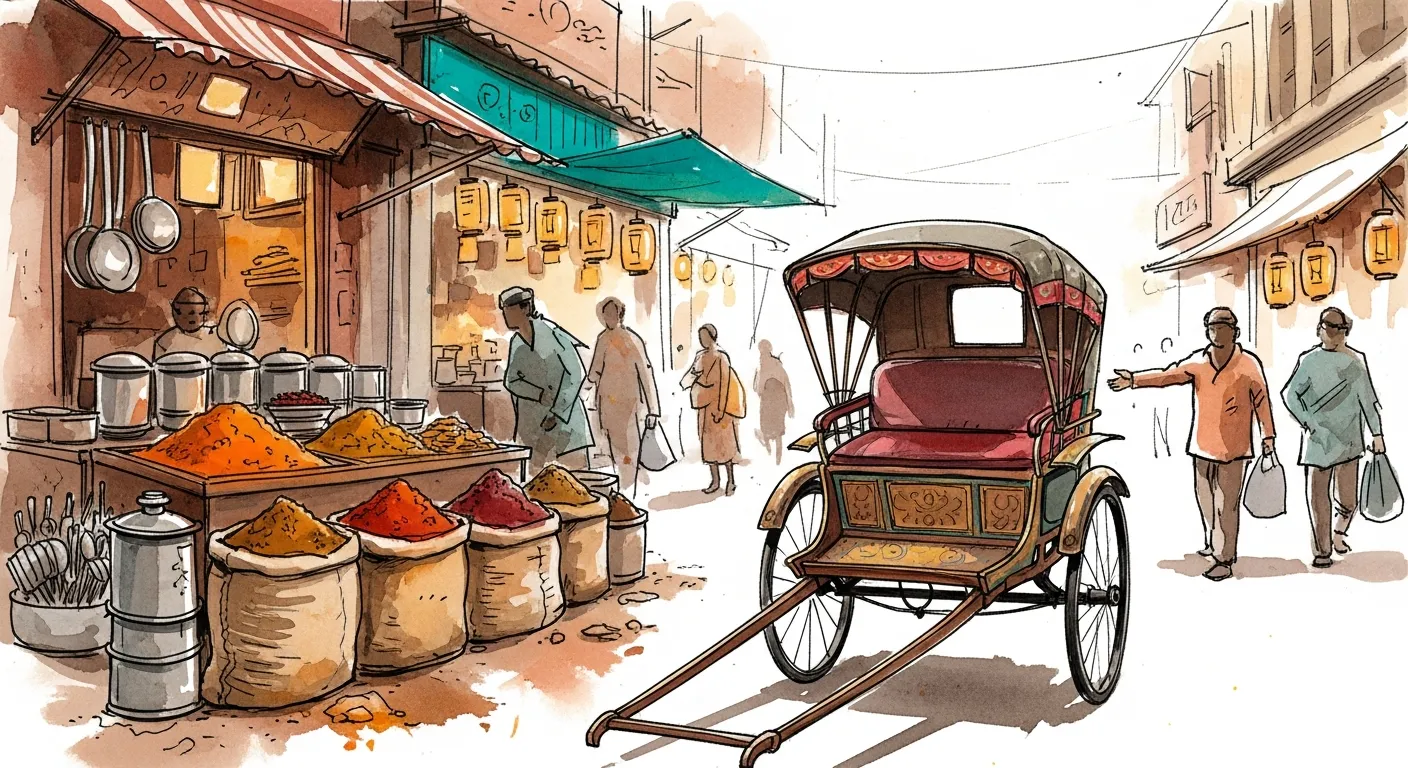
In 1879, a Japanese Methodist missionary named Jonathan Goble built a wheeled carriage to ferry his invalid wife around Yokohama. He called it jinrikisha. Man-power-vehicle. The design was crude. A wooden seat, two large wheels, two shafts, and a man between the shafts. Within twenty years it had spread from Tokyo to Singapore to Rangoon to Calcutta to Bombay, carried along the same shipping lanes that moved opium and cotton.
By 1920, there were thousands of hand-pulled rickshaws in Bombay, most of them concentrated in the lanes around Bhendi Bazaar, Null Bazaar, and Mohammed Ali Road. The pullers were largely migrants from the United Provinces and Bihar. They slept under the carriages they ran between. They ate twice a day at the canteens that had set up shop on the same lanes they worked.
Then Morarji Desai happened.
THE BAN THAT EMPTIED THE CANTEENS
In 1947, Morarji Desai, then Home Minister of the Bombay State, moved to ban the hand-pulled rickshaw on grounds of human dignity. Bombay became the first Indian city to outlaw the trade. Calcutta kept its rickshaws. So did Rangoon, briefly. Bombay did not.
The pullers did not vanish overnight. Some moved to cycle rickshaws. Some moved to handcarts. Some went back to Bihar. A few stayed and switched to loading work at the docks. But the daily geometry of the lane, the man who ran between two shafts and stopped at the same canteen at 11am and 8pm for the same plate of dal and rice, that geometry ended in the late 1940s.
The canteens stayed.
This is the part nobody talks about. A restaurant does not close the day its customer disappears. It closes thirty, fifty, seventy years later, in a quiet arithmetic nobody writes down.
WHAT THE LANE USED TO EAT
The puller's meal was specific. He needed calories he could carry through a twelve-hour shift. He needed protein cheap enough to afford on a daily wage of four annas. He needed food hot enough to eat fast and salty enough to replace what he had sweated out between Crawford Market and Pydhonie.
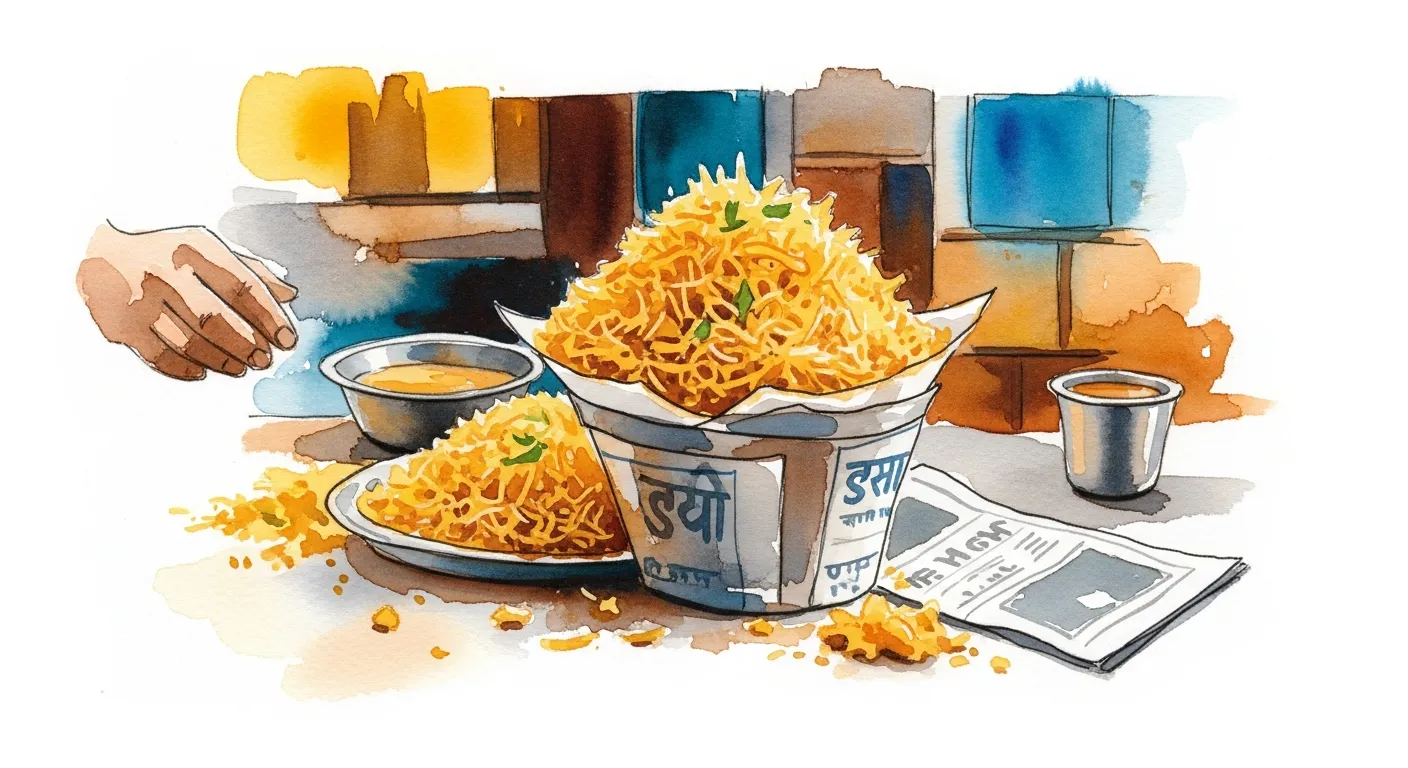
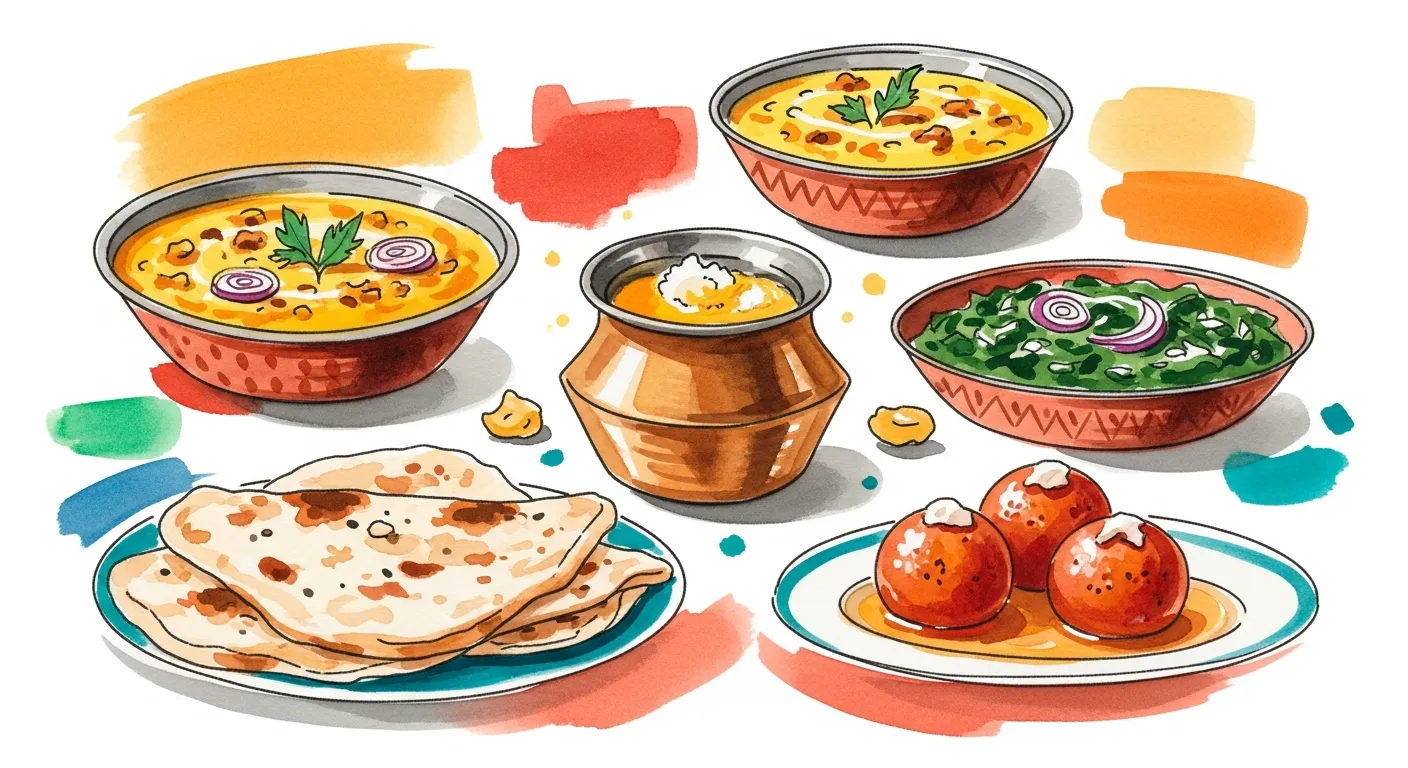
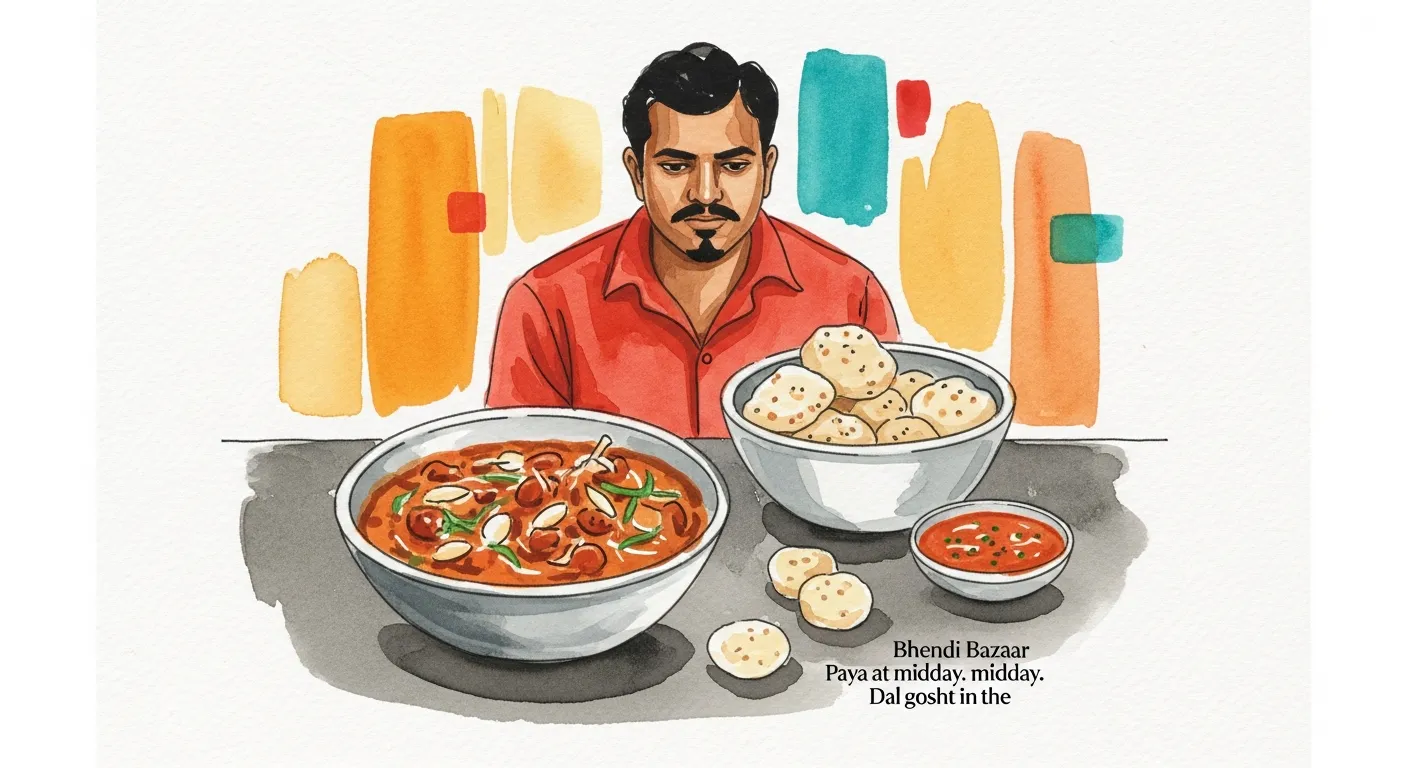
The canteens of Bhendi Bazaar built their menus around this man. Nihari at dawn, slow-cooked overnight on a low flame, served with khameeri roti thick enough to soak. Paya at midday. Dal gosht in the evening. The portions were large. The prices were small. The seating was a wooden bench. The customer did not linger because he could not afford to.
This was not Bohri food. This was not the elaborate thaal of the community that owned the lanes. This was the food of the men who worked the lanes for the community. Two different kitchens. Two different economies. Sharing one postcode.
The Bohri thaal survived because the Bohri community survived. The puller's canteen survived on momentum, on regulars, on the slow shift from rickshaw pullers to handcart men to mathadi workers to the loaders who still move sacks of rice through Null Bazaar at 5am.
Then the redevelopment started.
The restaurant model assumes a customer base that renews itself. Bhendi Bazaar's labour economy stopped renewing in 1948.
THE TRUST THAT REDREW THE LANES
In 2009, the Saifee Burhani Upliftment Trust began acquiring properties across 16.5 acres of Bhendi Bazaar, with a plan to demolish 250 buildings and rehouse 3,200 families and 1,250 shops in modern towers. The project, blessed by the Dawoodi Bohra spiritual leadership, was the largest cluster redevelopment of its kind in the country.
The legacy eateries were promised more carpet area and better infrastructure in the new towers. Tawakkal Sweets, Fakhri Farsan, Taj Ice Cream, Calcutta Fetawala, all institutions older than the trust acquiring their building, signed on.
The shopkeepers were not naive. They knew the bargain. A new shop with a proper kitchen, ventilation, plumbing that did not flood every monsoon, in exchange for the lane that had fed them for a hundred years.
What the bargain did not account for was the customer.
THE CUSTOMER THE PLAN FORGOT
A legacy eatery in Bhendi Bazaar has three customer bases, stacked on top of each other like sediment.
The oldest layer is the labour class. The descendants of the rickshaw pullers. The handcart men. The loaders. The hamals at the wholesale markets. The men who eat twice a day at a canteen because their kitchen is a footpath. This layer has been thinning for seventy-five years. It is now almost gone.
The middle layer is the residential Bohri community. The families who lived in the chawls above the shops, who sent a child down with a tiffin for dal chawal palidu, who knew the cook by name. The redevelopment is rehousing this layer into towers with their own kitchens, in apartments where the dining table is no longer fifty feet from the canteen counter.
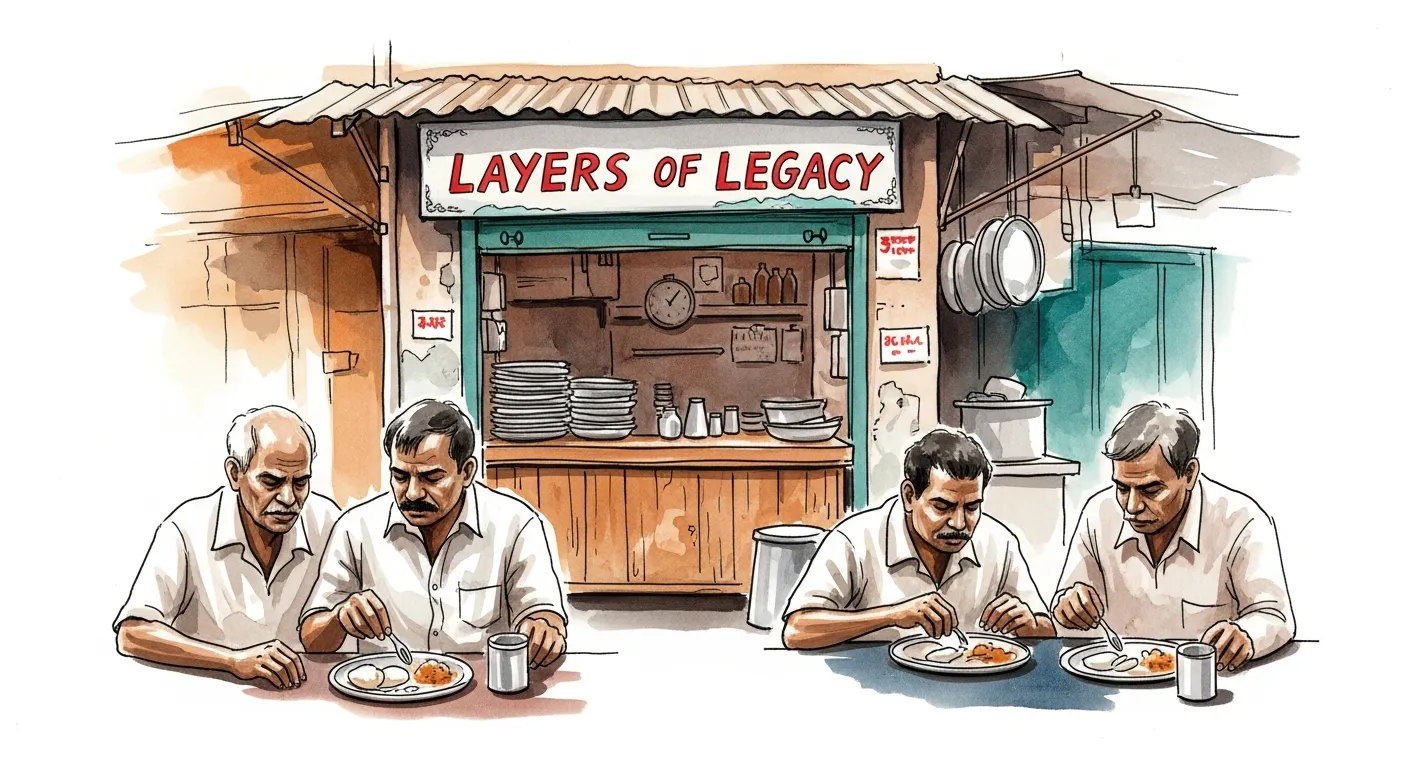
The top layer is the food tourist. The Instagram pilgrim. The man who drives in from Bandra during Ramzan for a plate of nalli nihari at midnight and a photograph next to the signboard. This layer is growing. It does not eat twice a day. It eats twice a year.
A shopkeeper at Calcutta Fetawala told the Dawoodi Bohras' own publication that business has become 'slightly slow' because of the movement of people, and that the shop has had to 'move ahead with time.' Move ahead with time is the polite phrase. The actual phrase is that the daily customer has been replaced by the seasonal one, and a restaurant built on daily customers cannot run on a seasonal calendar.
THE FOOD THAT CHANGED TO MATCH
Walk through Bohri Mohalla on a Saturday night in 2025. The bheja fry is now plated with a coriander garnish. The khichda has a portion size calibrated for a couple sharing. The nihari comes with a side of mint chutney that nobody in the lane has ever eaten with nihari. The menu boards are now in English first, Urdu second.
A resident posted on r/mumbai that the food in Bohri Mohalla has become 'designed for outsiders,' that the prices have climbed past what the locals can justify, and that the chaos of the food street on weekends has pushed the actual residents to eat at home or to drive to Mohammed Ali Road instead.
This is the erosion the redevelopment paperwork does not measure. The patron-eatery relationship in Bhendi Bazaar was not a transaction. It was a circuit. The cook knew which customer wanted his nihari with extra marrow. The customer knew which day the cook made paya from scratch and which day he stretched yesterday's stock. The waiter knew the puller's name, the loader's wage cycle, the family that ordered an extra roti when the eldest son was home from the Gulf.
A tower lobby with a card-swipe entry does not run that circuit. A tasting tourist with a 90-minute window does not run that circuit. The circuit ran on proximity and repetition, and the redevelopment has interrupted both.
Seventy-five years ago they lost the man between the shafts. Now they are losing the family in the chawl above the shop.
WHAT FAKHRI AND TAWAKKAL ARE DOING ABOUT IT
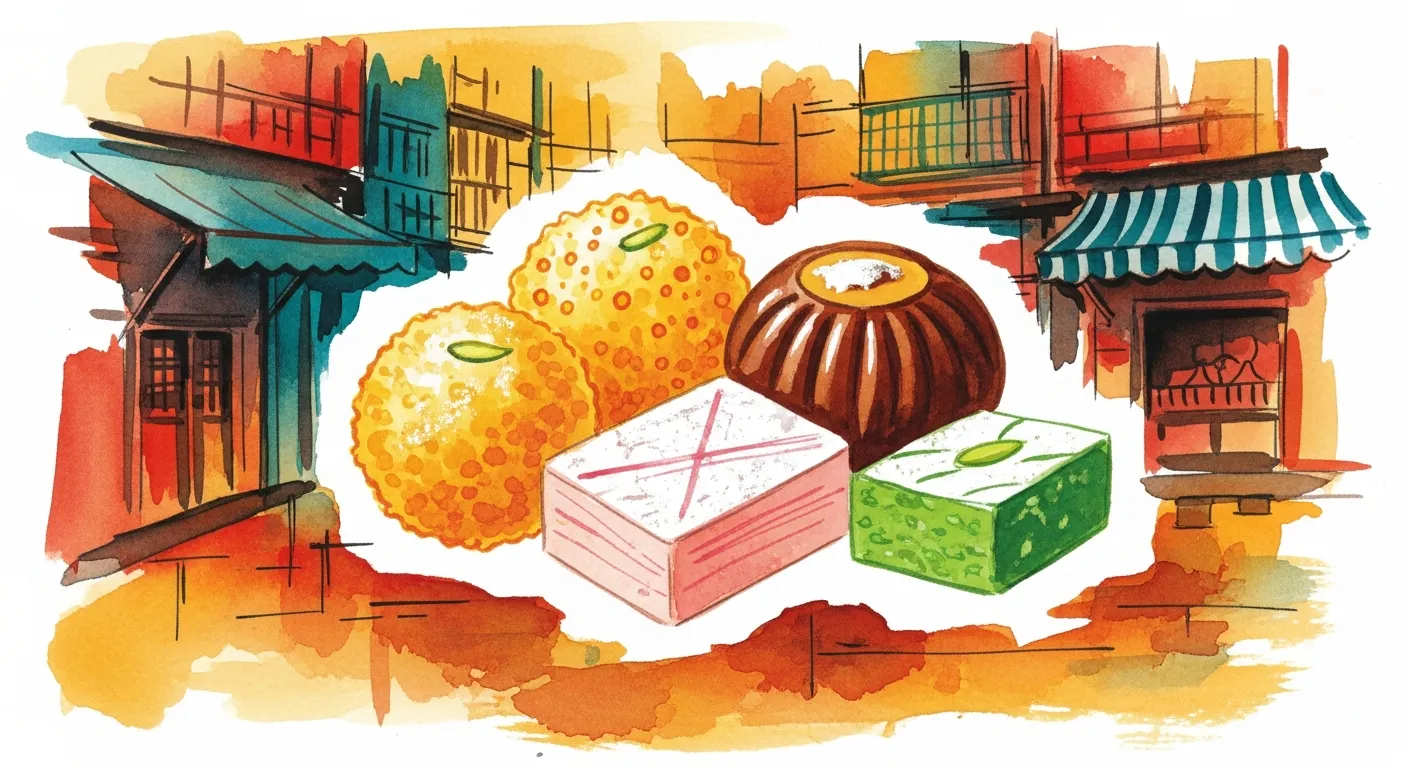
The legacy names are not sitting still. Tawakkal Sweets has expanded into online delivery and now ships mithai across the country. Fakhri Farsan has standardised its packaging and pushed into the gifting market. Taj Ice Cream has leaned into its Ramzan heritage and the queues that form on Mohammed Ali Road during the holy month.
These are adaptations. They are also concessions. The shop that once made one batch of malai khaja a day, sold by 4pm to the families on its lane, now makes a hundred batches a day, sold to a courier who does not know what malai khaja is. The recipe survives. The relationship does not.
A cuisine can outlive its original customer. It just becomes a different cuisine in the process.
THE LANE AT 5AM
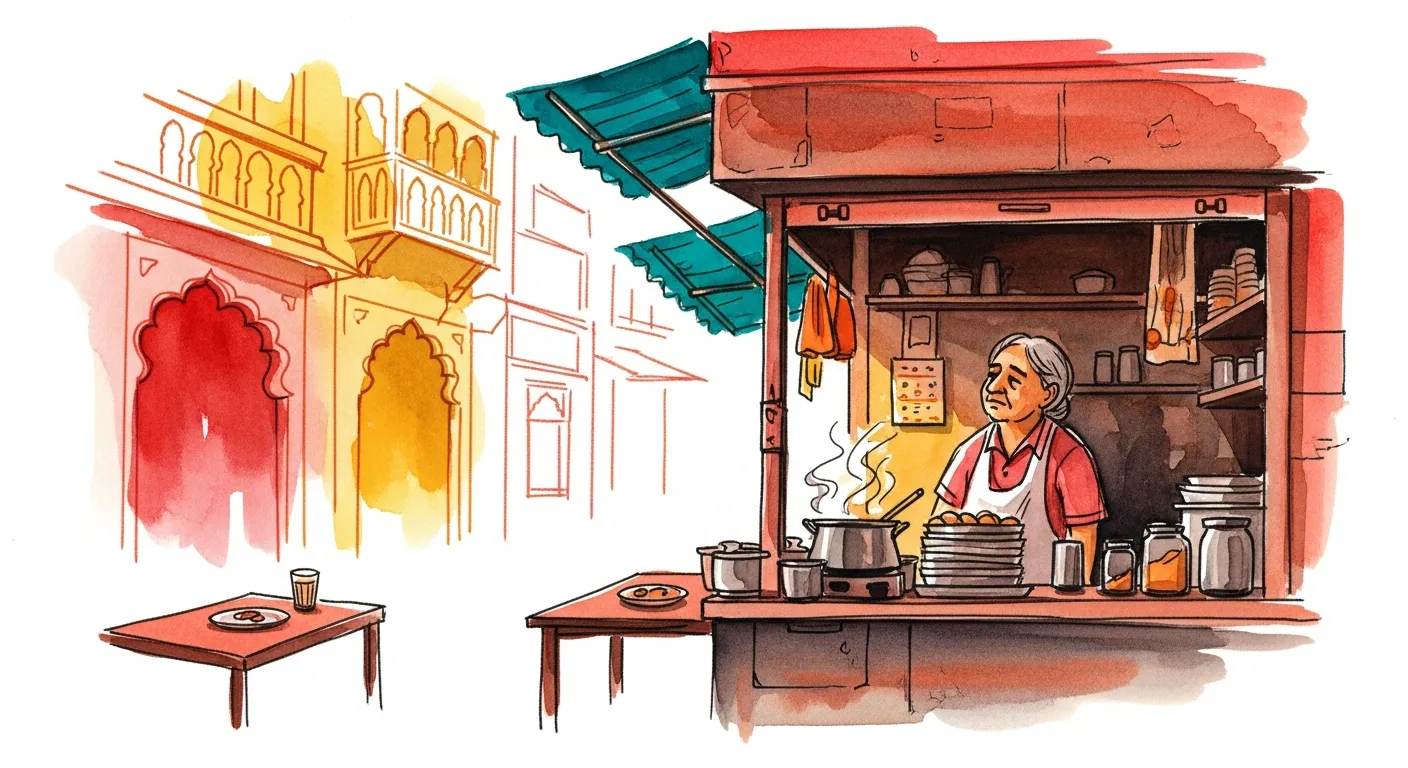
There is still a lane in Bhendi Bazaar where, if you walk through it at 5am before the redevelopment hoardings catch the light, you can see the older economy at work. The hamals carrying sacks of rice from a wholesale godown to a waiting Tempo. A canteen with the shutter half-up, serving nihari to four men who will eat in eight minutes and be back on the lane in nine.
The man between the shafts has been gone since 1948. The man with the sack on his head is still here. The canteen does not care which one walks in. It cares that one of them does.
Morarji Desai banned the carriage. He did not ban the appetite. The appetite has held on, in smaller and smaller numbers, in the lanes that the new towers have not yet reached.
The towers will reach them. The appetite will move. The canteen will follow, or it will not.
The man between the shafts is not coming back. The plate he ordered still is.
Field Notes
Quick reference1947. Morarji Desai outlaws the hand-pulled rickshaw in Bombay on grounds of human dignity. Calcutta keeps theirs for another fifty years.
16.5 acres. 250 buildings. 3,200 families. 1,250 shops. The Saifee Burhani Upliftment Trust project is the largest cluster redevelopment in India.
Nihari at dawn. Paya at midday. Dal gosht at evening. The puller's menu was built around a twelve-hour shift, not a dining occasion.
Jinrikisha. Japanese. Man-power-vehicle. Jonathan Goble built the first one in Yokohama in 1879 to carry his invalid wife. Within twenty years it was in Bombay.
The rickshaw travelled the same shipping lanes as opium and cotton. Tokyo to Singapore to Rangoon to Calcutta to Bombay. One design. One generation.
Get the next story first
Join the Bhukkads. Free, no spam, just stories.
Takes 30 seconds.