The Thaal That Refuses to Become a Souvenir
Bhendi Bazaar is being rebuilt in glass and steel. The Bohri kitchens inside it are being rebuilt in sushi and khow suey. The thaal in the middle has not moved.
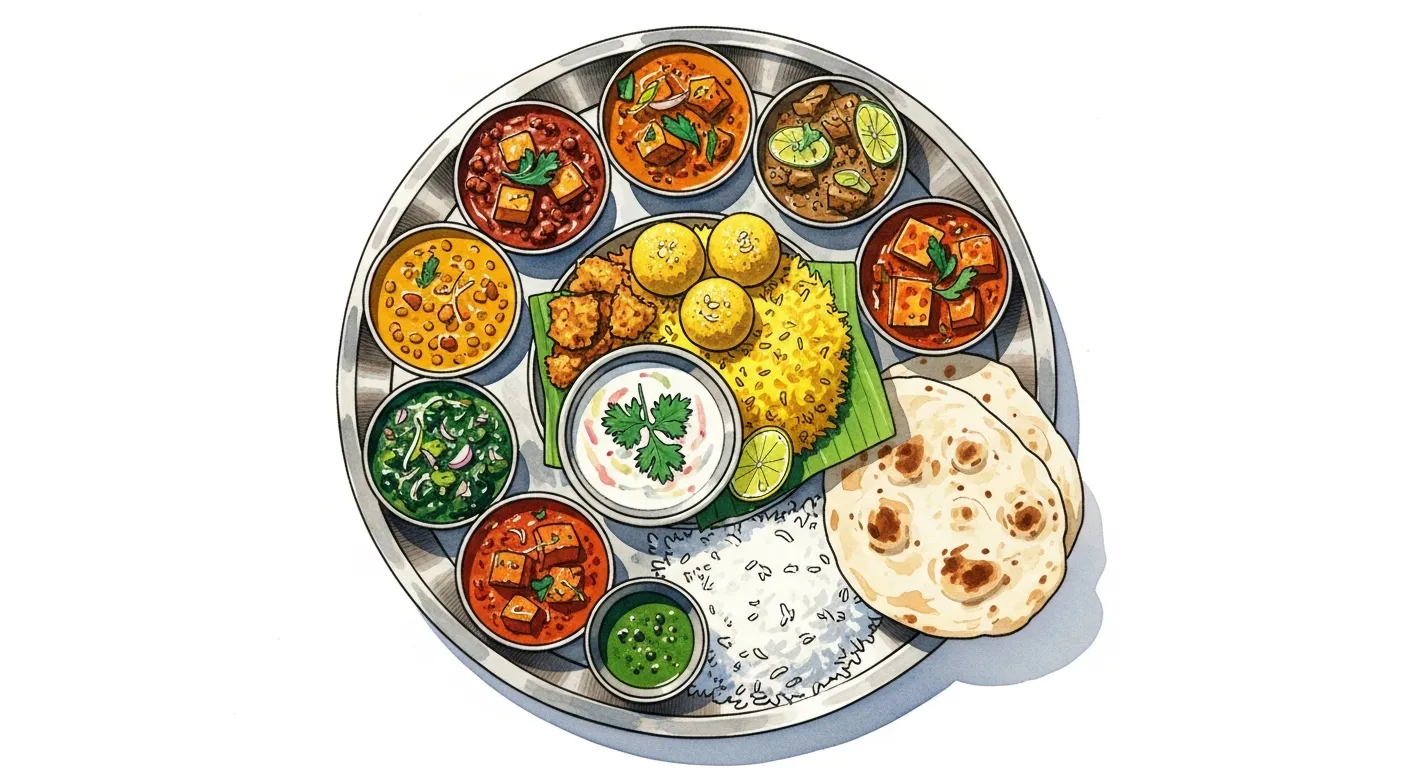
Generated by Imagen 4
In 1539, a Dawoodi Bohra missionary named Yusuf Najmuddin sailed from Yemen to Gujarat and brought with him a community structure that was, at its centre, a meal. Not a doctrine. Not a flag. A meal. Eight people seated around a metal platter large enough to be a small table, eating from a single surface, beginning with something sweet, ending with something sweet, with the savoury work of the meal sandwiched between the mithas like a secret.
Four hundred and eighty seven years later, that same platter sits on the floor of a flat in a tower that did not exist five years ago, in a neighbourhood that is being demolished and rebuilt around it, and the people sitting around it are still beginning with the sweet.
The building is new. The thaal is not.
THE 16.5 ACRES THAT ARE BEING REWRITTEN
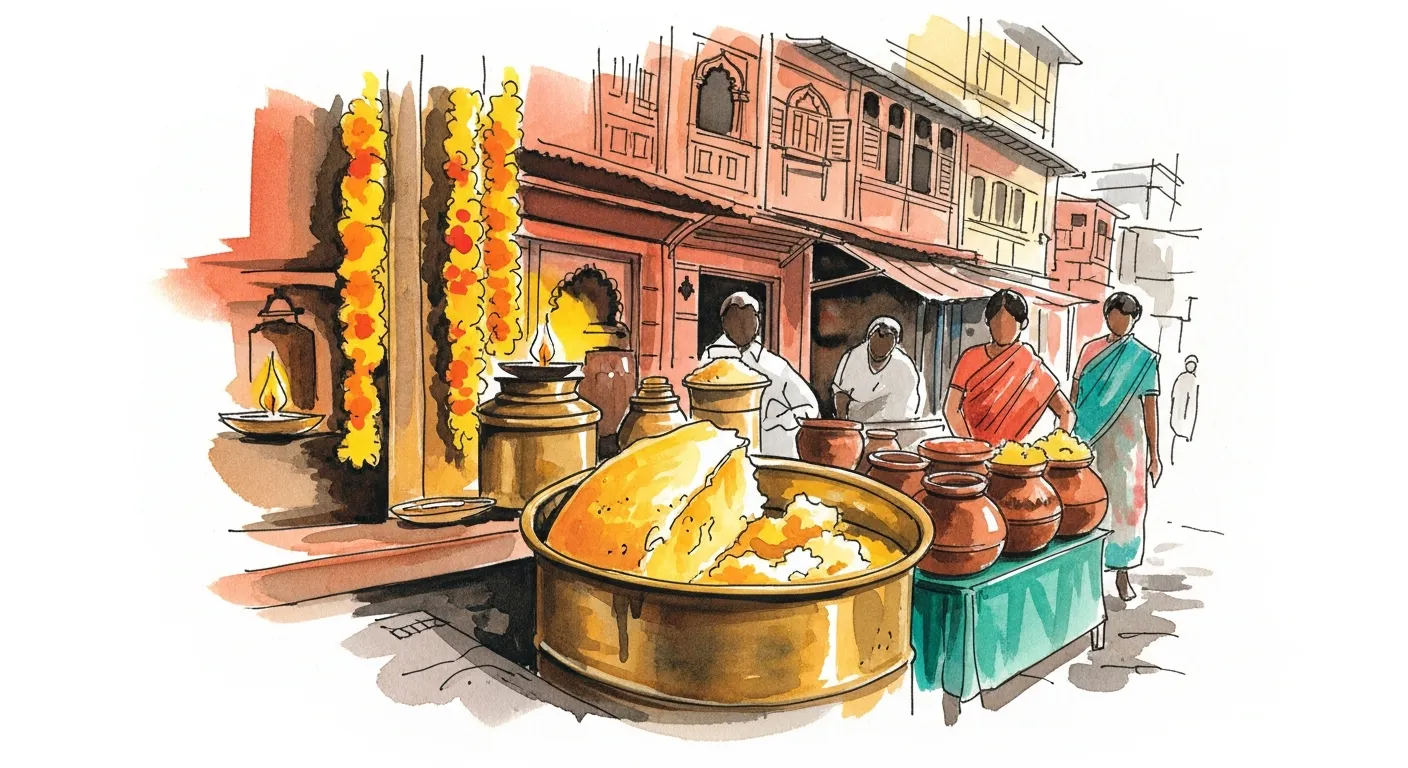
Bhendi Bazaar is, by any reasonable measure, one of the most ambitious urban rewrites this city has attempted. The Saifee Burhani Upliftment Trust began the project in 2009, with a stated plan to rehabilitate 3,200 families and 1,250 shops across 16.5 acres. The old chawls, some of them over a century old, are being replaced by towers. The mohallas, the lanes that have a name and a character and a vegetable seller who knows your mother, are being redrawn as plots.
The Trust calls this upliftment. The residents who have moved into the new flats are, by most accounts, glad to have lifts and proper plumbing. The residents who are still waiting in transit accommodation are less glad. Both of them, when you ask, will say the same sentence about the food.
The food is not the same.
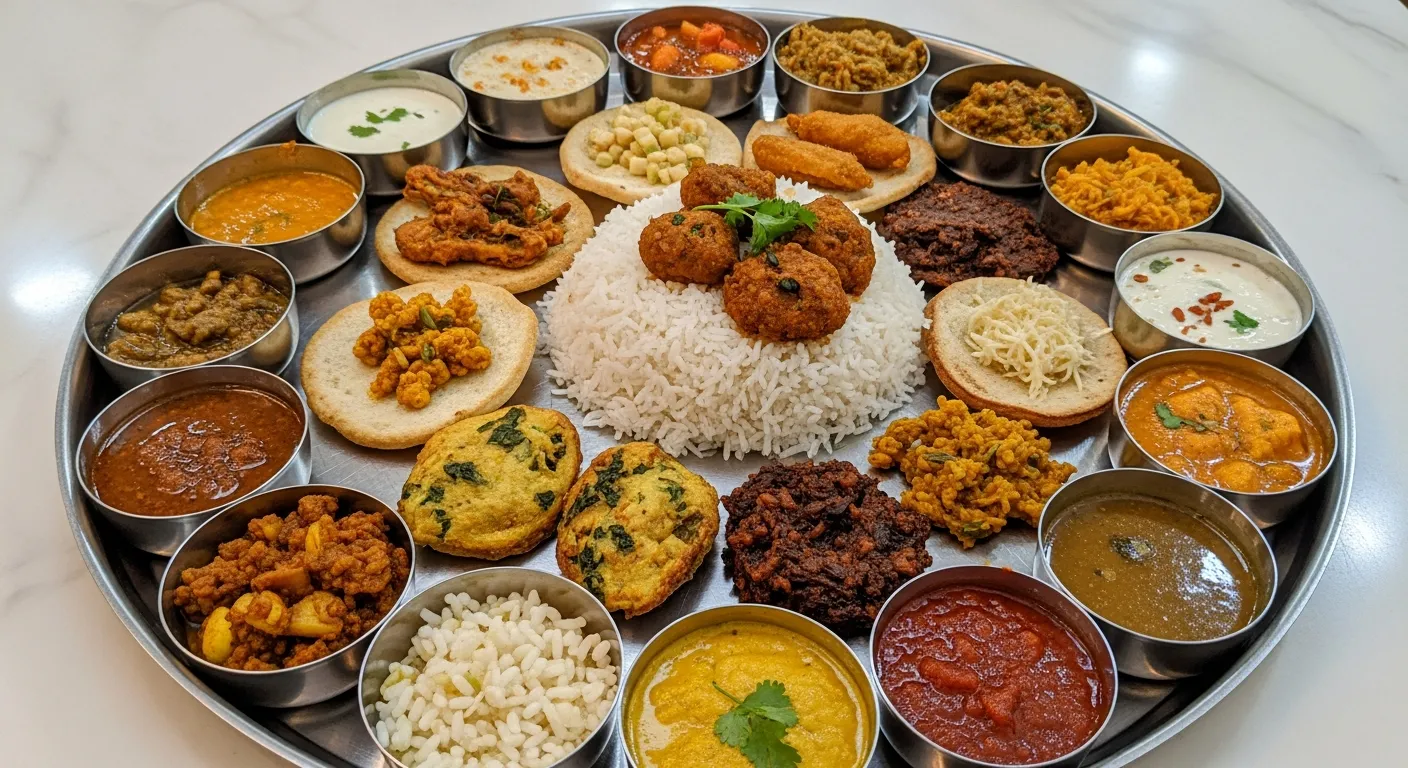
It is not that the recipes have changed. It is that the room around the recipes has changed. A thaal needs a floor. A floor needs a flat. A flat needs neighbours who will walk in without knocking. When the lift requires a keycard, the eighth seat at the platter takes longer to fill.
THE EIGHT WHO EAT TOGETHER
Nobody talks about the geometry of the thaal.
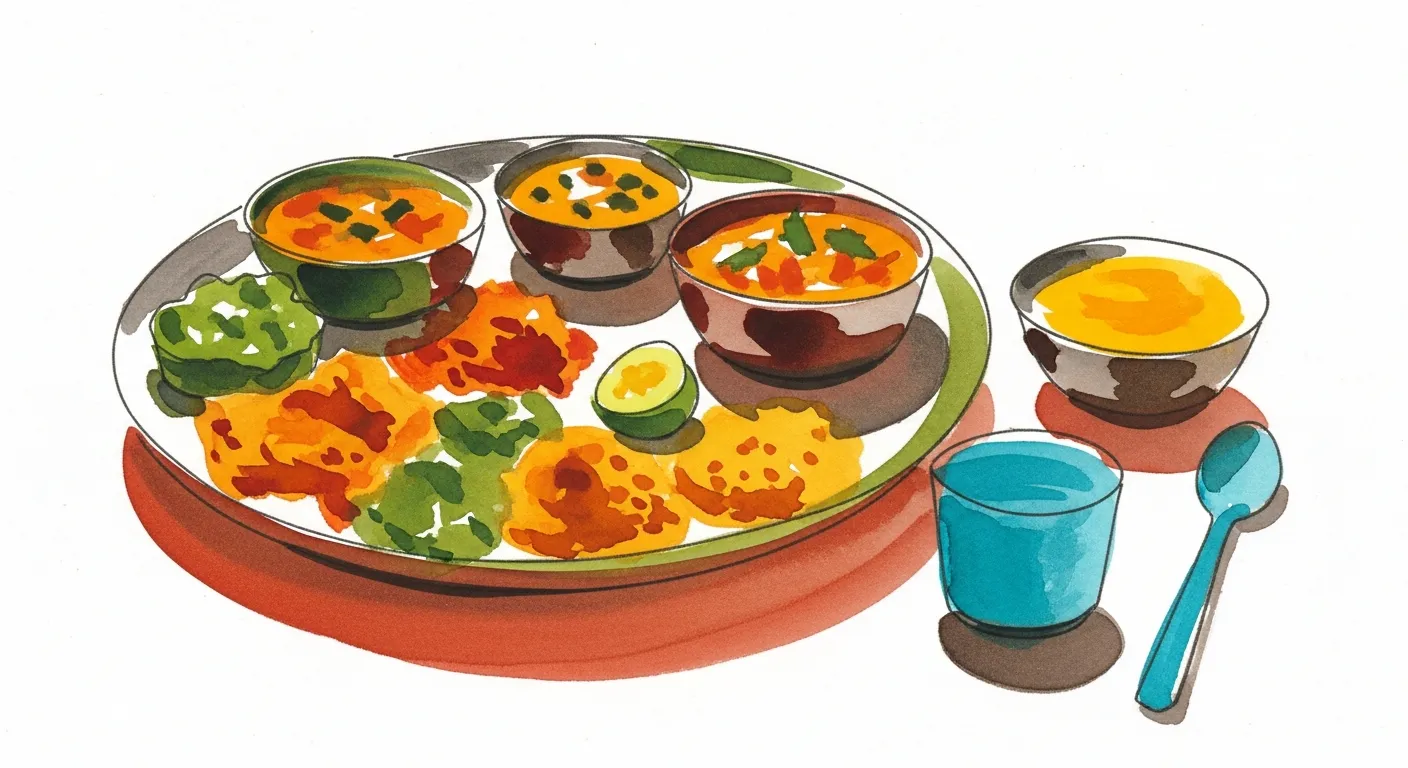
The platter is round. Eight people sit around it. Not seven. Not nine. The number is structural, not decorative. The food is placed at the centre, and the rhythm of the meal, what the Bohris call the movement from mithas to kharas and back to mithas, is the part the community considers non-negotiable. You start with a spoon of something sweet. You move through the savoury courses. You finish with something sweet. The savoury can be anything. The structure cannot.
This is the part the caterers understand. The dishes can move. The frame cannot.
Which is why, in the last decade, you will find vol-au-vents on a Bohri thaal. You will find khow suey, the Burmese coconut noodle bowl that arrived in Indian kitchens through Kolkata's Burma returnees. You will find sushi. You will find a Malaysian red curry sitting next to a kaari chawal that has been cooked the same way since the 1920s. The Mint piece traced this evolution: caterers in Bhendi Bazaar are folding global cuisines into the thaal to keep the younger generation, the ones who studied in London and worked in Dubai, sitting on the floor.
The dish travels. The thaal does not.
THE SHOPS THAT REMEMBER
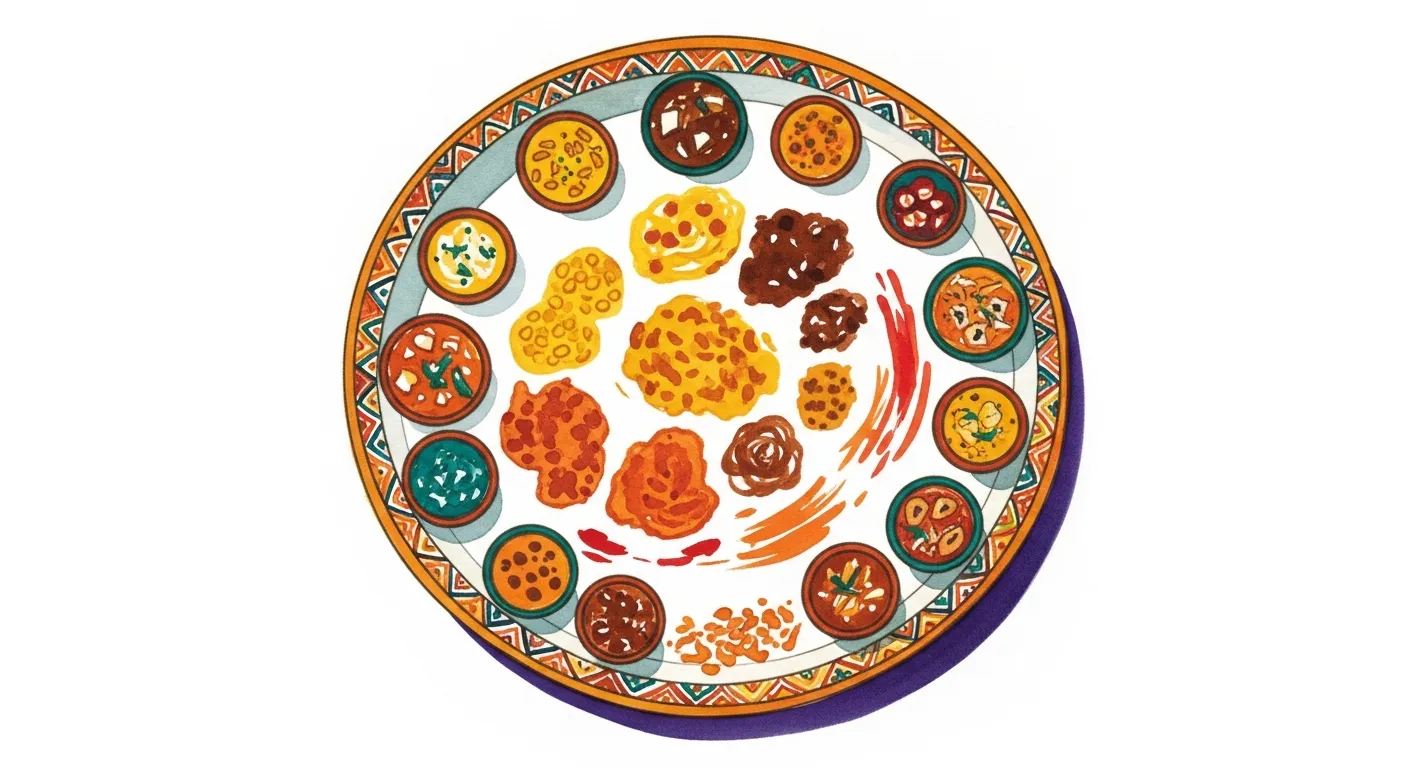
Taj Ice Cream has been on the corner of Bohri Mohalla since 1887. That is one hundred and thirty eight years of churning fruit and cream by hand, in wooden barrels packed with ice and salt, in a lane that has been renamed twice and rebuilt around it more times than the family can count. Noor Sweets has been making mawa jalebis since 1922. Surti Bara Handi, the goat trotter place, has been on the same patch since before Independence.
These are not restaurants. They are, as the Indulge piece put it, keepers of memories. The Taj family still grates the mango themselves. The man at Noor still pulls the jalebi batter through his fingers. Nobody has written down the recipes because the recipes are in the hands.
The redevelopment plan, by the Trust's own description, accommodates these shops. They get new premises. They get cleaner kitchens. They get, in some cases, the first proper exhaust hood they have ever owned. What they do not get back is the lane outside. The lane was where the queue formed. The lane was where the regulars stood and gossiped while the malai kulfi set. The lane was where you learned that the man who ran the shop also fed three families on his own street and never sent a bill.
A new shopfront on a new road is not the same shop. It is the same recipe in a different room.
THE RAMZAN THAT SOCIAL MEDIA ATE
And then there is March. Every year.
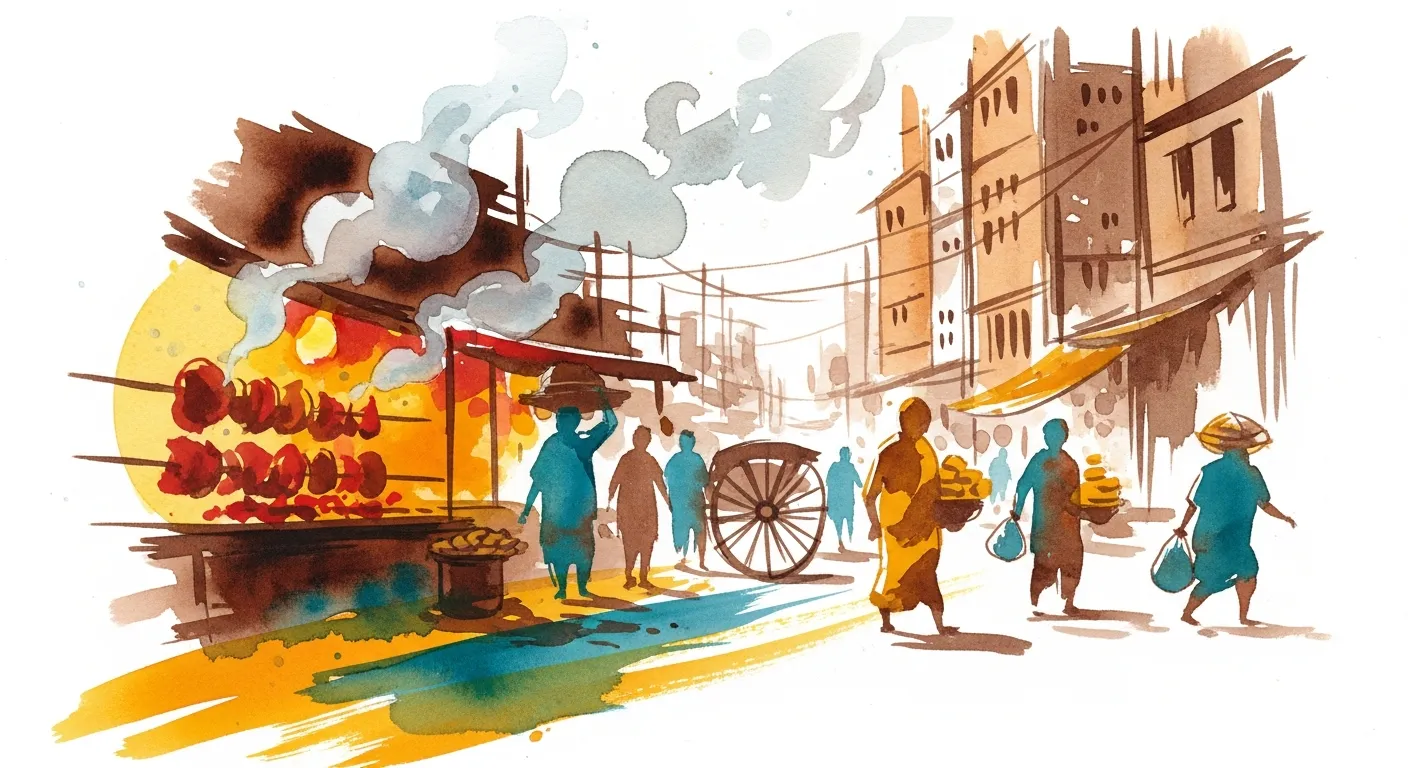
For three decades, Bohri Mohalla during Ramzan was a local affair. The lanes filled up after Iftar, the smell of seekh and bheja fry hung over the corner, and the people eating were, mostly, the people who lived there. Then the food bloggers found it. Then the reels found it. Then the queues started forming by 7 PM and stretching past midnight.
A resident wrote about this on Reddit last year, and the post landed harder than the algorithm expected. The lanes are full of food designed for outsiders now, they wrote. The malpua got bigger and sweeter for the camera. The prices doubled. The litter tripled. The construction dust from the Trust's ongoing work mixed with the smoke from the grills and settled on everything. What used to be a neighbourhood eating together became a neighbourhood feeding a queue.
This is not a complaint about visitors. The Bohris are, by every account, among the most welcoming hosts in this city. The complaint is about scale. A mohalla can host a hundred guests. It cannot host ten thousand without changing what it serves them.
The food that travels well on Instagram is rarely the food the family eats at home.
WHAT THE THAAL KNOWS
Here is the thing the redevelopment plan and the social media wave have, between them, accidentally clarified.
The Bohri thaal was never about the building it sat in. It was never about the lane outside. It was about eight people, one platter, and a rhythm that begins and ends with something sweet. You can move it to the 19th floor of a new tower. You can put sushi on it. You can let a food walk photograph it. None of that touches the centre.
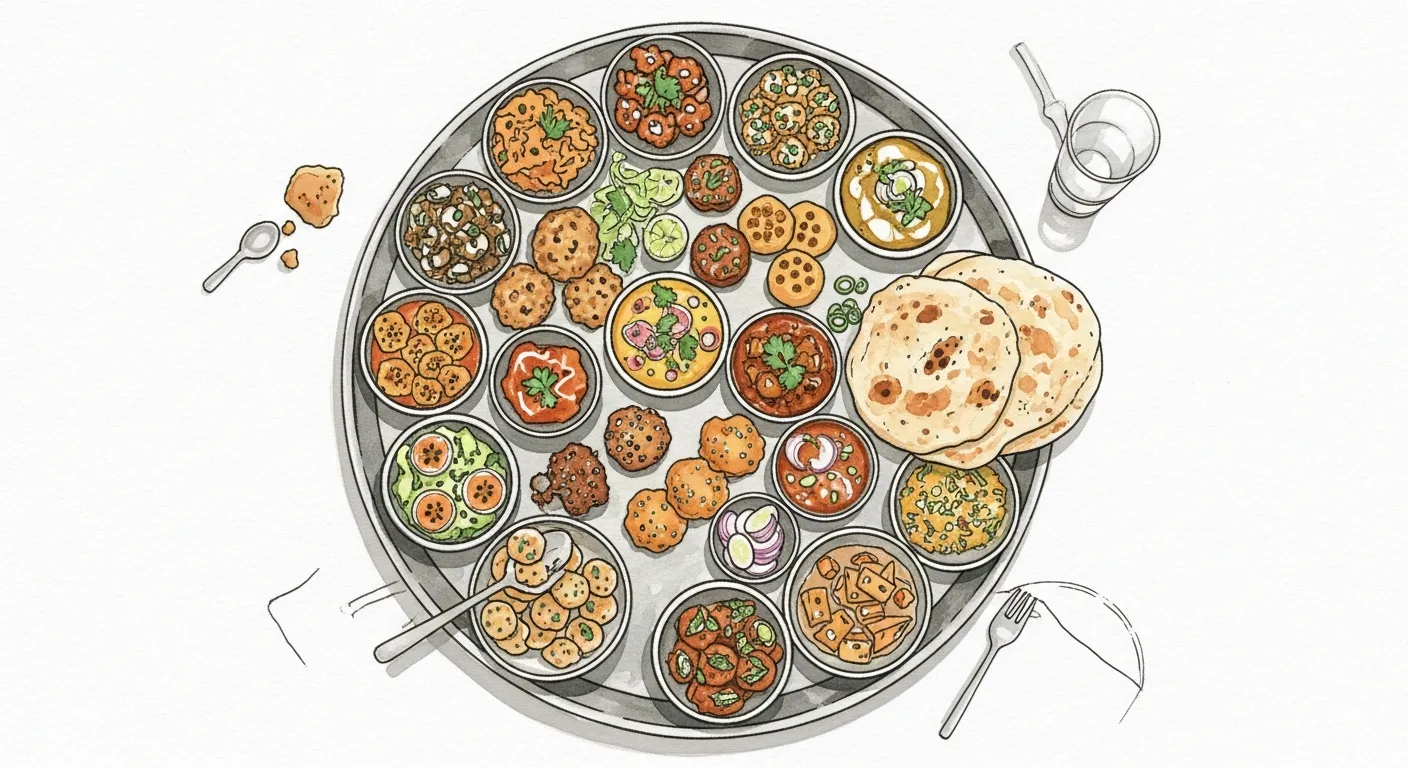
The centre is the geometry. Eight people. One surface. No individual plates. No my-portion and your-portion. The structural refusal of the modern restaurant's most basic assumption, which is that you came to eat alone in the company of others.
A Bohri thaal is the opposite premise. You came to eat together, and the food is the proof.
This is why caterers can add khow suey to the menu and the elders nod. The dish is new. The act is ancient.
THE CALLBACK
The writers and the food walk operators and the cultural preservation committees keep talking about documentation. Write the recipes down. Film the grandmothers. Map the shops. All of this is useful. All of this is also, in some quiet way, beside the point.
The Bohri thaal is not preserved by writing it down. It is preserved by sitting down. Eight people, one platter, the sweet first, the savoury middle, the sweet again at the end. The towers will keep going up. The lanes will keep being redrawn. The kaari chawal will, on some Friday evening in 2040, be served next to a dish that has not been invented yet.
The eight chairs will still be there.
The sweet will still come first.
Field Notes
Quick referenceTaj Ice Cream has been hand-churning fruit and cream in Bohri Mohalla since 1887. That is 138 years on the same corner.
Every Bohri thaal begins with something sweet and ends with something sweet. The savoury in between can be anything. The frame cannot move.
The Saifee Burhani Upliftment Trust is redeveloping 16.5 acres of Bhendi Bazaar, rehabilitating 3,200 families and 1,250 shops. Started in 2009.
Eight. Not seven. Not nine. The geometry of the Bohri thaal is structural, not decorative.
Noor Sweets has been pulling mawa jalebi batter through the same fingers for over a century. The recipe has not been written down.
Get the next story first
Join the Bhukkads. Free, no spam, just stories.
Takes 30 seconds.