The Sadya Holds The Line
Coconut prices tripled. Matta rice doubled. The Malayali home kitchens of Matunga did not flinch.
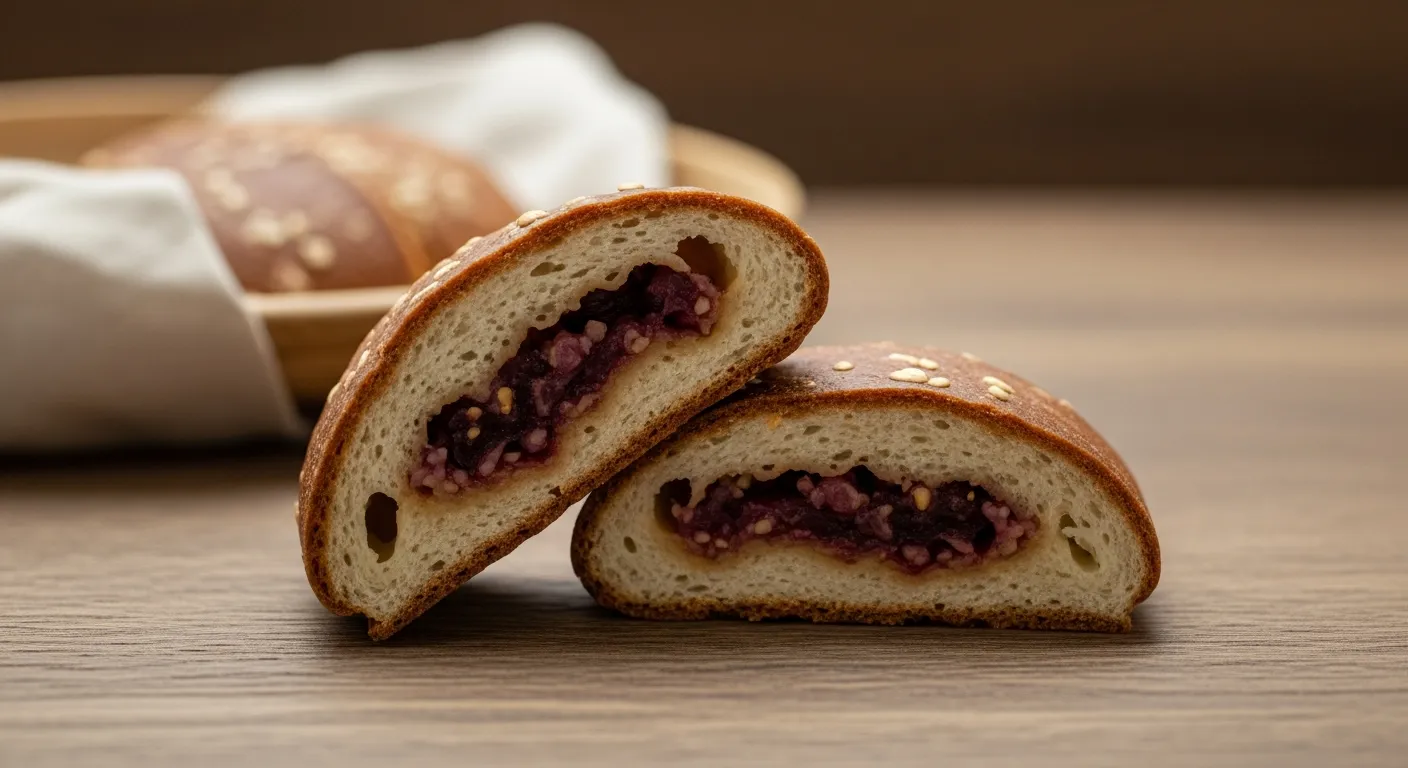
Generated by Imagen 4
In 1924, the Bombay Improvement Trust finished laying out a grid of bungalows and chawls south of Dadar station, and the South Indians arrived to fill them. Tamil Brahmins came first, drawn by the new typing schools and railway jobs. Then the Iyers, the Iyengars, the Palakkad Brahmins. By the 1940s, Matunga had a Madras-style coffee culture, four temples, and a vegetable market that stocked curry leaves before any other neighbourhood in the city. The Malayalis came on the next train.
They opened tiffin services out of kitchens. They cooked for the bachelors who came up from Kochi and Thrissur to work the docks, the banks, the typewriter showrooms. They sent home money orders and recipes in equal measure. A hundred years later, the grandchildren of those women are still cooking. The kitchens are smaller. The clientele is wider. And the coconut, the foundational ingredient of every dish they make, now costs three times what it did last September.
THE COCONUT BECAME A LUXURY
Kerala has a coconut problem. Coconut prices in the state surged from roughly Rs 25 per nut to Rs 77 in under a year, a jump of over 200 percent. Coconut oil, the fat that defines almost everything a Malayali kitchen produces, climbed from around Rs 200 a litre to between Rs 400 and Rs 750 within six months. That is not a price hike. That is a rewrite of the economics of an entire cuisine.
A Sadya for ten people uses roughly four whole coconuts, half a litre of coconut oil, and freshly grated coconut in at least six of the twenty-four items on the leaf. Do the math at last year's prices. Then do it again at this year's. The same meal that cost a home chef in Matunga around Rs 180 in coconut alone now costs Rs 540 before she has touched the Matta rice.
Which, by the way, has nearly doubled in retail price over the past decade, with the sharpest spikes in the last two years.

The Sadya is twenty-four dishes on a banana leaf. Eighteen of them depend on coconut. Nobody is substituting.
THE WOMEN WHO RUN THE KITCHENS
Nobody talks about the home chefs.
The restaurants get the press. Anand Bhavan on Bhandarkar Road, Cafe Madras on the corner, Ram Ashraya in King's Circle, all of them get written about every Onam by every food editor in the city. The home kitchens, the women cooking out of two-burner stoves in Matunga and Chembur and Mulund, supplying Onam Sadyas to a thousand homes across the western suburbs each September, work somewhere else. Quieter. By WhatsApp. By word of mouth that travels through three generations of Malayali aunties before it reaches you.
These are the people absorbing the coconut crisis. Not the restaurants, which can raise menu prices and write it off as inflation. The home chef who has been charging Rs 450 for a Sadya box for the last four years cannot suddenly charge Rs 700. Her customers are the same aunties who told her customers about her. The economics of the home kitchen runs on trust, not margin.
Services like FoodiaQ, delivering homemade Kerala food across Mumbai, explicitly promise fresh ingredients and traditional methods. That promise is the entire product. The moment you switch to copra-based oil instead of fresh-pressed, the moment you use desiccated coconut instead of grated, the aunties know. The aunties always know.
THE TECHNIQUES THAT WILL NOT SHORTEN
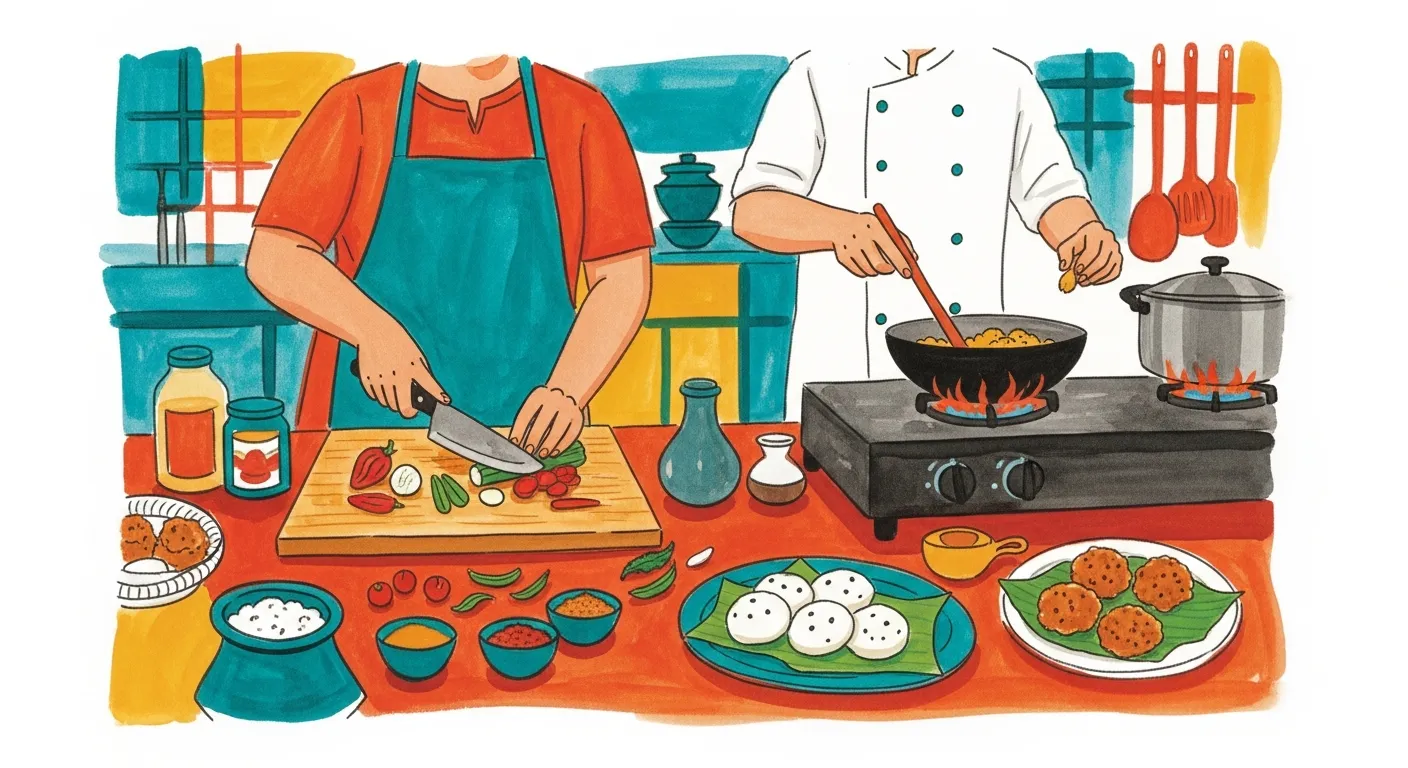
A proper aviyal takes ninety minutes. Not because anyone wants it to. Because the vegetables, the ash gourd, the yam, the raw banana, the drumstick, the carrot, all cook at different rates, and they go in at different times, and the coconut-cumin-green chilli paste gets ground fresh on a stone, not in a mixer, because the mixer heats the coconut and changes the flavour.
The olan needs the ash gourd cut into specific rectangles. The kalan needs yoghurt that has been souring for exactly the right number of days. The parippu needs the moong dal roasted before it is boiled. The pachadi needs the mustard tempered separately from the coconut paste, then folded in at the end so the mustard does not bleed.
Traditional Kerala cooking, especially for Sadya, involves spices ground fresh and coconut grated by hand, a commitment that has not diminished with modernity. Read that sentence again. It has not diminished. In an era where every other cuisine has surrendered to the food processor, the Malayali home kitchen still grinds masala on an ammikkallu because the texture is different and the women cooking know it is different.
This is not nostalgia. This is engineering.
THE WIDER MATH
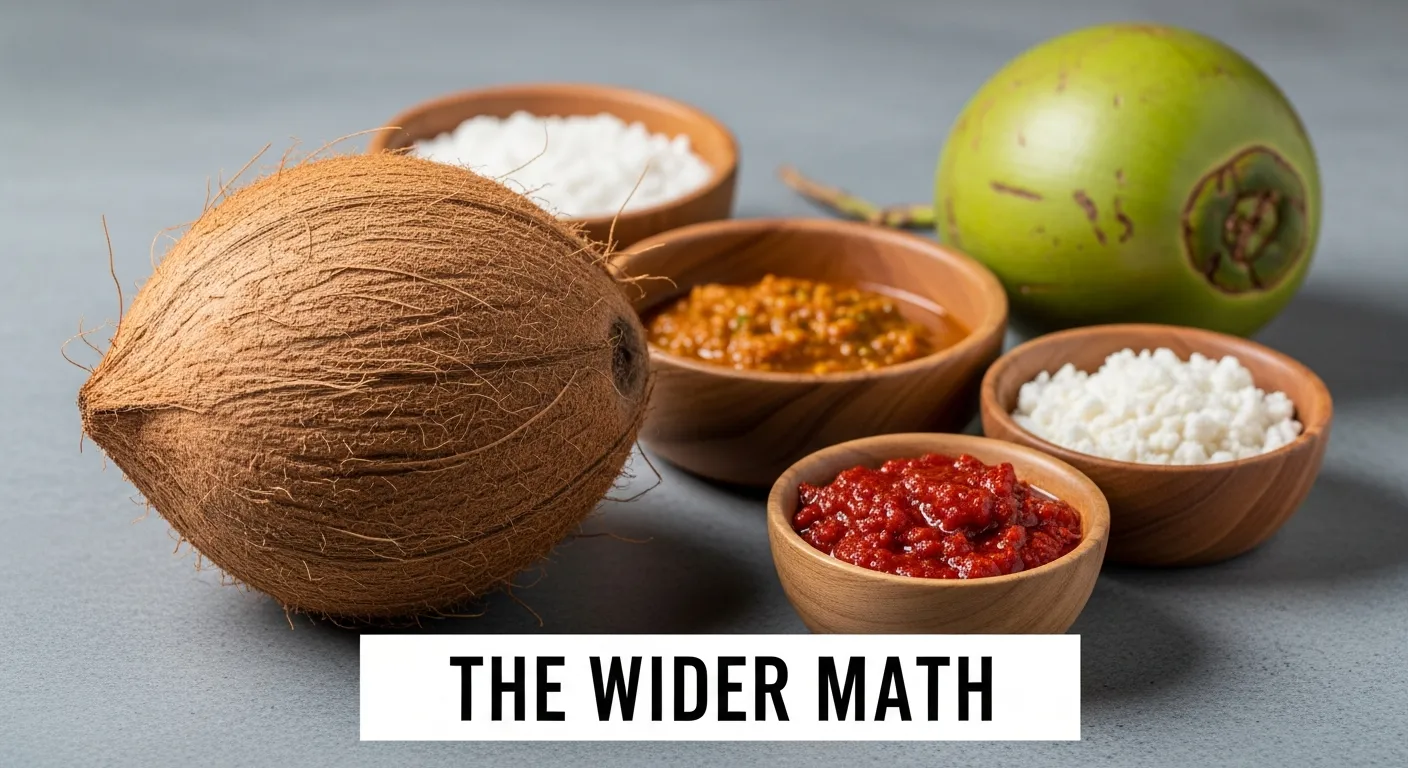
The coconut is the headline. Everything else is the fine print, and the fine print is also expensive.
The cost of a home-cooked vegetarian thali in India rose 5 percent year-on-year in May 2026, with tomatoes up 57 percent to Rs 36 per kg, alongside higher LPG and edible oil prices. For a Sadya cook, the tomato barely matters. The LPG matters enormously. A Sadya for fifty people, the standard wedding or Onam order, runs the burner for fourteen hours straight. One commercial cylinder, sometimes two.
Then there is the curry leaf, which has to be fresh, not dried. The kaya, the green plantain, which has to come up from the Crawford Market wholesalers who get it from Kerala twice a week. The jaggery for the payasam, which has to be the dark Palakkad variety, not the lighter Maharashtrian gul. The Matta rice itself, the parboiled red rice that is non-negotiable on the leaf, sourced from specific mills in Palakkad and Thrissur.
Kerala imports most of its own food. Mumbai imports Kerala. Every link in that chain has gotten more expensive in the last eighteen months.
THE GENERATION QUESTION
The woman cooking the Sadya in Matunga today is, on average, in her late fifties. Her mother taught her. Her grandmother taught her mother. The chain is four generations deep in some families, going back to the first Malayali settlers in the 1930s.
Her daughter works in IT in Powai. Her son is in Dubai. Neither of them is going to take over the tiffin service.
This is the quiet conversation happening in every Malayali home kitchen in the city. Not the price of coconut. The succession. Who grinds the masala when the woman who knows how to grind it decides she is done.
Some of the daughters are coming back to it. Not as a profession. As a weekend project, a once-a-year Onam catering effort that pays for itself and keeps the recipes alive. A few of them are putting the operation on Instagram, taking orders by DM, delivering through Dunzo. The format is changing. The aviyal is not.
The recipes were written down by nobody. They were rehearsed by everybody.
WHAT THE LEAF STILL HOLDS
On the morning of Thiruvonam, a Malayali home cook in Matunga wakes at four. The coconut was grated the night before. The vegetables for the aviyal were cut at eleven. The Matta rice has been soaking. The banana leaf, ordered from the Tamil vendor at the Matunga market who has been supplying her family since 1987, was delivered at six.
By noon, twenty-four items will be on each leaf, in the precise order that custom dictates. Pickles and pappadam on the top left. Thoran and aviyal in the middle. Parippu and ghee first, then sambar, then rasam, then payasam. Each course separated by the next, each item in conversation with the one beside it.
The coconut cost three times what it did last year. The labour was unpaid, as it has always been. The leaf will be folded shut at the end of the meal, top to bottom, which means the guest enjoyed it. Bottom to top means they did not. Everyone knows. Nobody says.
A hundred years after the first Malayali kitchens opened in Matunga, the leaf still folds the right way.
Field Notes
Quick referenceOne coconut: Rs 25 last September. Rs 77 this April. A Sadya for ten now costs Rs 540 in coconut alone before the rice goes in.
Twenty-four dishes. One banana leaf. The order they appear in has not changed in four generations.
Kaya from Crawford Market wholesalers, twice a week from Kerala. Palakkad jaggery. Matta rice from specific mills in Thrissur. Mumbai imports Kerala imports its own food.
Thiruvonam morning starts at four. Coconut grated the night before. Banana leaf delivered by six. Twenty-four dishes on the leaf by noon.
The daughter is in Powai. The son is in Dubai. The ammikkallu is still in the kitchen. The question of who uses it next is the real conversation.
Get the next story first
Join the Bhukkads. Free, no spam, just stories.
Takes 30 seconds.