The Community Without a State Cooked Its Way Home
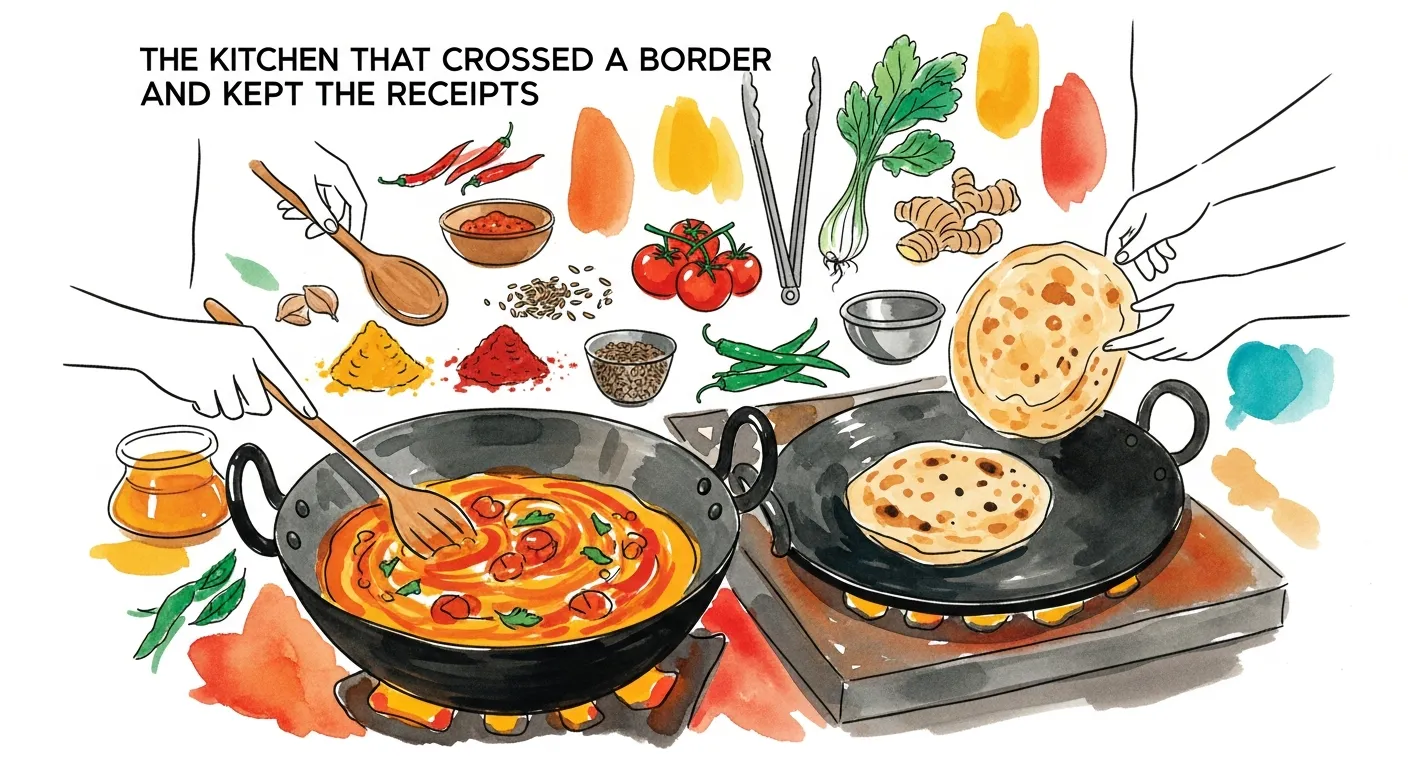
In Chembur Camp, Sindhi home kitchens are doing the work that no restaurant in this city ever bothered to do. The koki is on WhatsApp. The sai bhaji is on a delivery app. The map is in the spice tin.
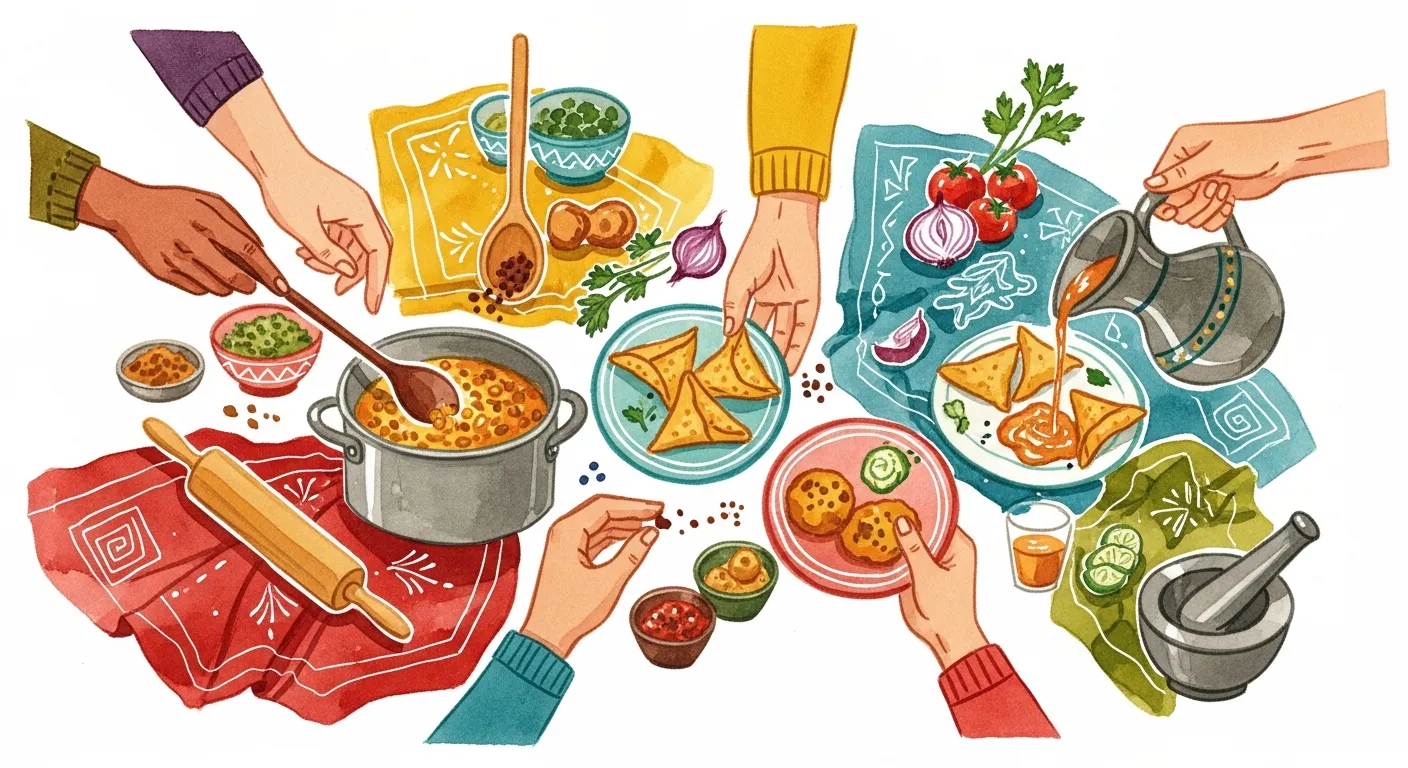
Generated by Imagen 4
In 1843, a British officer named Charles Napier conquered the province of Sindh on the orders of nobody in particular. The story goes that he sent a one-word telegram back to London. Peccavi. Latin for I have sinned. The pun being Sindh, the place, and sinned, the verb. Whether he actually sent it is disputed by historians and irrelevant to everybody else. What matters is that the British took Sindh, ran it for 104 years, and then in August 1947 drew a line through a map that put the whole province on the wrong side of a new border.
The people who lived there had to leave. Not some of them. Most of them. Roughly 1.4 million Hindu Sindhis crossed into India between 1947 and 1951, and unlike the Punjabis or the Bengalis, they did not arrive in a state that already spoke their language. There was no Sindh on the Indian side. There still isn't.
"Unlike other linguistic groups in India, Sindhis have no state to anchor their identity," Mid-day noted recently. The sentence is short and it does a lot of work. No state means no tourism board. No state means no government-funded food festival. No state means the language itself, written in a modified Perso-Arabic script most Indians have never seen, is on the UNESCO list of endangered tongues.
What the community had instead was a tiffin box.
THE CAMP THAT BECAME A NEIGHBOURHOOD
Chembur, in the late 1940s, was not a neighbourhood anybody wanted. It was salt flats, a few villages, and the edge of the city's reach. The state government built barracks here for refugees arriving from Sindh. The area got a name that has stuck for eighty years. Chembur Camp.
The barracks were temporary. The community was not. The families who arrived with one suitcase and an address written on a piece of paper stayed, built shops, sent children to school, and quietly turned a refugee settlement into one of the densest Sindhi neighbourhoods in Mumbai. The temples came up. The Sindhi-medium schools came up. The sweet shops selling gheeyar and singhar came up.
The kitchens were already there. They had arrived in the women's heads.
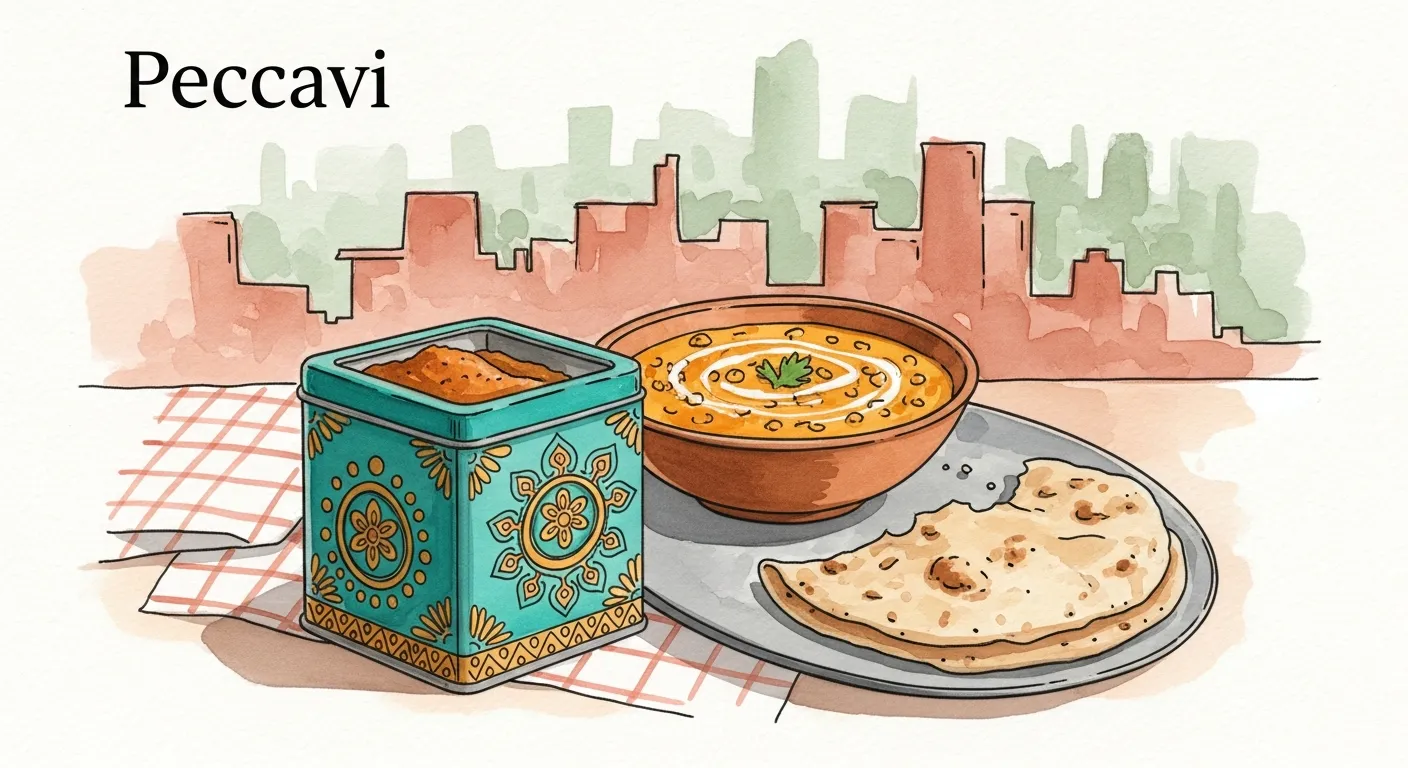
"The story of Sindhi food is one of resilience born of forced migration, shaped by scarcity, sustained by memory, and passed on with love," The Lab Mag wrote. The line reads like a thesis statement for everything that followed.
THE FIRST GENERATION COOKED FOR RENT
Nobody talks about the first wave of Sindhi home chefs because they did not call themselves that. They called it survival. The women who arrived in Chembur in 1948 and 1949 had often been the only adult in the household with a working kitchen skill set. Husbands were looking for work in a market that did not want them. The papad press came out. The kachri masala came out. The ladoos came out by the dozen, then by the hundred, then by the order book.
This is the part of the Sindhi food story that nobody photographs. The cottage industries that ran out of one-room kitchens. The papads sold to the corner store on credit. The pickles bartered for school fees. Mumbai-based Sindhi cooks built the bridge between displacement and dinner one kilo at a time.
The Sindhi grandmother is the country's longest-running unregistered food startup.
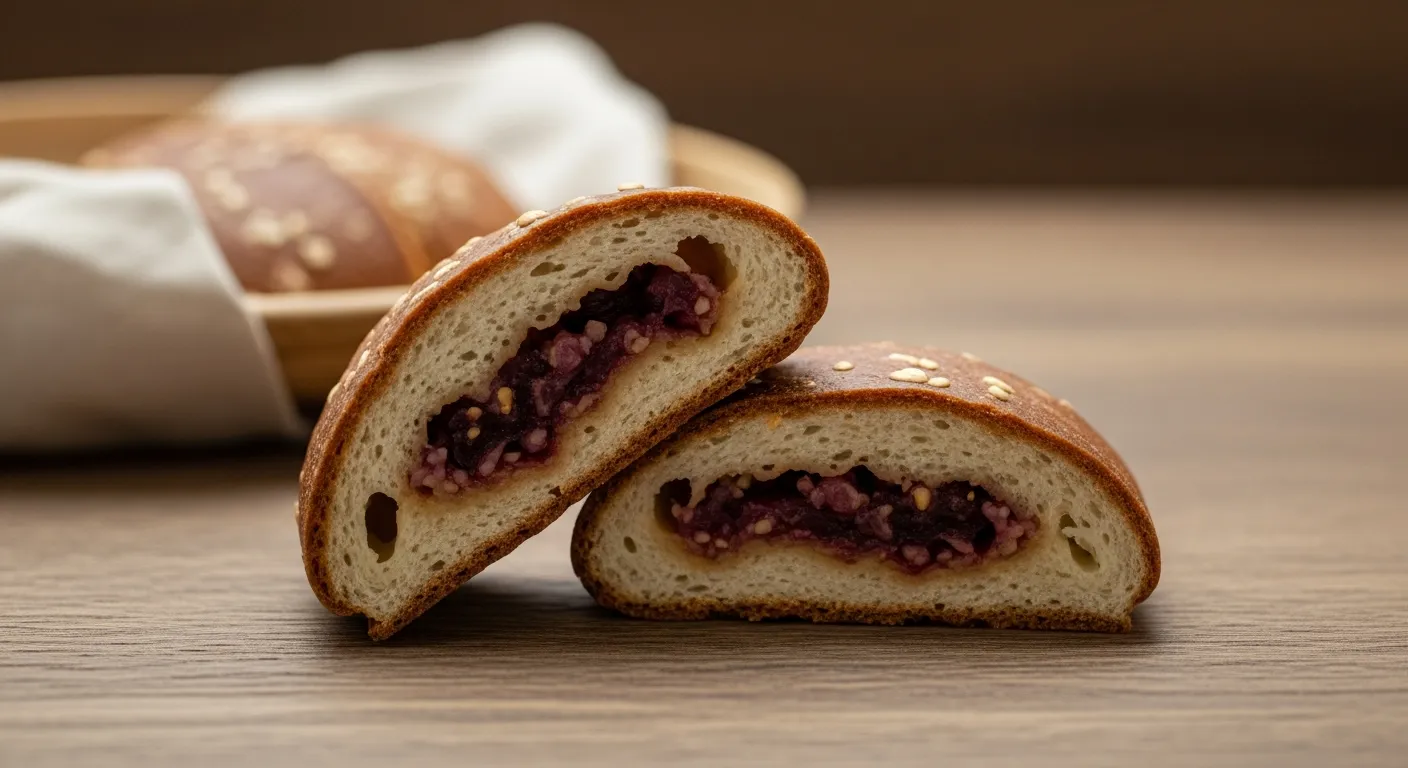
The ingredients were the first thing to change. Sindh had its own river, its own wheat, its own freshwater fish from the Indus, its own variety of palla that nobody in Bombay had ever heard of. The palla, a hilsa-like river fish central to Sindhi cooking, did not exist on this side of the border. Neither did the specific lotus stems, the kachalu, certain dals milled in specific ways. The women adapted. The sai bhaji, that thick green stew of spinach, chana dal, dill, and seven other greens, was tweaked to use whatever the Chembur subzi market had on Tuesday. The koki, that thick flatbread with onion and ajwain, stayed exactly what it was because flour and onion travel well.
The community improvised. It always improvises.
THE SECOND GENERATION COOKED FOR WEDDINGS
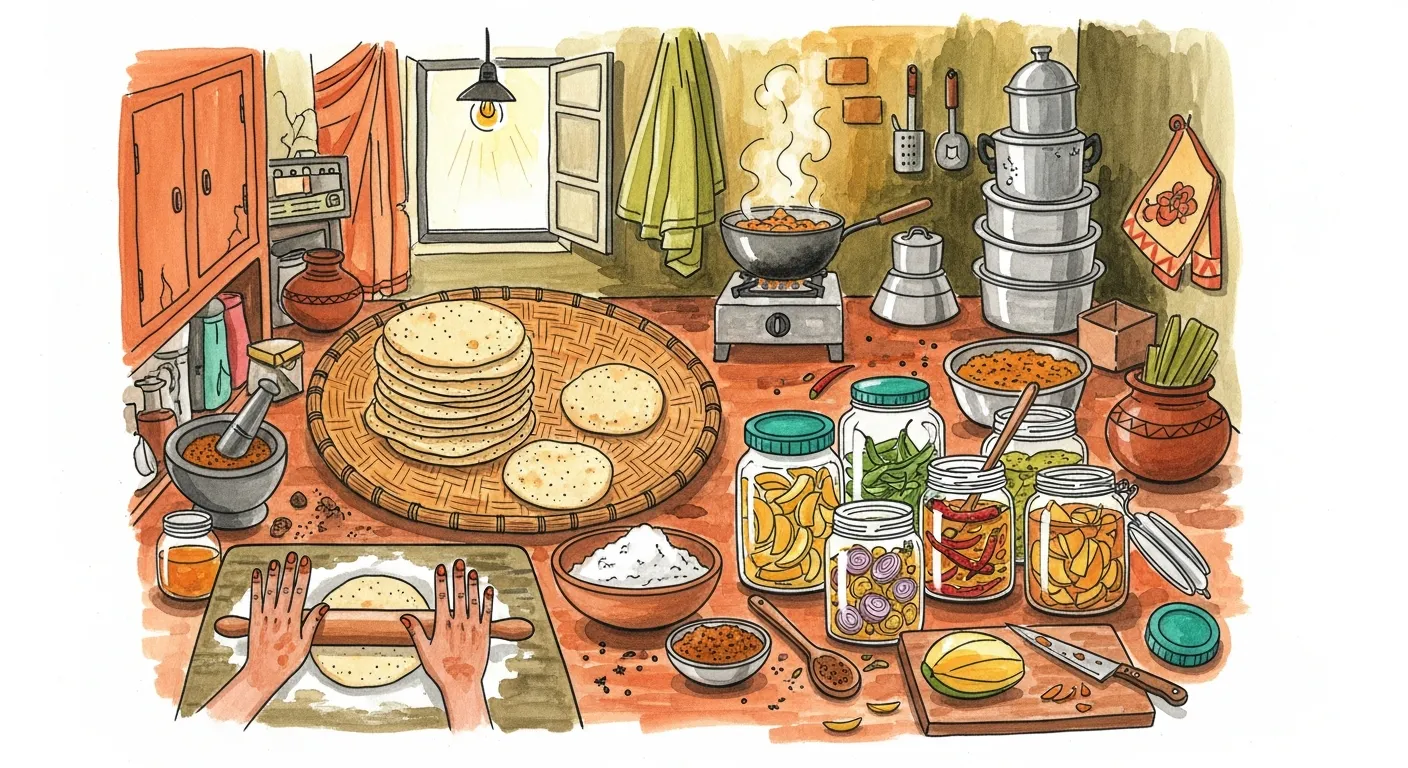
By the 1970s and 1980s, the home kitchen had become a small catering operation. The Sindhi wedding circuit in Mumbai is a closed economy. Two thousand guests, a dozen courses, and the same three families have been making the dal pakwan for the breakfast counter for forty years. The aunties who ran these operations did not have shop signs. They had phone numbers passed at funerals.
This is the layer of Mumbai's food economy that no restaurant guide has ever mapped. The Sindhi caterer working out of a Chembur flat with two industrial gas burners, three nieces, and an order book six months deep.
The kitchen is the only Sindh that travelled in one piece.
THE THIRD GENERATION FOUND WHATSAPP
Shalini Khanna runs Love Per Plate out of her home in Mumbai. The Sindhian profiled her recently. The line that stays with you is small and domestic. "After dabbling in different careers and experiencing life's many facets, she has found comfort in her home kitchen, with her kids around her, as she doles out spoonfuls of 'Love Per Plate'."
The model is not new. The infrastructure is. "At Love Per Plate, Shalini dishes out simple and balanced meals for lunches and dinners, made with fresh, seasonal ingredients she sources herself from early morning visits to her local vegetable market," The Sindhian noted. Read that closely. The supply chain is one woman with a tote bag at six in the morning. The distribution chain is a phone. The marketing budget is a WhatsApp broadcast list.
This is the third-generation playbook in Chembur and the home-chef economy around it. The grandmother cooked because she chose to. The mother catered because the orders kept coming. The daughter posts a weekly menu on Instagram, takes orders till Friday evening, and a Dunzo rider picks up tiffins on Sunday morning.
The specific dishes that travel best are the ones that travel worst commercially. Sai bhaji needs two hours of slow heat. Bhuga chawal needs caramelised onions cooked till they are nearly black. Seyal dabal, that fried-bread-soaked-in-onion-gravy dish that no restaurant in this city has on a menu, is a forty-minute affair. The home kitchen can do it. A restaurant kitchen cooking forty different things cannot.
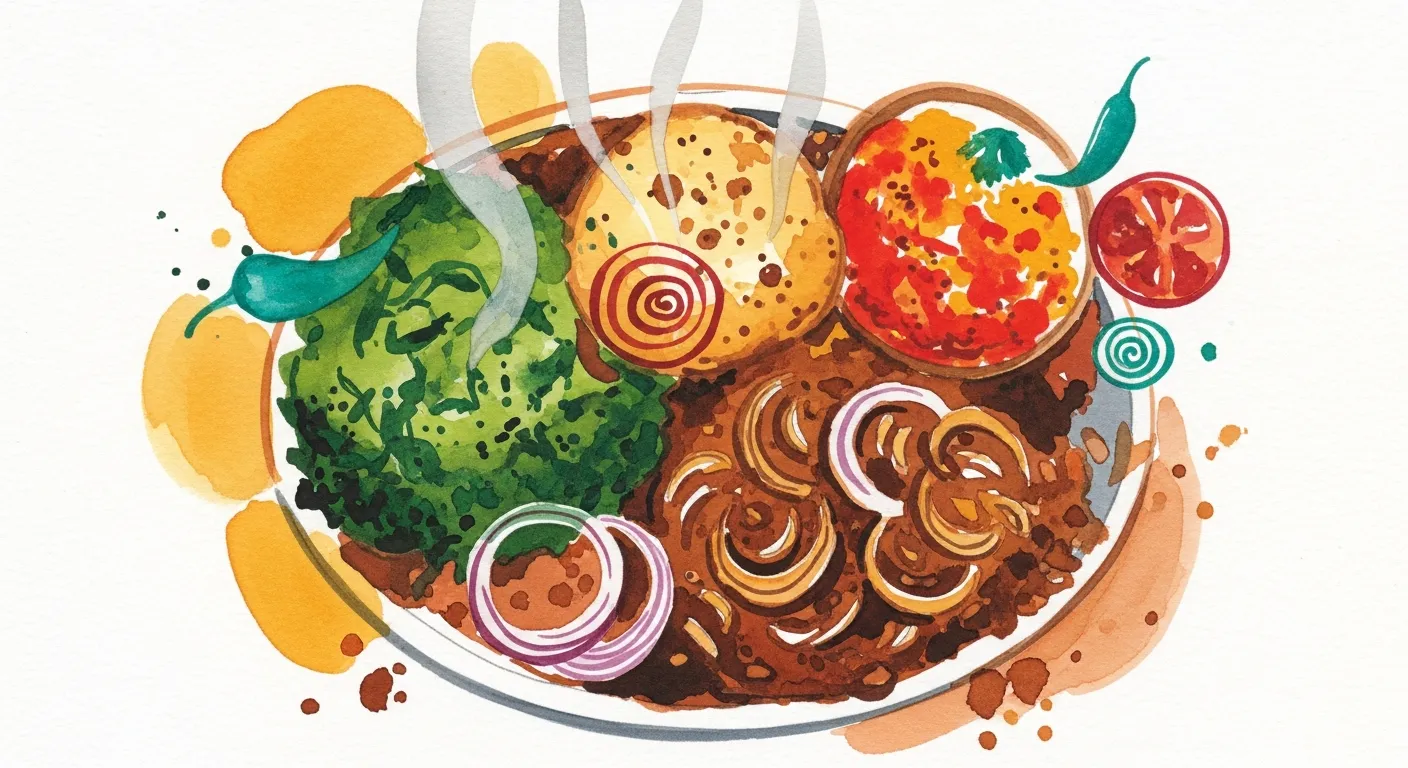
The home chef is winning because the dish was never meant to be on a menu in the first place.
THE INGREDIENT PROBLEM IS THE WHOLE PROBLEM
Ask any home chef in Chembur Camp what is hard about the work and the answer is never the cooking. It is the sourcing.
Kachri, a wild melon used as a tenderiser and souring agent, is now imported in small packets from Rajasthan and Sindh-origin traders in Ulhasnagar. Saunf-heavy garam masala blends that defined Sindhi cooking have to be hand-mixed because nothing commercial tastes right. The specific variety of besan used for Sindhi kadhi, coarser than what is on a Big Bazaar shelf, comes from one mill in Ulhasnagar that has been milling it since the 1950s.
Ulhasnagar, for the uninitiated, is the other Sindhi geography of greater Mumbai. The city was literally built as Camp 5 for Sindhi refugees in 1949. It is the spice cabinet of the entire diaspora's cooking. The Chembur home chef is on the phone to a wholesaler in Ulhasnagar twice a month. The wholesaler is dealing with three Sindhi mandis a week. The chain is invisible from outside and absolutely essential from inside.
When wheat prices climb, the dal pakwan goes up by ten rupees a plate. When the specific Rajasthani kachri shipment is delayed, the seyal mutton on Sunday's menu becomes seyal chicken. The home chef is running an entire procurement department out of a contact list.
THE SUPPER CLUB AS REVIVAL
The newer development is the Sindhi supper club. Small dinners, eight to twelve guests, hosted in private homes across the city, with a set menu that runs from lola, a thick jaggery flatbread, through to a koki course, a sai bhaji course, and a singhar dessert.
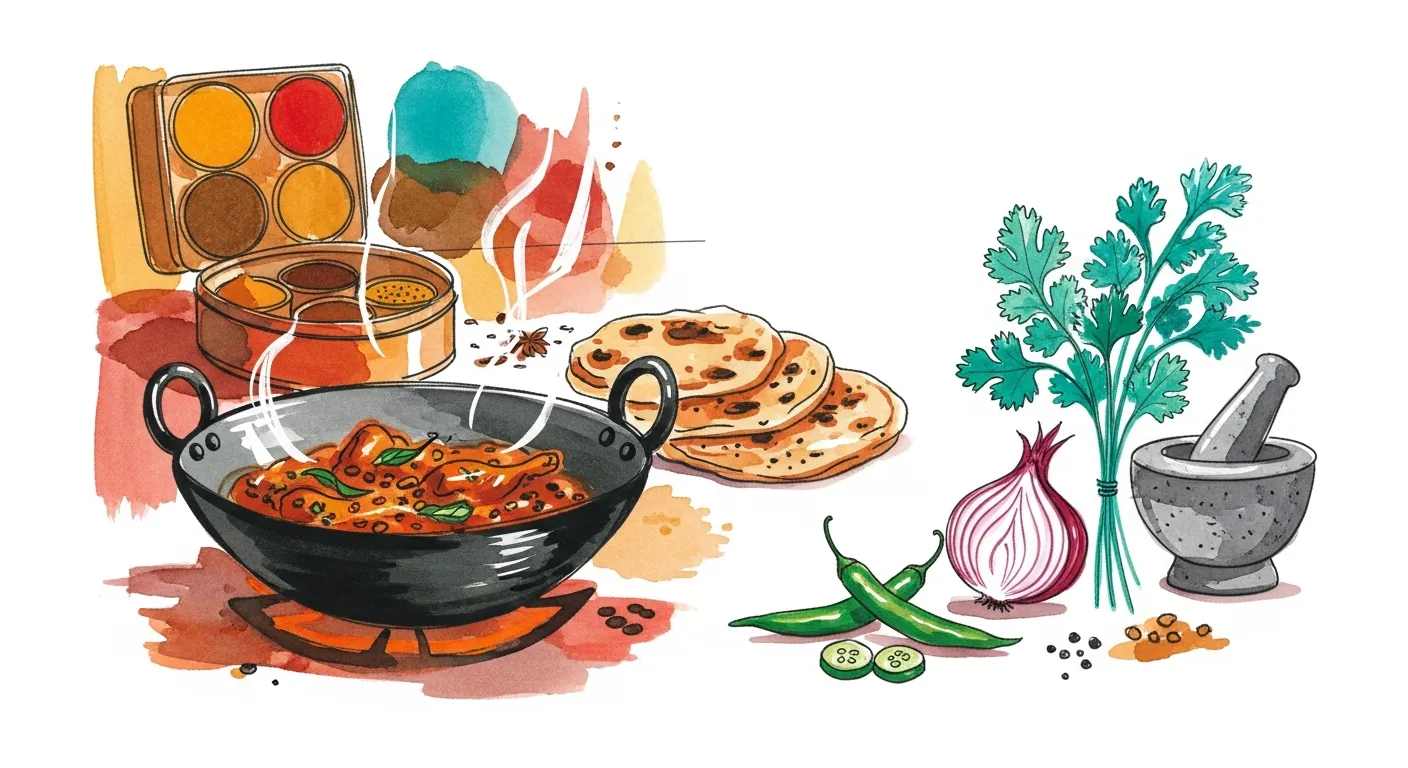
The community is increasingly using supper clubs to celebrate and preserve culinary culture, Mid-day reported. The crowd is mixed. Sindhi grandchildren who never learned the language but want to taste what their grandmother cooked. Non-Sindhi food enthusiasts who have eaten everything in Mumbai except this. Diaspora visitors from Dubai, London, Hong Kong, in town for a wedding, paying eighteen hundred rupees a head to eat what their mothers never got around to teaching them.
"For a community that lost its land in 1947, culture has always only lived in memory," Mid-day wrote. The supper club is what happens when memory becomes a ticketed event.
The kitchen became the museum because the museum was never built.
WHY THE FOOD MATTERS MORE THAN THE FOOD
The Lab Mag carried a sentence that explains everything. "It's funny how Boli (language) and Boti (food), two things that probably have two-and-a-half inches of real estate in your body, specifically on the tongue, are the most essential things one holds on to and reminds us of who we were."
The language is fading. The food is not. The Sindhi-medium school enrollment in Mumbai has been dropping for three decades. The third-generation child in Chembur understands Sindhi when the grandmother speaks it but answers in Hindi. The grandchildren of the refugees are functionally monolingual in English.
But they eat koki at breakfast. They argue about whose dadi made the better sai bhaji. They send pictures of their Sunday meal to a family WhatsApp group with twenty-three members across four continents.
The tongue is doing two jobs. One of them is winning.
THE CHEMBUR ECONOMY OF THE WEEKEND
Chembur Camp on a Saturday morning is the closest thing the diaspora has to a working high street of its own cuisine. The mithai shop is taking pre-orders for Cheti Chand sweets. The kirana store has fresh kachri powder behind the counter that he keeps for his Sindhi regulars. The home chef two buildings away is finalising the Sunday dabba list. Twelve orders, four families on the list since 2019.
The rider arrives. The tiffins move. The boli is half-spoken. The boti is fully cooked.
The province is gone. The kitchen stayed.
Field Notes
Quick referenceRoughly 1.4 million Sindhi Hindus crossed into India between 1947 and 1951 - into a country with no state in their language.
Built as Camp 5 for Sindhi refugees in 1949. Now the spice cabinet for the entire diaspora's cooking across greater Mumbai.
Fried bread soaked in onion gravy. Forty minutes of work. Not a single restaurant menu in Mumbai carries it. The home kitchen is the only place it exists.
Eighteen hundred rupees a head, eight to twelve guests, a private home in Mumbai. Sindhi grandchildren paying to eat what their dadi cooked for free.
Sindhi, written in a modified Perso-Arabic script, is on the UNESCO list of endangered languages. The food is not endangered. The tongue is doing two jobs.
Get the next story first
Join the Bhukkads. Free, no spam, just stories.
Takes 30 seconds.