The Modak Economy Runs Out of Dadar Kitchens
Before the pandal goes up, the steamers are already on. Inside the home kitchens of Dadar and Thane that the festive season actually depends on.
Generated by Imagen 4
In 1893, Lokmanya Tilak took a private household ritual and dragged it into the street. Ganesh Chaturthi, until then a domestic affair conducted in front rooms with a small clay idol and a plate of twenty-one modaks, became a public festival. The British did not know what to do with a religious gathering that was also a political meeting that was also a neighbourhood lunch. The pandals went up. The processions started. The idols grew taller every decade until they were ten feet, fifteen, twenty.
The modak stayed the same size.
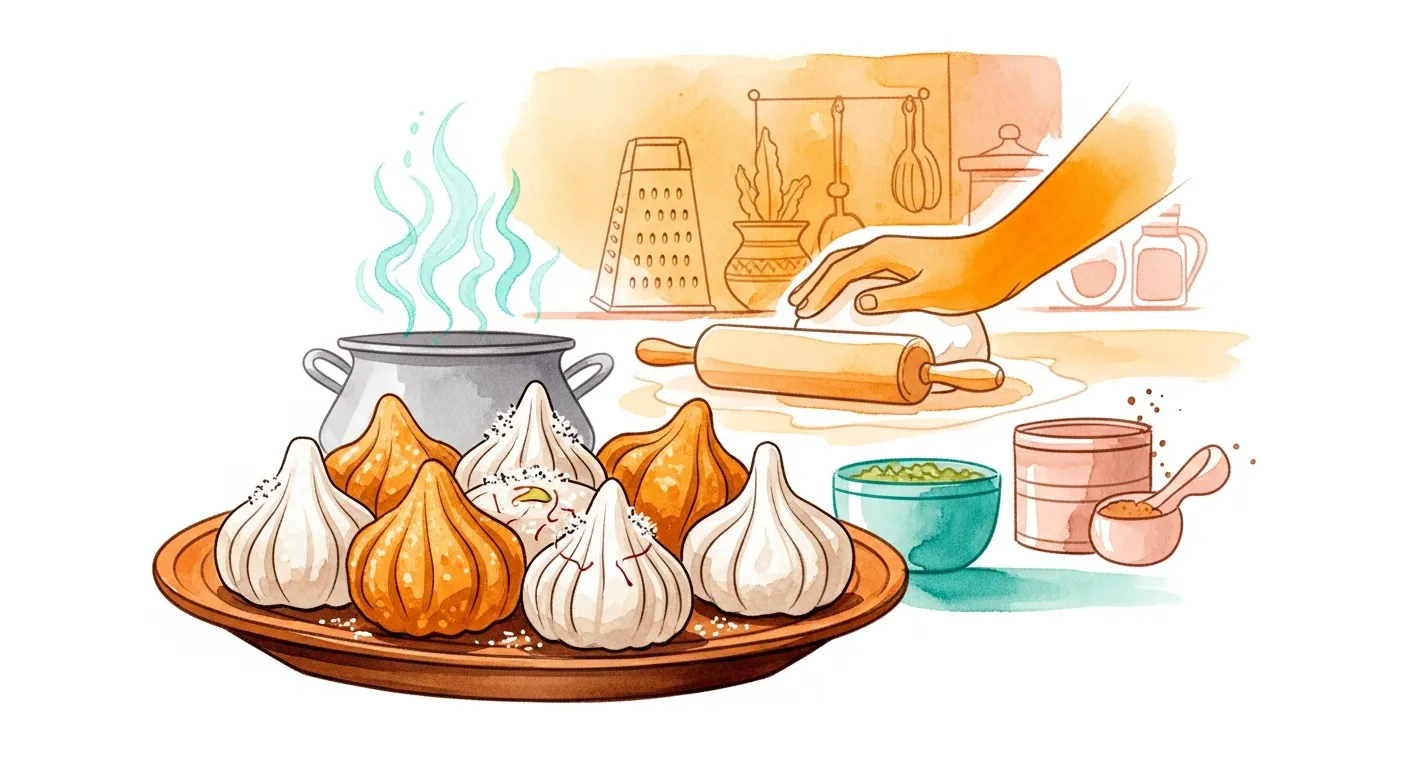
It stayed the same size because the recipe is the recipe. Rice flour kneaded with boiling water until the dough is hot enough to burn your palm. A filling of fresh coconut scraped that morning, jaggery melted slow, a pinch of nutmeg, a thread of cardamom. Twenty-one pleats pinched up by hand into a peak. Ten minutes in the steamer. You cannot scale this. You cannot factory it. You can only make it the way somebody's aaji made it, in a kitchen, by hand, for the people sitting in the next room.
This is the part nobody talks about. The festival is public. The food is not.
THE KITCHEN BEFORE THE PANDAL
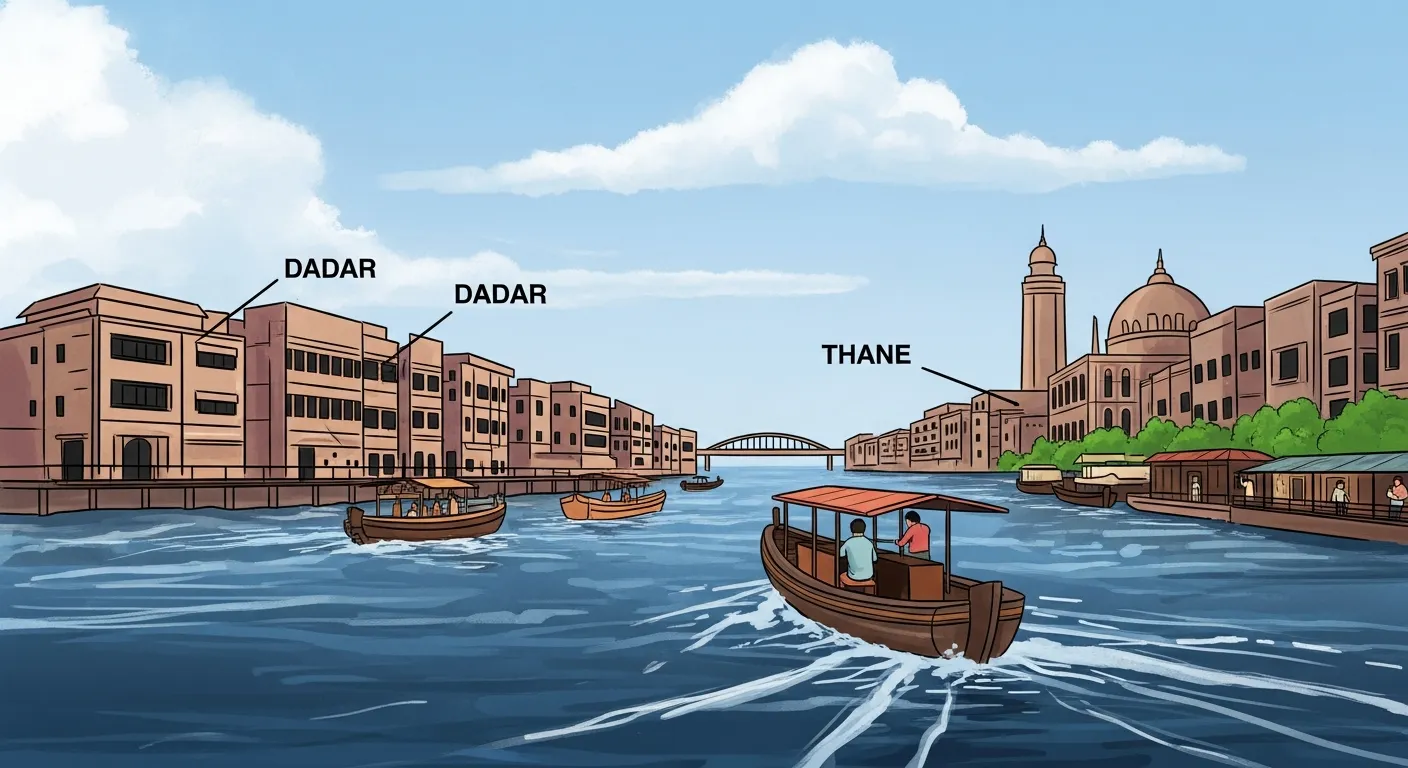
Walk through Dadar in the week before Ganesh Chaturthi and the smell tells you everything the calendar will not. Ghee on slow flame. Coconut hitting hot jaggery. The faint sourness of rice flour being scalded. It comes out of third-floor windows in Hindu Colony, out of the kitchens behind Plaza Cinema, out of buildings in Shivaji Park where the same families have lived for four generations.
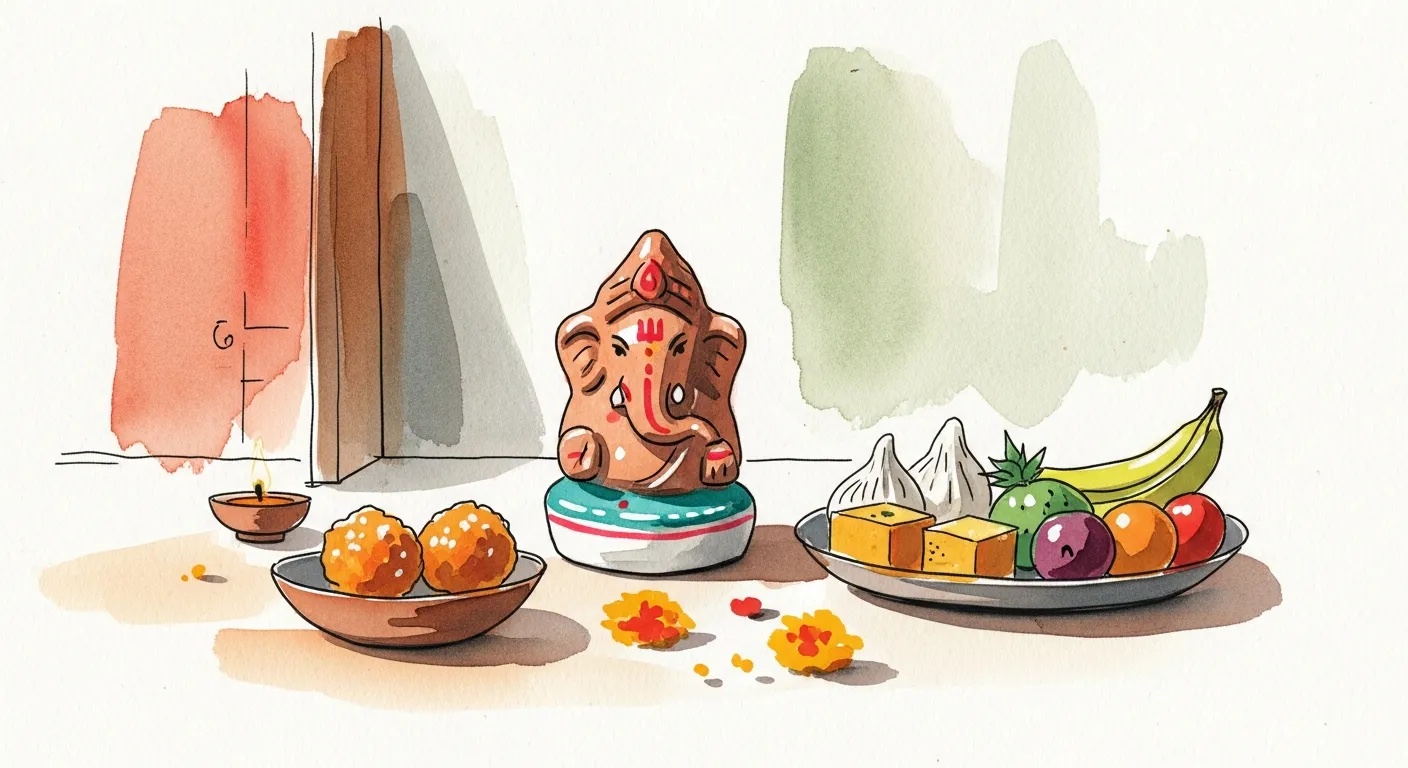
These are not shops. These are home chefs, mostly women, taking orders on WhatsApp, working off lists written on the back of last year's envelope, running two pressure cookers and a kadhai and a steamer at the same time because the order for 200 modaks has to go out by 6 pm and the order for 80 puranpolis has to go out by 8.
The home kitchen, not the mithai shop, is the actual infrastructure of the Maharashtrian festive season.
Hindustan Times reported on the rise of artisanal food coming out of home kitchens across the Mumbai Metropolitan Region, with consumers willing to pay a premium for hand-crafted products over mass-produced alternatives. The piece frames it as a trend. In Dadar and Thane, it is not a trend. It is a forty-year-old supply chain that finally has a name.
THE WOMEN WHO NEVER STOPPED
The mill workers came from the Konkan in the late nineteenth century and settled in Parel, Lalbaug, Dadar. The wives came after. They brought the recipes that the city did not yet have a name for. Ukadiche modak, the steamed kind, not the fried kind that came later. Puranpoli with chana dal and jaggery, rolled paper-thin on a wooden patla. Karanji for Diwali. Shrikhand hung overnight in muslin. Anarsa for the patient ones.
When the mills closed in the 1980s, the men lost their jobs. The women kept their kitchens. A few of them started taking orders from neighbours, then from neighbours of neighbours, then from offices in Lower Parel that wanted a tray of puranpolis for the team. By the 2000s, the WhatsApp order had replaced the landline. By the 2020s, the Instagram DM had replaced the WhatsApp.
The recipe did not change.
The festival is public. The food is not.
That insistence on continuity is also what you find at Saraswati Ladu Depot in Dadar West, which has been operating for more than 45 years. Pure ghee, age-old recipes, no shortcuts. The shop is not a home kitchen, but it runs on the same logic: the recipe is the recipe. The home chefs around the corner do not call themselves anything. They just take the next order.
THANE, WHICH IS NOT A SUBURB
Thane gets dismissed as a suburb. It is not a suburb. It is a city of over 21 lakh people with its own koliwadas, its own gaothans, its own Maharashtrian middle class that has been there since long before the Eastern Express Highway existed. The festive economy here is even more home-kitchen-driven than Dadar, because the mithai shop density is lower and the building society network is tighter.
ThaneWeb notes that authentic Maharashtrian food, including puranpoli and ukadiche modak, thrives in local homes and small eateries in the city, holding a culinary continuity that the larger restaurant scene has never quite managed to bottle.
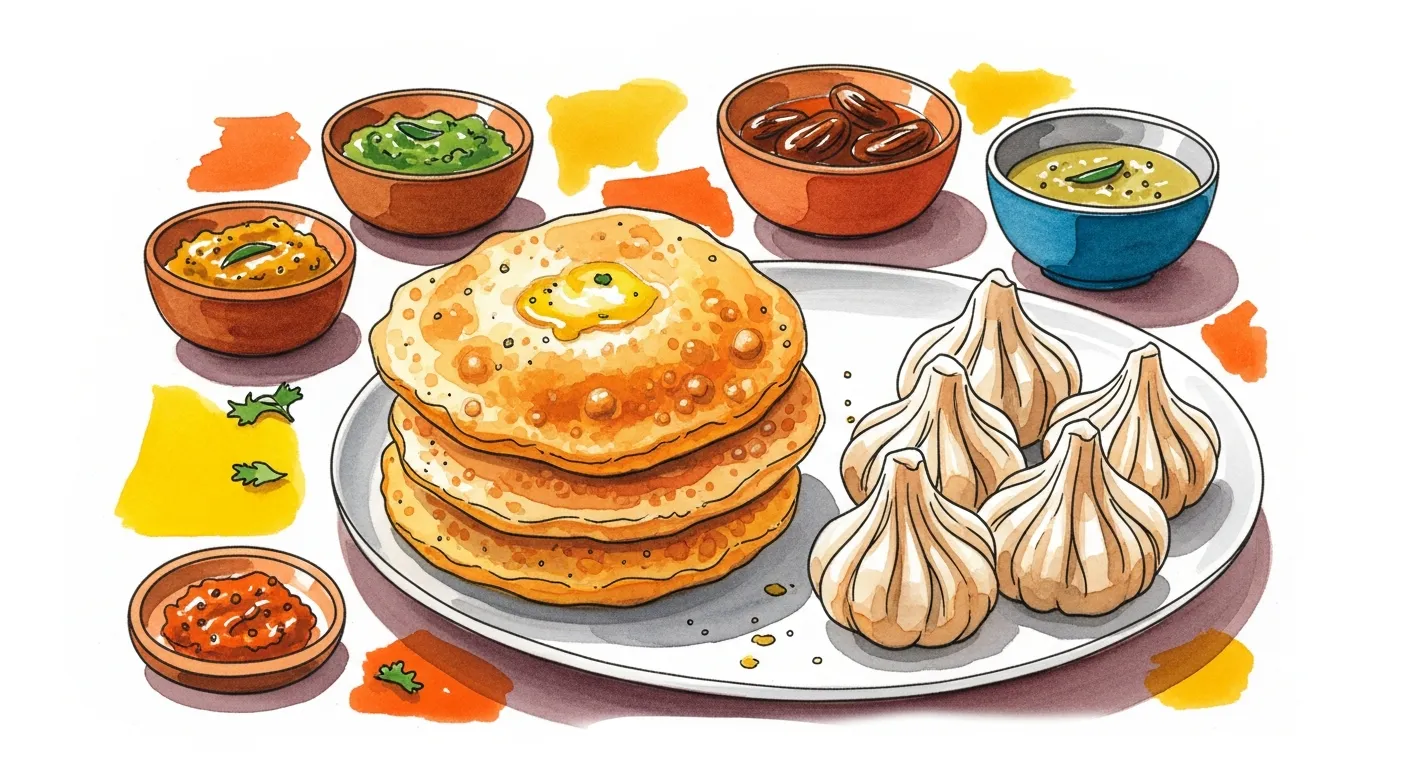
In Naupada, in Panchpakhadi, in Vrindavan Society, the order book opens roughly three weeks before Ganesh Chaturthi. By the second week, it is closed. By the third week, the home chef is working sixteen-hour days with one or two helpers, usually a sister, sometimes a daughter back from her job in Powai for the long weekend.
The modak count for a single home kitchen in this window runs into the thousands. The puranpoli count, slightly lower, because each one takes longer. Pricing sits anywhere between 40 and 80 rupees a piece for modaks, 60 to 120 for a puranpoli, depending on the filling and whether the ghee is local or A2.
One pressure cooker. One kadhai. One steamer. Two thousand modaks. This is what the festival actually looks like from the inside.
THE PREMIUM ON HANDMADE
For twenty years, the assumption was that the factory would win. Haldiram's would scale. Bikanervala would scale. The frozen modak in the freezer aisle would replace the steamed one from the third-floor flat. It did not happen.
Luxebook India's roundup of Ganesh Chaturthi modak deliveries in Mumbai reads like a directory of small operators, almost all of them advertising handmade, preservative-free, made-that-morning. The language is identical to what the aunties in Hindu Colony have been saying since 1985. The only difference is that now there is a website.
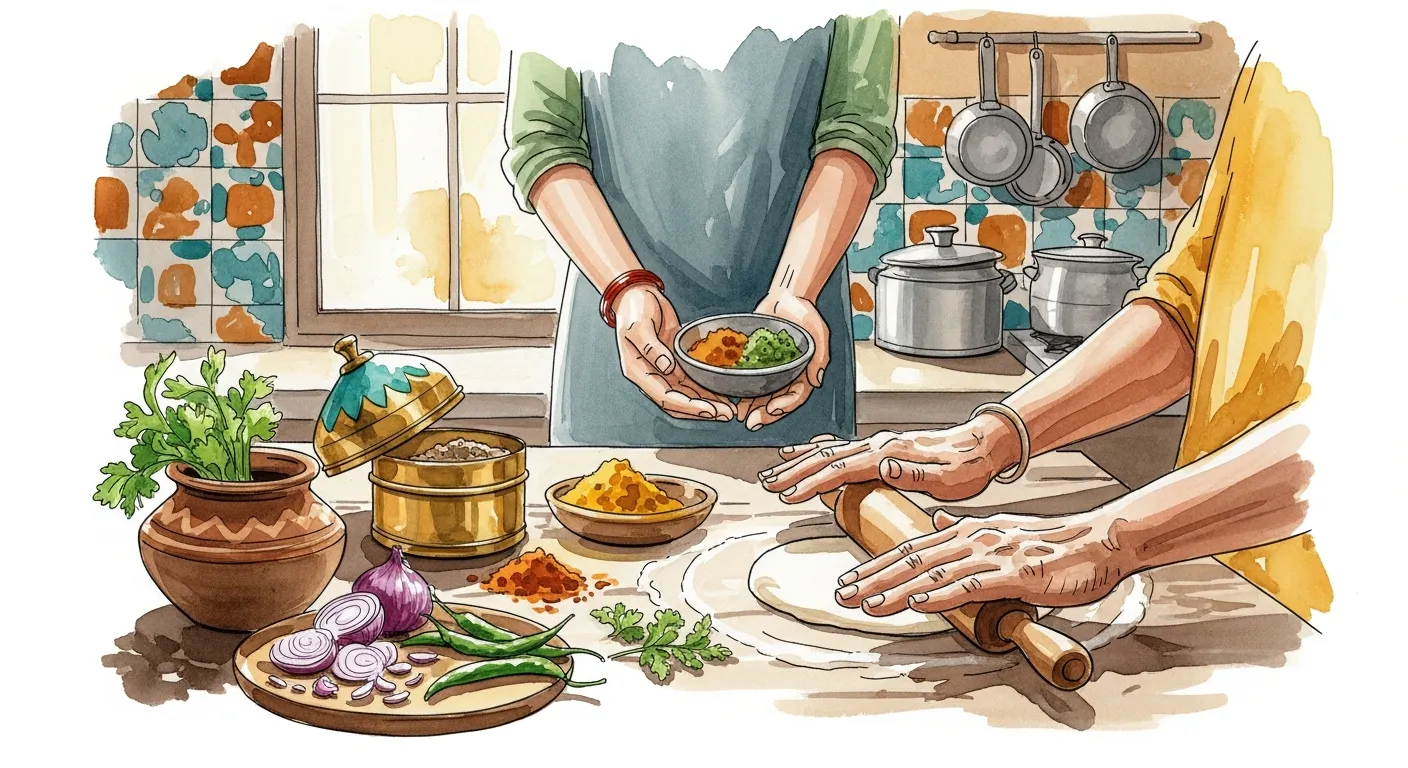
The consumer has voted. They will pay 70 rupees for one modak from a woman in Dadar over 25 rupees for one from a packet, and they will queue up on WhatsApp three weeks in advance to do it. The premium is not for the modak. The premium is for the certainty that somebody, somewhere, sat on a kitchen floor and pinched twenty-one pleats by hand.
In a world shifting toward factory-made sweets, the third-floor flat is the last serious kitchen in the building.
THE GENERATIONAL HANDOVER
The quiet question, in every one of these kitchens, is who takes over. The daughter has a job in Powai. The daughter-in-law lives in Pune. The grandson is in Bangalore writing code. The aaji is 72 and her wrists are tired and she will not say it but the steamer is heavy now.
Some of the answer is that the daughter does come back, on Friday evening, and she does learn the puran. Some of the answer is that a younger neighbour, an MBA who quit her job in 2021, has started her own modak operation off Instagram and is doing 3000 pieces this season. Some of the answer is that the recipe gets typed out, finally, after a hundred years of being in someone's head, and saved to a Google Doc that gets shared in a family WhatsApp group.
The festival will not run out of modaks. It might run out of grandmothers.
But for now, in the week before Chaturthi, the steamer is on. The coconut is being scraped. The jaggery is melting slow on a flame that has been lit by the same hand for forty years. The order goes out at 6 pm in a brown paper bag with a marker scrawl on the front and no barcode.
The idol is ten feet tall. The modak is the size of a thumb. Twenty-one pleats. Pinched by hand. The way it has been done since 1893, and a long time before that.
Field Notes
Quick referenceThe modak order book in Thane home kitchens opens three weeks before Chaturthi. By week two, it is closed.
Handmade ukadiche modak from a Dadar home kitchen: 40 to 80 rupees a piece. A packet from the freezer aisle: 25. The queue forms for the 80-rupee one.
A single home kitchen in Thane produces thousands of modaks across the Chaturthi window. One steamer. One kadhai. No barcode.
Saraswati Ladu Depot in Dadar West has been running for over 45 years on pure ghee and no shortcuts. The home chefs around the corner run on exactly the same logic.
1893: Lokmanya Tilak turns Ganesh Chaturthi from a front-room ritual into a street festival. The modak does not get the memo. It stays exactly the same size.
Get the next story first
Join the Bhukkads. Free, no spam, just stories.
Takes 30 seconds.