The Galli That Grinds to Order
In Lalbaug's Mirchi Galli, a Koli grandmother's masala still gets ground to her exact recipe. The LPG cylinder has other ideas.
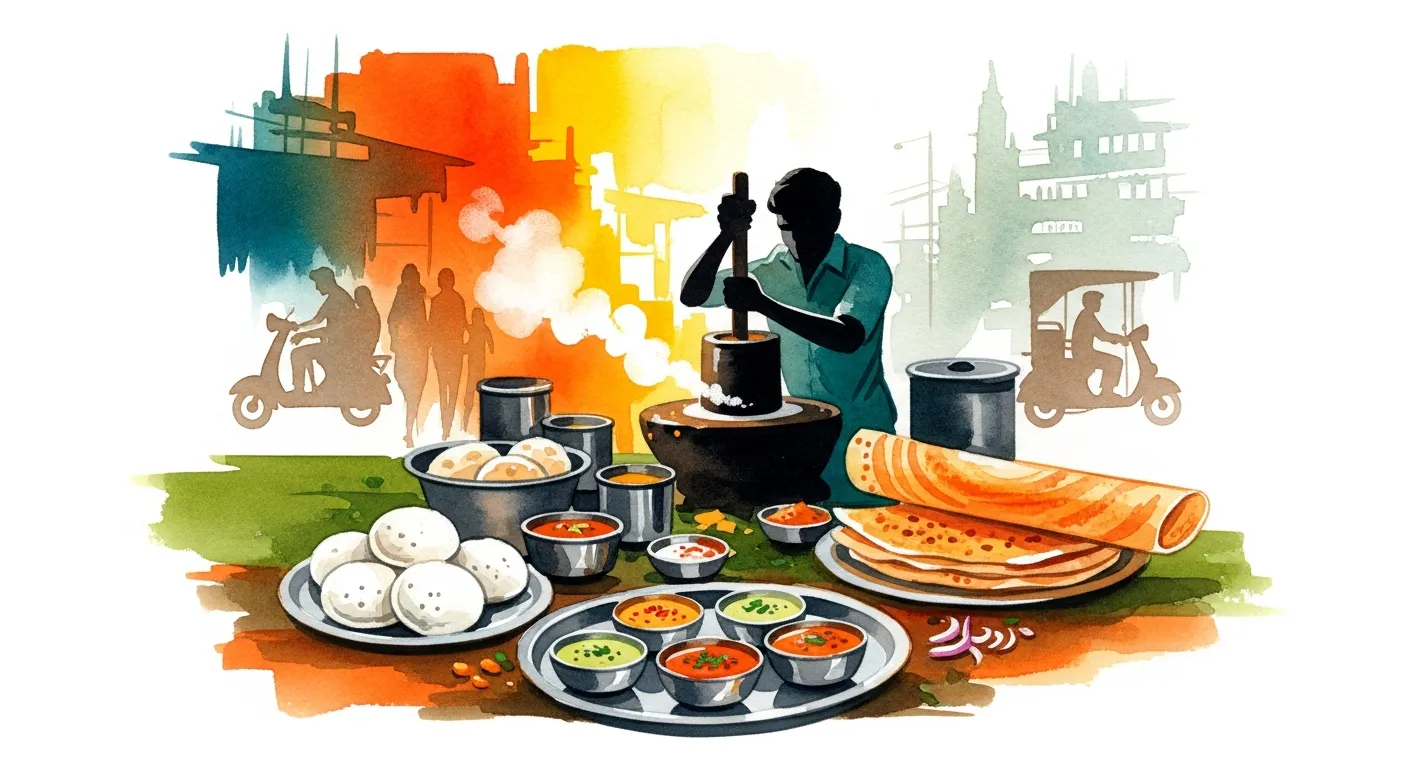
Generated by Imagen 4
In 1854, a Parsi merchant named Cowasji Nanabhai Davar opened the first cotton mill in Bombay. By the turn of the century, the stretch between Parel and Lalbaug held nearly 100 textile mills, employing close to two and a half lakh workers. The men came from the Konkan, from Ratnagiri, from the Ghats. Their wives came after them. The wives needed spices.
That is how Mirchi Galli was born. Not as a tourist attraction. Not as a heritage zone. As a supply chain for women who had migrated 400 kilometres from villages where they ground their own masala on a stone, and now lived in chawls where there was no stone, no terrace, no afternoon.
The mills closed. The galli stayed.
THE LANE THAT REFUSED TO INDUSTRIALISE
Walk in from the Lalbaug flyover today and the air changes before the lane does. Red Kashmiri chillies stacked in burlap. Bedgi from Karnataka in a separate pile, darker, less heat, more colour. Coriander seed in jute sacks open at the top. Black stone flower. Dagad phool. Star anise. The shops are narrow, two metres wide at most, and they go back deep, and at the back of each one is a machine that has been running since someone's father bought it.
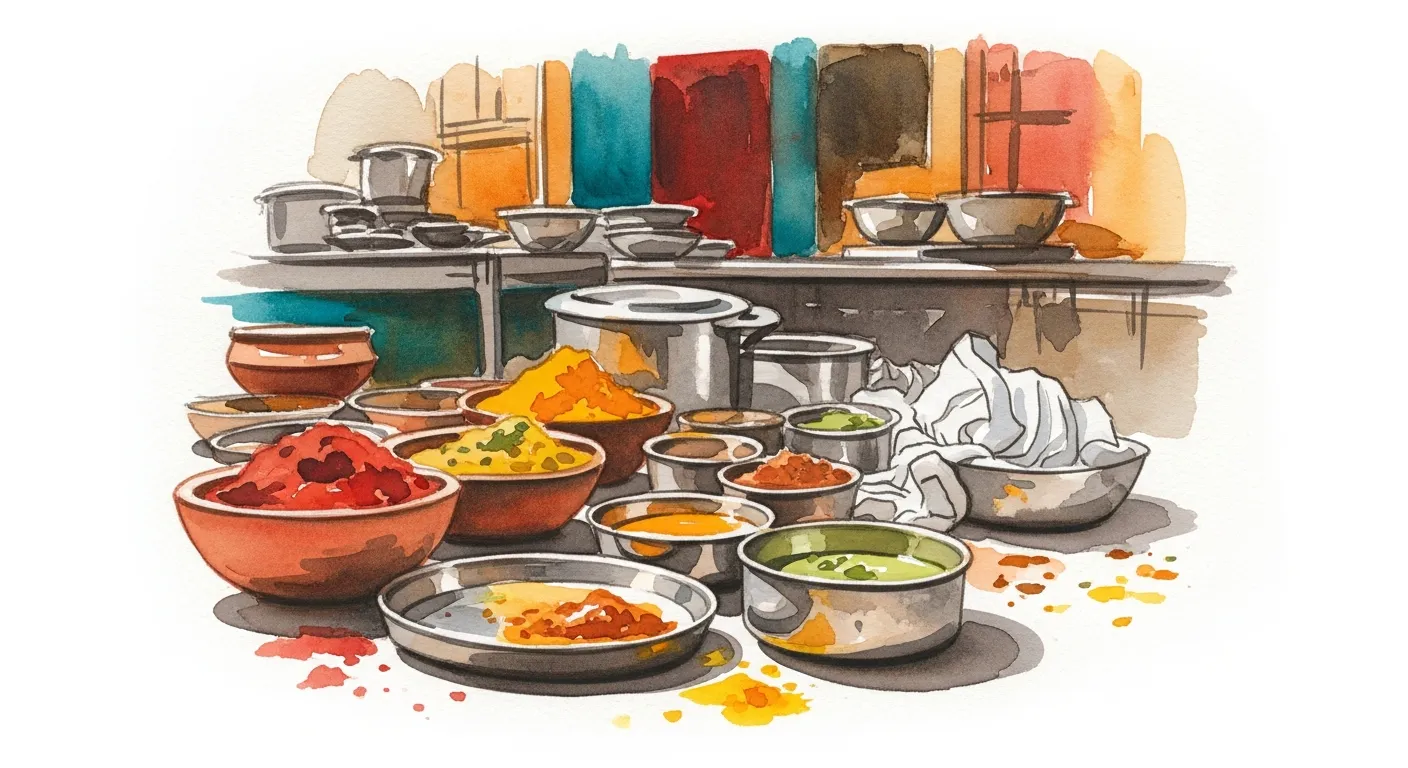
The customer brings a list. Sometimes a recipe written on the back of an envelope. Sometimes nothing, just a memory of how the grandmother did it. The shopkeeper weighs out the chillies, the coriander, the cumin, the turmeric, the methi, the cloves, the cinnamon, the kala masala stones. He roasts them. He grinds them. He hands them back in a brown paper bag that will be empty in three weeks.
This is what Lalbaug Market does. Custom blends to your recipe, ground in front of you, in a city where everything else is sold in a sachet.
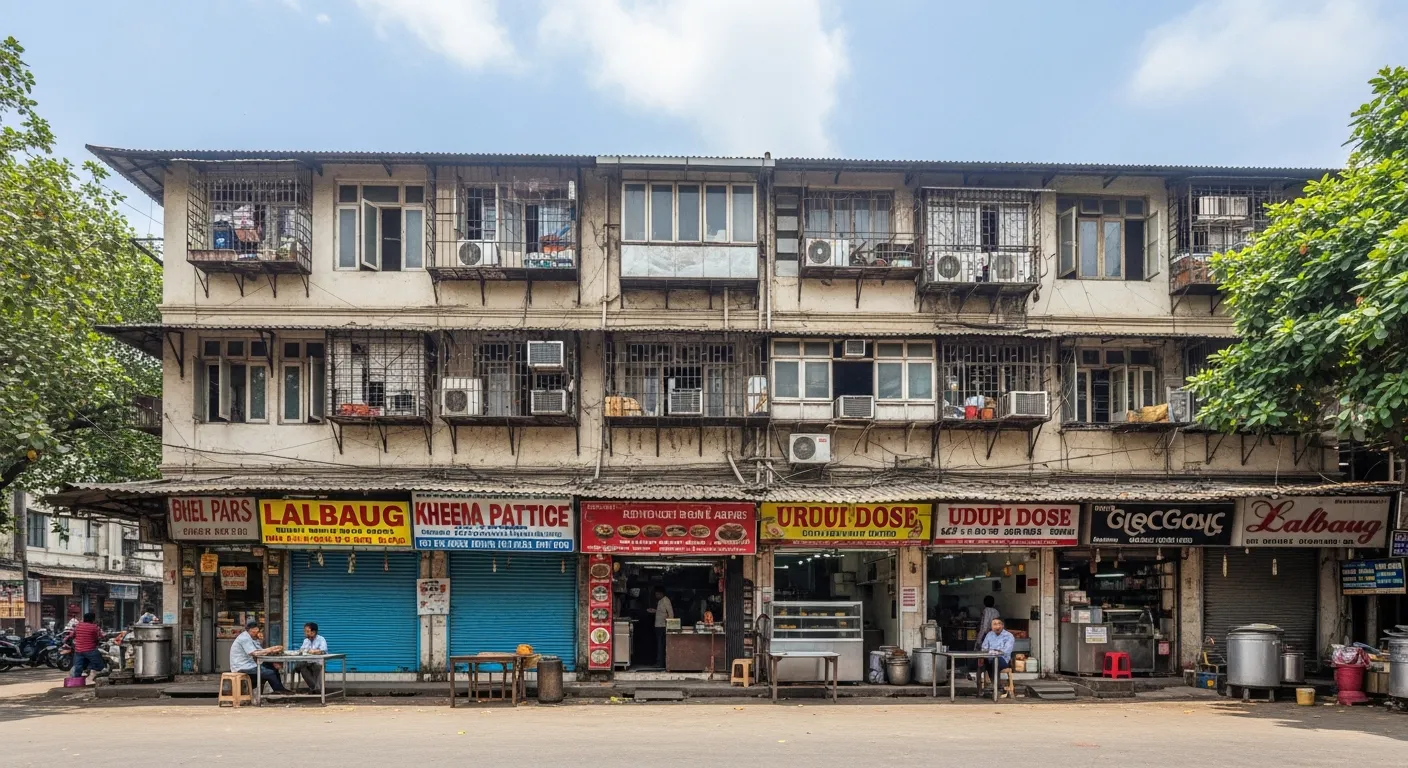
The bag still goes out the same way. Brown paper, marker, no barcode.
NOBODY TALKS ABOUT THE KOLI MASALA
The galli gets written about as a Maharashtrian institution. Goda masala, kala masala, the kanda-lasun blends from the Deshastha kitchens of Pune. All true. All celebrated.
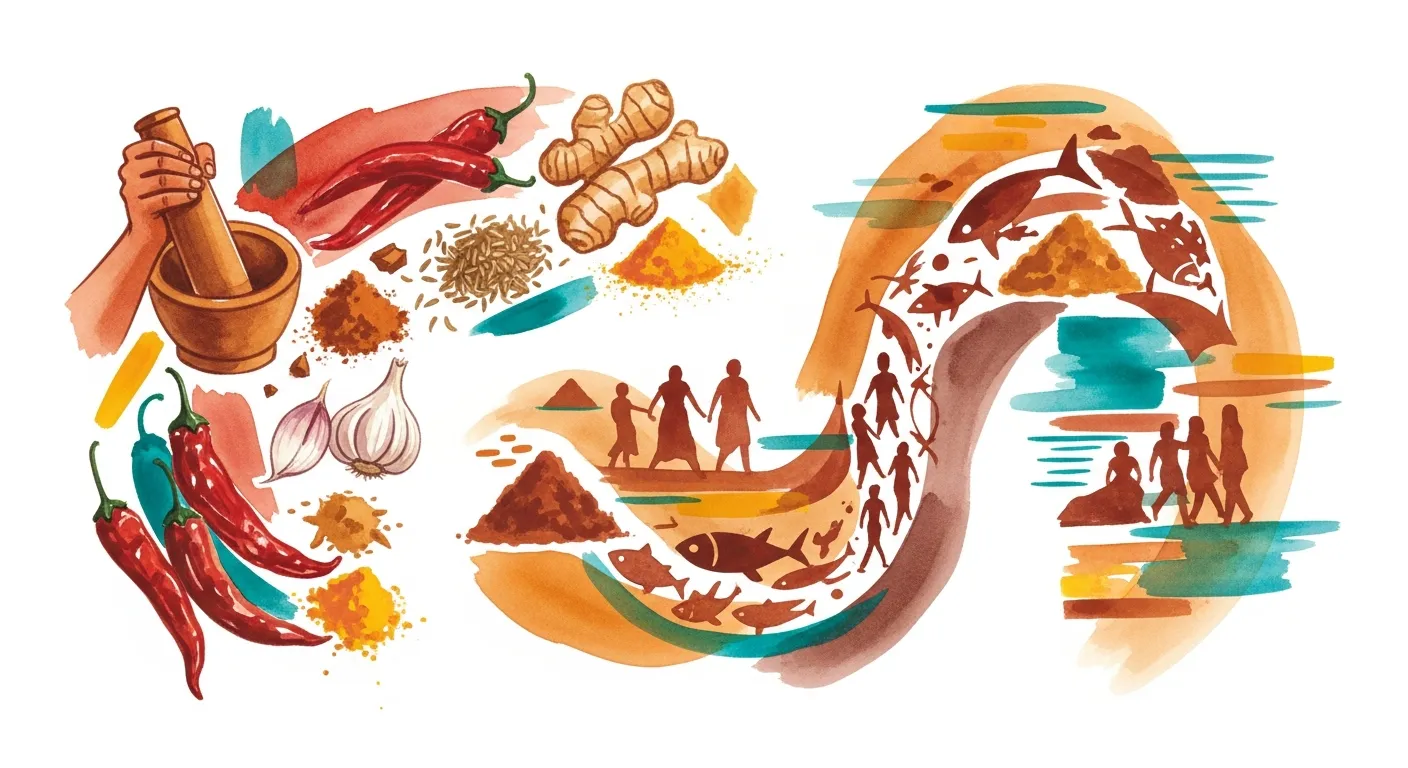
Nobody talks about the Koli women who walk in from Worli, from Sassoon Dock, from Cuffe Parade Koliwada, with a list that has no name. The Koli masala does not have a single recipe. It has as many recipes as there are Koli households.
The Locavore documented this recently. The base is more or less consistent: dry red chilli, coriander, cumin, turmeric, garlic, ginger, peppercorn. After that, every house diverges. One family adds dagad phool because the husband's mother was from Murud. Another adds extra clove because the boat goes out before sunrise and the curry has to hold its warmth till the afternoon. A third leaves out the cinnamon because the grandmother said sweetness has no place in a fish curry.
The Kolis are the original people of these islands. Bombay was their archipelago before it was anyone's port. Their masala is older than the city's name. And the only place in the city that still grinds it to their specifications, household by household, is a four-lane stretch in Lalbaug.
THE LPG CYLINDER PROBLEM
The roast is the part that costs money. To dry-roast 50 kilos of mixed spices to the right colour, the right oil release, the right stage just before the cumin browns, you need flame for hours. Commercial LPG in Maharashtra has climbed steadily for three years. A 19-kilogram cylinder that cost around 1,600 rupees in early 2022 now runs well past 1,800, and the smaller vendors who burn through two cylinders a week feel every rupee.
The Indian Express noted that rising operational costs are squeezing the Mirchi Galli shops at exactly the moment when packaged competitors are getting cheaper. The math is not subtle. A 200-gram pouch of branded garam masala in a supermarket costs less than the LPG required to roast the same quantity at custom order.
The galli is competing against a system that has removed the human from the equation. It is winning on flavour. It is losing on price.
THE FMCG WAVE
According to research published by Allied Business Academies, India is the world's largest producer, consumer, and exporter of spices, growing about 75 of the 109 varieties listed by the International Organization for Standardization. That should be good news for the galli. It is, instead, the source of its pressure.
The same paper records that branded spice players, MDH, Everest, Catch, Badshah, Eastern, now dominate urban Indian kitchens. Advanced technology, cheap factory labour, and pan-India distribution give them an economic edge no four-by-two-metre Lalbaug shop can match. The branded masala arrives in colour-printed laminate, with an MRP, a barcode, a shelf life, and a fragrance engineered to read as spice the moment the sachet is torn.
The galli arrives in a brown paper bag with the shopkeeper's mobile number written in marker.
Allied Business Academies also notes that taste, purity, and colour drive Indian spice purchases. The galli has all three. What it does not have is a television budget.
WHAT GETS LOST WHEN THE GALLI LOSES
Think about what custom grinding actually preserves.
A Koli widow in Worli Koliwada has been making the same surmai curry for forty years. Her masala has nineteen ingredients. The proportions are specific. The grind is medium-coarse because she wants the coriander to bloom in the oil, not dissolve. She has never written it down. Her daughter cooks the same curry, slightly differently, because the daughter prefers a finer grind. The granddaughter, who works in Lower Parel, buys a packet and uses double the quantity to get half the flavour.
The packet does not know about the boat. The packet does not know that surmai cooked at five in the morning needs a different masala than pomfret cooked at noon. The packet does not know that the dagad phool is the whole point.
The recipe is the inheritance. The grind is how it gets passed down.
When the galli shop closes, what closes with it is the only commercial infrastructure in the city that respects a recipe that was never written. A supermarket cannot do this. An app cannot do this. A factory in Nashik running 24-hour shifts on a German pulveriser cannot do this.
THE QUIET ECONOMICS OF HOLDING ON
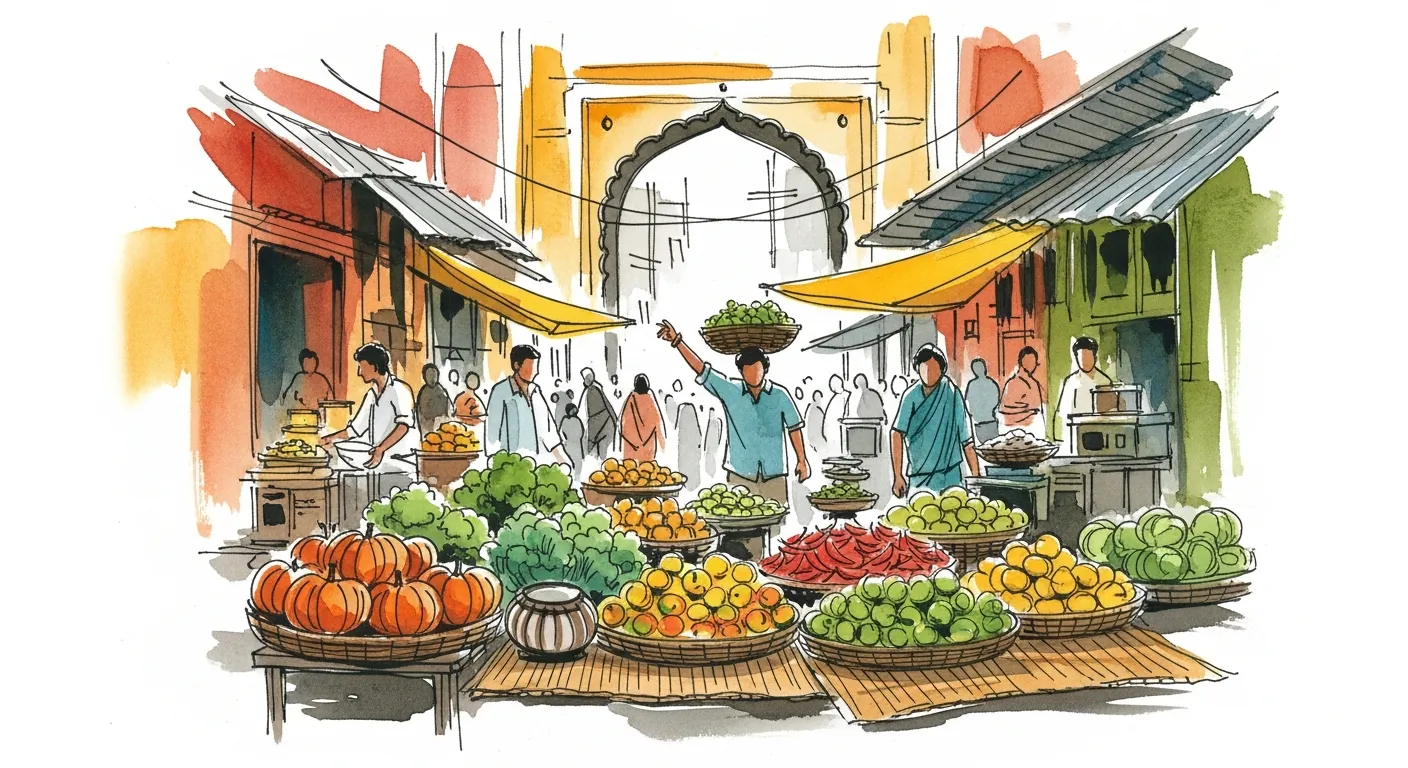
Punnaka's survey of the market puts it plainly: for over a century, Lalbaug has served as a lifeline for working-class families, a cultural hub for festivals, and a sensory anchor for visitors. The shops here did not survive because they were charming. They survived because the Koli households, the Kunbi households, the CKP households, the East Indian households all needed something the supermarket could not provide, and they were willing to walk through traffic for it.
That willingness is what is being tested now. The granddaughter in Lower Parel is not walking through traffic. She is opening Blinkit.
The shopkeepers know this. Several have started taking orders on WhatsApp. The bag still goes out the same way, brown paper, marker, no barcode. The grind is still done in front of the order. The recipe is still kept in a notebook, sometimes with the customer's name, sometimes with just a phone number and the word fish in Marathi.
The galli is digitising the order but refusing to industrialise the spice. That is the quiet position it has taken. Whether it holds depends on whether enough granddaughters remember what their grandmothers told them about cinnamon.
WHAT THE BOAT KNOWS
The Koli fishers go out before dawn. They come back with surmai, bombil, paplet, halwa, bangda. The curry that meets the fish at the door is a curry their great-grandmothers were making in this same archipelago when the British were still figuring out what to call the place.
The masala for that curry, the specific one, the household one, the one with the dagad phool and the extra clove and the precise proportion of Kashmiri to Bedgi, is still ground in a four-lane stretch in Lalbaug by men who know the recipes of women they have never met.
The cylinder costs more this year. The packet costs less. The lane keeps grinding.
The boat goes out at five. The masala has to be ready.
Field Notes
Quick referenceMirchi Galli was not planned. It formed because mill workers' wives from the Konkan needed someone to grind their masala in a city with no grinding stones.
Koli women walk in from Worli, Sassoon Dock, and Cuffe Parade Koliwada. The galli serves a coastline, not just a neighbourhood.
Every Koli masala starts the same: dry red chilli, coriander, cumin, turmeric, garlic, ginger, peppercorn. After that, every household splits.
A 200-gram pouch of branded garam masala at a supermarket costs less than the LPG needed to roast the same quantity at custom order.
India grows about 75 of the 109 spice varieties listed by the International Organization for Standardization. The galli stocks most of them.
Get the next story first
Join the Bhukkads. Free, no spam, just stories.
Takes 30 seconds.