The Dock That Forgot How to Sell Fish
Sassoon Dock has been Mumbai's first stop for fish since 1875. The community that built it is now being asked to leave the room while the room gets renovated.
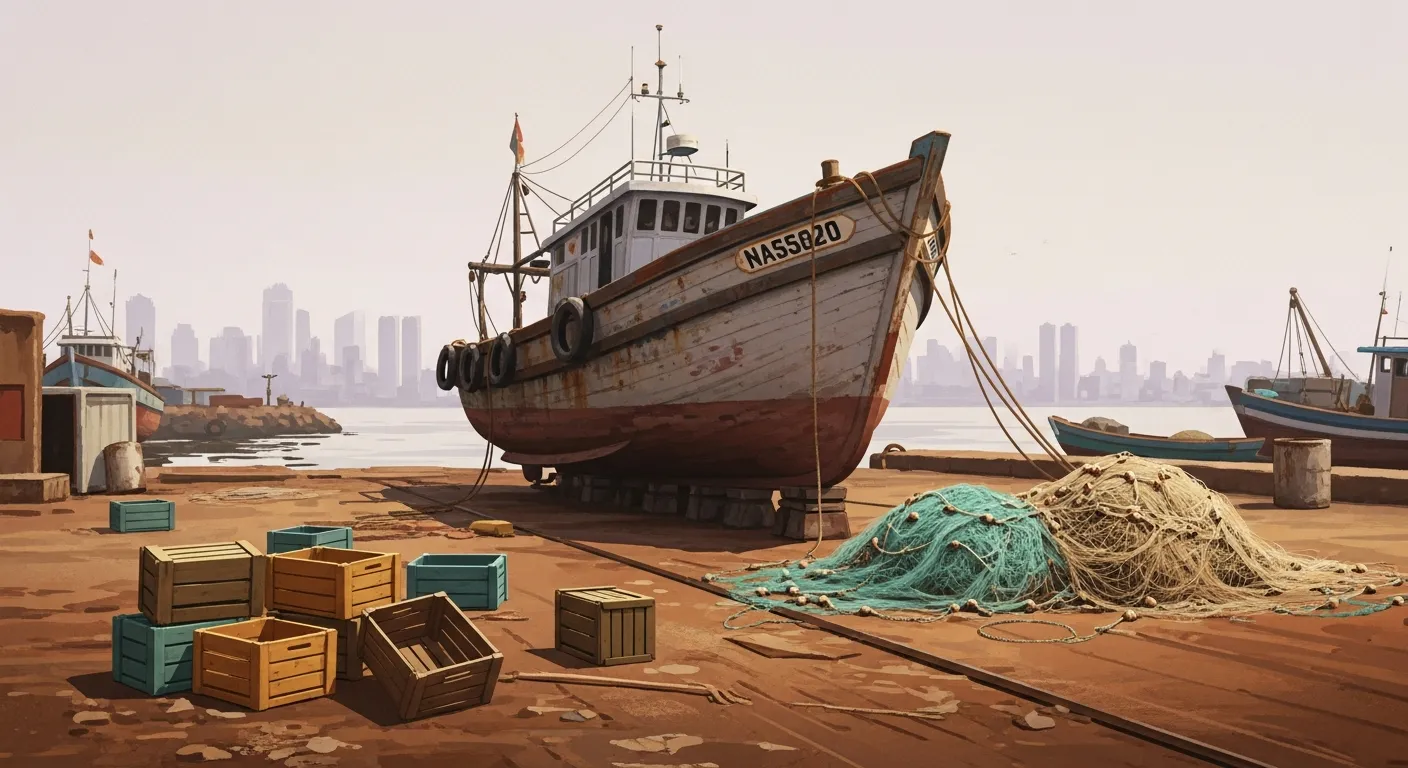
Generated by Imagen 4
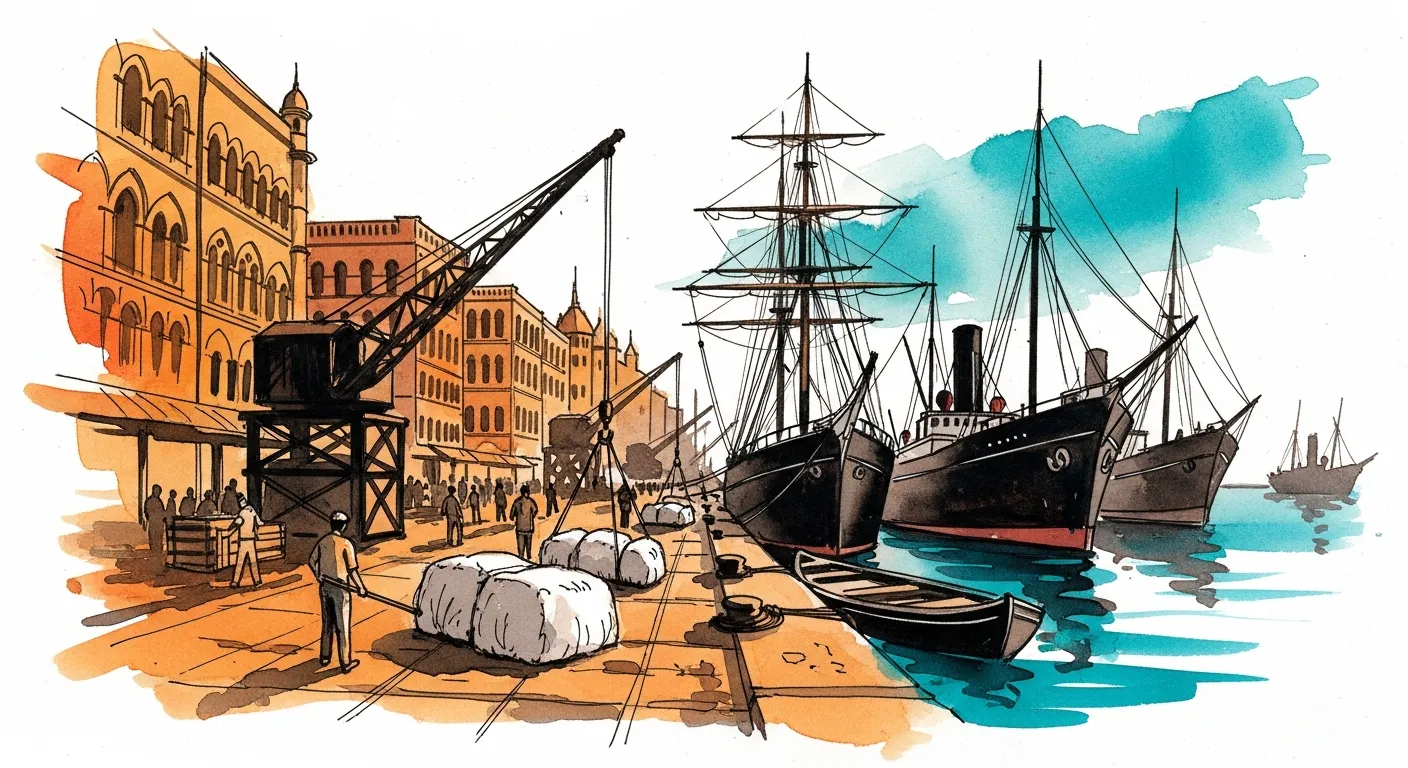
In 1875, a Baghdadi Jewish businessman named Albert Abdullah David Sassoon finished building a wet dock in Colaba. He did not build it for fish. He built it for cotton. His family had moved from Baghdad to Bombay in 1832, escaping the Pasha of Baghdad's persecution, and within two generations they were running a trading empire that stretched from Shanghai to Manchester. The dock was supposed to handle bales arriving from the mills of Lancashire. It was the first wet dock on the west coast of India. It cost twenty lakh rupees, a number that meant something in 1875.
The cotton trade collapsed faster than anyone expected. The Suez Canal opened in 1869. The American Civil War ended. Bombay's cotton boom went quiet by the 1870s. The Sassoons sold the dock to the Port Trust. The wet dock sat there, waiting for a different cargo.
The cargo arrived in wooden boats, pulled up from the Arabian Sea by men whose families had been fishing these waters for six hundred years before Sassoon was born.
They stayed.
THE COMMUNITY THAT WAS HERE FIRST
The Kolis named the seven islands. Mumbai itself comes from Mumbadevi, the Koli goddess whose temple predates every church, every mosque, every fire temple in this city. When the Portuguese arrived in 1534, the Kolis were already here. When the British took over in 1661 as part of Catherine of Braganza's dowry, the Kolis were already here. When Sassoon broke ground in Colaba in 1872, the Kolis were already here, in Machimar Nagar a few hundred metres away, drying bombil on bamboo racks the way their grandmothers had.
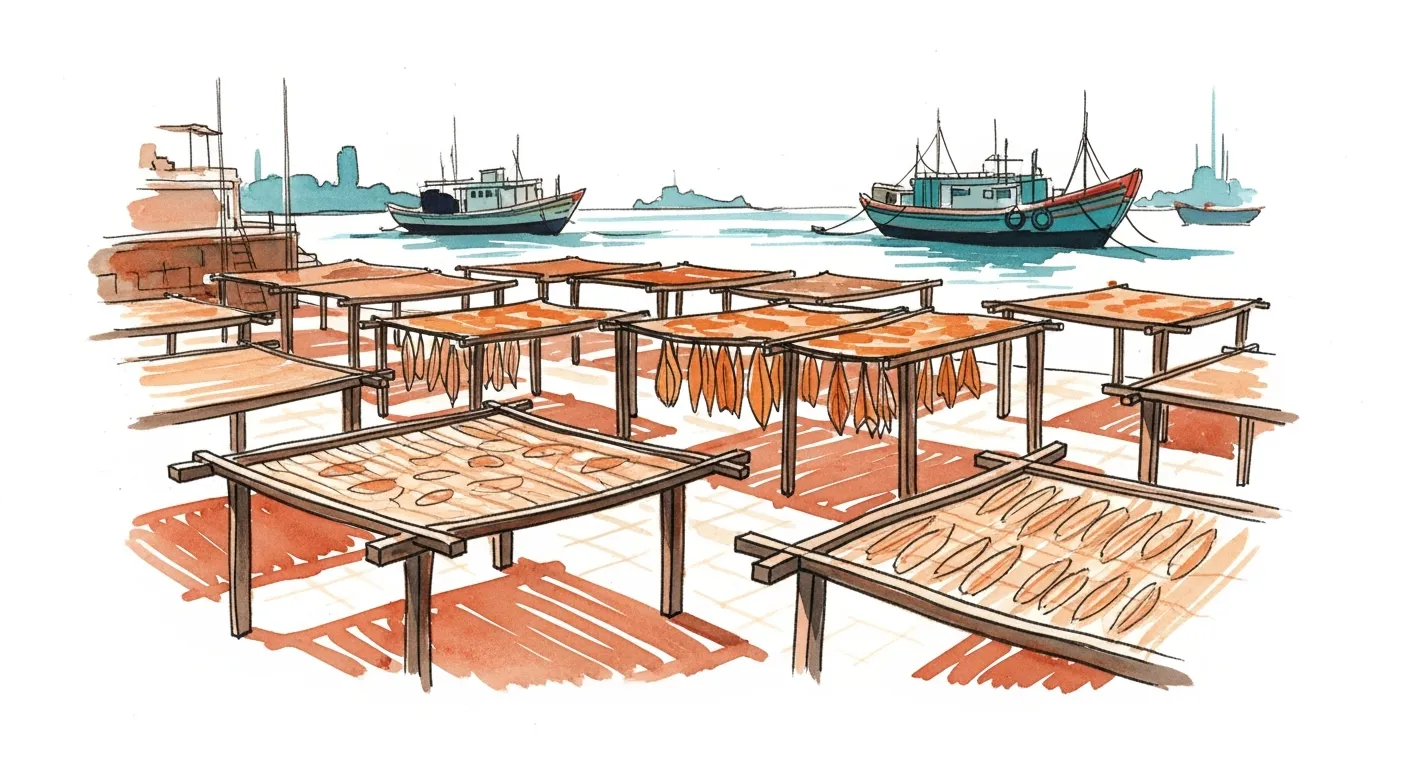
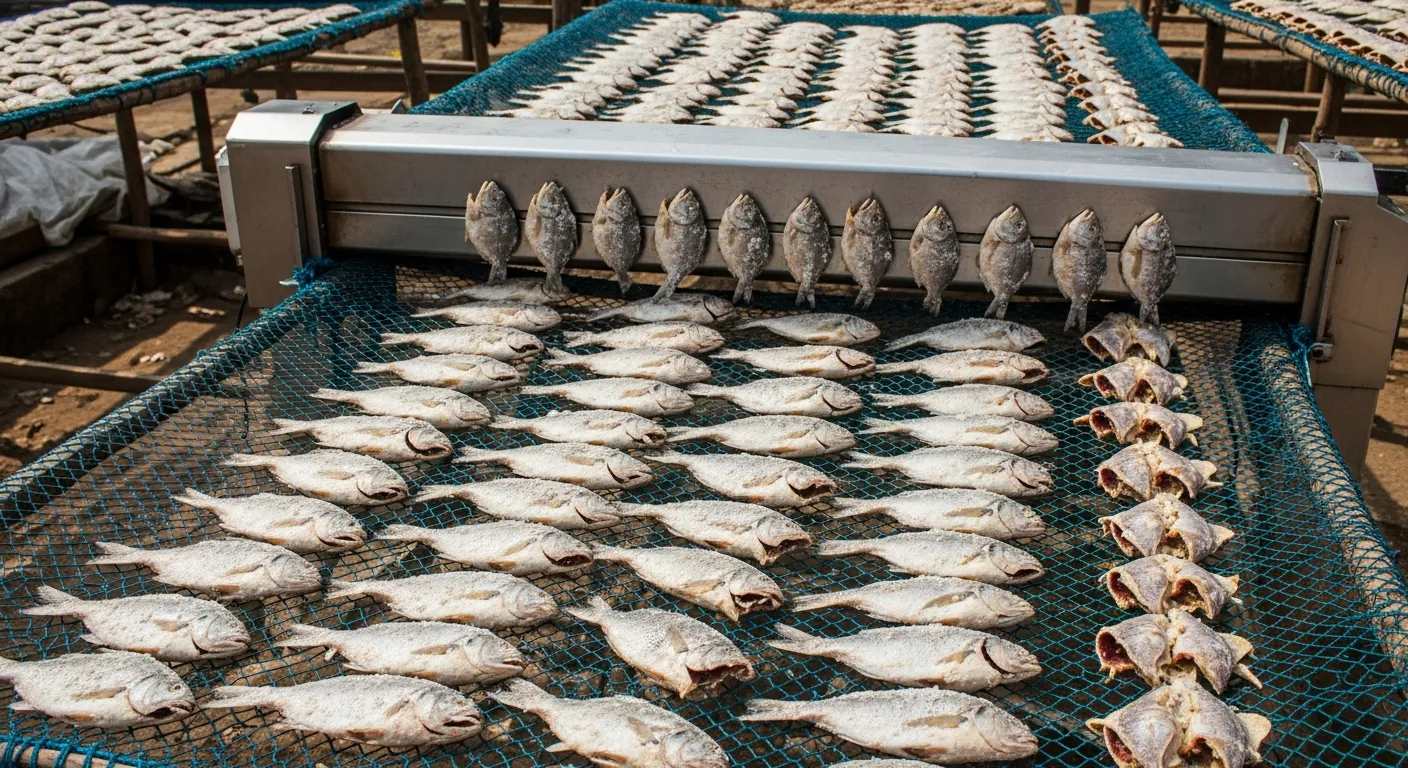
The technique is older than the dock by several centuries. Bombil, the Bombay duck, is not a duck. It is Harpadon nehereus, a translucent lizardfish with almost no skeleton, that rots within hours of leaving the water. The Koli solution, developed over generations, was to gut it, salt it lightly, and hang it on bamboo frames called vala in the sea breeze for three to five days. The sun does half the work. The wind does the other half. What comes out is sukha bombil, a stiff, pungent stick of preserved protein that lasts months.
The recipe that follows is older than the preservation. Sukha bombil chutney. Sukha bombil fry with kokum. Bombil aamti with red Konkani masala. Each Koli household has its own ratio of garlic to red chilli to teppal, the Sichuan-pepper cousin that grows wild along the Konkan coast.
Nobody talks about the racks. Everybody talks about the boats.
THE BAN THAT BROKE THE BACK
In June 2024, a state directive prohibited fish sales at Sassoon Dock itself. The dock could land fish. It could not retail fish. Over 500 Koli women and hundreds of traditional fishers in Colaba and Cuffe Parade lost the floor they had been selling on for generations, according to Hindustan Times.
The women are the ones who run the sukha business. The men go out at 4am. The women take what comes back, sort it, salt what cannot be sold fresh, hang it on the racks, and sit at the dock from 6am selling the rest. The sukha is the margin. The fresh fish has a six-hour window. The dried fish has a six-month one. When you cannot sell at the dock, the fresh fish has to move to a wholesaler at a discount, and the sukha has nowhere to go at all, because the customers who bought the sukha were the same customers who came for the fresh.
The economics of the Koli kitchen run on the margin between what sold today and what got hung up to dry.
THE COURT, THE COUNCIL, THE SOLID WASTE
The Bombay High Court has taken the position that Sassoon Dock requires essential modernisation to address pollution from solid waste generated by fishing activities, according to The Indian Express. The waste is real. Fish guts, ice slurry, plastic crates, oil from trawler engines. The dock smells like a dock that has been working for a hundred and fifty years, because it has.
The modernisation plan arrived from an unexpected direction. In 2024, the Maharashtra government signed an agreement with Finland for a technology-driven modernisation of Sassoon Dock, aiming to improve efficiency and increase fishermen's earnings, ET Infra reported. Finland has cold-chain technology. Finland has hygienic processing standards. Finland has, presumably, never tried to dry a bombil on a bamboo rack in 90% humidity with the sea wind doing the seasoning.
The question nobody is answering is what happens to the racks.
Industrial fish processing, the kind the modernisation plan envisages, requires enclosed cold rooms, stainless steel surfaces, mechanical drying tunnels. The mechanical tunnel produces a product that is technically dried fish. It is not sukha bombil. The taste comes from the salt-air ferment that happens in three days of open exposure. Remove the open exposure and you remove the dish.
THE WHATSAPP REPLY
The Koli women are not waiting for the government to figure this out.
A group of them have formed Daryavardi Producer Company Limited, a registered company that handles branding, packaging, and WhatsApp orders for traditional Koli seafood, Times of India reported. The structure is unusual. A producer company is a hybrid between a cooperative and a private limited company, a legal form created in India in 2002 specifically to let primary producers, fishers, farmers, weavers, retain ownership while accessing modern capital and markets.
DPCL members take orders through WhatsApp, vacuum-seal sukha bombil and sukat (dried shrimp) and karandi, and ship across Mumbai and to Koli diaspora customers in Pune, Bengaluru, and the Gulf. The same women who lost their dock-floor selling space in June 2024 are now invoicing in GST and shipping bubble-wrapped fish to apartments in Wakad.
The kitchen got a logistics department before the government got around to fixing the dock.
WHAT THE SEA IS DOING
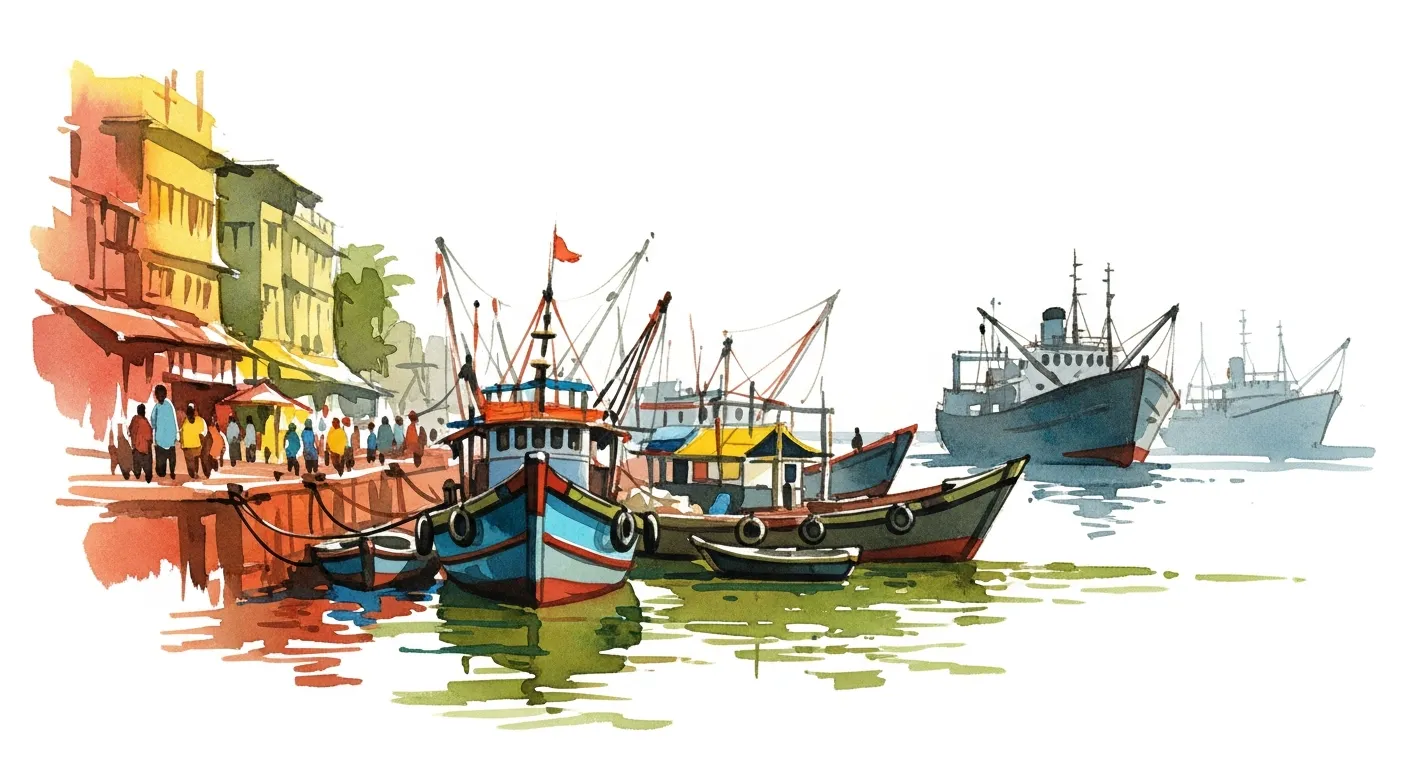
The other half of the problem is not on land. The Mumbai Koli Project documents how rapid urbanisation and ongoing climate pressures are reshaping the community and straining their traditional livelihood, The Locavore reported. The catch is changing. Bombil itself, the fish the city is named after in spirit if not in word, is getting smaller and arriving later. Pomfret has moved further out. Surmai is being trawled before it reaches the shallow water Koli boats can work.
The Kolis fish with gill nets and small mechanised boats called hodi. The industrial trawlers fish with bottom-dragging gear that takes everything. The dock that lands the Koli boats also lands the trawlers. The same ice. The same crates. Two completely different economic models pretending to share a floor.
THE RACK IN MACHIMAR NAGAR
Walk five minutes from the Sassoon Dock gate and you are in Machimar Nagar. The racks are still there. Bamboo frames, head-height, with bombil clipped on by the tail, hundreds at a time, swaying slightly in the wind off Back Bay. The women who set them up at dawn check them at dusk. They turn the fish so both sides catch the sun. They pull the ones that are ready and replace them with that morning's catch.
This is the oldest food processing plant in Mumbai. It has no roof, no walls, no licence number, and no replacement.
The Finland deal will not touch Machimar Nagar. The deal is for the dock. But the dock is where the fish comes in, and the rack is where the fish becomes sukha, and the kitchen is where the sukha becomes dinner, and all three are one system that the women have run, profitably, for longer than the city has had a name.
Albert Sassoon built a wet dock for cotton in 1875. The cotton went away. The fishers stayed.
The fishers are still here. The question is whether the racks will be.
Field Notes
Quick referenceSassoon Dock opened in 1875 as the first wet dock on India's west coast. It was built for cotton. It never saw a single bale.
Machimar Nagar sits five minutes from the dock gate. The bamboo drying racks have been there longer than any building in Colaba.
Bombil (Harpadon nehereus) rots within hours of leaving the water. The Koli solution: gut, salt, hang in sea breeze for three to five days. The technique predates the dock by centuries.
June 2024: a state directive barred fish retail at Sassoon Dock. Over 500 Koli women lost the floor they had sold on for generations.
Daryavardi Producer Company Limited: registered, GST-invoiced, WhatsApp-operated. Koli women shipping vakuum-sealed sukha bombil to Pune, Bengaluru, and the Gulf.
Get the next story first
Join the Bhukkads. Free, no spam, just stories.
Takes 30 seconds.