The Word 'Punch' Came From Here. Mumbai Forgot. The World Didn't.
Five ingredients. One Hindi word. Four hundred years of cocktails that started on this coast and came back as something else.
Generated by Imagen 4
In 1632, a German traveller named Albert de Mandelslo arrived in Surat and watched English sailors drink something he had never seen before. Spirit, sugar, water, citrus, spice. Five ingredients. He wrote it down in his journal because it was new to him, but it was not new to anyone on that dock. The locals had been making it for generations. They called it paanch. Five. Because that is what it was. Five things in a bowl.
The sailors took it back to London. London anglicised the word. By the 1660s it was appearing in Samuel Pepys' diary. By 1700 it was the most popular drink in the English-speaking world. By 1850 every American bar had a punch bowl on the counter. By 2025 every cocktail menu in Brooklyn has a 'punch' section and the bartenders writing those menus do not know that the word in their mouth is a Hindi numeral.
This is the part that nobody talks about.
The cocktail did not come to Mumbai. The cocktail came from Mumbai. Or close enough. From this coast. From Surat, Madras, Calcutta, the three port cities where East India Company men first learned to dilute their arrack with lime and jaggery because the spirit alone would close a man's throat. The oldest mixed drink in the modern bartender's vocabulary is a Bombay invention that travelled west, mutated for four centuries, and is now arriving back at Colaba bars in a coupe glass with a dehydrated citrus wheel, charging eight hundred rupees, and being called 'innovative.'
The drink came home. It just took the long way.
THE FIRST BARTENDERS WERE NOT BARTENDERS
They were cooks. They worked in factory kitchens for the English East India Company, feeding traders who were sick, homesick, or both. The arrack was local, distilled from coconut sap or palm jaggery. The citrus was local. The sugar was local. The spice was local. The only foreign thing in the bowl was the man drinking it.
For most of the next three hundred years, Bombay drank what was poured for it. Toddy in the Koli settlements. Feni when the Goan trade routes opened. IMFL when the Bombay Prohibition Act of 1949 made everything else legally complicated. The cocktail, the descendant of paanch, lived its glamorous life elsewhere. New York. London. Singapore. It sent postcards home in the form of Tom Collinses at the Taj and Old Fashioneds at the Bombay Gymkhana. Nobody was making anything. They were pouring.
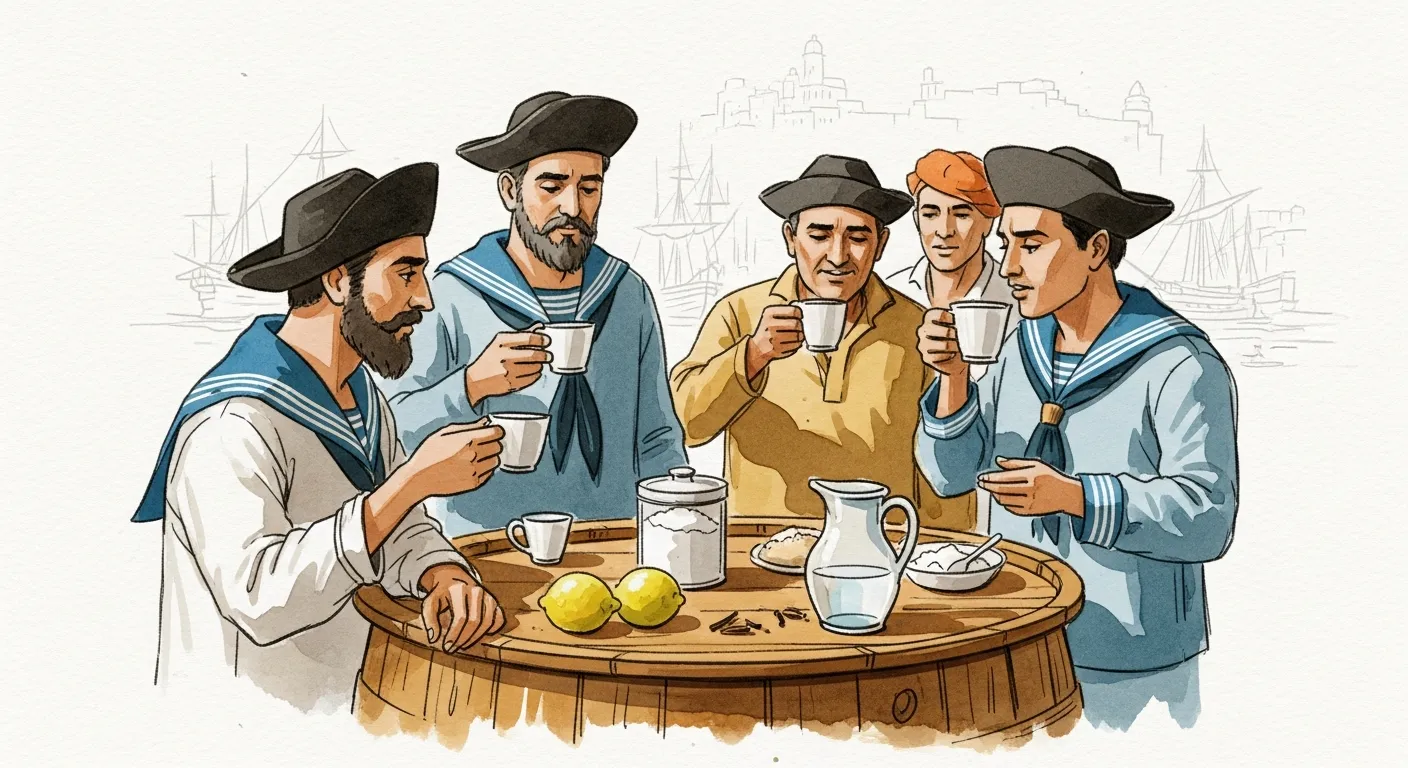
The drink that India invented came back to India as an import.
THE QUIET SHIFT
The contemporary Mumbai bar scene did not arrive with a manifesto. It arrived in pieces, the way these things always do.
First the speakeasies. PCO opened a Mumbai outpost with cocktails named after Indian textiles. You enter through a passcode. The menu reads like a swatch book. Jamdani. Ikat. Chanderi. Each drink is a fabric and the fabric is the flavour profile. It is conceptually heavy. It also works.
Then the indigenous-ingredient push. KMC Bar & Bistro building in-house liqueurs from desi spices. Ekaa folding Ayurvedic logic into the glass. Paradox treating tomato powder and egg white as base ingredients, not garnish. None of this is gimmick. Somebody, somewhere, finally remembered that the original paanch had five Indian ingredients, not five Italian ones.
Then the design-forward year. 2024 into 2025. Idoru Bombay opened around vinyl culture. Sharp cocktails, no maximalism, the bar built for the record and the record built for the drink. Call Me Sofia opened as an Italian-style aperitivo room, low-ABV, Campari-forward, the kind of place where you can have three drinks and still talk. Fielia opened invite-only. They call it Cocktail Cinema. Theatrical serves. You apply to drink there.
The loud era is closing. The intentional era is open for business.
THE PANTRY APPROACH
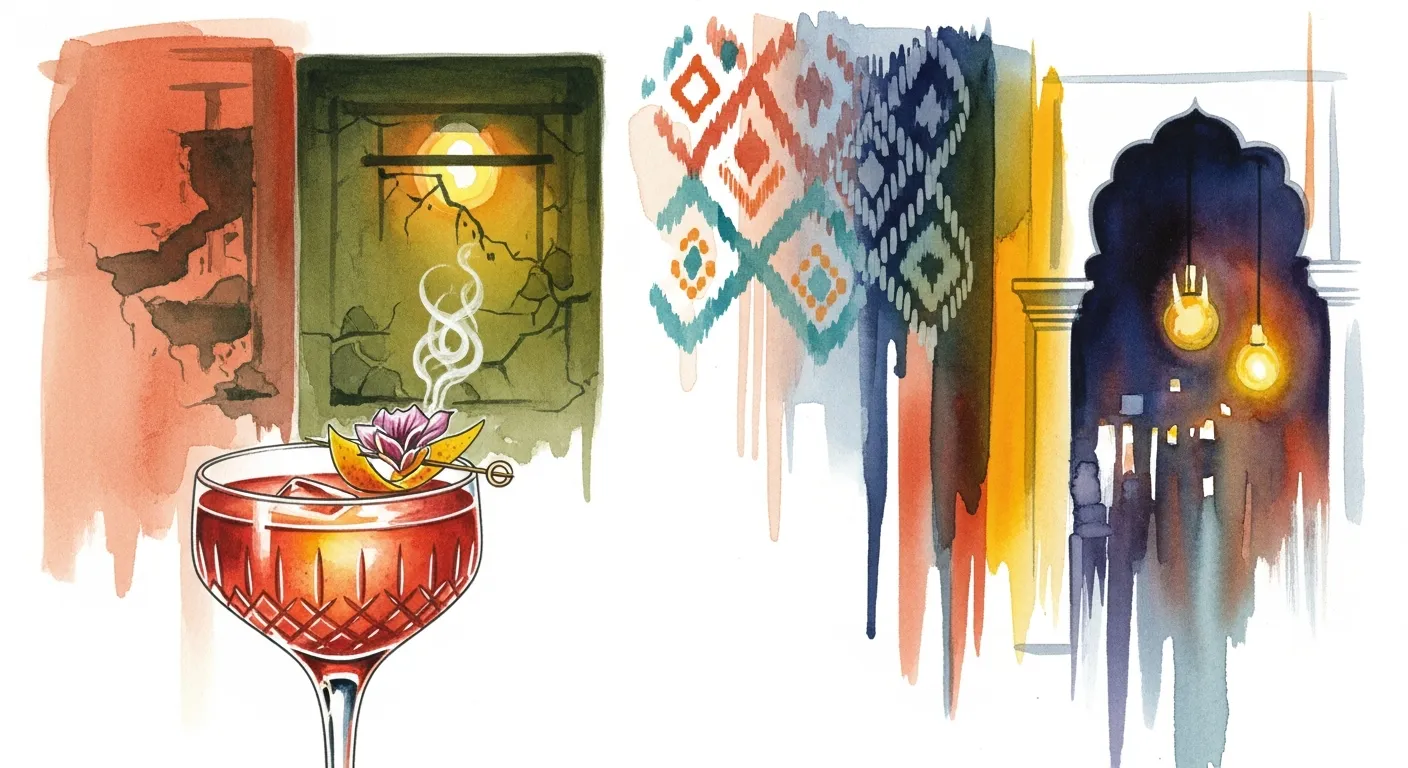
In Khar, a bar called Adam & Eve opened with a working method they call 'pantry-outward.' It is what it sounds like. You do not start with a classic and Indianise it. You start with what is on the kitchen shelf and build the drink from there.
Their current list, depending on the week, has used ponzu, enoki mushroom, brie, beeswax, and yerba mate. Read that again. Brie. In a cocktail. As an actual ingredient, fat-washed into the spirit. The brie is doing the same job that cream does in a White Russian. It is just doing it with more confidence and a sharper finish.
This is what the descendants of paanch look like in 2025. Five ingredients, still. Just five ingredients you would not have predicted.
THE CUTTING COCKTAIL
The best idea in Mumbai bar culture this year did not come from a fine-dining room. It came from someone watching a chaiwala pour.
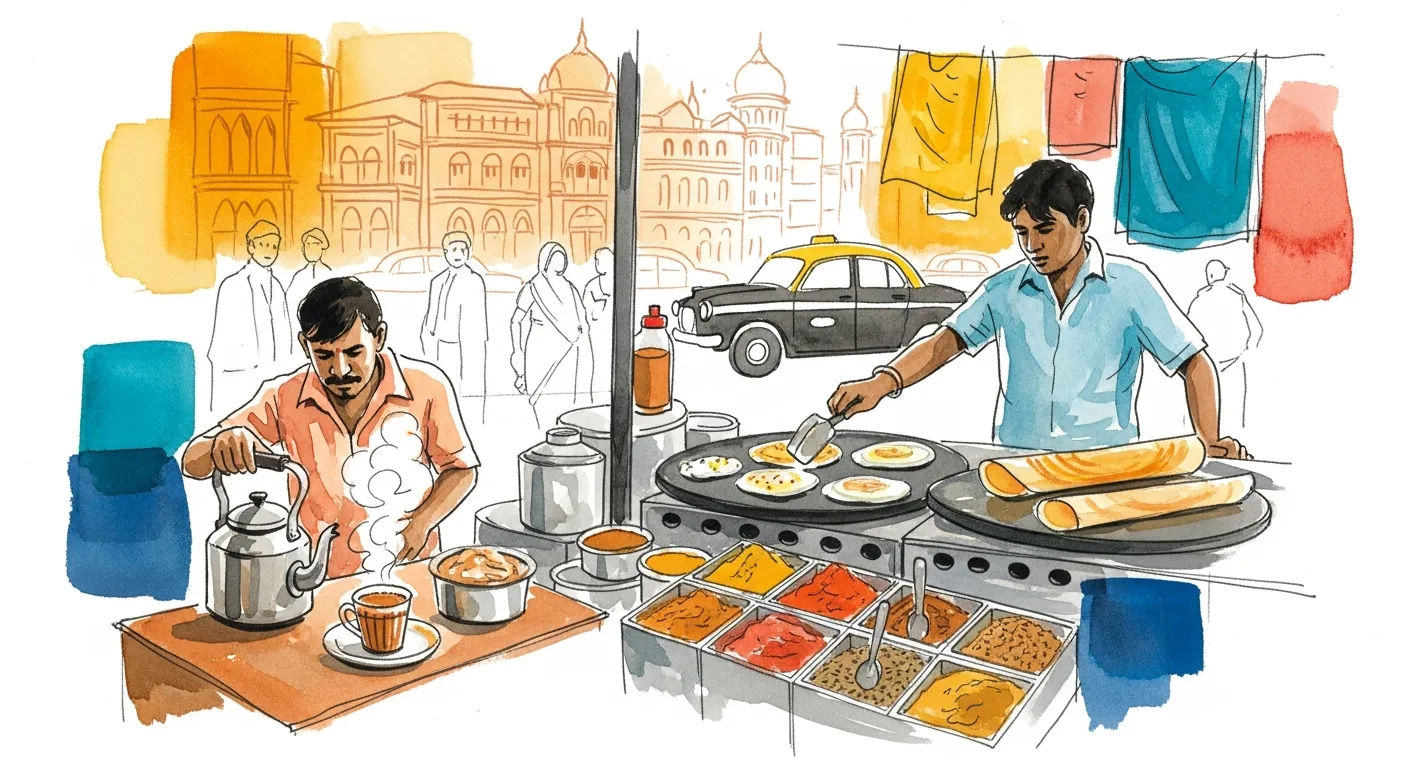
T24 Retro launched Mumbai's first Cutting Cocktail format in 2025. Half-sized serves. Sixty millilitre pours. Built on the logic of the cutting chai, the half-glass of tea that exists because nobody at a tapri has time for a full cup and everyone wants one more. The Mirchi Martini. The Tropical Chai. Designed to be ordered in twos and threes, drunk fast, talked over.
This is the most Bombay thing that has happened to the cocktail since paanch. The cutting chai is the city's most democratic ritual. Five rupees. Three minutes. Everyone drinks the same thing. T24 Retro took that grammar and applied it to the cocktail, which has spent two decades pricing itself out of the conversation. A cutting cocktail is not a sample. It is a complete drink, just sized for a city that is always running late.
The chaiwala invented portion control. The bartender finally listened.
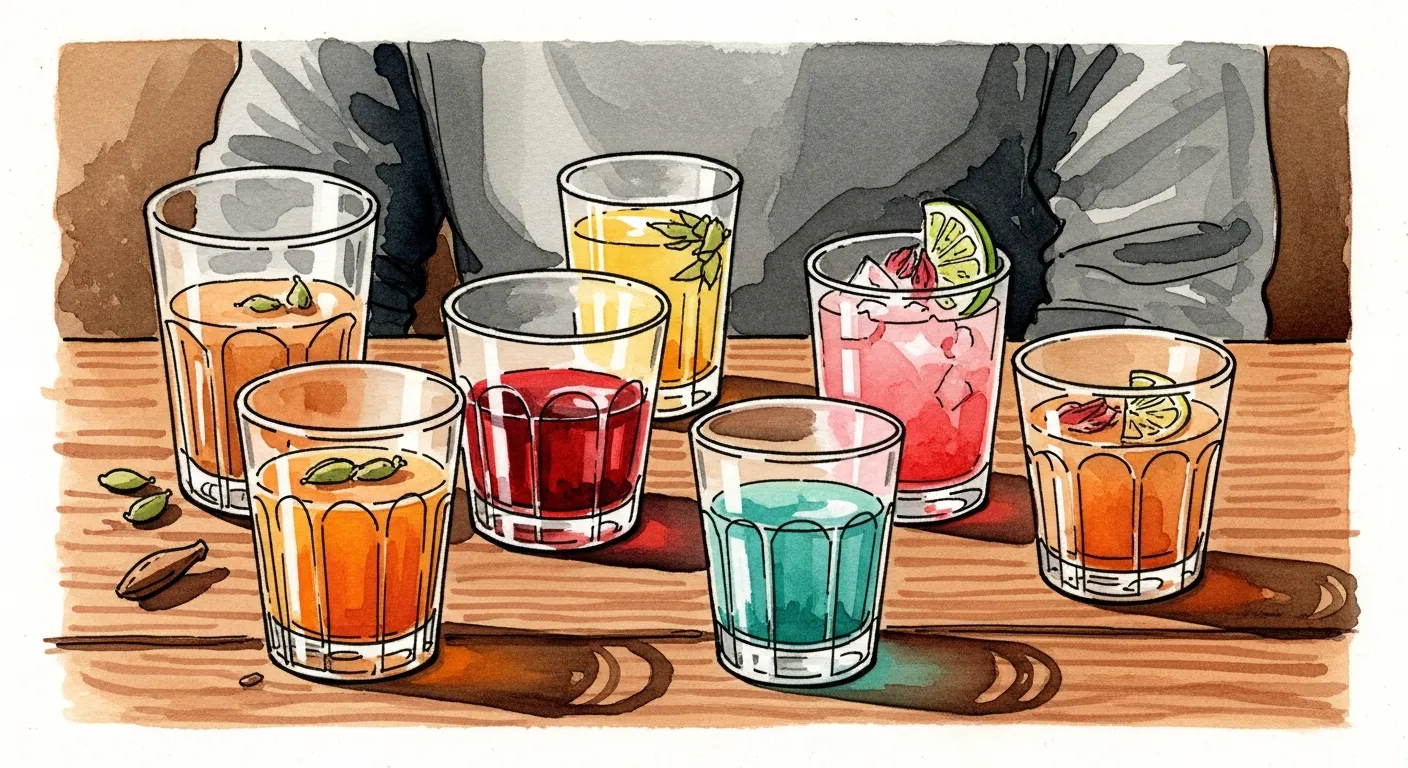
MAKING ONE AT HOME
The drink that has travelled the easiest into Mumbai home bars is the Mumbai Mule, a riff on the Moscow Mule that puts chaat masala where the original puts nothing.
The build is short. Sixty millilitres of vodka. The juice of half a lime. A small pinch of chaat masala, less than you think. Four mint leaves and four cilantro leaves, clapped between your palms before they go in, not muddled, clapped, so the oils release without the bitterness. Ice. Top with ginger beer, the spicy kind, not the sweet kind. Stir once. Garnish with a cilantro sprig and a lime wheel.
The chaat masala does the work. It carries black salt, amchur, cumin, the same flavour spine that is in every pani puri on every street in this city. You are drinking the chaat. The vodka is the carrier. The ginger beer is the punctuation.
Make it in a copper mug if you have one, a tall glass if you do not. The copper is not essential. The cold is.
WHAT TO ORDER, WHERE
If you want the textile cocktails, go to PCO. The passcode changes. Look it up before you leave the house.
If you want the pantry experiments, Adam & Eve in Khar. Sit at the bar. Talk to the person making your drink. Ask what is on the shelf this week.
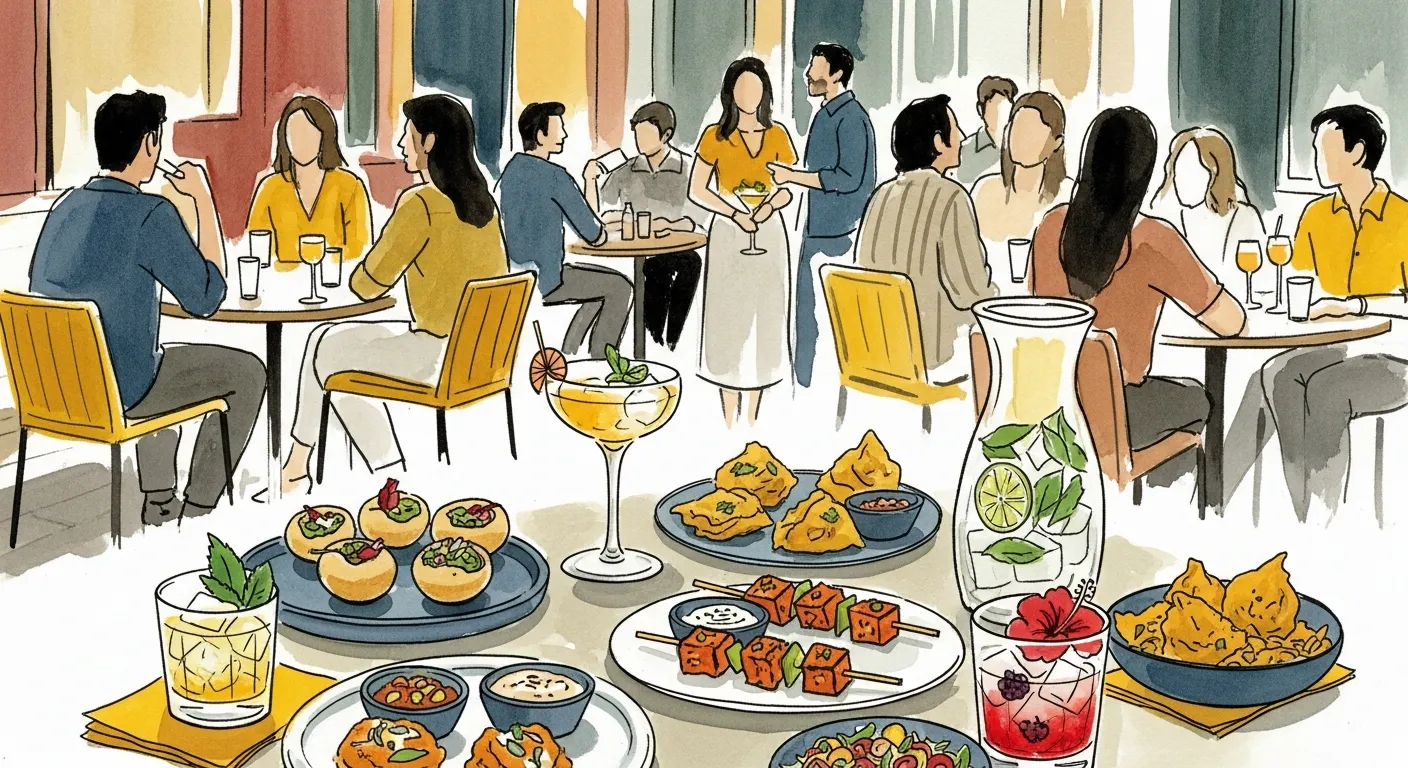
If you want the cutting format, T24 Retro. Order three. They are sized for it.
If you want the aperitivo hour without the aperitivo bill, Call Me Sofia. Low-ABV, high-conversation. Go on a Tuesday.
If you want the vinyl room, Idoru. Go for the record, stay for the drink. The order matters.
If you can get into Fielia, go. You probably cannot get into Fielia.
THE WORD THAT TRAVELLED
Mandelslo wrote down the word paanch in 1632. It was already old then. The English took it to London. The Americans took it to New York. The world took it everywhere else. For four hundred years, the cocktail was something that happened to other people, in other rooms, in other languages.
It is happening here again. In Khar, in Colaba, in a half-glass at a bar built like a tapri. The bartenders calling it innovation are right, mostly. They are just innovating on something this city forgot it invented.
Five ingredients. One Hindi word. The drink came back.
Field Notes
Quick referenceAlbert de Mandelslo documented paanch in Surat in 1632. The word was already old then.
Punch. From paanch. Hindi for five. The number of ingredients in the original bowl.
T24 Retro's cutting cocktails are 60ml pours, sized on the logic of the cutting chai. Complete drink. Not a sample.
Adam & Eve, Khar, builds cocktails pantry-outward. This week's menu has used brie, beeswax, and enoki mushroom.
The drink left this coast, became the world's most popular drink by 1700, and is now back at Colaba bars in a coupe glass at 800 rupees.
Get the next story first
Join the Bhukkads. Free, no spam, just stories.
Takes 30 seconds.