The Cocktail Didn't Change. The Bartender Did.
Mumbai's bars stopped importing their imagination. Now the drink in your glass tastes like the city that made it.
Generated by Imagen 4
In 1820, a British naval officer named Frederic Marryat walked into a bar in the United States and asked for a drink. What he got was a glass of spirits, sugar, water, and bitters, stirred with a stick. He wrote about it later in his diary, confused. He called it a "cocktail" because that was what the bartender called it. He had no idea what the word meant. Nobody did, really. The earliest known printed definition of "cocktail" had appeared only 14 years prior, in a Hudson, New York newspaper called The Balance and Columbian Repository, dated May 13, 1806. Four ingredients. That was a cocktail. Spirit, sugar, water, bitters. Everything that came after, for the next 219 years, has been an argument about how far you can stretch those four things before the drink stops being a drink and starts being a performance.
Mumbai, in 2025, is deep inside that argument.
THE PERMISSION STRUCTURE
For most of the twentieth century, drinking in Bombay was a simple transaction. You drank what was available. What was available was Indian-Made Foreign Liquor, a bureaucratic category that told you everything about the country's relationship with alcohol: foreign was the aspiration, Indian was the reality, and "made" was doing a lot of heavy lifting. Permit rooms, those fluorescent-lit halls of warm beer and cold purpose, were the architecture of legal drinking in a state that technically required a permit to consume. Maharashtra's liquor permit system, inherited from the Bombay Prohibition Act of 1949, was always more theatre than enforcement. But it shaped the culture. Drinking was tolerated, not celebrated. There was no room for a garnish. There was barely room for ice.
The first cocktail bars in Mumbai, the ones that arrived in the early 2000s with the hotel boom, did what early cocktail bars everywhere do. They imported. The menu was a photocopy of London or New York. The bottles were premium, the technique was correct, the bartender was invisible. You ordered a Cosmopolitan because you had seen it on television. The bartender made it because he had been trained to. Nobody was translating anything. They were transcribing.
Nobody was translating anything. They were transcribing.
THE TONGUE TURNED INWARD
The shift, when it came, was not about technique. It was about ingredients.
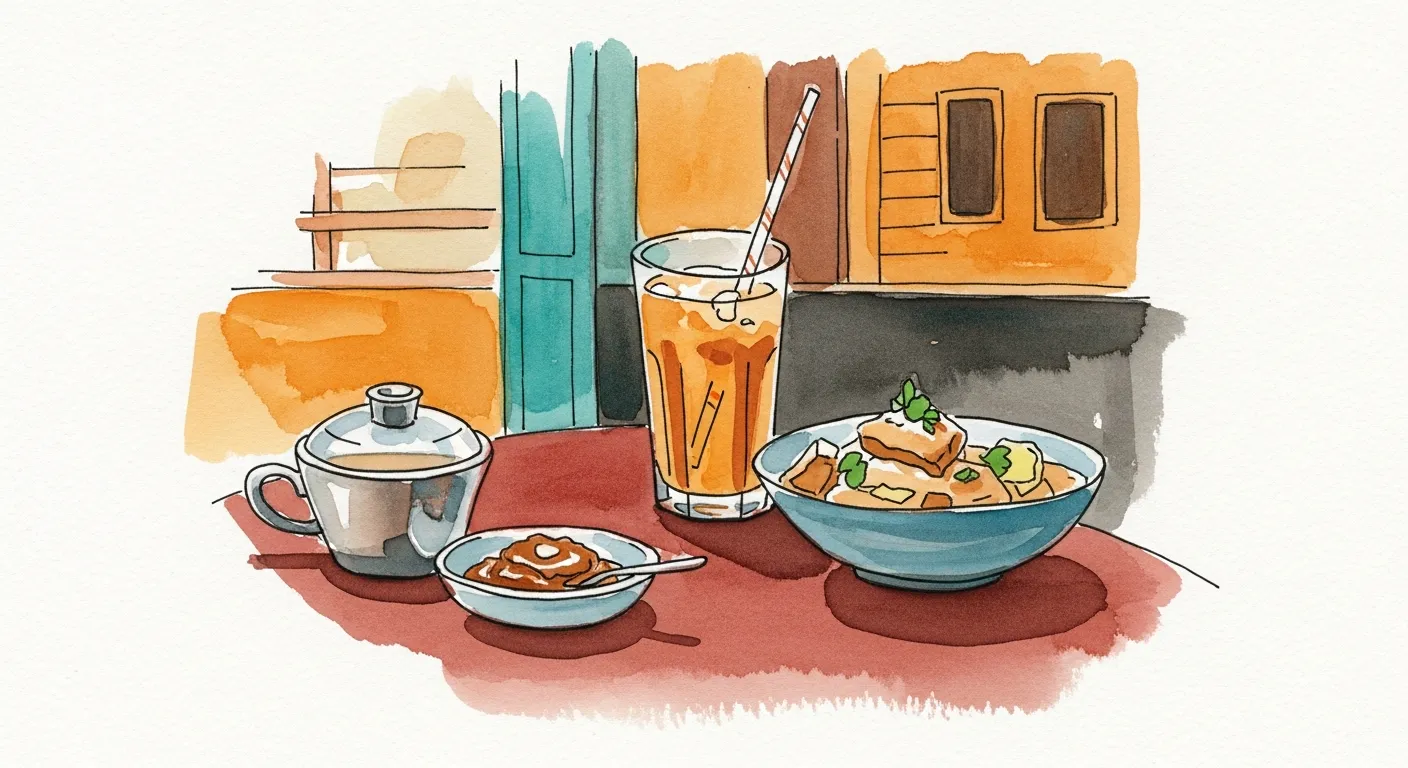
Someone, at some point, put tamarind in a glass and did not apologize for it. That was the revolution. Not molecular gastronomy, not smoke guns, not spherification. Just the quiet decision that jaggery, curry leaves, kokum, raw mango, gondhoraj lime, and black salt were not substitutes for anything. They were the point.
Bartenders in India are no longer mixologists. They are "flavour translators" and "storytellers," people whose job is to take what this land already produces and make it legible inside a coupe glass. Mumbai's bars are building menus around indigenous ingredients, not as novelty additions but as foundational choices. Tamarind is not a twist. It is the base.
This is the thing nobody talks about. The most important cocktail innovation in Mumbai in the last decade was not a drink. It was permission. Permission to use what was already in the kitchen.
THE BARTENDER WITH THE TITLE
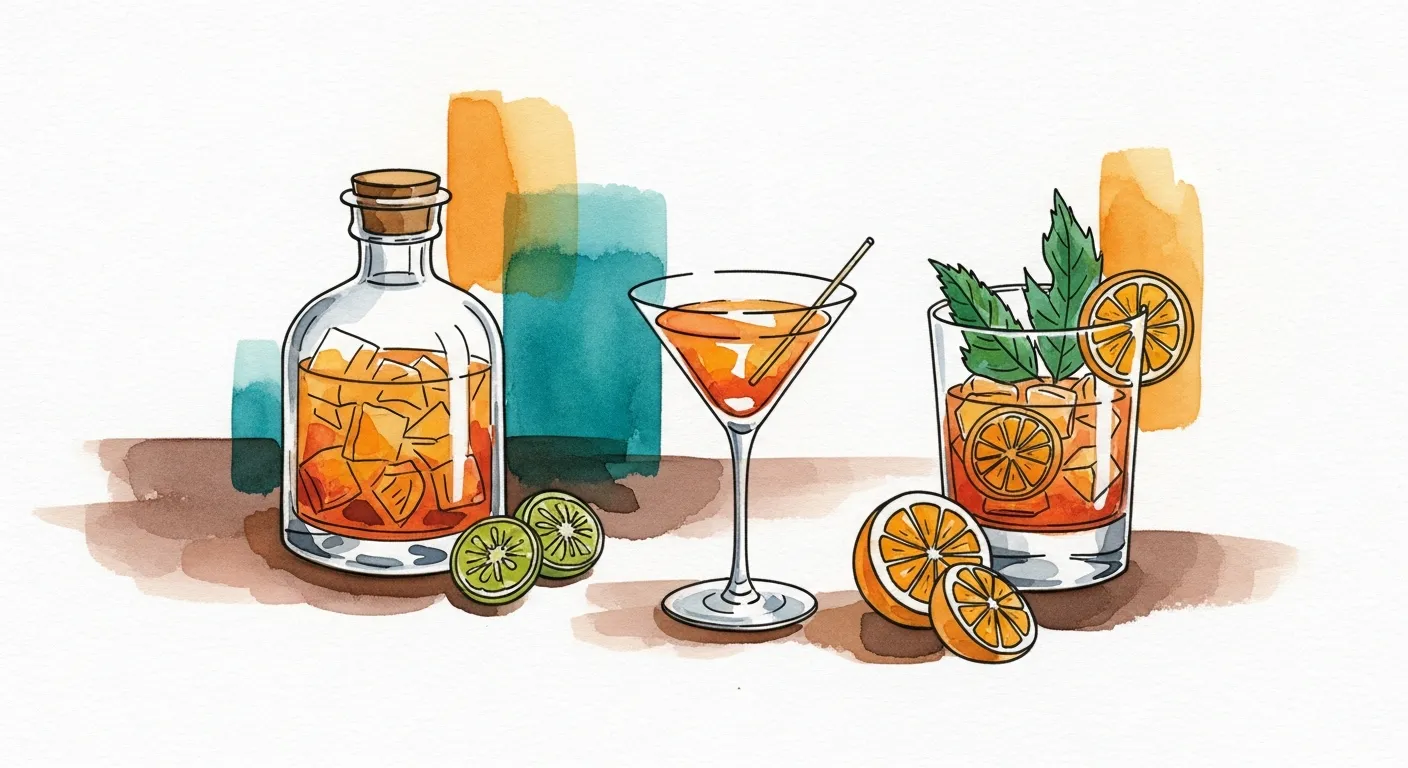
Karan Dhanelia won the World Class Bartender of the Year 2026. Think about that title for a moment. Not best Indian bartender. Not best Asian bartender. World Class Bartender of the Year. And his approach is built around savoury Indian produce. Not imported syrups. Not French liqueurs as crutches. The produce aisle of a sabzi mandi, reinterpreted.
Dhanelia's work is important not because he won a competition but because of what the win signals. An Indian bartender, working with Indian flavours, recognized globally. The direction of influence has reversed. For a century, Indian bars looked outward for vocabulary. Now the vocabulary is being generated here.
THE CINEMA
Then there is Fielia.
An invite-only bar inside a 100-year-old mill at Mahalaxmi Race Course. Designed by Gauri Khan. Billing itself as India's first "Cocktail Cinema." The menu is called Sin & Scandal, and it is not a list of drinks. It is a narrative. Each cocktail is a chapter. The bar is theatrical in the oldest sense of the word, not theatrical like a TikTok video but theatrical like a play where the lighting matters and the audience is complicit.
Fielia is doing something that Mumbai's bar scene has circled around for years without committing to: treating the cocktail as a complete sensory object. Not just flavour. Not just presentation. The room, the sequence, the story, the reveal. This is not a bar with a theme. This is a bar that has decided the drink is the least interesting part of the experience, and built everything else around making you disagree.
The drink is the least interesting part of the experience. The bar is built to make you disagree.
THE MYSTERY
At the other end of the spectrum, in Juhu, sits Kojak. A mystery-led cocktail bar. Head Mixologist Ratan Upadhyay builds drinks around stories, around quiet intrigue, around the idea that what you do not know about the glass in front of you is more interesting than what you do.
Kojak's approach is the inverse of Fielia's maximalism. Where Fielia stages a production, Kojak stages a question. The storytelling is embedded in the drink itself, not in the decor. You are not watching a cocktail being made. You are being asked to figure out what you are drinking.
These two bars, opened within the same city in the same era, represent the two poles of what Mumbai's cocktail scene has become. One is spectacle. The other is riddle. Both refuse to simply hand you a glass and walk away.
THE GEOGRAPHY OF AFTER DARK
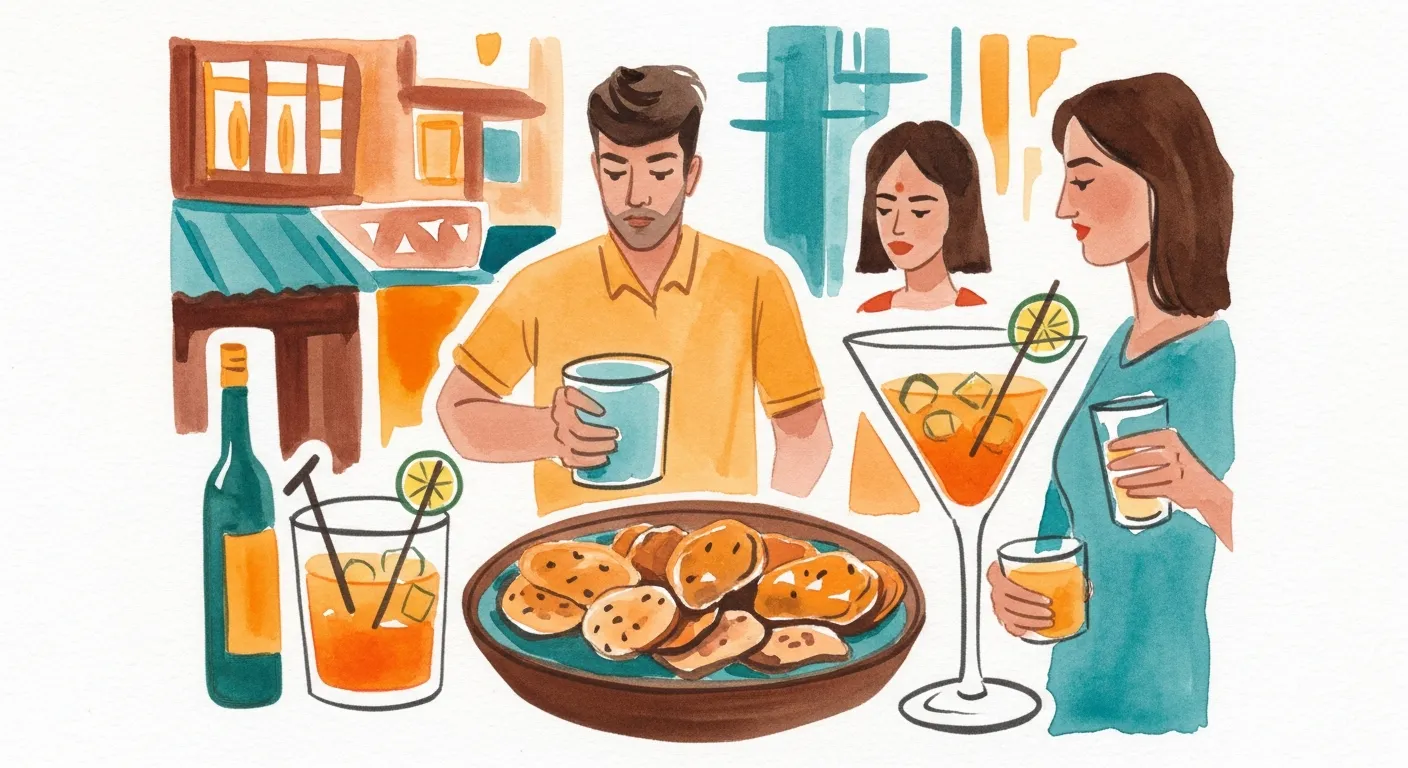
Mumbai drinks in corridors. Lower Parel's mill-compound conversions. Bandra's Linking Road-to-Hill Road stretch. Colaba behind the Causeway. Juhu's quiet lanes where the sound insulation is the distance from the main road. Andheri's Lokhandwala cluster, where the bartenders know your Uber driver's name.
Each neighbourhood drinks differently. Colaba drinks with tourists and legacy. Bandra drinks with ambition and noise. Lower Parel drinks in converted industrial spaces where the exposed brick is doing the work of a personality. Juhu drinks late, because Juhu does everything late.
But here is the thing about Mumbai after 1 AM. The city does not wind down. It renegotiates. The 1:30 AM permit extension that bars fought for years to get did not create a new drinking culture. It revealed the one that already existed. People were already out. They were just drinking in cars, on Marine Drive, in after-parties that started the moment the bar shut. The permit extension simply moved the conversation back indoors, where the bartender could hear the order.
FOUR INGREDIENTS
Spirit, sugar, water, bitters. That was the original recipe. That was what confused Frederic Marryat in 1820.
Two hundred and five years later, in a 100-year-old mill in Mahalaxmi, a bartender is telling you a story about sin. In a quiet lane in Juhu, another is handing you a mystery. In a competition halfway across the world, a third is putting sabzi mandi produce into a coupe glass and winning.
The four ingredients haven't changed. The four ingredients were never the point.
The cocktail didn't change. The bartender did. And the bartender, finally, sounds like the city.
Field Notes
Quick referenceThe word 'cocktail' first appeared in print on May 13, 1806, in The Balance and Columbian Repository, Hudson, New York.
Spirit, sugar, water, bitters. Four ingredients. Everything since 1806 has been an argument about stretching them.
Someone put tamarind in a glass and didn't apologize for it. That was the revolution.
Fielia: India's first 'Cocktail Cinema' inside a 100-year-old mill at Mahalaxmi Race Course.
Kojak stages questions, not productions. You figure out what you're drinking.
Get the next story first
Join the Bhukkads. Free, no spam, just stories.
Takes 30 seconds.