The Pop-Up That Pays the Farmer First
A 1965 wholesale market law. A Khar living room serving 18 people. And a tomato that travelled 47 kilometres to get here.
Generated by Imagen 4
In 1965, the Maharashtra Agricultural Produce Marketing Committee Act was passed. It made one thing illegal: selling your own vegetables to whoever you wanted. If you were a farmer in Junnar or Karjat or Palghar, you had to sell through an APMC mandi. The mandi had a commission agent. The commission agent had a buyer. The buyer had a transporter. The transporter had a wholesaler in Vashi. The wholesaler had a retailer in Khar. The retailer had you.
Seven hands between the soil and the salad. Each one taking a cut. The farmer, at the end of all this, kept somewhere between 25 and 30 percent of what you paid.
This law was amended in 2017. Then again in 2020. Then the central farm laws happened, and were repealed, and the dust never quite settled. But the consequence of those amendments, the small clause that nobody fought over, was this: a farmer could now sell directly to a buyer outside the mandi. No commission agent. No middleman. Just a phone call and a tempo.
This is not a story about farm laws. This is a story about what happens when a chef in Khar gets the phone number.
THE LIVING ROOM ECONOMY
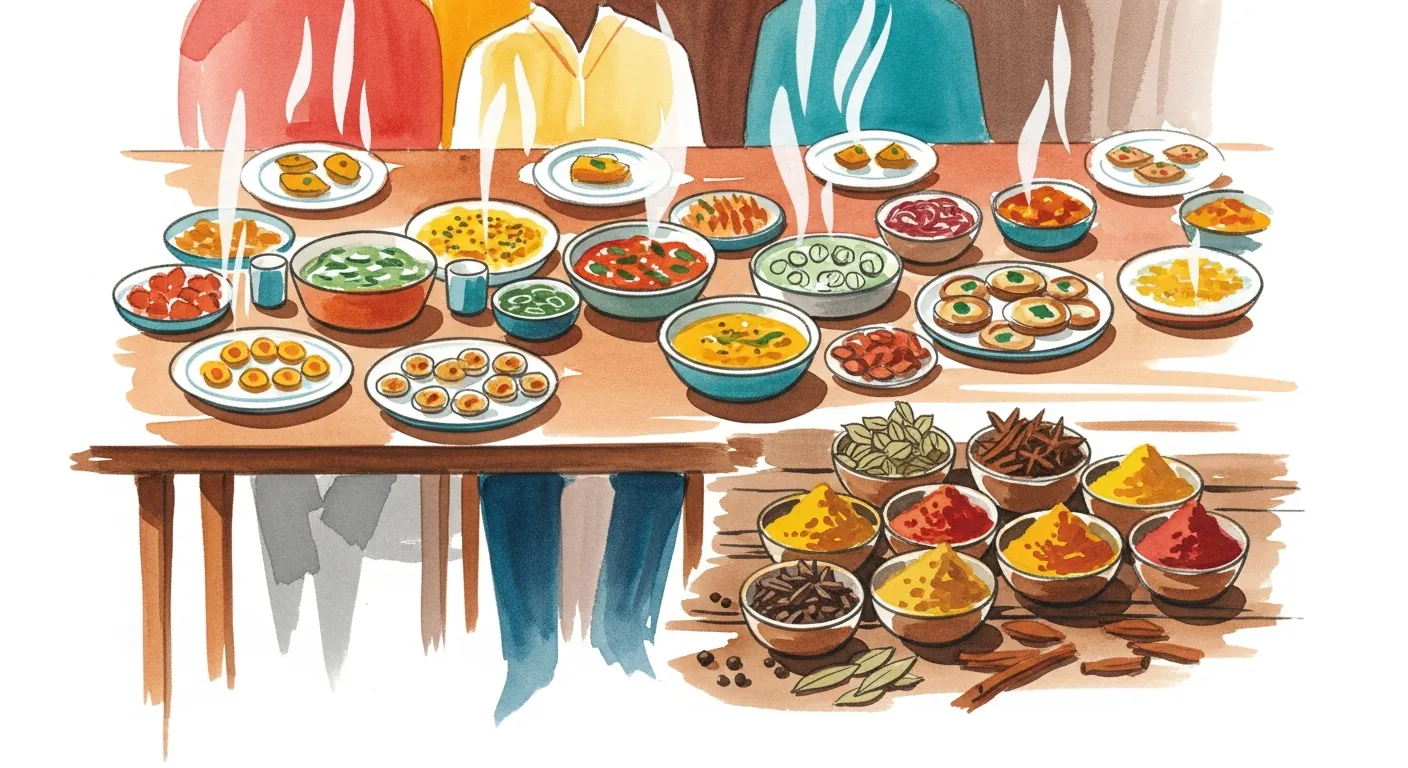
Nobody talks about the fact that the most interesting restaurants in Bombay right now do not have signboards. They do not have GST-compliant POS systems. They do not have Zomato listings. They have an Instagram handle, a WhatsApp number, and 18 chairs in somebody's living room in Khar West.
The format has a name now. Pop-up. The format is older than the name. Supper clubs in 1920s Harlem. Paladares in 1990s Havana. The Bohri thaal in any Bohri household on any Sunday. What is new is the supply chain.
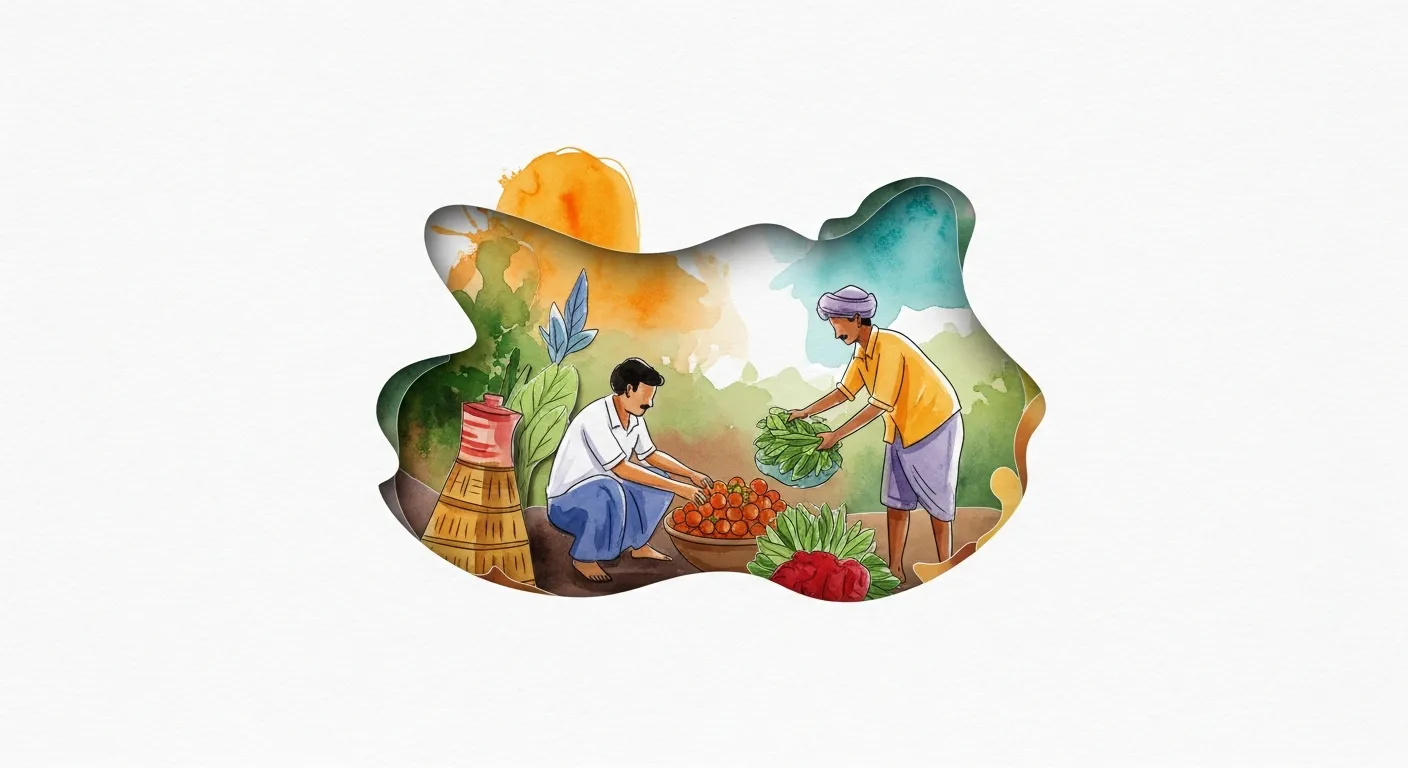
A conventional restaurant in Khar buys from a wholesaler who buys from Vashi who buys from the mandi who buys from the farmer. A pop-up in Khar, increasingly, calls the farmer. The phone call is the entire business model.
THE NUMBERS THAT MAKE IT WORK
These intimate kitchens serve their tight circles. Tickets run from 2,500 to 6,000 rupees. The chef is the owner is the dishwasher is the procurement officer. There is no kitchen brigade because there is no kitchen, just a home stove and a rented induction plate.
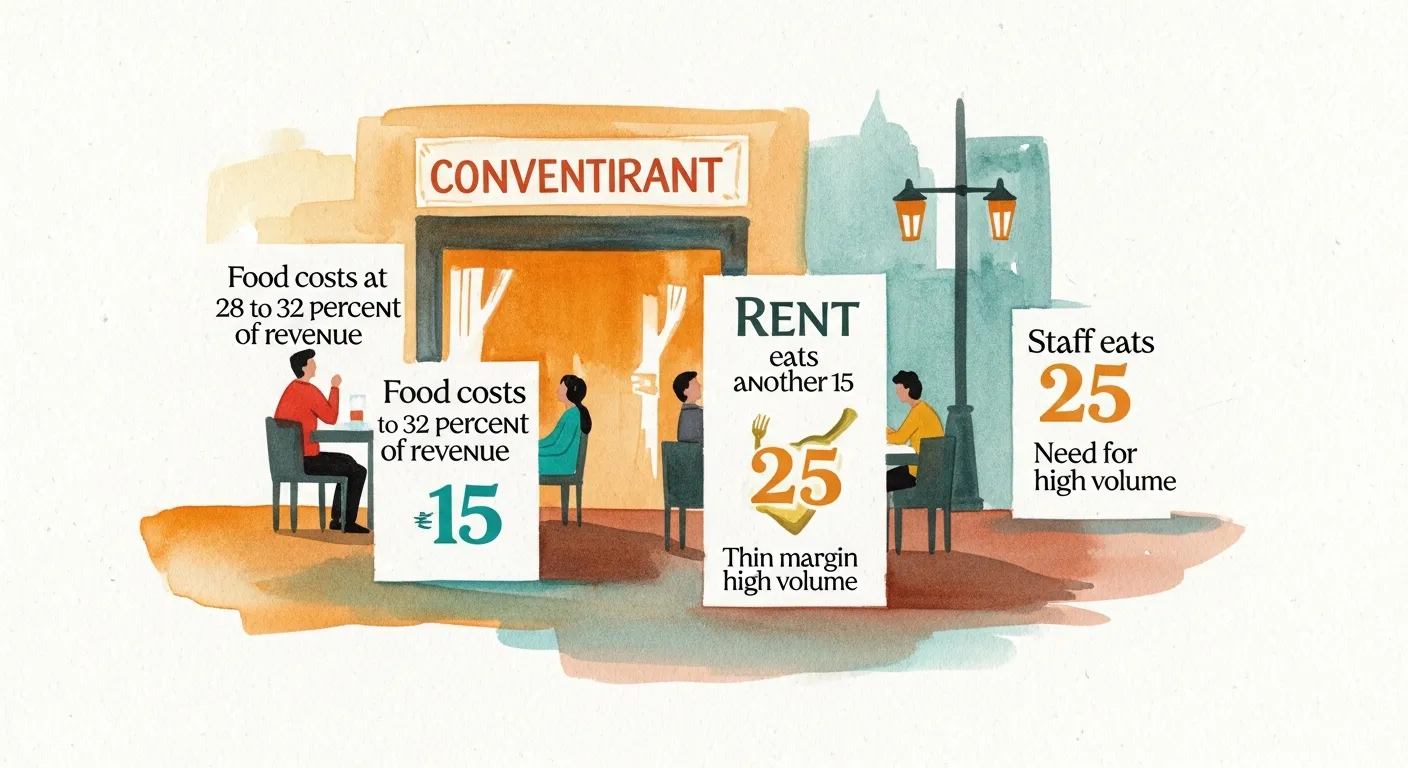
This is the economics that matter. A conventional Khar restaurant runs food costs at 28 to 32 percent of revenue. Rent eats another 15. Staff eats 25. The margin is thin and the volume has to be high.
A pop-up pays no rent. It pays no permanent staff. Its food cost can run at 45 percent and still leave more in the chef's pocket than a salaried sous role at a fine-dine. The 45 percent is what makes the farmer phone call viable. A wholesaler sells tomatoes at 40 rupees a kilo. A farmer in Junnar, called direct, sells the same tomato at 55. The pop-up pays more per kilo and still spends less per cover, because the cover is paying 4,500 rupees for 11 courses instead of 600 rupees for a thali.
The pop-up pays the farmer more. The diner pays the chef more. The middleman is the only one who loses.
WHAT THE GOVERNMENT FINALLY NOTICED
In September 2024, the Ministry of Agriculture began actively encouraging hotels and restaurants to source directly from Farmer Producer Organizations. India has roughly 35,000 FPOs, with 10,000 set up under government schemes. The pitch was straightforward. Cut out the mandi. Pay the FPO. Boost farmer income. Streamline supply.
The Taj has a sourcing officer. The Oberoi has a sourcing officer. ITC has a sourcing officer. They negotiate annual contracts at scale.
A pop-up has the chef, in pyjamas, on WhatsApp, at 10 PM, asking a farmer in Karjat whether the chillies he flagged on Tuesday are still on the plant.
This is not inefficient. This is the most efficient thing that has happened to Indian agriculture in 60 years. The chef wants 800 grams of one specific chilli. The farmer has 800 grams of one specific chilli. There is no minimum order quantity. There is no annual contract. There is a tempo at 5 AM and a kitchen at 11.
THE CSA QUESTION
Community-supported agriculture emerged in the mid-1980s as an American adaptation of Japanese farming cooperatives. The diner pays upfront for a season of produce. The farmer plants accordingly. Risk and reward shared.
In Bombay, the model has bent to fit the city. A handful of pop-up chefs have started running what they call subscription seats. You pay 18,000 rupees for six dinners across a season. The chef commits to specific farmers for specific crops. The farmer plants knowing those eight kilos of heirloom brinjal have a buyer in October.
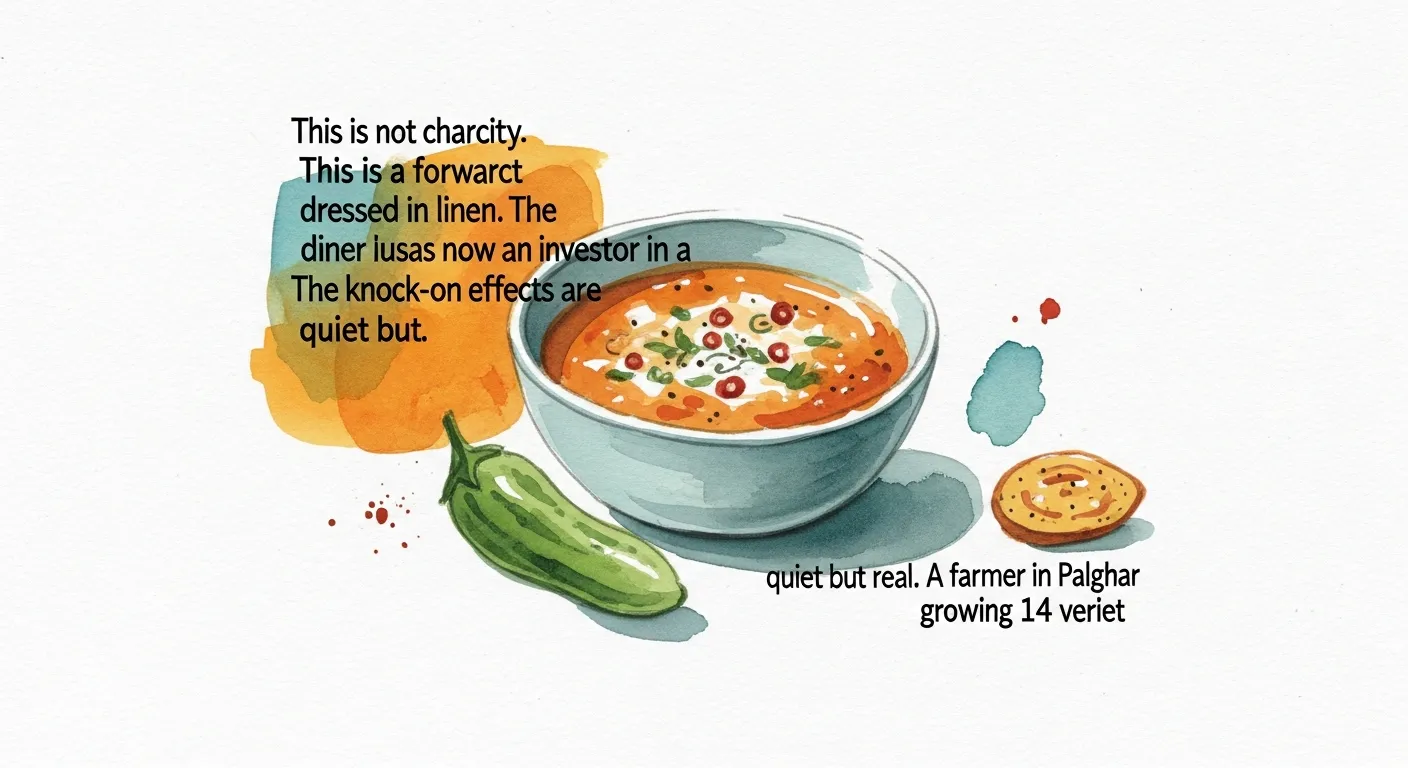
This is not charity. This is a forward contract dressed in linen. The diner is now an investor in a brinjal.
The knock-on effects are quiet but real. A farmer in Palghar growing 14 varieties of rice for one chef in Khar has expanded to four chefs. The same farmer, three years ago, was growing two varieties for the mandi. Two varieties, because that was what the mandi paid for. Fourteen, because that is what the kitchens want.
WHAT THE NUMBERS LOOK LIKE FROM THE OTHER END
Urban India drives nearly 70% of organic food purchases, per Earth5R's reporting on urban food systems. Mumbai is roughly a third of that. Khar, Bandra, Versova, Juhu, this is where the demand sits. Not because these neighbourhoods are more virtuous. Because they have the disposable income and the smartphone literacy to find a chef on Instagram and Venmo a deposit by Friday.
The same report notes that urban consumers now demand full traceability and certified organic sourcing. Traceability is the keyword. The pop-up chef can name the farmer, the village, the field, the date of harvest. The Khar fine-dine can name the supplier, sometimes. The wholesaler in Vashi can name the broker.
Traceability collapses with every hand the produce passes through. The pop-up has one hand. The fine-dine has three. The supermarket has seven.
Specificity is what people are paying for. The chilli has an address.
THE GATHERING, AND WHAT IT SIGNALLED
In early 2025, Mumbai hosted The Gathering, a festival featuring pop-up restaurants and chefs with a hyperlocal, ingredient-first approach. It was the first time the city's pop-up scene had a public address. Before that, it was WhatsApp groups and Instagram stories.
The festival did not invent the format. It catalogued it. And in cataloguing it, it told the FPOs in Junnar and Karjat and Palghar that the buyer they had been selling to in twos and threes now existed in dozens.
THE LIMIT
This model does not scale. That is not a flaw. That is the design.
A pop-up that grows to 60 covers stops being a pop-up. It needs a kitchen, a brigade, a license, a rent, a margin structure that the 45 percent food cost cannot support. The farmer phone call gets handed to a sourcing manager. The sourcing manager does not have time to ask whether the chillies on Tuesday are still on the plant. The sourcing manager calls the FPO, who calls the farmer, who is back to being a name on a list.
The pop-up works because it is small. The supply chain works because the pop-up is small. The middleman returns the moment the dining room expands.
This is why Khar has 30 pop-ups and not three big ones. The economics demand smallness. The sourcing demands smallness. The diner, increasingly, demands smallness.
THE CALLBACK
In 1965, the law said the farmer could not sell directly. In 2020, the law said he could.
It took a chef in a Khar living room, 18 chairs, and a WhatsApp message at 10 PM to actually make it happen.
Field Notes
Quick referenceMaharashtra APMC Act amendments in 2017 and 2020 finally let farmers sell direct to restaurants
Seven middlemen between soil and salad — farmer keeps 25-30% of what you pay
45% food costs work when covers pay 4,500 rupees for 11 courses instead of 600 for a thali
India has 35,000 Farmer Producer Organizations — 10,000 set up under government schemes
Pop-up knows farmer, village, field, harvest date — supermarket knows seven middlemen
Get the next story first
Join the Bhukkads. Free, no spam, just stories.
Takes 30 seconds.