The Word Punch Came From a Sailor's Ration. Mumbai Took It Back.
A bar in Bandra named after a Hindi numeral. A pour the size of a chai glass. An Elephanta Caves cocktail with 90 percent local ingredients. The Mumbai bar finally stopped translating and started writing.
Generated by Imagen 4
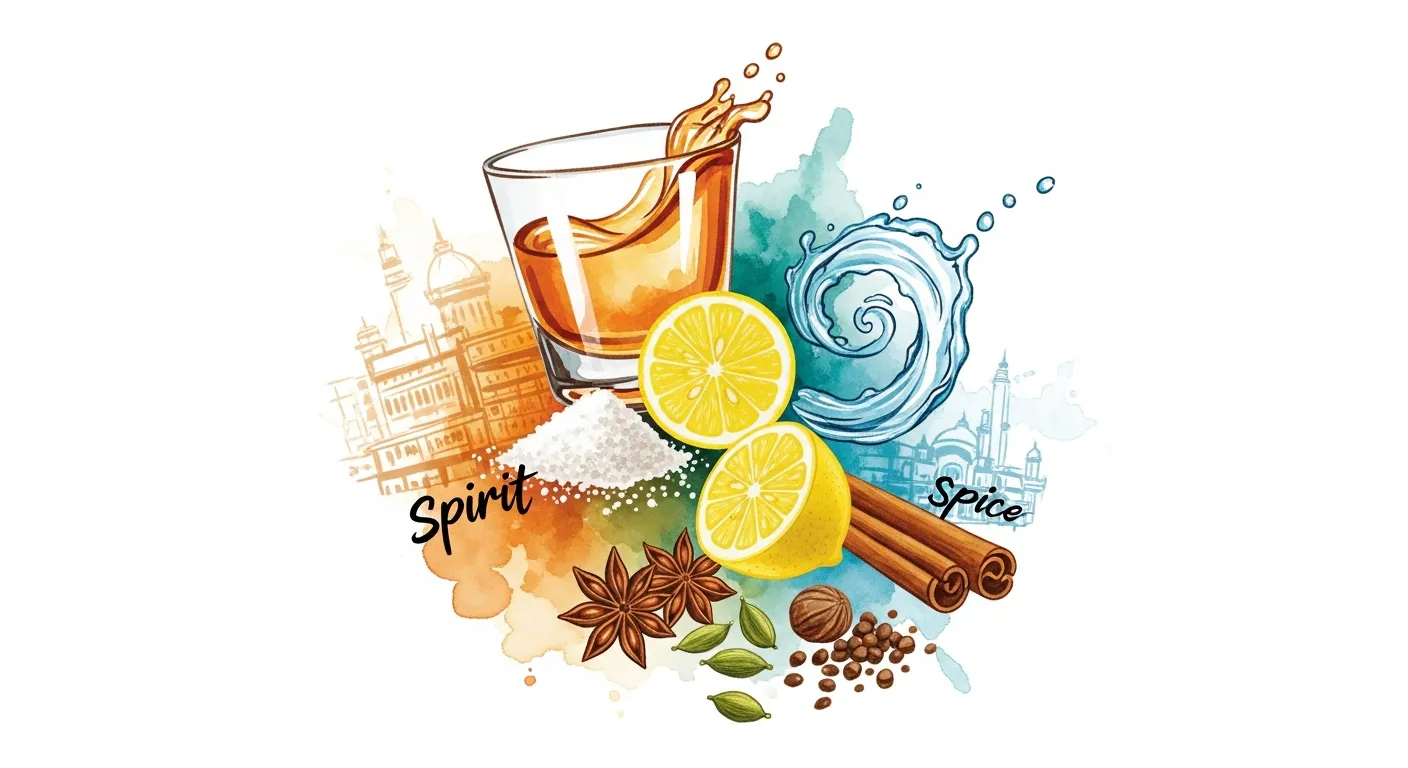
In 1638, a British sailor on an East India Company ship anchored off the western coast of India wrote down a recipe in his logbook. Five ingredients. Spirit, sugar, lemon, water, spice. He called it by the Hindi word for five. Paanch.
The word travelled back to London on the next ship. It lost a syllable somewhere in the Arabian Sea. By the time it reached a tavern in Wapping, it was punch.
For the next four hundred years, the British called it their invention. They wrote it into their cocktail manuals. They served it at their regimental dinners. They taught it back to the colonies as a civilising drink. The bowl in the middle of the table, the ladle, the floating slice of orange, all of it presented as something the English had brought to a country that did not know how to drink.
The country, of course, was the one that had named it.
THE BAR THAT TOOK THE WORD BACK
In Bandra, in 2025, a bar opened called Punchline. The premise is exactly what it sounds like. Every drink on the menu is built on the punch architecture, those original five ingredients, reinterpreted through a kitchen that has spent the last decade learning that the Indian pantry is not a garnish.
The bar makes the point Time Out makes for it. Punch was not imported into Mumbai. Punch was exported out of it. Bombay, Madras, Calcutta, the three port cities the Company built its trade on, were the three kitchens where the drink was invented. The sailors took it home. The British took the credit.
This is the part nobody talks about. Mumbai's cocktail scene, the one you read about in glossy roundups, did not arrive as a Western import that the city slowly indigenised. It is a returning emigrant. The drink came back. It always comes back.
Punch was not imported into Mumbai. Punch was exported out of it.
THE CUTTING THAT WALKED INTO A BAR
There is a glass in Mumbai that nobody calls a glass. 75 millilitres of brown liquid, scalding, sweet, served in a cylinder so small you hold it with two fingers and a thumb. The cutting chai. Half the pour. Half the price. Twice the conversation.
In early 2024, somebody at T24 Retro looked at the cutting chai and asked why the cocktail menu was still pricing itself like a sit-down opera. The Cutting Cocktail menu was the answer. A 35-seater garden courtyard inside Blend Kitchen & Bar. A Mirchi Martini. A Tropical Chai. Half-sized serves built for the 25-minute window between two other places you have to be.
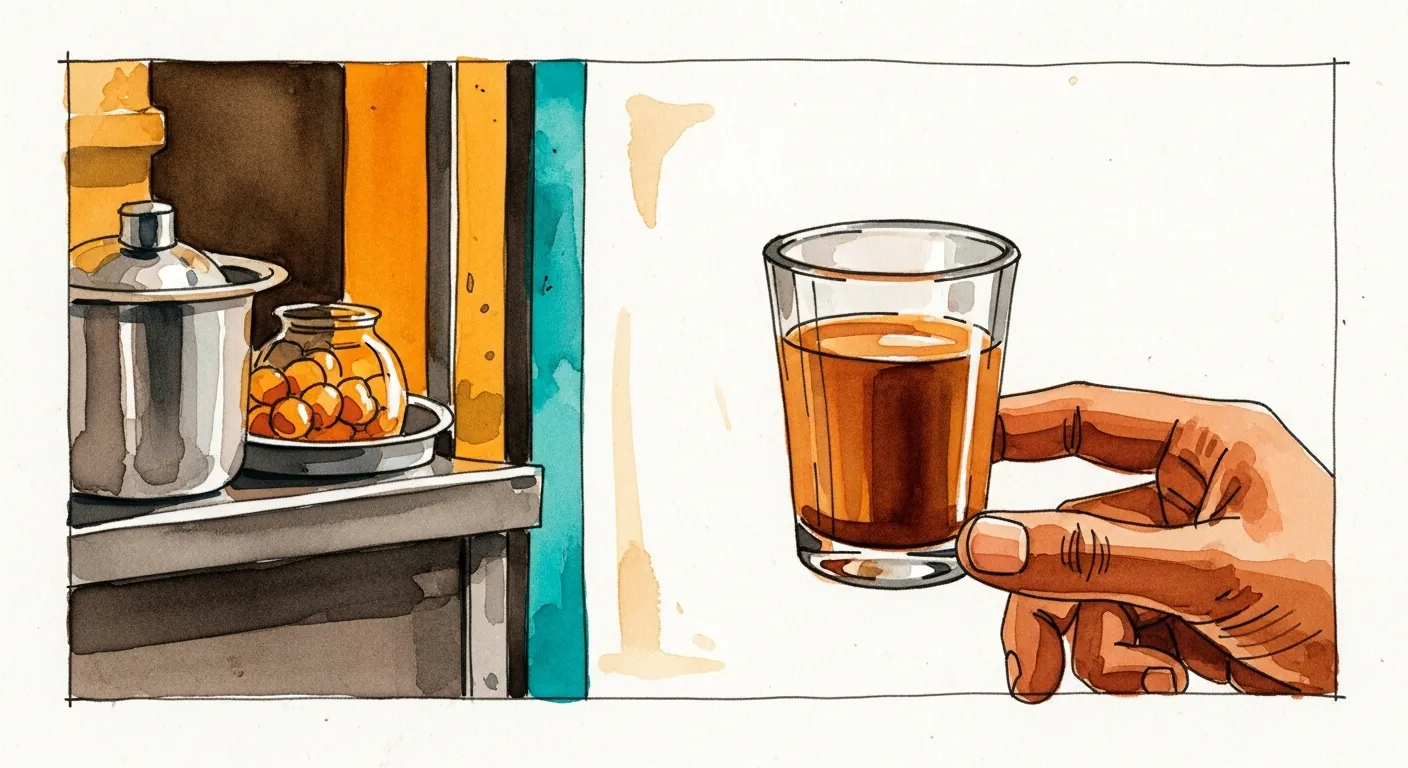
"Cutting Cocktails offer half-sized, experimental serves at half the price, allowing guests to sample a variety of flavours without committing to a full drink," Restaurant India News reported. The line is doing a lot of quiet work. The full pour is the architecture of the colonial bar. You sit, you commit, you pay 800 rupees because economically you have to. The cutting flips the contract. You walk in, you try the weird one with the curry leaf, you laugh, you pay 400, you leave.
The cutting cocktail is the first time a Mumbai bar admitted that the city does not have an hour to spare.
THE CAVE THAT BECAME A COCKTAIL MENU
One ferry ride from the Gateway, on an island most Mumbaikars have not visited since their school trip, there are caves carved in the sixth century into basalt rock. Trimurti. The three-headed Shiva. Stone older than most cities have a right to claim.
In 2026, a bar opened named after them. Bumipura, Curly Tales reported, draws its identity from the Elephanta Caves. Nearly 90 percent of its ingredients are sourced locally. The signature pour, Dear Seri, is a cocktail built around Nasi Lemak, the Malay rice dish, rerouted through a Bombay bartender's hands.
The number to hold on to is the 90 percent. For most of the last fifty years, a Mumbai cocktail bar's pantry was an import declaration. The vermouth was Italian. The bitters were from a factory in Trinidad. The garnish was the only thing that came from south of the Vindhyas. Bumipura inverts the arithmetic. Ninety percent local. Ten percent imported. The drink, finally, is built out of the geography it is being poured in.
THE TEXTILE IN THE GLASS
At PCO, the cocktail menu reads like a swatch book. Time Out lists Raw Silk and Kantha among the signature pours, drinks named after Indian weaves. Raw silk is the unprocessed yarn, slubbed and irregular, the way silk comes off the loom before anybody has decided to make it polite. Kantha is the running-stitch quilt the women of Bengal make from layered old saris.
The bar is making an argument about the cocktail by making an argument about the cloth. Both are constructed. Both reward attention to texture. Both, in India, were once dismissed as craft and have spent the last twenty years being re-classified as design.
At Paradox, the bar run by Aditi and Aditya Dugar (the couple behind Masque), the menu reads like a kitchen pass. Tomato powder in a drink called Bubble Bath. Egg white in a Grassland. Cocktails priced around 1,550 rupees. The bartender, here, is running the same brigade Escoffier ran in a kitchen in Cannes in 1882. Mise en place. Sequence. The drink as a course.
The bartender is running the same brigade Escoffier ran in a kitchen in Cannes in 1882.
HOW TO POUR ONE AT HOME
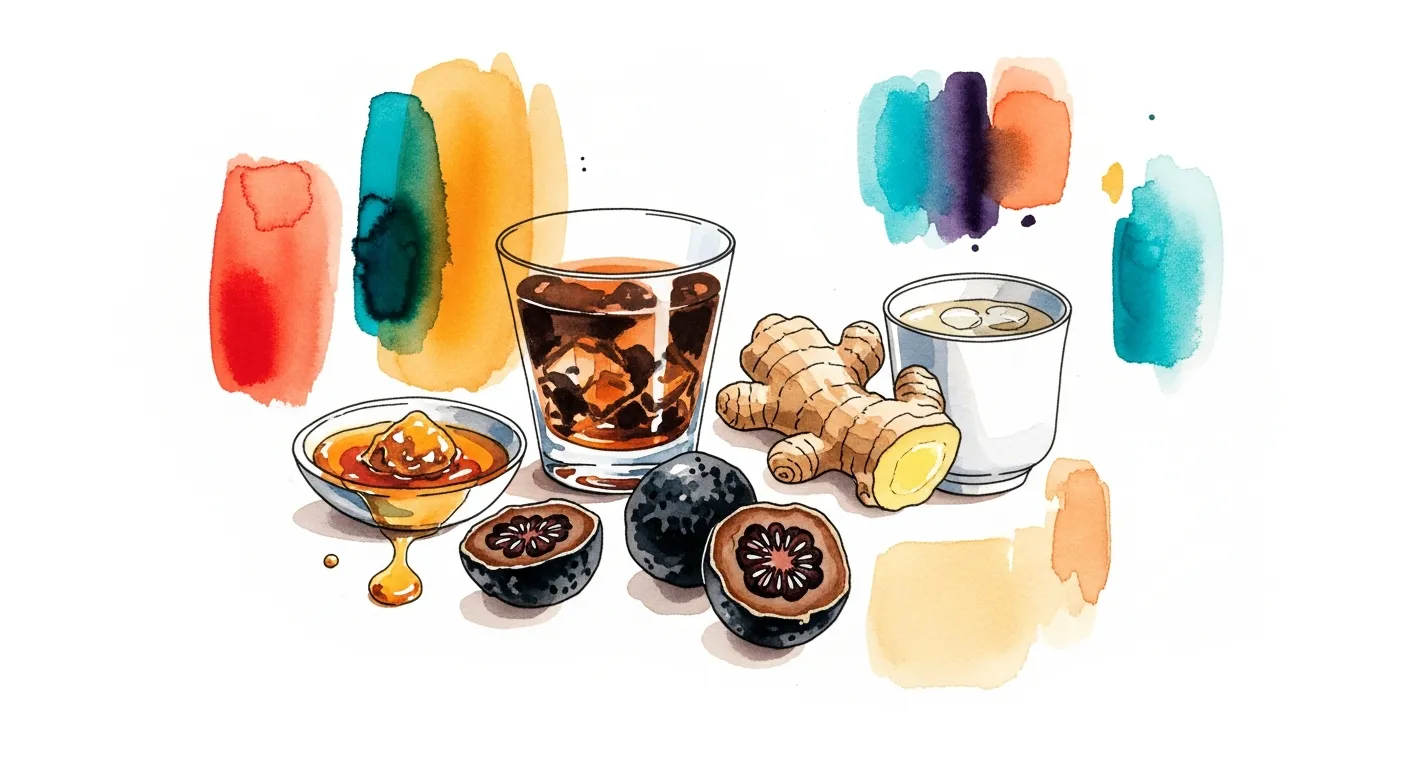
The punch the sailor wrote down in 1638 had five ingredients. The proportions are not complicated. One part sour, two parts sweet, three parts strong, four parts weak, plus a spice. Lime, sugar syrup, dark rum, water or cold tea, and a grating of nutmeg or a stick of cinnamon broken into the bowl.
That is the recipe. That is the whole recipe. The British spent four centuries dressing it up. You can make it in your kitchen tonight with what is already in your pantry.
The Mumbai variation, the one the bartenders here have been working on since 2015, swaps the lime for kokum, the sugar for jaggery syrup, the rum for an aged Goan feni, the water for a cold ginger-lemongrass infusion, the nutmeg for a single curry leaf bruised against the side of the glass. Five ingredients still. The architecture holds. The grammar is local.
This is what a four-hundred-year-old loanword tastes like when it gets home.
THE LAST POUR
There is an hour in Mumbai when the kitchen has closed and the only person still working is the one behind the bar. He is wiping a glass he already wiped. He is reaching for a bottle you did not see him put there. He has spent the day reading about kokum, or weaves, or a sixth-century cave on an island most of his customers will never visit.
You order. He pours. He does not explain.
The drink is the explanation.
Field Notes
Quick reference1638. A British sailor logs a five-ingredient recipe. Calls it Paanch. London calls it punch. Four hundred years of mispronunciation.
The Elephanta Caves were carved in the sixth century. One ferry ride from Gateway. Bumipura named its bar after them and sources 90 percent of ingredients locally.
Half-sized cocktail. Half the price. Around 400 rupees. The Cutting Cocktail at Blend Kitchen & Bar is the Mumbai answer to a menu that forgot the city has somewhere to be.
One part sour. Two parts sweet. Three parts strong. Four parts weak. One spice. The punch formula is unchanged since a sailor's logbook. Every variation is a conversation with the same skeleton.
Kokum for lime. Jaggery syrup for sugar. Aged Goan feni for rum. Ginger-lemongrass for water. Curry leaf for nutmeg. Five ingredients. The architecture holds.
Get the next story first
Join the Bhukkads. Free, no spam, just stories.
Takes 30 seconds.