Mumbai After Eleven Has a New Vocabulary
A vegetarian speakeasy in Bandra, a half-pour bar that thinks like a chai stall, a 1981 graduate still teaching the city how to pour. Four arguments about what Bombay drinks after dark.
Generated by Imagen 4
There is an hour in this city, somewhere between the last train out of Churchgate and the first cab home from Bandra, when the bars stop pretending they are restaurants and start telling you what they actually are. The kitchen has closed. The food menu has been folded away. The waiter who was pushing the chicken tikka two hours ago has gone home, and the only person left on the floor is the one behind the counter. He is wiping a glass he already wiped. He is reaching for a bottle you did not see him put there. He is waiting for you to ask the right question.
You know this hour. I know you know it.
This is the part nobody talks about. Mumbai's bar scene, the one you read about in glossy listicles, did not happen because the city suddenly learned to drink. It happened because four or five people, across forty-three years, refused to treat the bartender as a waiter with a different uniform.
THE WOMAN WHO STARTED IT IN 1981
In 1981, a twenty-two-year-old woman named Shatbhi Basu walked into a Chinese restaurant on Linking Road called Chopsticks and was, by accident, handed a job behind the bar. She had trained as a chef. The kitchen was full. The bar was empty. Somebody decided she could pour.
She could. She became, by The Times of India's account, India's first woman bartender. Not the first to drink. Not the first to own a bar. The first to stand on the working side of the counter in a country that did not yet have a word for what she was doing.
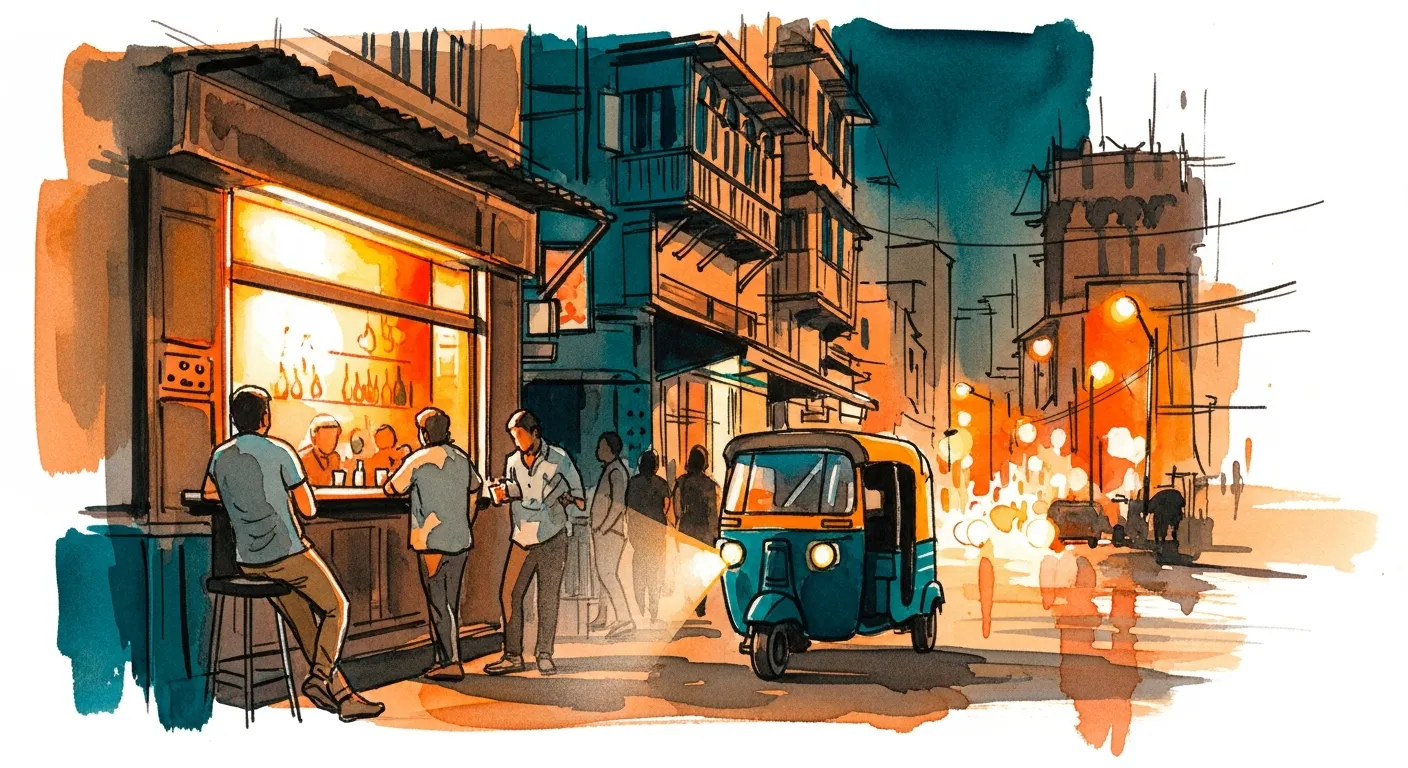
The 1981 Bombay bar was not a place a woman went to work. The Bombay Prohibition Act of 1949 had spent three decades shaping the city's drinking into something fluorescent and almost entirely male. The permit room was the architecture. The hotel bar was the alternative. The cocktail, when it appeared, was poured by a man in a waistcoat reading from a manual nobody had updated since 1962.
Shatbhi had no manual. She read. She tasted. She poured for a clientele that, by her own account, sometimes refused to be served by her and sometimes proposed to her over the second drink. Both reactions came from the same place. Neither of them was about the drink.
She stayed.
She stayed. The drink got better. The country took its time.
In 1997, sixteen years after Chopsticks, she founded STIR Academy of Bartending, the country's first institution for professional bartending. Every name on every cocktail menu you will read in this piece, every mixologist with a clever Instagram bio and a fat-washed tequila, owes her something. Most of them know it. Some of them have said it out loud.
THE CANTEEN AND ITS FIFTH BOOK
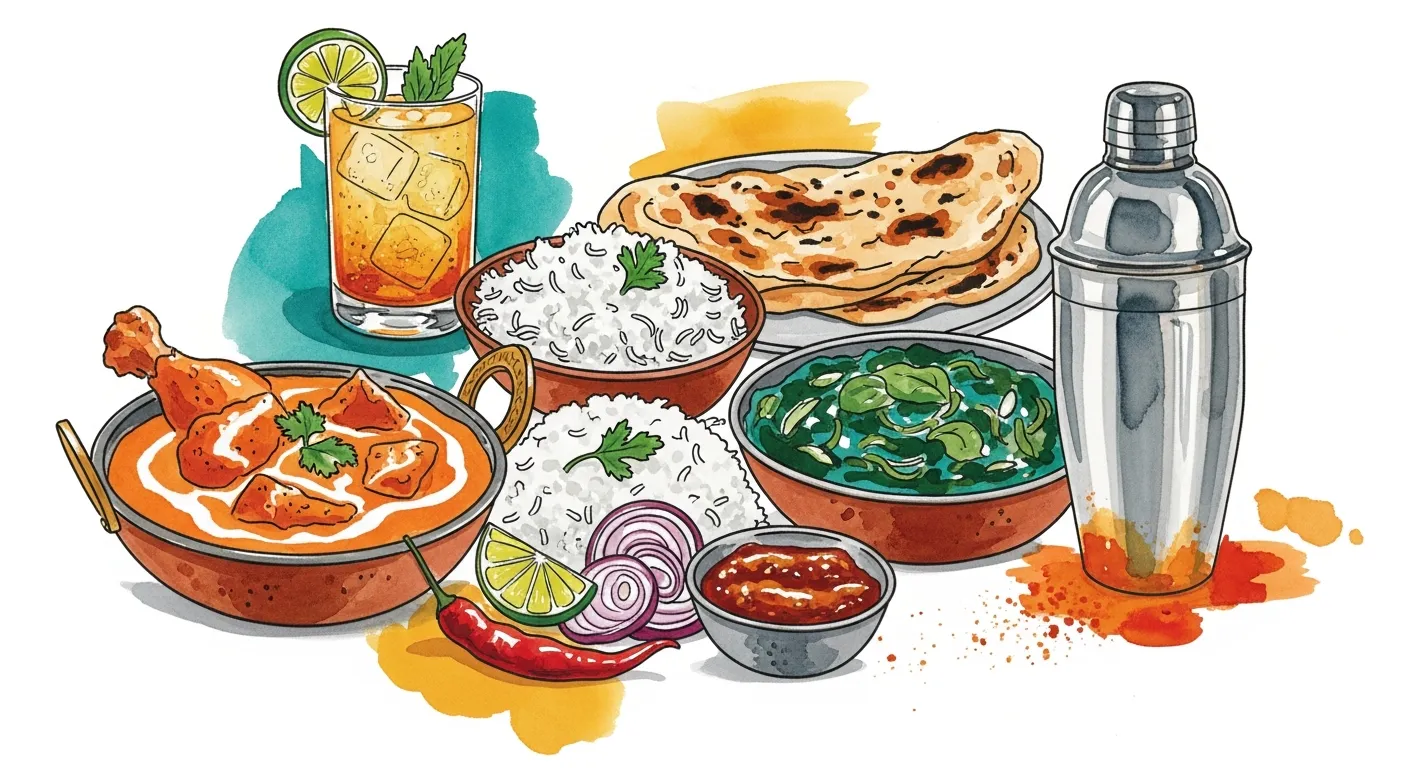
In April 2024, The Bombay Canteen at Kamala Mills released the fifth edition of what it calls the Canteen Cocktail Book. The title was Make Mine A Bombay. Fifth edition. Think about that. A restaurant in this city has been writing and rewriting a single cocktail menu for long enough that it now reads like a serial novel. Each edition is an argument about what Bombay tastes like that year.
The Waiting List is the drink that explains the menu. A highball. Coconut fat-washed tequila. House-made curry leaf soda. A curry leaf salt rim. It is named after the Udipi restaurant ritual that has fed this city more thalis than the census can count. You walk in. You write your name on a slip. You wait. Somebody calls you. You eat fast. You leave.
The drink is the wait. The drink is the steel tumbler of water that arrives before the food. The drink is the curry leaf the cook flicked into hot oil two seconds before the sambar hit the plate.
This is not a cocktail with an Indian garnish. This is a cocktail that grew up in a Bombay restaurant and only learned about tequila later.
CHARLEE, AND THE QUIET RADICAL ACT OF NO MEAT
In March 2024, a bar opened in Bandra that, on paper, should not have worked. Its name was Charlee. Its concept was Mumbai's first vegetarian speakeasy. Its interior was described by the people who built it as Batcave meets Gentleman's Club, which is the kind of phrase that makes you want to lock the door and walk away. Until you go in.
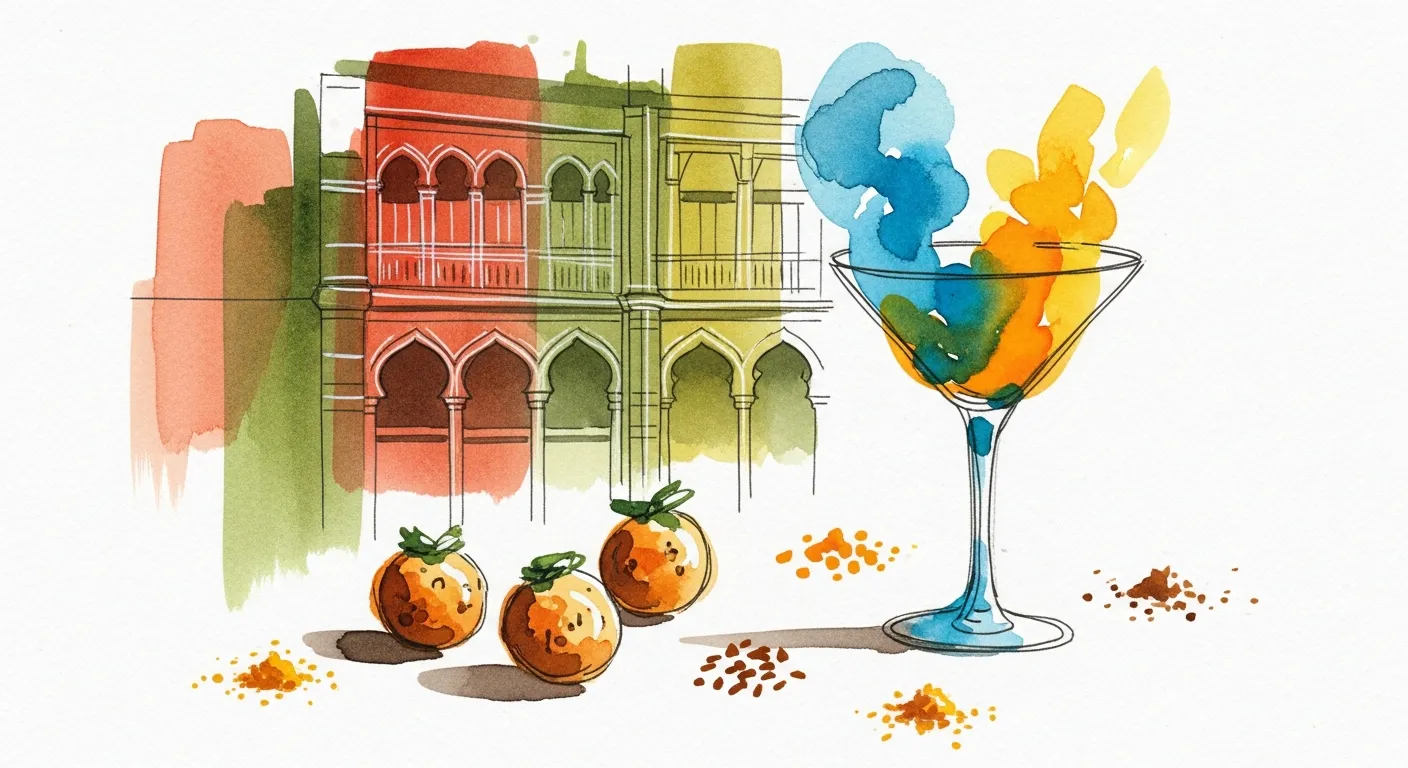
The vegetarian bar, in this city, has historically been a contradiction. The bar food economy was built on chicken tikka, kheema pav, bacon-wrapped everything. The vegetarian drinker either ordered a paneer dish and pretended, or went home. Charlee read the room differently. The food was vegetarian. The bar was the main event. The drinks were not built around the absence of meat. They were built around what was actually on the shelf in a Bombay pantry that nobody had bothered to open.
The Perry Road is the cocktail that gives the bar its address. Tequila. Cilantro. Bird's eye chili. Jalapeno. Citrus. Guava. It is named after the Bandra lane that has, for decades, been the polite face of the East Indian neighbourhood next to it. The drink is spicy. The drink is fruity. The drink tastes like the chutney your friend's mother makes in a house you visited once and have been trying to find again.
The vegetarian bar in Mumbai stopped being a constraint and became a thesis.
THE HALF POUR
In May 2026, a bar opened that decided the whole format was wrong. It called itself Cutting Cocktails. It served half-sized cocktails at half the price. It operated as a hidden speakeasy. It took its name from the 75-millilitre glass of chai that this city invented somewhere in the 1950s when somebody, somewhere, looked at a full cup of tea and decided it was too much commitment for what was essentially a smoke break with milk in it.
The cutting chai is not a drink. It is a permission structure. It lets you stop and talk to someone without the weight of a full transaction. You have one. You have another with somebody else twenty minutes later. You have a third on the way home. The economics of the cutting are the economics of conversation.
The cutting cocktail is the first time a Mumbai bar has admitted that the city does not have an hour to spare.
The full pour is the colonial bar. You sit. You order. You commit. You pay 800 rupees and you stay because economically you have to. The cutting flips it. You walk in, you try the weird one with the curry leaf, you laugh at how it tastes, you pay half, you leave. It is a tasting menu without the tasting menu. It is, structurally, the bar version of what Shatbhi Basu was doing forty-three years ago at Chopsticks when she poured a drink for a stranger who was not sure he wanted to be served by her. Less ceremony. More conversation.
THE FOUR ARGUMENTS
Four bars. Four arguments about what this city drinks after dark.
One says the bartender is a person, not a waiter, and a woman counts. One says the cocktail should taste like the restaurant down the road, not the hotel in another country. One says the bar does not need meat to be a bar. One says the drink does not need to be 180 millilitres to be a drink.
None of these arguments are loud. None of them came with a manifesto. They arrived in pieces, in different neighbourhoods, across forty-five years, and the only reason you can drink your way through all four of them on a single Friday night is that the people who made them refused to leave.
Shatbhi is still teaching. The Canteen is on its fifth book. Charlee is still serving the Perry Road. Cutting Cocktails is still pouring 75 millilitres into a glass that knows what it is doing.
The last train out of Churchgate left an hour ago. The first cab home is still twenty minutes away.
This is the hour the city writes for.
Field Notes
Quick referenceShatbhi Basu walked into Chopsticks on Linking Road in 1981 and became India's first woman bartender. STIR Academy, the country's first bartending school, followed sixteen years later.
The Bombay Canteen has rewritten its cocktail menu five times. The fifth edition is called Make Mine A Bombay. Each one is a different argument about what this city tastes like.
Charlee in Bandra is Mumbai's first vegetarian speakeasy. The bar food economy was built on kheema pav and chicken tikka. Charlee built around what was already on the pantry shelf.
Cutting Cocktails serves half-sized drinks at half the price. The format is borrowed directly from the cutting chai, the 75-millilitre glass this city invented when a full cup felt like too much commitment.
The Bombay Prohibition Act of 1949 spent three decades shaping the city's drinking culture. The permit room and the hotel bar were the only architectures on offer. The cocktail, when it showed up, was poured by a man reading from a manual nobody had updated since 1962.
Get the next story first
Join the Bhukkads. Free, no spam, just stories.
Takes 30 seconds.