The Sev That Used to Cost Less Than the Newspaper
In Bhuleshwar, the farsan shops that fed a city's festivals for a hundred years are being priced out by palm oil, packaged competitors, and a generation that reads labels.
Generated by Imagen 4
In 1803, a fire broke out in the Fort area of Bombay and burned for three days. Roughly 471 houses went up. The Company, in its infinite talent for accidental urban planning, decided the native population had been living too close to the white town, and pushed the trading castes north. The Gujaratis, Marwaris, Bhatias, and Jains who had been running the moneylending and wholesale trade of the city packed up their chulhas and their ledgers and moved to a marsh being reclaimed just past the walls.
That marsh became Bhuleshwar.
By the 1850s, the lanes around the Bhuleshwar Mahadev temple were the densest concentration of vegetarian kitchens in the country. Not restaurants. Kitchens. The distinction matters. A Gujarati merchant's day was measured in six eating windows, and each one required something specific, fresh, and preferably fried in ghee. The shops that came up to service this appetite were called farsan shops, from the Gujarati word for a savoury eaten between meals. Sev. Ganthia. Fafda. Chakri. Chevdo. Khaman. Patra. Each one required a different flour, a different oil temperature, a different hand.
One hundred and seventy years later, the flour is the same. The hand is the same. Almost nothing else is.
THE ARITHMETIC OF A PAPER CONE
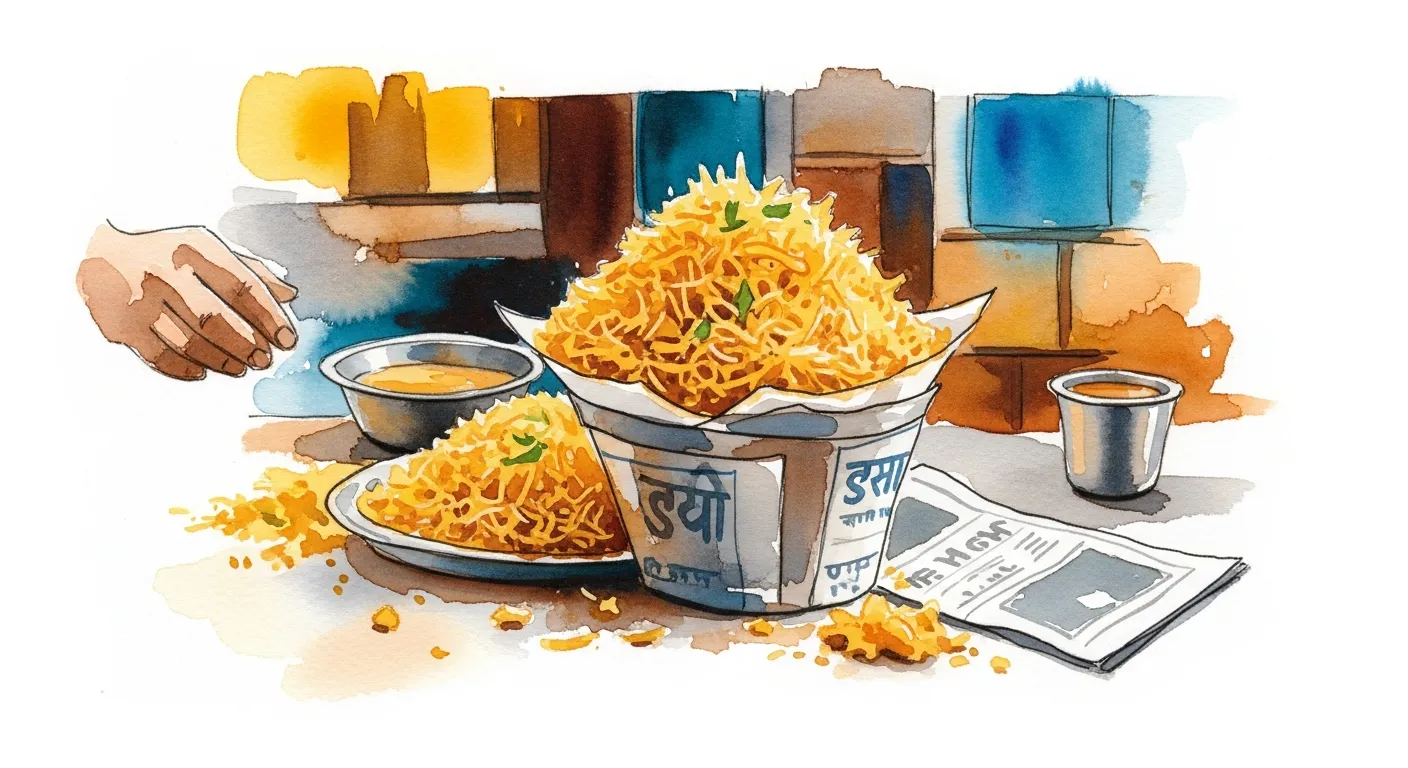
A kilogram of proper Gujarati sev, the thin kind that goes on top of sev usal at four in the afternoon, uses roughly 700 grams of besan, 200 grams of oil, and enough ajwain and asafoetida to make the whole lane smell like Diwali. The besan is not negotiable. The oil is where the story hides.
Until about 2018, most Bhuleshwar farsanwalas were frying in a blend that leaned heavily on refined palm oil for the base and groundnut oil for the finish. Palm oil because it holds temperature. Groundnut because it carries flavour. That blend has been getting more expensive every quarter for four years.
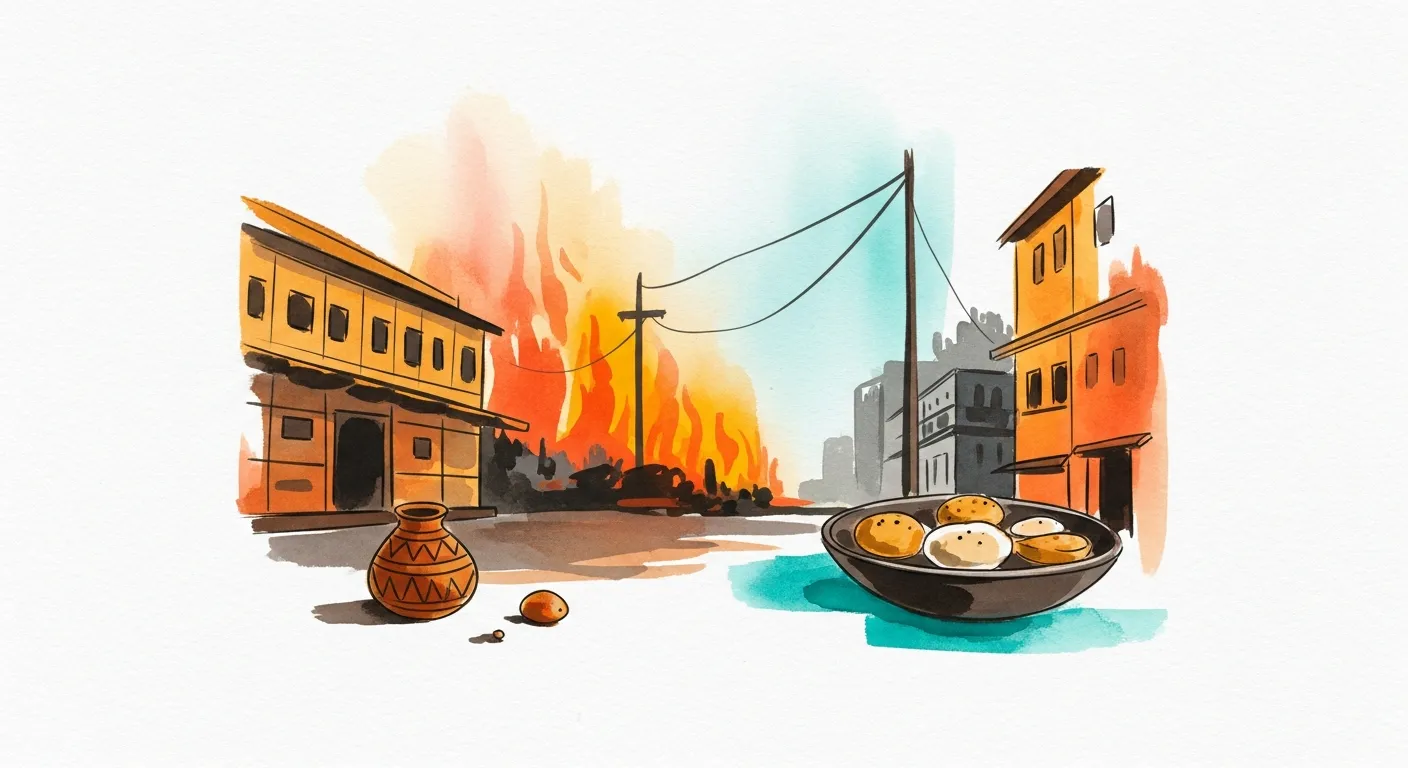
In May 2026, Business Standard reported that palm oil prices were up 11 percent, Brent crude was up 32 percent, and HDPE packaging costs had jumped 56 percent. FMCG companies had already pushed retail prices up 3 to 7 percent and were preparing for another round. By August, Bold News was reporting that a fresh wave of price hikes was queued up for the festive season, citing geopolitical pressure on commodity markets.
For a large FMCG, a 5 percent hike gets absorbed across a 2,000-crore portfolio. For a farsan shop in Bhuleshwar working on 15 to 18 percent margins, a 5 percent hike on oil is the difference between paying the rent this month and paying it next month.
The farsanwala and the FMCG conglomerate are buying the same palm oil off the same commodities exchange. Only one of them can hedge.
THE SHOP THAT MEASURED THE CITY
Walk down Panjrapole Lane on a Wednesday morning and the pattern is still visible. A shop opens at seven. Two men sit cross-legged behind flat brass tavas. A third man stands at the front counter with a set of scales that were calibrated during the Nehru administration. The sev comes off the press in ribbons. It is fried, drained, cooled, and weighed into paper cones that were folded at four in the morning by someone's cousin.
The entire supply chain fits inside 200 square feet.
That model worked for a hundred years because Bhuleshwar had a captive audience. The wholesale cloth market next door. The gold market at Zaveri Bazaar. The dry fruit traders on Mangaldas Lane. All of them needed 11 am chai with something salty, and none of them wanted to walk more than 40 metres to get it.
The audience is still there. The audience is now ordering Too Yumm baked ragi chips off Flipkart.
THE GENERATION THAT READS THE BACK OF THE PACKET
In July 2026, Flipkart's Food and Nutrition category posted 50 percent year-on-year growth, driven almost entirely by Gen Z shoppers in Tier 2 and Tier 3 cities buying cold-pressed oils, roasted makhana, multigrain namkeen, and Korean snacks. The Indian packaged snack market, currently around 46,000 crore rupees, is projected to cross 1 lakh crore within a decade.
Read that number again. The category is going to more than double. None of that growth is going to a man on Panjrapole Lane frying chakri by hand.
The FMCG.in trend report for 2026 is blunt about it. Urban Indian consumers, especially under 30, are reading labels for oil content, sodium, and additives. They want baked, not fried. They want palm-oil-free. They want a QR code on the packet. A paper cone with no ingredient list, no expiry date, and a visible sheen of ghee is, to a 24-year-old buying snacks on an app, closer to a public health concern than a childhood memory.
The farsanwala's biggest competitor is not another farsanwala. It is a nutritional information panel.
THE FESTIVAL THAT USED TO NEED A VILLAGE
Here is what nobody talks about.
A Gujarati or Maharashtrian household preparing for Diwali in 1985 did not buy snacks. It made them. Chakri, chivda, shakkarpara, karanji, ladoo. The making took two weeks. It involved aunts, cousins, neighbours, and a rotating cast of children whose only job was to shape the karanji edge with a fork. The farsan shop was where you went for the things that were too technical to attempt at home. Fafda that had to be rolled paper-thin on a stone. Ganthia that needed a specific press. Ghari that took three days.
The shop was a supplement to the community kitchen. Not a replacement.
Brown History's October 2025 essay on the disappearance of sandan-making in Konkan Muslim households makes the point better than anyone in a Bombay newspaper has. Migration to bigger cities. Nuclear families in smaller flats. Working women who cannot take two weeks off in October. The community kitchen has quietly gone quiet across every food culture in the country, and the farsan shop, which was built to service that kitchen, is now being asked to replace it entirely.
The farsanwala used to sell what your grandmother could not make. Now he is being asked to sell what your grandmother used to make, at a scale she never operated at, in a packaging she never used, to a customer who wants it in 10 minutes on Blinkit.
Some shops have adapted. There are Bhuleshwar names now on quick commerce apps, sealed pouches with nutritional panels, weekly production runs sized for city-wide delivery. That is the shop learning a new language. The men at the tavas are still the same men. The paper cones are still folded at four in the morning. But there is now also a barcode.
THE PART THE BALANCE SHEET DOES NOT SHOW
A Bhuleshwar farsan shop is not, in the strict sense, only a business. It is where a Marwari family that moved to Ghatkopar in 1978 still comes on the Saturday before Diwali because the mathia here tastes like their father's mathia. It is where the woman running a tiffin service in Kandivali sources her sev because her customers can tell the difference. It is where an 82-year-old regular sits on a plastic stool for 40 minutes drinking chai the shop does not officially sell.
None of that shows up in the GST filing. All of it stops the day the shutter comes down.
A packet of Haldiram's aloo bhujia is a snack. A paper cone from Bhuleshwar is an address, a family, and a Wednesday morning.
You cannot digitise the plastic stool.
WHAT SURVIVES
The shops that will still be open in 2035 are, mostly, already known. The ones with a name old enough to have outlived at least one currency reform. The ones whose grandsons went to business school and came back with a supply chain instead of an attitude. The ones who figured out that the sev is the product but the story is the moat.
The rest are running the same maths every quarter. Oil up. Besan up. Rent up. Footfall down. Grandson uninterested. Landlord interested.
The fire of 1803 pushed the Gujaratis into Bhuleshwar and gave the city its farsan. Two hundred and twenty-three years later, no fire is required. A commodities index, a Flipkart algorithm, and a family WhatsApp group are doing the job just fine.
The paper cone still costs less than the newspaper. For now.
Field Notes
Quick referenceThe 1803 Fort fire displaced Bombay's trading castes northward into a marsh that became Bhuleshwar. The city's farsan culture is an accident of colonial urban planning.
Palm oil up 11%, Brent crude up 32%, HDPE packaging up 56% - all in one quarter. A farsan shop on 15-18% margins has nowhere to hide.
1 kg of Gujarati sev: 700g besan, 200g oil, ajwain, asafoetida. The besan is non-negotiable. The oil is where the story hides.
India's packaged snack market sits at 46,000 crore rupees and is projected to cross 1 lakh crore within a decade. None of that growth is going to Panjrapole Lane.
Some Bhuleshwar shops now carry barcodes and sealed pouches on quick commerce apps. The men at the tavas are still the same men. The paper cones are still folded at four in the morning.
Get the next story first
Join the Bhukkads. Free, no spam, just stories.
Takes 30 seconds.