The Ghee Went Up. The Grandson Went to Goldman.
Kalbadevi's legacy mithaiwalas are being squeezed from two sides at once. The commodity market and the family WhatsApp group.
Generated by Imagen 4
In 1846, a man named Kandoi Haribhai Damodar walked from a village in Saurashtra to the port city on the western coast and set up a small shop selling penda and mohanthal. Bombay was still four decades away from being a proper metropolis. The Mint at Ballard Estate, which had been pressing coins since the 1830s, was still working for a company that ran the country. He picked a lane near Bhuleshwar because that was where the Gujarati traders were, and Gujarati traders needed mithai for every occasion that involved a ledger being opened, a daughter being married, or a god being pleased.
One hundred and seventy-nine years later, Kandoi Haribhai Damodar Mithaiwala is still there. Same lane. Broadly the same recipes. The mohanthal is still cut into the same diamond. What has changed is the arithmetic behind the diamond.
THE COMMODITY IN THE COPPER POT
A kilogram of mohanthal, done properly, uses roughly 250 grams of ghee and 300 grams of sugar before you get to the besan, the cardamom, the nuts. Everything else on that list is negotiable. The ghee and the sugar are not.
On August 5, 2026, wholesale sugar prices in Kolhapur, Maharashtra's key trading hub, hit a record 4,716 rupees per 100 kg, up 10.2 percent in a single month. Retail sugar in the city touched 49 to 52 rupees a kilo. Wholesale hit around 4,800 rupees a quintal in the weeks before that. Tight supplies, festival demand pulling forward, the usual pre-Diwali squeeze arriving early and hard.
On July 23, the Karnataka Milk Federation raised the price of a one-litre Nandini ghee sachet to 715 rupees, up from 700. Second hike in a year. The federation cited stricter enforcement against adulterated dairy tightening genuine supply. Sweet manufacturers across the country ran the numbers and came back with the same answer. Production costs up 3 to 5 percent. Immediately.
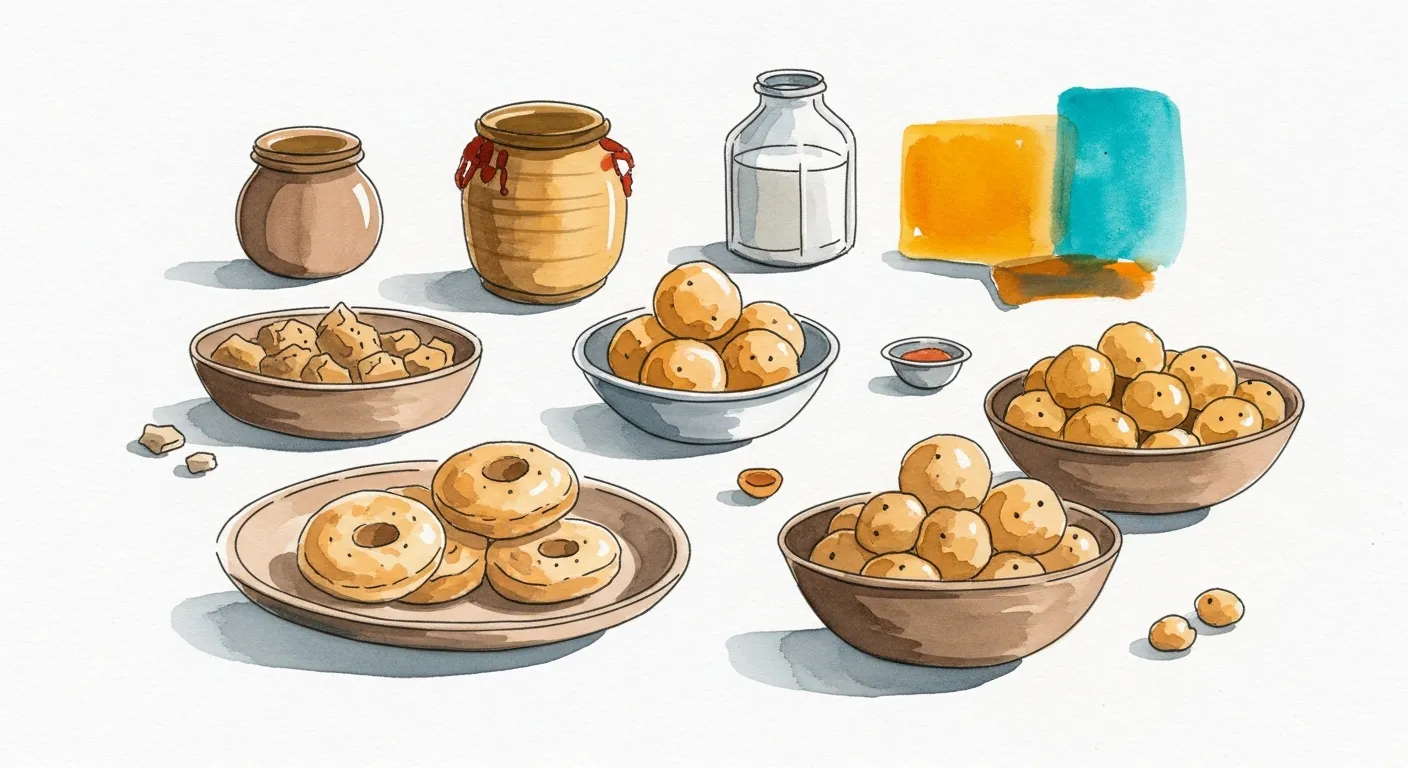
A shop that runs on ghee and sugar has just watched both inputs move against it in the same fortnight.
The kilo of mohanthal that costs 900 rupees at the counter has maybe 200 rupees of margin on a good day. Take 3 to 5 percent off the production side. Add the LPG bill, the labour, the Kalbadevi rent that has quietly been climbing since the mill closures. The margin is not a margin anymore. It is a tip.
THE PART NOBODY TALKS ABOUT
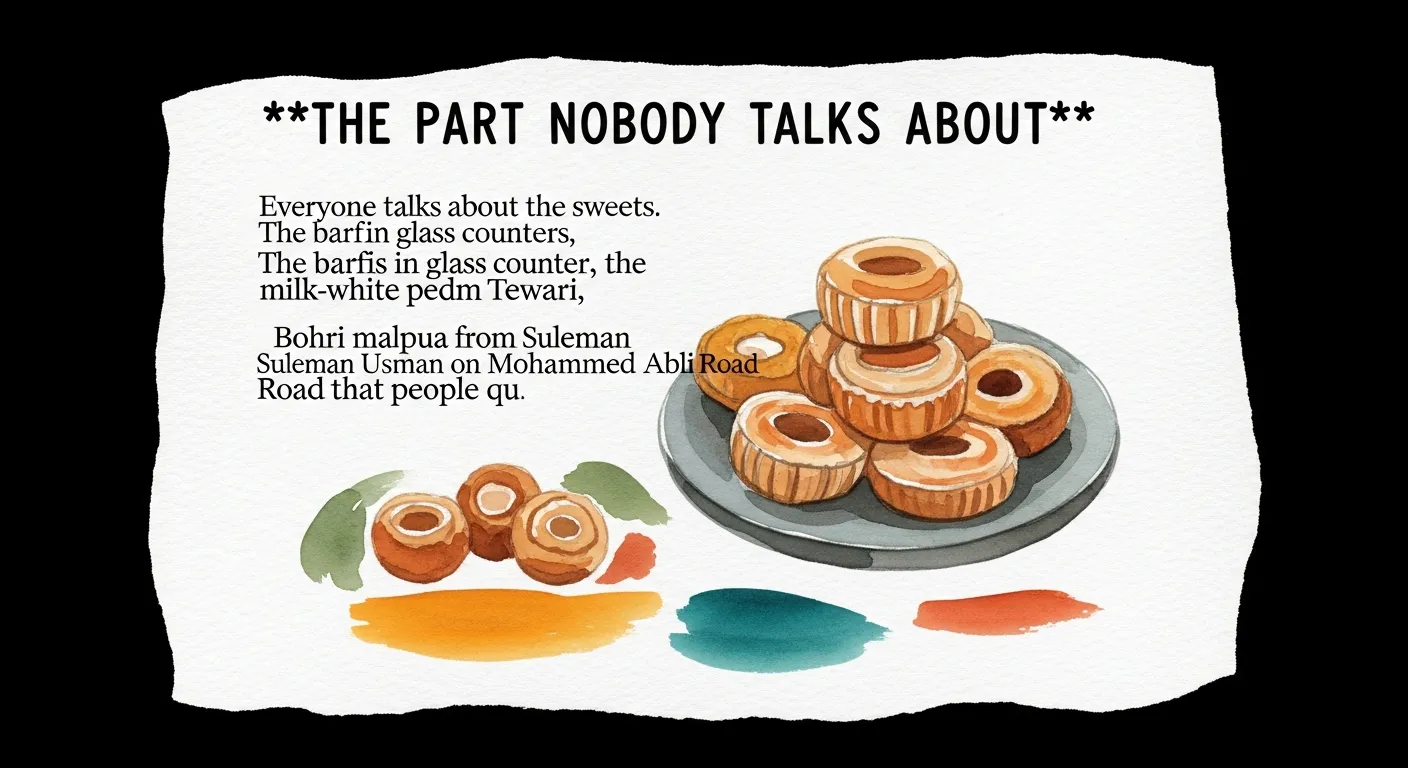
Everyone talks about the sweets. The barfis in glass counters, the milk-white pedas from Tewari, the Bohri malpua from Suleman Usman on Mohammed Ali Road that people queue for during Ramzan. The Instagram reels shot inside Jagannath Chaturbhuj Halwai. The heritage listicles that put Kalbadevi's mithaiwalas alongside Chor Bazaar and the Mumba Devi temple as things you should see before the city rewrites itself.
Nobody talks about the copper pot.
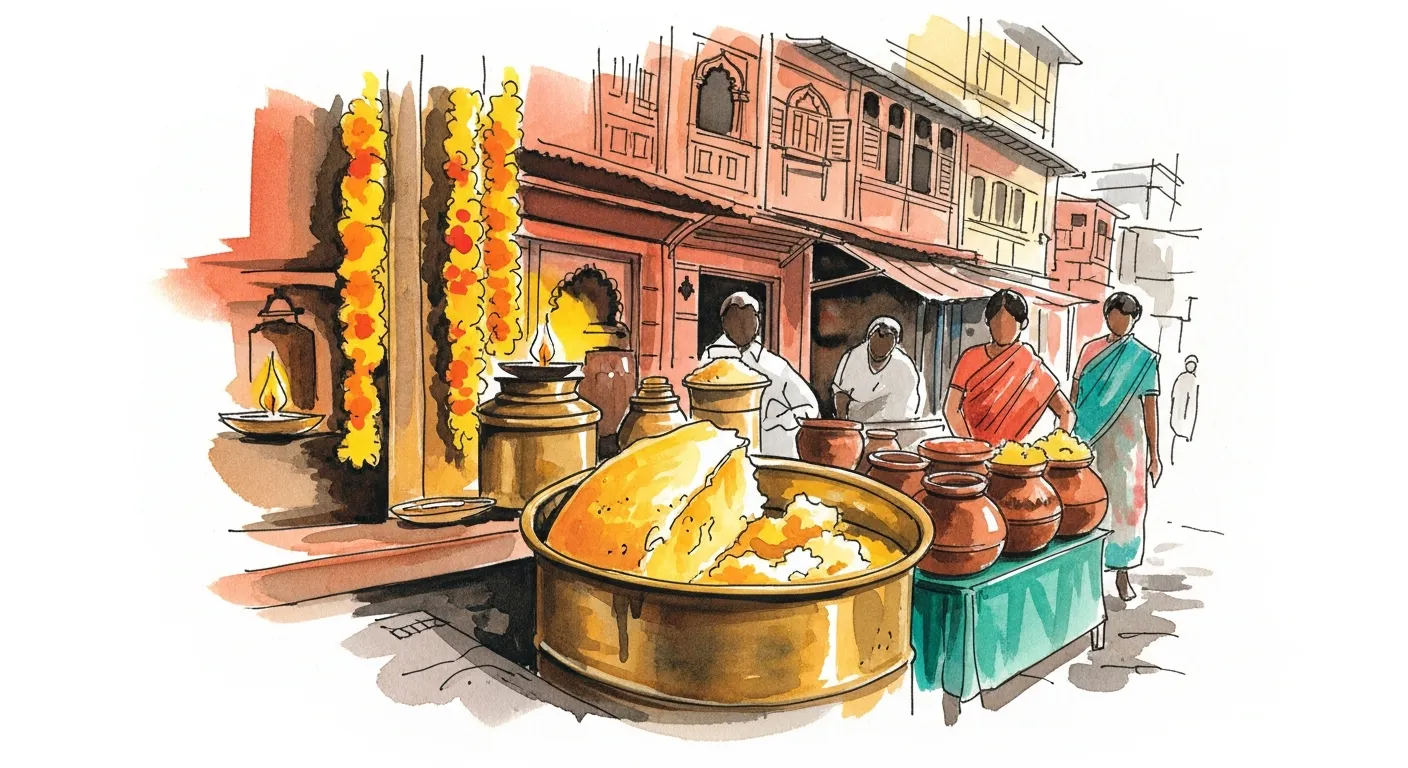
Mohanthal, done the way Kandoi Haribhai's grandsons still do it, involves roasting besan in ghee inside a heavy copper kadhai for close to an hour, one man stirring the entire time, arm working in a figure-eight that does not stop. Too fast and the besan burns. Too slow and it stays raw. The pot has to be copper because copper conducts evenly and the halwai reads the sound. When the besan is done, the pitch of the ghee crackling against the metal changes. He hears it before he sees it.
You cannot teach that to someone in six months. You cannot teach it to someone who does not want to learn it.
THE 7 PERCENT
Only 7 percent of Indian heirs reported feeling a sense of obligation to join the family business. That number, published in a Governance Now analysis of Indian family enterprise succession in September 2025, is the quietest crisis in Kalbadevi and the loudest.
The grandson of a halwai who trained under his grandfather in the 1990s is now 28. He has an MBA. He works at a bank in BKC. He speaks better English than Gujarati. He respects the shop enormously and comes for Diwali and Bhai Dooj and does the accounts on weekends because his father asked him to. He will not stand at a copper pot for an hour stirring besan. Not because he cannot. Because that is not what he trained for and that is not what the family invested his 22 years of education for. He will inherit the shop. He will not inherit the craft.
The craft lives in the karigars. The karigars are ageing. The apprentices are not arriving.
THE LANE THAT REMEMBERS
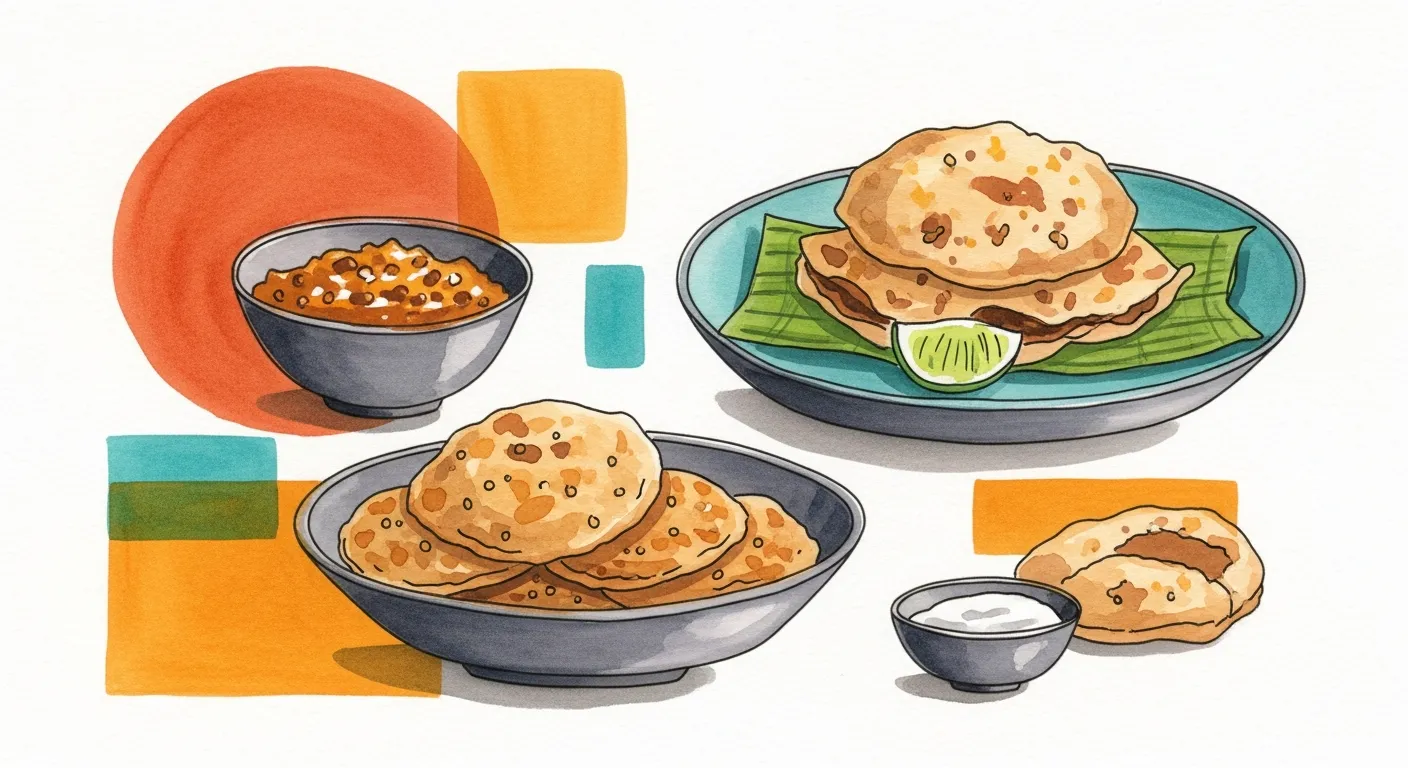
Kalbadevi is one of the oldest continuously commercial lanes in the country. When Bombay was still seven separate islands, this was already a trading pocket. The Kandoi family came from Gujarat. The Tewaris came from what is now Uttar Pradesh, bringing the Banarasi tradition of malai and rabri work. The Chaturbhuj lineage is Marwari, brought south by the cotton trade in the late nineteenth century. Suleman Usman set up in 1936, mastering both the North Indian repertoire and the specifically Bohri sweets that show up at thaals during Meethi Eid.
Four communities. Four regional traditions. All within walking distance of each other on a lane that is maybe 800 metres long. This is not a food court. This is a two-hundred-year accident of migration, credit lines, and lane rent that ended up preserving four separate sweet-making cultures inside one postal code.
Kalbadevi is the only place in India where you can eat Gujarati mohanthal, Banarasi malai chum-chum, Marwari ghevar, and Bohri malida within the same afternoon.
THE MATH THAT USED TO WORK
For most of the twentieth century, the math of a mithai shop in Kalbadevi was straightforward. Own the shop, do not pay rent. Family lives above the shop, do not pay housing. Sons work in the shop from age 14, do not pay wages. Karigars come from the same village as the founder, get room and board, send money home. Ingredients bought in cash from a wholesaler two lanes away. Customers walk in. Diwali covers six lean months.
Every single one of those assumptions has moved.
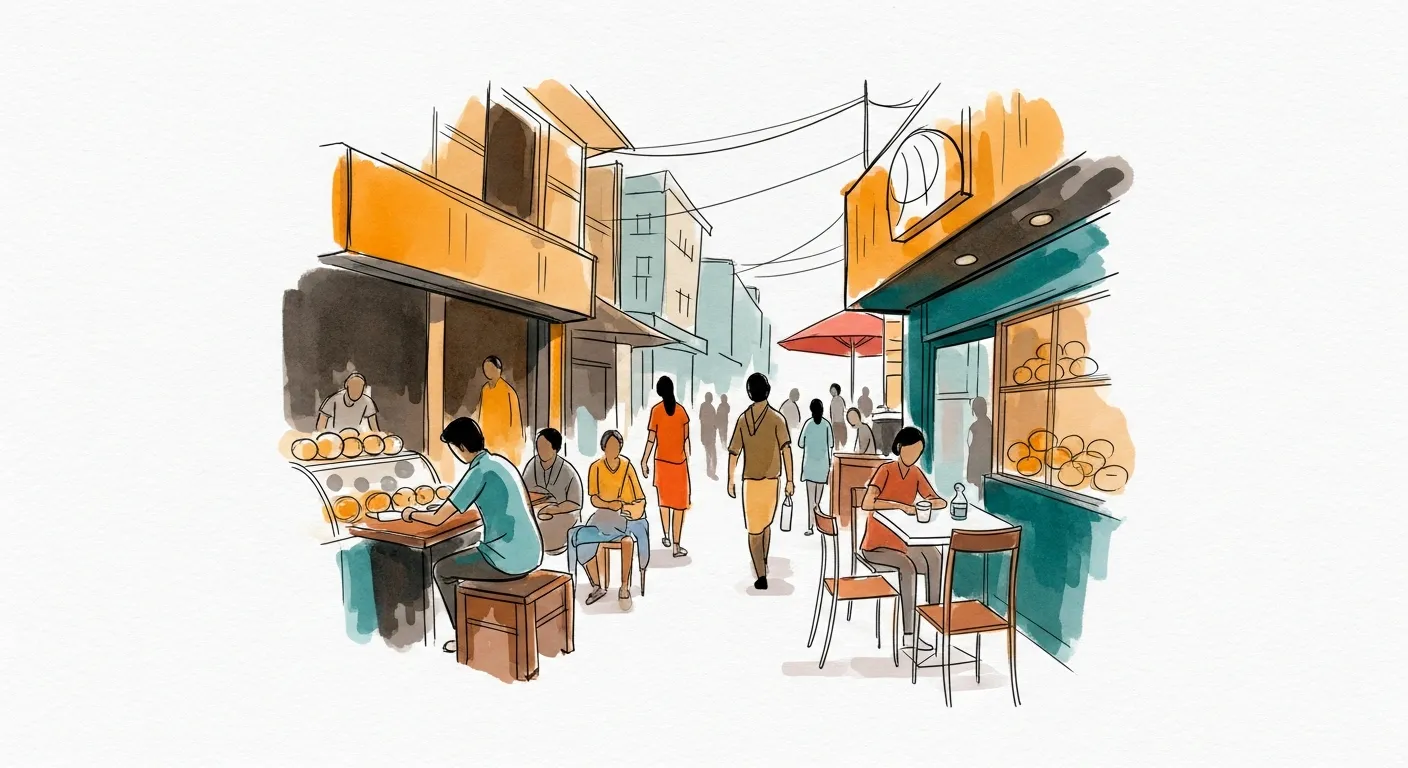
The shop is often owned but the sons live in Powai or Thane and commute. The karigars come from further away and cost more. The wholesalers now sit on WhatsApp with volatile daily prices. Sugar, dairy, and dry fruits all move independently, all move often, all move up more than down. The customer walks in less, orders on Swiggy more, and expects the box to look like a packaged brand's box even though the sweet inside was made by hand in a lane that predates the concept of packaging.
Urbanisation, the Global Risk Community report noted in March 2026, is reducing dependence on traditional sweet shops even as the packaged sweets market grows. The Haldirams of the world have industrial ghee contracts and hedge sugar futures. Kandoi Haribhai buys ghee this Tuesday at whatever Tuesday's price is.
THE HAND, THE POT, THE HOUR
A report on Indian sweet shops from July 2026 described them as guardians of tradition, transmitting recipes and techniques across generations. The framing is correct. The framing is also incomplete. Guardians need something to guard against, and the thing bearing down on Kalbadevi is not neglect. It is arithmetic combined with aspiration.
A family that has been making mohanthal for six generations does not stop because the great-grandson wants to be a consultant. It stops because the karigar who trained under the grandfather retired last year and the karigar he trained left three years ago for a job at a five-star hotel that pays 60,000 rupees a month with weekly offs. The recipe survives. The hand does not.
The recipe is on paper. The recipe is not the sweet.
WHAT TUESDAY LOOKS LIKE
On any given Tuesday in Kalbadevi, a shop owner in his 60s opens at 8 am, checks the sugar price on WhatsApp, calls his ghee supplier, decides whether to raise the counter price by 20 rupees a kilo or absorb it for another week. His son handles the online orders from an office in Andheri. His father, the previous owner, sits in the back watching the karigars. The karigars are two men in their 50s and one apprentice in his 20s who joined six months ago and may or may not stay.
Diwali is roughly ten weeks away. The pre-order calls have started. The sugar is at a record. The ghee is at its second hike of the year. The apprentice is learning mohanthal this week. He is stirring, arm working in a figure-eight that does not stop.
The copper pot is listening. It has been listening since 1846.
Field Notes
Quick referenceKandoi Haribhai Damodar Mithaiwala has been on the same lane in Kalbadevi since 1846. 179 years. Same diamond cut on the mohanthal.
Sugar up 10.2% in a single month. Ghee up for the second time in a year. A 900-rupee kilo of mohanthal now has roughly a 200-rupee margin on a good day.
Mohanthal takes one man stirring a copper kadhai in a figure-eight for close to an hour. The halwai knows the besan is done when the pitch of the ghee crackling against the metal changes.
Four sweet-making traditions, four communities, one 800-metre lane in Kalbadevi. Gujarati, Banarasi, Marwari, Bohri. No other postal code in India has all four.
Only 7% of Indian heirs reported feeling a sense of obligation to join the family business, per a Governance Now analysis of family enterprise succession published September 2025.
Get the next story first
Join the Bhukkads. Free, no spam, just stories.
Takes 30 seconds.