The Dough Diaries: How Pizza Conquered India and What India Did Back
A flatbread with 3,000 years of precedent didn't need permission to arrive. It needed translation.
In 1889, according to a story that Italian food historians have since complicated considerably, a baker named Raffaele Esposito made a pizza for Queen Margherita of Italy. Tomato, mozzarella, basil. Red, white, green. The Italian flag, edible. It was, by most accounts, a political act disguised as lunch. The queen approved. Naples approved. The rest of the world would take another century to catch up.
But here is the thing nobody mentions when they tell you pizza came to India: India already had it. Not pizza, exactly. But the idea of pizza. Flatbread. Toppings. Fire. The naan dates to 1300 CE in the poetry of Amir Khusrau. The paratha is older still. Stuffed, layered, griddled, blistered, pulled from a tandoor with bare hands, every region of this subcontinent had been putting things on top of bread or inside bread or around bread for longer than Italy had been a country.
Pizza didn't arrive in India. India had been rehearsing for pizza for three thousand years.
THE GATE OPENS
The year is 1996. Domino's Pizza opens its first store in New Delhi on January 18, 1996. Pizza Hut had arrived two years earlier, in 1994. This is five years after liberalisation, four years after Manmohan Singh's budget speech, and roughly two years after every multinational on earth decided India's 900 million people might want to buy things.
Domino's entered through a master franchise agreement with Bhartia Group's Jubilant FoodWorks. The model was simple: delivery-first, affordable, and fast. Pizza Hut went the other way, dine-in, air-conditioned, families welcome. Two strategies. Same bet. That Indians, who had never grown up with mozzarella, who didn't particularly care for processed tomato sauce, who overwhelmingly ate vegetarian, would fall in love with a Neapolitan disc of dough.
They were right. But not for the reasons they expected.
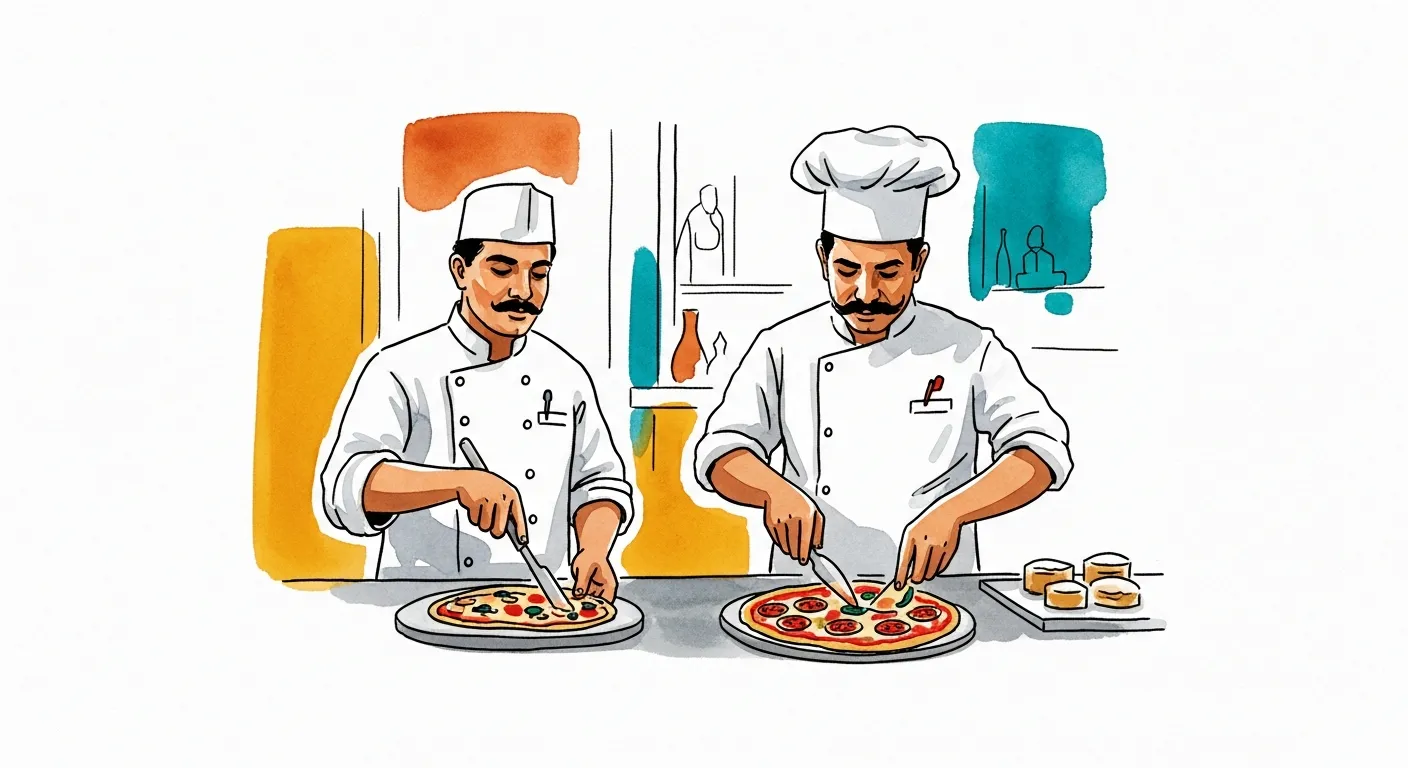
The chains didn't win India by selling pizza. They won India by letting India rewrite the menu.
THE PANEER PIVOT
Within two years of launch, both chains had done something their American headquarters would have found unrecognisable. They had built menus around Indian tastes. Pepperoni vanished. Pork vanished. Non-vegetarian options were carefully curated for local preferences. What replaced them tells you everything about how food actually travels across borders.
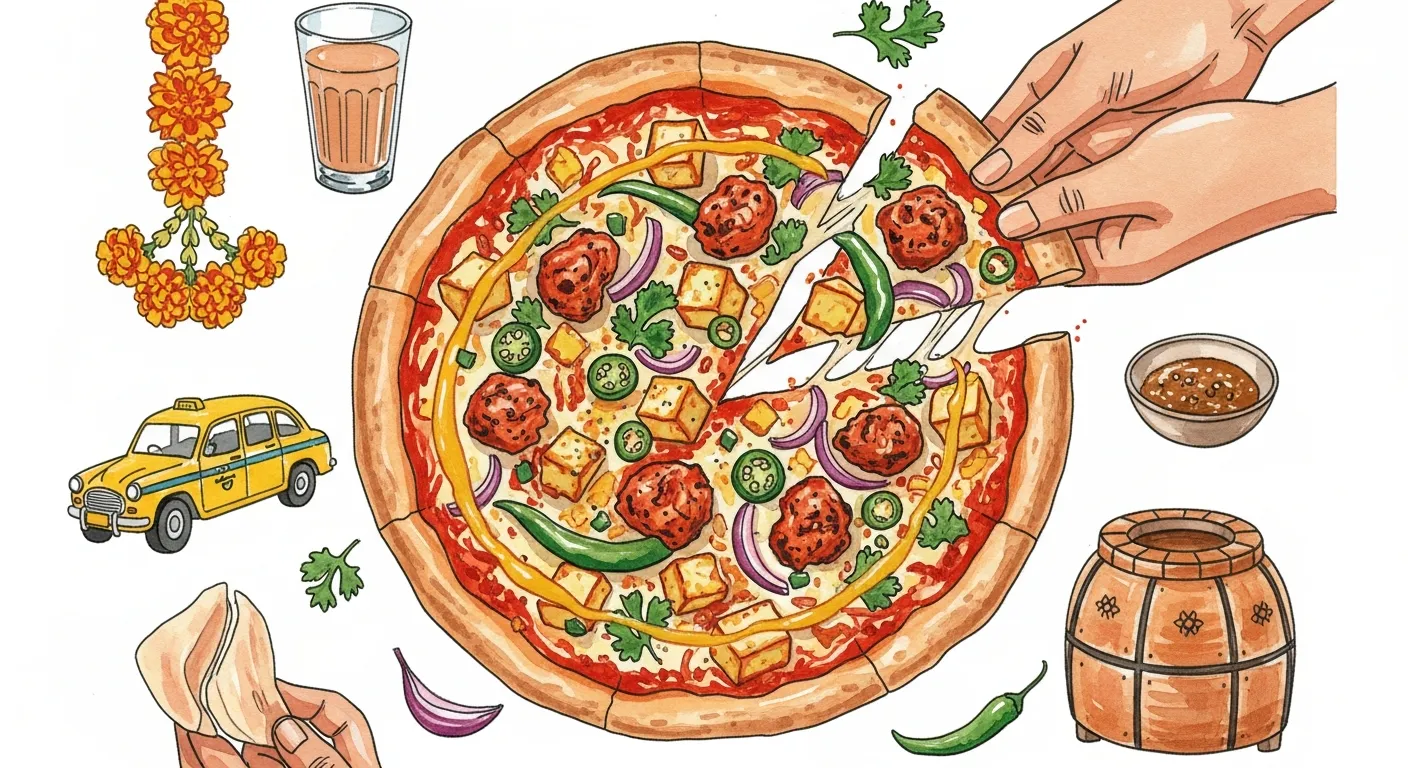
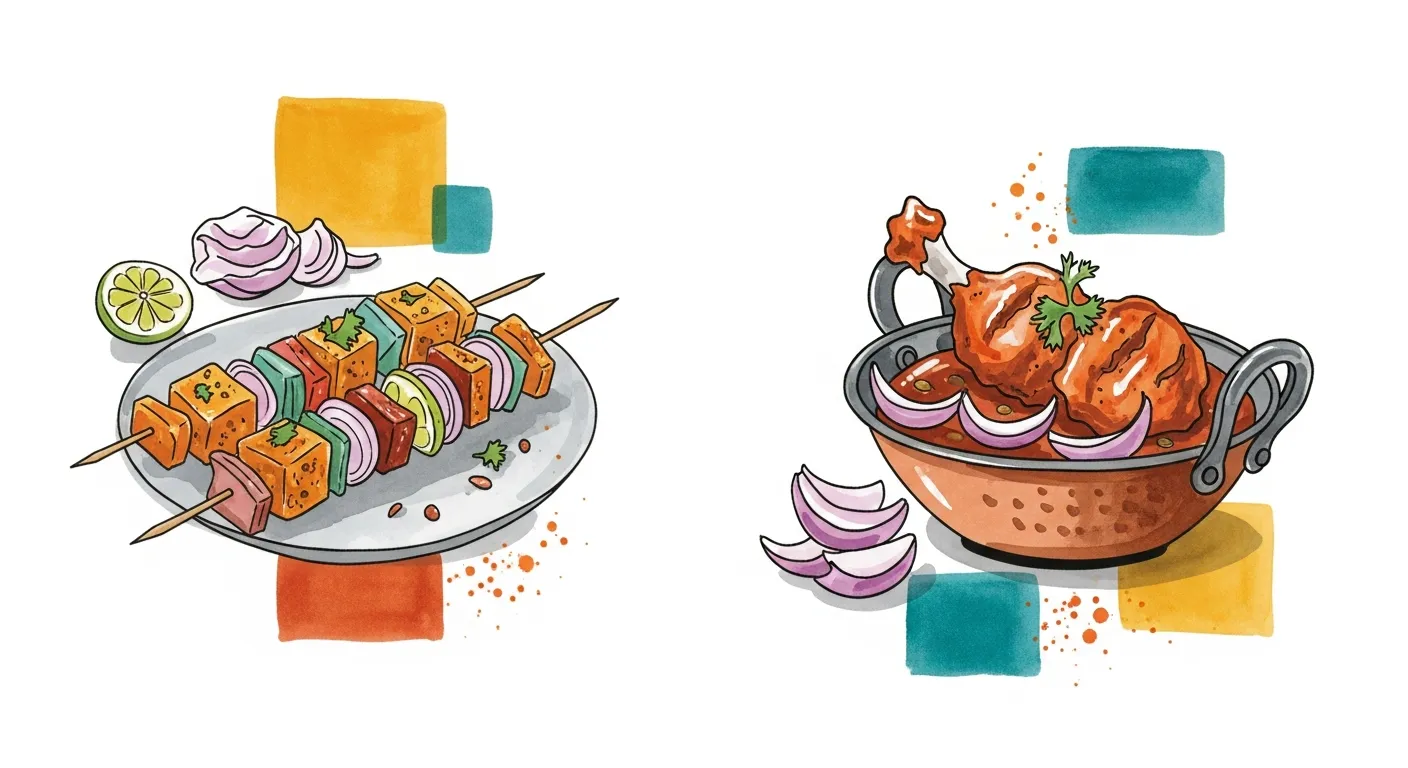
Paneer tikka became the default. Not as a novelty. As the bestseller. Tandoori chicken. Keema do pyaaza. Peppy paneer. These were not fusion experiments. They were survival adaptations. Paneer tikka, arguably India's defining pizza topping, has no ancestry in Naples, no precedent in New York, and no apology for existing.
Baby corn appeared on nearly every vegetarian pizza, a topping that would baffle anyone in Rome or Chicago. But it made sense here: vegetarian, locally available, it held its texture under heat and had a visual pop against orange cheese that worked on a laminated menu card in 2002.
The crust changed too. Domino's introduced a cheese burst variant. Pizza Hut went stuffed. Neither bore any resemblance to the charred, blistered, leopard-spotted cornicione of a proper Neapolitan pie. They didn't need to. They were Indian pizzas now.
BEFORE THE CHAINS
But the chains weren't first. Nobody talks about this.
Shiv Sagar, the vegetarian restaurant chain that started in Mumbai in the 1980s, was already serving what it called pizza well before Domino's had a single store in Asia. Shiv Sagar's pizza was a thick, bready base, more like a pau than a crust, topped with capsicum, onion, tomato, green chutney, and processed cheese. It came on a steel plate. It cost less than a vada pav costs today.
Was it pizza? By Neapolitan standards, absolutely not. By the standards of a city that turns everything it touches into its own food, it was exactly pizza. Shiv Sagar understood something the chains would spend crores learning: Indians don't adopt foreign food. They annex it.
The city didn't learn pizza. Pizza learned the city.
Every Udipi restaurant in Matunga had its own version by the early 1990s. Thick base, amul cheese, green chutney instead of marinara. These weren't lesser versions. They were parallel inventions.
THE NUMBERS
India is now one of the fastest-growing pizza markets in the world. Domino's alone operates over 2,000 stores across India as of 2024, making it their largest market outside the United States. Jubilant FoodWorks, the parent company, reported revenues exceeding 5,000 crore rupees in recent fiscal years.
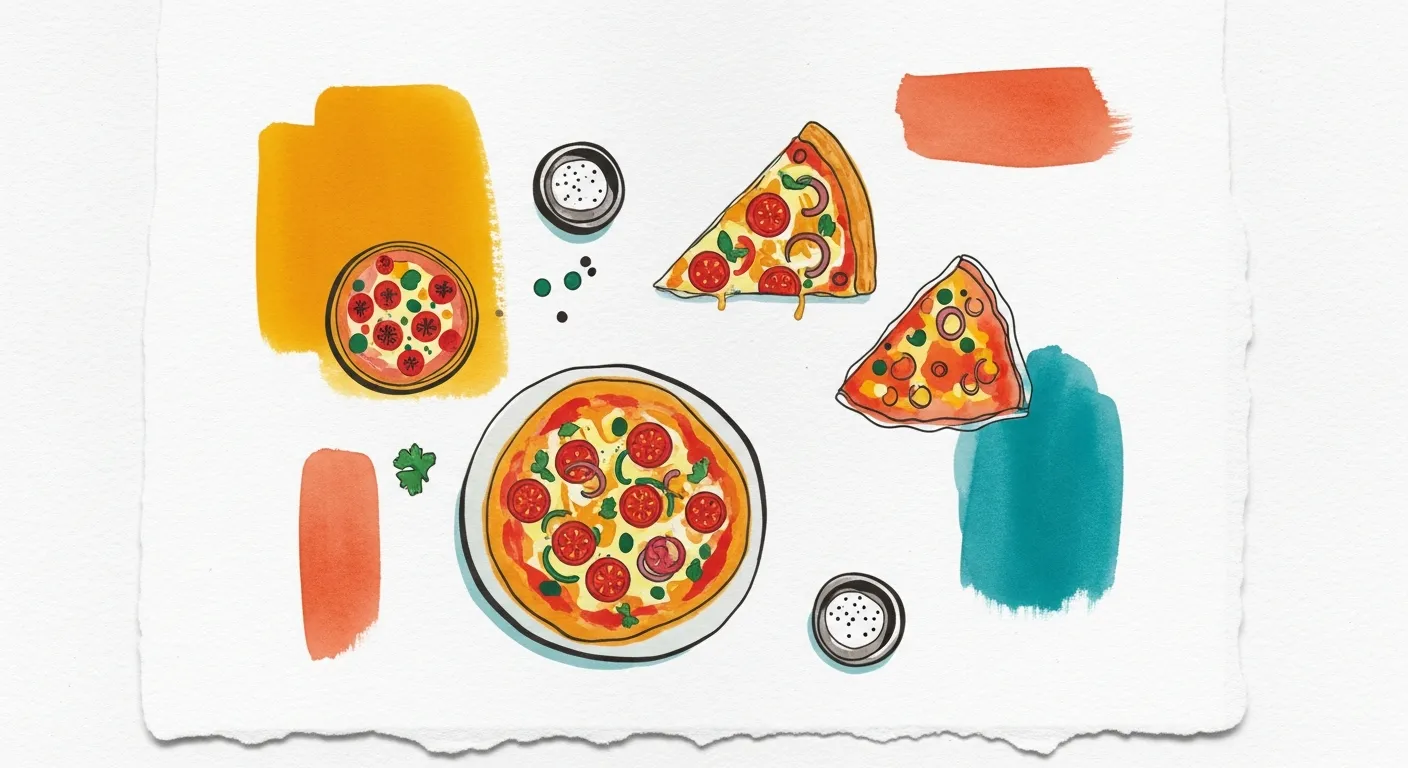
Pizza Hut runs over 500 stores. Add local chains, regional brands, cloud kitchens, and the guy on Linking Road selling pizza dosa from a cart, and you are looking at an industry that didn't exist 30 years ago and now feeds millions of people every single day.
Think about that. In 1995, most Indians had never eaten pizza. By 2025, there is a pizza place within delivery distance of nearly every urban Indian.
THE WOOD-FIRED COUNTER-REVOLUTION
And then, the correction.
Somewhere around 2018, Mumbai's food scene started asking a question it had never bothered with before: what does pizza actually taste like? Not Domino's pizza. Not Shiv Sagar pizza. The real thing. The Neapolitan thing. 72-hour fermented dough. San Marzano tomatoes. Fior di latte. A wood-fired oven running at 450 degrees Celsius. A 90-second bake.
Artisan pizzerias began appearing in Bandra, Lower Parel, and Kala Ghoda, competing directly with chains not on speed or price but on craft. The wood-fired gourmet pizza scene in Mumbai has grown significantly since 2018, with small-batch operations running single ovens imported from Naples, flour sourced from Italian mills, and price points that match or undercut chain delivery.
This wasn't a rejection of Indian pizza. It was an addition. The same city that eats paneer tikka pizza from Domino's at 11 PM now also eats a proper Margherita from a 12-seat pizzeria in Pali Hill at 8 PM. Both are real. Both are Mumbai.
THE HOME KITCHEN
The most radical pizza in India, though, is the one nobody reviews. The one made at home.
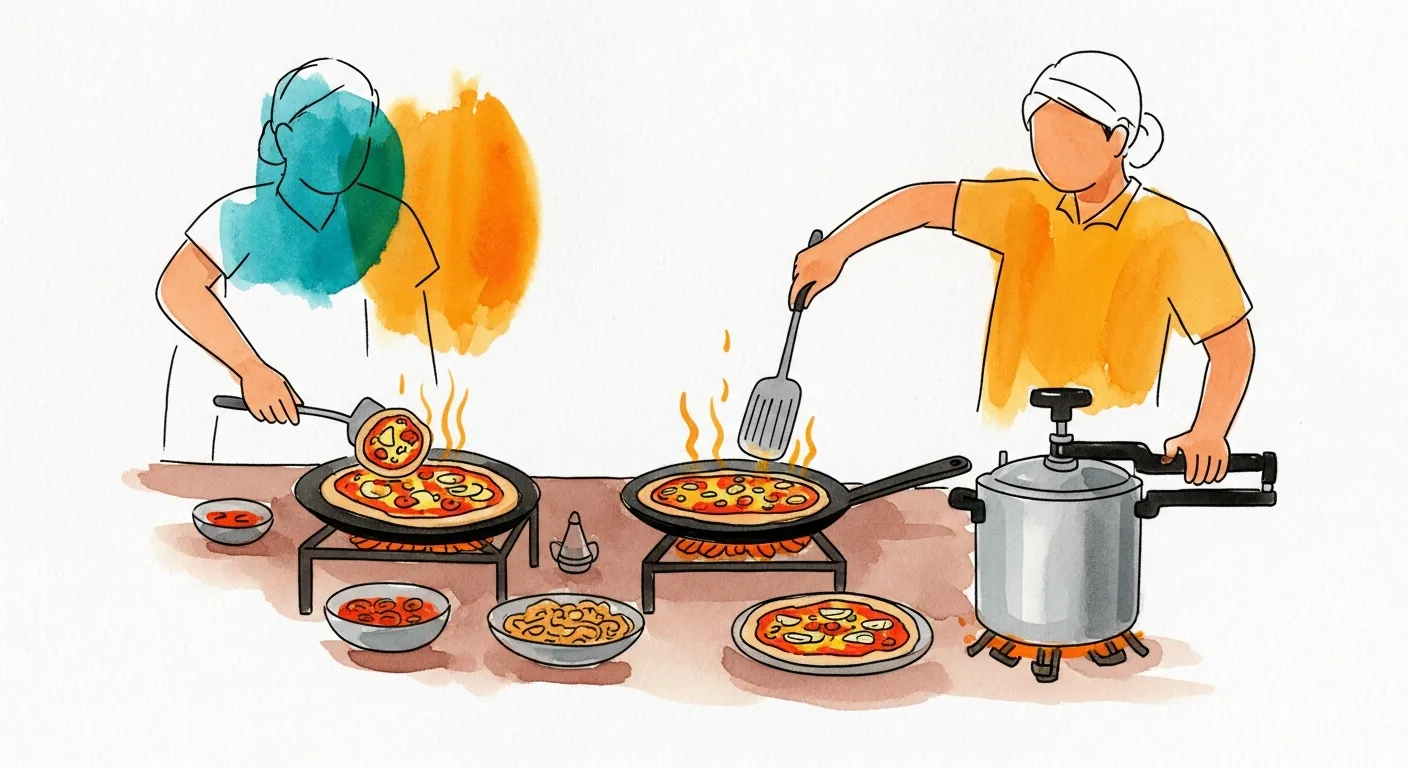
Indian home cooks have been making pizza on tawas, in pressure cookers, on naan bases, on paratha dough, with Amul cheese and Kissan ketchup, since at least the late 1990s. YouTube and recipe blogs codified what mothers already knew: you don't need an oven. You don't need mozzarella. You need a heavy pan, a lid, and the confidence to call it pizza because it is.
The tawa pizza is not a compromise. It is an invention. It has its own physics, its own crust, its own smoke.
Women across India figured out that a cast-iron tawa with a steel lid creates a convection effect close enough to an oven to melt cheese and blister a base. They figured this out without culinary school, without Italian cookbooks, without anyone's permission. The food internet merely documented what kitchens had already solved.
WHAT INDIA DID BACK
So here is the full arc. Italy invents pizza. America industrialises it. India gets it in 1996. Within a decade, India has rewritten the toppings, the crust, the sauce, the price, the delivery model, and the occasion. Pizza is no longer Friday night. It is tiffin. It is birthday party. It is exam-result celebration. It is 2 AM heartbreak food ordered from a phone.
The Neapolitans would not recognise most of it. That is fine. The Neapolitans would not recognise what Chicago did either, or what New York did, or what Tokyo did. Every city that loves pizza eventually makes it unrecognisable to the city that came before.
India didn't adapt pizza. India made pizza adapt.
Raffaele Esposito made a pizza for a queen in 1889. A hundred and seven years later, Domino's opened in Delhi and discovered that the queen, this time, preferred paneer.
Field Notes
Quick referencePizza Hut entered India in 1994, Domino's in 1996. The two-year head start didn't matter.
Paneer tikka became the bestseller, not pepperoni. The menu changed countries.
Tawa pizza: cast iron pan, steel lid, convection physics. No oven required.
Domino's runs 2,000+ stores in India—their largest market outside America.
Shiv Sagar served pizza on steel plates in the 1980s, before any American chain arrived.
Get the next story first
Join the Bhukkads. Free, no spam, just stories.
Takes 30 seconds.