Nobody Does It Like the Shettys
How one community from one coastal district fed an entire megacity.
In 1913, a boy named Rama arrived at Bhaucha Dhakka by boat. He was eleven. His father had passed. He had no English, no money, and no plan beyond the address of a woman in Santacruz who ran a bachelor's mess and needed a kitchen helper.
He took the job. He washed vessels. He watched.
Twenty-nine years later, that boy, A. Rama Nayak, opened a small restaurant on the first floor of a chawl near Matunga Central station. Sane Guruji inaugurated it. A plate cost four annas. The menu was temple food: idli, dosa, sambar, rasam. Vegetarian. Clean. Fast. Priced at what a mill worker could afford.
That was the entire business philosophy. It still is.
Between 1942 and 1955, Rama Nayak opened eleven restaurants across Bombay. The model was the same every time. Hire from home. Train in the kitchen. Pay fairly. Keep the food consistent. Keep showing up.
They called him the Father of Udupi Hotels. Not a journalist. Not a politician. M.V. Shetty, General Secretary of the Federation of Hotels & Restaurants Association, gave him that title. The industry named its own founder.
A boy who arrived by boat at eleven. Fourth-grade dropout. Bombay's first restaurant chain.
WHERE IT COMES FROM
The story does not begin in Bombay. It begins in the 13th century, inside the Krishna Matha in Udupi.
The philosopher Madhvacharya founded a Vaishnavite monastery there. The monastery ran a kitchen. That kitchen practised annadhana, free meals for every pilgrim who walked through the door. No questions about caste. No questions about origin. You showed up, you ate.
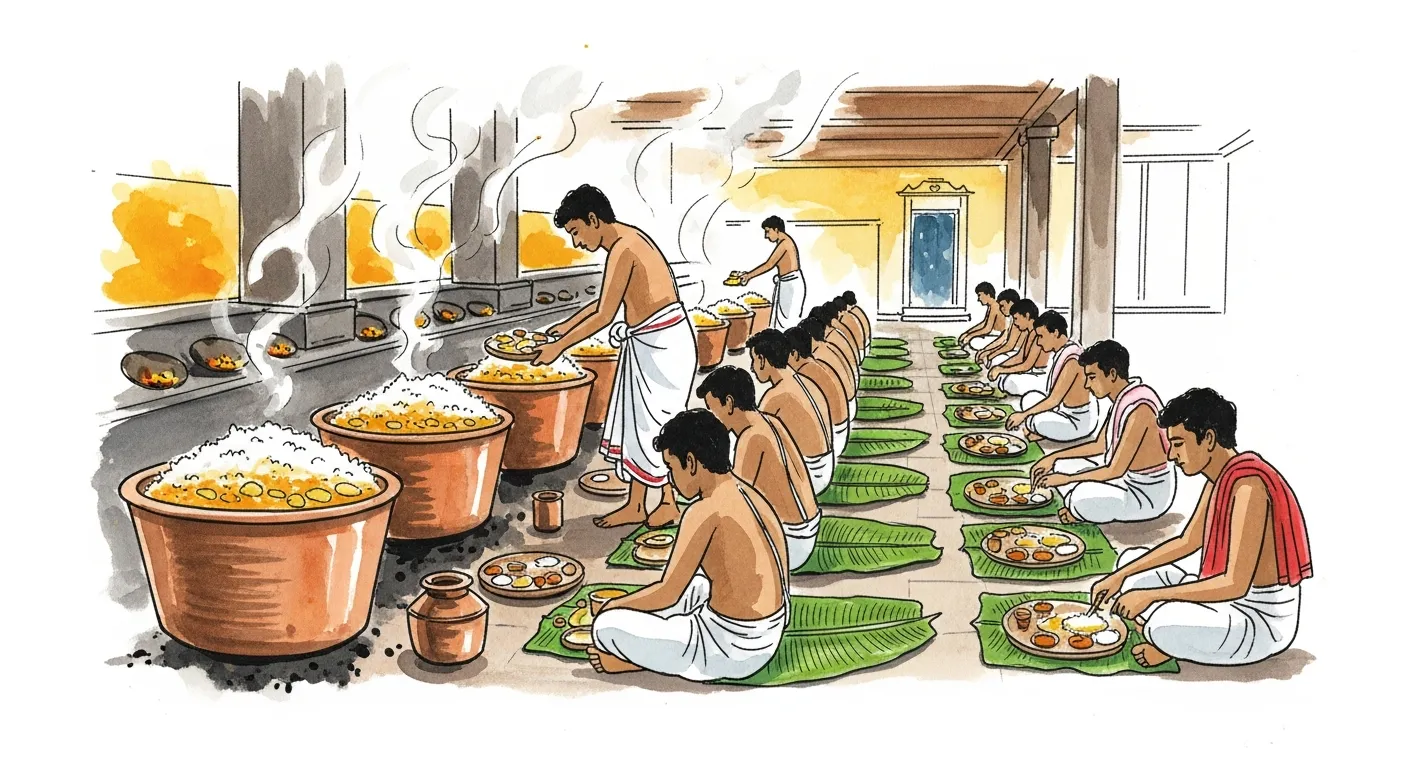
Eight monasteries, the Ashta Mathas, took turns running the kitchen in a rotation called paryaya. Originally every two months. Later, Vadiraja Teertha in the 16th century extended it to two years. The recipes didn't change between rotations. The portions didn't change. The sambar a pilgrim ate under one matha's watch tasted the same under the next.
The original franchise model. Seven centuries before anyone filed a trademark.
The cooks who trained in those kitchens learned seva as system. How to feed six hundred people the same dish, at the same standard, without shortcuts and without drama. Ritual purity. Madi. Kitchen discipline that was devotional before it was professional. This is what the men who left for Bombay carried with them. Not recipes. Discipline.
THE PIPELINE
From the 1890s onward, young men from Udupi and Dakshina Kannada, the Bunt community, population under a million worldwide, began leaving for Bombay. Post-independence land reforms had squeezed their agricultural income. The coast was beautiful. But beauty doesn't feed a family.
Every man who found work in a Bombay kitchen sent word home. Every cousin, every neighbour's son, every boy whose father knew someone who knew someone, the message was simple. Kaam hai. Oota sigthad. There's work. You'll eat.
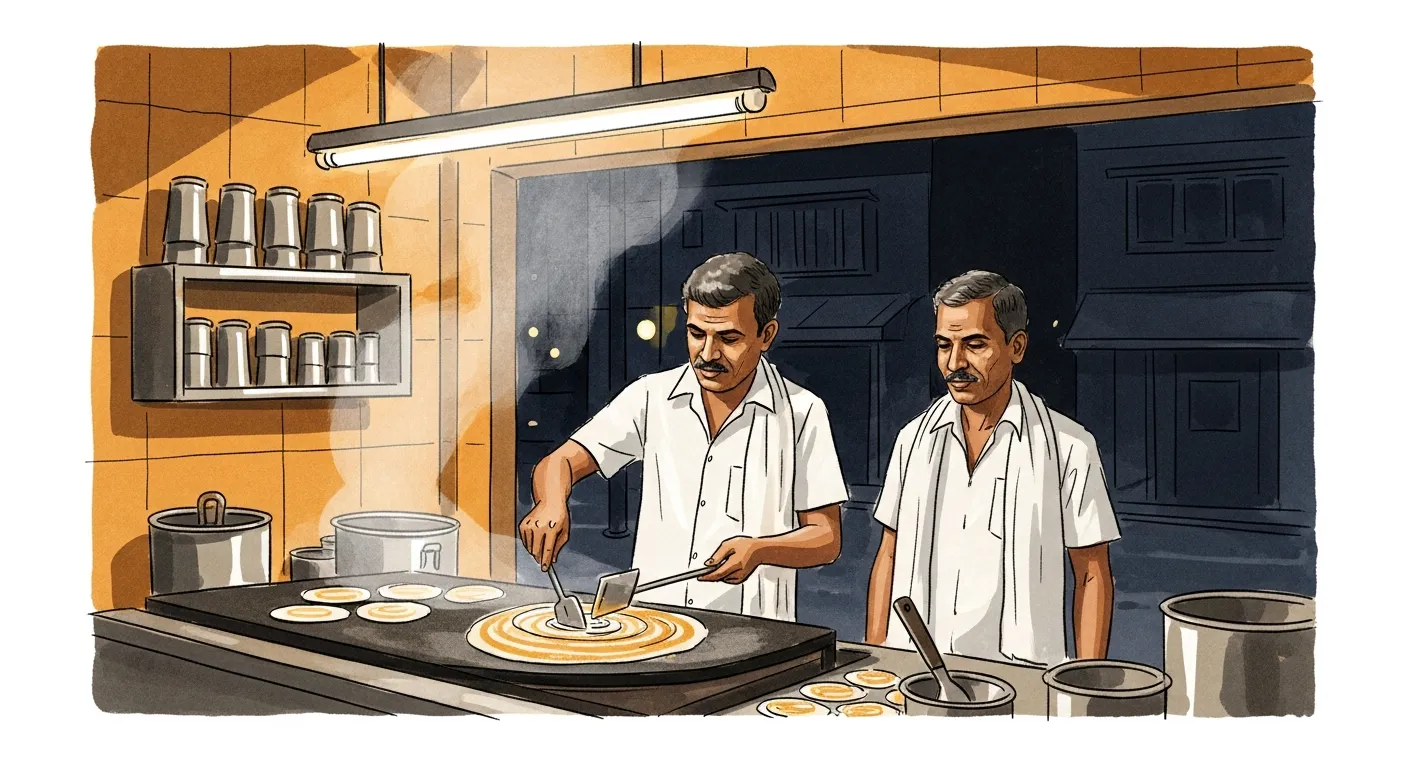
A boy arrives in Bombay. He is 17, maybe 18. He speaks Tulu and Kannada. He has a reference from a village elder and a contact at a restaurant. He starts at the bottom. Washing vessels. Cutting vegetables. Grinding batter at 4am, the wet stone and the fermented rice and the silence before a city wakes up.
Within two years, he is making dosas on the tawa. Within five, managing a counter. Within ten, he has saved enough to either open his own place or buy a share in an existing one.
He hires from home.
Amba Bhavan opened in 1933. Cafe Mysore in 1936. Mani's Lunch Home in 1937. Cafe Madras in 1940, now in its third generation under brothers Dev and Jay Prakash. Rama Nayak's in 1942. K. Ananda Shetty opened Saraswathi Lunch Home. In Matunga, in Dadar, in Sion, in Chembur, in the suburbs, one family after another.
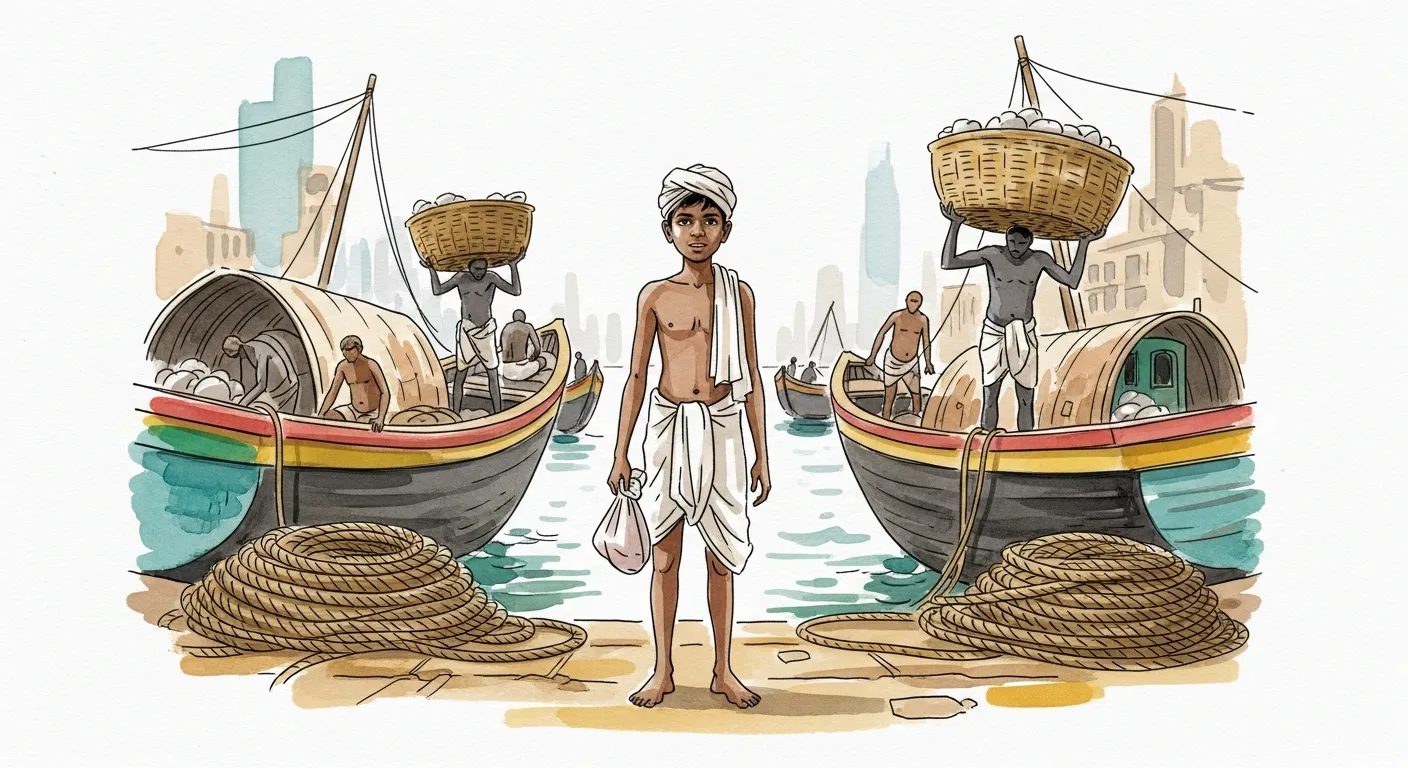
By the late 1980s, Shetty families had purchased many existing South Indian restaurants from retiring owners, absorbing even non-Udupi places into the network.
This was not a business plan. This was gravity.
WHAT SETS THEM APART
Everyone in Bombay says it. Shetty ka restaurant hai, toh chalega hi. If it's a Shetty's restaurant, it will run.
Not because of the food alone. The food is good, but that is not the secret. Ask anyone in the trade. Ask AHAR, the Indian Hotel & Restaurant Association, 8,000 members in Greater Mumbai, current president: Vijay K. Shetty. Ask the suppliers. Ask the waiters. They will all tell you the same thing.
It is the consistency.
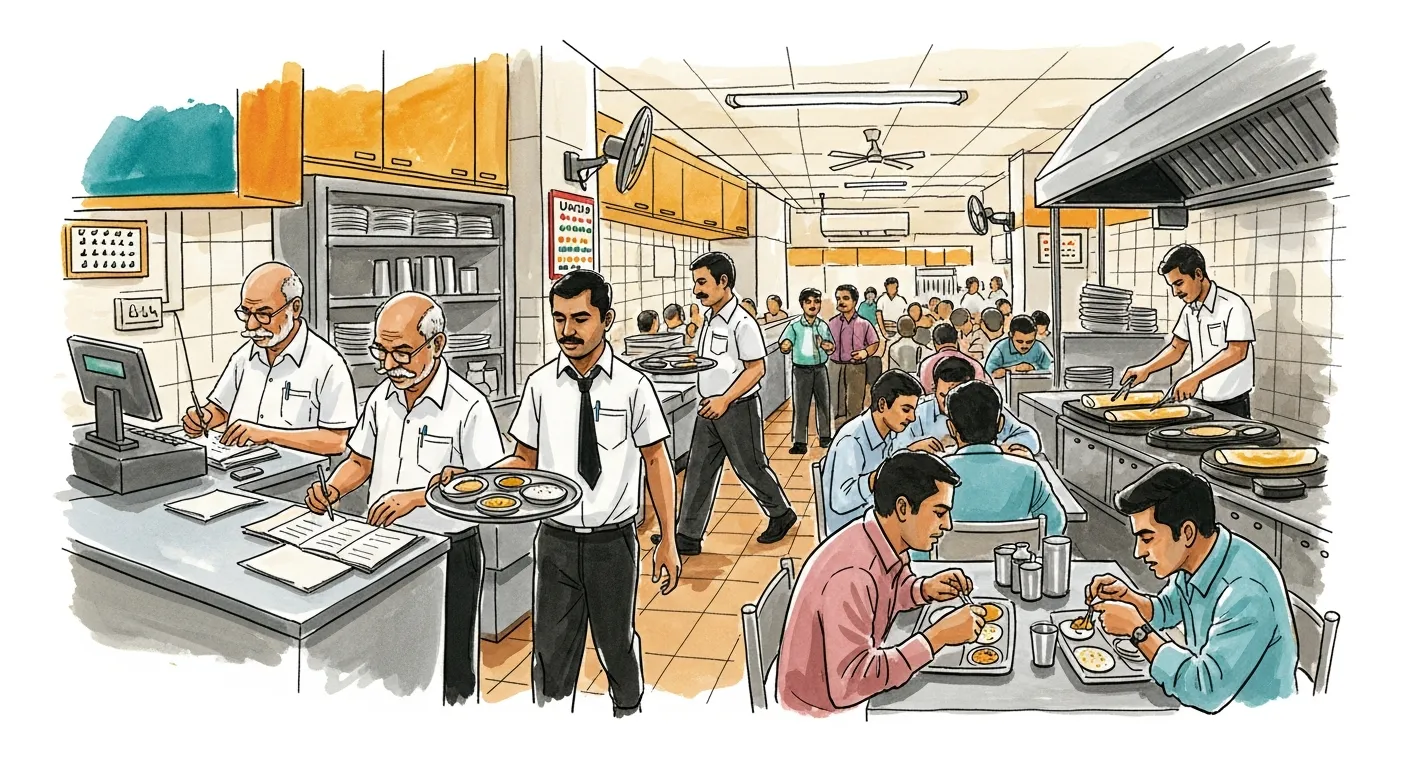
A Shetty-run restaurant opens at 7am. It closes at 11pm. Seven days a week. No annual shutdown. No "closed for renovation." No "owner is travelling." The sambar today tastes like the sambar last Tuesday. The dosa today is the same thickness as the dosa your father ate here in 1994.
Suniel Shetty, yes, that Suniel Shetty, described what he watched his father do: daily 5am trips to wholesale markets, kitchen prep before 7am opening, monitoring customer satisfaction through the day, managing supply chains in the evening. His father came to Bombay as a boy, worked as a waiter, slept on grain sacks in the restaurant, and eventually bought all three buildings where he had once worked.
Shetty ka restaurant hai. That's not a description. That's a guarantee.
The guarantee is not talent. It is not magic. It is waking up at 3:30am to soak rice while the city is still sleeping. And doing it again the next day. And the next. For decades.
THE ECONOMICS
A masala dosa priced at ₹120 costs roughly ₹30 in ingredients. Labour, rent, and electricity eat the rest. Margins: 15-20%. The restaurant survives not on any single plate but on volume. A busy Udupi place serves 800 to 1,200 plates a day. The arithmetic works only if you never stop.
Mumbai's total organized food services market is worth ₹55,181 crore, according to the NRAI India Food Services Report 2024. No one has isolated how much of that belongs to the Shetty network. No one has tried. The network does not advertise. It does not publish annual reports. It runs on trust, on community bonds, and on the understanding that if someone from your village gave you a chance, you do not waste it.
The secret is not the recipe. The secret is showing up.
BEYOND THE DOSA
Here is what most people don't realise. The Shettys didn't stop at restaurants.
Dr. Vithal Kamat, Bunt, from the same coastal strip, built The Orchid, Asia's first five-star Ecotel hotel, opened in 1997. 221 rooms. 95 national and international awards. His father Venkatesh Krishna Kamat had started Kamat Hotels in 1958, expanding from a restaurant in Pune into a chain across Maharashtra.
K. Prakash Shetty founded the MRG Group in 1993. Today it operates Goldfinch Hotels, a DoubleTree by Hilton in Goa, a Courtyard by Marriott in Bengaluru, and the Navi Mumbai Marriott.
Shilpa Shetty holds a 50% stake in Bastian Hospitality Group, ₹127 crore revenue in FY2024, running Bastian, A Bar Called Life, Arth, One Street, Binge.
From the permit rooms of Thane to the Marriotts of Navi Mumbai. From four-anna plates in a Matunga chawl to five-star Ecotels in Vile Parle. The same community. The same district. The same work ethic, across three generations.
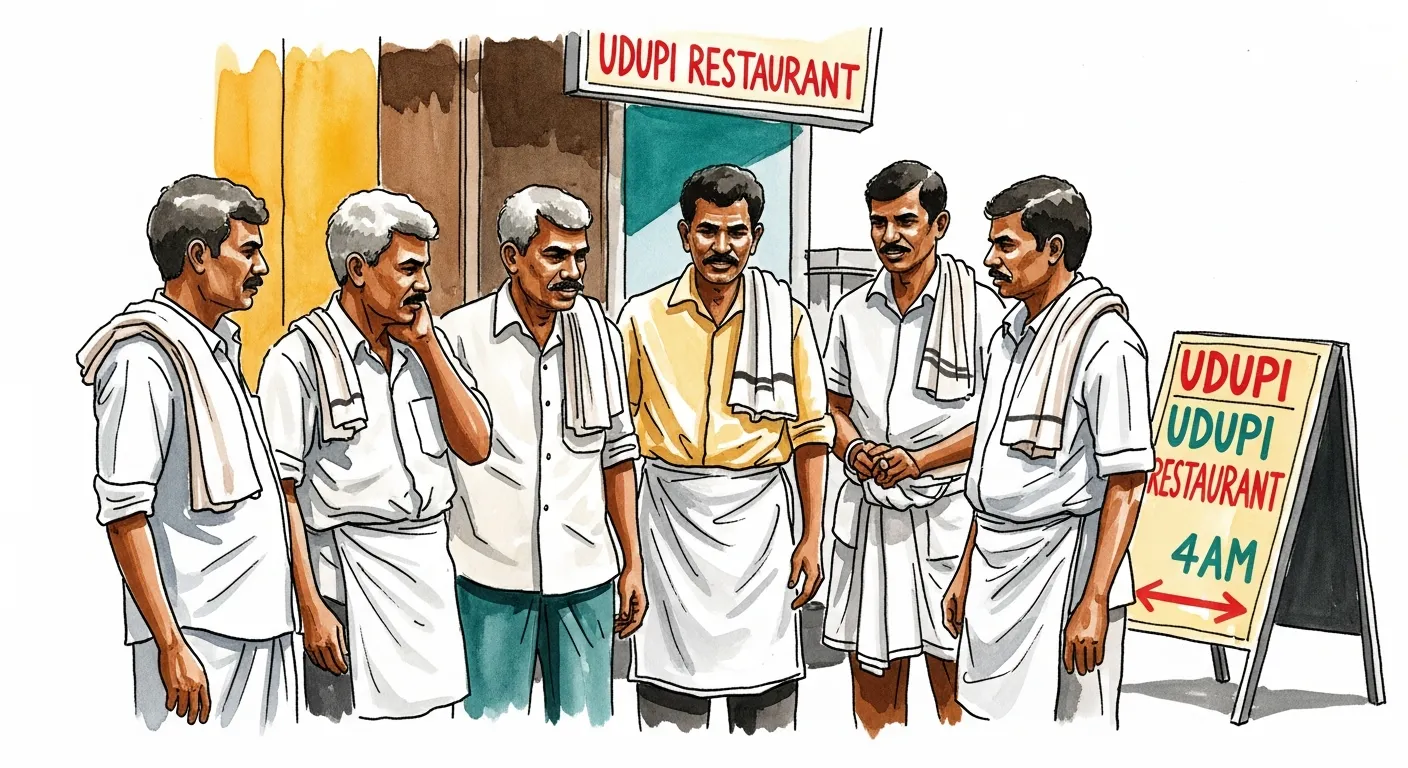
And when Swiggy and Zomato started charging commissions that crushed margins for small restaurants, it was Suniel Shetty who backed WAAYU, a zero-commission food delivery app, built in partnership with AHAR, now on the ONDC platform. The community didn't wait for someone else to fix it.
THE NEXT GENERATION
The pipeline hasn't stopped. It has evolved.
The Bunts Sangha, founded in Mumbai in 1927, now runs the Ramanath Payyade College of Hospitality Management Studies in Kurla. BSc Hospitality. BA Culinary Arts. Placements at Taj, Oberoi, Marriott, Hyatt. The boys who once arrived with a village elder's reference now arrive with a degree from their own community's college.
Shashank Nayak, Rama Nayak's grandson, left a career in marketing in 2009 to come back and run the family restaurant. Third generation. Four of the original eleven branches still operate. The food is unchanged. The waiters still walk without shoes. If you waste their sambar, you pay a fine of ₹13.
At Cafe Madras, the third generation is running the tawa. At Goldfinch Hotels, the second generation is signing Marriott franchise agreements. At WAAYU, a movie star's son is fighting Zomato with a zero-commission model.
Different scales. Same origin. Same 50-kilometre radius in coastal Karnataka.
Different tawas. Same discipline.
THE FOOD THAT RUNS THIS CITY
Professor Frank Conlon of the University of Washington wrote about dining in Bombay. Scholars Stig Toft Madsen and Geoffrey Gardella published an academic study called "Udupi Hotels: Entrepreneurship, Reform, and Revival." The food writer Matt Avalos wrote perhaps the most detailed English-language feature on the Udupi hotel network for Roads & Kingdoms.
All of them documented the same thing. A community that feeds a city of 2.1 crore people, three meals a day, without interruption, without fanfare, and without asking for credit.
They say Bombay doesn't let you sleep hungry. That's true. But someone has to wake up at 3:30am to make sure of it.
The Shettys have been doing that for a hundred years. Tomorrow's rice is already soaking.
Field Notes
Quick referenceRama Nayak arrived in Bombay at age 11 in 1913 by boat at Bhaucha Dhakka with no English, no money, just an address.
The entire Bunt community worldwide has a population under one million people.
The 13th-century Krishna Matha in Udupi created the original franchise system with eight monasteries rotating kitchen duties.
A ₹120 masala dosa costs ₹30 in ingredients. Busy Udupi restaurants serve 800-1,200 plates daily.
At Rama Nayak's restaurant, you still pay a ₹13 fine if you waste their sambar.
Get the next story first
Join the Bhukkads. Free, no spam, just stories.
Takes 30 seconds.