The Banana Leaf Is Holding the Line
Matunga's Udupi restaurants survived prohibition, partition, and Pizza Hut. The gas cylinder might be different.
Generated by Imagen 4
In 1924, a man named Krishna Rao opened a small eating house in Udupi, a temple town on the Karnataka coast. He was a Shivalli Brahmin. He cooked for pilgrims. The food he served was vegetarian, cheap, and standardised in a way Indian food rarely is. Sambar to a recipe. Rasam to a recipe. Rice measured in volumes. The meal ended with curd and a slice of banana, and it cost almost nothing.
By the 1930s, his nephews and cousins were running similar establishments in Bombay. By 1950, there were dozens. By 1970, the South Indian breakfast in this city, the idli, the medu vada, the masala dosa, was no longer South Indian. It was Bombay food cooked by men from one specific district of Karnataka, served to clerks, mill workers, and Parsis on their way to Fort.
Nobody talks about the fact that almost every Udupi restaurant in Mumbai is, genealogically, a cousin of every other Udupi restaurant in Mumbai.
THE STREET THAT BECAME A CANTEEN
Matunga happened because of the railways. The Bombay Improvement Trust laid out the suburb in the 1920s as a planned residential zone for South Indian government servants and Tamil Brahmin families displaced from the south by famine and opportunity. The Asthika Samaj came up in 1931. The temples followed. The schools followed. And then, because 8,000 vegetarian families needed somewhere to eat dosa that was not their own kitchen, the restaurants followed.
A. Rama Nayak opened Udupi Shri Krishna Boarding in 1942. Mani's Lunch Home opened on King's Circle in the late 1950s. Cafe Madras came in 1941, Anand Bhavan around the same period, Ram Ashraya in 1939. Six decades. Same families. Same suppliers. Same banana leaves arriving at five in the morning from Vasai.
Every Tamil child in Bombay between 1945 and 2005 ate their first dosa outside the home in Matunga. That is not a claim. That is a census.
THE THALI THAT WILL NOT MOVE
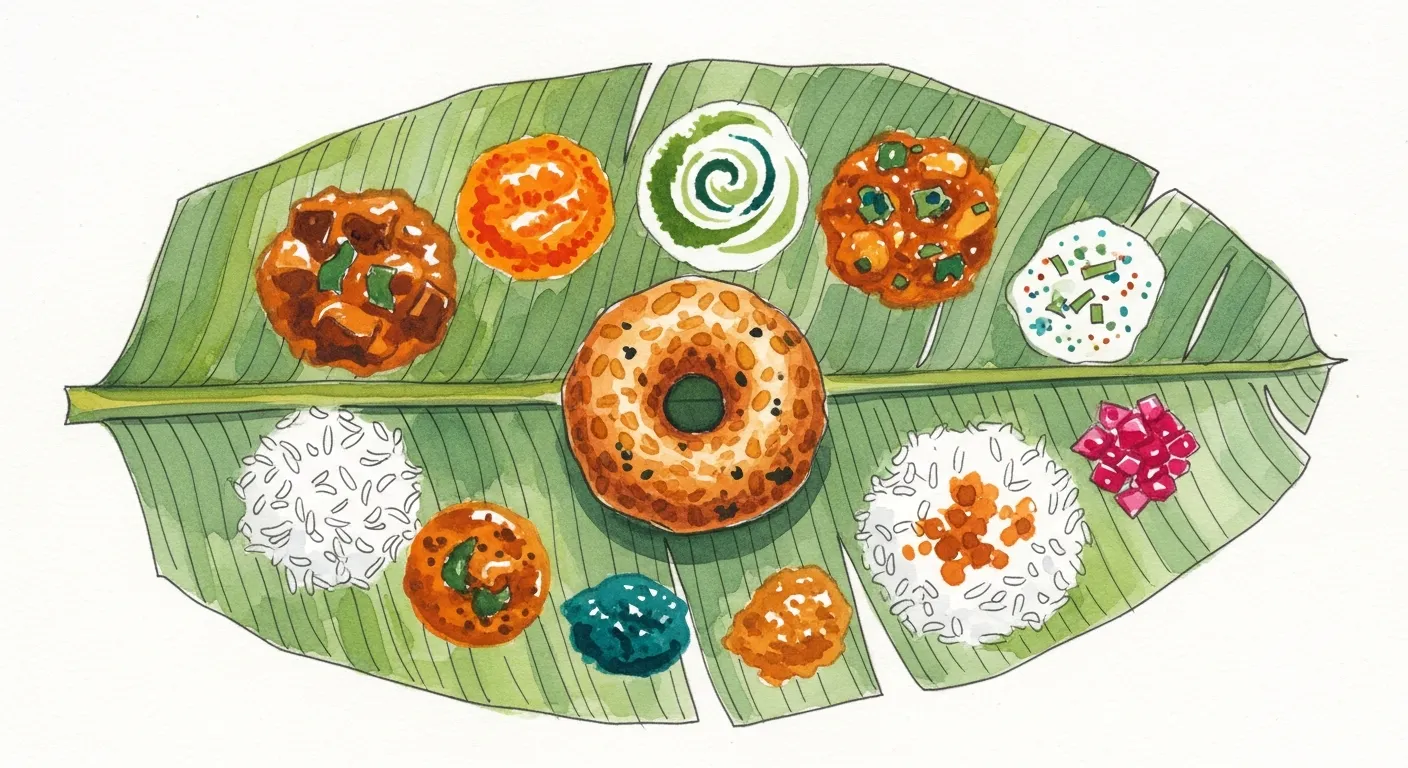
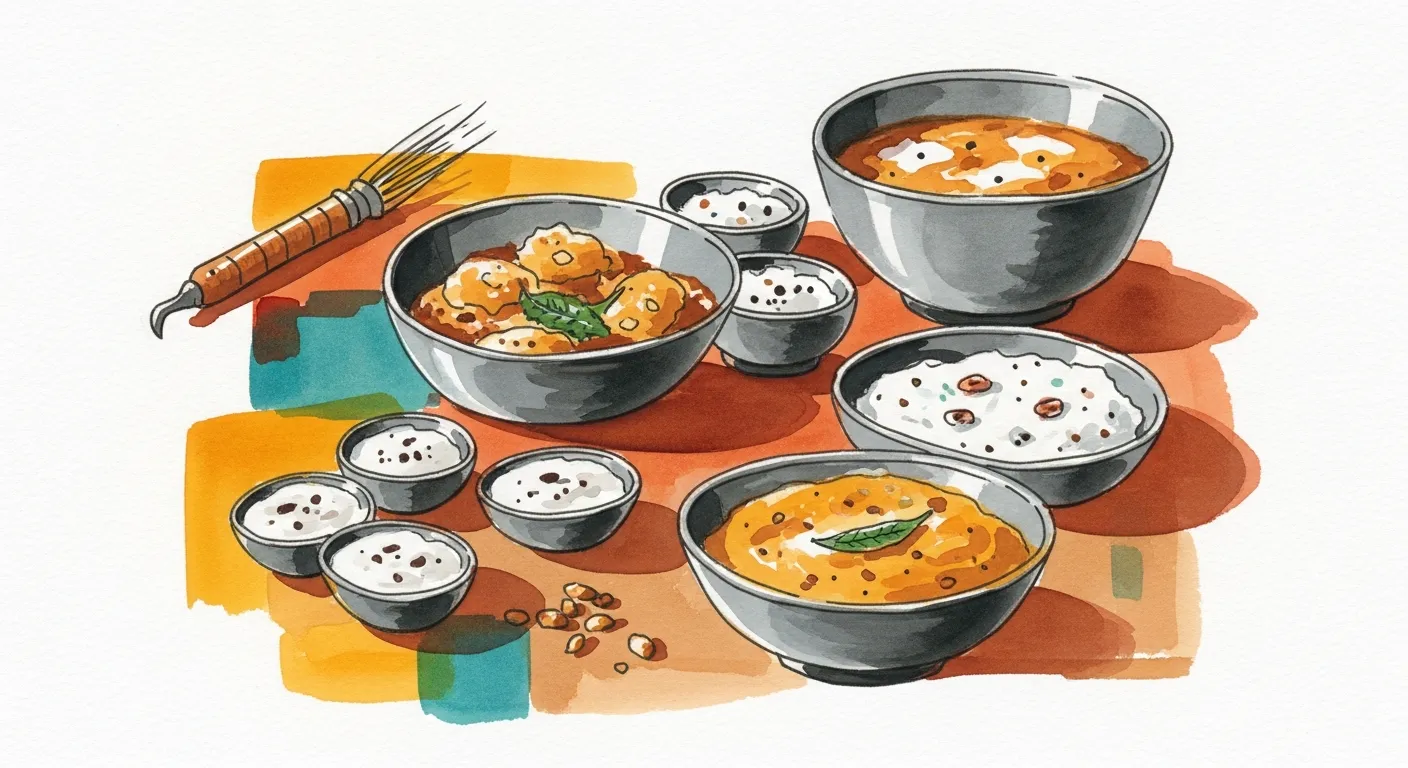
Walk into Rama Nayak's today and the unlimited South Indian thali costs Rs 300. Banana leaf. No onion. No garlic. Rice, sambar, rasam, two vegetables, a kootu, a pachadi, payasam, papad, buttermilk. Refills until you stop them. It is the same meal Krishna Rao served pilgrims in 1924 and the same meal A. Rama Nayak served clerks in 1942.
Rs 300.
The NOVA consumer trends report for 2026 notes that restaurant menu prices in major markets have risen approximately 31% since 2020. A thali that cost Rs 180 in 2019 should, by that math, be Rs 235 today. Rama Nayak's is Rs 300, which sounds like it has kept pace, until you remember that this is unlimited, served on a leaf flown in from another district, by men who have worked in that kitchen for thirty years on salaries that are not casual labour wages.
The margins are not generous. They never were. The whole Udupi system was built on volume, repetition, and the fact that the cook, the cashier, and the man washing the leaves were often related to the owner.
The thali is not a price point. It is a position.
WHAT THE GAS CYLINDER BROKE
In early 2024, Mumbai Mirror reported that Mani's Lunch Home had been forced to discontinue several popular dosa varieties at its Matunga outlet because of a severe shortage of commercial LPG cylinders. The headline said the special dishes were the first to go off the menu. Read that sentence again. The special dishes go first. Not the cheap ones. Not the loss-leaders. The ones that needed a second burner, a longer cooking time, a dedicated tawa.
A Bloomberg report on the broader crisis put the dependency in numbers. 75% of Indian restaurants rely on LPG. Of those, 90% of their food production runs on it. When the cylinder supply tightens, the menu shrinks. The 14-variety dosa list becomes a six-variety dosa list. The Mysore masala stays. The pesarattu, the rava onion, the set dosa, the spring dosa, the cheese-paneer-jain, those are negotiable.
An 80-year-old restaurant survives war, riot, demonetisation, and lockdown, and gets quietly clipped by a gas shortage.
The man running Mani's today is not Mani. The man running Cafe Madras is the third generation. The kitchens are still staffed largely by cooks from coastal Karnataka, Kundapur, Karkala, Hebri. They have been in those kitchens for decades. They are not being replaced by 22-year-olds who want to learn. The 22-year-olds want to work in the cloud kitchens in Wadala that pay double.
THE NEW CUSTOMER DOES NOT WANT UNLIMITED
Here is the part the owners will not say on the record.
The Tamil Brahmin family that ate at Ram Ashraya every Sunday for forty years has, statistically, halved. The children moved to Powai, Pune, Bangalore, Singapore, New Jersey. The parents are 78 and eat one idli at home. The customer base that built these restaurants is ageing out of them.
The replacement customer is different. Restaurant India's analysis of changing dining behaviour describes a shift towards what it calls experience-driven dining. Quality over quantity. Authenticity as a brand attribute. Health-conscious, portion-controlled meals. The all-you-can-eat thali, which was the entire economic logic of the Udupi boarding house, is not what a 31-year-old product manager from Hiranandani is looking for at lunch.
She wants three idlis, not seven. She wants to know if the ghee is A2. She wants the chutney without coconut because she is doing a Whole30. She will pay Rs 450 for that meal at a place with better lighting and an Instagram presence. She will not pay Rs 300 for unlimited at a place where the fan is loud and the cashier is a 70-year-old man with a ledger.
The Udupi restaurant was built for the man who came in hungry, ate until he was full, and left. The new customer comes in curious, eats until she has the photo, and leaves.
The all-you-can-eat thali is not a menu item. It is a worldview.
WHAT MATUNGA IS DOING ABOUT IT
Not much. And that is, possibly, the point.
Cafe Madras has not redesigned its interiors in any meaningful way. Ram Ashraya still opens at 5:30 AM and runs out of idli batter by 9:30. Rama Nayak's still serves the thali on a leaf and charges Rs 300. Anand Bhavan still has the same plastic-laminate menu card it had in 2008. Mani's, post-cylinder crisis, runs a shorter dosa list and apologises if you ask for the discontinued ones.
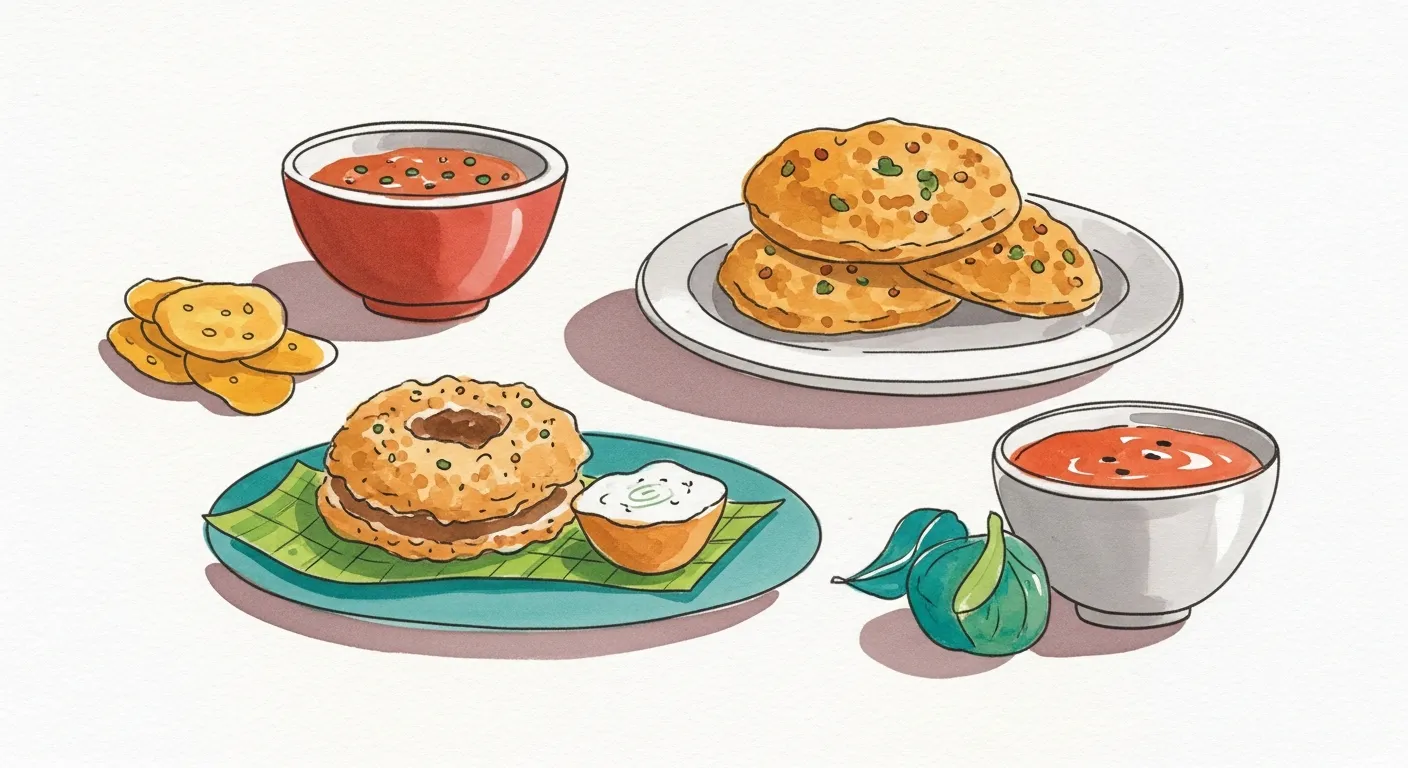
This is not stubbornness. This is a calculation. The minute a Matunga Udupi restaurant starts looking like a Bandra Udupi restaurant, the reason to come to Matunga disappears.
The rents on King's Circle and Bhandarkar Road have, by broker estimates, roughly doubled since 2015. The owners who own their premises, and most of the old guard do, are insulated. The owners who lease, particularly the second-tier places that opened in the 1980s, are the ones quietly closing or shifting to delivery-only. Two have shut in the last three years. Nobody wrote about it.
The ones that survive do so because the family still owns the building, the cook is still on the payroll, and the regulars still walk in at 8:15 AM expecting two idlis, one vada, filter coffee, and silence.
THE BANANA LEAF AS BALANCE SHEET
A banana leaf in a Matunga kitchen costs about Rs 3 wholesale. The thali it carries costs Rs 300. The leaf is 1% of the price.
It is also the entire reason the meal works. It is biodegradable. It is single-use without being plastic. It does not need washing. It signals authenticity to the customer who needs the signal and feels like home to the customer who does not. It is the cheapest piece of equipment in the kitchen and the most expressive.
When Cafe Madras or Rama Nayak's eventually goes, and one of them will, in the next decade, the thing that will be lost is not the recipe. The recipes are written down. The thing that will be lost is the arrangement. The 80-year-old supplier in Vasai. The cook from Kundapur. The cashier with the ledger. The Tamil grandfather and the Maharashtrian schoolboy at adjacent tables, eating the same meal for different reasons.
Krishna Rao opened a small eating house in 1924 because pilgrims needed to eat. A hundred and two years later, his great-grand-nephews are still feeding the city.
The gas cylinder is the immediate problem. The customer is the long one.
The banana leaf is still on the table.
Field Notes
Quick referenceAlmost every Udupi restaurant in Mumbai is genealogically a cousin of every other one — all traced back to Krishna Rao's 1924 eatery in coastal Karnataka.
A banana leaf costs Rs 3. The thali it carries costs Rs 300. The leaf is 1% of the price and 100% of the reason the meal works.
75% of Indian restaurants rely on LPG. When cylinder supply tightens, the 14-variety dosa list becomes six. The special dishes go first.
The Tamil Brahmin families who ate at Ram Ashraya every Sunday for forty years have statistically halved. The children moved to Singapore and New Jersey.
Same banana leaves arriving at 5 AM from Vasai. Same suppliers for six decades. The 80-year-old arrangement is the actual product being sold.
Get the next story first
Join the Bhukkads. Free, no spam, just stories.
Takes 30 seconds.