Every Culture Has a Dumpling. India Has Forty.
Modak, momo, gujiya, kozhukattai, dim sum. A civilisation reveals itself through what it wraps in dough.
This is not a food story.
This is a census report. A migration record. A faith document disguised as a recipe index. Because if you want to know where a people came from, what they believe in, who they traded with, and what they carried when they ran, don't read their constitution. Read their dumplings.
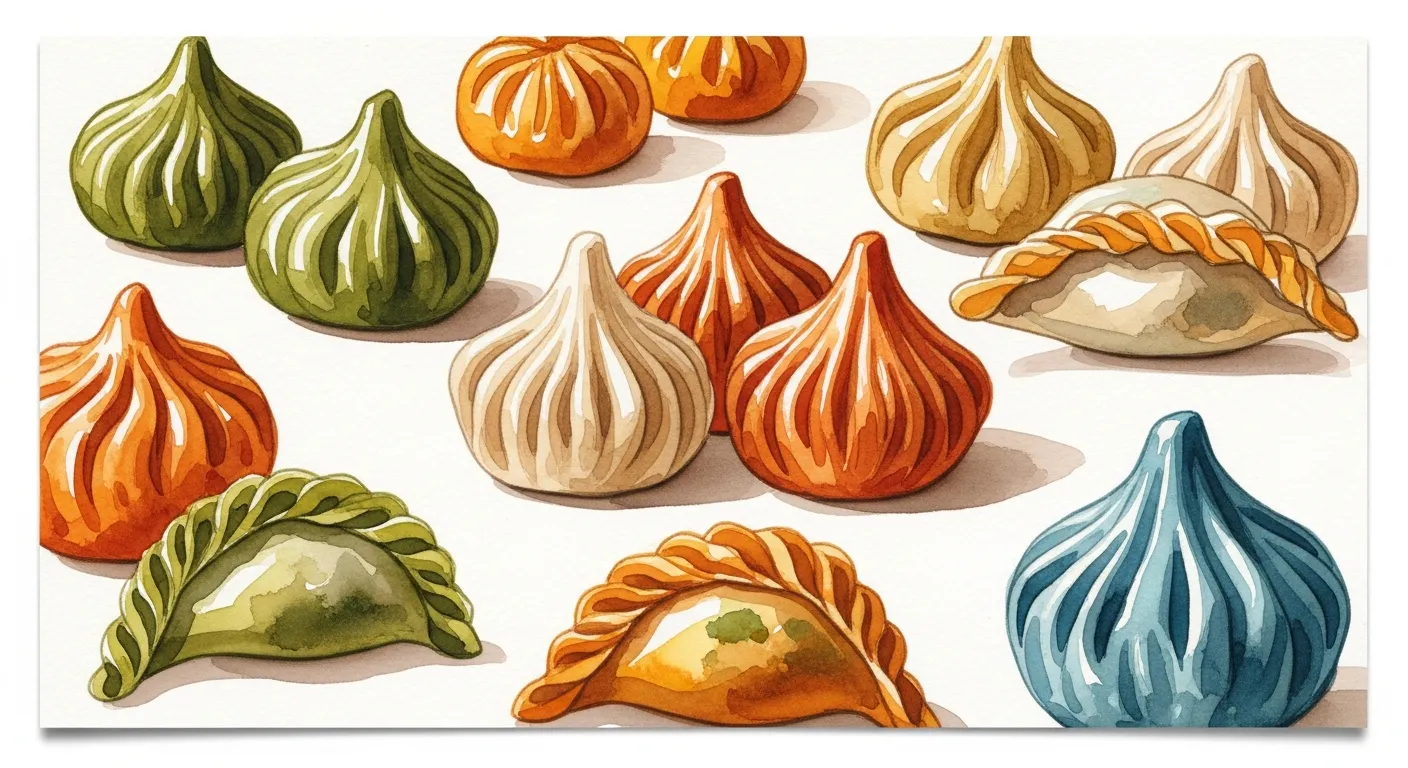
Every culture on earth has one. The Italians have ravioli. The Poles have pierogi. The Georgians have khinkali. The Japanese have gyoza. China has about seven hundred variations and counting. But India. India doesn't have a dumpling. India has a civilisation's worth of them. At last count, food historians have documented at least forty distinct varieties across the subcontinent. Forty pockets of dough, each one holding a different story of who showed up, who stayed, and what they were hungry for.
This doesn't get talked about enough.
Nobody looks at a plate of momos in Kolkata and a plate of modak in Pune and a plate of dim sum in Tangra and says: these are the same impulse, expressed by three completely different histories, arriving at the same answer. Flour. Filling. Fold. Steam or fry. Serve. That's the formula. Everything else is geography and memory.
Let's start with God.
MODAK: THE OFFERING
The modak is not a snack. It is a prayer. Specifically, it is Lord Ganesha's favourite food, and if you grew up in Maharashtra, you know the hierarchy: ukadiche modak, steamed, rice flour shell, fresh coconut and jaggery inside, made by your grandmother, is the only version that counts. The fried ones are fine. The chocolate ones are blasphemy.
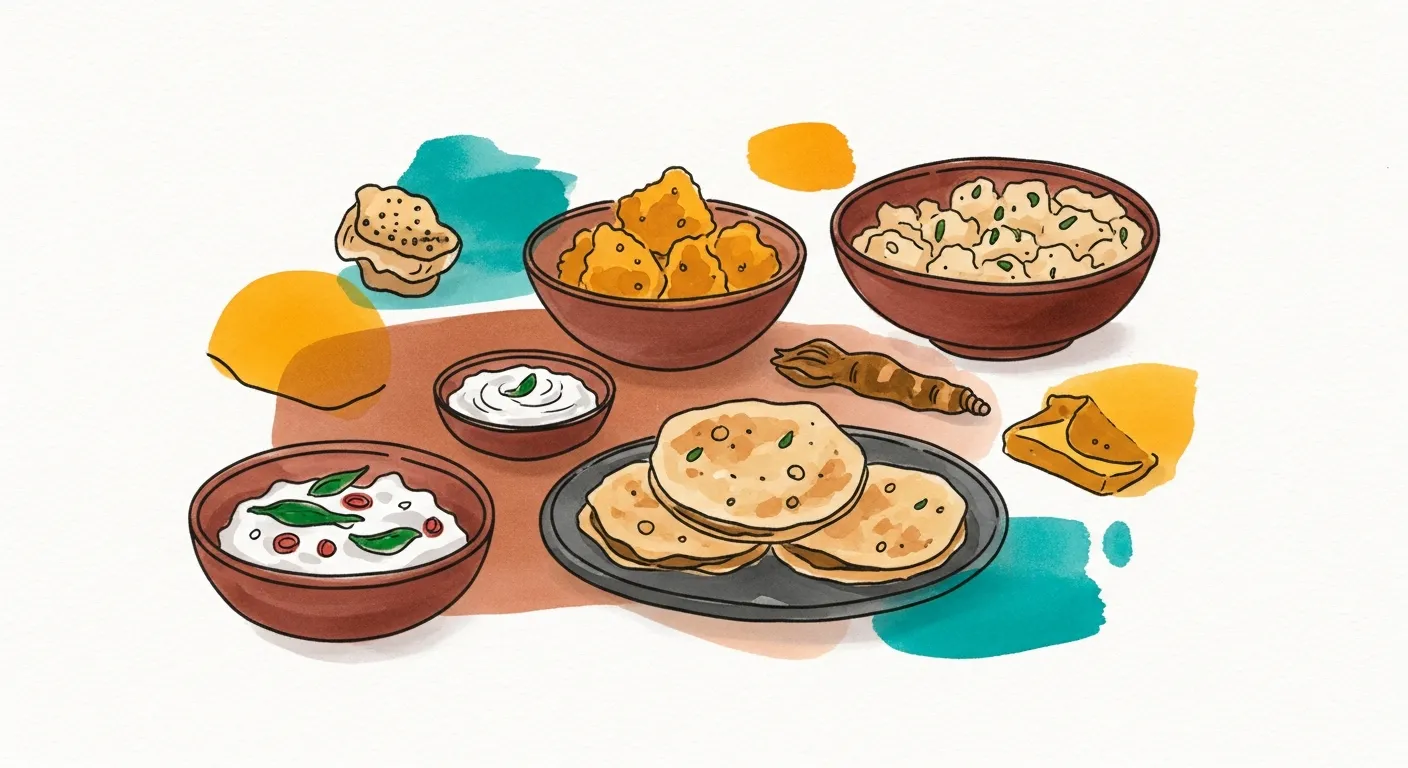
The earliest references to modak appear in texts dating back to the Peshwa era, though the sweet itself is almost certainly older. Dagdusheth Halwai temple in Pune reportedly distributes over 10,000 modak during Chaturthi week alone. Ten thousand. One temple.
You don't eat a modak. You receive it. The prasad plate comes to you and you take one and that first bite is not about taste. It is about being in the room where the prayer happened.
I spoke to Meena Khedkar, who has been making ukadiche modak in her Girgaon kitchen for thirty-seven years. She starts at 4 AM during Chaturthi. The dough has to be right. Not too thick, not too thin. The pleats have to close at the top in a point. She doesn't use a mould. Never has. "Mould se modak banvaycha mhanje devala insult," she says. Making modak from a mould is an insult to God.
She's right.
KOZHUKATTAI: THE ANCESTOR
Go south. Tamil Nadu. Kerala. Karnataka. The kozhukattai has been feeding temple towns for centuries. Rice flour. Jaggery and coconut for the sweet version. Seasoned dal for the savoury one. Steamed in banana leaves or idli plates.
If the modak is a prayer, the kozhukattai is a lineage. It shows up at Vinayaka Chaturthi, at Pongal, at Thai Poosam. It is possibly the oldest surviving dumpling form in the subcontinent, with references in Sangam-era Tamil literature going back to roughly the 3rd century BCE.
Lalitha Venkataraman, a food researcher based in Madurai, told me she has documented nineteen sub-varieties of kozhukattai across Tamil Nadu alone. Nineteen. Some are sweet. Some are savoury. Some are stuffed with raw banana. One version from Chettinad uses black sesame.
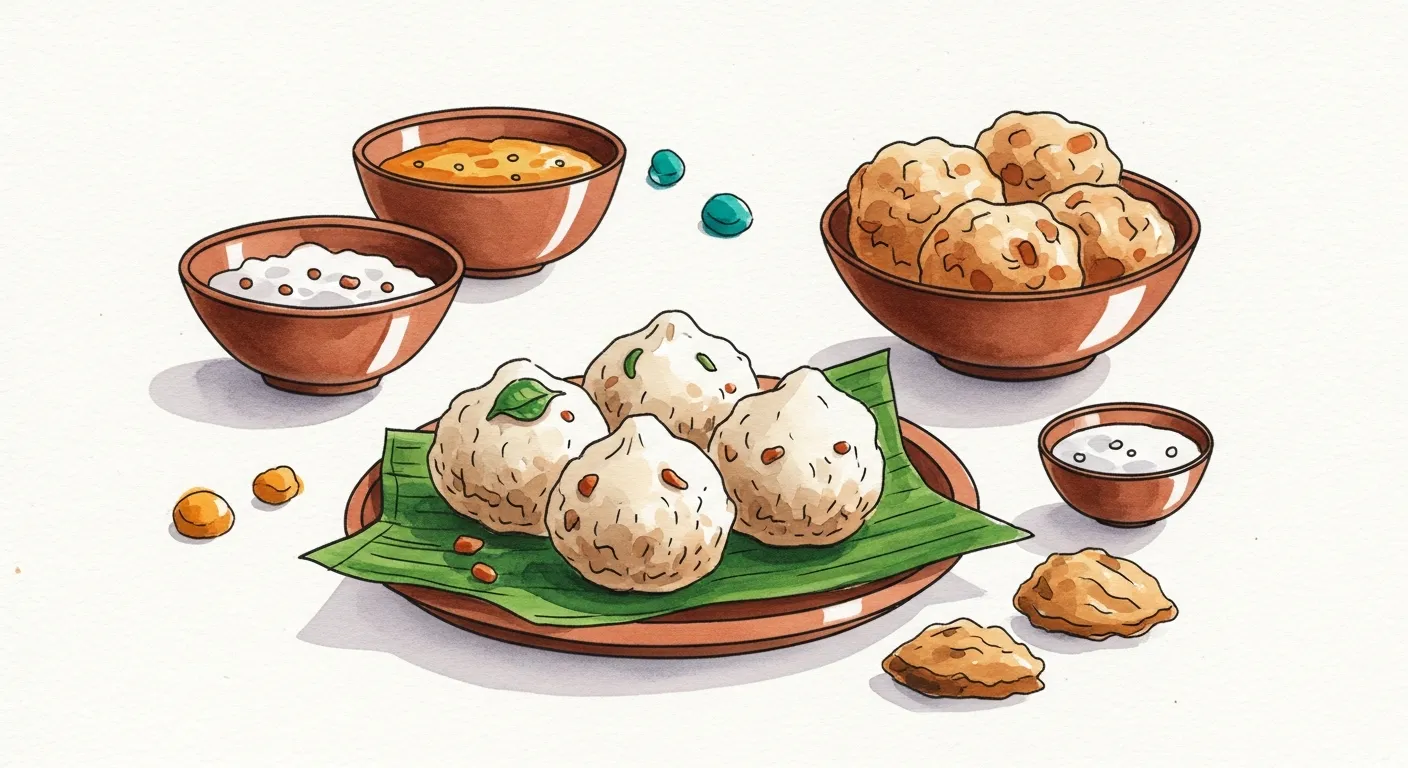
The kozhukattai doesn't get the press it deserves because it doesn't have a holiday named after it. It just quietly keeps showing up. Millennium after millennium. That's its whole personality.
MOMO: THE REFUGEE
Now north. Way north. Then east. Then everywhere.
The momo came to India the way most important things do: carried by people who had to leave home. In 1959, following the Tibetan uprising, approximately 80,000 Tibetan refugees crossed into India. They settled in Dharamsala, Darjeeling, Kalimpong, and Kolkata. They brought their language, their prayers, their thangka paintings. And they brought their dumplings.
Within two decades, the momo had conquered Bengal. By the 1990s, it had moved to Delhi. By the 2000s, it was everywhere. Today, the momo is arguably India's most democratic street food. You can get one for seven rupees on a Siliguri sidewalk or four hundred rupees at a restaurant in Bandra that puts truffle oil on it. (The Siliguri one is better. I will stand on this hill forever.)
The momo is the only dumpling in India that has no caste, no religion, no region. Everyone claims it. Nobody owns it. That is its power.
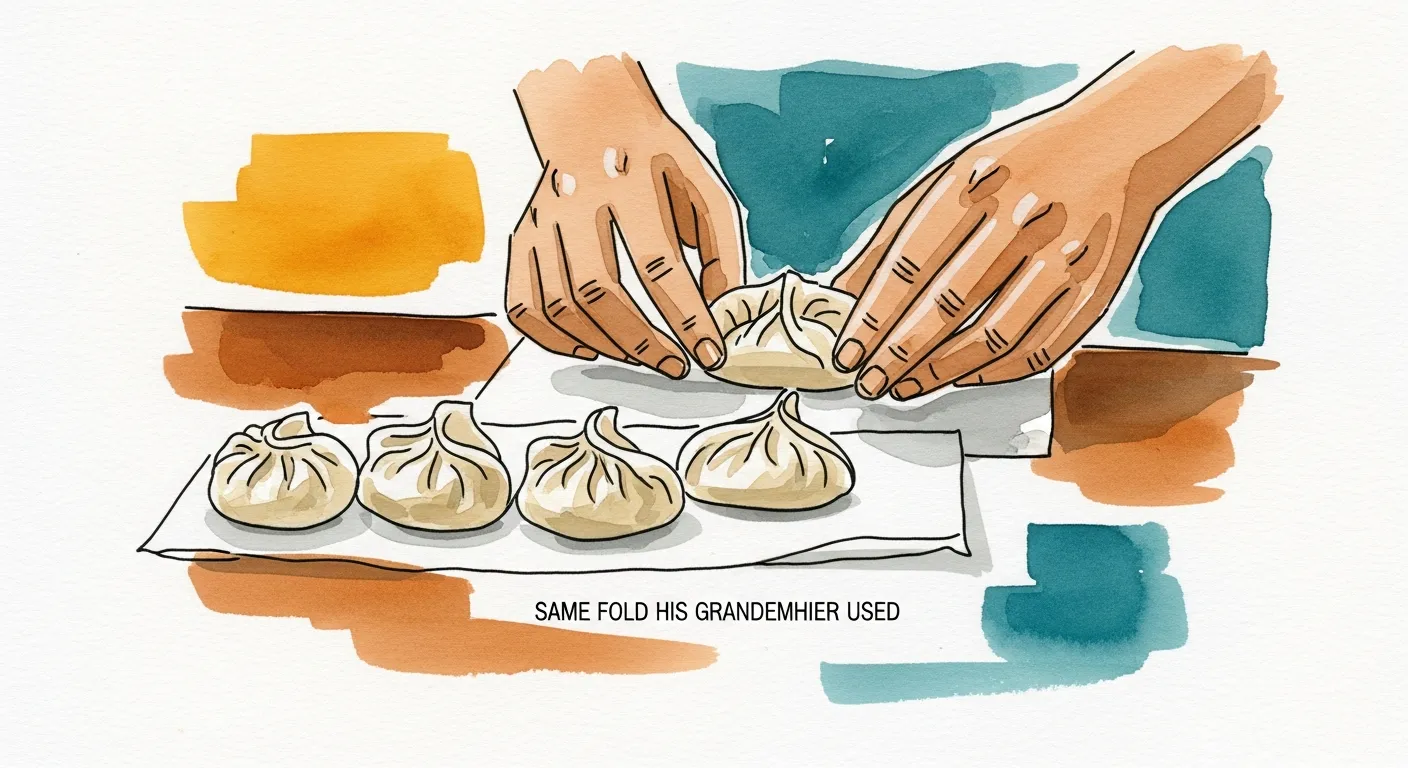
Tenzin Dorjee runs a momo stall in Majnu Ka Tilla, Delhi. His family came from Lhasa in 1962. Three generations later, his grandson makes momos with the same fold his grandmother used. "The fold is the signature," he says. "Every family has its own." He makes around 800 momos a day. On weekends, 1,200.
The buff momo remains the original. The paneer momo is the compromise. The tandoori momo is the innovation. The chocolate momo is the war crime.
GUJIYA: THE FESTIVAL
The gujiya comes out at Holi. This is non-negotiable. It is the deep-fried crescent of Uttar Pradesh, Rajasthan, Madhya Pradesh, and Bihar. Maida shell. Khoya and dry fruit filling. Pinched edge that looks like a tiny crimped horizon.
Its origin traces back through the Mughal courts, though some food historians link it to the Turkish samsa, which arrived via Central Asian trade routes well before the Mughals. The Silk Road, as usual, gets the credit for distribution.
Rajan Sharma, a third-generation halwai in Mathura, makes roughly 5,000 gujiya in the week before Holi. His shop has been open since 1948. "Holi bina gujiya, shaadi bina dulhan," he says. Holi without gujiya is a wedding without a bride.
The gujiya is the only dumpling in India that belongs to a specific colour. It belongs to the pink and yellow and green of Holi gulaal. You cannot think of one without the other.
DIM SUM IN TANGRA: THE SETTLER
The Hakka Chinese came to Calcutta in the late 18th century. They worked in tanneries, shoe factories, and dentistry, which is one of the stranger sentences in Indian migration history. They settled in Tangra, built temples, opened restaurants, and made dim sum.
Not the Hong Kong kind. The Calcutta kind. Heavier. Spicier. Dipped in chilli vinegar, not soy. The wrappers are thicker. The fillings lean pork and prawn. The siu mai at Kim Ling in Tangra has been the same recipe since the 1960s. It tastes like absolutely nothing in Canton and absolutely everything in Calcutta.
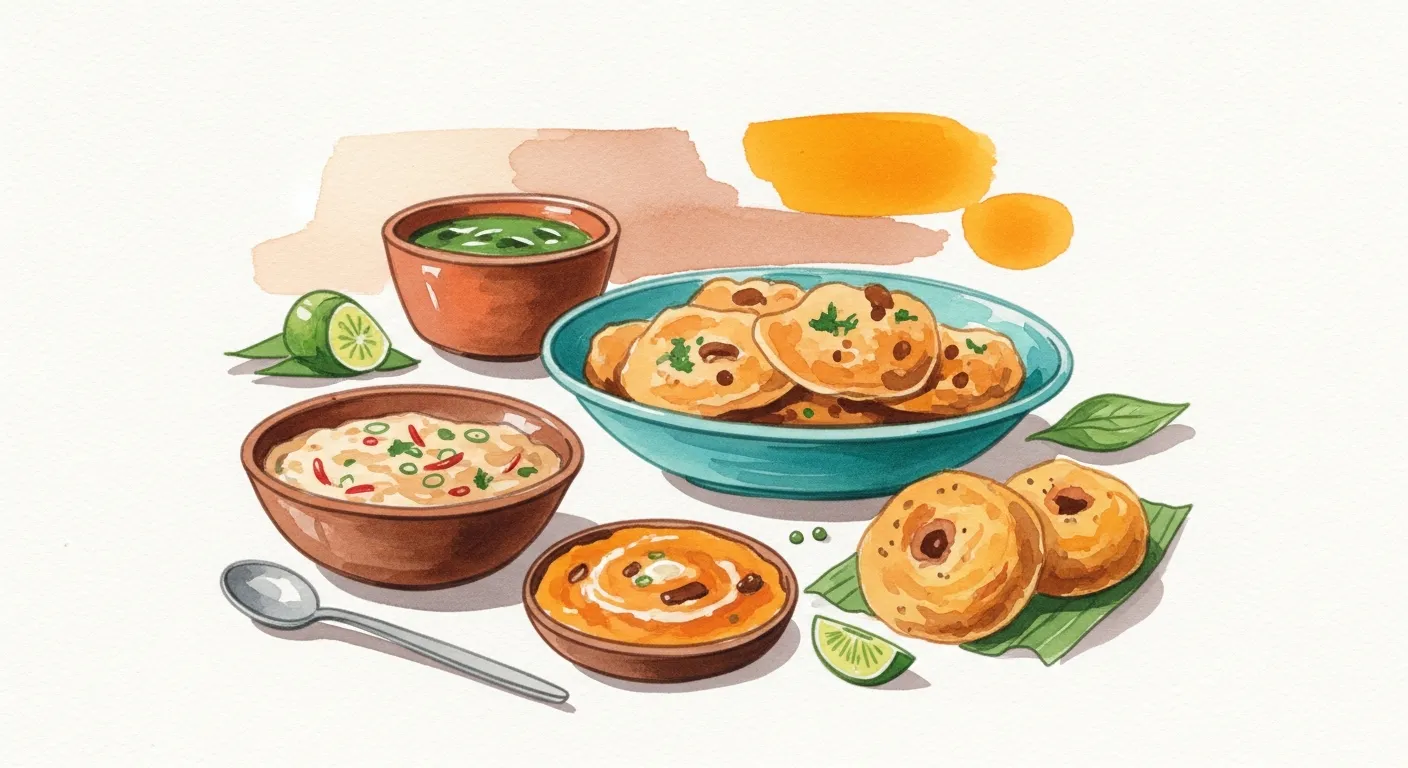
At its peak, the Chinese-Indian population in Kolkata numbered around 20,000. Today, fewer than 2,000 remain. The restaurants are the archive now.
RISSÓIS: THE COLONIAL GHOST
The rissóis came from Portugal to Goa sometime during the 450 years of colonial rule. A crescent of pastry dough, filled with shrimp or crab, breaded and fried. It is basically a Goan empanada that refuses to call itself that.
You find it at Goan Catholic weddings, at Christmas tables in Panjim, at bakeries in Margao that have been open since before Independence. Maria Fernandes, who runs a catering kitchen in Mapusa, makes about 300 rissóis for every wedding she caters. "The bride's mother always calls about the rissóis first," she says. "Not the vindaloo. Not the bebinca. The rissóis."
THE COUNT
Forty. At least. Modak in Maharashtra. Kozhukattai in Tamil Nadu. Momo from Tibet via everywhere. Gujiya across the Hindi belt. Pitha in Assam and Bengal. Kadubu in Karnataka. Nevri in Goa. Somas in Andhra Pradesh. Dim sum in Tangra. Rissóis in Panjim. Ladakhi momos that are nothing like Darjeeling momos. Manipuri momos that are nothing like Delhi momos.
India didn't invent the dumpling. India just gave it forty reasons to stay.
Every one of them is flour, filling, fold. And every one of them is a different answer to the same question: what do we carry when we carry food?
You carry faith. You carry migration. You carry trade routes and temple offerings and refugee crossings and colonial leftovers and grandmother's hands at 4 AM.
You carry forty dumplings. And you call it a country.
Field Notes
Quick referenceFood historians have documented at least forty distinct dumpling varieties across the Indian subcontinent.
Kozhukattai references appear in Sangam-era Tamil literature from the 3rd century BCE.
Dagdusheth Halwai temple in Pune distributes over 10,000 modak during Chaturthi week.
80,000 Tibetan refugees crossed into India in 1959, carrying the momo with them.
A single momo stall in Delhi's Majnu Ka Tilla makes 800 momos daily, 1,200 on weekends.
Get the next story first
Join the Bhukkads. Free, no spam, just stories.
Takes 30 seconds.