The Dosa That Held the Line for Eighty Years
A coastal town in Karnataka. A famine in 1336. A property tax revision in 2025. And a sixty-rupee filter coffee in Matunga that is doing the work of three generations.
Generated by Imagen 4
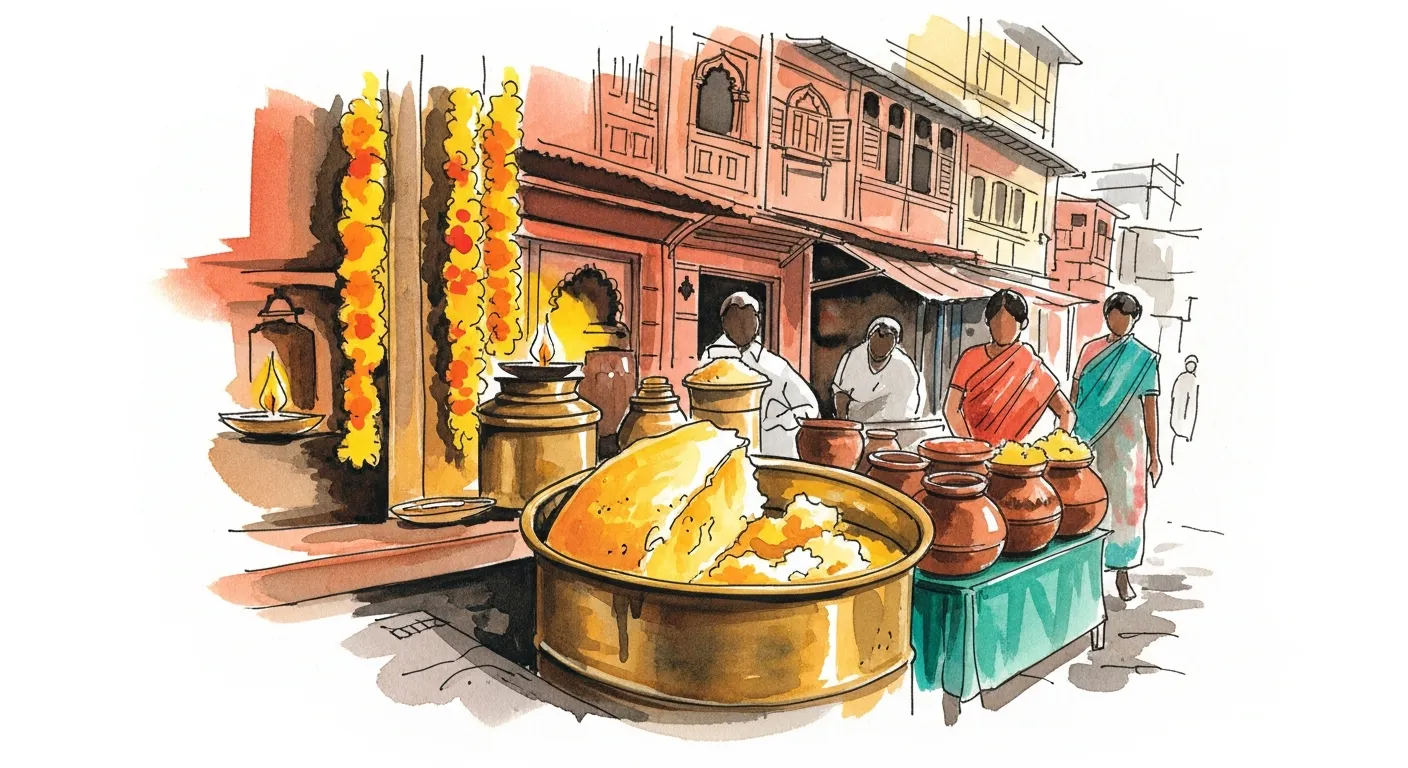
In 1336, a famine emptied the temple kitchens of Udupi. The Krishna Matha, founded by the philosopher Madhvacharya in the thirteenth century, ran on a system that fed pilgrims first and asked questions later. When the rains failed, the cooks who served the deity, Shivalli Brahmins by caste, by training, and by inheritance, walked. Some went south to Mangalore. Some went north. Some, eventually, by ship and by rail and by the slow logic of a community that travels with its recipes intact, arrived in Bombay.
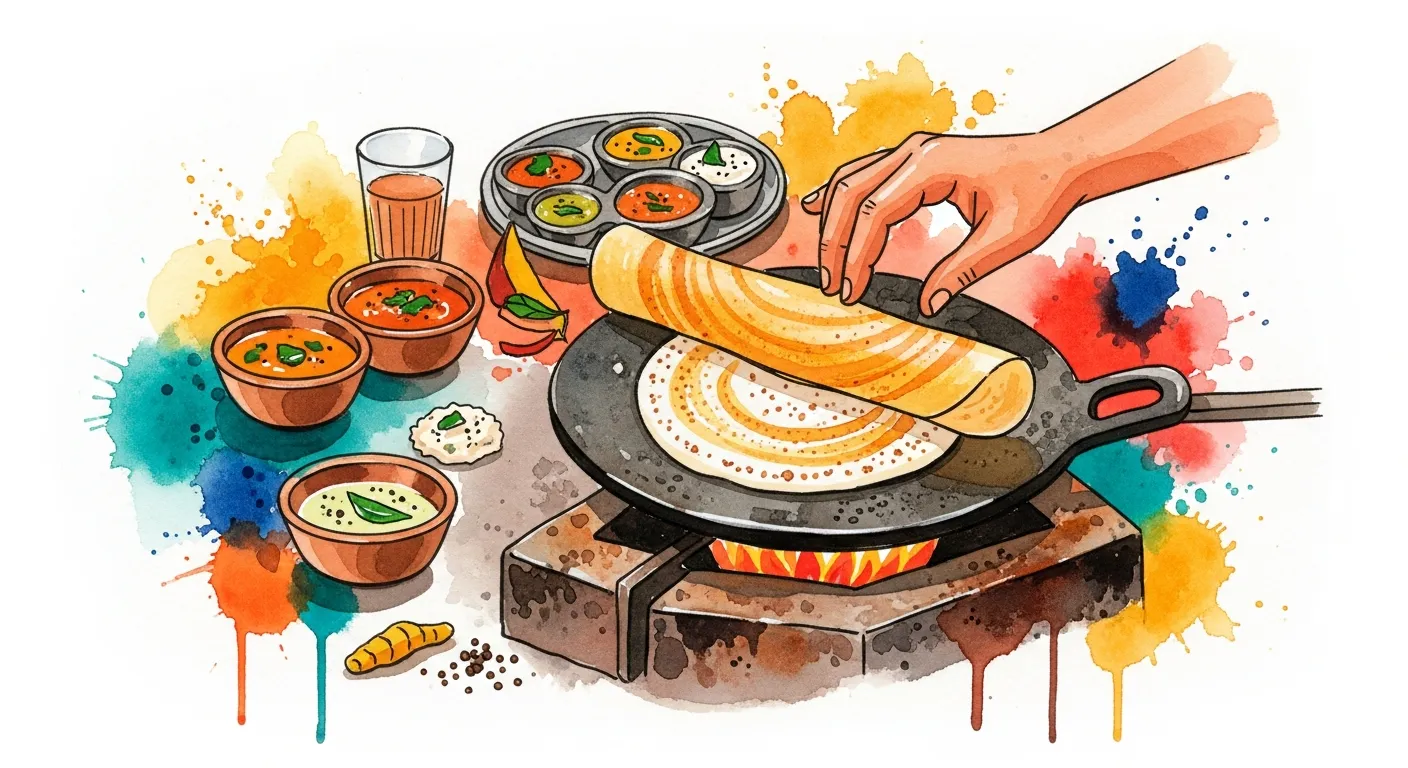
They did not arrive with capital. They arrived with a technique. Rice soaked overnight. Urad dal ground on a stone. A batter that fermented in the heat of a coastal kitchen and produced, the next morning, a crepe so thin it folded like paper and so crisp it cracked under a spoon. The dosa was not invented in Bombay. It was perfected here, in the back lanes of Matunga, by men who had been making it for eight hundred years.
This is not a story about the dosa. This is a story about a sixty-rupee filter coffee and a property tax notice that arrived in March.
THE TOWN THE BRAHMINS BUILT
Matunga was a planned settlement. The Bombay Improvement Trust, in the 1920s, laid out the plots in a grid and sold them at rates that the existing Fort and Kalbadevi merchants found uninteresting. Tamil Brahmins, who had been arriving in Bombay since the 1890s as clerks in the railways and the post office, bought in. So did the Shivalli Brahmins from Udupi. By the 1940s, the neighbourhood had its own temple, its own sabhas, its own schools where children learned Carnatic music in the afternoon, and its own restaurants where a man could eat a meal that tasted exactly like the one his grandmother made in Mangalore.
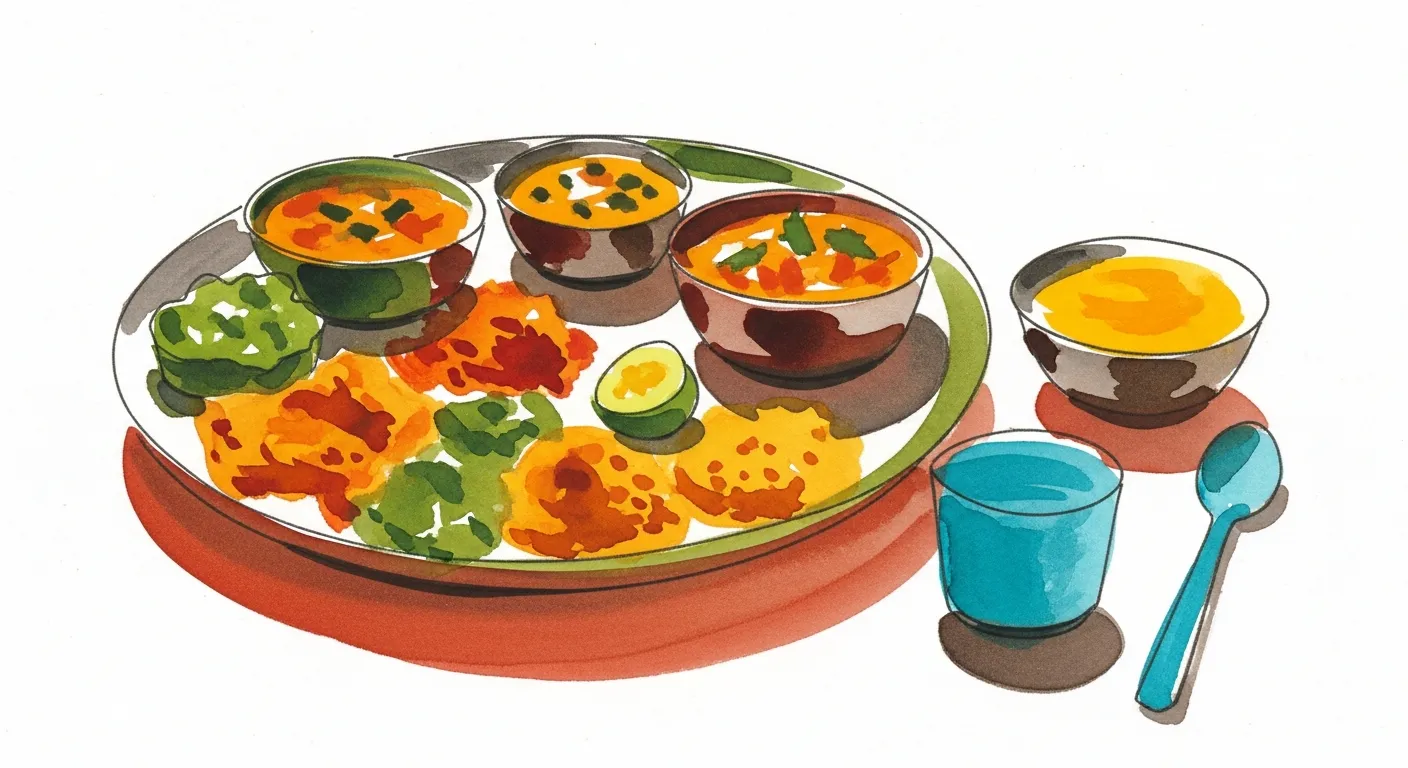
Anand Bhavan opened around 1945. Mysore Concerns and Ram Ashraya followed. Cafe Madras, on Kings Circle, came shortly after. These places were not restaurants in the sense that the word is used today. They were canteens. They were extensions of the temple kitchen. They served one thali at lunch, one tiffin menu in the morning and evening, no menu cards, no waiters who introduced themselves, no music. The food arrived. You ate. You paid. You left.
The price was the point. A meal at Ram Ashraya, for fifty years, cost less than the bus fare to get there.
WHAT NOBODY TALKS ABOUT
Nobody talks about the fact that the Udupi restaurant in Bombay was a subsidy. Not a charity, not a hobby, but a deliberate, structural subsidy from the temple economy of coastal Karnataka to the working population of a colonial port city.
The owners were Shivalli Brahmins who treated cooking as service. The staff, often nephews and second cousins, came up from villages around Udupi on a system that paid in food, lodging, and a wage that was sent home to families who owned a small piece of paddy land. The supply chain was vertical. Rice from family farms. Coconut from the Konkan. Coffee from the plantations of Chikmagalur, where the same families had relatives. The restaurant did not buy ingredients at Mumbai market rates. It received them, often, at cost.
The forty-rupee idli was not a price. It was a remittance running in reverse.
When the math of that remittance changed, the price could not hold.
THE NUMBERS THAT BROKE
In September 2011, the Times of India reported that 132 Udupi establishments in Mumbai had closed down over the previous four years, 80 of them in the Fort area alone. The reasons listed were rent, LPG, electricity, sugar, foodgrain, milk, vegetables. The reasons not listed, but implicit, were that the second generation of Shivalli owners had sent their children to engineering colleges, and the third generation was not coming back to stand at a cash counter from six in the morning.
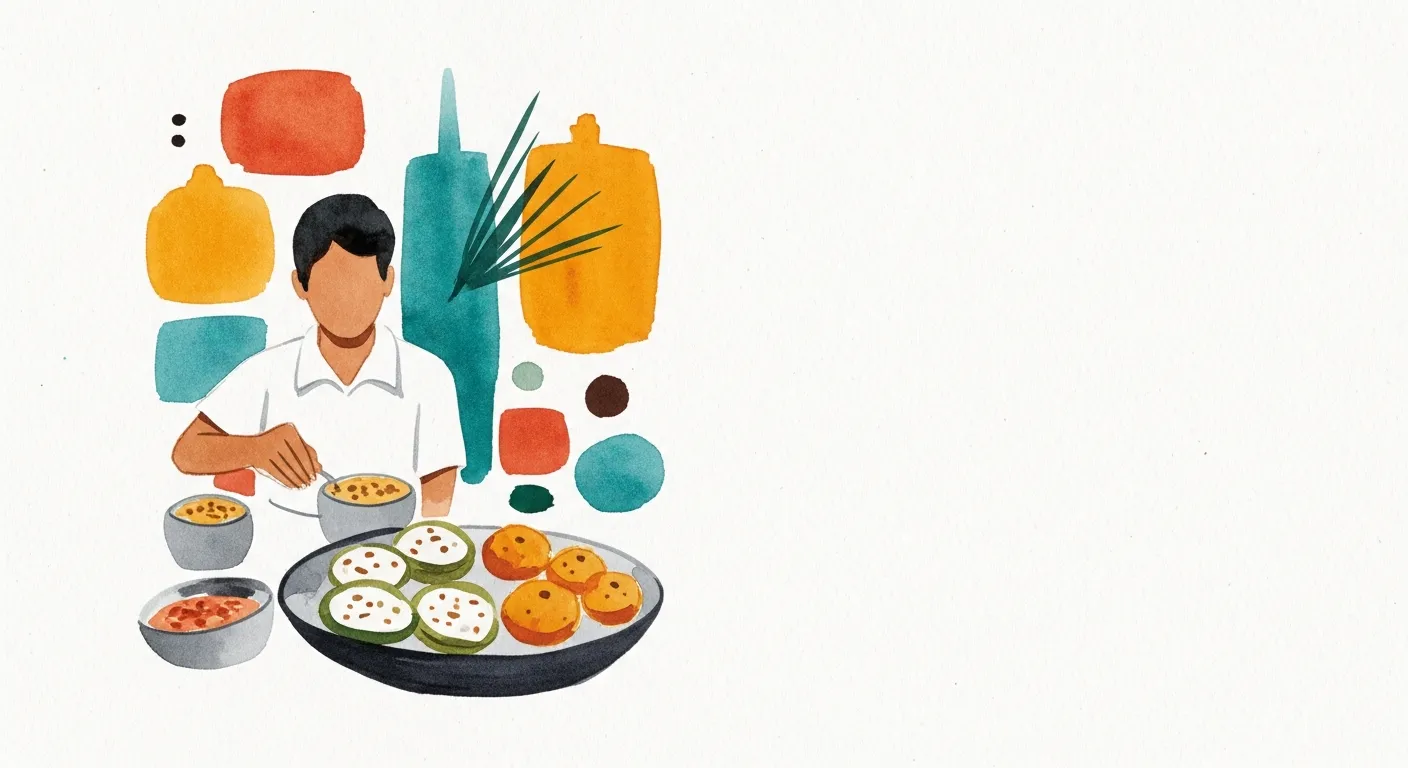
The ones who survived did so by compromising. The same article documented Udupi restaurants adding Punjabi paneer, Chinese noodles, even Mexican wraps to their menus. The dosa stayed on the card. It was no longer the centre of the card.
The forty-rupee idli was not a price. It was a remittance running in reverse.
Matunga held out longer than Fort. The neighbourhood was, and remains, one of the few in Mumbai where the customer base is still substantially South Indian, still substantially walk-in, still substantially the kind of household that eats curd rice on a Tuesday because it is Tuesday. Anand Bhavan, profiled by The Indian Express in February 2026, was described as an 80-year-old eatery that prioritises authentic food and the loyalty of its regulars over modern ambience. The framing was affectionate. It was also a warning.
THE TAX THAT ARRIVED IN AUGUST
In August 2025, the Brihanmumbai Municipal Corporation announced that it would begin levying property tax on commercial establishments in slum areas of the city, with an initial projection of at least Rs 700 crore in revenue. The headline was about slums. The story underneath was about a city that had decided, after a long fiscal pause, that every commercial square foot would now be measured, assessed, and billed.
Matunga is not a slum. Matunga is a heritage commercial precinct sitting on some of the most valuable real estate in central Mumbai. When the BMC begins a revenue cycle, it does not begin in only one neighbourhood.
The Udupi restaurants of Matunga operate on margins that have been thin for two decades and are now thinner. A filter coffee at sixty rupees, an idli plate at seventy, a thali at two hundred and twenty. These prices do not exist in Bandra. They do not exist in Lower Parel. They exist in Matunga because the buildings were bought in the 1940s and 1950s, the family lives upstairs, and the cook has been there since 1991.
Take any of those three pillars away and the math collapses.
THE RENAISSANCE THAT IS NOT A RENAISSANCE
In October 2025, Slurrp ran a piece on what it called a South Indian renaissance in Mumbai's food scene, citing new formats and addresses in Bandra, Lower Parel, and Khar. Chettinad small plates. Mangalorean fine dining. Filter coffee bars with single-origin beans and a barista who can explain the difference between Coorg and Chikmagalur.
This is good news. It is also a different business. A dosa at one of these restaurants costs four hundred and fifty rupees. The plate is ceramic. The chutney comes in a small steel katori with a wooden spoon. The customer is a thirty-two-year-old who works in equity research and considers this an authentic Sunday outing.
The Matunga dosa costs ninety rupees. The plate is steel. The chutney comes in a steel cup that has been in service since the Emergency. The customer is a seventy-four-year-old who has been eating here since he was a boy and considers this Tuesday lunch.
These are not the same dish. They are not even the same economy.
The renaissance is not threatening Matunga's restaurants. The renaissance is ignoring them. Which, in commercial terms, may be worse.
THE GENERATIONAL HANDOVER
The sons of the Shivalli owners are doctors in New Jersey and software engineers in Bangalore. The daughters run their own businesses. None of this is a loss. It is exactly what the first generation worked for, sitting at the counter from six to ten and again from twelve to four and again from seven to eleven, so that the second generation would not have to.
The question that the third generation is now answering, quietly, kitchen by kitchen, is whether the building stays a restaurant.
Some have sold to chains. Some have leased the ground floor to a quick-service brand and kept the family name on the signboard as a kind of decorative gesture. Some, like Anand Bhavan and Ram Ashraya and Cafe Madras and Mysore Concerns, have done none of these things. They have kept the cook. They have kept the menu. They have raised the idli by ten rupees and absorbed the rest.
WHAT A SIXTY-RUPEE COFFEE BUYS
A filter coffee at Cafe Madras costs around sixty rupees. The decoction is made fresh in the morning. The milk is boiled, not steamed. The coffee is served in a steel tumbler set inside a steel davara, and you pour it from one to the other to cool it, and the action of pouring is the entire ritual of South Indian morning coffee, compressed into ten seconds at a Formica table on Kings Circle.
This costs less than a Metro ticket from Andheri to Ghatkopar. It also costs less than the city now charges, in property tax and in opportunity cost, to keep the table where you are sitting.
The restaurants are not closing tomorrow. The community is still here. The buildings, mostly, are still owned. The cooks, the older ones, still come in at five.
But the famine of 1336 sent the cooks out of Udupi, and they walked, and eventually they arrived in Bombay and built something that fed this city for eighty years on a math that nobody, anymore, can quite reproduce.
The coffee is sixty rupees. Drink it slowly.
Field Notes
Quick referenceThe 1336 famine emptied Udupi's temple kitchens, sending Shivalli Brahmin cooks to Bombay with eight centuries of technique.
Udupi restaurants operated as reverse remittances — temple economy subsidising Bombay's working population.
132 Udupi establishments in Mumbai closed between 2007-2011, 80 of them in Fort alone.
BMC's new property tax cycle targets Rs 700 crore revenue, hitting Matunga's razor-thin margins.
Renaissance dosa: Rs 450, ceramic plate. Matunga dosa: Rs 90, steel plate from the Emergency.
Get the next story first
Join the Bhukkads. Free, no spam, just stories.
Takes 30 seconds.