The Cutting Cocktail Is the Most Honest Drink in Mumbai
Half the pour, half the price, twice the conversation. The city that invented the cutting chai finally figured out what to do with its bartenders.
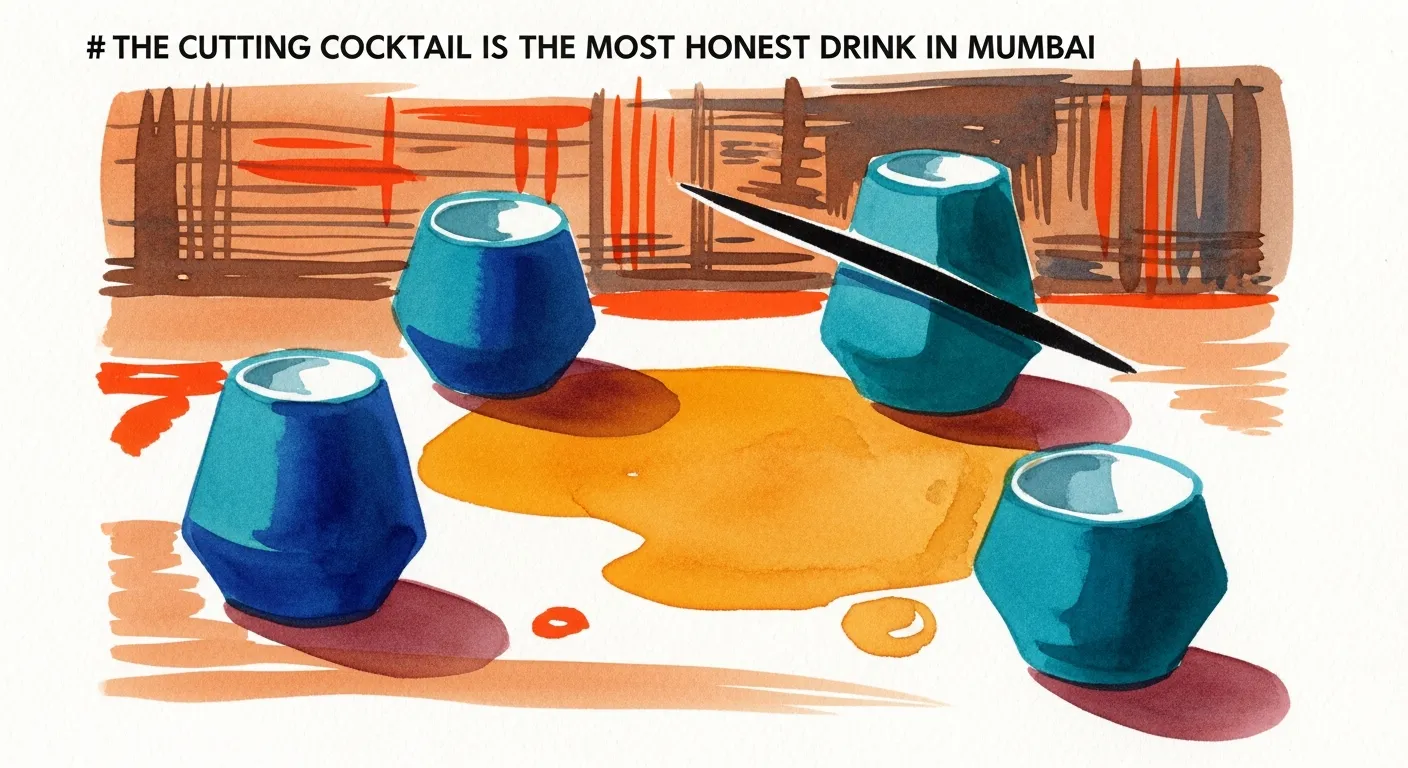
Generated by Imagen 4
There is a glass in Mumbai that nobody calls a glass. It is 75 millilitres of brown liquid, scalding, sweet, served in a cylinder so small you can hold it with two fingers and a thumb. It exists because somebody, somewhere in the 1950s, looked at a full cup of chai and decided it was too much commitment for what was essentially a smoke break with milk in it. The cutting was born. Half the pour. Half the price. Twice the conversation, because now you could have two of them with two different people without ruining your appetite for lunch.
The cutting is not a drink. It is a permission structure. It lets you stop and talk to someone without the weight of a full transaction.
Mumbai's bars, in 2025, finally figured this out.
THE HALF POUR
In early 2024, T24 Retro launched what it called the city's first Cutting Cocktail menu. The idea is exactly what it sounds like. Half-sized cocktails. Half the price. Experimental serves you would never commit to at a full 180 millilitres because the risk is too high and the bill is too unforgiving. A Mirchi Martini. A Tropical Chai. Drinks built for a 25-minute window between two other places you have to be.
This is the part nobody talks about. The cocktail menu in Mumbai has been priced like a sit-down opera for fifteen years. The cutting cocktail is the first time anyone has acknowledged that the city actually drinks the way it eats, in pieces, on the move, with somebody else's elbow in your ribs.
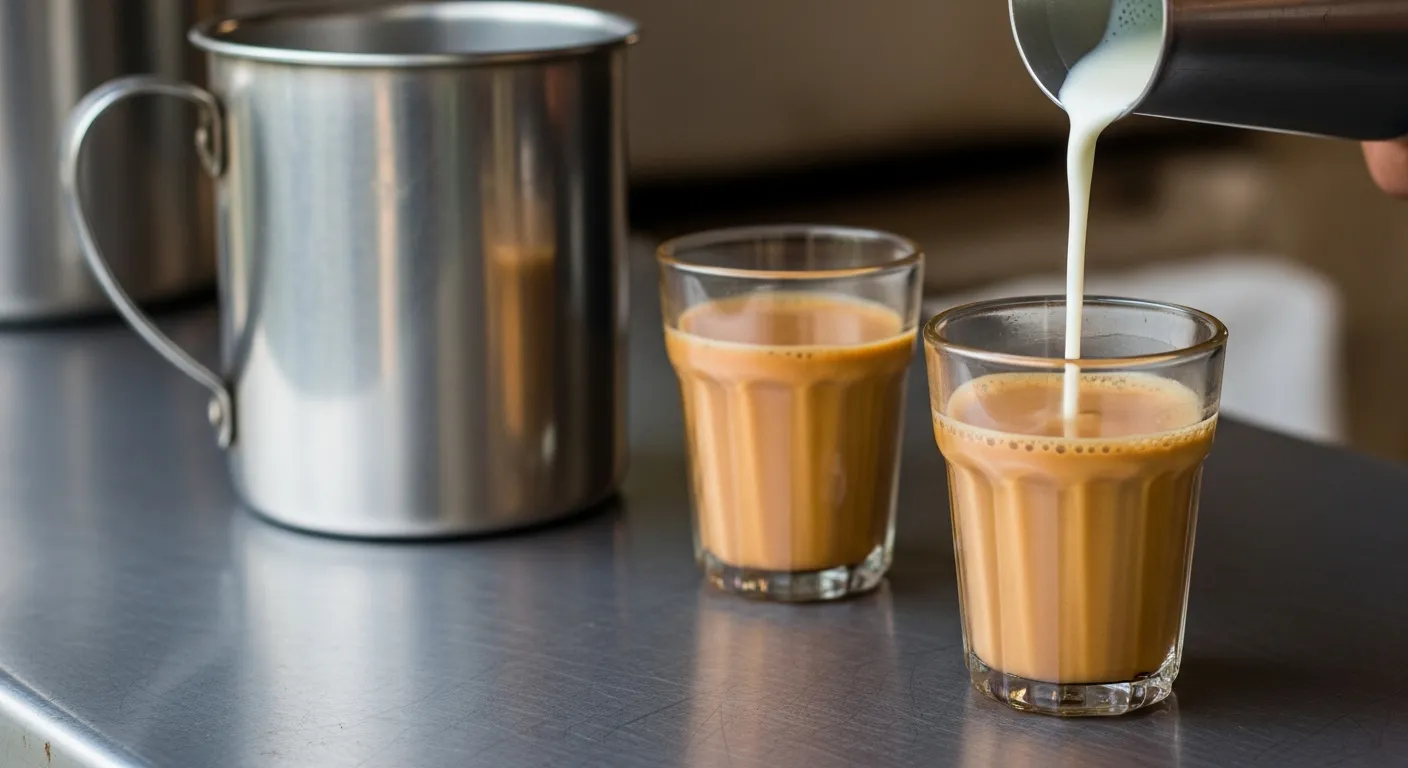
The full pour is the architecture of the colonial bar. You sit. You order. You commit. You pay 800 rupees and you stay for an hour because economically you have to. The cutting flips it. You walk in, you try the weird one with the curry leaf, you laugh at how it tastes, you pay 400, you leave. It is a tasting menu without the tasting menu.
The cutting cocktail is the first time a Mumbai bar has admitted that the city does not have an hour to spare.
THE FLAVOUR INDEX
For most of the last twenty years, the Mumbai cocktail has been an act of translation. Somebody in a hotel bar took a London recipe and swapped one ingredient. Somebody else took a New York recipe and added a garnish. The drink was foreign. The garnish was Indian. The argument was settled.
Then, somewhere around 2015, the argument stopped being about the garnish.
Indiaphile published a recipe for what it called the Mumbai Mule, a 218-kcal variation on the Moscow Mule. The Moscow Mule, for reference, is a 1941 invention from a Los Angeles bar called the Cock 'n' Bull, created by John Martin and Jack Morgan to move unsold vodka and ginger beer. Vodka, ginger beer, lime, copper mug. That was it. Eight decades later, somebody in a Mumbai kitchen looked at that recipe and asked the only question that mattered. Why does it taste like nothing from here.
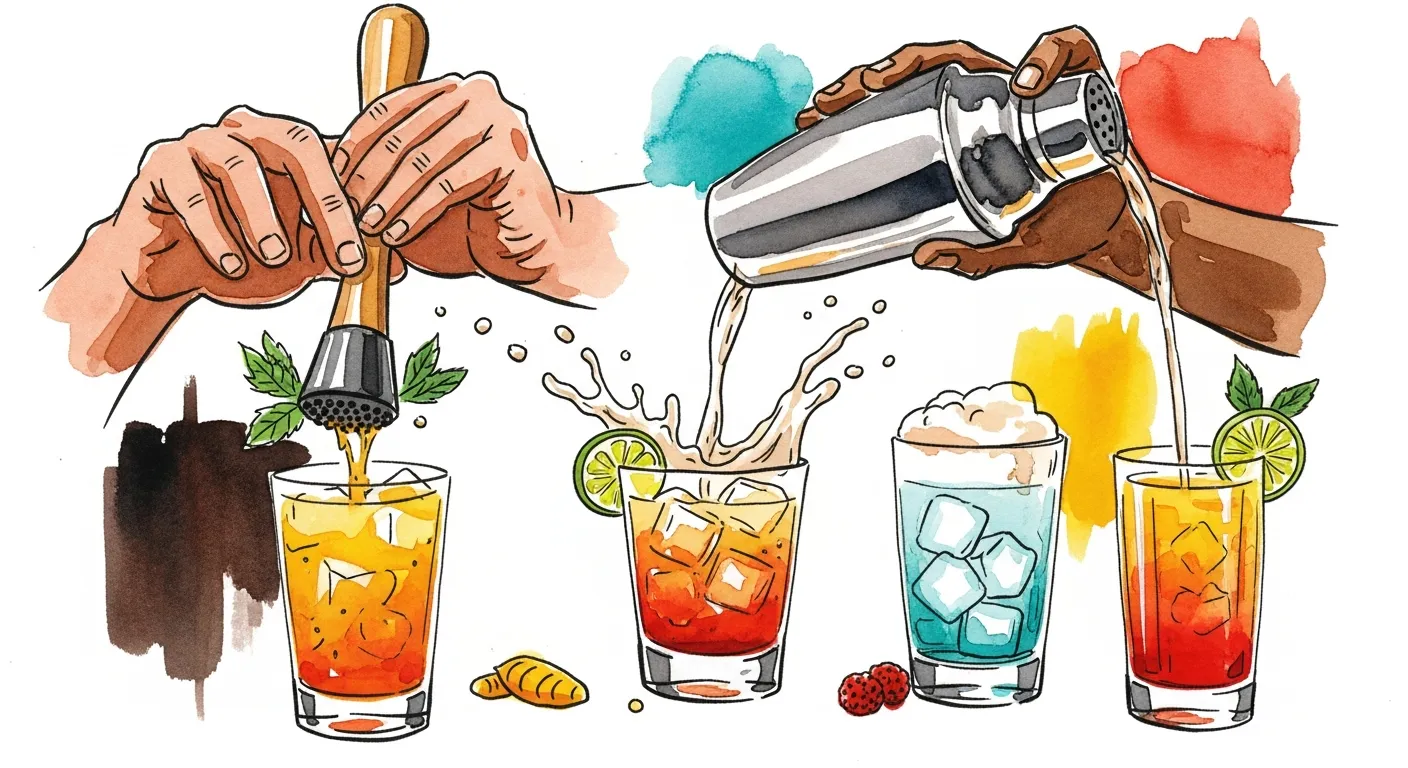
"This Mumbai Mule is a distinctive variation of the Moscow Mule that is inspired by the flavors of Mumbai street food," the Indiaphile recipe notes. "The final recipe focuses on infusing the drink with the spicy, cilantro-mint chutney reminiscent of bhel or sev puri."
Chaat masala. Cilantro. Mint. A green chutney muddled into a copper mug. The drink is not a Moscow Mule with Indian decoration. It is a bhel puri that you drink. The reference is not the garnish. The reference is the recipe.
THE MATUNGA TRANSLATION
The Bombay Canteen, at Kamala Mills, has been doing this longer than most. Its fifth cocktail book, Make Mine A Bombay, reads less like a recipe collection and more like a neighbourhood gazette. Each drink references a place. Each place is a Mumbai you have walked past a thousand times without registering it.
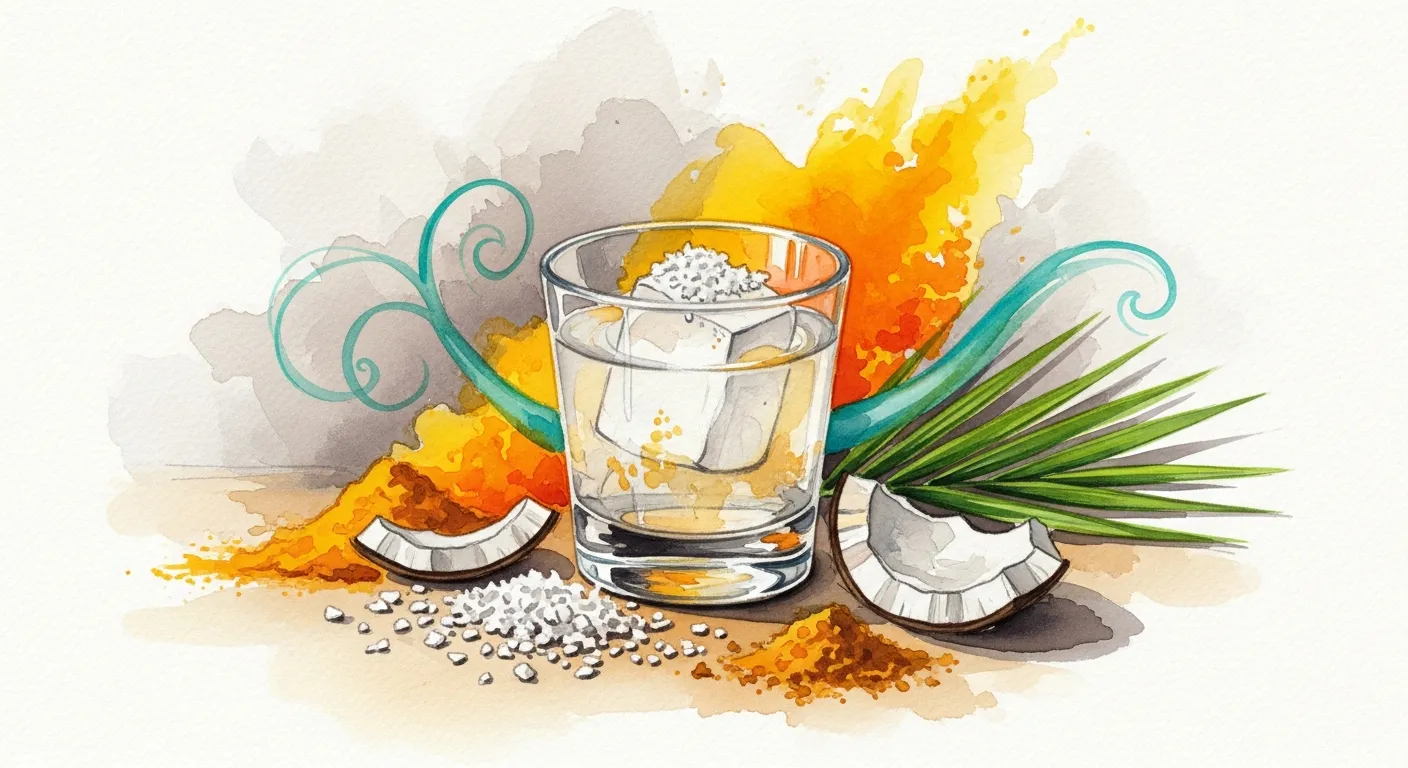
The Waiting List is the one to study. Coconut fat-washed tequila. House-made curry leaf soda. A curry leaf salt rim. It is named for the queue at every Udipi restaurant in Matunga, the South Indian belt that has been feeding this city idli and filter coffee since the 1930s. The drink is not pretending to be a Margarita with curry leaves on top. It is a Matunga breakfast in a coupe glass.
The coconut fat-wash is the technique. You melt coconut oil into the tequila, freeze it, strain out the solidified fat. What stays behind is the flavour of the coconut without the weight of the oil. It tastes like the inside of an idli batter. The bar in Kamala Mills is doing in a glass what a Matunga aunty has been doing in a steamer since before Independence.
THE GOAN DETOUR
O Pedro, in BKC, runs a parallel argument. Its Happy Go Rocky menu is built around Goan flavour memory, which is its own subcategory of the Mumbai cocktail conversation because Goa is where this city goes to remember how to drink.
The Last Cucumber is the one that stops the table. Short Story vodka infused with green pea and parsley. Dill-infused wine. Cucumber pickle brine. Honey-pepper syrup. Read that ingredient list twice. There is no fruit. There is no sweetness, really. There is a vegetable, a herb, a brine, and a sting. The drink is savoury the way a good sol kadhi is savoury. It is meant to be drunk with food, not before it.
This is the shift. The cocktail in Mumbai is no longer the thing you drink to fill the gap before dinner. It is the thing you drink with dinner, because the bartender and the chef are finally reading from the same notebook.
The cocktail is no longer the warm-up. It is the second voice at the table.
THE AYURVEDIC LIBRARY
And then there is Ekaa. Niyati Rao's restaurant on Reay Road runs a bar program called Dwadash, built around twelve indigenous Indian ingredients and Ayurvedic principles. The drinks have names like The Himalayan Fir. The reference points are not London or New York. They are the Ayurvedic pharmacopoeia, which is older than every cocktail bar in every city on earth combined.
This is the deep end of the argument. The cocktail, as a form, is 219 years old. The Ayurvedic understanding of bitter, sour, sweet, salt, pungent, astringent is roughly three thousand years older. When Ekaa builds a drink around those six tastes, it is not innovating. It is finally letting the older book win.
THE HOME POUR
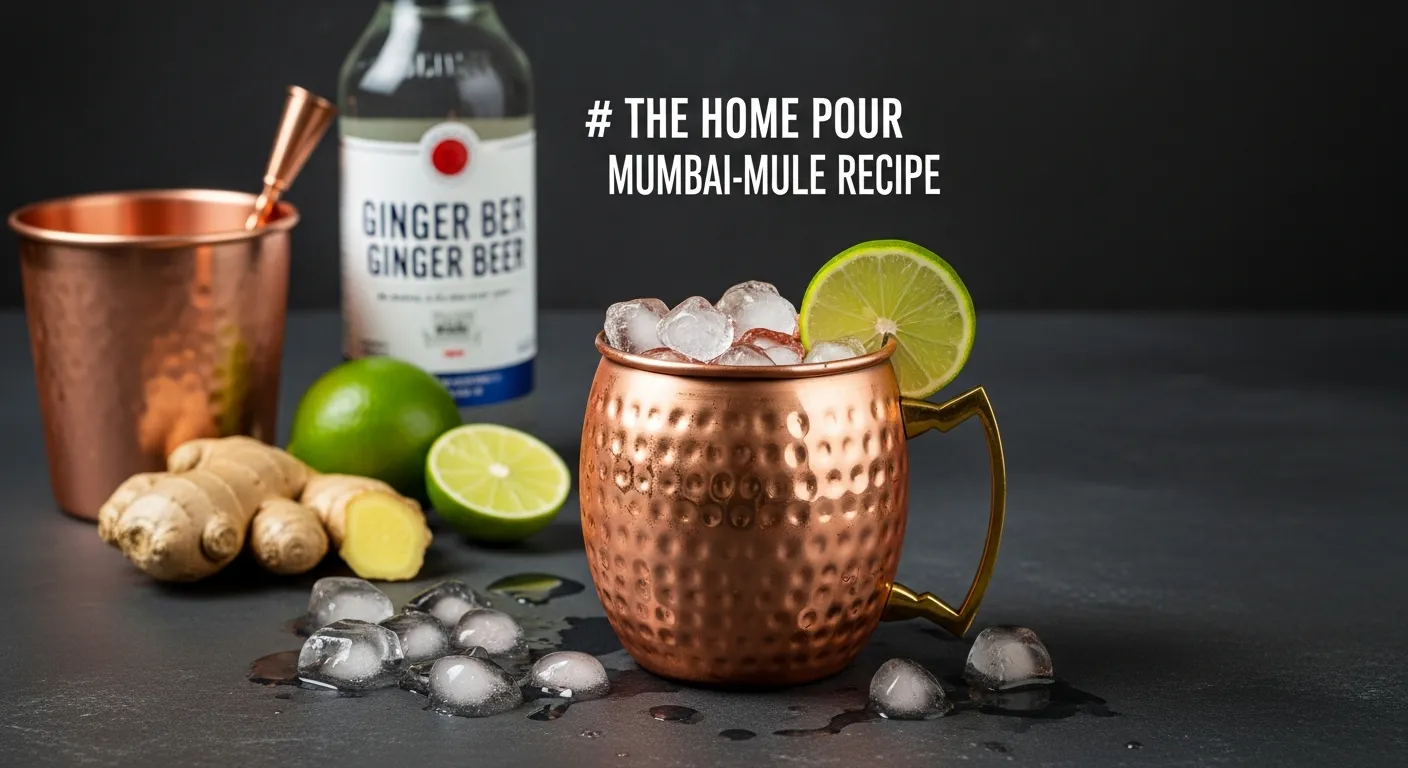
The best part of this whole shift is that you can do it at home. The Mumbai Mule recipe is online. You need vodka, ginger beer, lime, fresh mint, fresh cilantro, a pinch of chaat masala, a copper mug if you have one and a steel glass if you don't. Muddle the mint and cilantro with the chaat masala and lime. Pour the vodka over ice. Top with ginger beer. Stir once. Drink.
The whole thing takes ninety seconds. It costs less than 200 rupees per glass. It tastes like the chutney at the bhel stand outside your building, with a kick that arrives somewhere around the third sip.
Make it at half pour. Make it cutting. Pour 75 millilitres into a small glass, hand it to someone, have the conversation, pour another one in fifteen minutes if the conversation is worth it.
The city invented this rhythm a hundred years ago with tea. The bars are only just catching up.
Field Notes
Quick referenceThe cutting chai exists because a full cup was too much commitment for a smoke break. 75 ml. Half the price. The geometry of a city that never stops moving.
The Moscow Mule was invented at a Los Angeles bar called the Cock 'n' Bull to move unsold vodka and ginger beer. Eight decades later, Mumbai added chaat masala and made it theirs.
Coconut fat-washed tequila: melt coconut oil in, freeze it, strain the solid fat out. The flavour stays. The weight goes. A Matunga breakfast inside a coupe glass.
Ekaa's Dwadash bar program is built on twelve indigenous Indian ingredients and Ayurvedic principles. The six tastes - bitter, sour, sweet, salt, pungent, astringent - predate the cocktail by roughly three thousand years.
O Pedro's Last Cucumber has no fruit, no sweetness. Vegetable, herb, brine, sting. A savoury cocktail built to sit beside the food, not before it.
Get the next story first
Join the Bhukkads. Free, no spam, just stories.
Takes 30 seconds.