The Sea Was Theirs Before the City Had a Name
In Worli Koliwada, a 30,000 crore road is rewriting a 600-year-old kitchen. The fish are smaller. The bombil rack is shorter. The bottle of masala is still on the shelf.
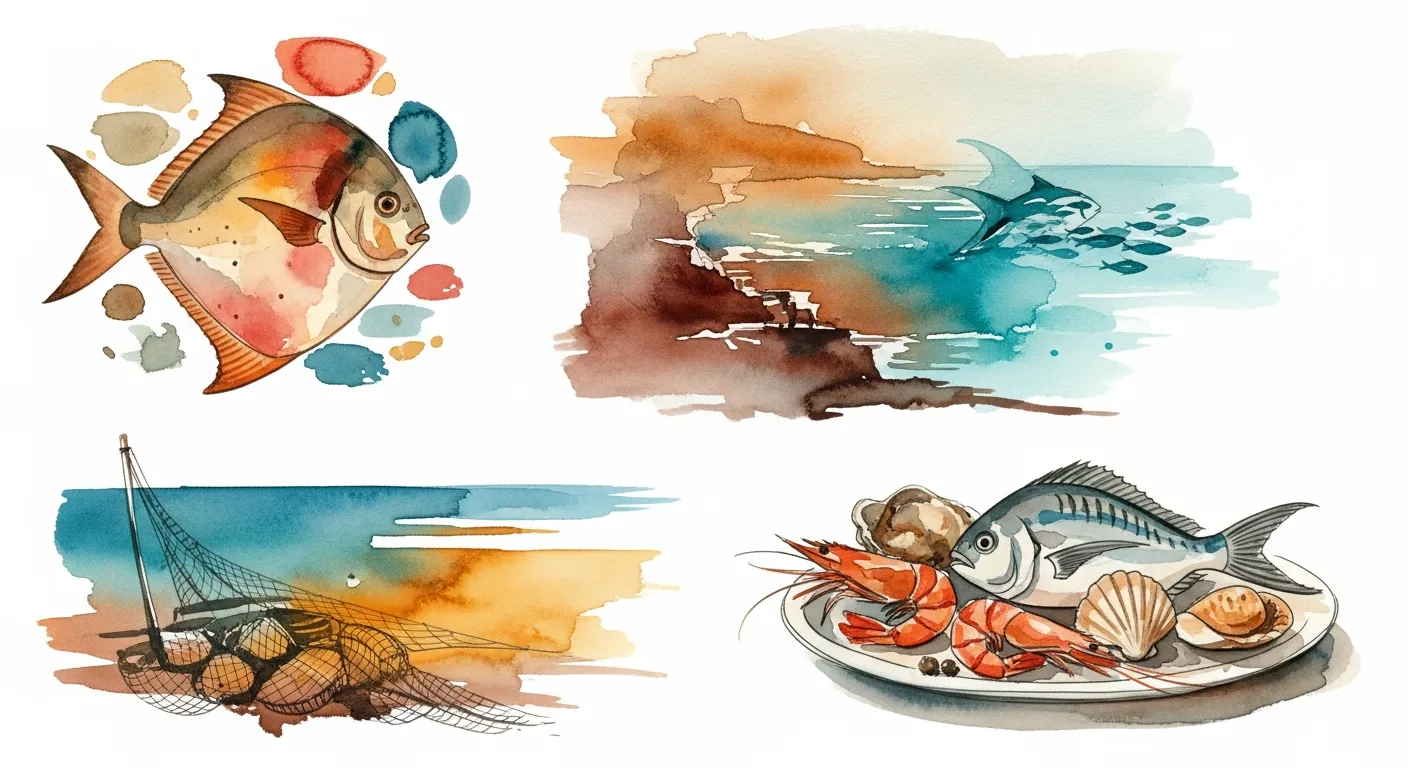
Generated by Imagen 4
In 1505, a Portuguese captain named Francisco de Almeida sailed past a cluster of seven islands on the western coast of India and did not bother to stop. He was on his way to Cochin. The islands were too small, the harbour too shallow for his purposes, the inhabitants too few to tax. He noted them on a chart and moved on.
The inhabitants he did not bother to count were already there, in stilted houses set back from the tide line, drying fish on bamboo frames in the sea wind. They had names for every reef, every current, every monsoon wind that mattered. They had a goddess called Mumbadevi whose shrine sat in the Fort area of the main island, in what would later become the oldest quarter of the city. The city that would eventually take her name was, in 1505, still four hundred and ninety-five years away from building a road that would cut their grandchildren off from the sea.
The Kolis stayed. The Portuguese came and went. The British came and stayed for three hundred years and then went. The mills came and the mills closed. The textile strike of 1982 emptied Lower Parel of looms. The towers came. The Sea Link opened in 2009. The Coastal Road broke ground in 2018.
Through all of it, in Worli Koliwada, a woman would walk down to the rocks at four in the morning, pull a koyta from her waist, and start gutting the night's catch by torchlight. Her daughter would inherit the knife. Her granddaughter still has it.
The granddaughter is now being told that the rocks are a construction site.
THE VILLAGE INSIDE THE FORT INSIDE THE CITY
Worli Koliwada sits on a promontory at the northern tip of Worli, behind the 17th-century Worli Fort. To reach it you turn off Khan Abdul Gaffar Khan Road, pass the bus depot, and walk into a grid of narrow lanes where the buildings get shorter, the smell of dried bombil gets sharper, and the air starts to taste of salt and woodsmoke.
The village is older than the fort. The fort was built by the Portuguese around 1675 to watch shipping lanes along the coast. The Kolis were already there, watching the same water, for reasons that had nothing to do with empire.
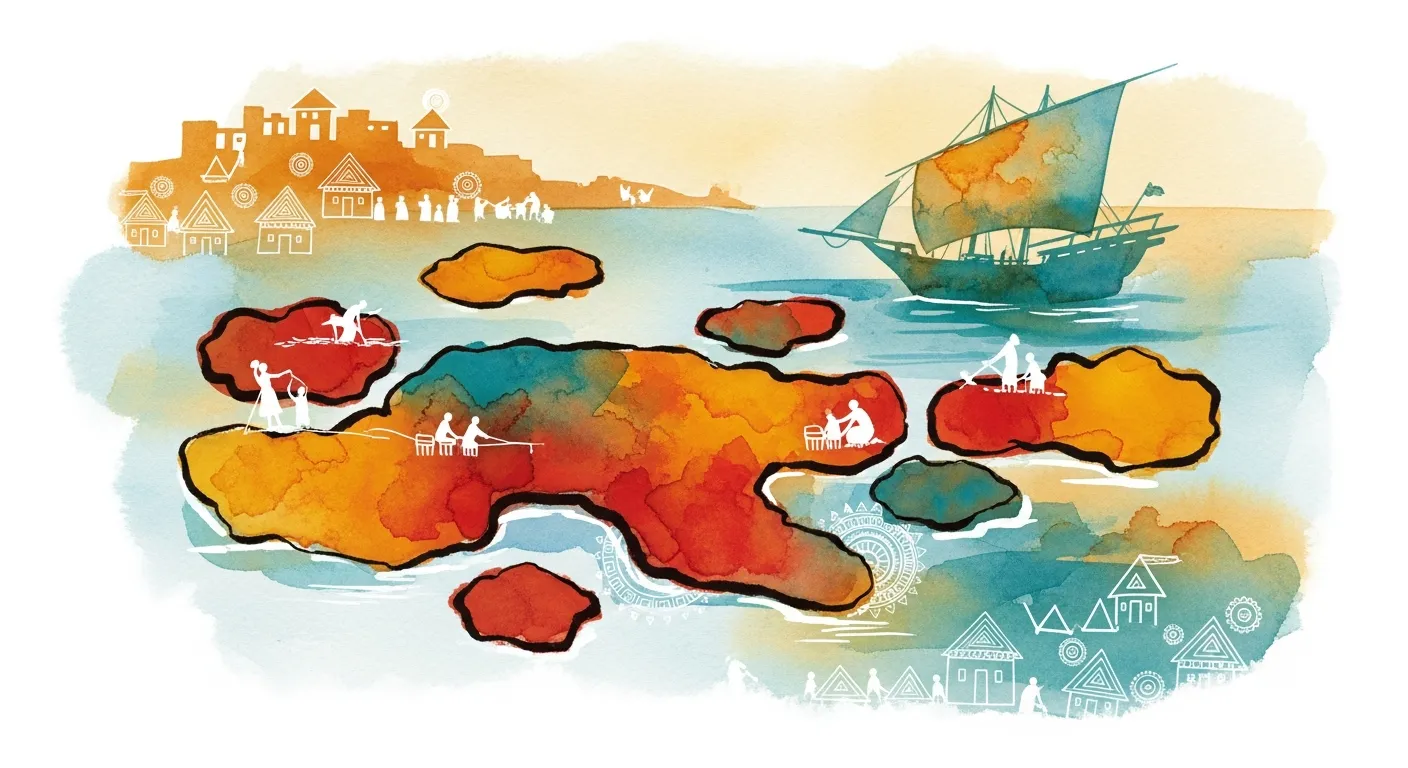
They are one of the original communities of the seven islands. The word Mumbai comes from their goddess. The word Koliwada simply means the place where the Kolis live. There are still a handful of them across the city, Versova, Mahim, Cuffe Parade, Madh, Khar Danda, but Worli is one of the oldest and one of the most visible, sitting as it does in the line of sight of the Bandra-Worli Sea Link and now, the Coastal Road.
THE KITCHEN NOBODY PHOTOGRAPHS
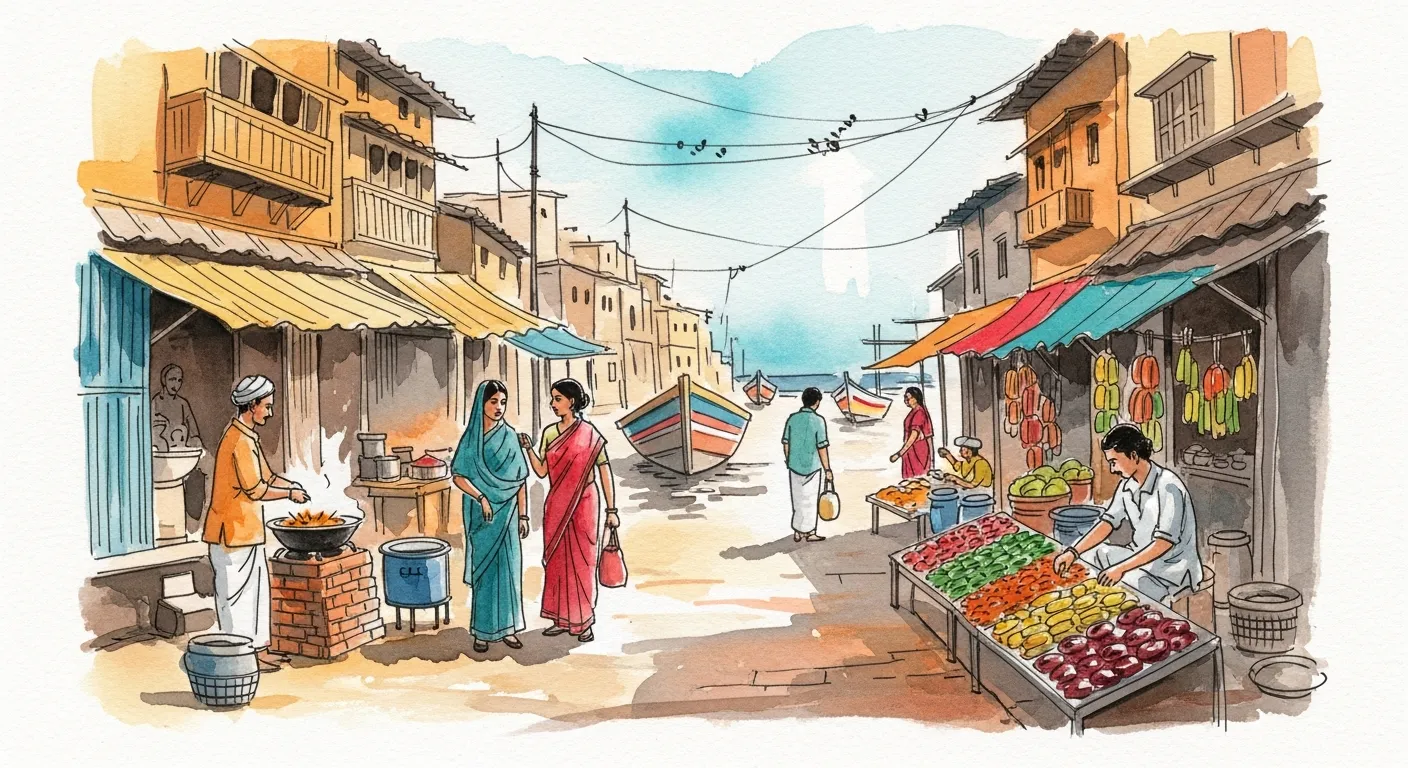
Everybody photographs the boats. The painted prows, the nets piled on the jetty, the women in nine-yard sarees with baskets on their heads at Sassoon Dock. The boats are the postcard.
Nobody photographs the kitchens. The kitchens are where the actual culture lives.
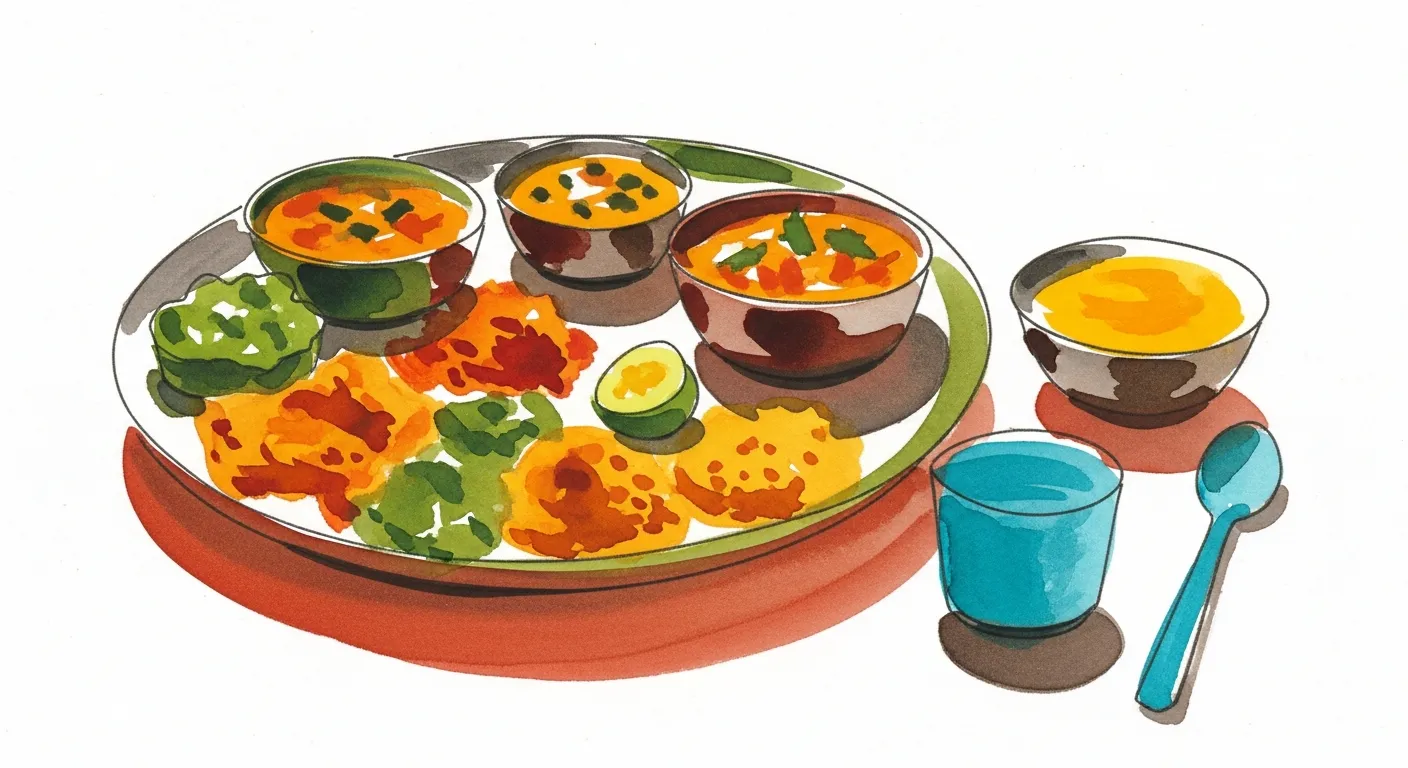
A Koli kitchen in Worli runs on a few non-negotiables. There is a stone sil-batta, still used because the electric mixer bruises the masala. There is a clay handi for the curry, because metal changes the taste of kokum. There is a bottle of Koli masala, ground at home, usually in February or March when the sun is hot enough to dry red chillies in two days flat. The ratio is family-specific. Bedgi chillies for colour. Lavangi for heat. Coriander seed, cumin, peppercorn, a small amount of stone flower, a piece of dagad phool, fennel if the grandmother insists.
The fish is the variable. Surmai for the good days. Bangda for the regular days. Bombil, fresh or sukha, for any day. Mandeli when the catch is small. Sukat, the dried shrimp, for the curry that makes the rice disappear faster than it was served. Kolambi for occasions. Chimburi, the small crab, when the children ask.
The technique is older than the recipe. Slow heat. Coconut grated, not desiccated. Tamarind, not vinegar. Teppal, the Sichuan-pepper cousin from the Konkan, crushed once between two fingers and dropped in at the end.
The recipe is the easy part. The fish is the hard part.
THE NUMBERS ON THE ROAD
The Mumbai Coastal Road Project is a 10.58-kilometre stretch running from the Princess Street Flyover at Marine Drive to the southern end of the Bandra-Worli Sea Link. It involves reclamation of land from the sea, twin tunnels under Malabar Hill, and a network of promenades, cycle tracks, and parking lots. The first phase opened to traffic in 2024.
For the Kolis of Worli, the road has done three things, in order of severity.
First, it has cut access. Restricted entry to traditional jetties and fishing routes means boats now have to launch from farther out, burn more fuel, return later, and pay more for ice.
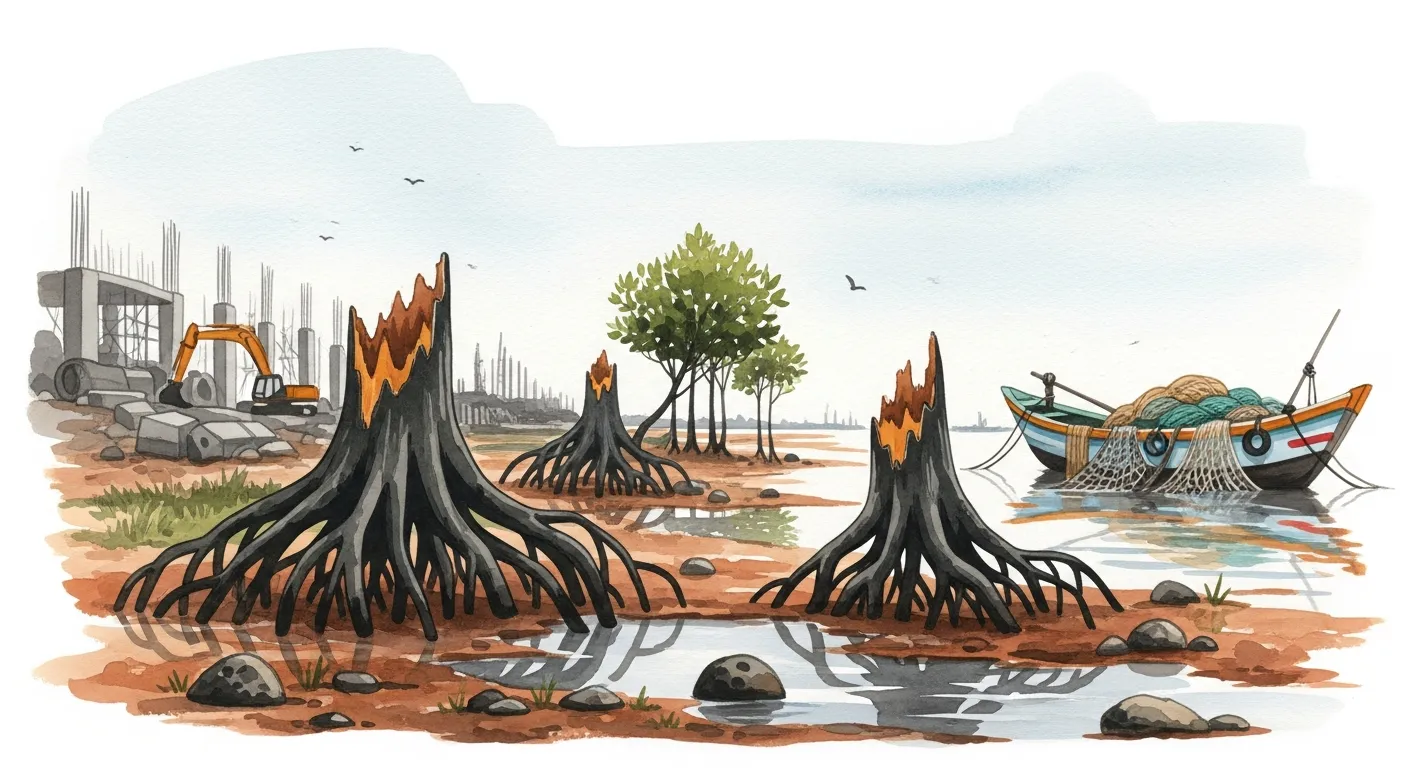
Second, it has cut catch. The reclamation work and the removal of mangroves have changed the seabed and the breeding patterns. A TISS report cited by the Centre for Development Policy and Practice found that daily earnings of Worli fisherfolk have roughly halved, while operational expenses have climbed by around 27 percent.
Third, it has cut the mangrove. The construction has required the removal of thousands of mangrove trees, which were not just trees. They were the nursery for the juvenile bombil, the shelter for the small crab, the place where the prawn larvae grew large enough to be worth catching.
Half the income. A quarter more cost. Fewer fish to begin with. That is the math of the road.
THE STALL AND THE HOME KITCHEN
For decades, the front lanes of Worli Koliwada had a quiet economy of fish stalls. Not formal restaurants. Plastic stools, a few cooking vessels, a board with prices written in chalk. Surmai fry for forty. Bombil fry for twenty. Sol kadhi free with the meal. The customer was the auto driver, the office worker walking down from the Worli signal, the occasional curious outsider who had heard from a friend that the masala here was the real thing.
A newer wave of home kitchens had been quietly building on top of this. Younger Koli women, third and fourth generation, running small operations out of their own homes. WhatsApp orders. A few dabbas a day. Sukat chutney sold by the jar. Sukha bombil shipped by courier. Some had started taking bookings for weekend lunches, ten people at a time, eaten on the floor of a stilted house with a view of the sea that the Sea Link now bisects.
The stalls and the home kitchens depended on the same supply chain. The boat goes out at night. The catch comes in at dawn. The women sort it on the rocks. The best fish goes to the wholesale buyer. The middle goes to the home kitchen. The smallest goes to the family pot.
When the boat brings back half of what it used to, every link in that chain tightens. The wholesale buyer still pays. The home kitchen pays more for less. The family pot gets the smallest fish or no fish at all.
When the catch shrinks, the kitchen shrinks first.
THE SYMBOLIC ROAD
There is a sociological reading of the Coastal Road that goes beyond fish and fuel. It argues that the road is not just an infrastructure project. It is a story the city is telling itself about what a coastline should look like.
In the new story, the coastline is for joggers. For cyclists. For families taking selfies at sunset. For cars moving from south Mumbai to the western suburbs in seventeen minutes. The working shoreline, the one with nets drying on the rocks and fish guts in the gutter and women shouting prices in Marathi at five in the morning, does not fit the picture.
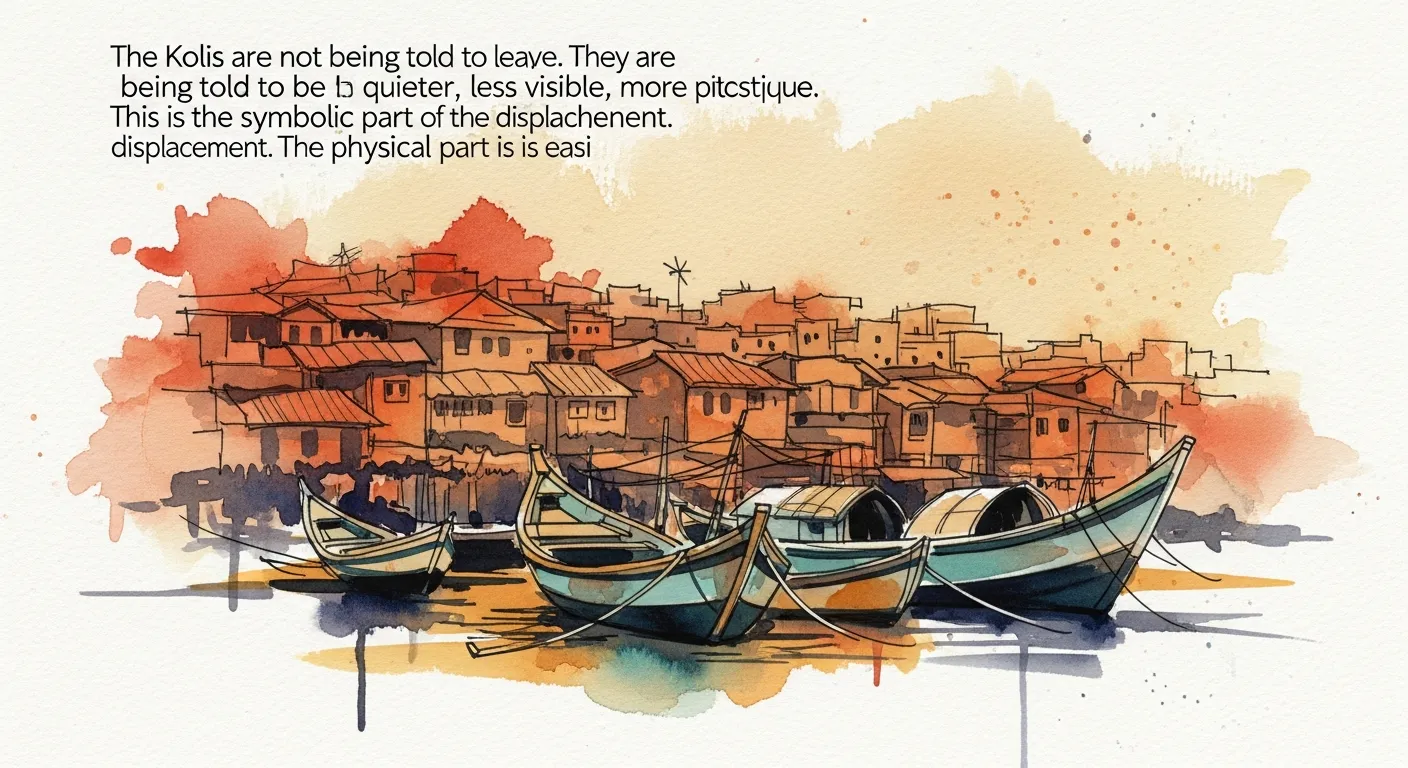
The Kolis are not being told to leave. They are being told to be quieter, cleaner, less visible, more picturesque.
This is the symbolic part of the displacement. The physical part is easier to measure. The symbolic part is harder to fight. You cannot file an injunction against a vision board.
WHAT STAYS, AND WHO IS KEEPING IT
A research paper out of Worli Koliwada makes a quiet point. The Kolis' land ownership and cultural identity are being diminished, and the benefits of development are not effectively reaching them.
But the kitchens are still running. The masala is still being ground in February. The bombil is still being split and salted and hung on the bamboo, though the racks are shorter than they used to be. The sukat chutney is still being made, though the sukat costs more. The Koli New Year, Narali Purnima, when the community offers a coconut to the sea before the monsoon ends and the boats go out again, is still observed every year on the same day.
The home kitchens are adapting. Some have moved to fish bought from Sassoon Dock when the Worli catch is too thin. A few are sourcing surmai from Versova through cousins. One woman in the village has started teaching Koli cooking classes to outsiders on weekends, charging by the head, partly for the income, partly because she would rather pass the recipe to a stranger than let it sit in a notebook nobody opens.
The sea is still there. The road runs over it but does not erase it. The boats still go out at night. They come back with less. They come back.
The woman with her grandmother's koyta is still gutting fish at four in the morning. The torchlight is dimmer than it used to be, because the streetlight on the jetty was taken down for construction. But the knife is sharp. The masala is on the shelf. The fire is on by five.
Francisco de Almeida did not stop. Five hundred years of empire did not move them. A road is not going to be the thing that does.
Field Notes
Quick referenceFrancisco de Almeida sailed past the seven islands in 1505 and did not stop. The Kolis had already been there for centuries before he arrived.
Daily earnings of Worli fisherfolk have roughly halved since Coastal Road construction began. Operational expenses climbed around 27 percent. The fish got smaller too.
Worli Fort was built by the Portuguese around 1675. The Kolis were already living on that promontory before the first stone was laid.
Koli masala is ground at home in February or March, when the sun is hot enough to dry red chillies in two days. The ratio is family-specific. Nobody shares the exact number.
Every year, before the monsoon ends and the boats go back out, the Kolis of Worli offer a coconut to the sea. The city keeps changing. The date does not.
Get the next story first
Join the Bhukkads. Free, no spam, just stories.
Takes 30 seconds.