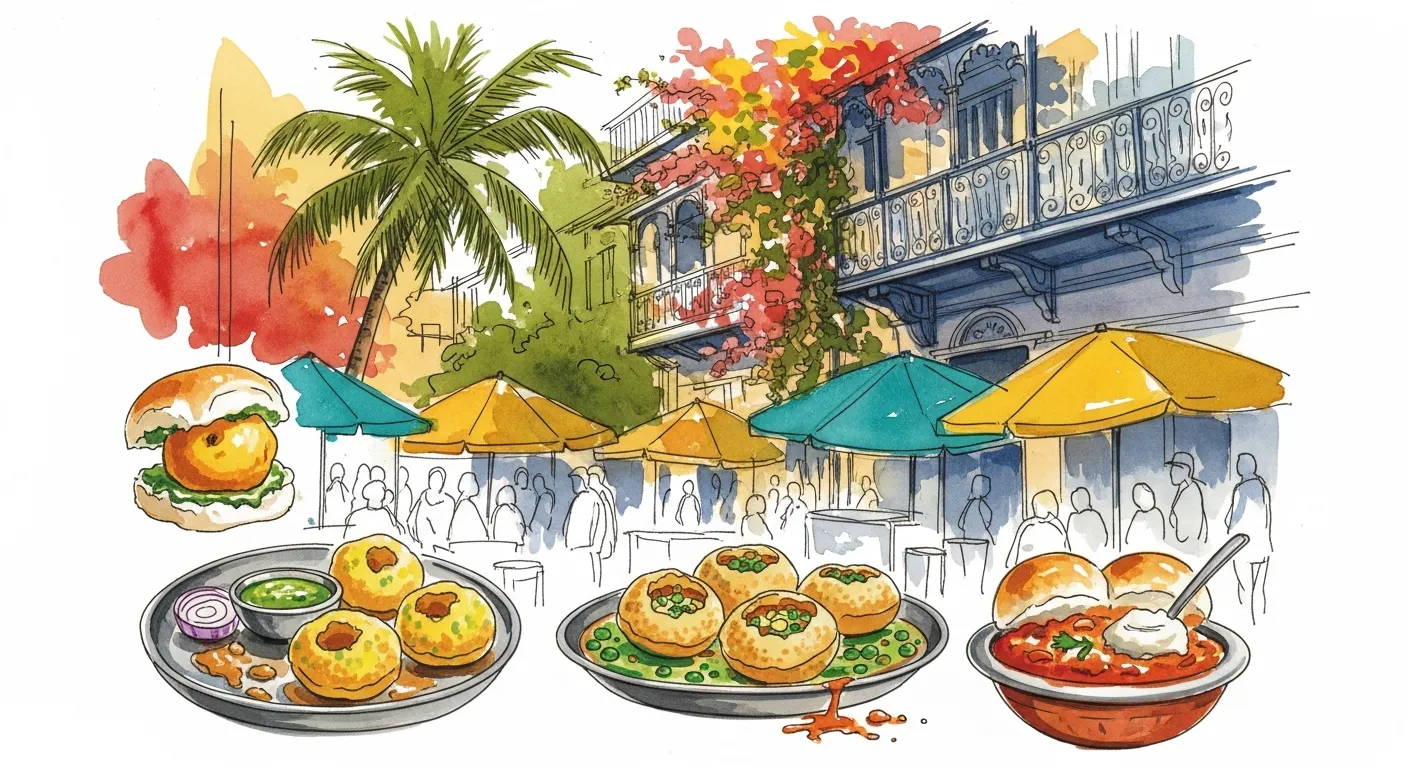
The stories behind the food. The people, the places, the plates.
Category
Area
Near Mumbai 93 stories
01
CultureMumbai
The Weekend Bombay Learned to Pace Itself
A Korean carnival at Kurla, a pier festival that runs until July 23, a Juhu hotel buffet with a live band playing to 4pm, and the market that has been closed on Sundays since 1869. Two days. One city. A schedule.
6 min read9 Jul 2026
02
Pop-UpsVersova and Lokhandwala
The Community Hall That Became a Kitchen
In Versova and Lokhandwala, a quieter economy is taking shape. Home cooks are pooling rent, sharing gas, and putting regional India on plates that used to belong to bar menus.
6 min read7 Jul 2026
03
Fine DineBandra and Lower Parel
The Fish Nobody Wanted Is On The Tasting Menu
Bandra and Lower Parel's fine-dining rooms are quietly rewiring a four-hundred-year-old supply chain. The middleman is losing. The mackerel is winning.
7 min read5 Jul 2026
04
CultureMumbai
The Saturday Night Menu Nobody Reads
A discovery bar in Khar built around one ingredient. A speakeasy pouring half-cocktails at half the price. A Todi Mill room that took the wardrobe out of the equation. Four rooms. One night. The food menu everyone forgets.
7 min read4 Jul 2026
05
Home ChefsChembur
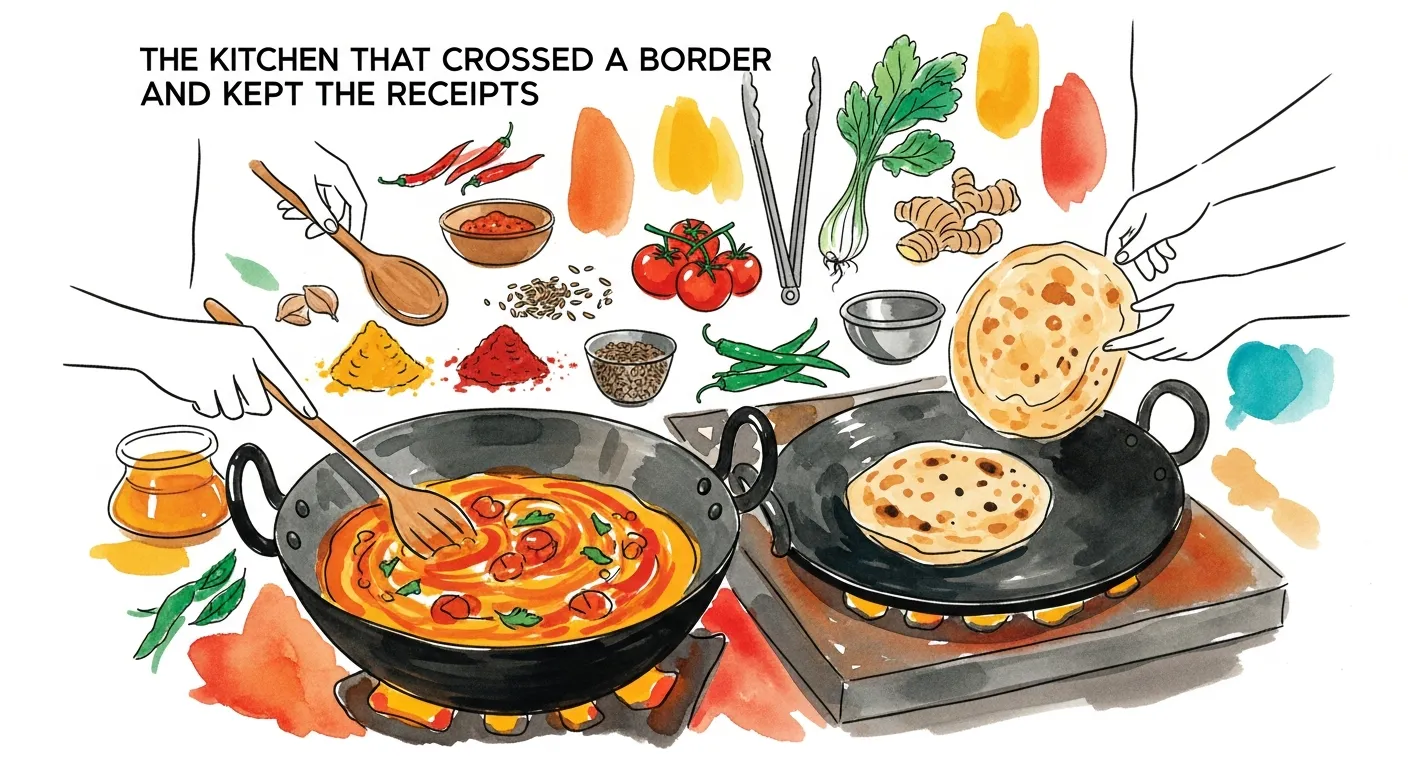
The Kitchen That Crossed a Border and Kept the Receipts
In Chembur, a generation of Sindhi home cooks is doing the maths their grandmothers never had to. The recipe survives. The margin does not.
7 min read4 Jul 2026
06
Fine DineBandra
The Bungalow Will See You Now
Bandra's lanes are hiding a new kind of restaurant. Fourteen chairs. No signboard. A chef who has finally stopped explaining themselves.
6 min read3 Jul 2026
07
Street FoodMarine Drive
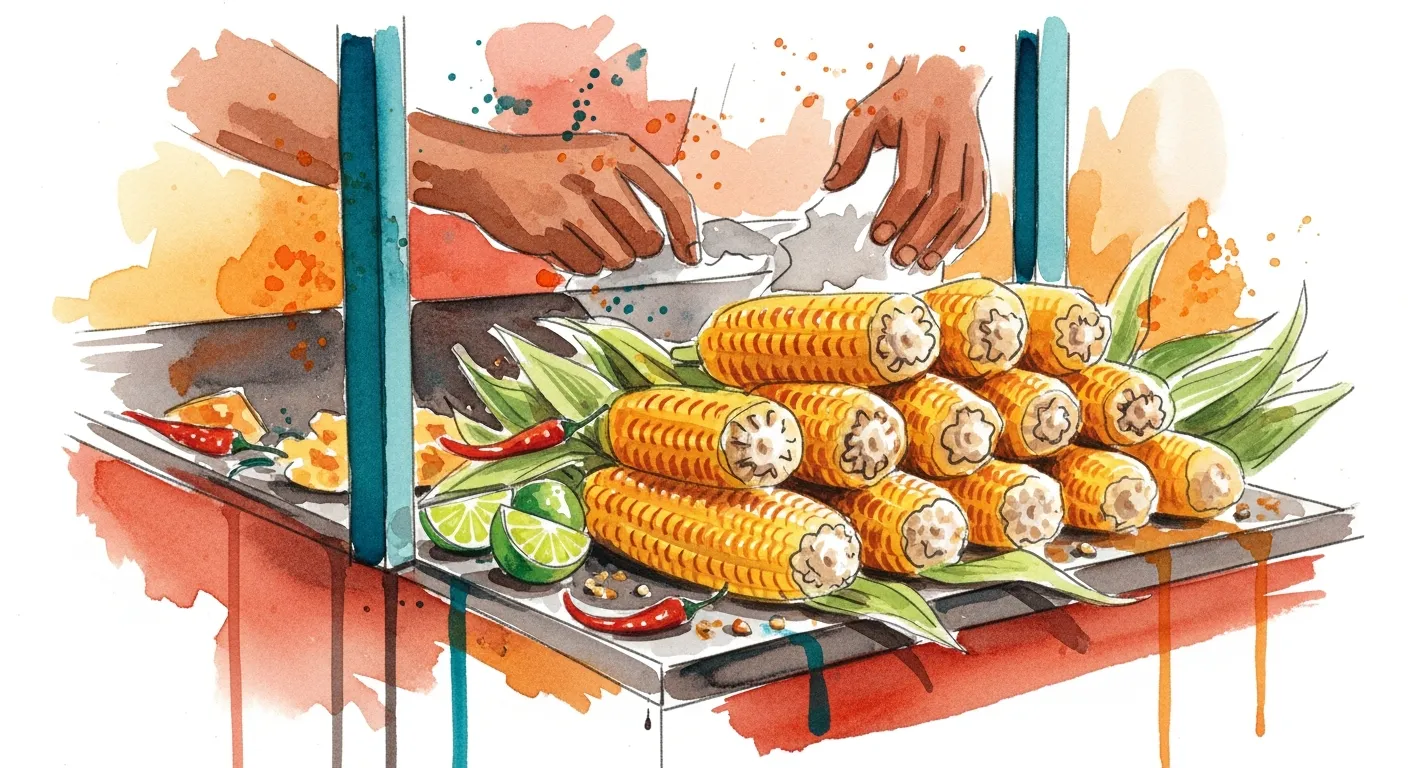
The Cob That Waits for the Rain
Marine Drive's bhuttawalas have run on two variables for four generations: a coal fire and a monsoon. Both are getting harder to hold.
7 min read3 Jul 2026
08
CultureMumbai
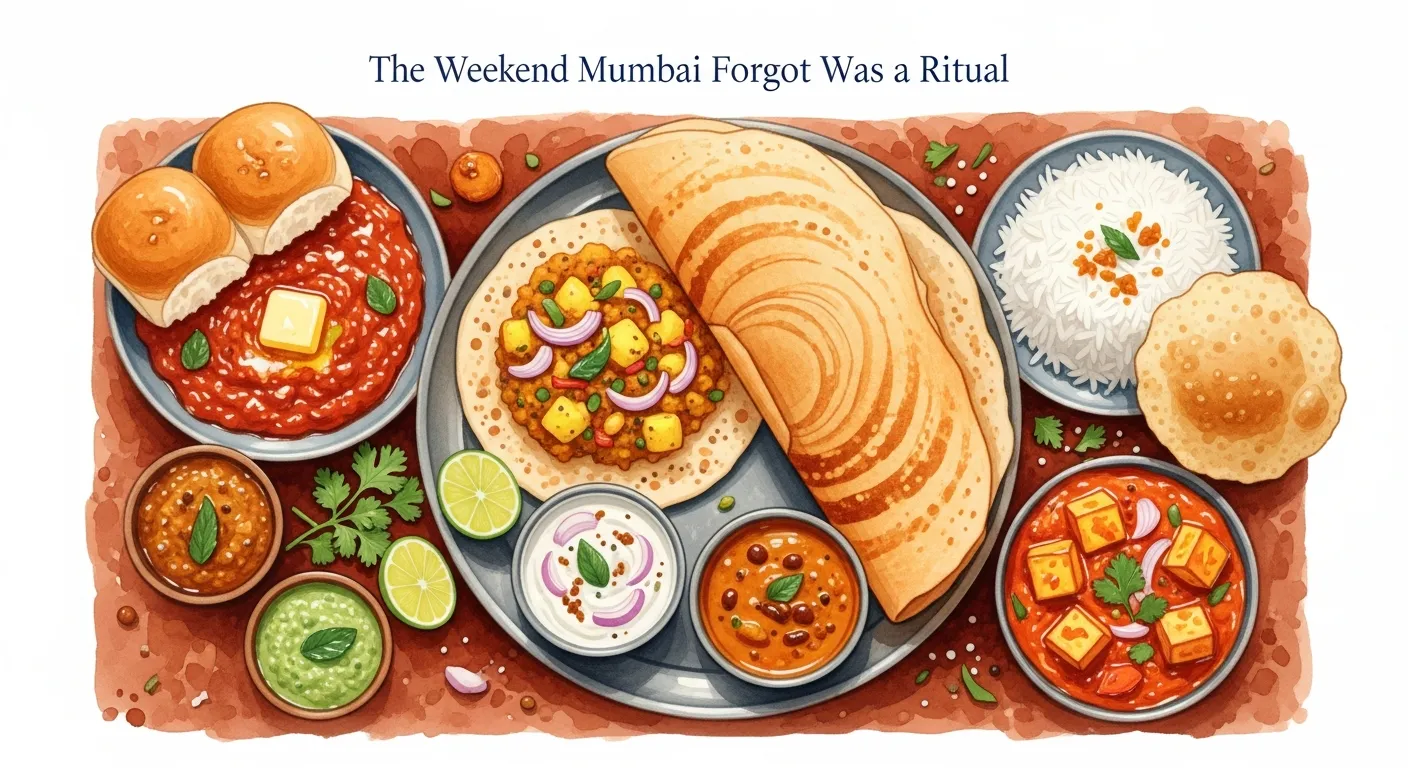
The Weekend Mumbai Forgot Was a Ritual
A monsoon pier festival, a blind coffee tasting in Khar, a Korean carnival at Kurla, and the Sunday buffet that still runs a live band past three. Two days. One city. A schedule that assumes you know what you're doing.
7 min read2 Jul 2026
09
Fine DineLower Parel
The Mill That Ate the Restaurant
Lower Parel's textile floors are being sliced into 20-seat rooms. The fine-dining playbook is quietly being rewritten.
6 min read2 Jul 2026
10
CultureBhendi Bazaar
The Customer Who Stopped Coming Back
Morarji Desai banned hand-pulled rickshaws in Bombay seventy-five years ago. The men who pulled them ate at specific canteens in Bhendi Bazaar. Those canteens are still there. The men are not. Nobody planned for what happens to a restaurant when its customer base is legislated out of existence.
7 min read23 Jun 2026
11
Street FoodFort
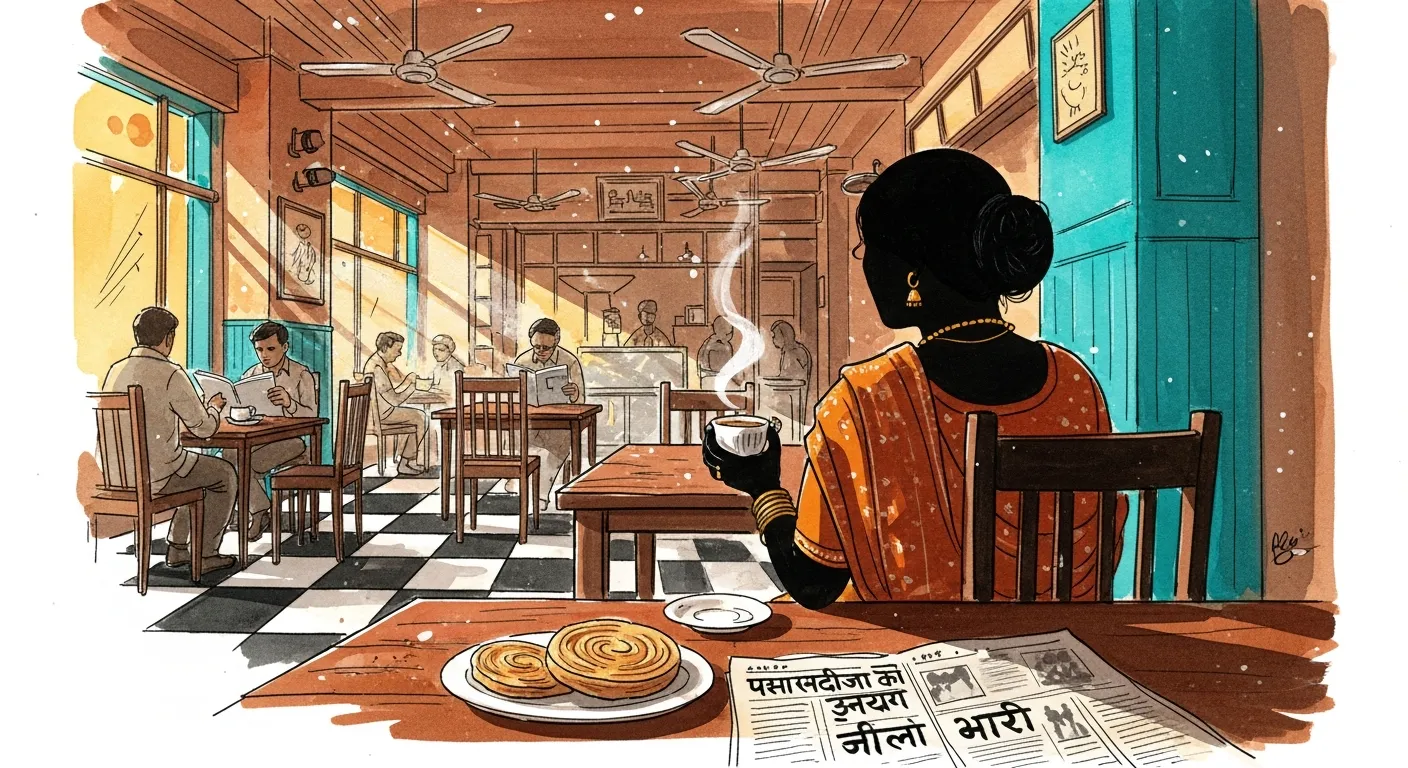
The Glass That Costs Twelve Rupees Now
Milk went up two rupees a litre. Sugarcane went up nine hundred a tonne. A generation of office workers started ordering cold brew. The cutting chai stall at the corner of Fort is doing the maths.
8 min read20 Jun 2026
12
CultureMumbai
The Word Punch Came From a Sailor's Ration. Mumbai Took It Back.
A bar in Bandra named after a Hindi numeral. A pour the size of a chai glass. An Elephanta Caves cocktail with 90 percent local ingredients. The Mumbai bar finally stopped translating and started writing.
6 min read19 Jun 2026
13
Pop-UpsJuhu and Versova
The Table That Lasts One Night
Juhu and Versova have become the city's audition room for cuisines too small to survive a lease. The chefs are young. The rents are punishing. The recipes are older than both.
7 min read19 Jun 2026
14
CultureBhendi Bazaar
The Thaal That Refuses to Become a Souvenir
Bhendi Bazaar is being rebuilt in glass and steel. The Bohri kitchens inside it are being rebuilt in sushi and khow suey. The thaal in the middle has not moved.
6 min read18 Jun 2026
15
CultureMumbai
Mumbai After Eleven Has a New Vocabulary
A vegetarian speakeasy in Bandra, a half-pour bar that thinks like a chai stall, a 1981 graduate still teaching the city how to pour. Four arguments about what Bombay drinks after dark.
7 min read17 Jun 2026
16
Home ChefsMatunga
The Sadya Holds The Line
Coconut prices tripled. Matta rice doubled. The Malayali home kitchens of Matunga did not flinch.
7 min read15 Jun 2026
17
Pop-UpsBandra (Pali Hill)
The Living Room Economy
Pali Hill rents touched Rs 12 lakh a month. A generation of cooks did the math and moved into someone's dining room.
7 min read15 Jun 2026
18
CultureFort and Dhobi Talao
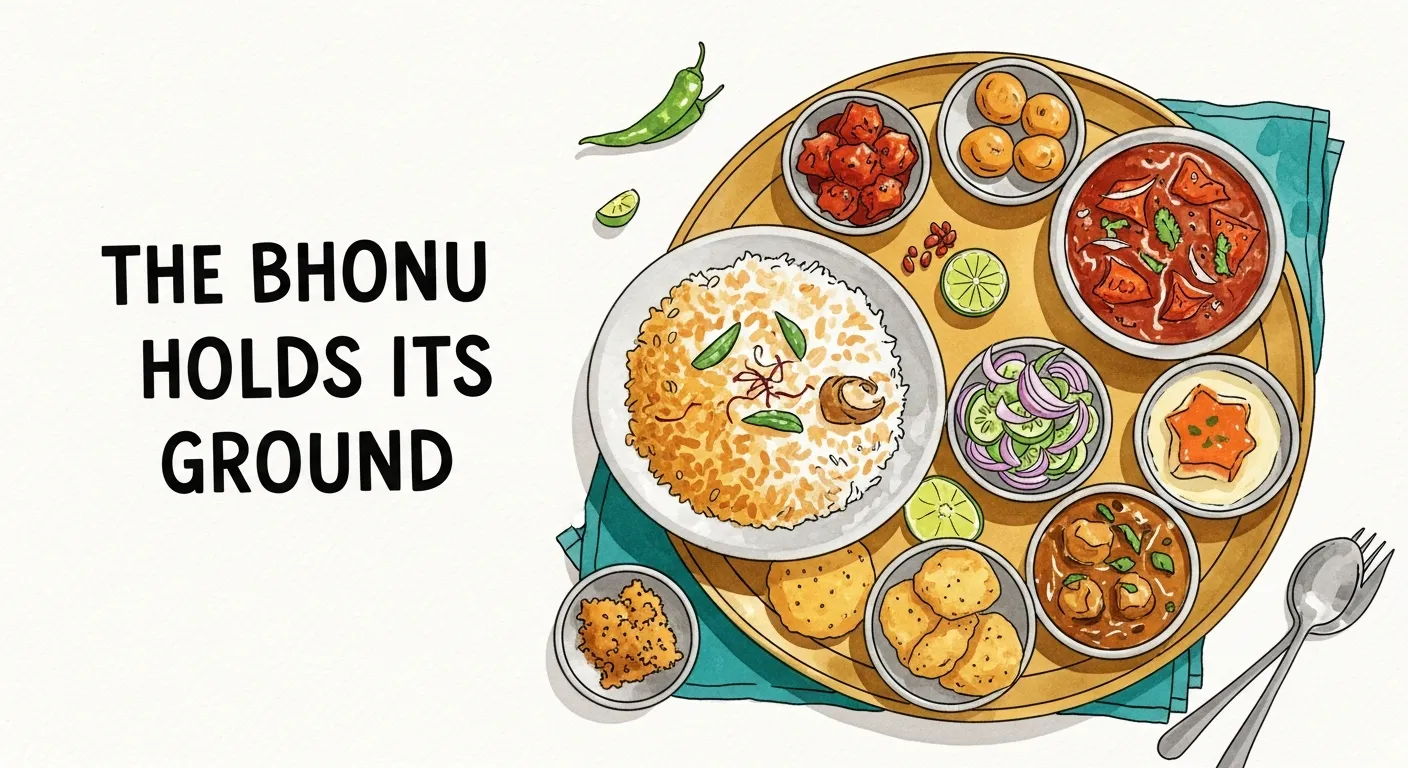
The Bhonu Holds Its Ground
Fort and Dhobi Talao still cook for a community that shrinks ten percent a decade. The recipes haven't moved.
7 min read14 Jun 2026
19
Street FoodGhatkopar's Khau Galli
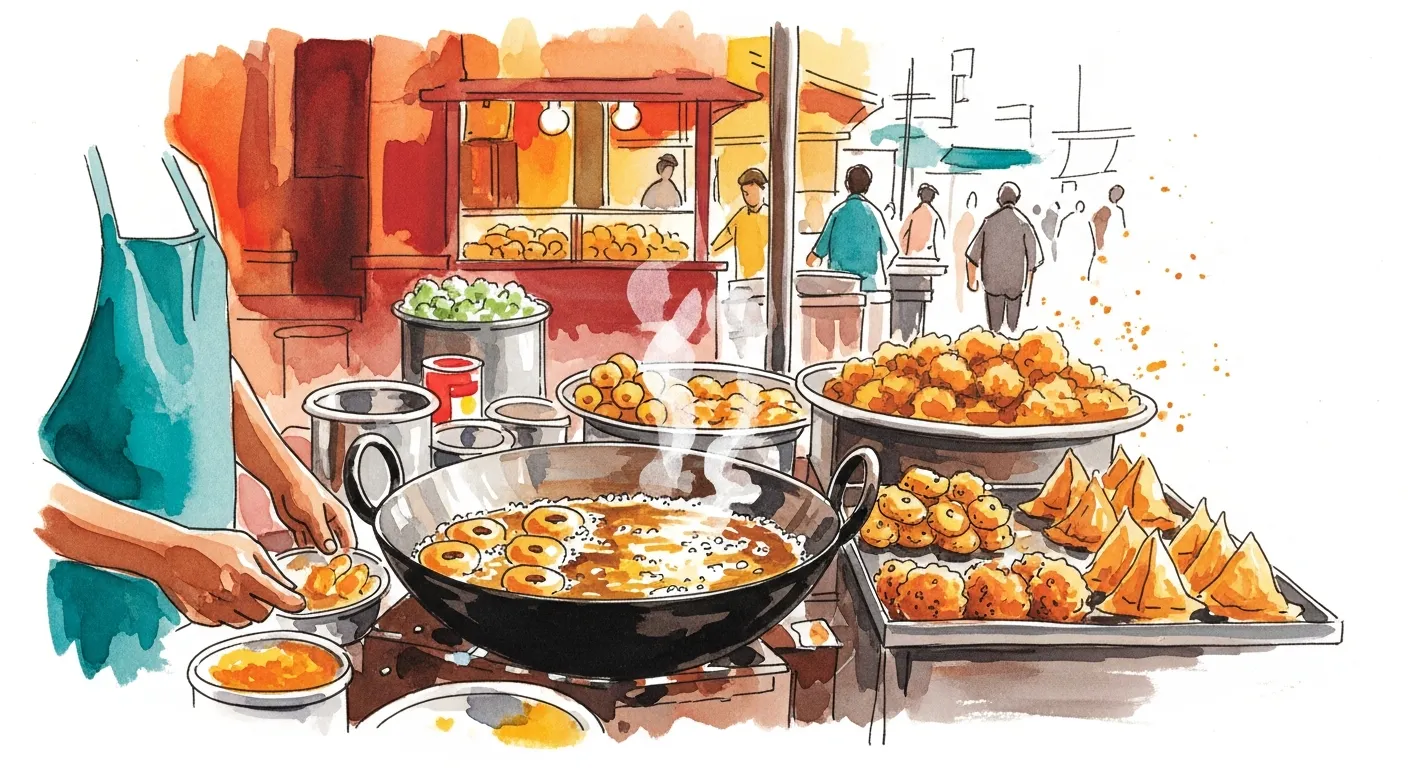
The Galli That Fries For a Living
Edible oil doubled. Ghatkopar's vada pav men did the math. Then they did it again.
7 min read12 Jun 2026
20
CultureMumbai
The Woman Who Walked Into a Bar in 1981 and Never Left
Shatbhi Basu was twenty-two when she became India's first woman bartender. The country took forty-four years to catch up.